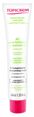
Topicrem AC Compensating Moisturizing Cream
Works for
1 of 1 advertised claim delivered
MoisturizingParaffinum liquidum, Zinc gluconate + 13 moreStrong evidence
“It immediately soothes the irritations, hydrates 24H and restores cutaneous comfort.”
This product can help improve hydration of the skin with the two types of ingredients.
The first type is called “humectants”:
these ingredients help attract water.
When humectants are on the surface of the skin, they “pull in” the moisture from the outside environment, or from
within deeper layers of the skin. The following ingredients in this product do the job:
glycerin, sodium hyaluronate.
This product also contains ingredients called “occlusives”. They help reduce the speed with which our skin loses moisture to the outside environment. These ingredients also help soften the upper layer of the skin, so it feels less tight and nicer to the touch. The following ingredients in this product do the job: cera alba, helianthus annuus seed oil.
The following ingredients in this product are especially good for supporting the skin barrier and helping with the hydration level: paraffinum liquidum
Can it cause trouble?
Irritancy1 strong irritant: ParfumMedium risk
ComedogenicClean of flagged comedogenic ingredientsNone flagged


User reviews
Be the first — your take helps the next person decide.
Ingredients
Filter by role to see what each ingredient is doing.
Water~45–55%
Paraffinum liquidum~7–8.5%
- Irritation risk
- Low
Mineral oil. One of the most effective and well studied occlusive and emollient moisturizing ingredients. Helps reduce moisture loss in skin and repair skin barrier function
More about Paraffinum liquidumGlycerin~4–4.9%
- Irritation risk
- Low
One of the best moisturizing ingredients. Naturally present in skin. It attracts water to the upper layer of the skin working as a humectant
More about GlycerinCamelina sativa seed oil~3.1–3.8%
- Irritation risk
- Low
Helps soften the upper layer of the skin
More about Camelina sativa seed oilCoco-caprylate/caprate~2.4–3%
- Irritation risk
- Low
Helps to soften the upper layer of the skin without creating a greasy texture
More about Coco-caprylate/caprateGlyceryl stearate~2–2.5%
- Irritation risk
- Low
An emollient that softens the skin and forms a protective layer on its surface. Helps water and oil mix together
More about Glyceryl stearatePeg-100 stearate~1.8–2.2%
- Irritation risk
- Low
Helps oil and water mix togehter and creates a nice product texture
More about Peg-100 stearateCera alba~1.8–2.2%
- Irritation risk
- Medium
Forms a protective barrier that holds water and keeps dry skin hydrated. Keeps an emulsion from separating into its oil and liquid components, and increases the thickness of a product. Can be an allergen
More about Cera albaMyristyl pca~1.2–1.5%
- Irritation risk
- Low
Octyldodecyl pca~1–1.3%
- Irritation risk
- Low
Zinc gluconate~0.7–1.05%
- Irritation risk
- Medium
Typically used to stabilize the product formulations. It is a salt of a polyhydroxy acid (PHA) and in larger concentrations, can help shed the dead cells from the skin surface revealing smoother skin. It can help attract water to the upper layer of the skin. Might to be helpful against acne and clogged pores. Could be helpful in neutralizing free radicals, but solid research is missing. Due to the zinc content, might help calm down inflammation in skin
More about Zinc gluconateIsostearyl avocadate~0.65–0.95%
- Irritation risk
- Low
Sodium polyacrylate~0.6–0.9%
- Irritation risk
- Low
Used to create a gel-like product texture, as well as to stabilize emulsions
More about Sodium polyacrylatePalmitic acid~0.55–0.85%
- Irritation risk
- Low
An emollient that is naturally present in skin and helps soften it
More about Palmitic acidXanthan gum~0.5–0.75%
- Irritation risk
- Low
Used to create a thicker product consistency
More about Xanthan gumStearic acid~0.55–0.8%
- Irritation risk
- Low
Helps oil and water mix together and works as an emollient
More about Stearic acidPhenoxyethanol~0.3–0.55%
- Irritation risk
- Low
A preservative. It helps prevent bacterial growth in cosmetic products
More about PhenoxyethanolAllantoin~0.25–0.4%
- Irritation risk
- Low
Helps calm down inflammation in skin and can help reduce itching. Helps to repair the skin barrier and keep skin hydrated
More about AllantoinSodium hyaluronate~0.2–0.4%
- Irritation risk
- Low
One of the best moisturizing ingredients. Attracts water into the upper layer of the skin
More about Sodium hyaluronateGlyceryl caprylate~0.25–0.45%
- Irritation risk
- Low
An emollient that can also help water and oil mix together, as well as prevent bacteria growth in products
More about Glyceryl caprylateTocopherol~0.15–0.3%
- Irritation risk
- Low
Pure form of vitamin E. Can help moisturise and protect the skin from free radicals. Often used to help stabilise other ingredients or the formula itself
More about TocopherolSodium hydroxide~0.15–0.25%
Isostearyl alcohol~0.15–0.3%
- Irritation risk
- Low
Helps soften the upper layer of the skin
More about Isostearyl alcoholHelianthus annuus seed oil~0.15–0.25%
- Irritation risk
- Low
A great emollient due to its high linoleic acid content. One of the most effective plant oils in helping skin hydration and repairing skin barrier function
More about Helianthus annuus seed oilParfum~0.05–0.1%
- Irritation risk
- High
An aromatic blend of unspecified and possibly irritating ingredients
More about ParfumIngredient list view
Water, Paraffinum liquidum, Glycerin, Camelina sativa seed oil, Coco-caprylate/caprate, Glyceryl stearate, Peg-100 stearate, Cera alba, Myristyl pca, Octyldodecyl pca, Zinc gluconate, Isostearyl avocadate, Sodium polyacrylate, Palmitic acid, Xanthan gum, Stearic acid, Phenoxyethanol, Allantoin, Sodium hyaluronate, Glyceryl caprylate, Tocopherol, Sodium hydroxide, Isostearyl alcohol, Helianthus annuus seed oil, Parfum
Compare prices
Retailers ranked by price — lowest first.
Affiliate links · prices updated regularly · As an Amazon Associate, WIMJ earns from qualifying purchases.
Worth comparing, line by line.
Match % combines shared ingredients, the first five ingredients, shared actives and hero ingredients, irritancy (lower counts in the alternative's favour), texture and body area. Only products in the same routine step are compared.
| TopicremAC Compensating Moisturizing CreamYOUR PRODUCT | Meishoku Brilliant ColorsCeracolla Moisture Cream | Face factsCeramide Moisturising Gel Cream | CicaBiafineAnti-Irritations Moisturising Cream | |
|---|---|---|---|---|
| Match | — | 60% | 60% | 60% |
| Price | $14.64 | $11.16−$3.48 | $6.87−$7.77 | $17.91+$3.27 |
| Shared key ingredients | — | 3 of 9 | 3 of 9 | 4 of 9 |
| Key difference | — | Ceramide 6 Ii | Ceramide Ap | Petrolatum |
| Irritancy | Medium | Low | Low | Low |
| Drying alcohol | — | — | — | — |
| View product | Shop | Shop | Shop |


Product summary
Based on the ingredients included, "Topicrem - AC Compensating Moisturizing Cream" works well for moisturizing the skin. The formulation is based on a combination of good humectants and emollients. Both are needed to increase the skin hydration level. Glycerin and sodium hyaluronate in this product (humectants) attract water molecules to the upper layer of the skin (the water comes from the outside air or from the deeper layers of the skin if the air is dry). Paraffinum liquidum, beeswax, cera alba, helianthus annuus seed oil and coco-caprylate/caprate in this product help decrease the water evoporation from the skin, so that it stays hydrated for longer. These ingredients also soften the skin and take away the feeling of tightness and dryness.
Irritation risk
There are some common irritants in this product, including ingredients that do not have benefits for the skin. We assess the overall irritancy of this moisturizer to be medium. For a detailed overview of all potential irritants: click here
You can see the detailed formula review with the breakdown of all actives in the product and the full ingredient list with estimated concentrations in the tables below.
Price
The product retails for 42.48CA$ in Canada, for 7.24$ in the United States and for 10.50£ in the United Kingdom.
For a detailed price comparison: click here.
Sources cited in this review
Every concentration estimate and effectiveness label is anchored to one of these 20 studies and safety reviews.
- 1A review on the extensive skin benefits of mineral oilncbi.nlm.nih.gov
- 2
- 3
- 4Safety Assessment of Alkyl Esters as Used in Cosmeticscir-safety.org
- 5
- 6Zinc salts in dermatologyncbi.nlm.nih.gov

Affiliate links · As an Amazon Associate, WIMJ earns from qualifying purchases.