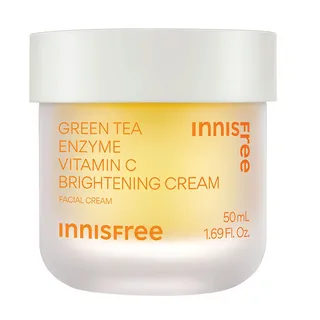
innisfree Vitamin C Green Tea Enzyme Brightening Cream

innisfree Vitamin C Green Tea Enzyme Brightening Cream

Efficacy66/100IrritancyMedium

Works for

Evens skin tone
Niacinamide, Glutathione +ย 6ย more
Works well
What the product description says
โ€œFades dark spots and corrects uneven skin tone.โ€
Source: Lila Beauty

This product can help reduce hypepigmentation and even out the skin tone because it contains the following effective ingredients: glutathione, niacinamide

The following ingredient (ingredients) in this product might be helpful, but there is no evidence to confirm that it actually can help even out the skin tone: ferulic acid.

Keep in mind that you would need to apply any topical skincare targetted at hypigmentation consistently for a couple of months to get a result. No topical skincare product can help get rid of hyperpigmentation (including post-acne marks and age spots) instantly.

NiacinamideKey activeEffect: HighIs proven to be effective in reducing blemishes, evening out skin tone and helping to improve lines and wrinkles. It helps the skin to repair sun damage, calm down inflammation and keep maintain good levels of moisture. The concentration of about 2% is effective for supporting the skin barrier and evening out the skin tone. Concentration of 4-6% is better for helping with acne and balancing the sebum production~2.2โ€“2.7%
GlutathioneKey activeEffect: HighA peptide that can help neutralize free radicals in skin and reduce melanin production resulting in skin lightening effect and reduction in hyperpigmentation. It can also help attract moisture to the upper layer of the skin~0.25โ€“0.45%
Ferulic acidKey activeEffect: MediumA potent anti-oxidant that has been shown to be effective in neutralizing free radicals in skin. There seem to have a synergetic effect of ferulic acid, vitamin E and C, meaning that when the ingredients are used together, they enhance each other's ability protect the skin against free radicals. Ferulic acid also helps to stabilize other ingredients - including vitamins C and E. It can help to even out the skin tone. Ferulic acid is approved for use as a sunscreen ingredient in Japan in concentrations up to 10%~0.25โ€“0.45%
Magnesium ascorbyl phosphateEffect: Low, below effective doseA derivative of vitamin C that is more stable, but less bioavailable than the pure form of vitamin C. It does not penetrate the skin well, but has been shown to convert to pure vitamin C once in skin. It can be helpful in stimulating collagen production and lightening the skin tone, but the required concentration is likely to be very high~0.25โ€“0.45%
GluconolactoneUnder-dosedA polyhydroxy acid (PHA) that helps shed the dead cells from the skin surface revealing smoother skin. Is believed to be genter than AHAs. It helps attract water to the upper layer of the skin and can stimulate production of skin's own hyaluronic acid resulting in improved hydration levels. It has been shown to be helpful against acne and clogged pores if used consistently (e.g over a period of 12 weeks) in high enough concentration. It can help reduce fine lines and wrinkles and improve skin tone with long-term application. Can help neutralize free radicals~0.25โ€“0.4%
Ascorbyl tetraisopalmitateUnder-dosedA vitamin C derivative. Studies show that is might be effective in reducing hyperpigmentation, but there are no studies confirming that it is effectively converted into the bioavailable form of Vitamin C in skin. It is not clear how this derivative compares in effectiveness to the topical application of bioavailable form of vitamin C (L-ascorbic acid)~0.25โ€“0.4%
3-o-ethyl ascorbic acidUnder-dosedA vitamin C derivative that is more stable but less potent than pure form of vitamin C. Can help neutralize free radicals and help reduce hyperpigmentation, but the required concentration is likely to be much higher than for the pure form of vitamin C, limiting the ingredient's effectiveness in products~0.2โ€“0.4%
Ascorbic acidUnder-dosedThe most well-researched antioxidant that works in skin. Helps neutralize free radicals supporting collagen production, helping to even out the skin tone and preventing early signs of aging~0.15โ€“0.3%
Anti-blemish
Niacinamide, Linoleic acid +ย 2ย more
Works well
What the product description says
โ€œInnisfree Vitamin C Green Tea Enzyme Brightening Cream helps improve skin tone, blemishes, dark circles, and skin texture.โ€
Source: Lila Beauty

This product can help reduce breakouts and clogged pores because it contains the following ingredient: niacinamide. This ingredient is used for treating acne and can have a noticeable effect.

The following ingredient (ingredients) in this product might be helpful, but there is no evidence to confirm that it actually works: linoleic acid

NiacinamideHeroEffect: HighIs proven to be effective in reducing blemishes, evening out skin tone and helping to improve lines and wrinkles. It helps the skin to repair sun damage, calm down inflammation and keep maintain good levels of moisture. The concentration of about 2% is effective for supporting the skin barrier and evening out the skin tone. Concentration of 4-6% is better for helping with acne and balancing the sebum production~2.2โ€“2.7%
Linoleic acidKey activeEffect: MediumAn excellent emollient. Helps soften the skin, restore its barrier function, and can help to calm down inflammation. It can be helpful to prevent blemishes and clogged pores~0.35โ€“0.6%
Sodium ascorbyl phosphateUnder-dosedA stable derivative of vitamin C. It is oil-soluble which means it is more likely to penetrate the skin compared to the pure form of vitamin C (which is water-soluble), but it is less bio-available and is way less effective in stimulating collagen and reducing wrinkles compared to the pure form of vitamin C (L-ascorbic acid) and its other derivatives (for example, magnesium ascorbyl phosphate). At the same time, this vitamin C derivative has been shown in studies to be effective in reducing acne, blemishes and clogged pores. It is less irritating then the pure form of vitamin C~0.25โ€“0.45%
GluconolactoneUnder-dosedA polyhydroxy acid (PHA) that helps shed the dead cells from the skin surface revealing smoother skin. Is believed to be genter than AHAs. It helps attract water to the upper layer of the skin and can stimulate production of skin's own hyaluronic acid resulting in improved hydration levels. It has been shown to be helpful against acne and clogged pores if used consistently (e.g over a period of 12 weeks) in high enough concentration. It can help reduce fine lines and wrinkles and improve skin tone with long-term application. Can help neutralize free radicals~0.25โ€“0.4%
Exfoliation
Gluconolactone ~0.25โ€“0.4%, below the ~1% it needs
Under-dosed
What the product description says
โ€œGreen Tea Enzyme gently exfoliates dead skin cells.โ€
Source: Lila Beauty

This product does not contain effective exfoliating ingredients. It might be able to deliver physical exfoliation, that is scrub off some of the dead cells on the surface of the skin. We do not recommend physical exfoliation, because it is not uniform (some bits of skin can get exfoliated too much while others not at all). It can also traumatize the skin and aggrevate acne and other skin conditions.

GluconolactoneUnder-dosedA polyhydroxy acid (PHA) that helps shed the dead cells from the skin surface revealing smoother skin. Is believed to be genter than AHAs. It helps attract water to the upper layer of the skin and can stimulate production of skin's own hyaluronic acid resulting in improved hydration levels. It has been shown to be helpful against acne and clogged pores if used consistently (e.g over a period of 12 weeks) in high enough concentration. It can help reduce fine lines and wrinkles and improve skin tone with long-term application. Can help neutralize free radicals~0.25โ€“0.4%
Anti-oxidation
Side benefit ยท Ferulic acid, Glutathione +ย 13ย more
Works well

This product contains antioxidants (ferulic acid, glutathione) that can help neutralize free radicals in skin. By doing so, they can lessen the damage the skin gets from the UV light (sun).

The following ingredients - pyridoxine also can have an antioxidant effect, but there is less evidence to confirm their effectiveness in skin.

Ferulic acidKey activeEffect: HighA potent anti-oxidant that has been shown to be effective in neutralizing free radicals in skin. There seem to have a synergetic effect of ferulic acid, vitamin E and C, meaning that when the ingredients are used together, they enhance each other's ability protect the skin against free radicals. Ferulic acid also helps to stabilize other ingredients - including vitamins C and E. It can help to even out the skin tone. Ferulic acid is approved for use as a sunscreen ingredient in Japan in concentrations up to 10%~0.25โ€“0.45%
GlutathioneKey activeEffect: HighA peptide that can help neutralize free radicals in skin and reduce melanin production resulting in skin lightening effect and reduction in hyperpigmentation. It can also help attract moisture to the upper layer of the skin~0.25โ€“0.45%
PyridoxineKey activeEffect: MediumMight help neutralize free radicals in skin, but evidence of effectiveness in skin is lacking. It might be irritating~0.1โ€“0.2%
Daucus carota sativa seed oilEffect: LowA plant oil that might help neutralize free radicals and have an anti-bacterial effect~0.25โ€“0.45%
Daucus carota sativa root extractEffect: LowCarrot extract. Might have anti-oxidant properties and be used to add orange color~0.2โ€“0.35%
Citrus reticulata peel extractEffect: LowA likely irritant. Might have some anti-oxidant activity, but is mostly used as a fragrance in cosmetic products~0.2โ€“0.35%
Coptis japonica root extractEffect: LowA plant extract that might have some anti-oxidant properties~0.15โ€“0.3%
Magnesium ascorbyl phosphateEffect: Low, below effective doseA derivative of vitamin C that is more stable, but less bioavailable than the pure form of vitamin C. It does not penetrate the skin well, but has been shown to convert to pure vitamin C once in skin. It can be helpful in stimulating collagen production and lightening the skin tone, but the required concentration is likely to be very high~0.25โ€“0.45%
Tocopheryl acetateEffect: Low, below effective doseA more stable but less bio-available form of vitamin E compared to Tocopherol. Might help moisturize and protect the skin from free radicals, but mostly used in low concentrations to stabilize other ingredients.~0.2โ€“0.4%
Ascorbyl tetraisopalmitateUnder-dosedA vitamin C derivative. Studies show that is might be effective in reducing hyperpigmentation, but there are no studies confirming that it is effectively converted into the bioavailable form of Vitamin C in skin. It is not clear how this derivative compares in effectiveness to the topical application of bioavailable form of vitamin C (L-ascorbic acid)~0.25โ€“0.4%
TocopherolUnder-dosedPure form of vitamin E. Can help moisturise and protect the skin from free radicals. Often used to help stabilise other ingredients or the formula itself~0.25โ€“0.45%
GluconolactoneUnder-dosedA polyhydroxy acid (PHA) that helps shed the dead cells from the skin surface revealing smoother skin. Is believed to be genter than AHAs. It helps attract water to the upper layer of the skin and can stimulate production of skin's own hyaluronic acid resulting in improved hydration levels. It has been shown to be helpful against acne and clogged pores if used consistently (e.g over a period of 12 weeks) in high enough concentration. It can help reduce fine lines and wrinkles and improve skin tone with long-term application. Can help neutralize free radicals~0.25โ€“0.4%
Sodium ascorbyl phosphateUnder-dosedA stable derivative of vitamin C. It is oil-soluble which means it is more likely to penetrate the skin compared to the pure form of vitamin C (which is water-soluble), but it is less bio-available and is way less effective in stimulating collagen and reducing wrinkles compared to the pure form of vitamin C (L-ascorbic acid) and its other derivatives (for example, magnesium ascorbyl phosphate). At the same time, this vitamin C derivative has been shown in studies to be effective in reducing acne, blemishes and clogged pores. It is less irritating then the pure form of vitamin C~0.25โ€“0.45%
3-o-ethyl ascorbic acidUnder-dosedA vitamin C derivative that is more stable but less potent than pure form of vitamin C. Can help neutralize free radicals and help reduce hyperpigmentation, but the required concentration is likely to be much higher than for the pure form of vitamin C, limiting the ingredient's effectiveness in products~0.2โ€“0.4%
Ascorbic acidUnder-dosedThe most well-researched antioxidant that works in skin. Helps neutralize free radicals supporting collagen production, helping to even out the skin tone and preventing early signs of aging~0.15โ€“0.3%
Anti-aging
Side benefit ยท Niacinamide, Ferulic acid +ย 9ย more
Works well

This product can help reduce and prevent fine lines and wrinkles, improve skin elasticity and firmness because it contains niacinamide.

These ingredients in the product can also be helpful, even though there is less evidence for their effectiveness: ferulic acid, folic acid.

Keep in mind that it typically takes at least 6 weeks to notice any results because the changes that are needed to improve fine lines and elasticity happen in the deeper layers of the skin. No topical anti-aging product can โ€œeraseโ€ wrinkles or fully reverse signs of aging.

NiacinamideKey activeEffect: HighIs proven to be effective in reducing blemishes, evening out skin tone and helping to improve lines and wrinkles. It helps the skin to repair sun damage, calm down inflammation and keep maintain good levels of moisture. The concentration of about 2% is effective for supporting the skin barrier and evening out the skin tone. Concentration of 4-6% is better for helping with acne and balancing the sebum production~2.2โ€“2.7%
Ferulic acidKey activeEffect: MediumA potent anti-oxidant that has been shown to be effective in neutralizing free radicals in skin. There seem to have a synergetic effect of ferulic acid, vitamin E and C, meaning that when the ingredients are used together, they enhance each other's ability protect the skin against free radicals. Ferulic acid also helps to stabilize other ingredients - including vitamins C and E. It can help to even out the skin tone. Ferulic acid is approved for use as a sunscreen ingredient in Japan in concentrations up to 10%~0.25โ€“0.45%
Folic acidKey activeEffect: MediumCan help stimulate collagen production in skin. While available studies are promising, more research is needed to confirm the efficacy in skin~0.15โ€“0.3%
Hyaluronic acidEffect: LowOne of the best moisturizing ingredients. Attracts water into the upper layer of the skin. Naturally present in skin. Typically has large molecule size unless advertised otherwise on the product label. Helps support skin's barrier function and may help to reduce inflammation~0.25โ€“0.45%
TocopherolEffect: Low, below effective dosePure form of vitamin E. Can help moisturise and protect the skin from free radicals. Often used to help stabilise other ingredients or the formula itself~0.25โ€“0.45%
Sodium ascorbyl phosphateEffect: Low, below effective doseA stable derivative of vitamin C. It is oil-soluble which means it is more likely to penetrate the skin compared to the pure form of vitamin C (which is water-soluble), but it is less bio-available and is way less effective in stimulating collagen and reducing wrinkles compared to the pure form of vitamin C (L-ascorbic acid) and its other derivatives (for example, magnesium ascorbyl phosphate). At the same time, this vitamin C derivative has been shown in studies to be effective in reducing acne, blemishes and clogged pores. It is less irritating then the pure form of vitamin C~0.25โ€“0.45%
Magnesium ascorbyl phosphateEffect: Low, below effective doseA derivative of vitamin C that is more stable, but less bioavailable than the pure form of vitamin C. It does not penetrate the skin well, but has been shown to convert to pure vitamin C once in skin. It can be helpful in stimulating collagen production and lightening the skin tone, but the required concentration is likely to be very high~0.25โ€“0.45%
3-o-ethyl ascorbic acidEffect: Low, below effective doseA vitamin C derivative that is more stable but less potent than pure form of vitamin C. Can help neutralize free radicals and help reduce hyperpigmentation, but the required concentration is likely to be much higher than for the pure form of vitamin C, limiting the ingredient's effectiveness in products~0.2โ€“0.4%
GluconolactoneUnder-dosedA polyhydroxy acid (PHA) that helps shed the dead cells from the skin surface revealing smoother skin. Is believed to be genter than AHAs. It helps attract water to the upper layer of the skin and can stimulate production of skin's own hyaluronic acid resulting in improved hydration levels. It has been shown to be helpful against acne and clogged pores if used consistently (e.g over a period of 12 weeks) in high enough concentration. It can help reduce fine lines and wrinkles and improve skin tone with long-term application. Can help neutralize free radicals~0.25โ€“0.4%
Ascorbyl tetraisopalmitateUnder-dosedA vitamin C derivative. Studies show that is might be effective in reducing hyperpigmentation, but there are no studies confirming that it is effectively converted into the bioavailable form of Vitamin C in skin. It is not clear how this derivative compares in effectiveness to the topical application of bioavailable form of vitamin C (L-ascorbic acid)~0.25โ€“0.4%
Ascorbic acidUnder-dosedThe most well-researched antioxidant that works in skin. Helps neutralize free radicals supporting collagen production, helping to even out the skin tone and preventing early signs of aging~0.15โ€“0.3%
Moisturizing
Side benefit ยท Niacinamide, Linoleic acid +ย 30ย more
Works well

This product can help improve hydration of the skin with the two types of ingredients.

The first type is called โ€œhumectantsโ€:
these ingredients help attract water. When humectants are on the surface of the skin, they โ€œpull inโ€ the moisture from the outside environment, or from within deeper layers of the skin. The following ingredients in this product do the job: arginine, glycerin.

This product also contains ingredients called โ€œocclusivesโ€. They help reduce the speed with which our skin loses moisture to the outside environment. These ingredients also help soften the upper layer of the skin, so it feels less tight and nicer to the touch. The following ingredients in this product do the job: arginine, caprylic/capric triglyceride.

The following ingredients in this product are especially good for supporting the skin barrier and helping with the hydration level: linoleic acid, niacinamide, panthenol

NiacinamideHeroEffect: HighIs proven to be effective in reducing blemishes, evening out skin tone and helping to improve lines and wrinkles. It helps the skin to repair sun damage, calm down inflammation and keep maintain good levels of moisture. The concentration of about 2% is effective for supporting the skin barrier and evening out the skin tone. Concentration of 4-6% is better for helping with acne and balancing the sebum production~2.2โ€“2.7%
Linoleic acidHeroยท EmollientEffect: HighAn excellent emollient. Helps soften the skin, restore its barrier function, and can help to calm down inflammation. It can be helpful to prevent blemishes and clogged pores~0.35โ€“0.6%
PanthenolHeroยท HumectantEffect: HighHelps attract water to the upper layer of the skin and can help improve skin barrier function~0.25โ€“0.45%
GlycerinKey activeยท HumectantEffect: HighOne of the best moisturizing ingredients. Naturally present in skin. It attracts water to the upper layer of the skin working as a humectant~3โ€“3.6%
Hydrogenated poly(c6-14 olefin)Key activeยท EmollientEffect: MediumHelps soften the upper layer of the skin and create a nice product texture~1.3โ€“1.5%
Caprylic/capric triglycerideKey activeยท Emollient, OcclusiveEffect: HighA good mix of fatty acids that forms a protective layer on the skin. Improves the shelf life of products. Derived from coconut and glycerin~1.1โ€“1.3%
SqualaneKey activeยท Emollient, OcclusiveEffect: HighAn oil naturally present in skin. Works as an emollient to soften the skin and form a protective layer on its surface without a greasy feeling.~0.6โ€“0.85%
ArginineKey activeยท Humectant, OcclusiveEffect: HighAn amino acid that is naturally present in skin and helps keep it hydrated. When used together with AHAs, it can reduce their irritating effect on the skin~0.3โ€“0.55%
Linolenic acidKey activeยท EmollientEffect: HighAn emollient that helps soften the skin and calm down inflammation~0.3โ€“0.55%
TrehaloseKey activeยท HumectantEffect: HighA sugar that attracts water to the upper layer of the skin~0.25โ€“0.5%
Hydrolyzed sodium hyaluronateKey activeEffect: HighAttracts water into the upper layer of the skin~0.25โ€“0.45%
Sodium hyaluronate crosspolymerKey activeยท HumectantEffect: HighAttracts water into the upper layer of the skin~0.25โ€“0.45%
Chondrus crispus extractKey activeยท OcclusiveEffect: HighRed algae extract that helps attract water to the upper layer of the skin and create a nicer product consistency~0.25โ€“0.5%
CyanocobalaminKey activeEffect: HighCan support skin barrier function and reduce inflammation in skin~0.25โ€“0.45%
GlutathioneKey activeEffect: HighA peptide that can help neutralize free radicals in skin and reduce melanin production resulting in skin lightening effect and reduction in hyperpigmentation. It can also help attract moisture to the upper layer of the skin~0.25โ€“0.45%
Helianthus annuus seed oilKey activeยท Emollient, OcclusiveEffect: HighA great emollient due to its high linoleic acid content. One of the most effective plant oils in helping skin hydration and repairing skin barrier function~0.25โ€“0.5%
Hyaluronic acidKey activeยท HumectantEffect: HighOne of the best moisturizing ingredients. Attracts water into the upper layer of the skin. Naturally present in skin. Typically has large molecule size unless advertised otherwise on the product label. Helps support skin's barrier function and may help to reduce inflammation~0.25โ€“0.45%
Hydrolyzed hyaluronic acidKey activeยท HumectantEffect: HighOne of the best moisturizing ingredients. Attracts water into the upper layer of the skin. A version of it is naturally present in skin~0.25โ€“0.4%
Sodium acetylated hyaluronateKey activeยท HumectantEffect: HighA type of hyaluronic acid that works as an excellent moisturizer by attracting water into the upper layer of the skin. Is typically feels less sticky on the skin compared to the usual hyaluronic acid~0.25โ€“0.45%
Sodium hyaluronateKey activeยท HumectantEffect: HighOne of the best moisturizing ingredients. Attracts water into the upper layer of the skin~0.25โ€“0.45%
GlucoseKey activeยท HumectantEffect: MediumHelps attract water to the upper layer of the skin. Could be helpful in restoring the skin barrier function~0.25โ€“0.45%
Glyceryl acrylate/acrylic acid copolymerKey activeยท HumectantEffect: HighHelps attract water to the upper layer of the skin and provide a longer-lasting hydration. Can create a thicker product consistency~0.2โ€“0.35%
Canola oilKey activeยท EmollientEffect: MediumA plant oil that can help soften the upper layer of the skin~0.2โ€“0.4%
Butylene glycolยท HumectantEffect: LowUsed to create a nice product texture and help delivery of other ingredients. Might be somewhat helpful in attracting water to the upper layer of the skin~5.6โ€“6.8%
Isononyl isononanoateยท Emollient, OcclusiveEffect: LowForms a protective film on the surface of the skin to prevent moisture loss. Gives a velvety feel to products while reducing tackiness~0.7โ€“1.05%
Dextrinยท HumectantEffect: LowA sugar that is used to stabilize the product formulation. Can help attract water to the upper layer of the skin~0.25โ€“0.45%
Caprylyl glycolยท Humectant, EmollientEffect: LowHelps preserve products and creates a nice product texture~0.2โ€“0.4%
Linum usitatissimum seed oilEffect: Low~0.2โ€“0.4%
BiotinEffect: LowMight have some moisturising properties. Is not effective when applied topically beyond some moisturizing effect~0.15โ€“0.3%
Ascorbyl tetraisopalmitateEffect: Low, below effective doseA vitamin C derivative. Studies show that is might be effective in reducing hyperpigmentation, but there are no studies confirming that it is effectively converted into the bioavailable form of Vitamin C in skin. It is not clear how this derivative compares in effectiveness to the topical application of bioavailable form of vitamin C (L-ascorbic acid)~0.25โ€“0.4%
TocopherolEffect: Low, below effective dosePure form of vitamin E. Can help moisturise and protect the skin from free radicals. Often used to help stabilise other ingredients or the formula itself~0.25โ€“0.45%
GluconolactoneUnder-dosedA polyhydroxy acid (PHA) that helps shed the dead cells from the skin surface revealing smoother skin. Is believed to be genter than AHAs. It helps attract water to the upper layer of the skin and can stimulate production of skin's own hyaluronic acid resulting in improved hydration levels. It has been shown to be helpful against acne and clogged pores if used consistently (e.g over a period of 12 weeks) in high enough concentration. It can help reduce fine lines and wrinkles and improve skin tone with long-term application. Can help neutralize free radicals~0.25โ€“0.4%

Can it cause trouble?

Irritancy
1 strong irritant: Citrus reticulata peel extract
Medium risk
We flagged 22 ingredients with irritancy potential. Severity depends on your sensitivity threshold; the table lists the worst offenders first.
IngredientFunctionIrritationEst. amount
3-o-ethyl ascorbic acidA vitamin C derivative that is more stable but less potent than pure form of vitamin C. Can help neutralize free radicals and help reduce hyperpigmentation, but the required concentration is likely to be much higher than for the pure form of vitamin C, limiting the ingredient's effectiveness in productsHigh~0.2โ€“0.4%est.
Citrus reticulata peel extractA likely irritant. Might have some anti-oxidant activity, but is mostly used as a fragrance in cosmetic productsHigh~0.2โ€“0.35%est.
Coptis japonica root extractA plant extract that might have some anti-oxidant propertiesHigh~0.15โ€“0.3%est.
Ascorbic acidThe most well-researched antioxidant that works in skin. Helps neutralize free radicals supporting collagen production, helping to even out the skin tone and preventing early signs of agingHigh~0.15โ€“0.3%est.
PyridoxineMight help neutralize free radicals in skin, but evidence of effectiveness in skin is lacking. It might be irritatingHigh~0.1โ€“0.2%est.
1,2-hexanediolA preservativeMedium~0.6โ€“0.9%est.
Caprylic/capric triglycerideA good mix of fatty acids that forms a protective layer on the skin. Improves the shelf life of products. Derived from coconut and glycerinMedium~1.1โ€“1.3%est.
Acrylates/c10-30 alkyl acrylate crosspolymerMaintains the texture of skincare products. Allows the product to spread evenly. Helps oil and water mix togetherMedium~0.45โ€“0.65%est.
Hydroxyethyl acrylate/sodium acryloyldimethyl taurate copolymerA gelling agent that thickens the product consistency and leaves the skin with a velvety finishMedium~0.25โ€“0.5%est.
EthylhexylglycerinA preservativeMedium~0.2โ€“0.35%est.
Canola oilA plant oil that can help soften the upper layer of the skinMedium~0.2โ€“0.4%est.
Glyceryl acrylate/acrylic acid copolymerHelps attract water to the upper layer of the skin and provide a longer-lasting hydration. Can create a thicker product consistencyMedium~0.2โ€“0.35%est.
Caprylyl glycolHelps preserve products and creates a nice product textureMedium~0.2โ€“0.4%est.
Ascorbyl tetraisopalmitateA vitamin C derivative. Studies show that is might be effective in reducing hyperpigmentation, but there are no studies confirming that it is effectively converted into the bioavailable form of Vitamin C in skin. It is not clear how this derivative compares in effectiveness to the topical application of bioavailable form of vitamin C (L-ascorbic acid)Medium~0.25โ€“0.4%est.
Tocopheryl acetateA more stable but less bio-available form of vitamin E compared to Tocopherol. Might help moisturize and protect the skin from free radicals, but mostly used in low concentrations to stabilize other ingredients.Medium~0.2โ€“0.4%est.
Sodium ascorbyl phosphateA stable derivative of vitamin C. It is oil-soluble which means it is more likely to penetrate the skin compared to the pure form of vitamin C (which is water-soluble), but it is less bio-available and is way less effective in stimulating collagen and reducing wrinkles compared to the pure form of vitamin C (L-ascorbic acid) and its other derivatives (for example, magnesium ascorbyl phosphate). At the same time, this vitamin C derivative has been shown in studies to be effective in reducing acne, blemishes and clogged pores. It is less irritating then the pure form of vitamin CMedium~0.25โ€“0.45%est.
Magnesium ascorbyl phosphateA derivative of vitamin C that is more stable, but less bioavailable than the pure form of vitamin C. It does not penetrate the skin well, but has been shown to convert to pure vitamin C once in skin. It can be helpful in stimulating collagen production and lightening the skin tone, but the required concentration is likely to be very highMedium~0.25โ€“0.45%est.
GlutathioneA peptide that can help neutralize free radicals in skin and reduce melanin production resulting in skin lightening effect and reduction in hyperpigmentation. It can also help attract moisture to the upper layer of the skinMedium~0.25โ€“0.45%est.
GluconolactoneA polyhydroxy acid (PHA) that helps shed the dead cells from the skin surface revealing smoother skin. Is believed to be genter than AHAs. It helps attract water to the upper layer of the skin and can stimulate production of skin's own hyaluronic acid resulting in improved hydration levels. It has been shown to be helpful against acne and clogged pores if used consistently (e.g over a period of 12 weeks) in high enough concentration. It can help reduce fine lines and wrinkles and improve skin tone with long-term application. Can help neutralize free radicalsMedium~0.25โ€“0.4%est.
Sodium hyaluronate crosspolymerAttracts water into the upper layer of the skinMedium~0.25โ€“0.45%est.
Linolenic acidAn emollient that helps soften the skin and calm down inflammationMedium~0.3โ€“0.55%est.
Thiamine hclCan help attract water to the upper layer of the skin. Is studied as a mosquito repellentMedium~0.1โ€“0.2%est.
Comedogenic
1 ingredient rated 2 or more on the 0โ€“5 pore-clogging scale
1 flagged
These ingredients have a comedogenic rating of 2 or more on a 0โ€“5 scale; the table shows each one's rating. In leave-on products they can clog pores in acne-prone skin.
IngredientFunctionRatingEst. amount
Chondrus crispus extractRed algae extract that helps attract water to the upper layer of the skin and create a nicer product consistency3/5~0.25โ€“0.5%est.

User reviews

Would you recommend?
No community reviews yet.

Be the first โ€” your take helps the next person decide.

Ingredients

Filter by role to see what each ingredient is doing.

Water~45โ€“55%
Formula
Irritation risk
Low

Plain old water

More about Water
Butylene glycol~5.6โ€“6.8%
Formula
Irritation risk
Low
Works for
Moisturizing

Used to create a nice product texture and help delivery of other ingredients. Might be somewhat helpful in attracting water to the upper layer of the skin

More about Butylene glycol
Propanediol~4.1โ€“5%
Formula
Irritation risk
Low

Acts as a solvent for other ingredients. Speeds up the absorption of other ingredients into the skin

More about Propanediol
Glycerin~3โ€“3.6%
Key active
Irritation risk
Low
Works for
Moisturizing

One of the best moisturizing ingredients. Naturally present in skin. It attracts water to the upper layer of the skin working as a humectant

More about Glycerin
Niacinamide~2.2โ€“2.7%
Hero ยท Moisturizing, Anti-blemish
Irritation risk
Low
Works for
Anti-agingAnti-blemishEvens skin toneMoisturizingReduces irritationAntibacterialAnti-inflammatoryReduces redness

Is proven to be effective in reducing blemishes, evening out skin tone and helping to improve lines and wrinkles. It helps the skin to repair sun damage, calm down inflammation and keep maintain good levels of moisture. The concentration of about 2% is effective for supporting the skin barrier and evening out the skin tone. Concentration of 4-6% is better for helping with acne and balancing the sebum production

More about Niacinamide
Isopentyldiol~1.7โ€“2.1%
Formula
Irritation risk
Low

Helps dissolve other ingredients in a formulation

More about Isopentyldiol
1,2-hexanediol~0.6โ€“0.9%
Irritant ยท medium
Irritation risk
Medium

A preservative

More about 1,2-hexanediol
Hydrogenated poly(c6-14 olefin)~1.3โ€“1.5%
Key active
Irritation risk
Low
Works for
Moisturizing

Helps soften the upper layer of the skin and create a nice product texture

More about Hydrogenated poly(c6-14 olefin)
Caprylic/capric triglyceride~1.1โ€“1.3%
Key activeIrritant ยท medium
Irritation risk
Medium
Works for
Moisturizing

A good mix of fatty acids that forms a protective layer on the skin. Improves the shelf life of products. Derived from coconut and glycerin

More about Caprylic/capric triglyceride
Isononyl isononanoate~0.7โ€“1.05%
Formula
Irritation risk
Low
Works for
Moisturizing

Forms a protective film on the surface of the skin to prevent moisture loss. Gives a velvety feel to products while reducing tackiness

More about Isononyl isononanoate
Squalane~0.6โ€“0.85%
Key active
Irritation risk
Low
Works for
Moisturizing

An oil naturally present in skin. Works as an emollient to soften the skin and form a protective layer on its surface without a greasy feeling.

More about Squalane
Ammonium acryloyldimethyltaurate/vp copolymer~0.45โ€“0.65%
Formula
Irritation risk
Low

Increases thickness of a product. Texture enhancer for oil-in-water emulsions

More about Ammonium acryloyldimethyltaurate/vp copolymer
Acrylates/c10-30 alkyl acrylate crosspolymer~0.45โ€“0.65%
Irritant ยท medium
Irritation risk
Medium

Maintains the texture of skincare products. Allows the product to spread evenly. Helps oil and water mix together

More about Acrylates/c10-30 alkyl acrylate crosspolymer
Arginine~0.3โ€“0.55%
Key active
Irritation risk
Low
Works for
Moisturizing

An amino acid that is naturally present in skin and helps keep it hydrated. When used together with AHAs, it can reduce their irritating effect on the skin

More about Arginine
Trehalose~0.25โ€“0.5%
Key active
Irritation risk
Low
Works for
Moisturizing

A sugar that attracts water to the upper layer of the skin

More about Trehalose
Hydroxyethyl acrylate/sodium acryloyldimethyl taurate copolymer~0.25โ€“0.5%
Irritant ยท medium
Irritation risk
Medium

A gelling agent that thickens the product consistency and leaves the skin with a velvety finish

More about Hydroxyethyl acrylate/sodium acryloyldimethyl taurate copolymer
Sodium acrylic acid/ma copolymer~0.25โ€“0.5%
Formula
Dextrin~0.25โ€“0.45%
Formula
Irritation risk
Low
Works for
Moisturizing

A sugar that is used to stabilize the product formulation. Can help attract water to the upper layer of the skin

More about Dextrin
Xanthan gum~0.25โ€“0.45%
Formula
Irritation risk
Low
Works for
Cleansing

Used to create a thicker product consistency

More about Xanthan gum
3-o-ethyl ascorbic acid~0.2โ€“0.4%
Under-dosedIrritant ยท high
Irritation risk
High
Works for
Anti-oxidationEvens skin toneAnti-aging

A vitamin C derivative that is more stable but less potent than pure form of vitamin C. Can help neutralize free radicals and help reduce hyperpigmentation, but the required concentration is likely to be much higher than for the pure form of vitamin C, limiting the ingredient's effectiveness in products

More about 3-o-ethyl ascorbic acid
Cetearyl olivate~0.2โ€“0.4%
Formula
Irritation risk
Low
Works for
Cleansing

Helps oil and water mix together

More about Cetearyl olivate
Citrus reticulata peel extract~0.2โ€“0.35%
Irritant ยท high
Irritation risk
High
Works for
Anti-oxidation

A likely irritant. Might have some anti-oxidant activity, but is mostly used as a fragrance in cosmetic products

More about Citrus reticulata peel extract
Castor oil/ipdi copolymer~0.2โ€“0.4%
Formula
Irritation risk
Low

Helps improve the product texture

More about Castor oil/ipdi copolymer
Coptis japonica root extract~0.15โ€“0.3%
Irritant ยท high
Irritation risk
High
Works for
Anti-oxidation

A plant extract that might have some anti-oxidant properties

More about Coptis japonica root extract
Ethylhexylglycerin~0.2โ€“0.35%
Irritant ยท medium
Irritation risk
Medium

A preservative

More about Ethylhexylglycerin
Daucus carota sativa root extract~0.2โ€“0.35%
Formula
Irritation risk
Low
Works for
Anti-oxidation

Carrot extract. Might have anti-oxidant properties and be used to add orange color

More about Daucus carota sativa root extract
Sorbitan olivate~0.2โ€“0.4%
Formula
Irritation risk
Low
Works for
Cleansing

Helps oil and water mix together

More about Sorbitan olivate
Canola oil~0.2โ€“0.4%
Key activeIrritant ยท medium
Irritation risk
Medium
Works for
Moisturizing

A plant oil that can help soften the upper layer of the skin

More about Canola oil
Cyclodextrin~0.2โ€“0.35%
Formula
Irritation risk
Low

A type of sugar that is used to support delivery of active ingredients and can enhance their penetration into the skin without disrupting the skin's barrier

More about Cyclodextrin
Sodium phytate~0.2โ€“0.35%
Formula
Irritation risk
Low

Used to stabilize product formulations

More about Sodium phytate
Glyceryl acrylate/acrylic acid copolymer~0.2โ€“0.35%
Key activeIrritant ยท medium
Irritation risk
Medium
Works for
Moisturizing

Helps attract water to the upper layer of the skin and provide a longer-lasting hydration. Can create a thicker product consistency

More about Glyceryl acrylate/acrylic acid copolymer
Sorbitan isostearate~0.2โ€“0.4%
Formula
Irritation risk
Low
Works for
Cleansing

Helps oil and water mix together

More about Sorbitan isostearate
Protease~0.2โ€“0.35%
Formula
Irritation risk
Low
More about Protease
Caprylyl glycol~0.2โ€“0.4%
Irritant ยท medium
Irritation risk
Medium
Works for
Moisturizing

Helps preserve products and creates a nice product texture

More about Caprylyl glycol
Pvm/ma copolymer~0.25โ€“0.4%
Formula
Daucus carota sativa seed oil~0.25โ€“0.45%
Formula
Irritation risk
Low
Works for
Anti-oxidationAntibacterial

A plant oil that might help neutralize free radicals and have an anti-bacterial effect

More about Daucus carota sativa seed oil
Carbomer~0.2โ€“0.4%
Formula
Irritation risk
Low
Works for
Cleansing

Helps create a thicker or gel-like product texture. It is not a surfactant but can be used in gentle cleansing formulations

More about Carbomer
Ascorbyl tetraisopalmitate~0.25โ€“0.4%
Under-dosedIrritant ยท medium
Irritation risk
Medium
Works for
Anti-oxidationAnti-agingEvens skin toneMoisturizing

A vitamin C derivative. Studies show that is might be effective in reducing hyperpigmentation, but there are no studies confirming that it is effectively converted into the bioavailable form of Vitamin C in skin. It is not clear how this derivative compares in effectiveness to the topical application of bioavailable form of vitamin C (L-ascorbic acid)

More about Ascorbyl tetraisopalmitate
Tocopheryl acetate~0.2โ€“0.4%
Irritant ยท medium
Irritation risk
Medium
Works for
Anti-oxidation

A more stable but less bio-available form of vitamin E compared to Tocopherol. Might help moisturize and protect the skin from free radicals, but mostly used in low concentrations to stabilize other ingredients.

More about Tocopheryl acetate
Beta-carotene~0.2โ€“0.4%
Formula
Irritation risk
Low

A colorant adding orange or bright yellow color

More about Beta-carotene
Helianthus annuus seed oil~0.25โ€“0.5%
Key active
Irritation risk
Low
Works for
Moisturizing

A great emollient due to its high linoleic acid content. One of the most effective plant oils in helping skin hydration and repairing skin barrier function

More about Helianthus annuus seed oil
Amodimethicone~0.25โ€“0.45%
Formula
Irritation risk
Low

Helps create a silky product texture

More about Amodimethicone
Glucose~0.25โ€“0.45%
Key active
Irritation risk
Low
Works for
Moisturizing

Helps attract water to the upper layer of the skin. Could be helpful in restoring the skin barrier function

More about Glucose
Sodium hyaluronate~0.25โ€“0.45%
Key active
Irritation risk
Low
Works for
Moisturizing

One of the best moisturizing ingredients. Attracts water into the upper layer of the skin

More about Sodium hyaluronate
Panthenol~0.25โ€“0.45%
Hero ยท Moisturizing
Irritation risk
Low
Works for
Reduces rednessMoisturizingReduces irritation

Helps attract water to the upper layer of the skin and can help improve skin barrier function

More about Panthenol
Chondrus crispus extract~0.25โ€“0.5%
Key activeComedogenic 3/5
Irritation risk
Low
Comedogenicity
3/5
Works for
Moisturizing

Red algae extract that helps attract water to the upper layer of the skin and create a nicer product consistency

More about Chondrus crispus extract
Hydroxypropyltrimonium hyaluronate~0.25โ€“0.5%
Formula
Sodium ascorbyl phosphate~0.25โ€“0.45%
Under-dosedIrritant ยท medium
Irritation risk
Medium
Works for
Anti-blemishAnti-oxidationAnti-aging

A stable derivative of vitamin C. It is oil-soluble which means it is more likely to penetrate the skin compared to the pure form of vitamin C (which is water-soluble), but it is less bio-available and is way less effective in stimulating collagen and reducing wrinkles compared to the pure form of vitamin C (L-ascorbic acid) and its other derivatives (for example, magnesium ascorbyl phosphate). At the same time, this vitamin C derivative has been shown in studies to be effective in reducing acne, blemishes and clogged pores. It is less irritating then the pure form of vitamin C

More about Sodium ascorbyl phosphate
Tocopherol~0.25โ€“0.45%
Under-dosed
Irritation risk
Low
Works for
Anti-oxidationAnti-agingAnti-inflammatoryMoisturizing

Pure form of vitamin E. Can help moisturise and protect the skin from free radicals. Often used to help stabilise other ingredients or the formula itself

More about Tocopherol
Magnesium ascorbyl phosphate~0.25โ€“0.45%
Irritant ยท medium
Irritation risk
Medium
Works for
Evens skin toneAnti-agingAnti-oxidation

A derivative of vitamin C that is more stable, but less bioavailable than the pure form of vitamin C. It does not penetrate the skin well, but has been shown to convert to pure vitamin C once in skin. It can be helpful in stimulating collagen production and lightening the skin tone, but the required concentration is likely to be very high

More about Magnesium ascorbyl phosphate
Glutathione~0.25โ€“0.45%
Key activeIrritant ยท medium
Irritation risk
Medium
Works for
Anti-oxidationMoisturizingEvens skin tone

A peptide that can help neutralize free radicals in skin and reduce melanin production resulting in skin lightening effect and reduction in hyperpigmentation. It can also help attract moisture to the upper layer of the skin

More about Glutathione
Ferulic acid~0.25โ€“0.45%
Key active
Irritation risk
Low
Works for
Anti-oxidationEvens skin toneAnti-inflammatoryAnti-aging

A potent anti-oxidant that has been shown to be effective in neutralizing free radicals in skin. There seem to have a synergetic effect of ferulic acid, vitamin E and C, meaning that when the ingredients are used together, they enhance each other's ability protect the skin against free radicals. Ferulic acid also helps to stabilize other ingredients - including vitamins C and E. It can help to even out the skin tone. Ferulic acid is approved for use as a sunscreen ingredient in Japan in concentrations up to 10%

More about Ferulic acid
Linum usitatissimum seed oil~0.2โ€“0.4%
Formula
Irritation risk
Low
Works for
Moisturizing
More about Linum usitatissimum seed oil
Hydrolyzed hyaluronic acid~0.25โ€“0.4%
Key active
Irritation risk
Low
Works for
Moisturizing

One of the best moisturizing ingredients. Attracts water into the upper layer of the skin. A version of it is naturally present in skin

More about Hydrolyzed hyaluronic acid
Sodium acetylated hyaluronate~0.25โ€“0.45%
Key active
Irritation risk
Low
Works for
Moisturizing

A type of hyaluronic acid that works as an excellent moisturizer by attracting water into the upper layer of the skin. Is typically feels less sticky on the skin compared to the usual hyaluronic acid

More about Sodium acetylated hyaluronate
Cyanocobalamin~0.25โ€“0.45%
Key active
Irritation risk
Low
Works for
Anti-inflammatoryMoisturizing

Can support skin barrier function and reduce inflammation in skin

More about Cyanocobalamin
Gluconolactone~0.25โ€“0.4%
Under-dosedIrritant ยท medium
Irritation risk
Medium
Works for
ExfoliationMoisturizingAnti-agingEvens skin toneAnti-oxidationAnti-blemish

A polyhydroxy acid (PHA) that helps shed the dead cells from the skin surface revealing smoother skin. Is believed to be genter than AHAs. It helps attract water to the upper layer of the skin and can stimulate production of skin's own hyaluronic acid resulting in improved hydration levels. It has been shown to be helpful against acne and clogged pores if used consistently (e.g over a period of 12 weeks) in high enough concentration. It can help reduce fine lines and wrinkles and improve skin tone with long-term application. Can help neutralize free radicals

More about Gluconolactone
Hyaluronic acid~0.25โ€“0.45%
Key active
Irritation risk
Low
Works for
MoisturizingAnti-inflammatoryAnti-aging

One of the best moisturizing ingredients. Attracts water into the upper layer of the skin. Naturally present in skin. Typically has large molecule size unless advertised otherwise on the product label. Helps support skin's barrier function and may help to reduce inflammation

More about Hyaluronic acid
Sodium hyaluronate crosspolymer~0.25โ€“0.45%
Key activeIrritant ยท medium
Irritation risk
Medium
Works for
Moisturizing

Attracts water into the upper layer of the skin

More about Sodium hyaluronate crosspolymer
Hydrolyzed sodium hyaluronate~0.25โ€“0.45%
Key active
Irritation risk
Low
Works for
Moisturizing

Attracts water into the upper layer of the skin

More about Hydrolyzed sodium hyaluronate
Potassium hyaluronate~0.25โ€“0.45%
Formula
Linolenic acid~0.3โ€“0.55%
Key activeIrritant ยท medium
Irritation risk
Medium
Works for
MoisturizingCleansingReduces irritationAnti-inflammatory

An emollient that helps soften the skin and calm down inflammation

More about Linolenic acid
Linoleic acid~0.35โ€“0.6%
Hero ยท Moisturizing
Irritation risk
Low
Works for
CleansingMoisturizingAnti-blemish

An excellent emollient. Helps soften the skin, restore its barrier function, and can help to calm down inflammation. It can be helpful to prevent blemishes and clogged pores

More about Linoleic acid
Ascorbic acid~0.15โ€“0.3%
Under-dosedIrritant ยท high
Irritation risk
High
Works for
Anti-oxidationEvens skin toneAnti-aging

The most well-researched antioxidant that works in skin. Helps neutralize free radicals supporting collagen production, helping to even out the skin tone and preventing early signs of aging

More about Ascorbic acid
Biotin~0.15โ€“0.3%
Formula
Irritation risk
Low
Works for
Moisturizing

Might have some moisturising properties. Is not effective when applied topically beyond some moisturizing effect

More about Biotin
Folic acid~0.15โ€“0.3%
Key active
Irritation risk
Low
Works for
Anti-aging

Can help stimulate collagen production in skin. While available studies are promising, more research is needed to confirm the efficacy in skin

More about Folic acid
Riboflavin~0.15โ€“0.3%
Formula
Irritation risk
Low
More about Riboflavin
Pyridoxine~0.1โ€“0.2%
Key activeIrritant ยท high
Irritation risk
High
Works for
Anti-oxidation

Might help neutralize free radicals in skin, but evidence of effectiveness in skin is lacking. It might be irritating

More about Pyridoxine
Thiamine hcl~0.1โ€“0.2%
Irritant ยท medium
Irritation risk
Medium

Can help attract water to the upper layer of the skin. Is studied as a mosquito repellent

More about Thiamine hcl
Ingredient list view

Water, Butylene glycol, Propanediol, Glycerin, Niacinamide, Isopentyldiol, 1,2-hexanediol, Hydrogenated poly(c6-14 olefin), Caprylic/capric triglyceride, Isononyl isononanoate, Squalane, Ammonium acryloyldimethyltaurate/vp copolymer, Acrylates/c10-30 alkyl acrylate crosspolymer, Arginine, Trehalose, Hydroxyethyl acrylate/sodium acryloyldimethyl taurate copolymer, Sodium acrylic acid/ma copolymer, Dextrin, Xanthan gum, 3-o-ethyl ascorbic acid, Cetearyl olivate, Citrus reticulata peel extract, Castor oil/ipdi copolymer, Coptis japonica root extract, Ethylhexylglycerin, Daucus carota sativa root extract, Sorbitan olivate, Canola oil, Cyclodextrin, Sodium phytate, Glyceryl acrylate/acrylic acid copolymer, Sorbitan isostearate, Protease, Caprylyl glycol, Pvm/ma copolymer, Daucus carota sativa seed oil, Carbomer, Ascorbyl tetraisopalmitate, Tocopheryl acetate, Beta-carotene, Helianthus annuus seed oil, Amodimethicone, Glucose, Sodium hyaluronate, Panthenol, Chondrus crispus extract, Hydroxypropyltrimonium hyaluronate, Sodium ascorbyl phosphate, Tocopherol, Magnesium ascorbyl phosphate, Glutathione, Ferulic acid, Linum usitatissimum seed oil, Hydrolyzed hyaluronic acid, Sodium acetylated hyaluronate, Cyanocobalamin, Gluconolactone, Hyaluronic acid, Sodium hyaluronate crosspolymer, Hydrolyzed sodium hyaluronate, Potassium hyaluronate, Linolenic acid, Linoleic acid, Ascorbic acid, Biotin, Folic acid, Riboflavin, Pyridoxine, Thiamine hcl

Compare prices

Retailers ranked by price โ€” lowest first.

Amazon USPrice as of 11/17 00:07 GMT
$27.00
Buy

Affiliate links ยท As an Amazon Associate, WIMJ earns from qualifying purchases.

Worth comparing, line by line.

Match % combines shared ingredients, the first five ingredients, shared actives and hero ingredients, irritancy (lower counts in the alternative's favour), texture and body area. Only products in the same routine step are compared.

Side-by-side comparison of this product against its closest alternatives
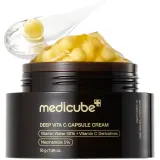
innisfreeVitamin C Green Tea Enzyme Brightening CreamYOUR PRODUCTMedicubeDeep Vita C Capsule Creamhwarang'Bellflower Moisturizing Barrier Cream12 GRABSOlibetaine Rich Hyaluron Moist Cream
Matchโ€”77%76%76%
Price$27.00$2.36โˆ’$24.64$14.18โˆ’$12.82$19.80โˆ’$7.20
Shared key ingredientsโ€”14 of 2614 of 2613 of 26
Key differenceโ€”AdenosineAdenosineAdenosine
Irritancy Medium Medium Medium Low
Drying alcoholโ€”โ€”โ€”โ€”
View product Shop Shop Shop

More alternatives: mixsoon Cica Hyal Deep Soothing CreamTIA'M AC Fighting Oil-Free Aqua Cream

Cheaper alternatives? See how this stacks up against similar formulas.
We compare ingredient profiles across our catalog โ€” pick the closest match for your budget.
Open dupe finder

Product summary

"innisfree - Buy Innisfree Vitamin C Green Tea Enzyme Brightening Cream Australia - Korean Skincare Online" is effective for: Evens skin tone, Moisturizing, Anti-blemish and Anti-aging

Ingredient callouts

  • We love that this moisturizer contains a good concentration of niacinamide 2.20% - 2.70%. Niacinamide is a perfect active in a moistruizer because it helps calm down inflamation in skin and support the skin barrier. More than that, it is helpful for most common skin concerns: it helps regulat oil production, help reduce acne and clogged pores, improve skin tone and prevent pigmentation marks. It also helps fight photodamage.
  • This product also contains Vitamin C (Ascorbic Acid). It can be an effective active for anti-aging and evening out the skin tone, but in this moisturizer it is used for stabilizing other ingredients in the formulation. In this concentration (0.15% - 0.30%) it cannot have a noticeable benefit for the skin.

About the brand

According to Cruelty-Free Kitty "innisfree" is cruelty free, but its parent company is not.

Price

The product retails for 38.95A$ in Australia.

For a detailed price comparison: click here.

Sources cited in this review

Every concentration estimate and effectiveness label is anchored to one of these 58 studies and safety reviews.

  1. 1
  2. 2
  3. 3
  4. 4
  5. 5
  6. 6
    Canola Oilsciencedirect.com
innisfree Vitamin C Green Tea Enzyme Brightening Cream
innisfreeVitamin C Green Tea Enzyme Brightening Cream

Affiliate links ยท As an Amazon Associate, WIMJ earns from qualifying purchases.

As an Amazon Associate, WIMJ earns from qualifying purchases.