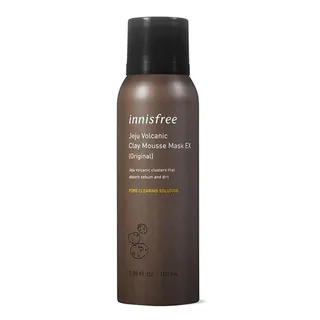
Works for
ExfoliationLactic acid ~0.7–1.05%Under-dosed
“Contains Jeju Volcanic Clusters to keep pores clean Removes dead skin cells and purifies pores Results in clearer and smoother looking skin”
This product does not contain effective exfoliating ingredients. It might be able to deliver physical exfoliation, that is scrub off some of the dead cells on the surface of the skin. We do not recommend physical exfoliation, because it is not uniform (some bits of skin can get exfoliated too much while others not at all). It can also traumatize the skin and aggrevate acne and other skin conditions.
Anti-blemishKaolin, Bentonite + 2 moreNot delivered
“Contains Jeju Volcanic Clusters to keep pores clean Removes dead skin cells and purifies pores Results in clearer and smoother looking skin”
Effective ingredients missing or their concentration is too low.
Anti-oxidationSide benefit · Camellia sinensis leaf extract, Salix alba bark extract + 2 moreMay help
This product contains antioxidants (camellia sinensis leaf extract) that might be able to help neutralize free radicals in skin to lessen the damage it gets from the UV light (sun). There is not enough evidence to confirm their effectiveness in skin though.
MoisturizingSide benefit · Cyclopentasiloxane, Cetearyl alcohol + 8 moreWorks
This product can help improve hydration of the skin with the two types of ingredients.
The first type is called “humectants”:
these ingredients help attract water.
When humectants are on the surface of the skin, they “pull in” the moisture from the outside environment, or from
within deeper layers of the skin. The following ingredients in this product do the job:
arginine, mannitol.
This product also contains ingredients called “occlusives”. They help reduce the speed with which our skin loses moisture to the outside environment. These ingredients also help soften the upper layer of the skin, so it feels less tight and nicer to the touch. The following ingredients in this product do the job: arginine, cetearyl alcohol.
Can it cause trouble?
Irritancy3 strong irritants: Alcohol, Juglans regia shell powder + 1 more — patch-test recommendedHigh risk
Comedogenic2 ingredients rated 2 or more on the 0–5 pore-clogging scale2 flagged

User reviews
Be the first — your take helps the next person decide.
Ingredients
Filter by role to see what each ingredient is doing.
Water~45–55%
Kaolin~6.1–7.4%
- Irritation risk
- Low
A type of clay that consists mainly of aluminum silicate. Helps absorb oil and creates a thicker product consistency. Can be used to add a white color
More about KaolinTitanium dioxide~5.7–7%
- Irritation risk
- Low
Works as a UV filter when used in high concentrations. It is photostable and is effective mostly against the UVB light, with some protection in the UVA range. In small concentrations, used for its ability to improve the color of cosmetic products. Is usually well tolerated by the skin
More about Titanium dioxideCi 77891~4.4–5.3%
- Irritation risk
- Low
Volcanic ash~3.4–4.2%
- Irritation risk
- Low
Butylene glycol~2.8–3.4%
- Irritation risk
- Low
Used to create a nice product texture and help delivery of other ingredients. Might be somewhat helpful in attracting water to the upper layer of the skin
More about Butylene glycolSilica~2.5–3.1%
Alcohol~2.1–2.6%
- Irritation risk
- High
Can be drying and contribute to skin irritation. Used in formulars to dissolve other ingredients, create a thinner product consistency or for its antibacterial properties
More about AlcoholPolyvinyl alcohol~2–2.5%
Cyclopentasiloxane~1.4–1.8%
- Irritation risk
- Low
A silicone that helps improve the product texture and spreadability. Can absorb oil creating a short-term mattifying effect on the skin
More about CyclopentasiloxaneStearic acid~1.2–1.4%
- Irritation risk
- Low
Helps oil and water mix together and works as an emollient
More about Stearic acidCellulose~1–1.3%
- Irritation risk
- Low
Can be used to help absorb oil as well as add volume and imporve texture of products.
More about CellulosePalmitic acid~1–1.2%
- Irritation risk
- Low
An emollient that is naturally present in skin and helps soften it
More about Palmitic acidBentonite~0.8–1.2%
Cyclohexasiloxane~0.95–1.15%
- Irritation risk
- Low
A silicone that serves as an emollient. Helps create a nice non-greasy feels
More about CyclohexasiloxaneSalix alba bark extract~0.75–1.1%
- Irritation risk
- High
A plant extract that can help neutralize free radicals in skin. It contains a compound salicin that can theoretically be converted into salicylic acid that, in turn, helps reduce inflammation in skin, but the evidence of effectiveness in skin is lacking and the extract is usually not used in a concentration that would enable an exfoliating effect
More about Salix alba bark extractLactic acid~0.7–1.05%
- Irritation risk
- Medium
An exfoliating and moisturizing alpha-hydroxy acid (AHA). Typically causes less irritation than other AHAs, for example, glycolic acid. At high concentrations (about 15%), lactic acid can help reduce lines and wrinkles. Recent studies show that lactic acid can support the "good" bacteria living on skin's surface (healthy skin microbiome)
More about Lactic acidJuglans regia shell powder~0.75–1.15%
- Irritation risk
- High
Citrus unshiu peel extract~0.65–1%
- Irritation risk
- High
Orchid extract~0.6–0.85%
Camellia sinensis leaf extract~0.5–0.75%
- Irritation risk
- Low
Can contain potent anti-oxidant compounds (abbreviated ECG, GCG, EGC, and EGCG) that might help protect the skin from free radicals. Can help calm down inflammation and has some anti-bacterial properties. Unfortunately, these antioxidants are unstable and lose their effectiveness very quickly in products. The concentration of the antioxidant compounds in the extract also tends to be low to be effective in topical formulation
More about Camellia sinensis leaf extractCamellia japonica leaf extract~0.5–0.7%
- Irritation risk
- Medium
A plant extract that might help neutralize free radicals in skin
More about Camellia japonica leaf extractOpuntia coccinellifera fruit extract~0.5–0.75%
- Irritation risk
- High
A plant extract that might help neutralize free radicals in skin
More about Opuntia coccinellifera fruit extractMicrocrystalline cellulose~0.5–0.75%
Mannitol~0.45–0.7%
- Irritation risk
- Low
Helps to attract water to the upper layer of the skin
More about MannitolCetearyl alcohol~0.55–0.8%
- Irritation risk
- Low
- Comedogenicity
- 2/5
A non-drying alcohol. Works as an emollient. Helps water and oil mix together and creates a nice product texture
More about Cetearyl alcoholSorbitan stearate~0.5–0.7%
Arginine~0.3–0.6%
- Irritation risk
- Low
An amino acid that is naturally present in skin and helps keep it hydrated. When used together with AHAs, it can reduce their irritating effect on the skin
More about ArginineEthylhexylglycerin~0.45–0.65%
Zea mays starch~0.4–0.65%
- Irritation risk
- Medium
- Comedogenicity
- 3/5
Used to thicken the product's consistency
More about Zea mays starchXanthan gum~0.35–0.6%
- Irritation risk
- Low
Used to create a thicker product consistency
More about Xanthan gumIron oxides~0.3–0.55%
- Irritation risk
- Low
An umbrella term for the following three colorants: CI 77491, CI 77492, CI 77499. They might be able to offer some protection against visible light, but the degree of the protection is not clear
More about Iron oxidesCi 77499~0.25–0.5%
Disodium edta~0.2–0.4%
Phenoxyethanol~0.15–0.3%
- Irritation risk
- Low
A preservative. It helps prevent bacterial growth in cosmetic products
More about PhenoxyethanolNitrogen~0.1–0.2%
Ingredient list view
Water, Kaolin, Titanium dioxide, Ci 77891, Volcanic ash, Butylene glycol, Silica, Alcohol, Polyvinyl alcohol, Cyclopentasiloxane, Stearic acid, Cellulose, Palmitic acid, Bentonite, Cyclohexasiloxane, Salix alba bark extract, Lactic acid, Juglans regia shell powder, Citrus unshiu peel extract, Orchid extract, Camellia sinensis leaf extract, Camellia japonica leaf extract, Opuntia coccinellifera fruit extract, Microcrystalline cellulose, Mannitol, Cetearyl alcohol, Sorbitan stearate, Arginine, Ethylhexylglycerin, Zea mays starch, Xanthan gum, Iron oxides, Ci 77499, Disodium edta, Phenoxyethanol, Nitrogen
Compare prices
Retailers ranked by price — lowest first.

Worth comparing, line by line.
Match % combines shared ingredients, the first five ingredients, shared actives and hero ingredients, irritancy (lower counts in the alternative's favour), texture and body area. Only products in the same routine step are compared.
| innisfreeJeju Volcanic Clay Mousse MaskYOUR PRODUCT | SOBEL SKIN Rx11% Triple Acid Mineral Mask | Skin JuiceFacial in a Jar Brightening Berry | VotarySensitive Resurfacing Peel | |
|---|---|---|---|---|
| Match | — | 53% | 52% | 52% |
| Price | — | — | — | $93.93 |
| Shared key ingredients | — | 4 of 7 | 3 of 7 | 3 of 7 |
| Key difference | — | Salicylic Acid | Caprylic/Capric Triglyceride | Salicylic Acid |
| Irritancy | High | Medium | Medium | Low |
| Drying alcohol | Contains drying alcohol | — | — | — |
| View product | Shop | Shop | Shop |

More alternatives: OFRA Brightening MaskDRMTLGY FacialRX Daily Peel Pads
Product summary
"innisfree - Jeju Volcanic Clay Mousse Mask" could be helpful for: Moisturizing, but its actives are not the most effective or are not well-studied.
Ingredient callouts
- This product contains acids (lactic acid 0.70% - 1.05%). Their concentration is low, and they will not have a strong exfoliating effect. Instead, they work to support the skin natural acid mantle and to attract water (as humectants). Lactic acid is particularly good in attracting water to the upper layer of the skin and improving the skin barrier.
- Humectants (arginine 0.30% - 0.60% and mannitol 0.45% - 0.70%). These ingredients help attract water to the upper layer of the skin and improve the skin hydration.
Price
The product retails for 24.80A$ in Australia.
For a detailed price comparison: click here.
Sources cited in this review
Every concentration estimate and effectiveness label is anchored to one of these 5 studies and safety reviews.
- 1Efficacy and Safety of White Willow Bark (Salix alba) Extractonlinelibrary.wiley.com
- 2
- 3Epidermal and dermal effects of topical lactic acidncbi.nlm.nih.gov
- 4Dual Effects of Alpha-Hydroxy Acids on the Skinpdfs.semanticscholar.org
- 5Anti-photoaging capability of antioxidant extract from Camellia japonica leafpubmed.ncbi.nlm.nih.gov

Affiliate links · As an Amazon Associate, WIMJ earns from qualifying purchases.