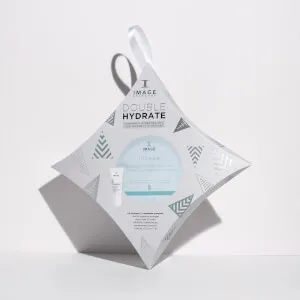
Image skincare Double Hydrate

Image skincare Double Hydrate

Efficacy100/100IrritancyHigh

Works for

Moisturizing
Palmitoyl tripeptide-1, Persea gratissima oil + 36 more
Works well
What the product description says
“Double Hydrate”
From product name

This product can help improve hydration of the skin with the two types of ingredients.

The first type is called “humectants”:
these ingredients help attract water. When humectants are on the surface of the skin, they “pull in” the moisture from the outside environment, or from within deeper layers of the skin. The following ingredients in this product do the job: alanine, arginine.

This product also contains ingredients called “occlusives”. They help reduce the speed with which our skin loses moisture to the outside environment. These ingredients also help soften the upper layer of the skin, so it feels less tight and nicer to the touch. The following ingredients in this product do the job: arginine, chondrus crispus extract.

The following ingredients in this product are especially good for supporting the skin barrier and helping with the hydration level: palmitoyl tripeptide-1

Palmitoyl tripeptide-1Hero· EmollientEffect: HighA type of peptide. Peptides are excellent moisturizers and might be able support collagen production reducing fine lines and wrinkles~0.15–0.55%
Persea gratissima oilKey active· EmollientEffect: HighAn emollient that helps soften the skin and could be helpful in repairing its barrier function~4.6–6.9%
Phenyl trimethiconeKey active· OcclusiveEffect: HighA type of silicone that can decrease loss of moisture from the skin surface. It helps create a nice product texture~3.7–5.6%
Ethylhexyl palmitateKey active· EmollientEffect: MediumAn emollient that helps soften the skin and create a nice product texture~2–2.9%
Sodium chondroitin sulfateKey active· HumectantEffect: HighIs naturally present in skin. Helps to attract water to its upper layer~0.15–0.55%
CysteineKey activeEffect: HighMight help neutralize free radicals in skin and might be helpful against hyperpigmentation~0.15–0.55%
UbiquinoneKey activeEffect: HighCoenzyme Q10. It helps neutralize free radicals in skin, improves skin hydration and might be helpful agains fine lines and wrinkles. It can be an allergen~0.15–0.55%
SqualaneKey active· Emollient, OcclusiveEffect: HighAn oil naturally present in skin. Works as an emollient to soften the skin and form a protective layer on its surface without a greasy feeling.~0.15–0.6%
Glyceryl linolenateKey active· EmollientEffect: MediumHelps soften the upper layer of the skin~0.15–0.55%
GlycerinKey active· HumectantEffect: HighOne of the best moisturizing ingredients. Naturally present in skin. It attracts water to the upper layer of the skin working as a humectant~0.1–0.45%
GlycineKey active· HumectantEffect: HighHelps to attract water to the upper layer of the skin and can help restore the skin barrier function~0.1–0.4%
HistidineKey active· HumectantEffect: High~0.1–0.35%
Sodium hyaluronateKey active· HumectantEffect: HighOne of the best moisturizing ingredients. Attracts water into the upper layer of the skin~0.1–0.4%
AlanineKey active· HumectantEffect: HighAn amino-acid that helps to attract water to the upper layer of the skin and might help to lighten the skin, but solid evidence is lacking~0.1–0.4%
ThreonineKey activeEffect: HighAn amino-acid that helps to attract water to the upper layer of the skin. In combination with other amino-acids, might help to reduce fine lines and wrinkles~0.1–0.4%
IsoleucineKey activeEffect: HighAn amino acid that can help attract water to the upper layer of the skin and support skin's barrier function~0.1–0.4%
Chondrus crispus extractKey active· OcclusiveEffect: HighRed algae extract that helps attract water to the upper layer of the skin and create a nicer product consistency~0.1–0.4%
Glutamic acidKey active· HumectantEffect: HighAn amino-acid that helps attract water to the upper layer of the skin~0.1–0.4%
TyrosineKey activeEffect: High~0.1–0.4%
ArginineKey active· Humectant, OcclusiveEffect: HighAn amino acid that is naturally present in skin and helps keep it hydrated. When used together with AHAs, it can reduce their irritating effect on the skin~0.1–0.35%
Aspartic acidKey active· HumectantEffect: HighAn amino-acid that helps increase skin hydration and might help to slightly improve skin firmness, potentially reducing lines and wrinkles~0.1–0.4%
AtelocollagenKey activeEffect: HighA protein that helps to attract moisture to the upper layer of the skin and might be helpful in reducing fine lines and wrinkles~0.1–0.35%
Beta-glucanKey activeEffect: HighHelps attract water to the upper layer of the skin, calm down inflammation and irritation, restore the barrier function and support wound healing. It can be helpful in reducing fine lines and wrinkles~0.1–0.4%
SerineKey activeEffect: HighAn amino-acid that helps to attract water to the upper layer of the skin. In combination with other amino-acids, might help to reduce fine lines and wrinkles~0.1–0.4%
LysineKey activeEffect: HighAn amino-acid that helps to attract water to the upper layer of the skin. In combination with other amino-acids, might help to reduce fine lines and wrinkles~0.1–0.4%
ProlineKey activeEffect: Medium~0.1–0.45%
GlucoseKey active· HumectantEffect: MediumHelps attract water to the upper layer of the skin. Could be helpful in restoring the skin barrier function~0.1–0.4%
Hydrogenated polyisobutene· Emollient, OcclusiveEffect: LowUsed to improve the product consistency and soften the upper layer of the skin~22–34%
Tribehenin· EmollientEffect: LowUsed to create a thicker product consistency and soften the upper layer of the skin~1.2–1.8%
Pentylene glycol· EmollientEffect: LowUsed to preserve products, dissolve other ingredients and create a nice product texture~0.3–0.7%
Portulaca oleracea extract· HumectantEffect: LowA plant extract that has some anti-oxidant activity, but solid research is lacking. Can help attract water to the upper layer of the skin~0.1–0.4%
Butylene glycol· HumectantEffect: LowUsed to create a nice product texture and help delivery of other ingredients. Might be somewhat helpful in attracting water to the upper layer of the skin~0.1–0.35%
TocopherolEffect: Low, below effective dosePure form of vitamin E. Can help moisturise and protect the skin from free radicals. Often used to help stabilise other ingredients or the formula itself~0.15–0.55%
Camellia sinensis leaf extractEffect: Low, below effective doseCan contain potent anti-oxidant compounds (abbreviated ECG, GCG, EGC, and EGCG) that might help protect the skin from free radicals. Can help calm down inflammation and has some anti-bacterial properties. Unfortunately, these antioxidants are unstable and lose their effectiveness very quickly in products. The concentration of the antioxidant compounds in the extract also tends to be low to be effective in topical formulation~0.15–0.6%
Aloe barbadensis leaf juiceEffect: Low, below effective doseTraditionally used to treat sunburns, dermatitis and inflammation, but evidence for its effectiveness is lacking. The extract can contain humectants that help attract water into the skin~0.1–0.35%
Centella asiatica extractUnder-dosedA plant extract that has been shown to be able to reduce inflammation in skin, support restoration of skin barrier function, as well as support collagen production. Contains active compounds called centelloids: asiaticoside, madecasosside, asiatic acid and madecassic acid. Might be helpful in preventing stretch marks. It can be itself be irritating though.~0.15–0.5%
NiacinamideUnder-dosedIs proven to be effective in reducing blemishes, evening out skin tone and helping to improve lines and wrinkles. It helps the skin to repair sun damage, calm down inflammation and keep maintain good levels of moisture. The concentration of about 2% is effective for supporting the skin barrier and evening out the skin tone. Concentration of 4-6% is better for helping with acne and balancing the sebum production~0.1–0.4%
AllantoinUnder-dosedHelps calm down inflammation in skin and can help reduce itching. Helps to repair the skin barrier and keep skin hydrated~0.1–0.3%
Anti-oxidation
Side benefit · Ubiquinone, Cysteine + 10 more
Works well

This product contains antioxidants (ubiquinone) that can help neutralize free radicals in skin. By doing so, they can lessen the damage the skin gets from the UV light (sun).

The following ingredients - cysteine also can have an antioxidant effect, but there is less evidence to confirm their effectiveness in skin.

UbiquinoneKey activeEffect: HighCoenzyme Q10. It helps neutralize free radicals in skin, improves skin hydration and might be helpful agains fine lines and wrinkles. It can be an allergen~0.15–0.55%
CysteineKey activeEffect: MediumMight help neutralize free radicals in skin and might be helpful against hyperpigmentation~0.15–0.55%
OryzanolEffect: LowAn anti-oxidant that helps stabilize product formulations. Might help neutralise free radicals in skin~0.1–0.35%
Beta-glucanEffect: LowHelps attract water to the upper layer of the skin, calm down inflammation and irritation, restore the barrier function and support wound healing. It can be helpful in reducing fine lines and wrinkles~0.1–0.4%
Portulaca oleracea extractEffect: LowA plant extract that has some anti-oxidant activity, but solid research is lacking. Can help attract water to the upper layer of the skin~0.1–0.4%
Tocopheryl acetateEffect: Low, below effective doseA more stable but less bio-available form of vitamin E compared to Tocopherol. Might help moisturize and protect the skin from free radicals, but mostly used in low concentrations to stabilize other ingredients.~0.4–1%
Magnesium ascorbyl phosphateEffect: Low, below effective doseA derivative of vitamin C that is more stable, but less bioavailable than the pure form of vitamin C. It does not penetrate the skin well, but has been shown to convert to pure vitamin C once in skin. It can be helpful in stimulating collagen production and lightening the skin tone, but the required concentration is likely to be very high~0.15–0.6%
Panax ginseng root extractEffect: Low, below effective doseA plant extract that might have some anti-inflammatory properties, but solid evidence is lacking. It can be irritating~0.15–0.5%
Ascorbyl palmitateEffect: Low, below effective doseBeing a lipid soluble form of vitamin C, it is more stable and can penetrate the skin better than L-Ascorbic acid. It is effective in protecting the skin from free radicals, as well as evening the skin tone, but is less effective in stimulating collagen production compared to L-Ascorbic acid.~0.05–0.25%
TocopherolUnder-dosedPure form of vitamin E. Can help moisturise and protect the skin from free radicals. Often used to help stabilise other ingredients or the formula itself~0.15–0.55%
Camellia sinensis leaf extractUnder-dosedCan contain potent anti-oxidant compounds (abbreviated ECG, GCG, EGC, and EGCG) that might help protect the skin from free radicals. Can help calm down inflammation and has some anti-bacterial properties. Unfortunately, these antioxidants are unstable and lose their effectiveness very quickly in products. The concentration of the antioxidant compounds in the extract also tends to be low to be effective in topical formulation~0.15–0.6%
Centella asiatica extractUnder-dosedA plant extract that has been shown to be able to reduce inflammation in skin, support restoration of skin barrier function, as well as support collagen production. Contains active compounds called centelloids: asiaticoside, madecasosside, asiatic acid and madecassic acid. Might be helpful in preventing stretch marks. It can be itself be irritating though.~0.15–0.5%
Anti-aging
Side benefit · Palmitoyl tripeptide-1, Lysine + 13 more
May help

This product contains aspartic acid, atelocollagen, lysine, palmitoyl tripeptide-1, serine, threonine. These ingredients might be able to help reduce and prevent fine lines and wrinkles, improve skin elasticity and firmness, but there is not enough evidence that it actually works.

Palmitoyl tripeptide-1Key activeEffect: MediumA type of peptide. Peptides are excellent moisturizers and might be able support collagen production reducing fine lines and wrinkles~0.15–0.55%
LysineKey activeEffect: MediumAn amino-acid that helps to attract water to the upper layer of the skin. In combination with other amino-acids, might help to reduce fine lines and wrinkles~0.1–0.4%
Aspartic acidKey activeEffect: MediumAn amino-acid that helps increase skin hydration and might help to slightly improve skin firmness, potentially reducing lines and wrinkles~0.1–0.4%
AtelocollagenKey activeEffect: MediumA protein that helps to attract moisture to the upper layer of the skin and might be helpful in reducing fine lines and wrinkles~0.1–0.35%
ThreonineKey activeEffect: MediumAn amino-acid that helps to attract water to the upper layer of the skin. In combination with other amino-acids, might help to reduce fine lines and wrinkles~0.1–0.4%
SerineKey activeEffect: MediumAn amino-acid that helps to attract water to the upper layer of the skin. In combination with other amino-acids, might help to reduce fine lines and wrinkles~0.1–0.4%
UbiquinoneEffect: LowCoenzyme Q10. It helps neutralize free radicals in skin, improves skin hydration and might be helpful agains fine lines and wrinkles. It can be an allergen~0.15–0.55%
Beta-glucanEffect: LowHelps attract water to the upper layer of the skin, calm down inflammation and irritation, restore the barrier function and support wound healing. It can be helpful in reducing fine lines and wrinkles~0.1–0.4%
Camellia sinensis leaf extractEffect: Low, below effective doseCan contain potent anti-oxidant compounds (abbreviated ECG, GCG, EGC, and EGCG) that might help protect the skin from free radicals. Can help calm down inflammation and has some anti-bacterial properties. Unfortunately, these antioxidants are unstable and lose their effectiveness very quickly in products. The concentration of the antioxidant compounds in the extract also tends to be low to be effective in topical formulation~0.15–0.6%
Magnesium ascorbyl phosphateEffect: Low, below effective doseA derivative of vitamin C that is more stable, but less bioavailable than the pure form of vitamin C. It does not penetrate the skin well, but has been shown to convert to pure vitamin C once in skin. It can be helpful in stimulating collagen production and lightening the skin tone, but the required concentration is likely to be very high~0.15–0.6%
TocopherolEffect: Low, below effective dosePure form of vitamin E. Can help moisturise and protect the skin from free radicals. Often used to help stabilise other ingredients or the formula itself~0.15–0.55%
Aloe barbadensis leaf juiceEffect: Low, below effective doseTraditionally used to treat sunburns, dermatitis and inflammation, but evidence for its effectiveness is lacking. The extract can contain humectants that help attract water into the skin~0.1–0.35%
Ascorbyl palmitateEffect: Low, below effective doseBeing a lipid soluble form of vitamin C, it is more stable and can penetrate the skin better than L-Ascorbic acid. It is effective in protecting the skin from free radicals, as well as evening the skin tone, but is less effective in stimulating collagen production compared to L-Ascorbic acid.~0.05–0.25%
Centella asiatica extractUnder-dosedA plant extract that has been shown to be able to reduce inflammation in skin, support restoration of skin barrier function, as well as support collagen production. Contains active compounds called centelloids: asiaticoside, madecasosside, asiatic acid and madecassic acid. Might be helpful in preventing stretch marks. It can be itself be irritating though.~0.15–0.5%
NiacinamideUnder-dosedIs proven to be effective in reducing blemishes, evening out skin tone and helping to improve lines and wrinkles. It helps the skin to repair sun damage, calm down inflammation and keep maintain good levels of moisture. The concentration of about 2% is effective for supporting the skin barrier and evening out the skin tone. Concentration of 4-6% is better for helping with acne and balancing the sebum production~0.1–0.4%

Can it cause trouble?

Irritancy
7 strong irritants: Aroma, Limonene + 5 more — patch-test recommended
High risk
We flagged 29 ingredients with irritancy potential. Severity depends on your sensitivity threshold; the table lists the worst offenders first.
IngredientFunctionIrritationEst. amount
AromaAn unspecified blend of fragrant irritating ingredientsHigh~0.45–1%est.
LimoneneA common frangrance that can easily irritate skin, especially if exposed to air, light or heatHigh~0.2–0.75%est.
LinaloolA fragrance. Can be irritatingHigh~0.1–0.35%est.
CitralA fragrance with a lemon scent. A likely irritantHigh~0.1–0.35%est.
Anthemis nobilis flower extractA plant extract that one one hand, can contain compounds that can help calm down skin irritation, but, on the other hand, its other compounds (especially fragrant ones) can themselves be irritatingHigh~0.1–0.3%est.
Citrus aurantium dulcis peel oilAn essentil oil from orange peel. Potential allergen and can be irritatingHigh~0.1–0.35%est.
Panax ginseng root extractA plant extract that might have some anti-inflammatory properties, but solid evidence is lacking. It can be irritatingHigh~0.15–0.5%est.
Citrus aurantium dulcis fruit extractA plant extract that is used as a fragrance. Can be irritating and lead to photosensitivityHigh~0.1–0.4%est.
Hamamelis virginiana extractA plant extract that can help calm down inflammation in skin. Can, however, itself be irritatingHigh~0.1–0.4%est.
TetradecaneUsed as a fragrance. Can be irritatingHigh~0.1–0.4%est.
Persea gratissima oilAn emollient that helps soften the skin and could be helpful in repairing its barrier functionMedium~4.6–6.9%est.
Pentaerythrityl tetraisostearateUsed to create a thicker product consistencyMedium~2.7–4%est.
Tocopheryl acetateA more stable but less bio-available form of vitamin E compared to Tocopherol. Might help moisturize and protect the skin from free radicals, but mostly used in low concentrations to stabilize other ingredients.Medium~0.4–1%est.
Pentylene glycolUsed to preserve products, dissolve other ingredients and create a nice product textureMedium~0.3–0.7%est.
1,2-hexanediolA preservativeMedium~0.1–0.35%est.
Aloe barbadensis leaf juiceTraditionally used to treat sunburns, dermatitis and inflammation, but evidence for its effectiveness is lacking. The extract can contain humectants that help attract water into the skinMedium~0.1–0.35%est.
EthylhexylglycerinA preservativeMedium~0.1–0.4%est.
Ceratonia siliqua gumUsed to stabilize product formulations and create thicker consistencyMedium~0.2–0.8%est.
Sodium citrateHelps to control the skin's pH level. Maintains the skin's natural film of amino-lactic acids and oils. Helps to preserve productsMedium~0.1–0.35%est.
Disodium edtaStabilizes the product formulationMedium~0.1–0.35%est.
Glyceryl linoleateHelps oil and water mix togetherMedium~0.15–0.6%est.
Centella asiatica extractA plant extract that has been shown to be able to reduce inflammation in skin, support restoration of skin barrier function, as well as support collagen production. Contains active compounds called centelloids: asiaticoside, madecasosside, asiatic acid and madecassic acid. Might be helpful in preventing stretch marks. It can be itself be irritating though.Medium~0.15–0.5%est.
Magnesium ascorbyl phosphateA derivative of vitamin C that is more stable, but less bioavailable than the pure form of vitamin C. It does not penetrate the skin well, but has been shown to convert to pure vitamin C once in skin. It can be helpful in stimulating collagen production and lightening the skin tone, but the required concentration is likely to be very highMedium~0.15–0.6%est.
Portulaca oleracea extractA plant extract that has some anti-oxidant activity, but solid research is lacking. Can help attract water to the upper layer of the skinMedium~0.1–0.4%est.
Glyceryl arachidonateHelps water and oil mix togetherMedium~0.15–0.6%est.
Citric acidCan work as an exfoliant but is typically used to adjust the product pHMedium~0.15–0.5%est.
Potassium sorbateA preservativeMedium~0.15–0.5%est.
BhtA preservativeMedium~0.05–0.25%est.
Ascorbyl palmitateBeing a lipid soluble form of vitamin C, it is more stable and can penetrate the skin better than L-Ascorbic acid. It is effective in protecting the skin from free radicals, as well as evening the skin tone, but is less effective in stimulating collagen production compared to L-Ascorbic acid.Medium~0.05–0.25%est.
Comedogenic
2 ingredients rated 2 or more on the 0–5 pore-clogging scale
2 flagged
These ingredients have a comedogenic rating of 2 or more on a 0–5 scale; the table shows each one's rating. In leave-on products they can clog pores in acne-prone skin.
IngredientFunctionRatingEst. amount
Ethylhexyl palmitateAn emollient that helps soften the skin and create a nice product texture3/5~2–2.9%est.
Chondrus crispus extractRed algae extract that helps attract water to the upper layer of the skin and create a nicer product consistency3/5~0.1–0.4%est.

User reviews

Would you recommend?
No community reviews yet.

Be the first — your take helps the next person decide.

Ingredients

Filter by role to see what each ingredient is doing.

Hydrogenated polyisobutene~22–34%
Formula
Irritation risk
Low
Works for
Moisturizing

Used to improve the product consistency and soften the upper layer of the skin

More about Hydrogenated polyisobutene
Ethylene/propylene/styrene copolymer~4.6–6.9%
Formula
Irritation risk
Low

Used to create a thicker product consistency

More about Ethylene/propylene/styrene copolymer
Persea gratissima oil~4.6–6.9%
Key activeIrritant · medium
Irritation risk
Medium
Works for
Moisturizing

An emollient that helps soften the skin and could be helpful in repairing its barrier function

More about Persea gratissima oil
Phenyl trimethicone~3.7–5.6%
Key active
Irritation risk
Low
Works for
Moisturizing

A type of silicone that can decrease loss of moisture from the skin surface. It helps create a nice product texture

More about Phenyl trimethicone
Pentaerythrityl tetraisostearate~2.7–4%
Irritant · medium
Irritation risk
Medium
Works for
Cleansing

Used to create a thicker product consistency

More about Pentaerythrityl tetraisostearate
Ethylhexyl palmitate~2–2.9%
Key activeComedogenic 3/5
Irritation risk
Low
Comedogenicity
3/5
Works for
Moisturizing

An emollient that helps soften the skin and create a nice product texture

More about Ethylhexyl palmitate
Ppg-12/smdi copolymer~1.7–2.6%
Formula
Irritation risk
Low

Used to create a nice product finish

More about Ppg-12/smdi copolymer
Tribehenin~1.2–1.8%
Formula
Irritation risk
Low
Works for
Moisturizing

Used to create a thicker product consistency and soften the upper layer of the skin

More about Tribehenin
Butylene/ethylene/styrene copolymer~0.9–1.35%
Formula
Irritation risk
Low

Used to create a gel-like product texture

More about Butylene/ethylene/styrene copolymer
Diisopropyl dimer dilinoleate~0.8–1.2%
Formula
Aroma~0.45–1%
Irritant · high
Irritation risk
High

An unspecified blend of fragrant irritating ingredients

More about Aroma
Tocopheryl acetate~0.4–1%
Irritant · medium
Irritation risk
Medium
Works for
Anti-oxidation

A more stable but less bio-available form of vitamin E compared to Tocopherol. Might help moisturize and protect the skin from free radicals, but mostly used in low concentrations to stabilize other ingredients.

More about Tocopheryl acetate
Limonene~0.2–0.75%
Irritant · high
Irritation risk
High

A common frangrance that can easily irritate skin, especially if exposed to air, light or heat

More about Limonene
Silica dimethyl silylate~0.35–0.75%
Formula
Irritation risk
Low

Used to create a thicker product consistency

More about Silica dimethyl silylate
Sorbitan isostearate~0.15–0.7%
Formula
Irritation risk
Low
Works for
Cleansing

Helps oil and water mix together

More about Sorbitan isostearate
Butylene glycol~0.15–0.65%
Formula
Irritation risk
Low
Works for
Moisturizing

Used to create a nice product texture and help delivery of other ingredients. Might be somewhat helpful in attracting water to the upper layer of the skin

More about Butylene glycol
Pentylene glycol~0.3–0.7%
Irritant · medium
Irritation risk
Medium
Works for
Moisturizing

Used to preserve products, dissolve other ingredients and create a nice product texture

More about Pentylene glycol
Sodium chondroitin sulfate~0.15–0.55%
Key active
Irritation risk
Low
Works for
Moisturizing

Is naturally present in skin. Helps to attract water to its upper layer

More about Sodium chondroitin sulfate
Pentaerythrityl tetra-di-t-butyl hydroxyhydrocinnamate~0.2–0.75%
Formula
Irritation risk
Low

Used to increase stability of product formulations

More about Pentaerythrityl tetra-di-t-butyl hydroxyhydrocinnamate
Mica~0.15–0.6%
Formula
Irritation risk
Low

Creates an illusion of smoother and more radiant skin tone. Adds shimmer to the skin by reflecting light

More about Mica
Titanium dioxide~0.15–0.65%
Formula
Irritation risk
Low
Works for
Sun protection

Works as a UV filter when used in high concentrations. It is photostable and is effective mostly against the UVB light, with some protection in the UVA range. In small concentrations, used for its ability to improve the color of cosmetic products. Is usually well tolerated by the skin

More about Titanium dioxide
Ci 77891~0.1–0.35%
Formula
Irritation risk
Low
More about Ci 77891
Atelocollagen~0.1–0.35%
Key active
Irritation risk
Low
Works for
MoisturizingAnti-aging

A protein that helps to attract moisture to the upper layer of the skin and might be helpful in reducing fine lines and wrinkles

More about Atelocollagen
Tocopherol~0.15–0.55%
Under-dosed
Irritation risk
Low
Works for
Anti-oxidationAnti-agingAnti-inflammatoryMoisturizing

Pure form of vitamin E. Can help moisturise and protect the skin from free radicals. Often used to help stabilise other ingredients or the formula itself

More about Tocopherol
Linalool~0.1–0.35%
Irritant · high
Irritation risk
High

A fragrance. Can be irritating

More about Linalool
Citral~0.1–0.35%
Irritant · high
Irritation risk
High

A fragrance with a lemon scent. A likely irritant

More about Citral
Palmitoyl tripeptide-1~0.15–0.55%
Hero · Moisturizing
Irritation risk
Low
Works for
MoisturizingAnti-aging

A type of peptide. Peptides are excellent moisturizers and might be able support collagen production reducing fine lines and wrinkles

More about Palmitoyl tripeptide-1
Oryzanol~0.1–0.35%
Formula
Irritation risk
Low
Works for
Anti-oxidation

An anti-oxidant that helps stabilize product formulations. Might help neutralise free radicals in skin

More about Oryzanol
Ubiquinone~0.15–0.55%
Key active
Irritation risk
Low
Works for
Anti-oxidationMoisturizingAnti-aging

Coenzyme Q10. It helps neutralize free radicals in skin, improves skin hydration and might be helpful agains fine lines and wrinkles. It can be an allergen

More about Ubiquinone
Water~0.1–0.35%
Formula
Irritation risk
Low

Plain old water

More about Water
Glycerin~0.1–0.45%
Key active
Irritation risk
Low
Works for
Moisturizing

One of the best moisturizing ingredients. Naturally present in skin. It attracts water to the upper layer of the skin working as a humectant

More about Glycerin
1,2-hexanediol~0.1–0.35%
Irritant · medium
Irritation risk
Medium

A preservative

More about 1,2-hexanediol
Allantoin~0.1–0.3%
Under-dosed
Irritation risk
Low
Works for
MoisturizingAnti-inflammatoryReduces rednessAnti-blemishReduces irritationExfoliation

Helps calm down inflammation in skin and can help reduce itching. Helps to repair the skin barrier and keep skin hydrated

More about Allantoin
Butylene glycol~0.1–0.35%
Formula
Irritation risk
Low
Works for
Moisturizing

Used to create a nice product texture and help delivery of other ingredients. Might be somewhat helpful in attracting water to the upper layer of the skin

More about Butylene glycol
Phenoxyethanol~0.1–0.4%
Formula
Irritation risk
Low

A preservative. It helps prevent bacterial growth in cosmetic products

More about Phenoxyethanol
Polysorbate 20~0.1–0.45%
Formula
Irritation risk
Low
Works for
Cleansing

Helps oil and water mix together

More about Polysorbate 20
Chondrus crispus extract~0.1–0.4%
Key activeComedogenic 3/5
Irritation risk
Low
Comedogenicity
3/5
Works for
Moisturizing

Red algae extract that helps attract water to the upper layer of the skin and create a nicer product consistency

More about Chondrus crispus extract
Carbomer~0.1–0.4%
Formula
Irritation risk
Low
Works for
Cleansing

Helps create a thicker or gel-like product texture. It is not a surfactant but can be used in gentle cleansing formulations

More about Carbomer
Niacinamide~0.1–0.4%
Under-dosed
Irritation risk
Low
Works for
Anti-agingEvens skin toneMoisturizingAnti-blemishReduces irritationAnti-inflammatoryReduces rednessAntibacterial

Is proven to be effective in reducing blemishes, evening out skin tone and helping to improve lines and wrinkles. It helps the skin to repair sun damage, calm down inflammation and keep maintain good levels of moisture. The concentration of about 2% is effective for supporting the skin barrier and evening out the skin tone. Concentration of 4-6% is better for helping with acne and balancing the sebum production

More about Niacinamide
Aloe barbadensis leaf juice~0.1–0.35%
Irritant · medium
Irritation risk
Medium
Works for
MoisturizingAntibacterialReduces irritationReduces rednessAnti-inflammatoryAnti-blemishAnti-aging

Traditionally used to treat sunburns, dermatitis and inflammation, but evidence for its effectiveness is lacking. The extract can contain humectants that help attract water into the skin

More about Aloe barbadensis leaf juice
Anthemis nobilis flower extract~0.1–0.3%
Irritant · high
Irritation risk
High
Works for
Anti-inflammatoryReduces irritation

A plant extract that one one hand, can contain compounds that can help calm down skin irritation, but, on the other hand, its other compounds (especially fragrant ones) can themselves be irritating

More about Anthemis nobilis flower extract
Camellia sinensis leaf extract~0.15–0.6%
Under-dosed
Irritation risk
Low
Works for
Anti-oxidationAntibacterialAnti-agingAnti-blemishEvens skin toneMoisturizing

Can contain potent anti-oxidant compounds (abbreviated ECG, GCG, EGC, and EGCG) that might help protect the skin from free radicals. Can help calm down inflammation and has some anti-bacterial properties. Unfortunately, these antioxidants are unstable and lose their effectiveness very quickly in products. The concentration of the antioxidant compounds in the extract also tends to be low to be effective in topical formulation

More about Camellia sinensis leaf extract
Tromethamine~0.1–0.35%
Formula
Irritation risk
Low

Helps adjust pH in products

More about Tromethamine
Ethylhexylglycerin~0.1–0.4%
Irritant · medium
Irritation risk
Medium

A preservative

More about Ethylhexylglycerin
Hydroxyethylcellulose~0.15–0.65%
Formula
Irritation risk
Low

Used to thicken product formulations and create gel-like textures

More about Hydroxyethylcellulose
Ceratonia siliqua gum~0.2–0.8%
Irritant · medium
Irritation risk
Medium

Used to stabilize product formulations and create thicker consistency

More about Ceratonia siliqua gum
Potassium chloride~0.1–0.4%
Formula
Dipotassium phosphate~0.1–0.4%
Formula
Irritation risk
Low

Used to adjust the pH of the product

More about Dipotassium phosphate
Sodium citrate~0.1–0.35%
Irritant · medium
Irritation risk
Medium

Helps to control the skin's pH level. Maintains the skin's natural film of amino-lactic acids and oils. Helps to preserve products

More about Sodium citrate
Citrus aurantium dulcis peel oil~0.1–0.35%
Irritant · high
Irritation risk
High

An essentil oil from orange peel. Potential allergen and can be irritating

More about Citrus aurantium dulcis peel oil
Disodium edta~0.1–0.35%
Irritant · medium
Irritation risk
Medium

Stabilizes the product formulation

More about Disodium edta
Panax ginseng root extract~0.15–0.5%
Irritant · high
Irritation risk
High
Works for
Anti-inflammatoryAnti-oxidation

A plant extract that might have some anti-inflammatory properties, but solid evidence is lacking. It can be irritating

More about Panax ginseng root extract
Limonene~0.1–0.35%
Irritant · high
Irritation risk
High

A common frangrance that can easily irritate skin, especially if exposed to air, light or heat

More about Limonene
Glucose~0.1–0.4%
Key active
Irritation risk
Low
Works for
Moisturizing

Helps attract water to the upper layer of the skin. Could be helpful in restoring the skin barrier function

More about Glucose
Calcium lactate~0.1–0.4%
Formula
Glucomannan~0.1–0.4%
Formula
Irritation risk
Low
More about Glucomannan
Glycine~0.1–0.4%
Key active
Irritation risk
Low
Works for
Moisturizing

Helps to attract water to the upper layer of the skin and can help restore the skin barrier function

More about Glycine
Serine~0.1–0.4%
Key active
Irritation risk
Low
Works for
MoisturizingAnti-aging

An amino-acid that helps to attract water to the upper layer of the skin. In combination with other amino-acids, might help to reduce fine lines and wrinkles

More about Serine
Glyceryl linoleate~0.15–0.6%
Irritant · medium
Irritation risk
Medium
Works for
Cleansing

Helps oil and water mix together

More about Glyceryl linoleate
Glutamic acid~0.1–0.4%
Key active
Irritation risk
Low
Works for
Moisturizing

An amino-acid that helps attract water to the upper layer of the skin

More about Glutamic acid
Beta-glucan~0.1–0.4%
Key active
Irritation risk
Low
Works for
Anti-inflammatoryReduces irritationMoisturizingAnti-oxidationAnti-agingAnti-blemish

Helps attract water to the upper layer of the skin, calm down inflammation and irritation, restore the barrier function and support wound healing. It can be helpful in reducing fine lines and wrinkles

More about Beta-glucan
Citrus aurantium dulcis fruit extract~0.1–0.4%
Irritant · high
Irritation risk
High

A plant extract that is used as a fragrance. Can be irritating and lead to photosensitivity

More about Citrus aurantium dulcis fruit extract
Hamamelis virginiana extract~0.1–0.4%
Irritant · high
Irritation risk
High
Works for
Anti-inflammatory

A plant extract that can help calm down inflammation in skin. Can, however, itself be irritating

More about Hamamelis virginiana extract
Solanum lycopersicum fruit extract~0.15–0.6%
Formula
Wine extract~0.15–0.6%
Formula
Irritation risk
Low
More about Wine extract
Aspartic acid~0.1–0.4%
Key active
Irritation risk
Low
Works for
MoisturizingAnti-aging

An amino-acid that helps increase skin hydration and might help to slightly improve skin firmness, potentially reducing lines and wrinkles

More about Aspartic acid
Leucine~0.1–0.4%
Formula
Irritation risk
Low
More about Leucine
Sodium hyaluronate~0.1–0.4%
Key active
Irritation risk
Low
Works for
Moisturizing

One of the best moisturizing ingredients. Attracts water into the upper layer of the skin

More about Sodium hyaluronate
Centella asiatica extract~0.15–0.5%
Under-dosedIrritant · medium
Irritation risk
Medium
Works for
Reduces irritationMoisturizingReduces rednessAnti-inflammatoryAnti-agingAnti-oxidationAnti-blemish

A plant extract that has been shown to be able to reduce inflammation in skin, support restoration of skin barrier function, as well as support collagen production. Contains active compounds called centelloids: asiaticoside, madecasosside, asiatic acid and madecassic acid. Might be helpful in preventing stretch marks. It can be itself be irritating though.

More about Centella asiatica extract
Magnesium ascorbyl phosphate~0.15–0.6%
Irritant · medium
Irritation risk
Medium
Works for
Evens skin toneAnti-agingAnti-oxidation

A derivative of vitamin C that is more stable, but less bioavailable than the pure form of vitamin C. It does not penetrate the skin well, but has been shown to convert to pure vitamin C once in skin. It can be helpful in stimulating collagen production and lightening the skin tone, but the required concentration is likely to be very high

More about Magnesium ascorbyl phosphate
Portulaca oleracea extract~0.1–0.4%
Irritant · medium
Irritation risk
Medium
Works for
Anti-oxidationMoisturizing

A plant extract that has some anti-oxidant activity, but solid research is lacking. Can help attract water to the upper layer of the skin

More about Portulaca oleracea extract
Squalane~0.15–0.6%
Key active
Irritation risk
Low
Works for
Moisturizing

An oil naturally present in skin. Works as an emollient to soften the skin and form a protective layer on its surface without a greasy feeling.

More about Squalane
Alanine~0.1–0.4%
Key active
Irritation risk
Low
Works for
MoisturizingEvens skin tone

An amino-acid that helps to attract water to the upper layer of the skin and might help to lighten the skin, but solid evidence is lacking

More about Alanine
Lysine~0.1–0.4%
Key active
Irritation risk
Low
Works for
MoisturizingAnti-aging

An amino-acid that helps to attract water to the upper layer of the skin. In combination with other amino-acids, might help to reduce fine lines and wrinkles

More about Lysine
Arginine~0.1–0.35%
Key active
Irritation risk
Low
Works for
Moisturizing

An amino acid that is naturally present in skin and helps keep it hydrated. When used together with AHAs, it can reduce their irritating effect on the skin

More about Arginine
Tyrosine~0.1–0.4%
Key active
Irritation risk
Low
Works for
Moisturizing
More about Tyrosine
Phenylalanine~0.1–0.4%
Formula
Irritation risk
Low
More about Phenylalanine
Proline~0.1–0.45%
Key active
Irritation risk
Low
Works for
Moisturizing
More about Proline
Threonine~0.1–0.4%
Key active
Irritation risk
Low
Works for
MoisturizingAnti-aging

An amino-acid that helps to attract water to the upper layer of the skin. In combination with other amino-acids, might help to reduce fine lines and wrinkles

More about Threonine
Valine~0.1–0.4%
Formula
Irritation risk
Low
More about Valine
Isoleucine~0.1–0.4%
Key active
Irritation risk
Low
Works for
Moisturizing

An amino acid that can help attract water to the upper layer of the skin and support skin's barrier function

More about Isoleucine
Glyceryl linolenate~0.15–0.55%
Key active
Irritation risk
Low
Works for
Moisturizing

Helps soften the upper layer of the skin

More about Glyceryl linolenate
Glyceryl arachidonate~0.15–0.6%
Irritant · medium
Irritation risk
Medium
Works for
Cleansing

Helps water and oil mix together

More about Glyceryl arachidonate
Histidine~0.1–0.35%
Key active
Irritation risk
Low
Works for
Moisturizing
More about Histidine
Cysteine~0.15–0.55%
Key active
Irritation risk
Low
Works for
MoisturizingAnti-oxidationEvens skin tone

Might help neutralize free radicals in skin and might be helpful against hyperpigmentation

More about Cysteine
Methionine~0.15–0.55%
Formula
Irritation risk
Low
More about Methionine
Citric acid~0.15–0.5%
Irritant · medium
Irritation risk
Medium

Can work as an exfoliant but is typically used to adjust the product pH

More about Citric acid
Potassium sorbate~0.15–0.5%
Irritant · medium
Irritation risk
Medium

A preservative

More about Potassium sorbate
Hexadecane~0.1–0.4%
Formula
Irritation risk
Low
More about Hexadecane
Tetradecane~0.1–0.4%
Irritant · high
Irritation risk
High

Used as a fragrance. Can be irritating

More about Tetradecane
Sodium benzoate~0.1–0.35%
Formula
Irritation risk
Low

A preservative

More about Sodium benzoate
Dodecane~0.05–0.3%
Formula
Irritation risk
Low
More about Dodecane
Octadecane~0.15–0.6%
Formula
Irritation risk
Low
More about Octadecane
Eicosane~0.15–0.55%
Formula
Irritation risk
Low
More about Eicosane
Bht~0.05–0.25%
Irritant · medium
Irritation risk
Medium

A preservative

More about Bht
Ascorbyl palmitate~0.05–0.25%
Irritant · medium
Irritation risk
Medium
Works for
Anti-agingAnti-oxidation

Being a lipid soluble form of vitamin C, it is more stable and can penetrate the skin better than L-Ascorbic acid. It is effective in protecting the skin from free radicals, as well as evening the skin tone, but is less effective in stimulating collagen production compared to L-Ascorbic acid.

More about Ascorbyl palmitate
Ingredient list view

Hydrogenated polyisobutene, Ethylene/propylene/styrene copolymer, Persea gratissima oil, Phenyl trimethicone, Pentaerythrityl tetraisostearate, Ethylhexyl palmitate, Ppg-12/smdi copolymer, Tribehenin, Butylene/ethylene/styrene copolymer, Diisopropyl dimer dilinoleate, Aroma, Tocopheryl acetate, Limonene, Silica dimethyl silylate, Sorbitan isostearate, Butylene glycol, Pentylene glycol, Sodium chondroitin sulfate, Pentaerythrityl tetra-di-t-butyl hydroxyhydrocinnamate, Mica, Titanium dioxide, Ci 77891, Atelocollagen, Tocopherol, Linalool, Citral, Palmitoyl tripeptide-1, Oryzanol, Ubiquinone, Water, Glycerin, 1,2-hexanediol, Allantoin, Butylene glycol, Phenoxyethanol, Polysorbate 20, Chondrus crispus extract, Carbomer, Niacinamide, Aloe barbadensis leaf juice, Anthemis nobilis flower extract, Camellia sinensis leaf extract, Tromethamine, Ethylhexylglycerin, Hydroxyethylcellulose, Ceratonia siliqua gum, Potassium chloride, Dipotassium phosphate, Sodium citrate, Citrus aurantium dulcis peel oil, Disodium edta, Panax ginseng root extract, Limonene, Glucose, Calcium lactate, Glucomannan, Glycine, Serine, Glyceryl linoleate, Glutamic acid, Beta-glucan, Citrus aurantium dulcis fruit extract, Hamamelis virginiana extract, Solanum lycopersicum fruit extract, Wine extract, Aspartic acid, Leucine, Sodium hyaluronate, Centella asiatica extract, Magnesium ascorbyl phosphate, Portulaca oleracea extract, Squalane, Alanine, Lysine, Arginine, Tyrosine, Phenylalanine, Proline, Threonine, Valine, Isoleucine, Glyceryl linolenate, Glyceryl arachidonate, Histidine, Cysteine, Methionine, Citric acid, Potassium sorbate, Hexadecane, Tetradecane, Sodium benzoate, Dodecane, Octadecane, Eicosane, Bht, Ascorbyl palmitate

Compare prices

Retailers ranked by price — lowest first.

Amazon US
Price unavailable Out of stock
Check

Affiliate links · As an Amazon Associate, WIMJ earns from qualifying purchases.

Worth comparing, line by line.

Match % combines shared ingredients, the first five ingredients, shared actives and hero ingredients, irritancy (lower counts in the alternative's favour), texture and body area. Only products in the same routine step are compared.

Side-by-side comparison of this product against its closest alternatives
Image skincareDouble HydrateYOUR PRODUCTKLAVUURejuve Pearlsation Multi Pearl Peptide CreamFilorgaNCEF-Intensive Supreme Regenerating SerumL'Oréal ParisAge Perfect Serum Le Duo
Match—53%49%47%
Price—$29.10—$21.19
Shared key ingredients—14 of 2714 of 2712 of 27
Key difference—NiacinamideRetinolNiacinamide
Irritancy High Medium High High
Drying alcohol—— Contains drying alcohol Contains drying alcohol
View product Shop Shop Shop

More alternatives: NACIFIC Rice + Pepta Collagen Peel-Off Wrapping MaskNEOSTRATA Hydra Filling Cream

Cheaper alternatives? Browse formulas in the same category.
We compare ingredient profiles across our catalog — pick the closest match for your budget.
Open dupe finder

Sources cited in this review

Every concentration estimate and effectiveness label is anchored to one of these 56 studies and safety reviews.

  1. 1
  2. 2
  3. 3
  4. 4
  5. 5
  6. 6
Image skincare Double Hydrate
Image skincareDouble Hydrate

Affiliate links · As an Amazon Associate, WIMJ earns from qualifying purchases.

As an Amazon Associate, WIMJ earns from qualifying purchases.