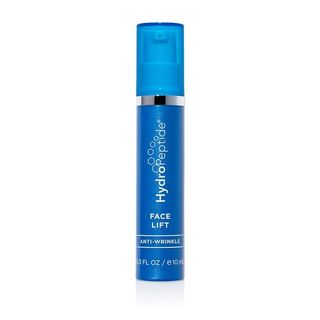
HydroPeptide Travel-Size Face Lift Moisturizer
Works for
2 of 3 advertised claims delivered
Moisturizing23 ingredients credited for this claimStrong support
“Travel-Size Face Lift Moisturizer”
This product can help improve hydration of the skin with the two types of ingredients.
The first type is called “humectants”:
these ingredients help attract water.
When humectants are on the surface of the skin, they “pull in” the moisture from the outside environment, or from
within deeper layers of the skin. The following ingredients in this product do the job:
glycerin, sodium hyaluronate.
This product also contains ingredients called “occlusives”. They help reduce the speed with which our skin loses moisture to the outside environment. These ingredients also help soften the upper layer of the skin, so it feels less tight and nicer to the touch. The following ingredients in this product do the job: dimethicone, squalane.
The following ingredients in this product are especially good for supporting the skin barrier and helping with the hydration level: acetyl sh-heptapeptide-1
Anti-aging5 ingredients credited for this claimModerate support
“KEY BENEFITS Balances Hydration Smooths Fine Lines Increases Firmness & Elasticity Fights Free Radical Damage SKIN CONCERN Fine Lines & Wrinkles Dry, Dehydrated Skin Give 20%, Get 20%”
This product contains acetyl sh-heptapeptide-1. This ingredient might be able to help reduce and prevent fine lines and wrinkles, improve skin elasticity and firmness, but there is not enough evidence that it actually works.
Evens skin tone1 ingredient credited for this claimWeak support
“This ultra-light moisturizer reinforces skin's defenses while protecting against environmental stressors, reducing the appearance of age spots, restoring youthful firmness, and visibly improving overall skin health.CRUELTY FREE. VEGAN.”
Effective ingredients missing or their concentration is too low
Anti-oxidationNot advertised by the brand · 11 ingredients credited for this claimModerate support
This product contains antioxidants (squalene) that might be able to help neutralize free radicals in skin to lessen the damage it gets from the UV light (sun). There is not enough evidence to confirm their effectiveness in skin though.
Can it cause trouble?
Irritancy5 strong irritants: Lavandula angustifolia flower/leaf/stem extract, Elettaria cardamomum seed extract + 3 more — patch-test recommendedHigh risk
Comedogenic5 ingredients rated 2 or more on the 0–5 pore-clogging scale5 flagged
User reviews
Be the first — your take helps the next person decide.
Ingredients
Filter by role to see what each ingredient is doing.
Water~45–55%
Diethylhexyl carbonate~5.3–6.4%
- Irritation risk
- Low
Helps soften the upper layer of the skin
More about Diethylhexyl carbonateGlycerin~4.2–5.2%
- Irritation risk
- Low
One of the best moisturizing ingredients. Naturally present in skin. It attracts water to the upper layer of the skin working as a humectant
More about GlycerinBehenyl alcohol~3.3–4%
- Irritation risk
- Low
Non-drying alcohol that helps water and oil mix together. Also serves as an emollient
More about Behenyl alcoholDimethicone~2.5–3.1%
- Irritation risk
- Low
A silicone that helps to reduce water loss from the surface of the skin. Can temporarily "fill in" lines and wrinkles, absorb oil, and create a nice product finish
More about DimethiconeIsopentyldiol~2–2.4%
Lactococcus ferment lysate~1.7–2.1%
- Irritation risk
- Low
Consists of remains of dead bacteria cells. Is likely helpful in attracting water to the upper layer of the skin. Might be helpful in reducing inflammation and neutralizing free radicals in skin
More about Lactococcus ferment lysatePolyglyceryl-10 pentastearate~1.4–1.8%
- Irritation risk
- Low
Squalane~1.3–1.6%
- Irritation risk
- Low
An oil naturally present in skin. Works as an emollient to soften the skin and form a protective layer on its surface without a greasy feeling.
More about SqualanePentylene glycol~1–1.3%
- Irritation risk
- Medium
Used to preserve products, dissolve other ingredients and create a nice product texture
More about Pentylene glycolSimmondsia chinensis seed oil~0.75–1.15%
- Irritation risk
- Medium
Softens the upper layer of skin and helps restore the healthy skin barrier. Has shown to help calm down inflammation in skin. It is a stable oil, meaning that it retains its properties even when exposed to air.
More about Simmondsia chinensis seed oilCetearyl alcohol~0.7–1.05%
- Irritation risk
- Low
- Comedogenicity
- 2/5
A non-drying alcohol. Works as an emollient. Helps water and oil mix together and creates a nice product texture
More about Cetearyl alcoholOlea europaea fruit unsaponifiables~0.6–0.85%
- Irritation risk
- Low
Jojoba oil/macadamia seed oil esters~0.5–0.7%
- Irritation risk
- Low
Sodium stearoyl lactylate~0.45–0.7%
- Irritation risk
- Medium
Helps oil and water mix together
More about Sodium stearoyl lactylateCaprylyl glycol~0.5–0.7%
- Irritation risk
- Medium
Helps preserve products and creates a nice product texture
More about Caprylyl glycolAmmonium acryloyldimethyltaurate/vp copolymer~0.45–0.65%
- Irritation risk
- Low
Increases thickness of a product. Texture enhancer for oil-in-water emulsions
More about Ammonium acryloyldimethyltaurate/vp copolymerHydroxyacetophenone~0.4–0.6%
Caprylic/capric triglyceride~0.45–0.65%
- Irritation risk
- Medium
A good mix of fatty acids that forms a protective layer on the skin. Improves the shelf life of products. Derived from coconut and glycerin
More about Caprylic/capric triglyceridePhenylpropanol~0.3–0.55%
- Irritation risk
- High
Helps mask the smell of other ingredients and helps preserve the product formulation
More about PhenylpropanolPropanediol~0.3–0.6%
- Irritation risk
- Low
Acts as a solvent for other ingredients. Speeds up the absorption of other ingredients into the skin
More about PropanediolButyrospermum parkii butter~0.35–0.6%
- Irritation risk
- Low
- Comedogenicity
- 3/5
A great moisturising ingredient that softens the skin and reduces water loss from its upper layer. It also can be helpful in protecting skin from free radicals
More about Butyrospermum parkii butter1,2-hexanediol~0.25–0.5%
Sodium methyl stearoyl taurate~0.6–0.9%
Squalene~0.3–0.55%
- Irritation risk
- Low
- Comedogenicity
- 2/5
An oil that is naturally part of skin sebum that helps to soften its upper layer, reduce water loss and neutralize free radicals. It might be comedogenic. Avoid applying large concentrations (or pure oil) before sun exposure as oxidized squalene can clog pores and lead to skin irritation. Today squalene is mostly derived from vegetable oils or synthetized by yeast
More about SqualeneCyamopsis tetragonoloba gum~0.3–0.55%
- Irritation risk
- Low
Tetrahexyldecyl ascorbate~0.25–0.5%
- Irritation risk
- Medium
Being a lipid soluble form of vitamin C, it is more stable than ascorbic acid, but still degrades quickly and needs to be stabilized in a formulation with another ingredient. It is claimed to penetrate skin better than pure vitamin C and have the the similar benefits, but solid studies of its effectiveness are lacking. Is likely to require a higher concentration in a product than pure vitamin C to be effective. It might be able to help reduce pore clogging.
More about Tetrahexyldecyl ascorbateXanthan gum~0.3–0.5%
- Irritation risk
- Low
Used to create a thicker product consistency
More about Xanthan gumSolanum lycopersicum fruit extract~0.25–0.5%
- Irritation risk
- Low
Simmondsia chinensis leaf extract~0.25–0.5%
- Irritation risk
- Medium
A plant extract that might have an antioxidant effect and help attract water to the upper layer of the skin
More about Simmondsia chinensis leaf extractSodium hyaluronate~0.25–0.5%
- Irritation risk
- Low
One of the best moisturizing ingredients. Attracts water into the upper layer of the skin
More about Sodium hyaluronateSodium phytate~0.25–0.5%
Hydrogenated lecithin~0.3–0.55%
- Irritation risk
- Low
Helps to retain moisture by creating a protective barrier on the skin. Rich in fatty acids. Improves product texture and helps with the penetration of other ingredients.
More about Hydrogenated lecithinLavandula angustifolia flower/leaf/stem extract~0.25–0.5%
Asteriscus graveolens flower/fruit/leaf/stem extract~0.25–0.5%
- Irritation risk
- Low
Phytosteryl macadamiate~0.3–0.55%
- Irritation risk
- Low
Helps soften the upper layer of the skin
More about Phytosteryl macadamiateGlycine soja oil~0.25–0.5%
- Irritation risk
- Medium
- Comedogenicity
- 2/5
A good emollient that helps soften the skin and helps repair its barrier function. It can clog pores if used in high concentrations.
More about Glycine soja oilCarrageenan~0.3–0.5%
- Irritation risk
- Medium
- Comedogenicity
- 3/5
Helps thicken the product formula and create a nice product formulation
More about CarrageenanCucumis melo cantalupensis fruit extract~0.25–0.45%
- Irritation risk
- Medium
A fruit extract that might help attract water to the upper layer of the skin and might have some antioxidant properties but evidence of effectiveness in skin is missing
More about Cucumis melo cantalupensis fruit extractCucumis sativus fruit extract~0.25–0.45%
- Irritation risk
- Medium
Might be somewhat helpful in reducing hyperpigmentation and neutralizing free radicals but its typical concentration in a product is too low for having an effect
More about Cucumis sativus fruit extractElettaria cardamomum seed extract~0.2–0.4%
Phytosterols~0.3–0.5%
- Irritation risk
- Medium
Lipids that work as an emollient and can be helpful in repairing skin barrier function
More about PhytosterolsPyrus malus fruit extract~0.25–0.4%
- Irritation risk
- Medium
Can have some moisturizing properties due to its sugar content
More about Pyrus malus fruit extractRose extract~0.2–0.4%
Rosmarinus officinalis leaf extract~0.2–0.35%
- Irritation risk
- High
Can be helpful in reducing inflammation in skin, including inflamed acne. It can be irritating
More about Rosmarinus officinalis leaf extractRubus idaeus fruit extract~0.2–0.35%
- Irritation risk
- Medium
A fruit extract that might have some anti-oxidant properties but evidence of effectiveness in skin is lacking
More about Rubus idaeus fruit extractSalvia officinalis leaf extract~0.25–0.45%
- Irritation risk
- High
Sage leaf extract. It can be irritating
More about Salvia officinalis leaf extractSantalum album wood extract~0.15–0.3%
Tocopherol~0.15–0.3%
- Irritation risk
- Low
Pure form of vitamin E. Can help moisturise and protect the skin from free radicals. Often used to help stabilise other ingredients or the formula itself
More about TocopherolSea salt~0.1–0.2%
- Irritation risk
- Medium
Used to thicken the product formulation and might help to add minerals to the surface of the skin. It is used in scrubs as a physical exfoliant. Can increase sensitivity to other ingredients if left on the skin or used in high concentration
More about Sea saltAcetyl sh-heptapeptide-1~0.1–0.2%
- Irritation risk
- Low
A type of peptide. Peptides are excellent moisturizers and might be able support collagen production reducing fine lines and wrinkles
More about Acetyl sh-heptapeptide-1Ingredient list view
Water, Diethylhexyl carbonate, Glycerin, Behenyl alcohol, Dimethicone, Isopentyldiol, Lactococcus ferment lysate, Polyglyceryl-10 pentastearate, Squalane, Pentylene glycol, Simmondsia chinensis seed oil, Cetearyl alcohol, Olea europaea fruit unsaponifiables, Jojoba oil/macadamia seed oil esters, Sodium stearoyl lactylate, Caprylyl glycol, Ammonium acryloyldimethyltaurate/vp copolymer, Hydroxyacetophenone, Caprylic/capric triglyceride, Phenylpropanol, Propanediol, Butyrospermum parkii butter, 1,2-hexanediol, Sodium methyl stearoyl taurate, Squalene, Cyamopsis tetragonoloba gum, Tetrahexyldecyl ascorbate, Xanthan gum, Solanum lycopersicum fruit extract, Simmondsia chinensis leaf extract, Sodium hyaluronate, Sodium phytate, Hydrogenated lecithin, Lavandula angustifolia flower/leaf/stem extract, Asteriscus graveolens flower/fruit/leaf/stem extract, Phytosteryl macadamiate, Unknown, Glycine soja oil, Carrageenan, Cucumis melo cantalupensis fruit extract, Cucumis sativus fruit extract, Elettaria cardamomum seed extract, Phytosterols, Pyrus malus fruit extract, Rose extract, Rosmarinus officinalis leaf extract, Rubus idaeus fruit extract, Salvia officinalis leaf extract, Santalum album wood extract, Tocopherol, Sea salt, Acetyl sh-heptapeptide-1
Compare prices
Retailers ranked by price — lowest first.

Product summary
Based on the ingredient list, "HydroPeptide - Travel-Size Face Lift Moisturizer" can work well for skin moisturization. To work well, any moisturizer needs to include a combination of water-binding and emollient ingredients. HydroPeptide - Travel-Size Face Lift Moisturizer ticks this box. Glycerin, sodium hyaluronate, caprylyl glycol and simmondsia chinensis leaf extract in this product (humectants) attract water molecules to the upper layer of the skin (the water comes from the outside air or from the deeper layers of the skin if the air is dry). Emollients in this formulation (glycine soja oil, phytosterols, phytosteryl macadamiate, dimethicone and squalane) help to reduce the moisture loss from the skin. They also soften the skin surface and relieve the feeling of dryness and tightness.
Ingredient callouts
- This moisturizer also contains Peptides (acetyl sh-heptapeptide-1 0.10% - 0.20%). Peptides are a very big group of ingredients. They all consist of a different combination of aminoacids. Our skin produces Peptides naturally. Some of them work as natural antibiotics, promote wound-healing and production of collagen. The scientists are still studying how effective the topical application of Peptides is, but it is very likely that they are helpful. Peptides might be able to support skin barrier restoration and even have an anti-aging benefit. At the very least, they certainly help attract water to the skin and support the hydration in this way.
Irritation risk
There are quite a few common irritants in this product, including ingredients without particular skin benefits. We would not recommend it for sensitive skin. We assess the overall irritancy of this moisturizer to be high. For a detailed overview of all potential irritants: click here
You can see the detailed formula review with the breakdown of all actives in the product and the full ingredient list with estimated concentrations in the tables below.
Price
The product retails for 33.00$ in the United States.
For a detailed price comparison: click here.
Sources cited in this review
Every concentration estimate and effectiveness label is anchored to one of these 20 studies and safety reviews.
- 1
- 2
- 3Final Report on the Safety Assessment of Dimethicone Copolyoljournals.sagepub.com
- 4
- 5Squalene and its potential clinical useseuropepmc.org
- 6

Affiliate links · As an Amazon Associate, WIMJ earns from qualifying purchases.