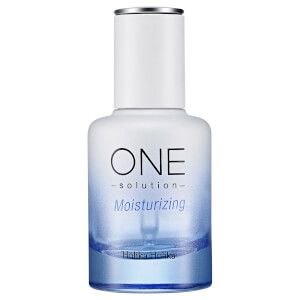
Holika Holika One Solution Super Energy Ampoule - Moisturizing
Works for
1 of 1 advertised claim delivered
MoisturizingPolymethylsilsesquioxane, Caprylic/capric triglyceride + 9 moreGood evidence
“Moisturizing”
This product can help improve hydration of the skin with the two types of ingredients.
The first type is called “humectants”:
these ingredients help attract water.
When humectants are on the surface of the skin, they “pull in” the moisture from the outside environment, or from
within deeper layers of the skin. The following ingredients in this product do the job:
betaine, glycerin.
This product also contains ingredients called “occlusives”. They help reduce the speed with which our skin loses moisture to the outside environment. These ingredients also help soften the upper layer of the skin, so it feels less tight and nicer to the touch. The following ingredients in this product do the job: caprylic/capric triglyceride, hydrolyzed collagen.
Can it cause trouble?
Irritancy8 strong irritants: Alcohol denat., Ocimum basilicum oil + 6 more — patch-test recommendedHigh risk
Comedogenic4 ingredients rated 2 or more on the 0–5 pore-clogging scale4 flagged
User reviews
Be the first — your take helps the next person decide.
Ingredients
Filter by role to see what each ingredient is doing.
Spirulina platensis extract~25–38%
- Irritation risk
- Low
- Comedogenicity
- 3/5
An algae extract. Might help to attract water to the upper layer of the skin and have an anti-oxidant effect
More about Spirulina platensis extractLaminaria hyperborea extract~5.3–8%
- Irritation risk
- Low
- Comedogenicity
- 3/5
Ecklonia cava extract~4.5–6.7%
- Irritation risk
- Low
- Comedogenicity
- 3/5
Fucus vesiculosus extract~3.2–4.9%
- Irritation risk
- Low
- Comedogenicity
- 3/5
Glycerin~2.3–3.5%
- Irritation risk
- Low
One of the best moisturizing ingredients. Naturally present in skin. It attracts water to the upper layer of the skin working as a humectant
More about GlycerinDipropylene glycol~1.8–2.7%
- Irritation risk
- Low
Helps to dissolve other ingredients in a formulation. Slows down the rate of product drying
More about Dipropylene glycolPeg/ppg/polybutylene glycol-8/5/3 glycerin~1.6–2.3%
- Irritation risk
- Low
Helps create a nice product texture and attract water to the upper layer of the skin
More about Peg/ppg/polybutylene glycol-8/5/3 glycerinAlcohol denat.~1.3–2%
- Irritation risk
- High
Produces temporary toning effect. Can help dissolve other ingredients or preserve products
More about Alcohol denat.Caprylic/capric triglyceride~1.3–2%
- Irritation risk
- Medium
A good mix of fatty acids that forms a protective layer on the skin. Improves the shelf life of products. Derived from coconut and glycerin
More about Caprylic/capric triglycerideMethyl gluceth-20~0.85–1.3%
- Irritation risk
- Low
Helps attract water to the upper layer of the skin and soften it
More about Methyl gluceth-20Betaine~0.5–1.2%
- Irritation risk
- Low
Helps attract water to the upper layer of the skin and improves the product texture
More about BetaineXylitol~0.45–1%
- Irritation risk
- Low
Helps attract water to the upper layer of the skin and repair the skin barrier function
More about XylitolHydrolyzed collagen~0.45–1.05%
- Irritation risk
- Low
A typically plant-derived compound that is supposed mimic human collagen. Cannot penetrate the skin barrier so is not particularly useful in skincare products beyond attracting water to the upper layer of the skin
More about Hydrolyzed collagenGelatin~0.4–0.9%
Acacia senegal gum~0.35–0.85%
- Irritation risk
- Medium
Helps mask the small of other ingredients and improve the product texture
More about Acacia senegal gumHydrolyzed coral~0.35–0.75%
- Irritation risk
- Low
Sea water~0.3–0.75%
- Irritation risk
- Low
Dissolves other ingredients. It does not have additional skin benefits compared to plain water
More about Sea waterWater~0.2–0.8%
Ocimum basilicum oil~0.2–0.7%
Citrus aurantium bergamia fruit oil~0.15–0.65%
- Irritation risk
- High
A plant oil with a high content of volatile compounds that can irritate the skin and lead to allergic reactions. Can lead to photosensitivity
More about Citrus aurantium bergamia fruit oilPelargonium graveolens flower oil~0.15–0.7%
- Irritation risk
- High
An essential oil. Can be irritating. Can become an allergen with oxidation
More about Pelargonium graveolens flower oilLavandula angustifolia oil~0.15–0.6%
- Irritation risk
- High
An essential oil. Potential allergen and can be irritating. It has some anti-bacterial properties
More about Lavandula angustifolia oilCitrus limon peel oil~0.15–0.55%
Macadamia integrifolia seed oil~0.2–0.75%
- Irritation risk
- Low
A plant oil that helps soften the upper layer of the skin
More about Macadamia integrifolia seed oilCitrus aurantium dulcis peel oil~0.15–0.6%
- Irritation risk
- High
An essentil oil from orange peel. Potential allergen and can be irritating
More about Citrus aurantium dulcis peel oilLauryl dimethicone/polyglycerin-3 crosspolymer~0.5–1.2%
Glycerin~0.15–0.7%
- Irritation risk
- Low
One of the best moisturizing ingredients. Naturally present in skin. It attracts water to the upper layer of the skin working as a humectant
More about GlycerinPolymethylsilsesquioxane~0.15–0.65%
- Irritation risk
- Low
A silicone that improves product texture and helps dissolve other ingredients. Can form a non-greasy film on the skin to prevent moisture loss
More about PolymethylsilsesquioxanePeg-60 hydrogenated castor oil~0.15–0.65%
- Irritation risk
- Medium
Helps oil and water mix together
More about Peg-60 hydrogenated castor oilAcrylates/c10-30 alkyl acrylate crosspolymer~0.15–0.6%
- Irritation risk
- Medium
Maintains the texture of skincare products. Allows the product to spread evenly. Helps oil and water mix together
More about Acrylates/c10-30 alkyl acrylate crosspolymerTromethamine~0.15–0.55%
Caprylyl glycol~0.2–0.7%
- Irritation risk
- Medium
Helps preserve products and creates a nice product texture
More about Caprylyl glycolCaprylhydroxamic acid~0.15–0.5%
Disodium edta~0.1–0.5%
Water~0.1–0.45%
Alcohol~0.1–0.4%
- Irritation risk
- High
Can be drying and contribute to skin irritation. Used in formulars to dissolve other ingredients, create a thinner product consistency or for its antibacterial properties
More about AlcoholPhospholipids~0.1–0.4%
- Irritation risk
- Low
Emollients that are naturaly present in skin. In addition, they help water and oil mix together in the product
More about PhospholipidsEthylhexylglycerin~0.1–0.3%
Phenoxyethanol~0.1–0.3%
- Irritation risk
- Low
A preservative. It helps prevent bacterial growth in cosmetic products
More about PhenoxyethanolCi 61565~0.05–0.2%
- Irritation risk
- Low
Ingredient list view
Spirulina platensis extract, Laminaria hyperborea extract, Ecklonia cava extract, Fucus vesiculosus extract, Glycerin, Dipropylene glycol, Peg/ppg/polybutylene glycol-8/5/3 glycerin, Alcohol denat., Caprylic/capric triglyceride, Methyl gluceth-20, Betaine, Xylitol, Hydrolyzed collagen, Gelatin, Acacia senegal gum, Hydrolyzed coral, Sea water, Water, Ocimum basilicum oil, Citrus aurantium bergamia fruit oil, Pelargonium graveolens flower oil, Lavandula angustifolia oil, Citrus limon peel oil, Macadamia integrifolia seed oil, Citrus aurantium dulcis peel oil, Lauryl dimethicone/polyglycerin-3 crosspolymer, Glycerin, Polymethylsilsesquioxane, Peg-60 hydrogenated castor oil, Acrylates/c10-30 alkyl acrylate crosspolymer, Tromethamine, Caprylyl glycol, Caprylhydroxamic acid, Disodium edta, Water, Alcohol, Phospholipids, Ethylhexylglycerin, Phenoxyethanol, Ci 61565
Compare prices
Retailers ranked by price — lowest first.

.png)
Sources cited in this review
Every concentration estimate and effectiveness label is anchored to one of these 8 studies and safety reviews.
- 1
- 2
- 3
- 4
- 5Air oxidation increases skin irritation from fragrance terpenesonlinelibrary.wiley.com
- 6

Affiliate links · As an Amazon Associate, WIMJ earns from qualifying purchases.