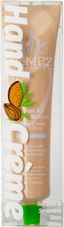
Hempz Koa & Sweet Almond Hydrating Herbal Hand Creme
Works for
1 of 1 advertised claim delivered
MoisturizingPanthenol, Caprylyl glycol + 2 moreStrong evidence
“Koa & Sweet Almond Hydrating Herbal Hand Creme”
This product contains good ingredients to attract water to the upper layer of the skin. These ingredients are called "humectants": panthenol, caprylyl glycol.
When humectants are on the surface of the skin, they “pull in” the moisture from the outside environment, or from within deeper layers of the skin. If the air is dry, humectants can speed up the moisture loss from the skin. This is why it is a good idea to use another product on top of this one to help "seal in" the moisture (look for ingredients like dimethicone, squalane, oils and butters).
The following ingredients in this product are especially good for supporting the skin barrier and helping with the hydration level: panthenol
Anti-agingNot advertised by the brand · Retinyl palmitate, Tocopherol + 1 moreModerate evidence
This product contains retinyl palmitate. This ingredient might be able to help reduce and prevent fine lines and wrinkles, improve skin elasticity and firmness, but there is not enough evidence that it actually works.
Evens skin toneNot advertised by the brand · Retinyl palmitate, Ascorbic acidModerate evidence
The following ingredient (ingredients) in this product might be helpful, but there is no evidence to confirm that it actually works: retinyl palmitate.
Can it cause trouble?
Irritancy9 strong irritants: Benzyl benzoate, Benzyl cinnamate + 7 more — patch-test recommendedHigh risk
ComedogenicClean of flagged comedogenic ingredientsNone flagged
User reviews
Be the first — your take helps the next person decide.
Ingredients
Filter by role to see what each ingredient is doing.
Hydrogenated polydecene~23–34%
- Irritation risk
- Low
Helps to soften the upper layer of the skin and create a nice product texture
More about Hydrogenated polydeceneBenzyl benzoate~6.1–9.2%
- Irritation risk
- High
Fragrance with sweet balsamic smell. Help to preserve products and dissolve other ingredients. Could trigger allergic reactions and be irritating
More about Benzyl benzoateCaprylyl glycol~4.5–6.8%
- Irritation risk
- Medium
Helps preserve products and creates a nice product texture
More about Caprylyl glycolChlorphenesin~0.16–0.32%
Disodium edta~0.5–1%
Benzyl cinnamate~2–3%
Trideceth-6~1.6–2.4%
Hexyl cinnamal~1.3–1.9%
Citronellol~1–1.6%
Benzyl salicylate~0.85–1.25%
Amyl cinnamal~0.5–1.15%
- Irritation risk
- High
Eugenol~0.4–0.95%
Butylphenyl methylpropional~0.4–0.9%
- Irritation risk
- High
A fragrance. Can trigger allergic reactions and be irritating
More about Butylphenyl methylpropionalMethyl 2-octynoate~0.35–0.85%
- Irritation risk
- Low
Ci 19140~0.35–0.85%
Ascorbic acid~0.3–0.7%
- Irritation risk
- High
The most well-researched antioxidant that works in skin. Helps neutralize free radicals supporting collagen production, helping to even out the skin tone and preventing early signs of aging
More about Ascorbic acidRetinyl palmitate~0.15–0.7%
- Irritation risk
- High
Three steps removed from the active form of vitamin A - retinoic acid. To have an effect in the skin, it first needs to be converted twice to become the retinoic acid. This means it is less potent than retinol, but could also be less irritating. Once converted to the retinoic acid in the skin, it helps against all signs of aging, improves skin cell turnover and helps fight blemishes and clogged pores. However, in many cosmetic formulations, it is used in a concentration that is too low to have the full effect
More about Retinyl palmitateTocopheryl acetate~0.15–0.7%
- Irritation risk
- Medium
A more stable but less bio-available form of vitamin E compared to Tocopherol. Might help moisturize and protect the skin from free radicals, but mostly used in low concentrations to stabilize other ingredients.
More about Tocopheryl acetateCi 15985~0.15–0.6%
Bht~0.15–0.5%
Panthenol~0.1–0.45%
- Irritation risk
- Low
Helps attract water to the upper layer of the skin and can help improve skin barrier function
More about PanthenolCitric acid~0.1–0.4%
- Irritation risk
- Medium
Can work as an exfoliant but is typically used to adjust the product pH
More about Citric acidTocopherol~0.1–0.4%
- Irritation risk
- Low
Pure form of vitamin E. Can help moisturise and protect the skin from free radicals. Often used to help stabilise other ingredients or the formula itself
More about TocopherolPotassium sorbate~0.1–0.35%
Sodium benzoate~0.1–0.3%
Ingredient list view
Hydrogenated polydecene, Benzyl benzoate, Caprylyl glycol, Chlorphenesin, Disodium edta, Benzyl cinnamate, Trideceth-6, Hexyl cinnamal, Citronellol, Benzyl salicylate, Amyl cinnamal, Eugenol, Butylphenyl methylpropional, Methyl 2-octynoate, Ci 19140, Ascorbic acid, Retinyl palmitate, Tocopheryl acetate, Ci 15985, Bht, Panthenol, Citric acid, Tocopherol, Potassium sorbate, Sodium benzoate
Compare prices
Retailers ranked by price — lowest first.
Sources cited in this review
Every concentration estimate and effectiveness label is anchored to one of these 6 studies and safety reviews.
- 1Safety Assessment of Polyene Group as Used in Cosmeticscir-safety.org
- 2
- 3Skin moisturizing effects of panthenol-based formulationspdfs.semanticscholar.org
- 4
- 5Vitamin E in dermatologyncbi.nlm.nih.gov
- 6Vitamin E and Skin Healthlpi.oregonstate.edu

Affiliate links · As an Amazon Associate, WIMJ earns from qualifying purchases.