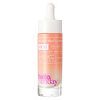
Hello Sunday The One That's A Serum Face Sunscreen SPF 45
Works for
2 of 2 advertised claims delivered
Sun protectionSPF 45 · 6 UV filtersBroad spectrum
This product offers a good level of protection against both UVB and UVA rays.
This sunscreen uses organic (so-called "chemical") sunscreen filters. Organic, or "chemical" filters usually provide reliable sun protection and rarely leave a white cast. Sunscreens with organic filters can sting eyes.
This product can be considered "reef safe" because it does not contain the UV filters (oxybenzone and octinoxate) that can be harmful to coral reefs when present in the water in high concentrations.
Moisturizing13 ingredients credited for this claimStrong support
“An alternative approach to sun protection, this light textured, moisturising SPF45 serum is built to protect against UVA/UVB and Infrared rays.”
This product can help improve hydration of the skin with the two types of ingredients.
The first type is called “humectants”:
these ingredients help attract water.
When humectants are on the surface of the skin, they “pull in” the moisture from the outside environment, or from
within deeper layers of the skin. The following ingredients in this product do the job:
carnosine, glycerin.
This product also contains ingredients called “occlusives”. They help reduce the speed with which our skin loses moisture to the outside environment. These ingredients also help soften the upper layer of the skin, so it feels less tight and nicer to the touch. The following ingredients in this product do the job: dimethicone, jojoba esters.
The following ingredients in this product are especially good for supporting the skin barrier and helping with the hydration level: panthenol
Anti-oxidationNot advertised by the brand · 4 ingredients credited for this claimStrong support
This product contains antioxidants (carnosine) that can help neutralize free radicals in skin. By doing so, they can lessen the damage the skin gets from the UV light (sun).
Evens skin toneNot advertised by the brand · 1 ingredient credited for this claimStrong support
This product offers broad spectrum sun protection. It means that it can prevent hyperpigmentation and help keep the skin tone even (sun damage is the main factor causing age spots, darkening of post-acne marks and other discolorations).
Anti-agingNot advertised by the brand · 4 ingredients credited for this claimStrong support
This product can help prevent early signs of skin aging because it offers a good level of broad spectrum sun protection. Sun damage is the main cause of premature skin aging, and protecting your skin from the sun is the best anti-aging strategy.
These ingredients in the product might also be helpful for reducing and preventing fine lines, wrinkles, and skin elasticity, even though there is no conclusive evidence for their effectiveness: carnosine.
Can it cause trouble?
Irritancy14 flagged ingredientsLow risk
ComedogenicClean of flagged comedogenic ingredientsNone flagged
User reviews
Be the first — your take helps the next person decide.
Ingredients
Filter by role to see what each ingredient is doing.
Water~45–55%
Butyloctyl salicylate~6.8–8.3%
- Irritation risk
- Medium
A synthetic ester of salicylic acid that is used to help disperse pigments and boost effectiveness of sunscreen ingredients. It is able to absorb UV light (working as an organic, or chemical filter), but is not approved as a sunscreen ingredient on its own
More about Butyloctyl salicylateOctocrylene~4.4–5.4%
- Irritation risk
- Medium
A weak sunscreen that protects against the sun rays that cause sunburn (UVB) and is somewhat effective against the UVA rays. It is quite stable and can help stabilize other, more vulnerable, sunscreen ingredients like Avobenzone. It is an organic, or so called "chemical" sunscreen
More about OctocryleneButyl methoxydibenzoylmethane~3.5–4.3%
- Irritation risk
- Medium
Avobenzone. An organic, or so-called "chemical" UV filter. Protects against both UVA and UVB rays. Needs to be combined with other filters in a formulation to be stable.
More about Butyl methoxydibenzoylmethaneBis-ethylhexyloxyphenol methoxyphenyl triazine~3–3.7%
- Irritation risk
- Medium
Tinosorb S. One of the most effective broad spectrum sunscreen ingredients. Protects from both UVA and UVB rays. It is photostable. Unfortunately, not approved by FDA (US) yet.
More about Bis-ethylhexyloxyphenol methoxyphenyl triazineDimethicone~2.1–2.5%
- Irritation risk
- Low
A silicone that helps to reduce water loss from the surface of the skin. Can temporarily "fill in" lines and wrinkles, absorb oil, and create a nice product finish
More about DimethiconeEthylhexyl triazone~2.1–2.6%
- Irritation risk
- Medium
Uvinul T. A UV filter. Effective against UVB rays. It is photostable. Can increase water resistance properties of the sunscreen. Unfortunately, not approved by the FDA (US) yet
More about Ethylhexyl triazoneGlycerin~1.5–1.8%
- Irritation risk
- Low
One of the best moisturizing ingredients. Naturally present in skin. It attracts water to the upper layer of the skin working as a humectant
More about GlycerinPhenylbenzimidazole sulfonic acid~1.7–2%
- Irritation risk
- Medium
Ensulizole. A UV filter that is effective against UVB rays. Does not protect against UVA light. It is photostable and can be used to help stabilize other sunscreen ingredients. It is water-soluble meaning that it can help create lighter sunscreen formulations
More about Phenylbenzimidazole sulfonic acidDicaprylyl carbonate~0.95–1.15%
- Irritation risk
- Low
Helps products spread more easily and works as an emollient to soften skin
More about Dicaprylyl carbonatePanthenol~0.65–0.95%
- Irritation risk
- Low
Helps attract water to the upper layer of the skin and can help improve skin barrier function
More about PanthenolJojoba esters~0.55–0.85%
- Irritation risk
- Medium
An emollient made of jojoba oil. Helps soften the skin and support its barrier function
More about Jojoba estersHydroxyacetophenone~0.45–0.7%
Polyacrylate crosspolymer-6~0.4–0.6%
- Irritation risk
- Low
Hydroxyethyl acrylate/sodium acryloyldimethyl taurate copolymer~0.3–0.6%
- Irritation risk
- Medium
A gelling agent that thickens the product consistency and leaves the skin with a velvety finish
More about Hydroxyethyl acrylate/sodium acryloyldimethyl taurate copolymerHelianthus annuus seed extract~0.3–0.55%
- Irritation risk
- Low
Sodium hydroxide~0.3–0.55%
Allantoin~0.25–0.5%
- Irritation risk
- Low
Helps calm down inflammation in skin and can help reduce itching. Helps to repair the skin barrier and keep skin hydrated
More about AllantoinTocopherol~0.25–0.45%
- Irritation risk
- Low
Pure form of vitamin E. Can help moisturise and protect the skin from free radicals. Often used to help stabilise other ingredients or the formula itself
More about TocopherolCarnosine~0.25–0.4%
- Irritation risk
- Low
A type of peptide. It attracts water to the upper layer of the skin. It can help neutralize free radicals in skin combatting the sun damage
More about CarnosineGluconolactone~0.2–0.4%
- Irritation risk
- Medium
A polyhydroxy acid (PHA) that helps shed the dead cells from the skin surface revealing smoother skin. Is believed to be genter than AHAs. It helps attract water to the upper layer of the skin and can stimulate production of skin's own hyaluronic acid resulting in improved hydration levels. It has been shown to be helpful against acne and clogged pores if used consistently (e.g over a period of 12 weeks) in high enough concentration. It can help reduce fine lines and wrinkles and improve skin tone with long-term application. Can help neutralize free radicals
More about GluconolactoneEthylhexylglycerin~0.2–0.4%
Sodium ascorbyl phosphate~0.2–0.35%
- Irritation risk
- Medium
A stable derivative of vitamin C. It is oil-soluble which means it is more likely to penetrate the skin compared to the pure form of vitamin C (which is water-soluble), but it is less bio-available and is way less effective in stimulating collagen and reducing wrinkles compared to the pure form of vitamin C (L-ascorbic acid) and its other derivatives (for example, magnesium ascorbyl phosphate). At the same time, this vitamin C derivative has been shown in studies to be effective in reducing acne, blemishes and clogged pores. It is less irritating then the pure form of vitamin C
More about Sodium ascorbyl phosphateTetrasodium glutamate diacetate~0.2–0.35%
- Irritation risk
- Low
Helps stabilize the product formulation
More about Tetrasodium glutamate diacetateSodium hyaluronate~0.2–0.35%
- Irritation risk
- Low
One of the best moisturizing ingredients. Attracts water into the upper layer of the skin
More about Sodium hyaluronateAloe barbadensis leaf juice powder~0.15–0.3%
- Irritation risk
- Medium
Traditionally used to treat sunburns, dermatitis and inflammation, but evidence for its effectiveness is lacking. The extract can contain humectants that help attract water into the skin
More about Aloe barbadensis leaf juice powderPolysorbate 60~0.2–0.35%
Sorbitan isostearate~0.15–0.25%
- Irritation risk
- Low
Helps oil and water mix together
More about Sorbitan isostearateAcacia decurrens extract~0.1–0.2%
- Irritation risk
- Low
Polyglycerin-3~0.1–0.2%
- Irritation risk
- Low
Helps to attract water to the upper layer of the skin
More about Polyglycerin-3Pantolactone~0.1–0.15%
- Irritation risk
- Low
Helps attract water to the upper layer of the skin
More about PantolactoneIngredient list view
Water, Butyloctyl salicylate, Octocrylene, Butyl methoxydibenzoylmethane, Bis-ethylhexyloxyphenol methoxyphenyl triazine, Dimethicone, Ethylhexyl triazone, Glycerin, Phenylbenzimidazole sulfonic acid, Dicaprylyl carbonate, Panthenol, Jojoba esters, Hydroxyacetophenone, Polyacrylate crosspolymer-6, Hydroxyethyl acrylate/sodium acryloyldimethyl taurate copolymer, Helianthus annuus seed extract, Sodium hydroxide, Allantoin, Tocopherol, Carnosine, Gluconolactone, Ethylhexylglycerin, Sodium ascorbyl phosphate, Tetrasodium glutamate diacetate, Sodium hyaluronate, Aloe barbadensis leaf juice powder, Polysorbate 60, Sorbitan isostearate, Acacia decurrens extract, Polyglycerin-3, Pantolactone
Compare prices
Retailers ranked by price — lowest first.

Affiliate links · prices updated regularly
Product summary
Based on the ingredient list, we assess that "Hello Sunday - The One That's A Serum Face Sunscreen SPF 45" can provide reliable sun protection. It can protect from both UVA and UVB rays. This is great news because not all sunscreens with SPF ratings give UVA protection. (UVA rays do not cause sunburn, but still damage our skin and lead to early aging).
Because it includes good moisturizing ingredients, it can also work as a hydrating day cream. Like all broad-spectrum sunscreens, this product helps prevent early signs of aging.
Sunscreen filters
This is a so-called "chemical" sunscreen. It means that it uses organic UV filters. They typically offer good sun protection and rarely leave a white cast, but they can be irritating for some people with sensitive skin. Here are the exact UV filters in this sunscreen: tinosorb s 3.00% - 3.70%, avobenzone 3.50% - 4.30%, butyloctyl salicylate 6.80% - 8.30%, uvinul t 2.10% - 2.60%, octocrylene 4.40% - 5.40% and ensulizole 1.70% - 2.00%.
Irritation risk
This product does not contain known common irritants and is suitable for sensitive skin. We assess the overall irritancy of this product to be low. For a detailed overview of all potential irritants: click here
You can see the detailed formula review with the breakdown of all actives in the product and the full ingredient list with estimated concentrations in the tables below.
Price
The product retails for 20.00£ in the United Kingdom.
For a detailed price comparison: click here.
Sources cited in this review
Every concentration estimate and effectiveness label is anchored to one of these 31 studies and safety reviews.
- 1
- 2
- 3Final Report on the Safety Assessment of Dimethicone Copolyoljournals.sagepub.com
- 4
- 5Skin moisturizing effects of panthenol-based formulationspdfs.semanticscholar.org
- 6

Affiliate links · As an Amazon Associate, WIMJ earns from qualifying purchases.