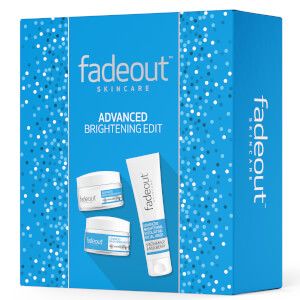
Fade Out Advanced Brightening Edit
Works for
2 of 4 advertised claims delivered
Sun protectionSPF 20 · 4 UV filters · Broad spectrumWeak protectionSPF under 30
This product offers broad spectrum sun protection, but it is weak. We recommend to use a broad spectrum sunscreen with at least SPF 30.
Moisturizing15 ingredients credited for this claimStrong support
“Harnessing the powers of Rosehip Seed Oil, the moisturiser works with the skin's overnight renewal process to replenish, revitalise and restore an even skin tone.”
This product can help improve hydration of the skin with the two types of ingredients.
The first type is called “humectants”:
these ingredients help attract water.
When humectants are on the surface of the skin, they “pull in” the moisture from the outside environment, or from
within deeper layers of the skin. The following ingredients in this product do the job:
glycerin, sodium lactate.
This product also contains ingredients called “occlusives”. They help reduce the speed with which our skin loses moisture to the outside environment. These ingredients also help soften the upper layer of the skin, so it feels less tight and nicer to the touch. The following ingredients in this product do the job: dimethicone, plukenetia volubilis seed oil.
The following ingredients in this product are especially good for supporting the skin barrier and helping with the hydration level: niacinamide, panthenol
Evens skin tone3 ingredients credited for this claimStrong support
“Fortified with natural active ingredients, the fast-absorbing formula works to minimise the appearance of hyperpigmentation whilst also protecting from the sun's harmful UVA and UVB rays.”
This product can help reduce hypepigmentation and even out the skin tone because it contains the following effective ingredients: niacinamide
The following ingredient (ingredients) in this product might be helpful, but there is no evidence to confirm that it actually can help even out the skin tone: morus alba bark extract.
Keep in mind that you would need to apply any topical skincare targetted at hypigmentation consistently for a couple of months to get a result. No topical skincare product can help get rid of hyperpigmentation (including post-acne marks and age spots) instantly.
This product can also help with skin tone because it offers sun protection. Sun damage is the main factor causing age spots, darkening of post-acne marks and other discolorations. This is why sun protection is the best strategy for maintaining an even skin tone. We, however, do not recommend using this product as a sunscreen because the protection it offers is not strong enough).
Exfoliation1 ingredient credited for this claimWeak support
“Fade Out Advanced Brightening Exfoliating Facial Wash 100ml”
This product does not contain effective exfoliating ingredients. It might be able to deliver physical exfoliation, that is scrub off some of the dead cells on the surface of the skin. We do not recommend physical exfoliation, because it is not uniform (some bits of skin can get exfoliated too much while others not at all). It can also traumatize the skin and aggrevate acne and other skin conditions.
Anti-agingNot advertised by the brand · 3 ingredients credited for this claimStrong support
This product can help reduce and prevent fine lines and wrinkles, improve skin elasticity and firmness because it contains niacinamide.
Keep in mind that it typically takes at least 6 weeks to notice any results because the changes that are needed to improve fine lines and elasticity happen in the deeper layers of the skin. No topical anti-aging product can “erase” wrinkles or fully reverse signs of aging.
Anti-blemishNot advertised by the brand · 2 ingredients credited for this claimStrong support
This product can help reduce breakouts and clogged pores because it contains the following ingredient: niacinamide. This ingredient is used for treating acne and can have a noticeable effect.
Can it cause trouble?
Irritancy7 strong irritants: Hibiscus sabdariffa flower extract, Parfum + 5 more — patch-test recommendedHigh risk
Comedogenic5 ingredients rated 2 or more on the 0–5 pore-clogging scale5 flagged


User reviews
Be the first — your take helps the next person decide.
Ingredients
Filter by role to see what each ingredient is doing.
Water~45–55%
Stearic acid~6.9–8.5%
- Irritation risk
- Low
Helps oil and water mix together and works as an emollient
More about Stearic acidGlycerin~4.2–5.2%
- Irritation risk
- Low
One of the best moisturizing ingredients. Naturally present in skin. It attracts water to the upper layer of the skin working as a humectant
More about GlycerinMyristic acid~3.1–3.8%
- Irritation risk
- Medium
- Comedogenicity
- 3/5
Helps oil and water mix together. Could be comedogenic
More about Myristic acidPotassium hydroxide~2.4–2.9%
Peg-100 stearate~2.1–2.5%
- Irritation risk
- Low
Helps oil and water mix togehter and creates a nice product texture
More about Peg-100 stearateGlyceryl stearate~1.7–2.1%
- Irritation risk
- Low
An emollient that softens the skin and forms a protective layer on its surface. Helps water and oil mix together
More about Glyceryl stearateNiacinamide~1.5–1.8%
- Irritation risk
- Low
Is proven to be effective in reducing blemishes, evening out skin tone and helping to improve lines and wrinkles. It helps the skin to repair sun damage, calm down inflammation and keep maintain good levels of moisture. The concentration of about 2% is effective for supporting the skin barrier and evening out the skin tone. Concentration of 4-6% is better for helping with acne and balancing the sebum production
More about NiacinamideHibiscus sabdariffa flower extract~1.2–1.5%
- Irritation risk
- High
A plant extract that can be irritating. It might contain a compound anthocyanin that could be helpful in neutralizing free radicals
More about Hibiscus sabdariffa flower extractMorus alba bark extract~1–1.2%
- Irritation risk
- High
A plant extract that might have anti-oxidant properties and help even out skin tone, but solid evidence is lacking
More about Morus alba bark extractCucumis sativus seed extract~0.7–1.1%
- Irritation risk
- Low
Hydrated silica~1–1.2%
Phenoxyethanol~0.6–0.85%
- Irritation risk
- Low
A preservative. It helps prevent bacterial growth in cosmetic products
More about PhenoxyethanolSodium benzoate~0.25–0.5%
Potassium sorbate~0.3–0.6%
Parfum~0.5–0.75%
- Irritation risk
- High
An aromatic blend of unspecified and possibly irritating ingredients
More about ParfumHexyl cinnamal~0.5–0.7%
Water~0.45–0.7%
Ethylhexyl methoxycinnamate~0.6–0.9%
- Irritation risk
- High
Octinoxate. When used in higher concentrations, works as a sunscreen protecting the skin from UVB rays. When used in lower concentration, helps to preserve the product formulation. Is shown to be harmful to coral reefs - consider avoiding bathing in coral reef areas when wearing a product with this ingredient. It can be irritating
More about Ethylhexyl methoxycinnamateSodium lactate~0.4–0.6%
- Irritation risk
- Medium
Helps attract water to the upper layer of the skin. Is often used to adjust the pH level of the product
More about Sodium lactateOctocrylene~0.55–0.85%
- Irritation risk
- Medium
A weak sunscreen that protects against the sun rays that cause sunburn (UVB) and is somewhat effective against the UVA rays. It is quite stable and can help stabilize other, more vulnerable, sunscreen ingredients like Avobenzone. It is an organic, or so called "chemical" sunscreen
More about OctocryleneLactic acid~0.35–0.6%
- Irritation risk
- Medium
An exfoliating and moisturizing alpha-hydroxy acid (AHA). Typically causes less irritation than other AHAs, for example, glycolic acid. At high concentrations (about 15%), lactic acid can help reduce lines and wrinkles. Recent studies show that lactic acid can support the "good" bacteria living on skin's surface (healthy skin microbiome)
More about Lactic acidCetearyl alcohol~0.45–0.65%
- Irritation risk
- Low
- Comedogenicity
- 2/5
A non-drying alcohol. Works as an emollient. Helps water and oil mix together and creates a nice product texture
More about Cetearyl alcoholGlyceryl stearate~0.45–0.65%
- Irritation risk
- Low
An emollient that softens the skin and forms a protective layer on its surface. Helps water and oil mix together
More about Glyceryl stearatePeg-100 stearate~0.45–0.7%
- Irritation risk
- Low
Helps oil and water mix togehter and creates a nice product texture
More about Peg-100 stearateNiacinamide~0.35–0.6%
- Irritation risk
- Low
Is proven to be effective in reducing blemishes, evening out skin tone and helping to improve lines and wrinkles. It helps the skin to repair sun damage, calm down inflammation and keep maintain good levels of moisture. The concentration of about 2% is effective for supporting the skin barrier and evening out the skin tone. Concentration of 4-6% is better for helping with acne and balancing the sebum production
More about NiacinamideButyl methoxydibenzoylmethane~0.55–0.8%
- Irritation risk
- Medium
Avobenzone. An organic, or so-called "chemical" UV filter. Protects against both UVA and UVB rays. Needs to be combined with other filters in a formulation to be stable.
More about Butyl methoxydibenzoylmethaneC12-15 alkyl benzoate~0.35–0.65%
- Irritation risk
- Low
Enhances the product texture and makes it more spreadable. Helps reduce water loss from the outer layer of skin. Extands the shelf life by preventing bacteria growth
More about C12-15 alkyl benzoateGlycerin~0.4–0.6%
- Irritation risk
- Low
One of the best moisturizing ingredients. Naturally present in skin. It attracts water to the upper layer of the skin working as a humectant
More about GlycerinStearyl alcohol~0.4–0.65%
- Irritation risk
- Low
An emollient that helps soften the skin
More about Stearyl alcoholTitanium dioxide~0.45–0.7%
- Irritation risk
- Low
Works as a UV filter when used in high concentrations. It is photostable and is effective mostly against the UVB light, with some protection in the UVA range. In small concentrations, used for its ability to improve the color of cosmetic products. Is usually well tolerated by the skin
More about Titanium dioxideHexylene glycol~0.3–0.6%
- Irritation risk
- Medium
Helps create a more spreadable product texture
More about Hexylene glycolDimethicone~0.45–0.65%
- Irritation risk
- Low
A silicone that helps to reduce water loss from the surface of the skin. Can temporarily "fill in" lines and wrinkles, absorb oil, and create a nice product finish
More about DimethiconeCeteareth-20~0.45–0.7%
- Irritation risk
- Medium
- Comedogenicity
- 2/5
Helps oil and water mix together. Has some emollient properties
More about Ceteareth-20Phenoxyethanol~0.35–0.65%
- Irritation risk
- Low
A preservative. It helps prevent bacterial growth in cosmetic products
More about PhenoxyethanolSilica~0.5–0.75%
Parfum~0.3–0.55%
- Irritation risk
- High
An aromatic blend of unspecified and possibly irritating ingredients
More about ParfumSodium saccharin~0.35–0.65%
- Irritation risk
- Low
Tocopheryl acetate~0.35–0.65%
- Irritation risk
- Medium
A more stable but less bio-available form of vitamin E compared to Tocopherol. Might help moisturize and protect the skin from free radicals, but mostly used in low concentrations to stabilize other ingredients.
More about Tocopheryl acetatePanthenol~0.35–0.6%
- Irritation risk
- Low
Helps attract water to the upper layer of the skin and can help improve skin barrier function
More about PanthenolEthylhexylglycerin~0.35–0.6%
Disodium edta~0.3–0.6%
Bht~0.3–0.6%
Hibiscus sabdariffa flower extract~0.3–0.6%
- Irritation risk
- High
A plant extract that can be irritating. It might contain a compound anthocyanin that could be helpful in neutralizing free radicals
More about Hibiscus sabdariffa flower extractMorus alba bark extract~0.3–0.6%
- Irritation risk
- High
A plant extract that might have anti-oxidant properties and help even out skin tone, but solid evidence is lacking
More about Morus alba bark extractCucumis sativus seed extract~0.3–0.6%
- Irritation risk
- Low
Sodium benzoate~0.25–0.5%
Potassium sorbate~0.35–0.6%
Hexyl cinnamal~0.3–0.55%
Linalool~0.3–0.55%
Citronellol~0.3–0.55%
Limonene~0.3–0.55%
- Irritation risk
- High
A common frangrance that can easily irritate skin, especially if exposed to air, light or heat
More about LimoneneEugenol~0.3–0.55%
Water~0.35–0.6%
Sodium lactate~0.3–0.6%
- Irritation risk
- Medium
Helps attract water to the upper layer of the skin. Is often used to adjust the pH level of the product
More about Sodium lactateC12-15 alkyl benzoate~0.35–0.65%
- Irritation risk
- Low
Enhances the product texture and makes it more spreadable. Helps reduce water loss from the outer layer of skin. Extands the shelf life by preventing bacteria growth
More about C12-15 alkyl benzoateDimethicone~0.45–0.65%
- Irritation risk
- Low
A silicone that helps to reduce water loss from the surface of the skin. Can temporarily "fill in" lines and wrinkles, absorb oil, and create a nice product finish
More about DimethiconeLactic acid~0.3–0.6%
- Irritation risk
- Medium
An exfoliating and moisturizing alpha-hydroxy acid (AHA). Typically causes less irritation than other AHAs, for example, glycolic acid. At high concentrations (about 15%), lactic acid can help reduce lines and wrinkles. Recent studies show that lactic acid can support the "good" bacteria living on skin's surface (healthy skin microbiome)
More about Lactic acidGlyceryl stearate~0.45–0.65%
- Irritation risk
- Low
An emollient that softens the skin and forms a protective layer on its surface. Helps water and oil mix together
More about Glyceryl stearatePeg-100 stearate~0.45–0.7%
- Irritation risk
- Low
Helps oil and water mix togehter and creates a nice product texture
More about Peg-100 stearateNiacinamide~0.35–0.6%
- Irritation risk
- Low
Is proven to be effective in reducing blemishes, evening out skin tone and helping to improve lines and wrinkles. It helps the skin to repair sun damage, calm down inflammation and keep maintain good levels of moisture. The concentration of about 2% is effective for supporting the skin barrier and evening out the skin tone. Concentration of 4-6% is better for helping with acne and balancing the sebum production
More about NiacinamideCetearyl alcohol~0.4–0.65%
- Irritation risk
- Low
- Comedogenicity
- 2/5
A non-drying alcohol. Works as an emollient. Helps water and oil mix together and creates a nice product texture
More about Cetearyl alcoholGlycerin~0.4–0.6%
- Irritation risk
- Low
One of the best moisturizing ingredients. Naturally present in skin. It attracts water to the upper layer of the skin working as a humectant
More about GlycerinStearyl alcohol~0.4–0.65%
- Irritation risk
- Low
An emollient that helps soften the skin
More about Stearyl alcoholHexylene glycol~0.3–0.6%
- Irritation risk
- Medium
Helps create a more spreadable product texture
More about Hexylene glycolCeteareth-20~0.45–0.7%
- Irritation risk
- Medium
- Comedogenicity
- 2/5
Helps oil and water mix together. Has some emollient properties
More about Ceteareth-20Phenoxyethanol~0.35–0.65%
- Irritation risk
- Low
A preservative. It helps prevent bacterial growth in cosmetic products
More about PhenoxyethanolInulin~0.3–0.6%
- Irritation risk
- Low
Helps attract water to the upper layer of the skin. Is claimed to support the growth of "good" bacteria in skin (as a "prebiotic"), but the research is lacking
More about InulinParfum~0.3–0.55%
- Irritation risk
- High
An aromatic blend of unspecified and possibly irritating ingredients
More about ParfumRosa canina fruit oil~0.4–0.6%
- Irritation risk
- Medium
A great emollient. Contains vitamin E (tocopherol) which may give it some anti-oxidant properties. Can contain volatile compounds and can be irritating
More about Rosa canina fruit oilSodium saccharin~0.35–0.6%
- Irritation risk
- Low
Tocopheryl acetate~0.35–0.65%
- Irritation risk
- Medium
A more stable but less bio-available form of vitamin E compared to Tocopherol. Might help moisturize and protect the skin from free radicals, but mostly used in low concentrations to stabilize other ingredients.
More about Tocopheryl acetatePlukenetia volubilis seed oil~0.4–0.6%
- Irritation risk
- Low
A plant oil that works as a good moisturizer by softening the upper layer of the skin. Might be helpful in reducing inflammation in skin and reducing blemishes due to the large content of linoleic acid
More about Plukenetia volubilis seed oilPanthenol~0.3–0.6%
- Irritation risk
- Low
Helps attract water to the upper layer of the skin and can help improve skin barrier function
More about PanthenolAlpha-glucan oligosaccharide~0.45–0.65%
- Irritation risk
- Low
Helps attract water to the upper layer of the skin
More about Alpha-glucan oligosaccharideEthylhexylglycerin~0.3–0.55%
Disodium edta~0.3–0.55%
Hibiscus sabdariffa flower extract~0.3–0.55%
- Irritation risk
- High
A plant extract that can be irritating. It might contain a compound anthocyanin that could be helpful in neutralizing free radicals
More about Hibiscus sabdariffa flower extractMorus alba bark extract~0.3–0.5%
- Irritation risk
- High
A plant extract that might have anti-oxidant properties and help even out skin tone, but solid evidence is lacking
More about Morus alba bark extractCucumis sativus seed extract~0.25–0.5%
- Irritation risk
- Low
Sodium benzoate~0.25–0.4%
Tocopherol~0.25–0.4%
- Irritation risk
- Low
Pure form of vitamin E. Can help moisturise and protect the skin from free radicals. Often used to help stabilise other ingredients or the formula itself
More about TocopherolPotassium sorbate~0.15–0.25%
Hexyl cinnamal~0.1–0.2%
Linalool~0.15–0.25%
Citronellol~0.1–0.2%
Limonene~0.05–0.15%
- Irritation risk
- High
A common frangrance that can easily irritate skin, especially if exposed to air, light or heat
More about LimoneneEugenol~0.05–0.1%
Ingredient list view
Water, Stearic acid, Glycerin, Myristic acid, Potassium hydroxide, Peg-100 stearate, Glyceryl stearate, Niacinamide, Hibiscus sabdariffa flower extract, Morus alba bark extract, Cucumis sativus seed extract, Hydrated silica, Phenoxyethanol, Sodium benzoate, Potassium sorbate, Parfum, Hexyl cinnamal, Water, Ethylhexyl methoxycinnamate, Sodium lactate, Octocrylene, Lactic acid, Cetearyl alcohol, Glyceryl stearate, Peg-100 stearate, Niacinamide, Butyl methoxydibenzoylmethane, C12-15 alkyl benzoate, Glycerin, Stearyl alcohol, Titanium dioxide, Hexylene glycol, Dimethicone, Ceteareth-20, Phenoxyethanol, Silica, Parfum, Sodium saccharin, Tocopheryl acetate, Panthenol, Ethylhexylglycerin, Disodium edta, Bht, Hibiscus sabdariffa flower extract, Morus alba bark extract, Cucumis sativus seed extract, Sodium benzoate, Potassium sorbate, Hexyl cinnamal, Linalool, Citronellol, Limonene, Eugenol, Water, Sodium lactate, C12-15 alkyl benzoate, Dimethicone, Lactic acid, Glyceryl stearate, Peg-100 stearate, Niacinamide, Cetearyl alcohol, Glycerin, Stearyl alcohol, Hexylene glycol, Ceteareth-20, Phenoxyethanol, Inulin, Parfum, Rosa canina fruit oil, Sodium saccharin, Tocopheryl acetate, Plukenetia volubilis seed oil, Panthenol, Alpha-glucan oligosaccharide, Ethylhexylglycerin, Disodium edta, Hibiscus sabdariffa flower extract, Morus alba bark extract, Cucumis sativus seed extract, Sodium benzoate, Tocopherol, Potassium sorbate, Hexyl cinnamal, Linalool, Citronellol, Limonene, Eugenol
Compare prices
Retailers ranked by price — lowest first.

Affiliate links · prices updated regularly
Worth comparing, line by line.
Match % combines shared ingredients, the first five ingredients, shared actives and hero ingredients, irritancy (lower counts in the alternative's favour), texture and body area. Only products in the same routine step are compared.
| Fade OutAdvanced Brightening EditYOUR PRODUCT | OlayTotal Effects Whip Moisturizer SPF 40 | UltraceuticalsNEW Ultra UV Protective Daily Moisturiser SPF 50 Mattifying | NellaHoney 1 Snail White Moist Sun Cream | |
|---|---|---|---|---|
| Match | — | 82% | 80% | 79% |
| Price | $27.60 | $28.99+$1.39 | $88.00+$60.40 | $14.40−$13.20 |
| Shared key ingredients | — | 7 of 16 | 7 of 16 | 6 of 16 |
| Key difference | — | Sodium Ascorbyl Phosphate | Ensulizole | Adenosine |
| Irritancy | High | Medium | Medium | Medium |
| SPF | SPF 20 | SPF 40 | SPF 50 | SPF 50 |
| Drying alcohol | — | — | — | — |
| View product | Shop | Shop | Shop |

Product summary
"Fade Out - Advanced Brightening Edit" "is a broad spectrum sunscreen meaning that it protects both from UVB rays (" burning "- they cause sunburn) and UVA rays (" aging "- they don't cause sunburn but lead to premature aging and pigmentation issues). However, this product does not offer enough sun protection. We recommend to use a sunscreen with at least SPF 30 daily.
It should also be hydrating enough to use without an additional moisturizer during the day. Like all broad-spectrum sunscreens, this product has an anti-aging benefit.
Sunscreen filters
This sunscreen uses a mixture of both mineral and organic (so-called" chemical ") UV filters. The organic filters in the product are: avobenzone, octinoxate and octocrylene. As for the mineral filters, this sunscreen uses titanium dioxide.
Irritation risk
There are quite a few common irritants in this product, including ingredients without particular skin benefits. We would not recommend it for sensitive skin. We assess the overall irritancy of this product to be high. For a detailed overview of all potential irritants: click here
You can see the detailed formula review with the breakdown of all actives in the product and the full ingredient list with estimated concentrations in the tables below.
Price
The product retails for 27.60$ in the United States, at around 19.99£ in the United Kingdom and for 35.00CA$ in Canada.
For a detailed price comparison: click here.
Sources cited in this review
Every concentration estimate and effectiveness label is anchored to one of these 19 studies and safety reviews.
- 1
- 2
- 3
- 4
- 5
- 6Hibiscus sabdariffa L. – A phytochemical and pharmacological reviewsciencedirect.com

Affiliate links · As an Amazon Associate, WIMJ earns from qualifying purchases.