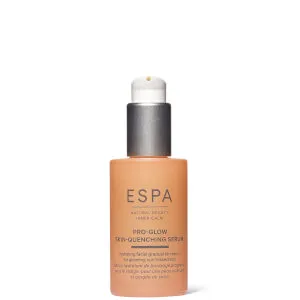
Works for
MoisturizingLinoleic acid, Glycerin + 16 moreWorks well
“This serum is refreshingly hydrating, bringing you supple feeling skin that radiates with vitality.”
This product can help improve hydration of the skin with the two types of ingredients.
The first type is called “humectants”:
these ingredients help attract water.
When humectants are on the surface of the skin, they “pull in” the moisture from the outside environment, or from
within deeper layers of the skin. The following ingredients in this product do the job:
glycerin, trehalose.
This product also contains ingredients called “occlusives”. They help reduce the speed with which our skin loses moisture to the outside environment. These ingredients also help soften the upper layer of the skin, so it feels less tight and nicer to the touch. The following ingredients in this product do the job: helianthus annuus seed oil, linolenic acid.
The following ingredients in this product are especially good for supporting the skin barrier and helping with the hydration level: linoleic acid
Can it cause trouble?
Irritancy15 strong irritants: Limonene, Citrus aurantium dulcis peel oil + 13 more — patch-test recommendedHigh risk
Comedogenic1 ingredient rated 2 or more on the 0–5 pore-clogging scale1 flagged
User reviews
Be the first — your take helps the next person decide.
Ingredients
Filter by role to see what each ingredient is doing.
Water~45–55%
Aloe barbadensis leaf juice~6.1–7.4%
- Irritation risk
- Medium
Traditionally used to treat sunburns, dermatitis and inflammation, but evidence for its effectiveness is lacking. The extract can contain humectants that help attract water into the skin
More about Aloe barbadensis leaf juicePentylene glycol~4.2–5.1%
- Irritation risk
- Medium
Used to preserve products, dissolve other ingredients and create a nice product texture
More about Pentylene glycolGlycerin~2.9–3.6%
- Irritation risk
- Low
One of the best moisturizing ingredients. Naturally present in skin. It attracts water to the upper layer of the skin working as a humectant
More about GlycerinPropanediol~2.2–2.6%
- Irritation risk
- Low
Acts as a solvent for other ingredients. Speeds up the absorption of other ingredients into the skin
More about PropanediolDihydroxyacetone~1.7–2.1%
Erythrulose~1.4–1.8%
- Irritation risk
- Low
Glyceryl caprylate~1.3–1.6%
- Irritation risk
- Low
An emollient that can also help water and oil mix together, as well as prevent bacteria growth in products
More about Glyceryl caprylateGlyceryl stearate citrate~1–1.2%
- Irritation risk
- Low
Helps oil and water mix together while softening the upper layer of the skin
More about Glyceryl stearate citrateLimonene~0.65–1%
- Irritation risk
- High
A common frangrance that can easily irritate skin, especially if exposed to air, light or heat
More about LimoneneTocopherol~0.55–0.8%
- Irritation risk
- Low
Pure form of vitamin E. Can help moisturise and protect the skin from free radicals. Often used to help stabilise other ingredients or the formula itself
More about TocopherolPolyglyceryl-3 stearate~0.45–0.7%
- Irritation risk
- Low
Helps oil and water mix together
More about Polyglyceryl-3 stearateCitrus aurantium dulcis peel oil~0.35–0.6%
- Irritation risk
- High
An essentil oil from orange peel. Potential allergen and can be irritating
More about Citrus aurantium dulcis peel oilSclerotium gum~0.3–0.55%
- Irritation risk
- Low
Used to create gel-like formulas and stabilize emulsions
More about Sclerotium gumHydrogenated lecithin~0.3–0.55%
- Irritation risk
- Low
Helps to retain moisture by creating a protective barrier on the skin. Rich in fatty acids. Improves product texture and helps with the penetration of other ingredients.
More about Hydrogenated lecithinSodium benzoate~0.25–0.5%
Echium plantagineum seed oil~0.25–0.5%
- Irritation risk
- Medium
A plant oil that because of its high content of alpha-linolenic acid help support skin barrier function and moisturize the skin
More about Echium plantagineum seed oilSodium stearoyl glutamate~0.3–0.55%
- Irritation risk
- Medium
Helps oil and water mix together
More about Sodium stearoyl glutamateXanthan gum~0.25–0.45%
- Irritation risk
- Low
Used to create a thicker product consistency
More about Xanthan gumLinoleic acid~0.35–0.6%
- Irritation risk
- Low
An excellent emollient. Helps soften the skin, restore its barrier function, and can help to calm down inflammation. It can be helpful to prevent blemishes and clogged pores
More about Linoleic acidCitrus aurantium bergamia fruit oil~0.2–0.35%
- Irritation risk
- High
A plant oil with a high content of volatile compounds that can irritate the skin and lead to allergic reactions. Can lead to photosensitivity
More about Citrus aurantium bergamia fruit oilCitrus nobilis peel oil~0.2–0.35%
- Irritation risk
- High
A plant oil with high content of volatile compounds that, especially when exposed to air, can cause allergic reactions and irritate the skin
More about Citrus nobilis peel oilGlyceryl undecylenate~0.25–0.45%
- Irritation risk
- Medium
Helps oil and water mix together and helps preserve the product formulation
More about Glyceryl undecylenateTremella fuciformis polysaccharide~0.2–0.35%
- Irritation risk
- Low
Helianthus annuus seed oil~0.2–0.4%
- Irritation risk
- Low
A great emollient due to its high linoleic acid content. One of the most effective plant oils in helping skin hydration and repairing skin barrier function
More about Helianthus annuus seed oilTrehalose~0.2–0.35%
- Irritation risk
- Low
A sugar that attracts water to the upper layer of the skin
More about TrehaloseOleic acid~0.25–0.45%
- Irritation risk
- Medium
Helps soften the upper layer of the skin. At the same time, it can weaken the skin's barrier enhancing penetration of other ingredients and increasing the risk of skin dryness
More about Oleic acidParfum~0.15–0.3%
- Irritation risk
- High
An aromatic blend of unspecified and possibly irritating ingredients
More about ParfumPaullinia cupana seed extract~0.15–0.3%
- Irritation risk
- High
Linalool~0.15–0.3%
Caprylic/capric triglyceride~0.25–0.45%
- Irritation risk
- Medium
A good mix of fatty acids that forms a protective layer on the skin. Improves the shelf life of products. Derived from coconut and glycerin
More about Caprylic/capric triglycerideCitrus aurantium amara leaf/twig oil~0.2–0.35%
- Irritation risk
- High
Cymbopogon nardus oil~0.2–0.35%
- Irritation risk
- High
Palmitic acid~0.25–0.45%
- Irritation risk
- Low
An emollient that is naturally present in skin and helps soften it
More about Palmitic acidStearic acid~0.3–0.6%
- Irritation risk
- Low
Helps oil and water mix together and works as an emollient
More about Stearic acidGeraniol~0.15–0.3%
Jasminum officinale flower extract~0.15–0.3%
Litsea cubeba fruit oil~0.15–0.3%
- Irritation risk
- High
An essential oil with a lemon-like smell that is extracted from a fruit grown in Asia. Used as a fragrance
More about Litsea cubeba fruit oilRosa centifolia flower extract~0.2–0.35%
- Irritation risk
- High
Contains essential oil. Can be irritating
More about Rosa centifolia flower extractCitral~0.15–0.3%
Linolenic acid~0.25–0.5%
- Irritation risk
- Medium
An emollient that helps soften the skin and calm down inflammation
More about Linolenic acidMoringa oleifera seed oil~0.2–0.4%
- Irritation risk
- Medium
A plant oil that helps soften the upper layer of the skin. Is unlikely to be helpful in restoring skin barrier function due to the low content of linoleic acid
More about Moringa oleifera seed oilSpirulina maxima extract~0.15–0.25%
- Irritation risk
- Low
- Comedogenicity
- 3/5
Citric acid~0.1–0.2%
- Irritation risk
- Medium
Can work as an exfoliant but is typically used to adjust the product pH
More about Citric acidCitrus aurantium amara flower oil~0.1–0.2%
- Irritation risk
- High
Used as a fragrance. Can be irritating
More about Citrus aurantium amara flower oilRosa damascena flower oil~0.1–0.2%
- Irritation risk
- High
Used as a fragrance. Can be irritating
More about Rosa damascena flower oilPotassium sorbate~0.1–0.2%
Ingredient list view
Water, Aloe barbadensis leaf juice, Pentylene glycol, Glycerin, Propanediol, Dihydroxyacetone, Erythrulose, Glyceryl caprylate, Glyceryl stearate citrate, Limonene, Tocopherol, Polyglyceryl-3 stearate, Citrus aurantium dulcis peel oil, Sclerotium gum, Hydrogenated lecithin, Sodium benzoate, Echium plantagineum seed oil, Sodium stearoyl glutamate, Xanthan gum, Linoleic acid, Citrus aurantium bergamia fruit oil, Citrus nobilis peel oil, Glyceryl undecylenate, Tremella fuciformis polysaccharide, Helianthus annuus seed oil, Trehalose, Oleic acid, Parfum, Paullinia cupana seed extract, Linalool, Caprylic/capric triglyceride, Citrus aurantium amara leaf/twig oil, Cymbopogon nardus oil, Palmitic acid, Stearic acid, Geraniol, Jasminum officinale flower extract, Litsea cubeba fruit oil, Rosa centifolia flower extract, Citral, Linolenic acid, Moringa oleifera seed oil, Spirulina maxima extract, Citric acid, Citrus aurantium amara flower oil, Rosa damascena flower oil, Potassium sorbate
Compare prices
Retailers ranked by price — lowest first.
Affiliate links · As an Amazon Associate, WIMJ earns from qualifying purchases.
Worth comparing, line by line.
Match % combines shared ingredients, the first five ingredients, shared actives and hero ingredients, irritancy (lower counts in the alternative's favour), texture and body area. Only products in the same routine step are compared.
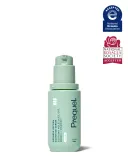
| ESPAPro-Glow Skin-Quenching SerumYOUR PRODUCT | PrequelREDNESS REFORM SOOTHING SERUM | ZelensPower A Retexturising and Renewing Serum | Skinbetter ScienceEven Tone Correcting Serum | |
|---|---|---|---|---|
| Match | — | 60% | 59% | 59% |
| Price | — | $19.99 | $57.62 | — |
| Shared key ingredients | — | 4 of 9 | 5 of 9 | 5 of 9 |
| Key difference | — | Glycolic Acid | Hydroxypinacolone Retinoate | Alpha-Arbutin |
| Irritancy | High | Medium | Medium | Low |
| Drying alcohol | — | — | — | — |
| View product | Shop | Shop | Shop |


More alternatives: colibri skincare Barrier BoosterTrinny London Overnight sensation
Sources cited in this review
Every concentration estimate and effectiveness label is anchored to one of these 21 studies and safety reviews.
- 1
- 2Vitamin E in dermatologyncbi.nlm.nih.gov
- 3Vitamin E and Skin Healthlpi.oregonstate.edu
- 4
- 5
- 6

Affiliate links · As an Amazon Associate, WIMJ earns from qualifying purchases.