Works for
2 of 2 advertised claims delivered
Anti-aging6 ingredients credited for this claimStrong support
“An intensive eye cream to improve skin hydration and enhance firmness and elasticity, while helping to minimise the appearance of lines and wrinkles.”
This product can help reduce and prevent fine lines and wrinkles, improve skin elasticity and firmness because it contains glycolic acid.
Keep in mind that it typically takes at least 6 weeks to notice any results because the changes that are needed to improve fine lines and elasticity happen in the deeper layers of the skin. No topical anti-aging product can “erase” wrinkles or fully reverse signs of aging.
Moisturizing32 ingredients credited for this claimGood support
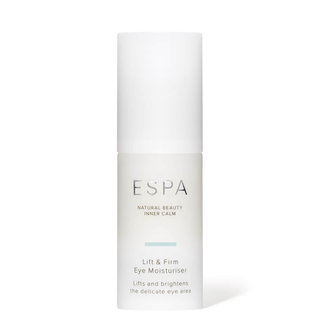
“Lift & Firm Eye Moisturiser”
This product can help improve hydration of the skin with the two types of ingredients.
The first type is called “humectants”:
these ingredients help attract water.
When humectants are on the surface of the skin, they “pull in” the moisture from the outside environment, or from
within deeper layers of the skin. The following ingredients in this product do the job:
algae extract, betaine.
This product also contains ingredients called “occlusives”. They help reduce the speed with which our skin loses moisture to the outside environment. These ingredients also help soften the upper layer of the skin, so it feels less tight and nicer to the touch. The following ingredients in this product do the job: caprylic/capric triglyceride, cocos nucifera oil.
ExfoliationNot advertised by the brand · 1 ingredient credited for this claimStrong support
This product can help exfoliate the skin. In other words, it helps break down the bonds between dead cells on the surface of the skin and speed up the skin turnover. Skin often appears softer and brighter after exfoliation, but overdoing it can result in disrupted skin barrier. The following ingredient is doing the exfoliating job in this product: glycolic acid.
Evens skin toneNot advertised by the brand · 2 ingredients credited for this claimStrong support
This product can help reduce hypepigmentation and even out the skin tone because it contains the following effective ingredients: glycolic acid
Keep in mind that you would need to apply any topical skincare targetted at hypigmentation consistently for a couple of months to get a result. No topical skincare product can help get rid of hyperpigmentation (including post-acne marks and age spots) instantly.
Can it cause trouble?
Irritancy9 strong irritants: Pelargonium graveolens flower oil, Citronellol + 7 more — patch-test recommendedHigh risk
Comedogenic4 ingredients rated 2 or more on the 0–5 pore-clogging scale4 flagged


User reviews
Be the first — your take helps the next person decide.
Ingredients
Filter by role to see what each ingredient is doing.
Water~45–55%
Cocos nucifera oil~4.6–5.6%
- Irritation risk
- Low
- Comedogenicity
- 3/5
An emollient. Found to be as effective as a moisturizer for dry skin as mineral oil. Could be comedogenic
More about Cocos nucifera oilGalactoarabinan~4.2–5.2%
- Irritation risk
- Medium
Helps attract water to the upper layer of the skin
More about GalactoarabinanGlycerin~3.1–3.8%
- Irritation risk
- Low
One of the best moisturizing ingredients. Naturally present in skin. It attracts water to the upper layer of the skin working as a humectant
More about GlycerinHelianthus annuus seed oil~2.5–3%
- Irritation risk
- Low
A great emollient due to its high linoleic acid content. One of the most effective plant oils in helping skin hydration and repairing skin barrier function
More about Helianthus annuus seed oilSqualane~2.1–2.5%
- Irritation risk
- Low
An oil naturally present in skin. Works as an emollient to soften the skin and form a protective layer on its surface without a greasy feeling.
More about SqualaneC12-16 alcohols~1.6–2%
- Irritation risk
- Medium
Helps soften the upper layer of the skin and improve the product's texture
More about C12-16 alcoholsCaprylic/capric triglyceride~1.5–1.9%
- Irritation risk
- Medium
A good mix of fatty acids that forms a protective layer on the skin. Improves the shelf life of products. Derived from coconut and glycerin
More about Caprylic/capric triglyceridePolyglyceryl-3 methylglucose distearate~1.2–1.4%
- Irritation risk
- Medium
Helps water and oil mix together
More about Polyglyceryl-3 methylglucose distearateEchium plantagineum seed oil~0.9–1.1%
- Irritation risk
- Medium
A plant oil that because of its high content of alpha-linolenic acid help support skin barrier function and moisturize the skin
More about Echium plantagineum seed oilPalmitic acid~0.7–1.05%
- Irritation risk
- Low
An emollient that is naturally present in skin and helps soften it
More about Palmitic acidSorbitol~0.55–0.8%
- Irritation risk
- Low
Helps attract water to the upper layer of the skin and improves the product texture
More about SorbitolLecithin~0.5–0.75%
- Irritation risk
- Low
Used mostly for creating emulsions - helping oil and water mix together. Helps soften the upper layer of the skin
More about LecithinBeta-glucan~0.4–0.65%
- Irritation risk
- Low
Helps attract water to the upper layer of the skin, calm down inflammation and irritation, restore the barrier function and support wound healing. It can be helpful in reducing fine lines and wrinkles
More about Beta-glucanBetaine~0.35–0.65%
- Irritation risk
- Low
Helps attract water to the upper layer of the skin and improves the product texture
More about BetaineSodium pca~0.35–0.65%
- Irritation risk
- Low
Naturally present in skin and helps to attract water to its upper layer
More about Sodium pcaButylene glycol~0.35–0.6%
- Irritation risk
- Low
Used to create a nice product texture and help delivery of other ingredients. Might be somewhat helpful in attracting water to the upper layer of the skin
More about Butylene glycolGlyceryl stearate~0.4–0.6%
- Irritation risk
- Low
An emollient that softens the skin and forms a protective layer on its surface. Helps water and oil mix together
More about Glyceryl stearateCetyl alcohol~0.3–0.6%
- Irritation risk
- Low
A non-drying alcohol that works to soften the skin and stabilize product formulations helping oil and water mix together
More about Cetyl alcoholPhenoxyethanol~0.3–0.55%
- Irritation risk
- Low
A preservative. It helps prevent bacterial growth in cosmetic products
More about PhenoxyethanolArgania spinosa kernel extract~0.25–0.5%
- Irritation risk
- Low
Chitin~0.4–0.65%
- Irritation risk
- Low
Glycine soja oil~0.25–0.5%
- Irritation risk
- Medium
- Comedogenicity
- 2/5
A good emollient that helps soften the skin and helps repair its barrier function. It can clog pores if used in high concentrations.
More about Glycine soja oilGlycine soja sterols~0.3–0.55%
- Irritation risk
- Low
An emollient that helps soften the skin
More about Glycine soja sterolsPullulan~0.25–0.5%
- Irritation risk
- High
Creates a thin drying film on the skin resulting in a short-term tightening effect
More about PullulanTocopherol~0.25–0.5%
- Irritation risk
- Low
Pure form of vitamin E. Can help moisturise and protect the skin from free radicals. Often used to help stabilise other ingredients or the formula itself
More about TocopherolXanthan gum~0.25–0.5%
- Irritation risk
- Low
Used to create a thicker product consistency
More about Xanthan gumNiacinamide~0.25–0.5%
- Irritation risk
- Low
Is proven to be effective in reducing blemishes, evening out skin tone and helping to improve lines and wrinkles. It helps the skin to repair sun damage, calm down inflammation and keep maintain good levels of moisture. The concentration of about 2% is effective for supporting the skin barrier and evening out the skin tone. Concentration of 4-6% is better for helping with acne and balancing the sebum production
More about NiacinamidePentylene glycol~0.3–0.55%
- Irritation risk
- Medium
Used to preserve products, dissolve other ingredients and create a nice product texture
More about Pentylene glycolSodium lactate~0.25–0.5%
- Irritation risk
- Medium
Helps attract water to the upper layer of the skin. Is often used to adjust the pH level of the product
More about Sodium lactatePelargonium graveolens flower oil~0.25–0.5%
- Irritation risk
- High
An essential oil. Can be irritating. Can become an allergen with oxidation
More about Pelargonium graveolens flower oilSaccharomyces cerevisiae extract~0.25–0.45%
- Irritation risk
- Medium
A moisturizing ingredient that works as a humectant to attract water to the upper layer of the skin.
More about Saccharomyces cerevisiae extractPhytic acid~0.25–0.5%
- Irritation risk
- Medium
An alpha-hydroxy acid (AHA), but is mostly used to stabilize product formulations in cosmetics
More about Phytic acidHexyl laurate~0.3–0.55%
- Irritation risk
- Medium
Helps soften the upper layer of the skin and create a nice product consistency
More about Hexyl laurateAlgae extract~0.3–0.6%
- Irritation risk
- Low
- Comedogenicity
- 3/5
Plant extract that helps the skin to attract water and make it more smooth for touch. Also shows promise of anti-aging properties, but research is not extensive yet
More about Algae extractFraxinus chinensis bark extract~0.25–0.45%
- Irritation risk
- Low
Sodium cocoyl glutamate~0.35–0.65%
- Irritation risk
- Medium
Helps oil and water mix together
More about Sodium cocoyl glutamateLonicera caprifolium flower extract~0.25–0.4%
- Irritation risk
- High
A plant extract that might help neutralize free radicals in skin. Can contain volalite oils and be irritating
More about Lonicera caprifolium flower extractLonicera japonica flower extract~0.25–0.45%
- Irritation risk
- High
A plant extract that might help neutralize free radicals in skin. Can contain volalite oils and be irritating
More about Lonicera japonica flower extractLupinus albus seed extract~0.25–0.45%
- Irritation risk
- Medium
A plant extract that helps soften the upper layer of the skin
More about Lupinus albus seed extractPersea gratissima oil~0.3–0.55%
- Irritation risk
- Medium
An emollient that helps soften the skin and could be helpful in repairing its barrier function
More about Persea gratissima oilBenzoic acid~0.25–0.5%
Citronellol~0.25–0.45%
Sodium hyaluronate~0.25–0.5%
- Irritation risk
- Low
One of the best moisturizing ingredients. Attracts water into the upper layer of the skin
More about Sodium hyaluronateAvena strigosa seed extract~0.25–0.45%
- Irritation risk
- Low
Dehydroacetic acid~0.25–0.5%
Spilanthes acmella flower extract~0.25–0.45%
- Irritation risk
- High
Plant extract that might hep calm down inflammation in skin
More about Spilanthes acmella flower extractGeraniol~0.25–0.45%
Cetearyl alcohol~0.3–0.55%
- Irritation risk
- Low
- Comedogenicity
- 2/5
A non-drying alcohol. Works as an emollient. Helps water and oil mix together and creates a nice product texture
More about Cetearyl alcoholSodium benzoate~0.25–0.5%
Potassium sorbate~0.25–0.5%
Caprylyl glycol~0.3–0.55%
- Irritation risk
- Medium
Helps preserve products and creates a nice product texture
More about Caprylyl glycolLeucojum aestivum bulb extract~0.25–0.5%
- Irritation risk
- Low
Linalool~0.25–0.45%
Ethylhexylglycerin~0.25–0.5%
Rhodiola rosea root extract~0.3–0.55%
- Irritation risk
- Low
Disodium rutinyl disulfate~0.25–0.5%
- Irritation risk
- Low
Hordeum distichon extract~0.25–0.45%
- Irritation risk
- Low
Melissa officinalis leaf extract~0.25–0.45%
- Irritation risk
- High
A plant extract that is added for its fragrance. Can be irritating
More about Melissa officinalis leaf extractCananga odorata flower oil~0.2–0.4%
Hydrogenated palm glycerides citrate~0.25–0.5%
- Irritation risk
- Low
Helps soften the upper layer of the skin
More about Hydrogenated palm glycerides citrateCitric acid~0.2–0.4%
- Irritation risk
- Medium
Can work as an exfoliant but is typically used to adjust the product pH
More about Citric acidGlycolic acid~0.2–0.4%
- Irritation risk
- High
An alpha-hydroxy acid (AHA) that helps to remove the dead skin cells on the surface of the skin reveling a more even, smoother complexation. It is also able to stimulate collagen production with long-term use. Could help to reduce pore congestion. It can be irritating to the skin. Apply sunscreen daily if using products with glycolic acid
More about Glycolic acidPotassium citrate~0.2–0.4%
- Irritation risk
- Low
Silanetriol~0.2–0.35%
- Irritation risk
- Low
Ascorbyl palmitate~0.15–0.3%
- Irritation risk
- Medium
Being a lipid soluble form of vitamin C, it is more stable and can penetrate the skin better than L-Ascorbic acid. It is effective in protecting the skin from free radicals, as well as evening the skin tone, but is less effective in stimulating collagen production compared to L-Ascorbic acid.
More about Ascorbyl palmitateGlyceryl oleate~0.2–0.4%
- Irritation risk
- High
Helps oil and water mix together. Can be irritating
More about Glyceryl oleateCitral~0.15–0.25%
Mentha viridis leaf oil~0.1–0.2%
Rosa damascena flower oil~0.1–0.2%
- Irritation risk
- High
Used as a fragrance. Can be irritating
More about Rosa damascena flower oilIngredient list view
Water, Cocos nucifera oil, Galactoarabinan, Glycerin, Helianthus annuus seed oil, Squalane, C12-16 alcohols, Caprylic/capric triglyceride, Polyglyceryl-3 methylglucose distearate, Echium plantagineum seed oil, Palmitic acid, Sorbitol, Lecithin, Beta-glucan, Betaine, Sodium pca, Butylene glycol, Glyceryl stearate, Cetyl alcohol, Phenoxyethanol, Argania spinosa kernel extract, Chitin, Glycine soja oil, Glycine soja sterols, Pullulan, Tocopherol, Xanthan gum, Niacinamide, Pentylene glycol, Sodium lactate, Pelargonium graveolens flower oil, Saccharomyces cerevisiae extract, Phytic acid, Hexyl laurate, Algae extract, Fraxinus chinensis bark extract, Sodium cocoyl glutamate, Lonicera caprifolium flower extract, Lonicera japonica flower extract, Lupinus albus seed extract, Persea gratissima oil, Benzoic acid, Citronellol, Sodium hyaluronate, Avena strigosa seed extract, Dehydroacetic acid, Spilanthes acmella flower extract, Geraniol, Cetearyl alcohol, Sodium benzoate, Potassium sorbate, Caprylyl glycol, Leucojum aestivum bulb extract, Linalool, Ethylhexylglycerin, Rhodiola rosea root extract, Disodium rutinyl disulfate, Hordeum distichon extract, Melissa officinalis leaf extract, Cananga odorata flower oil, Hydrogenated palm glycerides citrate, Citric acid, Glycolic acid, Potassium citrate, Silanetriol, Ascorbyl palmitate, Glyceryl oleate, Citral, Mentha viridis leaf oil, Rosa damascena flower oil
Compare prices
Retailers ranked by price — lowest first.

Worth comparing, line by line.
Match % combines shared ingredients, the first five ingredients, shared actives and hero ingredients, irritancy (lower counts in the alternative's favour), texture and body area. Only products in the same routine step are compared.
| ESPALift & Firm Eye MoisturiserYOUR PRODUCT | Kerstin FlorianCaviar Eye Creme | BYROEROSE TEA EYE CREAM | LieracMésolift Remineralising Anti-Fatigue Cream | |
|---|---|---|---|---|
| Match | — | 80% | 78% | 77% |
| Price | $59.49 | $143.00+$83.51 | $76.00+$16.51 | $44.82−$14.67 |
| Shared key ingredients | — | 6 of 22 | 5 of 22 | 9 of 22 |
| Key difference | — | Palmitoyl Tripeptide-5 | Adenosine | Lactic Acid |
| Irritancy | High | Medium | High | Medium |
| Drying alcohol | — | Contains drying alcohol | — | — |
| View product | Shop | Shop | Shop |


Sources cited in this review
Every concentration estimate and effectiveness label is anchored to one of these 34 studies and safety reviews.
- 1
- 2
- 3
- 4Effect of topically applied lipids on surfactant-irritated skinonlinelibrary.wiley.com
- 5
- 6

Affiliate links · As an Amazon Associate, WIMJ earns from qualifying purchases.