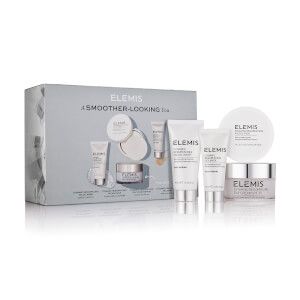
ELEMIS A Smoother Looking You
Works for
4 of 5 advertised claims delivered
Sun protectionSPF 30 · 3 UV filters · Broad spectrumWeak protectionLow filter dose
Evens skin tone2 ingredients credited for this claimStrong support
“Dynamic Resurfacing Gel Mask Targets The Look Of Fine Lines, Uneven Skin Texture And Light Scarring For A Renewed-Looking Complexion.”
This product can help reduce hypepigmentation and even out the skin tone because it contains the following effective ingredients: glycolic acid
Keep in mind that you would need to apply any topical skincare targetted at hypigmentation consistently for a couple of months to get a result. No topical skincare product can help get rid of hyperpigmentation (including post-acne marks and age spots) instantly.
This product can also help with skin tone because it offers sun protection. Sun damage is the main factor causing age spots, darkening of post-acne marks and other discolorations. This is why sun protection is the best strategy for maintaining an even skin tone. We, however, do not recommend using this product as a sunscreen because the protection it offers is not strong enough).
Moisturizing27 ingredients credited for this claimStrong support
“Use Dynamic Resurfacing Facial Wash Every Morning And Evening.”
This product can help improve hydration of the skin with the two types of ingredients.
The first type is called “humectants”:
these ingredients help attract water.
When humectants are on the surface of the skin, they “pull in” the moisture from the outside environment, or from
within deeper layers of the skin. The following ingredients in this product do the job:
betaine, biosaccharide gum-1.
This product also contains ingredients called “occlusives”. They help reduce the speed with which our skin loses moisture to the outside environment. These ingredients also help soften the upper layer of the skin, so it feels less tight and nicer to the touch. The following ingredients in this product do the job: borago officinalis seed oil, cetyl alcohol.
The following ingredients in this product are especially good for supporting the skin barrier and helping with the hydration level: acetyl tetrapeptide-9
Anti-aging6 ingredients credited for this claimStrong support
“Dynamic Resurfacing Gel Mask Targets The Look Of Fine Lines, Uneven Skin Texture And Light Scarring For A Renewed-Looking Complexion.”
This product can help reduce and prevent fine lines and wrinkles, improve skin elasticity and firmness because it contains glycolic acid.
These ingredients in the product can also be helpful, even though there is less evidence for their effectiveness: acetyl tetrapeptide-9.
Keep in mind that it typically takes at least 6 weeks to notice any results because the changes that are needed to improve fine lines and elasticity happen in the deeper layers of the skin. No topical anti-aging product can “erase” wrinkles or fully reverse signs of aging.
Exfoliation3 ingredients credited for this claimStrong support
“Formulated With A Powerful Blend Of Brightening Enzymes, This Dynamic Resurfacing Routine Sweeps Away Dead Skin Cells And Helps To Even Out The Complexion For A Smoother-Looking Complexion.”
This product can help exfoliate the skin. In other words, it helps break down the bonds between dead cells on the surface of the skin and speed up the skin turnover. Skin often appears softer and brighter after exfoliation, but overdoing it can result in disrupted skin barrier. The following ingredient is doing the exfoliating job in this product: glycolic acid.
Anti-oxidationNot advertised by the brand · 8 ingredients credited for this claimModerate support
This product contains antioxidants (rubus idaeus seed oil) that might be able to help neutralize free radicals in skin to lessen the damage it gets from the UV light (sun). There is not enough evidence to confirm their effectiveness in skin though.
Can it cause trouble?
Irritancy9 strong irritants: Parfum, Melissa officinalis leaf extract + 7 more — patch-test recommendedHigh risk
Comedogenic5 ingredients rated 2 or more on the 0–5 pore-clogging scale5 flagged
User reviews
Be the first — your take helps the next person decide.
Ingredients
Filter by role to see what each ingredient is doing.
Water~45–55%
Sodium lauroyl sarcosinate~8.8–10.8%
- Irritation risk
- Medium
Helps oil and water mix together and works as a cleansing agent
More about Sodium lauroyl sarcosinateGlycerin~3.9–4.8%
- Irritation risk
- Low
One of the best moisturizing ingredients. Naturally present in skin. It attracts water to the upper layer of the skin working as a humectant
More about GlycerinCocamidopropyl betaine~4.2–5.2%
- Irritation risk
- High
Helps water and oil mix together. Used as a cleansing ingredient. Could be an allergen
More about Cocamidopropyl betaineAcrylates copolymer~2.3–2.8%
- Irritation risk
- Medium
Used to stabilize product formulation, help create an even product layer over skin (for example, in sunscreen) and create a thicker product consistency
More about Acrylates copolymerPolysorbate 20~1.8–2.2%
Coco-glucoside~1.5–1.8%
- Irritation risk
- High
Used as a cleansing agent (surfactant) in cleansers. Helps water and oil mix together in lotions. Can be irritating
More about Coco-glucosideGlycol distearate~1.4–1.7%
- Irritation risk
- Medium
Helps water and oil mix together
More about Glycol distearateGlyceryl oleate~1.1–1.3%
- Irritation risk
- High
Helps oil and water mix together. Can be irritating
More about Glyceryl oleateSodium lactate~0.7–1.05%
- Irritation risk
- Medium
Helps attract water to the upper layer of the skin. Is often used to adjust the pH level of the product
More about Sodium lactateDicaprylyl ether~0.55–0.85%
- Irritation risk
- Low
Helps soften the upper layer of the skin while creating a non-greasy feel on the skin. Helps to dissolve other ingredients
More about Dicaprylyl etherPhenoxyethanol~0.4–0.6%
- Irritation risk
- Low
A preservative. It helps prevent bacterial growth in cosmetic products
More about PhenoxyethanolLauryl alcohol~0.3–0.55%
Parfum~0.2–0.4%
- Irritation risk
- High
An aromatic blend of unspecified and possibly irritating ingredients
More about ParfumSodium chloride~0.25–0.5%
- Irritation risk
- Low
Used to stabilize mixtures of oil and water, and create thicker, gel-like product textures
More about Sodium chlorideOrbignya oleifera seed oil~0.25–0.45%
- Irritation risk
- Low
A plant oil that can help soften the upper layer of the skin. Might be helpful in calming down inflammation in skin
More about Orbignya oleifera seed oilXanthan gum~0.25–0.45%
- Irritation risk
- Low
Used to create a thicker product consistency
More about Xanthan gumSodium hydroxide~0.25–0.45%
Caprylyl glycol~0.25–0.45%
- Irritation risk
- Medium
Helps preserve products and creates a nice product texture
More about Caprylyl glycolCitric acid~0.2–0.35%
- Irritation risk
- Medium
Can work as an exfoliant but is typically used to adjust the product pH
More about Citric acidPropylene glycol~0.15–0.3%
- Irritation risk
- High
Helps oil and water mix together and can enhance the penetration of other ingredients into the skin. It can be irritating
More about Propylene glycolChlorphenesin~0.15–0.3%
Glyceryl stearate~0.2–0.35%
- Irritation risk
- Low
An emollient that softens the skin and forms a protective layer on its surface. Helps water and oil mix together
More about Glyceryl stearateGalactoarabinan~0.15–0.3%
- Irritation risk
- Medium
Helps attract water to the upper layer of the skin
More about GalactoarabinanPapain~0.15–0.25%
- Irritation risk
- High
An enzyme extracted from papaya fruit. Can have an exfoliating effect on the skin. Can be irritating
More about PapainDisodium edta~0.15–0.25%
Behenyl alcohol~0.2–0.35%
- Irritation risk
- Low
Non-drying alcohol that helps water and oil mix together. Also serves as an emollient
More about Behenyl alcoholButyrospermum parkii butter~0.2–0.35%
- Irritation risk
- Low
- Comedogenicity
- 3/5
A great moisturising ingredient that softens the skin and reduces water loss from its upper layer. It also can be helpful in protecting skin from free radicals
More about Butyrospermum parkii butterBenzoic acid~0.15–0.3%
Moringa pterygosperma seed extract~0.1–0.2%
- Irritation risk
- Low
Might help attract water to the upper layer of the skin
More about Moringa pterygosperma seed extractHydrogenated castor oil~0.15–0.3%
- Irritation risk
- Medium
A plant oil that can help soften the skin. It might be helpful in calming down inflammation, but solid research is lacking. Is often used in lip products to create the needed product consistency
More about Hydrogenated castor oilDisodium phosphate~0.15–0.25%
- Irritation risk
- Low
Helps adjust the product pH and stabilize the formulation
More about Disodium phosphateStearyl alcohol~0.2–0.35%
- Irritation risk
- Low
An emollient that helps soften the skin
More about Stearyl alcoholProtease~0.1–0.25%
- Irritation risk
- Low
Subtilisin~0.1–0.25%
- Irritation risk
- Low
Tocopheryl acetate~0.15–0.3%
- Irritation risk
- Medium
A more stable but less bio-available form of vitamin E compared to Tocopherol. Might help moisturize and protect the skin from free radicals, but mostly used in low concentrations to stabilize other ingredients.
More about Tocopheryl acetateTocopherol~0.15–0.25%
- Irritation risk
- Low
Pure form of vitamin E. Can help moisturise and protect the skin from free radicals. Often used to help stabilise other ingredients or the formula itself
More about TocopherolHydrogenated palm glycerides citrate~0.15–0.3%
- Irritation risk
- Low
Helps soften the upper layer of the skin
More about Hydrogenated palm glycerides citrateTocopherol~0.15–0.25%
- Irritation risk
- Low
Pure form of vitamin E. Can help moisturise and protect the skin from free radicals. Often used to help stabilise other ingredients or the formula itself
More about TocopherolPoria cocos extract~0.15–0.25%
- Irritation risk
- Low
Water~0.15–0.25%
Butylene glycol~0.15–0.25%
- Irritation risk
- Low
Used to create a nice product texture and help delivery of other ingredients. Might be somewhat helpful in attracting water to the upper layer of the skin
More about Butylene glycolLactococcus ferment lysate~0.15–0.25%
- Irritation risk
- Low
Consists of remains of dead bacteria cells. Is likely helpful in attracting water to the upper layer of the skin. Might be helpful in reducing inflammation and neutralizing free radicals in skin
More about Lactococcus ferment lysatePolysorbate 20~0.15–0.3%
Methyl gluceth-20~0.15–0.25%
- Irritation risk
- Low
Helps attract water to the upper layer of the skin and soften it
More about Methyl gluceth-20Lactic acid~0.15–0.25%
- Irritation risk
- Medium
An exfoliating and moisturizing alpha-hydroxy acid (AHA). Typically causes less irritation than other AHAs, for example, glycolic acid. At high concentrations (about 15%), lactic acid can help reduce lines and wrinkles. Recent studies show that lactic acid can support the "good" bacteria living on skin's surface (healthy skin microbiome)
More about Lactic acidPhenoxyethanol~0.15–0.3%
- Irritation risk
- Low
A preservative. It helps prevent bacterial growth in cosmetic products
More about PhenoxyethanolBetaine~0.15–0.25%
- Irritation risk
- Low
Helps attract water to the upper layer of the skin and improves the product texture
More about BetainePropylene glycol~0.1–0.25%
- Irritation risk
- High
Helps oil and water mix together and can enhance the penetration of other ingredients into the skin. It can be irritating
More about Propylene glycolDisodium edta~0.15–0.25%
Benzoic acid~0.15–0.3%
Sodium hydroxide~0.15–0.25%
Parfum~0.1–0.2%
- Irritation risk
- High
An aromatic blend of unspecified and possibly irritating ingredients
More about ParfumDehydroacetic acid~0.15–0.25%
Tromethamine~0.15–0.25%
Ethylhexylglycerin~0.15–0.25%
Papain~0.15–0.25%
- Irritation risk
- High
An enzyme extracted from papaya fruit. Can have an exfoliating effect on the skin. Can be irritating
More about PapainSaponins~0.2–0.4%
Sodium benzoate~0.15–0.25%
Sodium chloride~0.15–0.3%
- Irritation risk
- Low
Used to stabilize mixtures of oil and water, and create thicker, gel-like product textures
More about Sodium chlorideGlycerin~0.15–0.3%
- Irritation risk
- Low
One of the best moisturizing ingredients. Naturally present in skin. It attracts water to the upper layer of the skin working as a humectant
More about GlycerinBehenyl alcohol~0.2–0.35%
- Irritation risk
- Low
Non-drying alcohol that helps water and oil mix together. Also serves as an emollient
More about Behenyl alcoholButyrospermum parkii butter~0.2–0.35%
- Irritation risk
- Low
- Comedogenicity
- 3/5
A great moisturising ingredient that softens the skin and reduces water loss from its upper layer. It also can be helpful in protecting skin from free radicals
More about Butyrospermum parkii butterHydrogenated castor oil~0.15–0.3%
- Irritation risk
- Medium
A plant oil that can help soften the skin. It might be helpful in calming down inflammation, but solid research is lacking. Is often used in lip products to create the needed product consistency
More about Hydrogenated castor oilStearyl alcohol~0.2–0.35%
- Irritation risk
- Low
An emollient that helps soften the skin
More about Stearyl alcoholPoria cocos extract~0.15–0.25%
- Irritation risk
- Low
Protease~0.1–0.25%
- Irritation risk
- Low
Saponaria officinalis leaf/root extract~0.1–0.25%
- Irritation risk
- Low
Subtilisin~0.1–0.25%
- Irritation risk
- Low
Tocopheryl acetate~0.15–0.3%
- Irritation risk
- Medium
A more stable but less bio-available form of vitamin E compared to Tocopherol. Might help moisturize and protect the skin from free radicals, but mostly used in low concentrations to stabilize other ingredients.
More about Tocopheryl acetateCream~0.15–0.3%
- Irritation risk
- Low
Water~0.15–0.25%
Coco-caprylate~0.15–0.3%
- Irritation risk
- Medium
An emollient that softens skin and creates a nice product texture
More about Coco-caprylateGlycerin~0.15–0.3%
- Irritation risk
- Low
One of the best moisturizing ingredients. Naturally present in skin. It attracts water to the upper layer of the skin working as a humectant
More about GlycerinCaprylic/capric triglyceride~0.2–0.35%
- Irritation risk
- Medium
A good mix of fatty acids that forms a protective layer on the skin. Improves the shelf life of products. Derived from coconut and glycerin
More about Caprylic/capric triglycerideCetyl alcohol~0.2–0.35%
- Irritation risk
- Low
A non-drying alcohol that works to soften the skin and stabilize product formulations helping oil and water mix together
More about Cetyl alcoholIsostearyl alcohol~0.15–0.3%
- Irritation risk
- Low
Helps soften the upper layer of the skin
More about Isostearyl alcoholButylene glycol~0.15–0.25%
- Irritation risk
- Low
Used to create a nice product texture and help delivery of other ingredients. Might be somewhat helpful in attracting water to the upper layer of the skin
More about Butylene glycolButylene glycol cocoate~0.15–0.3%
- Irritation risk
- Medium
Helps oil and water mix together
More about Butylene glycol cocoateButyl methoxydibenzoylmethane~0.3–0.55%
- Irritation risk
- Medium
Avobenzone. An organic, or so-called "chemical" UV filter. Protects against both UVA and UVB rays. Needs to be combined with other filters in a formulation to be stable.
More about Butyl methoxydibenzoylmethaneEthylhexyl methoxycinnamate~0.3–0.55%
- Irritation risk
- High
Octinoxate. When used in higher concentrations, works as a sunscreen protecting the skin from UVB rays. When used in lower concentration, helps to preserve the product formulation. Is shown to be harmful to coral reefs - consider avoiding bathing in coral reef areas when wearing a product with this ingredient. It can be irritating
More about Ethylhexyl methoxycinnamateRubus idaeus seed oil~0.15–0.3%
- Irritation risk
- Medium
A plant oil that might be able to help neutralize free radicals in skin
More about Rubus idaeus seed oilPhenoxyethanol~0.15–0.3%
- Irritation risk
- Low
A preservative. It helps prevent bacterial growth in cosmetic products
More about PhenoxyethanolTocopheryl acetate~0.15–0.3%
- Irritation risk
- Medium
A more stable but less bio-available form of vitamin E compared to Tocopherol. Might help moisturize and protect the skin from free radicals, but mostly used in low concentrations to stabilize other ingredients.
More about Tocopheryl acetateOctocrylene~0.3–0.55%
- Irritation risk
- Medium
A weak sunscreen that protects against the sun rays that cause sunburn (UVB) and is somewhat effective against the UVA rays. It is quite stable and can help stabilize other, more vulnerable, sunscreen ingredients like Avobenzone. It is an organic, or so called "chemical" sunscreen
More about OctocryleneCarbomer~0.15–0.25%
- Irritation risk
- Low
Helps create a thicker or gel-like product texture. It is not a surfactant but can be used in gentle cleansing formulations
More about CarbomerChlorphenesin~0.15–0.25%
Melissa officinalis leaf extract~0.15–0.25%
- Irritation risk
- High
A plant extract that is added for its fragrance. Can be irritating
More about Melissa officinalis leaf extractPropylene glycol~0.1–0.25%
- Irritation risk
- High
Helps oil and water mix together and can enhance the penetration of other ingredients into the skin. It can be irritating
More about Propylene glycolSodium stearoyl glutamate~0.2–0.35%
- Irritation risk
- Medium
Helps oil and water mix together
More about Sodium stearoyl glutamateBehenyl alcohol~0.2–0.35%
- Irritation risk
- Low
Non-drying alcohol that helps water and oil mix together. Also serves as an emollient
More about Behenyl alcoholEthylcellulose~0.15–0.3%
- Irritation risk
- Low
Xanthan gum~0.15–0.25%
- Irritation risk
- Low
Used to create a thicker product consistency
More about Xanthan gumButyrospermum parkii butter~0.2–0.35%
- Irritation risk
- Low
- Comedogenicity
- 3/5
A great moisturising ingredient that softens the skin and reduces water loss from its upper layer. It also can be helpful in protecting skin from free radicals
More about Butyrospermum parkii butterTocopherol~0.15–0.25%
- Irritation risk
- Low
Pure form of vitamin E. Can help moisturise and protect the skin from free radicals. Often used to help stabilise other ingredients or the formula itself
More about TocopherolPapain~0.15–0.25%
- Irritation risk
- High
An enzyme extracted from papaya fruit. Can have an exfoliating effect on the skin. Can be irritating
More about PapainBorago officinalis seed oil~0.15–0.3%
- Irritation risk
- Low
A plant oil that is effective in reducing irritation in skin, restore the barrier function and support its hydration
More about Borago officinalis seed oilParfum~0.1–0.2%
- Irritation risk
- High
An aromatic blend of unspecified and possibly irritating ingredients
More about ParfumDisodium edta~0.15–0.25%
Sodium hydroxide~0.15–0.25%
Lecithin~0.15–0.3%
- Irritation risk
- Low
Used mostly for creating emulsions - helping oil and water mix together. Helps soften the upper layer of the skin
More about LecithinSodium dehydroacetate~0.15–0.25%
Hydrogenated castor oil~0.15–0.3%
- Irritation risk
- Medium
A plant oil that can help soften the skin. It might be helpful in calming down inflammation, but solid research is lacking. Is often used in lip products to create the needed product consistency
More about Hydrogenated castor oilStearyl alcohol~0.2–0.35%
- Irritation risk
- Low
An emollient that helps soften the skin
More about Stearyl alcoholEuphrasia officinalis extract~0.15–0.25%
- Irritation risk
- Low
Mimosa tenuiflora bark extract~0.1–0.2%
- Irritation risk
- Low
Protease~0.1–0.25%
- Irritation risk
- Low
Biosaccharide gum-1~0.15–0.25%
- Irritation risk
- Low
Helps attract water to the upper layer of the skin and is claimed to provide a longer-lasting hydration because of its ability to create a water-binding film on the surface of the skin
More about Biosaccharide gum-1Citric acid~0.15–0.25%
- Irritation risk
- Medium
Can work as an exfoliant but is typically used to adjust the product pH
More about Citric acidHexyl cinnamal~0.1–0.2%
Codium tomentosum extract~0.15–0.3%
- Irritation risk
- Low
Ecklonia cava extract~0.15–0.3%
- Irritation risk
- Low
- Comedogenicity
- 3/5
Gelidium cartilagineum extract~0.15–0.3%
- Irritation risk
- Low
Hizikia fusiforme extract~0.15–0.3%
- Irritation risk
- Low
Myrtus communis leaf extract~0.15–0.25%
- Irritation risk
- High
A plant extract that contains an essential oil and often used for its fragrance. Can be irritating. It has some anti-bacterial and anti-oxidant properties
More about Myrtus communis leaf extractPotassium sorbate~0.2–0.35%
Sodium benzoate~0.15–0.3%
Benzyl salicylate~0.15–0.3%
Subtilisin~0.15–0.3%
- Irritation risk
- Low
Butylphenyl methylpropional~0.15–0.3%
- Irritation risk
- High
A fragrance. Can trigger allergic reactions and be irritating
More about Butylphenyl methylpropionalAlpha-isomethyl ionone~0.15–0.25%
- Irritation risk
- High
A fragrance. Potential allergen and can be irritating
More about Alpha-isomethyl iononePoria cocos extract~0.15–0.3%
- Irritation risk
- Low
Citrus aurantium amara leaf/twig oil~0.15–0.3%
- Irritation risk
- High
Water~0.15–0.3%
Polysorbate 20~0.2–0.35%
Glycerin~0.2–0.4%
- Irritation risk
- Low
One of the best moisturizing ingredients. Naturally present in skin. It attracts water to the upper layer of the skin working as a humectant
More about GlycerinMenthyl lactate~0.2–0.35%
Propanediol~0.2–0.35%
- Irritation risk
- Low
Acts as a solvent for other ingredients. Speeds up the absorption of other ingredients into the skin
More about PropanediolPropylene glycol~0.2–0.35%
- Irritation risk
- High
Helps oil and water mix together and can enhance the penetration of other ingredients into the skin. It can be irritating
More about Propylene glycolTromethamine~0.2–0.35%
Phenoxyethanol~0.2–0.4%
- Irritation risk
- Low
A preservative. It helps prevent bacterial growth in cosmetic products
More about PhenoxyethanolCarbomer~0.2–0.35%
- Irritation risk
- Low
Helps create a thicker or gel-like product texture. It is not a surfactant but can be used in gentle cleansing formulations
More about CarbomerButylene glycol~0.2–0.35%
- Irritation risk
- Low
Used to create a nice product texture and help delivery of other ingredients. Might be somewhat helpful in attracting water to the upper layer of the skin
More about Butylene glycolBambusa arundinacea stem extract~0.2–0.35%
- Irritation risk
- Low
Xanthan gum~0.2–0.35%
- Irritation risk
- Low
Used to create a thicker product consistency
More about Xanthan gumPeg-120 methyl glucose dioleate~0.2–0.4%
Parfum~0.15–0.3%
- Irritation risk
- High
An aromatic blend of unspecified and possibly irritating ingredients
More about ParfumChlorphenesin~0.16–0.32%
Disodium edta~0.2–0.35%
Papain~0.2–0.35%
- Irritation risk
- High
An enzyme extracted from papaya fruit. Can have an exfoliating effect on the skin. Can be irritating
More about PapainMannitol~0.2–0.35%
- Irritation risk
- Low
Helps to attract water to the upper layer of the skin
More about MannitolSodium dehydroacetate~0.2–0.35%
Malpighia glabra fruit extract~0.2–0.35%
- Irritation risk
- Medium
A plant extract that might help neutralize free radicals in skin, but research on its effectiveness is lacking
More about Malpighia glabra fruit extractBehenyl alcohol~0.25–0.45%
- Irritation risk
- Low
Non-drying alcohol that helps water and oil mix together. Also serves as an emollient
More about Behenyl alcoholButyrospermum parkii butter~0.25–0.45%
- Irritation risk
- Low
- Comedogenicity
- 3/5
A great moisturising ingredient that softens the skin and reduces water loss from its upper layer. It also can be helpful in protecting skin from free radicals
More about Butyrospermum parkii butterArctium majus root extract~0.2–0.35%
- Irritation risk
- Low
Citric acid~0.2–0.35%
- Irritation risk
- Medium
Can work as an exfoliant but is typically used to adjust the product pH
More about Citric acidGlycolic acid~0.2–0.35%
- Irritation risk
- High
An alpha-hydroxy acid (AHA) that helps to remove the dead skin cells on the surface of the skin reveling a more even, smoother complexation. It is also able to stimulate collagen production with long-term use. Could help to reduce pore congestion. It can be irritating to the skin. Apply sunscreen daily if using products with glycolic acid
More about Glycolic acidHydrogenated castor oil~0.2–0.4%
- Irritation risk
- Medium
A plant oil that can help soften the skin. It might be helpful in calming down inflammation, but solid research is lacking. Is often used in lip products to create the needed product consistency
More about Hydrogenated castor oilStearyl alcohol~0.2–0.4%
- Irritation risk
- Low
An emollient that helps soften the skin
More about Stearyl alcoholCaramel~0.15–0.3%
- Irritation risk
- Low
Zinc sulfate~0.15–0.3%
Protease~0.2–0.35%
- Irritation risk
- Low
Poria cocos extract~0.2–0.35%
- Irritation risk
- Low
Subtilisin~0.15–0.3%
- Irritation risk
- Low
Tocopheryl acetate~0.15–0.3%
- Irritation risk
- Medium
A more stable but less bio-available form of vitamin E compared to Tocopherol. Might help moisturize and protect the skin from free radicals, but mostly used in low concentrations to stabilize other ingredients.
More about Tocopheryl acetateTocopherol~0.15–0.3%
- Irritation risk
- Low
Pure form of vitamin E. Can help moisturise and protect the skin from free radicals. Often used to help stabilise other ingredients or the formula itself
More about TocopherolAcetyl tetrapeptide-9~0.15–0.25%
- Irritation risk
- Low
A type of peptide. Peptides are excellent moisturizers and might be able support collagen production reducing fine lines and wrinkles
More about Acetyl tetrapeptide-9Biotin~0.1–0.15%
- Irritation risk
- Low
Might have some moisturising properties. Is not effective when applied topically beyond some moisturizing effect
More about BiotinPotassium sorbate~0.15–0.25%
Ingredient list view
Water, Sodium lauroyl sarcosinate, Glycerin, Cocamidopropyl betaine, Acrylates copolymer, Polysorbate 20, Coco-glucoside, Glycol distearate, Glyceryl oleate, Sodium lactate, Dicaprylyl ether, Phenoxyethanol, Lauryl alcohol, Parfum, Sodium chloride, Orbignya oleifera seed oil, Xanthan gum, Sodium hydroxide, Caprylyl glycol, Citric acid, Propylene glycol, Chlorphenesin, Glyceryl stearate, Galactoarabinan, Papain, Disodium edta, Behenyl alcohol, Butyrospermum parkii butter, Benzoic acid, Moringa pterygosperma seed extract, Hydrogenated castor oil, Disodium phosphate, Stearyl alcohol, Protease, Subtilisin, Tocopheryl acetate, Tocopherol, Hydrogenated palm glycerides citrate, Tocopherol, Poria cocos extract, Water, Butylene glycol, Lactococcus ferment lysate, Polysorbate 20, Methyl gluceth-20, Lactic acid, Phenoxyethanol, Betaine, Propylene glycol, Disodium edta, Benzoic acid, Sodium hydroxide, Parfum, Dehydroacetic acid, Tromethamine, Ethylhexylglycerin, Papain, Saponins, Sodium benzoate, Sodium chloride, Glycerin, Behenyl alcohol, Butyrospermum parkii butter, Hydrogenated castor oil, Stearyl alcohol, Poria cocos extract, Protease, Saponaria officinalis leaf/root extract, Subtilisin, Tocopheryl acetate, Cream, Water, Coco-caprylate, Glycerin, Caprylic/capric triglyceride, Cetyl alcohol, Isostearyl alcohol, Butylene glycol, Butylene glycol cocoate, Butyl methoxydibenzoylmethane, Ethylhexyl methoxycinnamate, Rubus idaeus seed oil, Phenoxyethanol, Tocopheryl acetate, Octocrylene, Carbomer, Chlorphenesin, Melissa officinalis leaf extract, Propylene glycol, Sodium stearoyl glutamate, Behenyl alcohol, Ethylcellulose, Xanthan gum, Butyrospermum parkii butter, Tocopherol, Papain, Borago officinalis seed oil, Parfum, Disodium edta, Sodium hydroxide, Lecithin, Sodium dehydroacetate, Hydrogenated castor oil, Stearyl alcohol, Euphrasia officinalis extract, Mimosa tenuiflora bark extract, Protease, Biosaccharide gum-1, Citric acid, Hexyl cinnamal, Codium tomentosum extract, Ecklonia cava extract, Gelidium cartilagineum extract, Hizikia fusiforme extract, Myrtus communis leaf extract, Potassium sorbate, Sodium benzoate, Benzyl salicylate, Subtilisin, Butylphenyl methylpropional, Alpha-isomethyl ionone, Poria cocos extract, Citrus aurantium amara leaf/twig oil, Water, Polysorbate 20, Glycerin, Menthyl lactate, Propanediol, Propylene glycol, Tromethamine, Phenoxyethanol, Carbomer, Butylene glycol, Bambusa arundinacea stem extract, Xanthan gum, Peg-120 methyl glucose dioleate, Parfum, Chlorphenesin, Disodium edta, Papain, Mannitol, Sodium dehydroacetate, Malpighia glabra fruit extract, Behenyl alcohol, Butyrospermum parkii butter, Arctium majus root extract, Citric acid, Glycolic acid, Hydrogenated castor oil, Stearyl alcohol, Caramel, Zinc sulfate, Protease, Poria cocos extract, Subtilisin, Tocopheryl acetate, Tocopherol, Acetyl tetrapeptide-9, Biotin, Potassium sorbate
Compare prices
Retailers ranked by price — lowest first.

Product summary
"Elemis - A Smoother Looking You" is using UV filters in a relatively low concentration. Because of this, it might not be able to provide reliable sun protection.
This product should also be hydrating enough to use without an additional moisturizer during the day. This product prevents early signs of aging by protecting against sun damage (all broad spectrum sunscreens do that).
Sunscreen filters
This is a so-called "chemical" sunscreen. It means that it uses organic UV filters. They typically offer good sun protection and rarely leave a white cast, but they can be irritating for some people with sensitive skin. The UV filters in this sunscreen are: avobenzone 0.30% - 0.55%, octinoxate 0.30% - 0.55% and octocrylene 0.30% - 0.55%.
Irritation risk
There are quite a few common irritants in this product, including ingredients without particular skin benefits. We would not recommend it for sensitive skin. We assess the overall irritancy of it to be high. For a detailed overview of all potential irritants: click here
You can see the detailed formula review with the breakdown of all actives in the product and the full ingredient list with estimated concentrations in the tables below.
About the brand
According to Cruelty-Free Kitty "Elemis" is cruelty free and so is its parent company.
Price
The product retails for 105.00$ in the United States.
For a detailed price comparison: click here.
Sources cited in this review
Every concentration estimate and effectiveness label is anchored to one of these 28 studies and safety reviews.
- 1
- 2
- 3
- 4
- 5Allergen of the Year—Alkyl Glucosidepracticeupdate.com
- 6

Affiliate links · As an Amazon Associate, WIMJ earns from qualifying purchases.