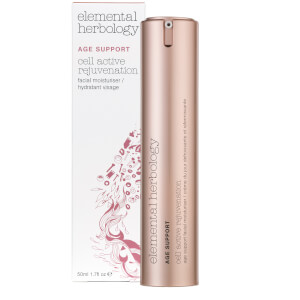
Elemental Herbology Cell Active Rejuvenation Age Support Facial Moisturiser
Works for
2 of 2 advertised claims delivered
MoisturizingHexapeptide-11, Palmitoyl tripeptide-38 + 28 moreStrong evidence
“Cell Active Rejuvenation Age Support Facial Moisturiser”
This product can help improve hydration of the skin with the two types of ingredients.
The first type is called “humectants”:
these ingredients help attract water.
When humectants are on the surface of the skin, they “pull in” the moisture from the outside environment, or from
within deeper layers of the skin. The following ingredients in this product do the job:
algae extract, anhydroxylitol.
This product also contains ingredients called “occlusives”. They help reduce the speed with which our skin loses moisture to the outside environment. These ingredients also help soften the upper layer of the skin, so it feels less tight and nicer to the touch. The following ingredients in this product do the job: butyrospermum parkii butter, helianthus annuus seed oil.
The following ingredients in this product are especially good for supporting the skin barrier and helping with the hydration level: hexapeptide-11, palmitoyl tripeptide-38
Anti-agingHexapeptide-11, Palmitoyl tripeptide-38 + 7 moreModerate evidence
“Cell Active Rejuvenation Age Support Facial Moisturiser”
This product contains hexapeptide-11, palmitoyl tripeptide-38. These ingredients might be able to help reduce and prevent fine lines and wrinkles, improve skin elasticity and firmness, but there is not enough evidence that it actually works.
Can it cause trouble?
Irritancy13 strong irritants: Rosa damascena extract, Citrus aurantium dulcis flower oil + 11 more — patch-test recommendedHigh risk
Comedogenic8 ingredients rated 2 or more on the 0–5 pore-clogging scale8 flagged
User reviews
Be the first — your take helps the next person decide.
Ingredients
Filter by role to see what each ingredient is doing.
Water~45–55%
Glycerin~4.6–5.6%
- Irritation risk
- Low
One of the best moisturizing ingredients. Naturally present in skin. It attracts water to the upper layer of the skin working as a humectant
More about GlycerinPlukenetia volubilis seed oil~4–4.9%
- Irritation risk
- Low
A plant oil that works as a good moisturizer by softening the upper layer of the skin. Might be helpful in reducing inflammation in skin and reducing blemishes due to the large content of linoleic acid
More about Plukenetia volubilis seed oilCoco-caprylate/caprate~3–3.7%
- Irritation risk
- Low
Helps to soften the upper layer of the skin without creating a greasy texture
More about Coco-caprylate/caprateButyrospermum parkii butter~2.3–2.8%
- Irritation risk
- Low
- Comedogenicity
- 3/5
A great moisturising ingredient that softens the skin and reduces water loss from its upper layer. It also can be helpful in protecting skin from free radicals
More about Butyrospermum parkii butterGlyceryl stearate~1.8–2.2%
- Irritation risk
- Low
An emollient that softens the skin and forms a protective layer on its surface. Helps water and oil mix together
More about Glyceryl stearateSaccharomyces/xylinum/black tea ferment~1.4–1.8%
- Irritation risk
- Low
A fermented sweet black tea. There is no studies on particular benefits of this ingredient in skin. It can help attract water to the upper layer of the skin, and might have some anti-oxidant effect. It is used in skincare for mostly marketing purposes because of the popularity of kombucha drinks
More about Saccharomyces/xylinum/black tea fermentCandelilla/jojoba/rice bran polyglyceryl-3 esters~1.3–1.6%
- Irritation risk
- Medium
Help oil and water mix together
More about Candelilla/jojoba/rice bran polyglyceryl-3 estersMyristyl myristate~1.2–1.5%
- Irritation risk
- Medium
- Comedogenicity
- 3/5
An emollient. Is not recommended for acne-prone skin as it can be comedogenic
More about Myristyl myristateXylitylglucoside~0.75–1.15%
- Irritation risk
- Low
Helps attract water to the upper layer of the skin and repair the skin barrier function
More about XylitylglucosideSoybean glycerides~0.6–0.9%
- Irritation risk
- Low
Help soften the upper layer of the skin
More about Soybean glyceridesOctyldodecanol~0.5–0.75%
- Irritation risk
- Low
An emollient that helps to soften the skin and create a pleasant product texture and stabilize the formulation
More about OctyldodecanolArgania spinosa kernel oil~0.45–0.65%
- Irritation risk
- Medium
An emollient that helps soften the upper layer of the skin. Might have some weak anti-oxidant properties
More about Argania spinosa kernel oilRosa canina fruit oil~0.4–0.6%
- Irritation risk
- Medium
A great emollient. Contains vitamin E (tocopherol) which may give it some anti-oxidant properties. Can contain volatile compounds and can be irritating
More about Rosa canina fruit oilRoyal jelly~0.3–0.55%
- Irritation risk
- High
Helps attract water to the upper layer of the skin
More about Royal jellyAlgae extract~0.4–0.6%
- Irritation risk
- Low
- Comedogenicity
- 3/5
Plant extract that helps the skin to attract water and make it more smooth for touch. Also shows promise of anti-aging properties, but research is not extensive yet
More about Algae extractHexapeptide-11~0.25–0.5%
- Irritation risk
- Low
A type of peptide. Peptides are excellent moisturizers and might be able support collagen production reducing fine lines and wrinkles
More about Hexapeptide-11Fucus vesiculosus extract~0.25–0.45%
- Irritation risk
- Low
- Comedogenicity
- 3/5
Panicum miliaceum seed extract~0.2–0.4%
- Irritation risk
- Low
Chlorella vulgaris/lupinus albus protein ferment~0.2–0.35%
- Irritation risk
- Low
- Comedogenicity
- 2/5
Palmitoyl tripeptide-38~0.2–0.4%
- Irritation risk
- Low
A type of peptide. Peptides are excellent moisturizers and might be able support collagen production reducing fine lines and wrinkles
More about Palmitoyl tripeptide-38Prunus amygdalus dulcis protein~0.2–0.35%
- Irritation risk
- Low
Zinc gluconate~0.15–0.3%
- Irritation risk
- Medium
Typically used to stabilize the product formulations. It is a salt of a polyhydroxy acid (PHA) and in larger concentrations, can help shed the dead cells from the skin surface revealing smoother skin. It can help attract water to the upper layer of the skin. Might to be helpful against acne and clogged pores. Could be helpful in neutralizing free radicals, but solid research is missing. Due to the zinc content, might help calm down inflammation in skin
More about Zinc gluconateButyrospermum parkii butter unsaponifiables~0.15–0.3%
- Irritation risk
- Low
- Comedogenicity
- 2/5
A great moisturizing ingredient that softens the skin and reduces water loss from its upper layer. It also can be helpful in protecting skin from free radicals
More about Butyrospermum parkii butter unsaponifiablesSodium hyaluronate~0.15–0.3%
- Irritation risk
- Low
One of the best moisturizing ingredients. Attracts water into the upper layer of the skin
More about Sodium hyaluronateRosa damascena extract~0.15–0.3%
- Irritation risk
- High
Oil of a very fragrant pink rose used as fragrance in cosmetics. Extensive research has shown it has mixed benefits. In the pro column, inhaling this flower’s scent seems to have relaxing properties and the plant’s petals contain skin-soothing and antioxidant compounds that can benefit skin. On the flipside, the numerous chemicals that create this rose’s distinctive fragrance pose a risk of causing skin aggravation.
More about Rosa damascena extractHematite extract~0.2–0.35%
- Irritation risk
- Low
Anhydroxylitol~0.15–0.3%
- Irritation risk
- Low
Helps attract water to the upper layer of the skin and repair the skin barrir function
More about AnhydroxylitolXylitol~0.15–0.3%
- Irritation risk
- Low
Helps attract water to the upper layer of the skin and repair the skin barrier function
More about XylitolMalpighia glabra fruit extract~0.15–0.3%
- Irritation risk
- Medium
A plant extract that might help neutralize free radicals in skin, but research on its effectiveness is lacking
More about Malpighia glabra fruit extractCopper gluconate~0.15–0.3%
- Irritation risk
- Medium
Typically used to stabilize the product formulations. It is a salt of polyhydroxy acid (PHA) and in larger concentrations, can help shed the dead cells from the skin surface revealing smoother skin. It can help attract water to the upper layer of the skin. Might to be helpful against acne and clogged pores. Could be helpful in neutralizing free radicals, but solid research is missing
More about Copper gluconateHelianthus annuus seed oil~0.2–0.35%
- Irritation risk
- Low
A great emollient due to its high linoleic acid content. One of the most effective plant oils in helping skin hydration and repairing skin barrier function
More about Helianthus annuus seed oilCitrus aurantium dulcis flower oil~0.15–0.3%
- Irritation risk
- High
Avena strigosa seed extract~0.15–0.3%
- Irritation risk
- Low
Cananga odorata flower oil~0.15–0.3%
Calendula officinalis flower oil~0.15–0.25%
- Irritation risk
- High
A plant oil that might have an antibacterial and some antioxidant effect. Is a common allergen and irritant
More about Calendula officinalis flower oilMagnesium aspartate~0.15–0.3%
- Irritation risk
- Low
Might be helpful in restoring skin barrier function and calm down inflammation in skin
More about Magnesium aspartateAscorbyl palmitate~0.2–0.35%
- Irritation risk
- Medium
Being a lipid soluble form of vitamin C, it is more stable and can penetrate the skin better than L-Ascorbic acid. It is effective in protecting the skin from free radicals, as well as evening the skin tone, but is less effective in stimulating collagen production compared to L-Ascorbic acid.
More about Ascorbyl palmitateCetearyl alcohol~0.25–0.4%
- Irritation risk
- Low
- Comedogenicity
- 2/5
A non-drying alcohol. Works as an emollient. Helps water and oil mix together and creates a nice product texture
More about Cetearyl alcoholGlyceryl stearate citrate~0.25–0.45%
- Irritation risk
- Low
Helps oil and water mix together while softening the upper layer of the skin
More about Glyceryl stearate citrateSodium stearoyl lactylate~0.2–0.4%
- Irritation risk
- Medium
Helps oil and water mix together
More about Sodium stearoyl lactylateMagnesium aluminum silicate~0.2–0.4%
- Irritation risk
- Low
Might be helpful in restoring skin barrier function and, when combined with zinc carbonate and malonic acid, reducing fine lines and wrinkles by stimulating elastin production. Also helps stabilize the product formulation
More about Magnesium aluminum silicateSorbitol~0.2–0.35%
- Irritation risk
- Low
Helps attract water to the upper layer of the skin and improves the product texture
More about SorbitolBenzyl alcohol~0.15–0.3%
- Irritation risk
- High
A preservative. Can be used to mask unpleasant smell. Can be irritating
More about Benzyl alcoholLinalool~0.15–0.3%
Isostearyl isostearate~0.2–0.4%
- Irritation risk
- Medium
- Comedogenicity
- 3/5
Helps soften the upper layer of the skin and improve the product texture. It can be comedogenic
More about Isostearyl isostearateXanthan gum~0.2–0.4%
- Irritation risk
- Low
Used to create a thicker product consistency
More about Xanthan gumMaltodextrin~0.2–0.4%
- Irritation risk
- Low
Used to stabilize the product formulation and can help absorb oil
More about MaltodextrinLecithin~0.25–0.45%
- Irritation risk
- Low
Used mostly for creating emulsions - helping oil and water mix together. Helps soften the upper layer of the skin
More about LecithinTocopherol~0.2–0.35%
- Irritation risk
- Low
Pure form of vitamin E. Can help moisturise and protect the skin from free radicals. Often used to help stabilise other ingredients or the formula itself
More about TocopherolLimonene~0.15–0.3%
- Irritation risk
- High
A common frangrance that can easily irritate skin, especially if exposed to air, light or heat
More about LimoneneCaprylhydroxamic acid~0.2–0.35%
Mannitol~0.2–0.35%
- Irritation risk
- Low
Helps to attract water to the upper layer of the skin
More about MannitolInulin lauryl carbamate~0.2–0.35%
Phenoxyethanol~0.2–0.4%
- Irritation risk
- Low
A preservative. It helps prevent bacterial growth in cosmetic products
More about PhenoxyethanolTetrasodium glutamate diacetate~0.2–0.35%
- Irritation risk
- Low
Helps stabilize the product formulation
More about Tetrasodium glutamate diacetateFarnesol~0.15–0.3%
Hydroxyethylcellulose~0.2–0.4%
- Irritation risk
- Low
Used to thicken product formulations and create gel-like textures
More about HydroxyethylcelluloseGeraniol~0.15–0.3%
Benzyl benzoate~0.15–0.3%
- Irritation risk
- High
Fragrance with sweet balsamic smell. Help to preserve products and dissolve other ingredients. Could trigger allergic reactions and be irritating
More about Benzyl benzoateHydroxypropyl cyclodextrin~0.2–0.4%
- Irritation risk
- Medium
Used to stabilize product formulations and help soften the upper layer of the skin
More about Hydroxypropyl cyclodextrinPectin~0.2–0.35%
- Irritation risk
- Low
Potassium sorbate~0.15–0.3%
Benzyl salicylate~0.15–0.25%
Tannic acid~0.15–0.3%
- Irritation risk
- Low
Citral~0.1–0.2%
Eugenol~0.1–0.2%
Isoeugenol~0.15–0.25%
- Irritation risk
- High
Sorbic acid~0.15–0.25%
Citric acid~0.05–0.1%
- Irritation risk
- Medium
Can work as an exfoliant but is typically used to adjust the product pH
More about Citric acidIngredient list view
Water, Glycerin, Plukenetia volubilis seed oil, Coco-caprylate/caprate, Butyrospermum parkii butter, Glyceryl stearate, Saccharomyces/xylinum/black tea ferment, Candelilla/jojoba/rice bran polyglyceryl-3 esters, Myristyl myristate, Xylitylglucoside, Soybean glycerides, Octyldodecanol, Argania spinosa kernel oil, Rosa canina fruit oil, Royal jelly, Algae extract, Hexapeptide-11, Fucus vesiculosus extract, Panicum miliaceum seed extract, Chlorella vulgaris/lupinus albus protein ferment, Palmitoyl tripeptide-38, Prunus amygdalus dulcis protein, Zinc gluconate, Butyrospermum parkii butter unsaponifiables, Sodium hyaluronate, Rosa damascena extract, Hematite extract, Anhydroxylitol, Xylitol, Malpighia glabra fruit extract, Copper gluconate, Helianthus annuus seed oil, Citrus aurantium dulcis flower oil, Avena strigosa seed extract, Cananga odorata flower oil, Calendula officinalis flower oil, Magnesium aspartate, Ascorbyl palmitate, Cetearyl alcohol, Glyceryl stearate citrate, Sodium stearoyl lactylate, Magnesium aluminum silicate, Sorbitol, Benzyl alcohol, Linalool, Isostearyl isostearate, Xanthan gum, Maltodextrin, Lecithin, Tocopherol, Limonene, Caprylhydroxamic acid, Mannitol, Inulin lauryl carbamate, Phenoxyethanol, Tetrasodium glutamate diacetate, Farnesol, Hydroxyethylcellulose, Geraniol, Benzyl benzoate, Hydroxypropyl cyclodextrin, Pectin, Potassium sorbate, Benzyl salicylate, Tannic acid, Citral, Eugenol, Isoeugenol, Sorbic acid, Citric acid, Unknown
Compare prices
Retailers ranked by price — lowest first.

.png)
Product summary
"Elemental Herbology - Cell Active Rejuvenation Age Support Facial Moisturiser" is a well-rounded moisturizing product. As we expect from a proper moisturizer, the formula includes a combo of effective humectants and emollients. These are the two different types of ingredients that are essential for improving the skin hydration and supporting a healthy skin barrier. Algae extract, anhydroxylitol, glycerin, mannitol and sodium hyaluronate in this product (humectants) attract water molecules to the upper layer of the skin (the water comes from the outside air or from the deeper layers of the skin if the air is dry). Algae extract, butyrospermum parkii butter, helianthus annuus seed oil, myristyl myristate and plukenetia volubilis seed oil in this product help decrease the water evoporation from the skin, so that it stays hydrated for longer. These ingredients also soften the skin and take away the feeling of tightness and dryness.
Ingredient callouts
- This moistruizer also contains peptides (palmitoyl tripeptide-38 0.20% - 0.40% and hexapeptide-11 0.25% - 0.50%). Peptides is a very big group of ingredients. They all consist of a different combination of amino-acids. Our skin produces peptides naturally. Some of them work as natural anti-biotics, promote wound-healing and production of collagen. The scientists are still studying how effective the topical application of peptides is, but it is very likely that peptides in skincare are helpful. They might be able to support skin barrier restoration and even have an anti-aging benefit. At the very least, they certainly help attract water to the skin and support the hydration in this way.
Irritation risk
This moisturizer contains a bunch of common irritants, including ingredients that do not provide any known benefit for the skin. It might not be the best choice if your skin is sensitive. We assess the overall irritancy of this moisturizer to be high. For a detailed overview of all potential irritants: click here
You can see the detailed formula review with the breakdown of all actives in the product and the full ingredient list with estimated concentrations in the tables below.
Price
The product retails from 60.00$ up to 84.00$ in the United States, for 111.70CA$ in Canada and from 51.00£ up to 60.00£ in the United Kingdom.
For a detailed price comparison: click here.
Sources cited in this review
Every concentration estimate and effectiveness label is anchored to one of these 23 studies and safety reviews.
- 1
- 2
- 3Safety Assessment of Alkyl Esters as Used in Cosmeticscir-safety.org
- 4
- 5Zinc salts in dermatologyncbi.nlm.nih.gov
- 6

Affiliate links · As an Amazon Associate, WIMJ earns from qualifying purchases.