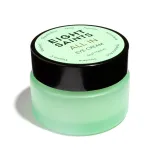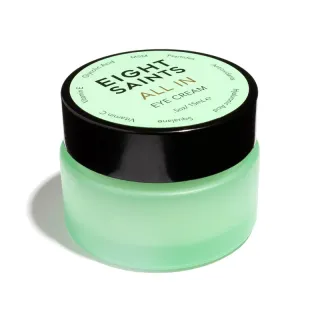
Eight Saints All In Eye Cream

Eight Saints All In Eye Cream

Efficacy100/100IrritancyHigh

Works for

Moisturizing
Panthenol, Oligopeptides + 33 more
Works well
What the product description says
“Olive oil-based squalane boosts blood circulation and provides moisture to target fine lines and wrinkles, helping you achieve visibly plumped skin.”
Source: Eight Saints

This product can help improve hydration of the skin with the two types of ingredients.

The first type is called “humectants”:
these ingredients help attract water. When humectants are on the surface of the skin, they “pull in” the moisture from the outside environment, or from within deeper layers of the skin. The following ingredients in this product do the job: arginine, glycerin.

This product also contains ingredients called “occlusives”. They help reduce the speed with which our skin loses moisture to the outside environment. These ingredients also help soften the upper layer of the skin, so it feels less tight and nicer to the touch. The following ingredients in this product do the job: arginine, cera alba.

The following ingredients in this product are especially good for supporting the skin barrier and helping with the hydration level: acetyl hexapeptide-8, palmitoyl tripeptide-5, panthenol, oligopeptides

PanthenolHero· HumectantEffect: HighHelps attract water to the upper layer of the skin and can help improve skin barrier function~0.25–0.45%
OligopeptidesHeroEffect: High~0.2–0.4%
Acetyl hexapeptide-8Hero· HumectantEffect: HighA type of peptide. Peptides are excellent moisturizers and might be able support collagen production reducing fine lines and wrinkles~0.2–0.4%
Palmitoyl tripeptide-5HeroEffect: HighA type of peptide. Peptides are excellent moisturizers and might be able support collagen production reducing fine lines and wrinkles~0.15–0.25%
Helianthus annuus seed oilKey active· Emollient, OcclusiveEffect: HighA great emollient due to its high linoleic acid content. One of the most effective plant oils in helping skin hydration and repairing skin barrier function~4.4–5.3%
Hyaluronic acidKey active· HumectantEffect: HighOne of the best moisturizing ingredients. Attracts water into the upper layer of the skin. Naturally present in skin. Typically has large molecule size unless advertised otherwise on the product label. Helps support skin's barrier function and may help to reduce inflammation~3–3.6%
GlycerinKey active· HumectantEffect: HighOne of the best moisturizing ingredients. Naturally present in skin. It attracts water to the upper layer of the skin working as a humectant~1.1–1.3%
SqualaneKey active· Emollient, OcclusiveEffect: HighAn oil naturally present in skin. Works as an emollient to soften the skin and form a protective layer on its surface without a greasy feeling.~0.75–1.1%
Elaeis guineensis oilKey active· EmollientEffect: MediumHelps soften the upper layer of the skin~0.5–0.75%
Hydrogenated castor oilKey active· EmollientEffect: MediumA plant oil that can help soften the skin. It might be helpful in calming down inflammation, but solid research is lacking. Is often used in lip products to create the needed product consistency~0.4–0.65%
Ethylhexyl palmitateKey active· EmollientEffect: MediumAn emollient that helps soften the skin and create a nice product texture~0.35–0.65%
Theobroma cacao seed butterKey active· EmollientEffect: HighHelps soften the upper layer of the skin and can be helpful in restoring the skin barrier function. Might have some anti-oxidant effect~0.3–0.55%
Cera albaKey active· Emollient, OcclusiveEffect: HighForms a protective barrier that holds water and keeps dry skin hydrated. Keeps an emulsion from separating into its oil and liquid components, and increases the thickness of a product. Can be an allergen~0.3–0.55%
Cetyl alcoholKey active· EmollientEffect: MediumA non-drying alcohol that works to soften the skin and stabilize product formulations helping oil and water mix together~0.3–0.6%
Malus domestica fruit extractKey activeEffect: HighHelps attract water to the upper layer of the skin~0.25–0.45%
Oenothera biennis oilKey active· EmollientEffect: HighHelps soften the upper layer of the skin and can support skin barrier function~0.25–0.45%
UbiquinoneKey activeEffect: HighCoenzyme Q10. It helps neutralize free radicals in skin, improves skin hydration and might be helpful agains fine lines and wrinkles. It can be an allergen~0.25–0.45%
Vitis vinifera seed oilKey active· EmollientEffect: HighA great emollient that can also have anti-oxidant properties~0.25–0.5%
Cocos nucifera oilKey active· Emollient, OcclusiveEffect: HighAn emollient. Found to be as effective as a moisturizer for dry skin as mineral oil. Could be comedogenic~0.25–0.5%
Borago officinalis seed oilKey active· EmollientEffect: HighA plant oil that is effective in reducing irritation in skin, restore the barrier function and support its hydration~0.25–0.4%
Cetearyl alcoholKey active· EmollientEffect: MediumA non-drying alcohol. Works as an emollient. Helps water and oil mix together and creates a nice product texture~0.25–0.5%
PhospholipidsKey activeEffect: MediumEmollients that are naturaly present in skin. In addition, they help water and oil mix together in the product~0.25–0.45%
Macadamia ternifolia seed oilKey active· EmollientEffect: MediumPlant oil from nuts that helps soften the upper layer of the skin. Contains a high concentration of oleic acid that can weaken skin's barrier function and increase water-loss while enhancing penetration of other ingredients~0.25–0.45%
Saccharum officinarum extractKey activeEffect: HighSugar extract that helps attract water to the upper layer of the skin~0.2–0.4%
Rosa canina seed oilKey activeEffect: HighA plant oil that helps soften the upper layer of the skin. It might have anti-oxidant properties. Might help reduce inflammation in skin and help against blemishes~0.2–0.4%
ArginineKey active· Humectant, OcclusiveEffect: HighAn amino acid that is naturally present in skin and helps keep it hydrated. When used together with AHAs, it can reduce their irritating effect on the skin~0.15–0.3%
Hydrogenated vegetable oilKey active· EmollientEffect: MediumAn oil from a mixture of different vegetables. Helps soften the upper layer of the skin~0.15–0.3%
Aloe barbadensis leaf juice· HumectantEffect: LowTraditionally used to treat sunburns, dermatitis and inflammation, but evidence for its effectiveness is lacking. The extract can contain humectants that help attract water into the skin~6.4–7.9%
Glyceryl stearate· EmollientEffect: LowAn emollient that softens the skin and forms a protective layer on its surface. Helps water and oil mix together~1.3–1.6%
Cucumis sativus fruit water· HumectantEffect: Low~0.15–0.3%
Linum usitatissimum seed oilEffect: Low~0.15–0.3%
Lactic acidUnder-dosedAn exfoliating and moisturizing alpha-hydroxy acid (AHA). Typically causes less irritation than other AHAs, for example, glycolic acid. At high concentrations (about 15%), lactic acid can help reduce lines and wrinkles. Recent studies show that lactic acid can support the "good" bacteria living on skin's surface (healthy skin microbiome)~0.5–0.75%
Persea gratissima oilUnder-dosedAn emollient that helps soften the skin and could be helpful in repairing its barrier function~0.25–0.45%
Caprylic/capric triglycerideUnder-dosedA good mix of fatty acids that forms a protective layer on the skin. Improves the shelf life of products. Derived from coconut and glycerin~0.2–0.35%
Simmondsia chinensis seed oilUnder-dosedSoftens the upper layer of skin and helps restore the healthy skin barrier. Has shown to help calm down inflammation in skin. It is a stable oil, meaning that it retains its properties even when exposed to air.~0.2–0.4%
Anti-aging
Glycolic acid, Acetyl hexapeptide-8 + 8 more
Works well
What the product description says
“The holy grail of anti-aging eye creams, our All-In Eye Cream contains all 8 of our namesake ingredients.”
Source: Eight Saints

This product can help reduce and prevent fine lines and wrinkles, improve skin elasticity and firmness because it contains glycolic acid.

These ingredients in the product can also be helpful, even though there is less evidence for their effectiveness: acetyl hexapeptide-8, palmitoyl tripeptide-5, oligopeptides.

Keep in mind that it typically takes at least 6 weeks to notice any results because the changes that are needed to improve fine lines and elasticity happen in the deeper layers of the skin. No topical anti-aging product can “erase” wrinkles or fully reverse signs of aging.

Glycolic acidKey activeEffect: HighAn alpha-hydroxy acid (AHA) that helps to remove the dead skin cells on the surface of the skin reveling a more even, smoother complexation. It is also able to stimulate collagen production with long-term use. Could help to reduce pore congestion. It can be irritating to the skin. Apply sunscreen daily if using products with glycolic acid~1.8–2.2%
Acetyl hexapeptide-8Key activeEffect: MediumA type of peptide. Peptides are excellent moisturizers and might be able support collagen production reducing fine lines and wrinkles~0.2–0.4%
OligopeptidesKey activeEffect: Medium~0.2–0.4%
Palmitoyl tripeptide-5Key activeEffect: MediumA type of peptide. Peptides are excellent moisturizers and might be able support collagen production reducing fine lines and wrinkles~0.15–0.25%
Aloe barbadensis leaf juiceEffect: LowTraditionally used to treat sunburns, dermatitis and inflammation, but evidence for its effectiveness is lacking. The extract can contain humectants that help attract water into the skin~6.4–7.9%
Hyaluronic acidEffect: LowOne of the best moisturizing ingredients. Attracts water into the upper layer of the skin. Naturally present in skin. Typically has large molecule size unless advertised otherwise on the product label. Helps support skin's barrier function and may help to reduce inflammation~3–3.6%
UbiquinoneEffect: LowCoenzyme Q10. It helps neutralize free radicals in skin, improves skin hydration and might be helpful agains fine lines and wrinkles. It can be an allergen~0.25–0.45%
Thioctic acidEffect: Low~0.2–0.35%
Ascorbyl palmitateEffect: Low, below effective doseBeing a lipid soluble form of vitamin C, it is more stable and can penetrate the skin better than L-Ascorbic acid. It is effective in protecting the skin from free radicals, as well as evening the skin tone, but is less effective in stimulating collagen production compared to L-Ascorbic acid.~0.25–0.45%
Lactic acidUnder-dosedAn exfoliating and moisturizing alpha-hydroxy acid (AHA). Typically causes less irritation than other AHAs, for example, glycolic acid. At high concentrations (about 15%), lactic acid can help reduce lines and wrinkles. Recent studies show that lactic acid can support the "good" bacteria living on skin's surface (healthy skin microbiome)~0.5–0.75%
Evens skin tone
Glycolic acid, Glycyrrhiza glabra root extract + 1 more
Works well
What the product description says
“Vitamin C brightens skin, while green tea's caffeine counteracts puffy eyes and dark circles.”
Source: Eight Saints

This product can help reduce hypepigmentation and even out the skin tone because it contains the following effective ingredients: glycolic acid

The following ingredient (ingredients) in this product might be helpful, but there is no evidence to confirm that it actually can help even out the skin tone: glycyrrhiza glabra root extract.

Keep in mind that you would need to apply any topical skincare targetted at hypigmentation consistently for a couple of months to get a result. No topical skincare product can help get rid of hyperpigmentation (including post-acne marks and age spots) instantly.

Glycolic acidKey activeEffect: HighAn alpha-hydroxy acid (AHA) that helps to remove the dead skin cells on the surface of the skin reveling a more even, smoother complexation. It is also able to stimulate collagen production with long-term use. Could help to reduce pore congestion. It can be irritating to the skin. Apply sunscreen daily if using products with glycolic acid~1.8–2.2%
Glycyrrhiza glabra root extractEffect: LowA plant extract that can help lighten the skin and calm down inflammation. Might be helpful in neutralizing free radicals~0.15–0.3%
Lactic acidUnder-dosedAn exfoliating and moisturizing alpha-hydroxy acid (AHA). Typically causes less irritation than other AHAs, for example, glycolic acid. At high concentrations (about 15%), lactic acid can help reduce lines and wrinkles. Recent studies show that lactic acid can support the "good" bacteria living on skin's surface (healthy skin microbiome)~0.5–0.75%
Anti-oxidation
Side benefit · Ubiquinone, Thioctic acid + 14 more
Works well

This product contains antioxidants (thioctic acid, ubiquinone) that can help neutralize free radicals in skin. By doing so, they can lessen the damage the skin gets from the UV light (sun).

The following ingredients - camellia sinensis extract, rubus idaeus seed oil also can have an antioxidant effect, but there is less evidence to confirm their effectiveness in skin.

UbiquinoneKey activeEffect: HighCoenzyme Q10. It helps neutralize free radicals in skin, improves skin hydration and might be helpful agains fine lines and wrinkles. It can be an allergen~0.25–0.45%
Thioctic acidKey activeEffect: High~0.2–0.35%
Rubus idaeus seed oilKey activeEffect: MediumA plant oil that might be able to help neutralize free radicals in skin~0.2–0.4%
Camellia sinensis extractKey activeEffect: MediumTea extract. Might be helpful in neutralizing free radicals in skin~0.15–0.3%
Theobroma cacao seed butterEffect: LowHelps soften the upper layer of the skin and can be helpful in restoring the skin barrier function. Might have some anti-oxidant effect~0.3–0.55%
Calendula officinalis extractEffect: LowA plant extract that might help neutralize free radicals in skin~0.25–0.45%
Borago officinalis seed oilEffect: LowA plant oil that is effective in reducing irritation in skin, restore the barrier function and support its hydration~0.25–0.4%
Malus domestica fruit extractEffect: LowHelps attract water to the upper layer of the skin~0.25–0.45%
Oenothera biennis oilEffect: LowHelps soften the upper layer of the skin and can support skin barrier function~0.25–0.45%
Vitis vinifera seed oilEffect: LowA great emollient that can also have anti-oxidant properties~0.25–0.5%
Rosa canina seed oilEffect: LowA plant oil that helps soften the upper layer of the skin. It might have anti-oxidant properties. Might help reduce inflammation in skin and help against blemishes~0.2–0.4%
Vaccinium macrocarpon fruit extractEffect: LowA berry extract. Might have some anti-oxidant properties~0.2–0.35%
Vaccinium angustifolium fruit extractEffect: LowA plant extract tha can have anti-oxidant properties, but evidence of effectiveness in skin is lacking~0.15–0.3%
Glycyrrhiza glabra root extractEffect: LowA plant extract that can help lighten the skin and calm down inflammation. Might be helpful in neutralizing free radicals~0.15–0.3%
Tocopheryl acetateEffect: Low, below effective doseA more stable but less bio-available form of vitamin E compared to Tocopherol. Might help moisturize and protect the skin from free radicals, but mostly used in low concentrations to stabilize other ingredients.~0.25–0.45%
Ascorbyl palmitateEffect: Low, below effective doseBeing a lipid soluble form of vitamin C, it is more stable and can penetrate the skin better than L-Ascorbic acid. It is effective in protecting the skin from free radicals, as well as evening the skin tone, but is less effective in stimulating collagen production compared to L-Ascorbic acid.~0.25–0.45%
Exfoliation
Side benefit · Glycolic acid, Lactic acid
Works well

This product can help exfoliate the skin. In other words, it helps break down the bonds between dead cells on the surface of the skin and speed up the skin turnover. Skin often appears softer and brighter after exfoliation, but overdoing it can result in disrupted skin barrier. The following ingredient is doing the exfoliating job in this product: glycolic acid.

Glycolic acidKey activeEffect: HighAn alpha-hydroxy acid (AHA) that helps to remove the dead skin cells on the surface of the skin reveling a more even, smoother complexation. It is also able to stimulate collagen production with long-term use. Could help to reduce pore congestion. It can be irritating to the skin. Apply sunscreen daily if using products with glycolic acid~1.8–2.2%
Lactic acidUnder-dosedAn exfoliating and moisturizing alpha-hydroxy acid (AHA). Typically causes less irritation than other AHAs, for example, glycolic acid. At high concentrations (about 15%), lactic acid can help reduce lines and wrinkles. Recent studies show that lactic acid can support the "good" bacteria living on skin's surface (healthy skin microbiome)~0.5–0.75%

Can it cause trouble?

Irritancy
4 strong irritants: Hamamelis virginiana extract, Citrus limon fruit extract + 2 more — patch-test recommended
High risk
We flagged 31 ingredients with irritancy potential. Severity depends on your sensitivity threshold; the table lists the worst offenders first.
IngredientFunctionIrritationEst. amount
Hamamelis virginiana extractA plant extract that can help calm down inflammation in skin. Can, however, itself be irritatingHigh~2.2–2.7%est.
Glycolic acidAn alpha-hydroxy acid (AHA) that helps to remove the dead skin cells on the surface of the skin reveling a more even, smoother complexation. It is also able to stimulate collagen production with long-term use. Could help to reduce pore congestion. It can be irritating to the skin. Apply sunscreen daily if using products with glycolic acidHigh~1.8–2.2%est.
Vaccinium macrocarpon fruit extractA berry extract. Might have some anti-oxidant propertiesHigh~0.2–0.35%est.
Citrus limon fruit extractUsed as a fragrance. Can be irritating and cause photosensitivityHigh~0.25–0.4%est.
Arnica montana extract—High~0.25–0.45%est.
Lavandula angustifolia extractUsed for fragrance and contains volatile compounds that can irritate the skinHigh~0.25–0.45%est.
Calendula officinalis extractA plant extract that might help neutralize free radicals in skinHigh~0.25–0.45%est.
Chamomilla recutita extractPlant extract that can have healing and anti-inflammatory properties. It is a potential allergen and can be irritatingHigh~0.25–0.4%est.
Benzyl alcoholA preservative. Can be used to mask unpleasant smell. Can be irritatingHigh~0.1–0.25%est.
Aloe barbadensis leaf juiceTraditionally used to treat sunburns, dermatitis and inflammation, but evidence for its effectiveness is lacking. The extract can contain humectants that help attract water into the skinMedium~6.4–7.9%est.
Lactic acidAn exfoliating and moisturizing alpha-hydroxy acid (AHA). Typically causes less irritation than other AHAs, for example, glycolic acid. At high concentrations (about 15%), lactic acid can help reduce lines and wrinkles. Recent studies show that lactic acid can support the "good" bacteria living on skin's surface (healthy skin microbiome)Medium~0.5–0.75%est.
Hydrogenated castor oilA plant oil that can help soften the skin. It might be helpful in calming down inflammation, but solid research is lacking. Is often used in lip products to create the needed product consistencyMedium~0.4–0.65%est.
Cetearyl glucosideHelps water and oil in the product mix well together and improves product textureMedium~0.2–0.4%est.
Caprylic/capric triglycerideA good mix of fatty acids that forms a protective layer on the skin. Improves the shelf life of products. Derived from coconut and glycerinMedium~0.2–0.35%est.
Cucumis sativus fruit water—Medium~0.15–0.3%est.
Cera albaForms a protective barrier that holds water and keeps dry skin hydrated. Keeps an emulsion from separating into its oil and liquid components, and increases the thickness of a product. Can be an allergenMedium~0.3–0.55%est.
Simmondsia chinensis seed oilSoftens the upper layer of skin and helps restore the healthy skin barrier. Has shown to help calm down inflammation in skin. It is a stable oil, meaning that it retains its properties even when exposed to air.Medium~0.2–0.4%est.
Vaccinium angustifolium fruit extractA plant extract tha can have anti-oxidant properties, but evidence of effectiveness in skin is lackingMedium~0.15–0.3%est.
Rubus idaeus seed oilA plant oil that might be able to help neutralize free radicals in skinMedium~0.2–0.4%est.
Glycyrrhiza glabra root extractA plant extract that can help lighten the skin and calm down inflammation. Might be helpful in neutralizing free radicalsMedium~0.15–0.3%est.
Persea gratissima oilAn emollient that helps soften the skin and could be helpful in repairing its barrier functionMedium~0.25–0.45%est.
Oenothera biennis oilHelps soften the upper layer of the skin and can support skin barrier functionMedium~0.25–0.45%est.
Rosa canina seed oilA plant oil that helps soften the upper layer of the skin. It might have anti-oxidant properties. Might help reduce inflammation in skin and help against blemishesMedium~0.2–0.4%est.
Tocopheryl acetateA more stable but less bio-available form of vitamin E compared to Tocopherol. Might help moisturize and protect the skin from free radicals, but mostly used in low concentrations to stabilize other ingredients.Medium~0.25–0.45%est.
Phytic acidAn alpha-hydroxy acid (AHA), but is mostly used to stabilize product formulations in cosmeticsMedium~0.25–0.45%est.
Malus domestica fruit extractHelps attract water to the upper layer of the skinMedium~0.25–0.45%est.
Ascorbyl palmitateBeing a lipid soluble form of vitamin C, it is more stable and can penetrate the skin better than L-Ascorbic acid. It is effective in protecting the skin from free radicals, as well as evening the skin tone, but is less effective in stimulating collagen production compared to L-Ascorbic acid.Medium~0.25–0.45%est.
Potassium sorbateA preservativeMedium~0.25–0.45%est.
Vitis vinifera seed oilA great emollient that can also have anti-oxidant propertiesMedium~0.25–0.5%est.
Macadamia ternifolia seed oilPlant oil from nuts that helps soften the upper layer of the skin. Contains a high concentration of oleic acid that can weaken skin's barrier function and increase water-loss while enhancing penetration of other ingredientsMedium~0.25–0.45%est.
EthylhexylglycerinA preservativeMedium~0.15–0.3%est.
Comedogenic
5 ingredients rated 2 or more on the 0–5 pore-clogging scale
5 flagged
These ingredients have a comedogenic rating of 2 or more on a 0–5 scale; the table shows each one's rating. In leave-on products they can clog pores in acne-prone skin.
IngredientFunctionRatingEst. amount
Ethylhexyl palmitateAn emollient that helps soften the skin and create a nice product texture3/5~0.35–0.65%est.
Cocos nucifera oilAn emollient. Found to be as effective as a moisturizer for dry skin as mineral oil. Could be comedogenic3/5~0.25–0.5%est.
Theobroma cacao seed butterHelps soften the upper layer of the skin and can be helpful in restoring the skin barrier function. Might have some anti-oxidant effect3/5~0.3–0.55%est.
Cetearyl alcoholA non-drying alcohol. Works as an emollient. Helps water and oil mix together and creates a nice product texture2/5~0.25–0.5%est.
Hydrogenated vegetable oilAn oil from a mixture of different vegetables. Helps soften the upper layer of the skin2/5~0.15–0.3%est.

User reviews

Would you recommend?
No community reviews yet.

Be the first — your take helps the next person decide.

Ingredients

Filter by role to see what each ingredient is doing.

Water~45–55%
Formula
Irritation risk
Low

Plain old water

More about Water
Aloe barbadensis leaf juice~6.4–7.9%
Irritant · medium
Irritation risk
Medium
Works for
MoisturizingAntibacterialAnti-inflammatoryReduces irritationReduces rednessAnti-blemishAnti-aging

Traditionally used to treat sunburns, dermatitis and inflammation, but evidence for its effectiveness is lacking. The extract can contain humectants that help attract water into the skin

More about Aloe barbadensis leaf juice
Helianthus annuus seed oil~4.4–5.3%
Key active
Irritation risk
Low
Works for
Moisturizing

A great emollient due to its high linoleic acid content. One of the most effective plant oils in helping skin hydration and repairing skin barrier function

More about Helianthus annuus seed oil
Hyaluronic acid~3–3.6%
Key active
Irritation risk
Low
Works for
MoisturizingAnti-inflammatoryAnti-aging

One of the best moisturizing ingredients. Attracts water into the upper layer of the skin. Naturally present in skin. Typically has large molecule size unless advertised otherwise on the product label. Helps support skin's barrier function and may help to reduce inflammation

More about Hyaluronic acid
Hamamelis virginiana extract~2.2–2.7%
Irritant · high
Irritation risk
High
Works for
Anti-inflammatory

A plant extract that can help calm down inflammation in skin. Can, however, itself be irritating

More about Hamamelis virginiana extract
Glycolic acid~1.8–2.2%
Key activeIrritant · high
Irritation risk
High
Works for
ExfoliationAnti-agingEvens skin toneAnti-blemish

An alpha-hydroxy acid (AHA) that helps to remove the dead skin cells on the surface of the skin reveling a more even, smoother complexation. It is also able to stimulate collagen production with long-term use. Could help to reduce pore congestion. It can be irritating to the skin. Apply sunscreen daily if using products with glycolic acid

More about Glycolic acid
Dimethyl sulfone~1.5–1.8%
Formula
Irritation risk
Low

Helps dissolve other ingredients

More about Dimethyl sulfone
Glyceryl stearate~1.3–1.6%
Formula
Irritation risk
Low
Works for
CleansingMoisturizing

An emollient that softens the skin and forms a protective layer on its surface. Helps water and oil mix together

More about Glyceryl stearate
Glycerin~1.1–1.3%
Key active
Irritation risk
Low
Works for
Moisturizing

One of the best moisturizing ingredients. Naturally present in skin. It attracts water to the upper layer of the skin working as a humectant

More about Glycerin
Squalane~0.75–1.1%
Key active
Irritation risk
Low
Works for
Moisturizing

An oil naturally present in skin. Works as an emollient to soften the skin and form a protective layer on its surface without a greasy feeling.

More about Squalane
Lactic acid~0.5–0.75%
Under-dosedIrritant · medium
Irritation risk
Medium
Works for
Evens skin toneMoisturizingExfoliationAnti-aging

An exfoliating and moisturizing alpha-hydroxy acid (AHA). Typically causes less irritation than other AHAs, for example, glycolic acid. At high concentrations (about 15%), lactic acid can help reduce lines and wrinkles. Recent studies show that lactic acid can support the "good" bacteria living on skin's surface (healthy skin microbiome)

More about Lactic acid
Elaeis guineensis oil~0.5–0.75%
Key active
Irritation risk
Low
Works for
Moisturizing

Helps soften the upper layer of the skin

More about Elaeis guineensis oil
Hydrogenated castor oil~0.4–0.65%
Key activeIrritant · medium
Irritation risk
Medium
Works for
CleansingMoisturizingAnti-inflammatory

A plant oil that can help soften the skin. It might be helpful in calming down inflammation, but solid research is lacking. Is often used in lip products to create the needed product consistency

More about Hydrogenated castor oil
Ethylhexyl palmitate~0.35–0.65%
Key activeComedogenic 3/5
Irritation risk
Low
Comedogenicity
3/5
Works for
Moisturizing

An emollient that helps soften the skin and create a nice product texture

More about Ethylhexyl palmitate
Cocos nucifera oil~0.25–0.5%
Key activeComedogenic 3/5
Irritation risk
Low
Comedogenicity
3/5
Works for
Moisturizing

An emollient. Found to be as effective as a moisturizer for dry skin as mineral oil. Could be comedogenic

More about Cocos nucifera oil
Theobroma cacao seed butter~0.3–0.55%
Key activeComedogenic 3/5
Irritation risk
Low
Comedogenicity
3/5
Works for
MoisturizingAnti-oxidationAnti-dandruff

Helps soften the upper layer of the skin and can be helpful in restoring the skin barrier function. Might have some anti-oxidant effect

More about Theobroma cacao seed butter
Cetyl alcohol~0.3–0.6%
Key active
Irritation risk
Low
Works for
CleansingMoisturizing

A non-drying alcohol that works to soften the skin and stabilize product formulations helping oil and water mix together

More about Cetyl alcohol
Cetearyl alcohol~0.25–0.5%
Key activeComedogenic 2/5
Irritation risk
Low
Comedogenicity
2/5
Works for
CleansingMoisturizing

A non-drying alcohol. Works as an emollient. Helps water and oil mix together and creates a nice product texture

More about Cetearyl alcohol
Cetearyl glucoside~0.2–0.4%
Irritant · medium
Irritation risk
Medium
Works for
Cleansing

Helps water and oil in the product mix well together and improves product texture

More about Cetearyl glucoside
Stearyl alcohol~0.2–0.4%
Formula
Irritation risk
Low
Works for
Cleansing

An emollient that helps soften the skin

More about Stearyl alcohol
Potassium stearate~0.25–0.45%
Formula
Irritation risk
Low
Works for
Cleansing
More about Potassium stearate
Unspecified form of vitamin c~0.15–0.25%
Formula
Caprylic/capric triglyceride~0.2–0.35%
Under-dosedIrritant · medium
Irritation risk
Medium
Works for
Moisturizing

A good mix of fatty acids that forms a protective layer on the skin. Improves the shelf life of products. Derived from coconut and glycerin

More about Caprylic/capric triglyceride
Hydrogenated vegetable oil~0.15–0.3%
Key activeComedogenic 2/5
Irritation risk
Low
Comedogenicity
2/5
Works for
Moisturizing

An oil from a mixture of different vegetables. Helps soften the upper layer of the skin

More about Hydrogenated vegetable oil
Sea fennel wax
Not recognized
Matrixyl 3000
Not recognized
Palmitoyl tripeptide-5~0.15–0.25%
Hero · Moisturizing
Irritation risk
Low
Works for
MoisturizingAnti-aging

A type of peptide. Peptides are excellent moisturizers and might be able support collagen production reducing fine lines and wrinkles

More about Palmitoyl tripeptide-5
Cucumis sativus fruit water~0.15–0.3%
Irritant · medium
Irritation risk
Medium
Works for
Moisturizing
More about Cucumis sativus fruit water
Carbomer~0.2–0.35%
Formula
Irritation risk
Low
Works for
Cleansing

Helps create a thicker or gel-like product texture. It is not a surfactant but can be used in gentle cleansing formulations

More about Carbomer
Arginine~0.15–0.3%
Key active
Irritation risk
Low
Works for
Moisturizing

An amino acid that is naturally present in skin and helps keep it hydrated. When used together with AHAs, it can reduce their irritating effect on the skin

More about Arginine
Cera alba~0.3–0.55%
Key activeIrritant · medium
Irritation risk
Medium
Works for
CleansingMoisturizing

Forms a protective barrier that holds water and keeps dry skin hydrated. Keeps an emulsion from separating into its oil and liquid components, and increases the thickness of a product. Can be an allergen

More about Cera alba
Simmondsia chinensis seed oil~0.2–0.4%
Under-dosedIrritant · medium
Irritation risk
Medium
Works for
Moisturizing

Softens the upper layer of skin and helps restore the healthy skin barrier. Has shown to help calm down inflammation in skin. It is a stable oil, meaning that it retains its properties even when exposed to air.

More about Simmondsia chinensis seed oil
Calophyllum inophyllum seed oil~0.2–0.35%
Formula
Camellia sinensis extract~0.15–0.3%
Key active
Irritation risk
Low
Works for
Anti-oxidation

Tea extract. Might be helpful in neutralizing free radicals in skin

More about Camellia sinensis extract
Thioctic acid~0.2–0.35%
Key active
Irritation risk
Low
Works for
Anti-oxidationAnti-aging
More about Thioctic acid
Arctostaphylos uva-ursi leaf extract~0.2–0.35%
Formula
Vaccinium angustifolium fruit extract~0.15–0.3%
Irritant · medium
Irritation risk
Medium
Works for
Anti-oxidation

A plant extract tha can have anti-oxidant properties, but evidence of effectiveness in skin is lacking

More about Vaccinium angustifolium fruit extract
Vaccinium macrocarpon fruit extract~0.2–0.35%
Irritant · high
Irritation risk
High
Works for
Anti-oxidation

A berry extract. Might have some anti-oxidant properties

More about Vaccinium macrocarpon fruit extract
Rubus idaeus seed oil~0.2–0.4%
Key activeIrritant · medium
Irritation risk
Medium
Works for
Anti-oxidation

A plant oil that might be able to help neutralize free radicals in skin

More about Rubus idaeus seed oil
Mahonia aquifolium root extract~0.2–0.35%
Formula
Glycyrrhiza glabra root extract~0.15–0.3%
Irritant · medium
Irritation risk
Medium
Works for
Reduces rednessEvens skin toneAnti-oxidationAnti-inflammatoryAntibacterial

A plant extract that can help lighten the skin and calm down inflammation. Might be helpful in neutralizing free radicals

More about Glycyrrhiza glabra root extract
Euphrasia officinalis extract~0.15–0.3%
Formula
Helichrysum stoechas flower oil~0.15–0.3%
Formula
Camellia japonica seed oil~0.2–0.4%
Formula
Irritation risk
Low

A plant oil that helps to soften the upper layer of the skin and can help restore skin's barrier function. Might have an anti-oxidant effect

More about Camellia japonica seed oil
Persea gratissima oil~0.25–0.45%
Under-dosedIrritant · medium
Irritation risk
Medium
Works for
Moisturizing

An emollient that helps soften the skin and could be helpful in repairing its barrier function

More about Persea gratissima oil
Geranium essential oil
Not recognized
Borago officinalis seed oil~0.25–0.4%
Key active
Irritation risk
Low
Works for
Anti-inflammatoryMoisturizingReduces irritationAnti-oxidation

A plant oil that is effective in reducing irritation in skin, restore the barrier function and support its hydration

More about Borago officinalis seed oil
Linum usitatissimum seed oil~0.15–0.3%
Formula
Irritation risk
Low
Works for
Moisturizing
More about Linum usitatissimum seed oil
Oenothera biennis oil~0.25–0.45%
Key activeIrritant · medium
Irritation risk
Medium
Works for
MoisturizingAnti-oxidationAnti-inflammatoryAnti-blemish

Helps soften the upper layer of the skin and can support skin barrier function

More about Oenothera biennis oil
Rosa canina seed oil~0.2–0.4%
Key activeIrritant · medium
Irritation risk
Medium
Works for
MoisturizingAnti-inflammatoryAnti-oxidation

A plant oil that helps soften the upper layer of the skin. It might have anti-oxidant properties. Might help reduce inflammation in skin and help against blemishes

More about Rosa canina seed oil
Sodium hydroxide~0.25–0.45%
Formula
Irritation risk
Low

Used to adjust the product's pH

More about Sodium hydroxide
Ubiquinone~0.25–0.45%
Key active
Irritation risk
Low
Works for
MoisturizingAnti-oxidationAnti-aging

Coenzyme Q10. It helps neutralize free radicals in skin, improves skin hydration and might be helpful agains fine lines and wrinkles. It can be an allergen

More about Ubiquinone
Tocopheryl acetate~0.25–0.45%
Irritant · medium
Irritation risk
Medium
Works for
Anti-oxidation

A more stable but less bio-available form of vitamin E compared to Tocopherol. Might help moisturize and protect the skin from free radicals, but mostly used in low concentrations to stabilize other ingredients.

More about Tocopheryl acetate
Phytic acid~0.25–0.45%
Irritant · medium
Irritation risk
Medium

An alpha-hydroxy acid (AHA), but is mostly used to stabilize product formulations in cosmetics

More about Phytic acid
Phospholipids~0.25–0.45%
Key active
Irritation risk
Low
Works for
Moisturizing

Emollients that are naturaly present in skin. In addition, they help water and oil mix together in the product

More about Phospholipids
Antioxidant
Not recognized
Malus domestica fruit extract~0.25–0.45%
Key activeIrritant · medium
Irritation risk
Medium
Works for
MoisturizingAnti-oxidation

Helps attract water to the upper layer of the skin

More about Malus domestica fruit extract
Citrus limon fruit extract~0.25–0.4%
Irritant · high
Irritation risk
High

Used as a fragrance. Can be irritating and cause photosensitivity

More about Citrus limon fruit extract
Saccharum officinarum extract~0.2–0.4%
Key active
Irritation risk
Low
Works for
Moisturizing

Sugar extract that helps attract water to the upper layer of the skin

More about Saccharum officinarum extract
Oligopeptides~0.2–0.4%
Hero · Moisturizing
Irritation risk
Low
Works for
MoisturizingAnti-aging
More about Oligopeptides
Lemongrass oil~0.2–0.35%
Formula
Irritation risk
Low
More about Lemongrass oil
Ascorbyl palmitate~0.25–0.45%
Irritant · medium
Irritation risk
Medium
Works for
Anti-oxidationAnti-aging

Being a lipid soluble form of vitamin C, it is more stable and can penetrate the skin better than L-Ascorbic acid. It is effective in protecting the skin from free radicals, as well as evening the skin tone, but is less effective in stimulating collagen production compared to L-Ascorbic acid.

More about Ascorbyl palmitate
Acetyl hexapeptide-8~0.2–0.4%
Hero · Moisturizing
Irritation risk
Low
Works for
MoisturizingAnti-aging

A type of peptide. Peptides are excellent moisturizers and might be able support collagen production reducing fine lines and wrinkles

More about Acetyl hexapeptide-8
Sclerotium gum~0.2–0.4%
Formula
Irritation risk
Low

Used to create gel-like formulas and stabilize emulsions

More about Sclerotium gum
Potassium sorbate~0.25–0.45%
Irritant · medium
Irritation risk
Medium

A preservative

More about Potassium sorbate
Panthenol~0.25–0.45%
Hero · Moisturizing
Irritation risk
Low
Works for
MoisturizingReduces rednessReduces irritation

Helps attract water to the upper layer of the skin and can help improve skin barrier function

More about Panthenol
Arnica montana extract~0.25–0.45%
Irritant · high
Lavandula angustifolia extract~0.25–0.45%
Irritant · high
Irritation risk
High

Used for fragrance and contains volatile compounds that can irritate the skin

More about Lavandula angustifolia extract
Calendula officinalis extract~0.25–0.45%
Irritant · high
Irritation risk
High
Works for
Anti-oxidationAnti-inflammatory

A plant extract that might help neutralize free radicals in skin

More about Calendula officinalis extract
Chamomilla recutita extract~0.25–0.4%
Irritant · high
Irritation risk
High
Works for
Anti-inflammatory

Plant extract that can have healing and anti-inflammatory properties. It is a potential allergen and can be irritating

More about Chamomilla recutita extract
Vitis vinifera seed oil~0.25–0.5%
Key activeIrritant · medium
Irritation risk
Medium
Works for
MoisturizingAnti-oxidation

A great emollient that can also have anti-oxidant properties

More about Vitis vinifera seed oil
Macadamia ternifolia seed oil~0.25–0.45%
Key activeIrritant · medium
Irritation risk
Medium
Works for
Moisturizing

Plant oil from nuts that helps soften the upper layer of the skin. Contains a high concentration of oleic acid that can weaken skin's barrier function and increase water-loss while enhancing penetration of other ingredients

More about Macadamia ternifolia seed oil
Sodium carbomer~0.2–0.35%
Formula
Irritation risk
Low

Helps improve the texture

More about Sodium carbomer
Xanthan gum~0.15–0.3%
Formula
Irritation risk
Low
Works for
Cleansing

Used to create a thicker product consistency

More about Xanthan gum
Phenoxyethanol~0.2–0.35%
Formula
Irritation risk
Low

A preservative. It helps prevent bacterial growth in cosmetic products

More about Phenoxyethanol
Ethylhexylglycerin~0.15–0.3%
Irritant · medium
Irritation risk
Medium

A preservative

More about Ethylhexylglycerin
Benzyl alcohol~0.1–0.25%
Irritant · high
Irritation risk
High

A preservative. Can be used to mask unpleasant smell. Can be irritating

More about Benzyl alcohol
Ingredient list view

Water, Aloe barbadensis leaf juice, Helianthus annuus seed oil, Hyaluronic acid, Hamamelis virginiana extract, Glycolic acid, Dimethyl sulfone, Glyceryl stearate, Glycerin, Squalane, Lactic acid, Elaeis guineensis oil, Hydrogenated castor oil, Ethylhexyl palmitate, Cocos nucifera oil, Theobroma cacao seed butter, Cetyl alcohol, Cetearyl alcohol, Cetearyl glucoside, Stearyl alcohol, Potassium stearate, Unspecified form of vitamin c, Caprylic/capric triglyceride, Hydrogenated vegetable oil, Unknown, Unknown, Palmitoyl tripeptide-5, Cucumis sativus fruit water, Carbomer, Arginine, Cera alba, Simmondsia chinensis seed oil, Calophyllum inophyllum seed oil, Camellia sinensis extract, Thioctic acid, Arctostaphylos uva-ursi leaf extract, Vaccinium angustifolium fruit extract, Vaccinium macrocarpon fruit extract, Rubus idaeus seed oil, Mahonia aquifolium root extract, Glycyrrhiza glabra root extract, Euphrasia officinalis extract, Helichrysum stoechas flower oil, Camellia japonica seed oil, Persea gratissima oil, Unknown, Borago officinalis seed oil, Linum usitatissimum seed oil, Oenothera biennis oil, Rosa canina seed oil, Sodium hydroxide, Ubiquinone, Tocopheryl acetate, Phytic acid, Phospholipids, Unknown, Malus domestica fruit extract, Citrus limon fruit extract, Saccharum officinarum extract, Oligopeptides, Lemongrass oil, Ascorbyl palmitate, Acetyl hexapeptide-8, Sclerotium gum, Potassium sorbate, Panthenol, Arnica montana extract, Lavandula angustifolia extract, Calendula officinalis extract, Chamomilla recutita extract, Vitis vinifera seed oil, Macadamia ternifolia seed oil, Sodium carbomer, Xanthan gum, Phenoxyethanol, Ethylhexylglycerin, Benzyl alcohol

Worth comparing, line by line.

Match % combines shared ingredients, the first five ingredients, shared actives and hero ingredients, irritancy (lower counts in the alternative's favour), texture and body area. Only products in the same routine step are compared.

Side-by-side comparison of this product against its closest alternatives
Eight SaintsAll In Eye CreamYOUR PRODUCTNoble PanaceaThe Absolute Restoring Eye CreamPeter Thomas RothMega-Rich Intensive Anti-Aging Eye CrèmeNEOGEN X SUR.MEDICV.Biome Advanced Eye Cream
Match—45%44%44%
Price$44.00$247.50+$203.50$40.00−$4.00$25.16−$18.84
Shared key ingredients—11 of 2810 of 281 of 28
Key difference—Acetyl Octapeptide-3Vitamin CTripeptide-1
Irritancy High Medium Medium Low
Drying alcohol————
View product Shop Shop Shop

More alternatives: Naturium Multi-Peptide Eye CreamBIOHEAL BOH Probioderm 3D Lifting Eye & Wrinkle Cream

Cheaper alternatives? See how this stacks up against similar formulas.
We compare ingredient profiles across our catalog — pick the closest match for your budget.
Open dupe finder

Sources cited in this review

Every concentration estimate and effectiveness label is anchored to one of these 35 studies and safety reviews.

  1. 1
  2. 2
  3. 3
  4. 4
  5. 5
  6. 6
Eight Saints All In Eye Cream
Eight SaintsAll In Eye Cream