Works for:
based on ingredients and %- Moisturizing
Can it cause trouble?
- Irritation risk: high
- Comedogenic risk ingredients: 12
Key actives

Product Summary
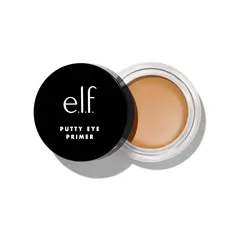
"e. L. F. Cosmetics - Putty Eye Primer" could be helpful for: Moisturizing, but its actives are not the most effective or are not well-studied.
Price
The product retails for 5.00£ in the United Kingdom.
For a detailed price comparison: click here.
Works for
Moisturizing
What does the product description say?
Infused with vegan Squalane to help moisturize the eyelid while extending wear. Why e.l.f. Loves It
Source: Ulta
This product can help soften the skin and reduce its moisture loss with emollients and occlusives: copernicia cerifera wax, dimethicone.
Keep in mind that this product does not contain effective ingredients to attract water to the upper layer of the skin. This is why an additional product with humectants like glycerin or hyaluronic acid can be helpful (apply it before this product for the best results).
A silicone that improves product texture and helps dissolve other ingredients. Can form a non-greasy film on the skin to prevent moisture loss
An emollient that helps soften the skin. Could be comedogenic
Helps to soften the upper layer of the skin and create a nice product consistency
A silicone that helps to reduce water loss from the surface of the skin. Can temporarily "fill in" lines and wrinkles, absorb oil, and create a nice product finish
An oil naturally present in skin. Works as an emollient to soften the skin and form a protective layer on its surface without a greasy feeling.
An emollient that helps soften the skin and can decrease moisture loss. Helps create a nice product texture
An emollient that helps soften the skin and create a nice product texture
Helps preserve products and creates a nice product texture
Used to improve the product consistency and soften the upper layer of the skin
Is used to dissolve other ingredients and create nice product texture
Used mostly for creating emulsions - helping oil and water mix together. Helps soften the upper layer of the skin
How honest is this product?
| Promise | Can it deliver? |
|---|---|
| Moisturizing |
Total Promises Fulfilled score: 75/100.
We receive a small commission for purchases made through these links at no cost for you. Thank you for your support! Learn more
Potential irritants
Comedogenic ingredients
User reviews (0)
Averages from community submissions.
No reviews yet for this product.
Be the first to share your experience!
Tried this product?
Help capture what the ingredient list can't—texture, finish, pilling, scent, and more. Answer what you can, skip the rest.
Takes ~30 seconds.
Reviews are shown in aggregate. No personal details.
Key Actives
A silicone that helps to reduce water loss from the surface of the skin. Can temporarily "fill in" lines and wrinkles, absorb oil, and create a nice product finish
A silicone that helps to reduce water loss from the surface of the skin. Can temporarily "fill in" lines and wrinkles, absorb oil, and create a nice product finish
A silicone that helps to reduce water loss from the surface of the skin. Can temporarily "fill in" lines and wrinkles, absorb oil, and create a nice product finish
A silicone that helps to reduce water loss from the surface of the skin. Can temporarily "fill in" lines and wrinkles, absorb oil, and create a nice product finish
A silicone that helps to reduce water loss from the surface of the skin. Can temporarily "fill in" lines and wrinkles, absorb oil, and create a nice product finish
A silicone that helps to reduce water loss from the surface of the skin. Can temporarily "fill in" lines and wrinkles, absorb oil, and create a nice product finish
A silicone that improves product texture and helps dissolve other ingredients. Can form a non-greasy film on the skin to prevent moisture loss
An oil naturally present in skin. Works as an emollient to soften the skin and form a protective layer on its surface without a greasy feeling.
Helps to soften the upper layer of the skin and create a nice product consistency
An emollient that helps soften the skin. Could be comedogenic
Works as a UV filter when used in high concentrations. It is photostable and is effective mostly against the UVB light, with some protection in the UVA range. In small concentrations, used for its ability to improve the color of cosmetic products. Is usually well tolerated by the skin
A silicone that improves product texture and helps dissolve other ingredients. Can form a non-greasy film on the skin to prevent moisture loss
An oil naturally present in skin. Works as an emollient to soften the skin and form a protective layer on its surface without a greasy feeling.
Helps to soften the upper layer of the skin and create a nice product consistency
An emollient that helps soften the skin. Could be comedogenic
Works as a UV filter when used in high concentrations. It is photostable and is effective mostly against the UVB light, with some protection in the UVA range. In small concentrations, used for its ability to improve the color of cosmetic products. Is usually well tolerated by the skin
A silicone that improves product texture and helps dissolve other ingredients. Can form a non-greasy film on the skin to prevent moisture loss
An oil naturally present in skin. Works as an emollient to soften the skin and form a protective layer on its surface without a greasy feeling.
Helps to soften the upper layer of the skin and create a nice product consistency
An emollient that helps soften the skin. Could be comedogenic
Works as a UV filter when used in high concentrations. It is photostable and is effective mostly against the UVB light, with some protection in the UVA range. In small concentrations, used for its ability to improve the color of cosmetic products. Is usually well tolerated by the skin
A silicone that improves product texture and helps dissolve other ingredients. Can form a non-greasy film on the skin to prevent moisture loss
An oil naturally present in skin. Works as an emollient to soften the skin and form a protective layer on its surface without a greasy feeling.
Helps to soften the upper layer of the skin and create a nice product consistency
An emollient that helps soften the skin. Could be comedogenic
Works as a UV filter when used in high concentrations. It is photostable and is effective mostly against the UVB light, with some protection in the UVA range. In small concentrations, used for its ability to improve the color of cosmetic products. Is usually well tolerated by the skin
A silicone that improves product texture and helps dissolve other ingredients. Can form a non-greasy film on the skin to prevent moisture loss
An oil naturally present in skin. Works as an emollient to soften the skin and form a protective layer on its surface without a greasy feeling.
Helps to soften the upper layer of the skin and create a nice product consistency
An emollient that helps soften the skin. Could be comedogenic
Works as a UV filter when used in high concentrations. It is photostable and is effective mostly against the UVB light, with some protection in the UVA range. In small concentrations, used for its ability to improve the color of cosmetic products. Is usually well tolerated by the skin
A silicone that improves product texture and helps dissolve other ingredients. Can form a non-greasy film on the skin to prevent moisture loss
An oil naturally present in skin. Works as an emollient to soften the skin and form a protective layer on its surface without a greasy feeling.
Helps to soften the upper layer of the skin and create a nice product consistency
An emollient that helps soften the skin. Could be comedogenic
Potential irritants
Oil of a very fragrant pink rose used as fragrance in cosmetics. Extensive research has shown it has mixed benefits. In the pro column, inhaling this flower’s scent seems to have relaxing properties and the plant’s petals contain skin-soothing and antioxidant compounds that can benefit skin. On the flipside, the numerous chemicals that create this rose’s distinctive fragrance pose a risk of causing skin aggravation.
Used to create a thicker product consistency and stabilize the formulation
Helps preserve products and creates a nice product texture
Comedogenic ingredients
An emollient that helps soften the skin. Could be comedogenic
An emollient that helps soften the skin and create a nice product texture
An emollient that helps soften the skin. Could be comedogenic
An emollient that helps soften the skin and create a nice product texture
An emollient that helps soften the skin. Could be comedogenic
An emollient that helps soften the skin and create a nice product texture
An emollient that helps soften the skin. Could be comedogenic
An emollient that helps soften the skin and create a nice product texture
An emollient that helps soften the skin. Could be comedogenic
An emollient that helps soften the skin and create a nice product texture
An emollient that helps soften the skin. Could be comedogenic
An emollient that helps soften the skin and create a nice product texture
All ingredients
An emollient that helps soften the skin and can decrease moisture loss. Helps create a nice product texture
A silicone that helps to reduce water loss from the surface of the skin. Can temporarily "fill in" lines and wrinkles, absorb oil, and create a nice product finish
A type of silicone that helps create a nice product consistency and support the delivery of other ingredients
Creates an illusion of smoother and more radiant skin tone. Adds shimmer to the skin by reflecting light
A silicone that improves product texture and helps dissolve other ingredients. Can form a non-greasy film on the skin to prevent moisture loss
Used to improve the product consistency and soften the upper layer of the skin
A type of clay that is used to thicken the product consistency
An oil naturally present in skin. Works as an emollient to soften the skin and form a protective layer on its surface without a greasy feeling.
Helps to soften the upper layer of the skin and create a nice product consistency
Used mostly for creating emulsions - helping oil and water mix together. Helps soften the upper layer of the skin
Used to create a thicker product consistency and stabilize the formulation
An emollient that helps soften the skin. Could be comedogenic
An emollient that helps soften the skin and create a nice product texture
Is used to dissolve other ingredients and create nice product texture
A type of silicone that helps oil and water mix well together. Helps to disperse other ingredients, e.g. pigments, evenly in a formulation
A preservative. It helps prevent bacterial growth in cosmetic products
Helps preserve products and creates a nice product texture
Works as a UV filter when used in high concentrations. It is photostable and is effective mostly against the UVB light, with some protection in the UVA range. In small concentrations, used for its ability to improve the color of cosmetic products. Is usually well tolerated by the skin
An emollient that helps soften the skin and can decrease moisture loss. Helps create a nice product texture
A silicone that helps to reduce water loss from the surface of the skin. Can temporarily "fill in" lines and wrinkles, absorb oil, and create a nice product finish
Creates an illusion of smoother and more radiant skin tone. Adds shimmer to the skin by reflecting light
A type of silicone that helps create a nice product consistency and support the delivery of other ingredients
A silicone that improves product texture and helps dissolve other ingredients. Can form a non-greasy film on the skin to prevent moisture loss
Used to improve the product consistency and soften the upper layer of the skin
A type of clay that is used to thicken the product consistency
An oil naturally present in skin. Works as an emollient to soften the skin and form a protective layer on its surface without a greasy feeling.
Helps to soften the upper layer of the skin and create a nice product consistency
Used mostly for creating emulsions - helping oil and water mix together. Helps soften the upper layer of the skin
Used to create a thicker product consistency and stabilize the formulation
An emollient that helps soften the skin. Could be comedogenic
An emollient that helps soften the skin and create a nice product texture
Is used to dissolve other ingredients and create nice product texture
A type of silicone that helps oil and water mix well together. Helps to disperse other ingredients, e.g. pigments, evenly in a formulation
A preservative. It helps prevent bacterial growth in cosmetic products
Helps preserve products and creates a nice product texture
Works as a UV filter when used in high concentrations. It is photostable and is effective mostly against the UVB light, with some protection in the UVA range. In small concentrations, used for its ability to improve the color of cosmetic products. Is usually well tolerated by the skin
An umbrella term for the following three colorants: CI 77491, CI 77492, CI 77499. They might be able to offer some protection against visible light, but the degree of the protection is not clear
Oil of a very fragrant pink rose used as fragrance in cosmetics. Extensive research has shown it has mixed benefits. In the pro column, inhaling this flower’s scent seems to have relaxing properties and the plant’s petals contain skin-soothing and antioxidant compounds that can benefit skin. On the flipside, the numerous chemicals that create this rose’s distinctive fragrance pose a risk of causing skin aggravation.
An emollient that helps soften the skin and can decrease moisture loss. Helps create a nice product texture
A silicone that helps to reduce water loss from the surface of the skin. Can temporarily "fill in" lines and wrinkles, absorb oil, and create a nice product finish
A type of silicone that helps create a nice product consistency and support the delivery of other ingredients
A silicone that improves product texture and helps dissolve other ingredients. Can form a non-greasy film on the skin to prevent moisture loss
Creates an illusion of smoother and more radiant skin tone. Adds shimmer to the skin by reflecting light
Used to improve the product consistency and soften the upper layer of the skin
A type of clay that is used to thicken the product consistency
An oil naturally present in skin. Works as an emollient to soften the skin and form a protective layer on its surface without a greasy feeling.
Helps to soften the upper layer of the skin and create a nice product consistency
Used mostly for creating emulsions - helping oil and water mix together. Helps soften the upper layer of the skin
Used to create a thicker product consistency and stabilize the formulation
An emollient that helps soften the skin. Could be comedogenic
An emollient that helps soften the skin and create a nice product texture
Is used to dissolve other ingredients and create nice product texture
A type of silicone that helps oil and water mix well together. Helps to disperse other ingredients, e.g. pigments, evenly in a formulation
A preservative. It helps prevent bacterial growth in cosmetic products
Helps preserve products and creates a nice product texture
Works as a UV filter when used in high concentrations. It is photostable and is effective mostly against the UVB light, with some protection in the UVA range. In small concentrations, used for its ability to improve the color of cosmetic products. Is usually well tolerated by the skin
An umbrella term for the following three colorants: CI 77491, CI 77492, CI 77499. They might be able to offer some protection against visible light, but the degree of the protection is not clear
Used to stabilize product formulations and suppport the delivery of other ingredients
An emollient that helps soften the skin and can decrease moisture loss. Helps create a nice product texture
A silicone that helps to reduce water loss from the surface of the skin. Can temporarily "fill in" lines and wrinkles, absorb oil, and create a nice product finish
A type of silicone that helps create a nice product consistency and support the delivery of other ingredients
A silicone that improves product texture and helps dissolve other ingredients. Can form a non-greasy film on the skin to prevent moisture loss
Creates an illusion of smoother and more radiant skin tone. Adds shimmer to the skin by reflecting light
Used to improve the product consistency and soften the upper layer of the skin
A type of clay that is used to thicken the product consistency
An oil naturally present in skin. Works as an emollient to soften the skin and form a protective layer on its surface without a greasy feeling.
Helps to soften the upper layer of the skin and create a nice product consistency
Used mostly for creating emulsions - helping oil and water mix together. Helps soften the upper layer of the skin
Used to create a thicker product consistency and stabilize the formulation
An emollient that helps soften the skin. Could be comedogenic
An emollient that helps soften the skin and create a nice product texture
Is used to dissolve other ingredients and create nice product texture
A type of silicone that helps oil and water mix well together. Helps to disperse other ingredients, e.g. pigments, evenly in a formulation
A preservative. It helps prevent bacterial growth in cosmetic products
Helps preserve products and creates a nice product texture
Works as a UV filter when used in high concentrations. It is photostable and is effective mostly against the UVB light, with some protection in the UVA range. In small concentrations, used for its ability to improve the color of cosmetic products. Is usually well tolerated by the skin
An umbrella term for the following three colorants: CI 77491, CI 77492, CI 77499. They might be able to offer some protection against visible light, but the degree of the protection is not clear
Can absorb oil. There is no research confirming other benefits for the skin
An emollient that helps soften the skin and can decrease moisture loss. Helps create a nice product texture
A silicone that helps to reduce water loss from the surface of the skin. Can temporarily "fill in" lines and wrinkles, absorb oil, and create a nice product finish
A type of silicone that helps create a nice product consistency and support the delivery of other ingredients
Creates an illusion of smoother and more radiant skin tone. Adds shimmer to the skin by reflecting light
A silicone that improves product texture and helps dissolve other ingredients. Can form a non-greasy film on the skin to prevent moisture loss
Used to improve the product consistency and soften the upper layer of the skin
A type of clay that is used to thicken the product consistency
An oil naturally present in skin. Works as an emollient to soften the skin and form a protective layer on its surface without a greasy feeling.
Helps to soften the upper layer of the skin and create a nice product consistency
Used mostly for creating emulsions - helping oil and water mix together. Helps soften the upper layer of the skin
Used to create a thicker product consistency and stabilize the formulation
An emollient that helps soften the skin. Could be comedogenic
An emollient that helps soften the skin and create a nice product texture
Is used to dissolve other ingredients and create nice product texture
A type of silicone that helps oil and water mix well together. Helps to disperse other ingredients, e.g. pigments, evenly in a formulation
A preservative. It helps prevent bacterial growth in cosmetic products
Helps preserve products and creates a nice product texture
Works as a UV filter when used in high concentrations. It is photostable and is effective mostly against the UVB light, with some protection in the UVA range. In small concentrations, used for its ability to improve the color of cosmetic products. Is usually well tolerated by the skin
An umbrella term for the following three colorants: CI 77491, CI 77492, CI 77499. They might be able to offer some protection against visible light, but the degree of the protection is not clear
Helps form a film on the surface of the skin and disperse other ingredients (like colorants) in cosmetics. Lac is a resinous substance secreted by parasite insects living on trees
An emollient that helps soften the skin and can decrease moisture loss. Helps create a nice product texture
A silicone that helps to reduce water loss from the surface of the skin. Can temporarily "fill in" lines and wrinkles, absorb oil, and create a nice product finish
A type of silicone that helps create a nice product consistency and support the delivery of other ingredients
A silicone that improves product texture and helps dissolve other ingredients. Can form a non-greasy film on the skin to prevent moisture loss
Creates an illusion of smoother and more radiant skin tone. Adds shimmer to the skin by reflecting light
Used to improve the product consistency and soften the upper layer of the skin
A type of clay that is used to thicken the product consistency
An oil naturally present in skin. Works as an emollient to soften the skin and form a protective layer on its surface without a greasy feeling.
Helps to soften the upper layer of the skin and create a nice product consistency
Used mostly for creating emulsions - helping oil and water mix together. Helps soften the upper layer of the skin
Used to create a thicker product consistency and stabilize the formulation
An emollient that helps soften the skin. Could be comedogenic
An emollient that helps soften the skin and create a nice product texture
Is used to dissolve other ingredients and create nice product texture
A type of silicone that helps oil and water mix well together. Helps to disperse other ingredients, e.g. pigments, evenly in a formulation
A preservative. It helps prevent bacterial growth in cosmetic products
Helps preserve products and creates a nice product texture
Ingredient list view
Unknown, Isododecane, Dimethicone, Trimethylsiloxysilicate, Polyethylene, Mica, Ceresin, Polymethylsilsesquioxane, Silica silylate, Hydrogenated polyisobutene, Disteardimonium hectorite, Squalane, Copernicia cerifera wax, Lecithin, Polyhydroxystearic acid, Isopropyl myristate, Ethylhexyl palmitate, Isostearic acid, Polyglyceryl-3 polyricinoleate, Propylene carbonate, Triethoxycaprylylsilane, Phenoxyethanol, Caprylyl glycol, Titanium dioxide, Ci 77891, Cream, Isododecane, Dimethicone, Mica, Trimethylsiloxysilicate, Polyethylene, Ceresin, Polymethylsilsesquioxane, Silica silylate, Hydrogenated polyisobutene, Disteardimonium hectorite, Squalane, Copernicia cerifera wax, Talc, Lecithin, Polyhydroxystearic acid, Isopropyl myristate, Ethylhexyl palmitate, Isostearic acid, Polyglyceryl-3 polyricinoleate, Propylene carbonate, Triethoxycaprylylsilane, Phenoxyethanol, Caprylyl glycol, Titanium dioxide, Ci 77891, Iron oxides, Rosa damascena extract, Isododecane, Dimethicone, Trimethylsiloxysilicate, Polyethylene, Ceresin, Polymethylsilsesquioxane, Mica, Silica silylate, Hydrogenated polyisobutene, Disteardimonium hectorite, Squalane, Copernicia cerifera wax, Talc, Lecithin, Polyhydroxystearic acid, Isopropyl myristate, Ethylhexyl palmitate, Isostearic acid, Polyglyceryl-3 polyricinoleate, Propylene carbonate, Triethoxycaprylylsilane, Phenoxyethanol, Caprylyl glycol, Titanium dioxide, Ci 77891, Iron oxides, Sand, Isododecane, Dimethicone, Trimethylsiloxysilicate, Polyethylene, Ceresin, Polymethylsilsesquioxane, Silica silylate, Talc, Mica, Hydrogenated polyisobutene, Disteardimonium hectorite, Squalane, Copernicia cerifera wax, Lecithin, Polyhydroxystearic acid, Isopropyl myristate, Ethylhexyl palmitate, Isostearic acid, Polyglyceryl-3 polyricinoleate, Propylene carbonate, Triethoxycaprylylsilane, Phenoxyethanol, Caprylyl glycol, Titanium dioxide, Ci 77891, Iron oxides, Clay, Isododecane, Dimethicone, Trimethylsiloxysilicate, Mica, Polyethylene, Ceresin, Polymethylsilsesquioxane, Silica silylate, Talc, Hydrogenated polyisobutene, Disteardimonium hectorite, Squalane, Copernicia cerifera wax, Lecithin, Polyhydroxystearic acid, Isopropyl myristate, Ethylhexyl palmitate, Isostearic acid, Polyglyceryl-3 polyricinoleate, Propylene carbonate, Triethoxycaprylylsilane, Phenoxyethanol, Caprylyl glycol, Titanium dioxide, Ci 77891, Iron oxides, Lac, Isododecane, Dimethicone, Trimethylsiloxysilicate, Polyethylene, Talc, Ceresin, Polymethylsilsesquioxane, Silica silylate, Mica, Hydrogenated polyisobutene, Disteardimonium hectorite, Squalane, Copernicia cerifera wax, Lecithin, Polyhydroxystearic acid, Isopropyl myristate, Ethylhexyl palmitate, Isostearic acid, Polyglyceryl-3 polyricinoleate, Propylene carbonate, Triethoxycaprylylsilane, Phenoxyethanol, Caprylyl glycol, Ci 77499, Ci 77266