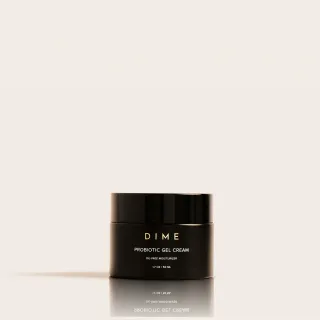
Works for
MoisturizingLinoleic acid, Dimethicone crosspolymer + 18 moreWorks well
“Keep your skin feeling hydrated and dewy with our water-based and oil-free Probiotic Gel Cream!”
This product can help improve hydration of the skin with the two types of ingredients.
The first type is called “humectants”:
these ingredients help attract water.
When humectants are on the surface of the skin, they “pull in” the moisture from the outside environment, or from
within deeper layers of the skin. The following ingredients in this product do the job:
fructooligosaccharides, glycerin.
This product also contains ingredients called “occlusives”. They help reduce the speed with which our skin loses moisture to the outside environment. These ingredients also help soften the upper layer of the skin, so it feels less tight and nicer to the touch. The following ingredients in this product do the job: dimethicone, phytosterols.
The following ingredients in this product are especially good for supporting the skin barrier and helping with the hydration level: linoleic acid
Anti-blemishLinoleic acid, Aloe barbadensis leaf juice + 1 moreNot delivered
“A gel moisturizer designed to hydrate and calm the skin to address various skin concerns such as blemishes, inflammation, and redness.”
This product contains ingredients (linoleic acid) that could help reduce blemishes and clogged pores in theory, but there is not enough evidence that they actually work.
Can it cause trouble?
Irritancy12 flagged ingredientsMedium risk
Comedogenic1 ingredient rated 2 or more on the 0–5 pore-clogging scale1 flagged

User reviews
Be the first — your take helps the next person decide.
Ingredients
Filter by role to see what each ingredient is doing.
Water~45–55%
Propanediol~5.2–6.4%
- Irritation risk
- Low
Acts as a solvent for other ingredients. Speeds up the absorption of other ingredients into the skin
More about PropanediolDimethicone crosspolymer~4.1–5%
- Irritation risk
- Low
Used to create a thicker product texture. Helps soften the upper layer of the skin and might be able to prevent moisture loss from its surface
More about Dimethicone crosspolymerGlycerin~3–3.6%
- Irritation risk
- Low
One of the best moisturizing ingredients. Naturally present in skin. It attracts water to the upper layer of the skin working as a humectant
More about GlycerinButylene glycol~2.3–2.8%
- Irritation risk
- Low
Used to create a nice product texture and help delivery of other ingredients. Might be somewhat helpful in attracting water to the upper layer of the skin
More about Butylene glycolDicaprylyl carbonate~1.9–2.4%
- Irritation risk
- Low
Helps products spread more easily and works as an emollient to soften skin
More about Dicaprylyl carbonateLactococcus ferment lysate~1.6–2%
- Irritation risk
- Low
Consists of remains of dead bacteria cells. Is likely helpful in attracting water to the upper layer of the skin. Might be helpful in reducing inflammation and neutralizing free radicals in skin
More about Lactococcus ferment lysatePentylene glycol~1.5–1.8%
- Irritation risk
- Medium
Used to preserve products, dissolve other ingredients and create a nice product texture
More about Pentylene glycolCetearyl methicone~1.1–1.4%
- Irritation risk
- Low
Dimethicone~1–1.2%
- Irritation risk
- Low
A silicone that helps to reduce water loss from the surface of the skin. Can temporarily "fill in" lines and wrinkles, absorb oil, and create a nice product finish
More about DimethiconeCaprylyl methicone~0.65–1%
- Irritation risk
- Low
A type of silicone that helps to soften the upper layer of the skin and create a nice product finish on the skin
More about Caprylyl methiconeCetearyl alcohol~0.65–1%
- Irritation risk
- Low
- Comedogenicity
- 2/5
A non-drying alcohol. Works as an emollient. Helps water and oil mix together and creates a nice product texture
More about Cetearyl alcoholGlyceryl stearate~0.55–0.85%
- Irritation risk
- Low
An emollient that softens the skin and forms a protective layer on its surface. Helps water and oil mix together
More about Glyceryl stearatePotassium olivoyl hydrolyzed oat protein~0.55–0.8%
Pyrus malus fruit extract~0.4–0.6%
- Irritation risk
- Medium
Can have some moisturizing properties due to its sugar content
More about Pyrus malus fruit extractSodium polyacryloyldimethyl taurate~0.4–0.65%
- Irritation risk
- Medium
Helps oil and water mix together
More about Sodium polyacryloyldimethyl taurateHydroxyacetophenone~0.4–0.6%
Phenoxyethanol~0.35–0.65%
- Irritation risk
- Low
A preservative. It helps prevent bacterial growth in cosmetic products
More about PhenoxyethanolXanthan gum~0.3–0.6%
- Irritation risk
- Low
Used to create a thicker product consistency
More about Xanthan gumBeta vulgaris root extract~0.25–0.5%
- Irritation risk
- Medium
A plant extract that might have some antioxidant properties, but mostly used in cosmetics for its color
More about Beta vulgaris root extractFructooligosaccharides~0.25–0.45%
- Irritation risk
- Low
Help attract water to the upper layer of the skin
More about FructooligosaccharidesMorinda citrifolia extract~0.25–0.45%
- Irritation risk
- Low
Acrylates/c10-30 alkyl acrylate crosspolymer~0.25–0.45%
- Irritation risk
- Medium
Maintains the texture of skincare products. Allows the product to spread evenly. Helps oil and water mix together
More about Acrylates/c10-30 alkyl acrylate crosspolymerGlyceryl oleate~0.25–0.45%
- Irritation risk
- High
Helps oil and water mix together. Can be irritating
More about Glyceryl oleateCaprylic/capric triglyceride~0.25–0.5%
- Irritation risk
- Medium
A good mix of fatty acids that forms a protective layer on the skin. Improves the shelf life of products. Derived from coconut and glycerin
More about Caprylic/capric triglycerideHydrolyzed hyaluronic acid~0.2–0.4%
- Irritation risk
- Low
One of the best moisturizing ingredients. Attracts water into the upper layer of the skin. A version of it is naturally present in skin
More about Hydrolyzed hyaluronic acidNiacinamide~0.2–0.4%
- Irritation risk
- Low
Is proven to be effective in reducing blemishes, evening out skin tone and helping to improve lines and wrinkles. It helps the skin to repair sun damage, calm down inflammation and keep maintain good levels of moisture. The concentration of about 2% is effective for supporting the skin barrier and evening out the skin tone. Concentration of 4-6% is better for helping with acne and balancing the sebum production
More about NiacinamideOlea europaea fruit unsaponifiables~0.25–0.45%
- Irritation risk
- Low
Sclerotium gum~0.2–0.35%
- Irritation risk
- Low
Used to create gel-like formulas and stabilize emulsions
More about Sclerotium gumLecithin~0.25–0.45%
- Irritation risk
- Low
Used mostly for creating emulsions - helping oil and water mix together. Helps soften the upper layer of the skin
More about LecithinPullulan~0.2–0.35%
- Irritation risk
- High
Creates a thin drying film on the skin resulting in a short-term tightening effect
More about PullulanEthylhexylglycerin~0.2–0.35%
Tetrasodium glutamate diacetate~0.15–0.3%
- Irritation risk
- Low
Helps stabilize the product formulation
More about Tetrasodium glutamate diacetateSilica~0.25–0.5%
Linoleic acid~0.25–0.5%
- Irritation risk
- Low
An excellent emollient. Helps soften the skin, restore its barrier function, and can help to calm down inflammation. It can be helpful to prevent blemishes and clogged pores
More about Linoleic acidPhospholipids~0.15–0.25%
- Irritation risk
- Low
Emollients that are naturaly present in skin. In addition, they help water and oil mix together in the product
More about PhospholipidsPhytosterols~0.15–0.3%
- Irritation risk
- Medium
Lipids that work as an emollient and can be helpful in repairing skin barrier function
More about PhytosterolsAloe barbadensis leaf juice~0.05–0.15%
- Irritation risk
- Medium
Traditionally used to treat sunburns, dermatitis and inflammation, but evidence for its effectiveness is lacking. The extract can contain humectants that help attract water into the skin
More about Aloe barbadensis leaf juiceCaramel~0.05–0.1%
- Irritation risk
- Low
Ingredient list view
Water, Propanediol, Dimethicone crosspolymer, Glycerin, Butylene glycol, Dicaprylyl carbonate, Lactococcus ferment lysate, Pentylene glycol, Cetearyl methicone, Dimethicone, Caprylyl methicone, Cetearyl alcohol, Glyceryl stearate, Potassium olivoyl hydrolyzed oat protein, Pyrus malus fruit extract, Sodium polyacryloyldimethyl taurate, Hydroxyacetophenone, Phenoxyethanol, Xanthan gum, Beta vulgaris root extract, Fructooligosaccharides, Morinda citrifolia extract, Acrylates/c10-30 alkyl acrylate crosspolymer, Glyceryl oleate, Caprylic/capric triglyceride, Hydrolyzed hyaluronic acid, Niacinamide, Olea europaea fruit unsaponifiables, Sclerotium gum, Lecithin, Pullulan, Ethylhexylglycerin, Tetrasodium glutamate diacetate, Silica, Linoleic acid, Phospholipids, Phytosterols, Aloe barbadensis leaf juice, Caramel
Compare prices
Retailers ranked by price — lowest first.

Worth comparing, line by line.
Match % combines shared ingredients, the first five ingredients, shared actives and hero ingredients, irritancy (lower counts in the alternative's favour), texture and body area. Only products in the same routine step are compared.
| DIMEProbiotic Gel CreamYOUR PRODUCT | THE formularxBarrier Relief Lightweight Ceramide Moisturizer | CereneIlluminating Water Cream | Dermarche LabsSMARTSYNC Probiotic Science Balancing Gel-Cream | |
|---|---|---|---|---|
| Match | — | 92% | 86% | 85% |
| Price | $40.00 | $9.01−$30.99 | — | $21.99−$18.01 |
| Shared key ingredients | — | 5 of 10 | 4 of 10 | 5 of 10 |
| Key difference | — | Colloidal Oatmeal | Anhydroxylitol | Anhydroxylitol |
| Irritancy | Medium | Low | Low | Medium |
| Drying alcohol | — | — | — | — |
| View product | Shop | Shop | Shop |

More alternatives: It Cosmetics Confidence in a Cream Barrier Boost Skin Barrier Repair MoisturizerSkinRx Lab MadeCera Core Cream
Sources cited in this review
Every concentration estimate and effectiveness label is anchored to one of these 10 studies and safety reviews.
- 1
- 2
- 3Final Report on the Safety Assessment of Dimethicone Copolyoljournals.sagepub.com
- 4
- 5Efficacy of a New Topical Nano-hyaluronic Acid in Humansncbi.nlm.nih.gov
- 6Physiochemical properties and application of hyaluronic acid: a systematic reviewonlinelibrary.wiley.com

Affiliate links · As an Amazon Associate, WIMJ earns from qualifying purchases.