Works for
MoisturizingEthylhexyl hydroxystearate, Dimethicone + 12 moreWorks
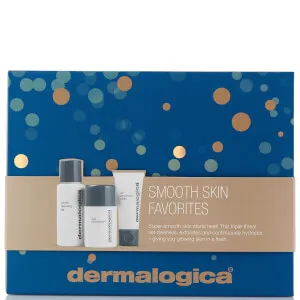
“This Dermalogica Smooth Skin Favorites set offers three products which can work together to offer an outstanding cleansing, exfoliation and hydration effect .”
This product can help improve hydration of the skin with the two types of ingredients.
The first type is called “humectants”:
these ingredients help attract water.
When humectants are on the surface of the skin, they “pull in” the moisture from the outside environment, or from
within deeper layers of the skin. The following ingredients in this product do the job:
sodium hyaluronate, silk amino acids.
This product also contains ingredients called “occlusives”. They help reduce the speed with which our skin loses moisture to the outside environment. These ingredients also help soften the upper layer of the skin, so it feels less tight and nicer to the touch. The following ingredients in this product do the job: dimethicone, ethylhexyl hydroxystearate.
ExfoliationRetinyl palmitateNot delivered
“Eliminate the dead skin cells and impurities which can dull the skin, and benefit from the refreshing colloidal oatmeal and green tea also featured in the formula.”
This product might help exfoliate the skin with retinyl palmitate, but this ingredient is not the most effective.
Anti-oxidationSide benefit · Camellia oleifera leaf extract, Vitis vinifera seed extract + 4 moreWorks well
This product contains antioxidants (camellia oleifera leaf extract, vitis vinifera seed extract) that can help neutralize free radicals in skin. By doing so, they can lessen the damage the skin gets from the UV light (sun).
Anti-agingSide benefit · Vitis vinifera seed extract, Retinyl palmitate + 2 moreMay help
This product contains retinyl palmitate, vitis vinifera seed extract. There is some human evidence that these ingredients help reduce and prevent fine lines and wrinkles and improve skin elasticity and firmness, though it is smaller or less consistent than the evidence for the best anti-aging ingredients.
Evens skin toneSide benefit · Retinyl palmitateMay help
The following ingredient (ingredients) in this product might be helpful, but there is no evidence to confirm that it actually works: retinyl palmitate.
Can it cause trouble?
Irritancy10 strong irritants: Lavandula angustifolia extract, Melissa officinalis leaf extract + 8 more — patch-test recommendedHigh risk
Comedogenic3 ingredients rated 2 or more on the 0–5 pore-clogging scale3 flagged
User reviews
Be the first — your take helps the next person decide.
Ingredients
Filter by role to see what each ingredient is doing.
Water~45–55%
Sodium laureth sulfate~10–12%
- Irritation risk
- High
- Comedogenicity
- 2/5
Works as a foaming cleansing agent
More about Sodium laureth sulfateDisodium lauroamphodiacetate~6.3–7.7%
- Irritation risk
- Medium
Helps oil and water mix together
More about Disodium lauroamphodiacetateSodium trideceth sulfate~3.4–4.1%
Hexylene glycol~2.1–2.6%
- Irritation risk
- Medium
Helps create a more spreadable product texture
More about Hexylene glycolHydroxyethylcellulose~1.9–2.3%
- Irritation risk
- Low
Used to thicken product formulations and create gel-like textures
More about HydroxyethylcelluloseLavandula angustifolia extract~1.6–2%
- Irritation risk
- High
Used for fragrance and contains volatile compounds that can irritate the skin
More about Lavandula angustifolia extractMelissa officinalis leaf extract~1.4–1.7%
- Irritation risk
- High
A plant extract that is added for its fragrance. Can be irritating
More about Melissa officinalis leaf extractQuillaja saponaria bark extract~1.2–1.5%
- Irritation risk
- Medium
Helps water and oil mix together
More about Quillaja saponaria bark extractLavandula angustifolia oil~0.9–1.15%
- Irritation risk
- High
An essential oil. Potential allergen and can be irritating. It has some anti-bacterial properties
More about Lavandula angustifolia oilPpg-5-ceteth-20~0.7–1.05%
- Irritation risk
- Medium
A solvent with some emollient properties
More about Ppg-5-ceteth-20Citric acid~0.55–0.85%
- Irritation risk
- Medium
Can work as an exfoliant but is typically used to adjust the product pH
More about Citric acidSodium chloride~0.6–0.9%
- Irritation risk
- Low
Used to stabilize mixtures of oil and water, and create thicker, gel-like product textures
More about Sodium chloridePhenoxyethanol~0.5–0.75%
- Irritation risk
- Low
A preservative. It helps prevent bacterial growth in cosmetic products
More about PhenoxyethanolMethylparaben~0.15–0.3%
Propylparaben~0.2–0.4%
Water~0.45–0.65%
Sodium laureth sulfate~0.7–1%
- Irritation risk
- High
- Comedogenicity
- 2/5
Works as a foaming cleansing agent
More about Sodium laureth sulfateDisodium lauroamphodiacetate~0.75–1.15%
- Irritation risk
- Medium
Helps oil and water mix together
More about Disodium lauroamphodiacetateSodium trideceth sulfate~0.65–0.95%
Hexylene glycol~0.3–0.55%
- Irritation risk
- Medium
Helps create a more spreadable product texture
More about Hexylene glycolHydroxyethylcellulose~0.35–0.6%
- Irritation risk
- Low
Used to thicken product formulations and create gel-like textures
More about HydroxyethylcelluloseLavandula angustifolia extract~0.3–0.5%
- Irritation risk
- High
Used for fragrance and contains volatile compounds that can irritate the skin
More about Lavandula angustifolia extractMelissa officinalis leaf extract~0.3–0.5%
- Irritation risk
- High
A plant extract that is added for its fragrance. Can be irritating
More about Melissa officinalis leaf extractQuillaja saponaria bark extract~0.45–0.7%
- Irritation risk
- Medium
Helps water and oil mix together
More about Quillaja saponaria bark extractLavandula angustifolia oil~0.3–0.55%
- Irritation risk
- High
An essential oil. Potential allergen and can be irritating. It has some anti-bacterial properties
More about Lavandula angustifolia oilPpg-5-ceteth-20~0.35–0.6%
- Irritation risk
- Medium
A solvent with some emollient properties
More about Ppg-5-ceteth-20Citric acid~0.3–0.55%
- Irritation risk
- Medium
Can work as an exfoliant but is typically used to adjust the product pH
More about Citric acidSodium chloride~0.3–0.6%
- Irritation risk
- Low
Used to stabilize mixtures of oil and water, and create thicker, gel-like product textures
More about Sodium chloridePhenoxyethanol~0.3–0.55%
- Irritation risk
- Low
A preservative. It helps prevent bacterial growth in cosmetic products
More about PhenoxyethanolMethylparaben~0.15–0.3%
Propylparaben~0.2–0.4%
Cream~0.3–0.6%
- Irritation risk
- Low
Water~0.3–0.55%
Butylene glycol~0.3–0.55%
- Irritation risk
- Low
Used to create a nice product texture and help delivery of other ingredients. Might be somewhat helpful in attracting water to the upper layer of the skin
More about Butylene glycolCaprylic/capric triglyceride~0.35–0.65%
- Irritation risk
- Medium
A good mix of fatty acids that forms a protective layer on the skin. Improves the shelf life of products. Derived from coconut and glycerin
More about Caprylic/capric triglycerideEthylhexyl hydroxystearate~0.35–0.6%
- Irritation risk
- Low
Helps soften the upper layer of the skin and reduce water loss from it
More about Ethylhexyl hydroxystearateStearic acid~0.45–0.7%
- Irritation risk
- Low
Helps oil and water mix together and works as an emollient
More about Stearic acidPeg-8~0.3–0.55%
- Irritation risk
- Medium
Used to create a nice product consistency
More about Peg-8Lactamide mea~0.3–0.5%
- Irritation risk
- Low
Ethylhexyl methoxycinnamate~0.5–0.8%
- Irritation risk
- High
Octinoxate. When used in higher concentrations, works as a sunscreen protecting the skin from UVB rays. When used in lower concentration, helps to preserve the product formulation. Is shown to be harmful to coral reefs - consider avoiding bathing in coral reef areas when wearing a product with this ingredient. It can be irritating
More about Ethylhexyl methoxycinnamateDimethicone~0.35–0.65%
- Irritation risk
- Low
A silicone that helps to reduce water loss from the surface of the skin. Can temporarily "fill in" lines and wrinkles, absorb oil, and create a nice product finish
More about DimethiconeCetearyl alcohol~0.35–0.6%
- Irritation risk
- Low
- Comedogenicity
- 2/5
A non-drying alcohol. Works as an emollient. Helps water and oil mix together and creates a nice product texture
More about Cetearyl alcoholSilk amino acids~0.3–0.5%
- Irritation risk
- Low
Might help attract water to the upper layer of the skin
More about Silk amino acidsPolysorbate 60~0.3–0.6%
Tocopheryl acetate~0.3–0.55%
- Irritation risk
- Medium
A more stable but less bio-available form of vitamin E compared to Tocopherol. Might help moisturize and protect the skin from free radicals, but mostly used in low concentrations to stabilize other ingredients.
More about Tocopheryl acetateCitrus aurantium amara flower extract~0.3–0.5%
- Irritation risk
- High
Used as a fragrance for its citrus smell. Can be irritating
More about Citrus aurantium amara flower extractCananga odorata flower oil~0.25–0.5%
Camellia oleifera leaf extract~0.3–0.5%
- Irritation risk
- Low
A plant extract that can help neutralize free radicals and reduce inflammation, even though it is not usually used in sufficient concentration in cosmetics
More about Camellia oleifera leaf extractAloe barbadensis leaf juice~0.3–0.55%
- Irritation risk
- Medium
Traditionally used to treat sunburns, dermatitis and inflammation, but evidence for its effectiveness is lacking. The extract can contain humectants that help attract water into the skin
More about Aloe barbadensis leaf juiceAllantoin panthenol~0.3–0.5%
- Irritation risk
- Low
Glycolipids~0.3–0.5%
- Irritation risk
- Low
Sodium hyaluronate~0.3–0.55%
- Irritation risk
- Low
One of the best moisturizing ingredients. Attracts water into the upper layer of the skin
More about Sodium hyaluronatePalmitoyl hydroxypropyltrimonium amylopectin/glycerin crosspolymer~0.3–0.5%
Lecithin~0.35–0.6%
- Irritation risk
- Low
Used mostly for creating emulsions - helping oil and water mix together. Helps soften the upper layer of the skin
More about LecithinVitis vinifera seed extract~0.3–0.55%
- Irritation risk
- Low
A plant extract that contains resveratrol and other anti-oxidant compounds that can help neutralize free radicals, reduce inflammation in skin and even out its tone. Can be also used to stabilize the product formulation
More about Vitis vinifera seed extractMalva sylvestris flower/leaf/stem extract~0.3–0.5%
- Irritation risk
- Low
Hedera helix leaf/stem extract~0.3–0.55%
- Irritation risk
- Low
Cucumis sativus fruit extract~0.3–0.55%
- Irritation risk
- Medium
Might be somewhat helpful in reducing hyperpigmentation and neutralizing free radicals but its typical concentration in a product is too low for having an effect
More about Cucumis sativus fruit extractSambucus nigra flower extract~0.3–0.55%
- Irritation risk
- High
A plant extract that might help neutralize free radicals in skin
More about Sambucus nigra flower extractArnica montana flower extract~0.25–0.5%
- Irritation risk
- High
A plant extract that can be irritating. It can have some anti-bacterial properties, but there are no evidence of a beneficial effect for skin
More about Arnica montana flower extractParietaria officinalis extract~0.3–0.55%
- Irritation risk
- Low
Retinyl palmitate~0.25–0.5%
- Irritation risk
- High
Three steps removed from the active form of vitamin A - retinoic acid. To have an effect in the skin, it first needs to be converted twice to become the retinoic acid. This means it is less potent than retinol, but could also be less irritating. Once converted to the retinoic acid in the skin, it helps against all signs of aging, improves skin cell turnover and helps fight blemishes and clogged pores. However, in many cosmetic formulations, it is used in a concentration that is too low to have the full effect
More about Retinyl palmitateAscorbyl palmitate~0.3–0.5%
- Irritation risk
- Medium
Being a lipid soluble form of vitamin C, it is more stable and can penetrate the skin better than L-Ascorbic acid. It is effective in protecting the skin from free radicals, as well as evening the skin tone, but is less effective in stimulating collagen production compared to L-Ascorbic acid.
More about Ascorbyl palmitatePolyquaternium-10~0.3–0.55%
- Irritation risk
- Low
Helps soften the upper layer of the skin and create a nice product finish
More about Polyquaternium-10Cetyl alcohol~0.3–0.6%
- Irritation risk
- Low
A non-drying alcohol that works to soften the skin and stabilize product formulations helping oil and water mix together
More about Cetyl alcoholPeg-100 stearate~0.35–0.65%
- Irritation risk
- Low
Helps oil and water mix togehter and creates a nice product texture
More about Peg-100 stearateGlyceryl stearate~0.3–0.55%
- Irritation risk
- Low
An emollient that softens the skin and forms a protective layer on its surface. Helps water and oil mix together
More about Glyceryl stearateAminomethyl propanol~0.2–0.4%
Disodium edta~0.2–0.35%
Carbomer~0.2–0.35%
- Irritation risk
- Low
Helps create a thicker or gel-like product texture. It is not a surfactant but can be used in gentle cleansing formulations
More about CarbomerSodium benzoate~0.1–0.2%
Phenoxyethanol~0.1–0.2%
- Irritation risk
- Low
A preservative. It helps prevent bacterial growth in cosmetic products
More about PhenoxyethanolEthylhexylglycerin~0.1–0.25%
Benzyl benzoate~0.1–0.2%
- Irritation risk
- High
Fragrance with sweet balsamic smell. Help to preserve products and dissolve other ingredients. Could trigger allergic reactions and be irritating
More about Benzyl benzoateBenzyl salicylate~0.05–0.1%
Linalool~0.05–0.1%
Ingredient list view
Water, Sodium laureth sulfate, Disodium lauroamphodiacetate, Sodium trideceth sulfate, Hexylene glycol, Hydroxyethylcellulose, Lavandula angustifolia extract, Melissa officinalis leaf extract, Quillaja saponaria bark extract, Lavandula angustifolia oil, Ppg-5-ceteth-20, Citric acid, Sodium chloride, Phenoxyethanol, Methylparaben, Propylparaben, Water, Sodium laureth sulfate, Disodium lauroamphodiacetate, Sodium trideceth sulfate, Hexylene glycol, Hydroxyethylcellulose, Lavandula angustifolia extract, Melissa officinalis leaf extract, Quillaja saponaria bark extract, Lavandula angustifolia oil, Ppg-5-ceteth-20, Citric acid, Sodium chloride, Phenoxyethanol, Methylparaben, Propylparaben, Cream, Water, Butylene glycol, Caprylic/capric triglyceride, Ethylhexyl hydroxystearate, Stearic acid, Peg-8, Lactamide mea, Ethylhexyl methoxycinnamate, Dimethicone, Cetearyl alcohol, Silk amino acids, Polysorbate 60, Tocopheryl acetate, Citrus aurantium amara flower extract, Cananga odorata flower oil, Camellia oleifera leaf extract, Aloe barbadensis leaf juice, Allantoin panthenol, Glycolipids, Sodium hyaluronate, Palmitoyl hydroxypropyltrimonium amylopectin/glycerin crosspolymer, Lecithin, Vitis vinifera seed extract, Malva sylvestris flower/leaf/stem extract, Hedera helix leaf/stem extract, Cucumis sativus fruit extract, Sambucus nigra flower extract, Arnica montana flower extract, Parietaria officinalis extract, Retinyl palmitate, Ascorbyl palmitate, Polyquaternium-10, Cetyl alcohol, Peg-100 stearate, Glyceryl stearate, Aminomethyl propanol, Disodium edta, Carbomer, Sodium benzoate, Phenoxyethanol, Ethylhexylglycerin, Benzyl benzoate, Benzyl salicylate, Linalool
Worth comparing, line by line.
Match % combines shared ingredients, the first five ingredients, shared actives and hero ingredients, irritancy (lower counts in the alternative's favour), texture and body area. Only products in the same routine step are compared.
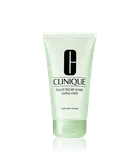
| DermalogicaSmooth Skin FavoritesYOUR PRODUCT | ZO Skin HealthExfoliation Accelerator | REVOLUTION SKINCAREDehydrated Skin Peeling Solution | CliniqueLiquid Facial Soap Tube | |
|---|---|---|---|---|
| Match | — | 29% | 28% | 28% |
| Price | — | $69.99 | — | — |
| Shared key ingredients | — | 3 of 9 | 3 of 9 | 3 of 9 |
| Key difference | — | Lactic Acid | Gluconolactone | Urea |
| Irritancy | High | Medium | Low | Low |
| Drying alcohol | — | — | — | — |
| View product | Shop | Shop | Shop |


More alternatives: Elizabeth Grant Caviar Nutruriche Diamond Hydrating Face PeelOrigins High-Potency Night-A-Mins Resurfacing Cream with Fruit-Derived AHAs
Product summary
"Dermalogica - Smooth Skin Favorites" is effective for: Anti-oxidation
This product could be helpful for: Moisturizing and Anti-aging, but its actives are not the most effective or are not well-studied.
Ingredient callouts
- this product includes a form of Retinoids (vitamin A) - retinyl palmitate 0.25% - 0.50%, but this type of vitamin A is not very effective. It could in theory help with fine lines and wrinkles, but the effect is most likely minimal.
- Humectants (sodium hyaluronate 0.30% - 0.55%). These ingredients help attract water to the upper layer of the skin and improve the skin hydration.
About the brand
According to Cruelty-Free Kitty "Dermalogica" is cruelty free, but its parent company is not.
Sources cited in this review
Every concentration estimate and effectiveness label is anchored to one of these 16 studies and safety reviews.
- 1Surfactants and experimental irritant contact dermatitisncbi.nlm.nih.gov
- 2
- 3
- 4Final Report on the Safety Assessment of Dimethicone Copolyoljournals.sagepub.com
- 5Hyaluronic acid: A key molecule in skin agingncbi.nlm.nih.gov
- 6
