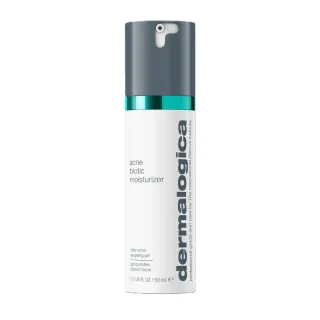
Works for
3 of 3 advertised claims delivered
Moisturizing13 ingredients credited for this claimStrong support
“Lightweight moisturizer with a prebiotic blend hydrates and supports skin's microbiome, helping aging skin look healthier, now and in the future.”
This product can help improve hydration of the skin with the two types of ingredients.
The first type is called “humectants”:
these ingredients help attract water.
When humectants are on the surface of the skin, they “pull in” the moisture from the outside environment, or from
within deeper layers of the skin. The following ingredients in this product do the job:
erythritol, glutamic acid.
This product also contains ingredients called “occlusives”. They help reduce the speed with which our skin loses moisture to the outside environment. These ingredients also help soften the upper layer of the skin, so it feels less tight and nicer to the touch. The following ingredients in this product do the job: squalane, caprylyl glycol.
The following ingredients in this product are especially good for supporting the skin barrier and helping with the hydration level: niacinamide
Anti-aging2 ingredients credited for this claimStrong support
“Helps prevent future breakouts and visibly promotes healthy skin aging.”
This product can help reduce and prevent fine lines and wrinkles, improve skin elasticity and firmness because it contains niacinamide.
Keep in mind that it typically takes at least 6 weeks to notice any results because the changes that are needed to improve fine lines and elasticity happen in the deeper layers of the skin. No topical anti-aging product can “erase” wrinkles or fully reverse signs of aging.
Anti-blemish3 ingredients credited for this claimStrong support
“Daily gel targets and helps prevent breakouts.”
This product can help reduce breakouts and clogged pores because it contains the following ingredient: niacinamide, salicylic acid. These ingredients is used for treating acne and can have a noticeable effect.
ExfoliationNot advertised by the brand · 1 ingredient credited for this claimStrong support
This product can help exfoliate the skin. In other words, it helps break down the bonds between dead cells on the surface of the skin and speed up the skin turnover. Skin often appears softer and brighter after exfoliation, but overdoing it can result in disrupted skin barrier. The following ingredient is doing the exfoliating job in this product: salicylic acid.
Evens skin toneNot advertised by the brand · 2 ingredients credited for this claimStrong support
This product can help reduce hypepigmentation and even out the skin tone because it contains the following effective ingredients: niacinamide, salicylic acid
Keep in mind that you would need to apply any topical skincare targetted at hypigmentation consistently for a couple of months to get a result. No topical skincare product can help get rid of hyperpigmentation (including post-acne marks and age spots) instantly.
Can it cause trouble?
Irritancy7 strong irritants: Lavandula angustifolia oil, Lavandula hybrida oil + 5 more — patch-test recommendedHigh risk
ComedogenicClean of flagged comedogenic ingredientsNone flagged


User reviews
Be the first — your take helps the next person decide.
Ingredients
Filter by role to see what each ingredient is doing.
Salicylic acid0.5%
- Irritation risk
- High
Used for skin exfoliation. It has an anti-inflammatory and anti-bacterial effect, helps to unclog pores, prevent blemishes and speed up healing of the existing ones. Sometimes referred to as a BHA (beta-hydroxy acid)
More about Salicylic acidWater~45–55%
Butylene glycol~9–11%
- Irritation risk
- Low
Used to create a nice product texture and help delivery of other ingredients. Might be somewhat helpful in attracting water to the upper layer of the skin
More about Butylene glycolPropanediol~5.2–6.3%
- Irritation risk
- Low
Acts as a solvent for other ingredients. Speeds up the absorption of other ingredients into the skin
More about PropanediolNiacinamide~3.5–4.3%
- Irritation risk
- Low
Is proven to be effective in reducing blemishes, evening out skin tone and helping to improve lines and wrinkles. It helps the skin to repair sun damage, calm down inflammation and keep maintain good levels of moisture. The concentration of about 2% is effective for supporting the skin barrier and evening out the skin tone. Concentration of 4-6% is better for helping with acne and balancing the sebum production
More about NiacinamideOctyldodecanol~2.5–3.1%
- Irritation risk
- Low
An emollient that helps to soften the skin and create a pleasant product texture and stabilize the formulation
More about OctyldodecanolEthylhexyl olivate~2–2.5%
- Irritation risk
- Low
Helps soften the upper layer of the skin
More about Ethylhexyl olivateGlycerin~1.9–2.3%
- Irritation risk
- Low
One of the best moisturizing ingredients. Naturally present in skin. It attracts water to the upper layer of the skin working as a humectant
More about GlycerinErythritol~1.6–2%
- Irritation risk
- Low
Helps to attract water to the upper layer of the skin
More about ErythritolInulin~1.4–1.8%
- Irritation risk
- Low
Helps attract water to the upper layer of the skin. Is claimed to support the growth of "good" bacteria in skin (as a "prebiotic"), but the research is lacking
More about InulinCetearyl olivate~1.2–1.5%
Lavandula angustifolia oil~1.1–1.3%
- Irritation risk
- High
An essential oil. Potential allergen and can be irritating. It has some anti-bacterial properties
More about Lavandula angustifolia oilLavandula hybrida oil~0.9–1.1%
- Irritation risk
- High
Plant extract that can be irritating and is a known allergen
More about Lavandula hybrida oilCitrus limon peel oil~0.75–1.1%
Salvia sclarea oil~0.75–1.1%
- Irritation risk
- High
Hydrolyzed jojoba esters~0.95–1.2%
- Irritation risk
- Low
Helps soften the upper layer of the skin
More about Hydrolyzed jojoba estersMorinda citrifolia fruit extract~0.7–1%
- Irritation risk
- Low
Leptospermum scoparium branch/leaf oil~0.7–1.05%
- Irritation risk
- Low
Phaeodactylum tricornutum extract~0.6–0.85%
- Irritation risk
- Low
Magnolia officinalis bark extract~0.6–0.9%
- Irritation risk
- Low
Piper nigrum seed extract~0.6–0.9%
- Irritation risk
- Low
Rosmarinus officinalis leaf oil~0.5–0.8%
- Irritation risk
- High
A plant oil with high content of volatile compounds that can irritate the skin. Can be used as a fragrance. Has anti-bacterial properties and might help neutralize free radicals on the surface of the skin
More about Rosmarinus officinalis leaf oilTocopherol~0.5–0.75%
- Irritation risk
- Low
Pure form of vitamin E. Can help moisturise and protect the skin from free radicals. Often used to help stabilise other ingredients or the formula itself
More about TocopherolXylitol~0.45–0.7%
- Irritation risk
- Low
Helps attract water to the upper layer of the skin and repair the skin barrier function
More about XylitolSqualane~0.55–0.8%
- Irritation risk
- Low
An oil naturally present in skin. Works as an emollient to soften the skin and form a protective layer on its surface without a greasy feeling.
More about SqualaneCaprylyl glycol~0.5–0.75%
- Irritation risk
- Medium
Helps preserve products and creates a nice product texture
More about Caprylyl glycolLecithin~0.5–0.75%
- Irritation risk
- Low
Used mostly for creating emulsions - helping oil and water mix together. Helps soften the upper layer of the skin
More about LecithinGlutamic acid~0.45–0.65%
- Irritation risk
- Low
An amino-acid that helps attract water to the upper layer of the skin
More about Glutamic acidPolyquaternium-80~0.5–0.8%
Didecyldimonium chloride~0.45–0.65%
Methylpropanediol~0.4–0.6%
Sorbitan olivate~0.3–0.55%
Tetrasodium glutamate diacetate~0.25–0.45%
- Irritation risk
- Low
Helps stabilize the product formulation
More about Tetrasodium glutamate diacetateCitric acid~0.2–0.35%
- Irritation risk
- Medium
Can work as an exfoliant but is typically used to adjust the product pH
More about Citric acidSodium hydroxide~0.15–0.3%
Polyacrylate crosspolymer-6~0.15–0.3%
- Irritation risk
- Low
Caprylic acid~0.2–0.35%
Linalool~0.1–0.15%
Limonene~0.05–0.1%
- Irritation risk
- High
A common frangrance that can easily irritate skin, especially if exposed to air, light or heat
More about LimoneneIngredient list view
Salicylic acid, Water, Butylene glycol, Propanediol, Niacinamide, Octyldodecanol, Ethylhexyl olivate, Glycerin, Erythritol, Inulin, Cetearyl olivate, Lavandula angustifolia oil, Lavandula hybrida oil, Citrus limon peel oil, Salvia sclarea oil, Hydrolyzed jojoba esters, Morinda citrifolia fruit extract, Leptospermum scoparium branch/leaf oil, Phaeodactylum tricornutum extract, Magnolia officinalis bark extract, Piper nigrum seed extract, Rosmarinus officinalis leaf oil, Tocopherol, Xylitol, Squalane, Caprylyl glycol, Lecithin, Glutamic acid, Polyquaternium-80, Didecyldimonium chloride, Methylpropanediol, Sorbitan olivate, Tetrasodium glutamate diacetate, Citric acid, Sodium hydroxide, Polyacrylate crosspolymer-6, Caprylic acid, Linalool, Limonene
Compare prices
Retailers ranked by price — lowest first.

Affiliate links · prices updated regularly
Worth comparing, line by line.
Match % combines shared ingredients, the first five ingredients, shared actives and hero ingredients, irritancy (lower counts in the alternative's favour), texture and body area. Only products in the same routine step are compared.
| DermalogicaAcne Biotic MoisturizerYOUR PRODUCT | BiodermaHydrabio Gel-Creme | FacetheorySUPERGEL OIL-FREE MOISTURISER M3 FOR OILY AND ACNE-PRONE SKIN | MesoesteticMelan Tran Daily Depigmenting Gel Cream | |
|---|---|---|---|---|
| Match | — | 89% | 87% | 86% |
| Price | $77.00 | $17.50−$59.50 | $18.99−$58.01 | $59.80−$17.20 |
| Shared key ingredients | — | 4 of 10 | 3 of 10 | 3 of 10 |
| Key difference | — | Peg/Ppg-18/18 Dimethicone | Lactic Acid | Lactic Acid |
| Irritancy | High | Medium | Medium | Medium |
| Drying alcohol | — | — | — | — |
| View product | Shop | Shop | Shop |


Sources cited in this review
Every concentration estimate and effectiveness label is anchored to one of these 16 studies and safety reviews.
- 1Salicylic acid as a peeling agent: a comprehensive reviewncbi.nlm.nih.gov
- 2Beta Hydroxy Acidsfda.gov
- 3A review of toxicity from topical salicylic acid preparationssciencedirect.com
- 4
- 5
- 6

Affiliate links · As an Amazon Associate, WIMJ earns from qualifying purchases.