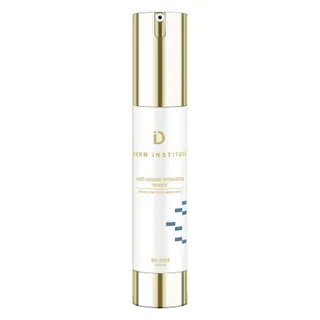
Derm Institute Anti-Oxidant Hydration Rescue

Derm Institute Anti-Oxidant Hydration Rescue

Efficacy100/100IrritancyHigh

Works for

Moisturizing
Palmitoyl tripeptide-5, Dipeptide diaminobutyroyl benzylamide diacetate + 32 more
Works well
What the product description says
“Hydrates and firms”
Source: SpaceNK US

This product can help improve hydration of the skin with the two types of ingredients.

The first type is called “humectants”:
these ingredients help attract water. When humectants are on the surface of the skin, they “pull in” the moisture from the outside environment, or from within deeper layers of the skin. The following ingredients in this product do the job: glycerin, sodium hyaluronate.

This product also contains ingredients called “occlusives”. They help reduce the speed with which our skin loses moisture to the outside environment. These ingredients also help soften the upper layer of the skin, so it feels less tight and nicer to the touch. The following ingredients in this product do the job: squalane, glycine soja sterols.

The following ingredients in this product are especially good for supporting the skin barrier and helping with the hydration level: acetyl tetrapeptide-17, dipeptide diaminobutyroyl benzylamide diacetate, palmitoyl tripeptide-5

Palmitoyl tripeptide-5HeroEffect: HighA type of peptide. Peptides are excellent moisturizers and might be able support collagen production reducing fine lines and wrinkles~0.2–0.35%
Dipeptide diaminobutyroyl benzylamide diacetateHeroEffect: HighA type of peptide. Peptides are excellent moisturizers and might be able support collagen production reducing fine lines and wrinkles~0.15–0.3%
Acetyl tetrapeptide-17HeroEffect: HighA type of peptide. Peptides are excellent moisturizers and might be able support collagen production reducing fine lines and wrinkles~0.15–0.3%
GlycerinKey active· HumectantEffect: HighOne of the best moisturizing ingredients. Naturally present in skin. It attracts water to the upper layer of the skin working as a humectant~4.5–5.5%
Cetyl alcoholKey active· EmollientEffect: MediumA non-drying alcohol that works to soften the skin and stabilize product formulations helping oil and water mix together~2.3–2.8%
Glycine soja sterolsKey active· EmollientEffect: HighAn emollient that helps soften the skin~1.5–1.8%
Corallina officinalis extractKey activeEffect: HighRed algae extract that helps attract water to the upper layer of the skin and might contain antioxidants~0.45–0.7%
CyclopentasiloxaneKey active· EmollientEffect: MediumA silicone that helps improve the product texture and spreadability. Can absorb oil creating a short-term mattifying effect on the skin~0.3–0.5%
Cetearyl alcoholKey active· EmollientEffect: MediumA non-drying alcohol. Works as an emollient. Helps water and oil mix together and creates a nice product texture~0.3–0.55%
SqualaneKey active· Emollient, OcclusiveEffect: HighAn oil naturally present in skin. Works as an emollient to soften the skin and form a protective layer on its surface without a greasy feeling.~0.25–0.5%
ProlineKey activeEffect: Medium~0.25–0.45%
Hydrolyzed vegetable proteinKey activeEffect: Medium~0.25–0.45%
Dimethicone crosspolymerKey activeEffect: MediumUsed to create a thicker product texture. Helps soften the upper layer of the skin and might be able to prevent moisture loss from its surface~0.25–0.45%
Sodium hyaluronateKey active· HumectantEffect: HighOne of the best moisturizing ingredients. Attracts water into the upper layer of the skin~0.2–0.35%
Hydrolyzed soy proteinKey active· HumectantEffect: MediumHelps attract water to the upper layer of the skin. Might have some anti-aging, anti-oxidant, and skin lightening properties, but solid evidence is missing~0.15–0.3%
Butylene glycol· HumectantEffect: LowUsed to create a nice product texture and help delivery of other ingredients. Might be somewhat helpful in attracting water to the upper layer of the skin~3.9–4.7%
Dicaprylyl carbonate· EmollientEffect: LowHelps products spread more easily and works as an emollient to soften skin~3.1–3.8%
Behenyl alcohol· Emollient, OcclusiveEffect: LowNon-drying alcohol that helps water and oil mix together. Also serves as an emollient~1.6–2%
Glyceryl stearate· EmollientEffect: LowAn emollient that softens the skin and forms a protective layer on its surface. Helps water and oil mix together~1.2–1.5%
Ananas sativus fruit extractEffect: LowA fruit extract that might help to attract water to the upper layer of the skin, but there is no evidence for any other benefits to the skin~0.35–0.65%
Glyceryl caprylate· EmollientEffect: LowAn emollient that can also help water and oil mix together, as well as prevent bacteria growth in products~0.3–0.55%
Hydrolyzed corn starch· HumectantEffect: LowHelps improve the product texture~0.25–0.45%
Pentylene glycol· EmollientEffect: LowUsed to preserve products, dissolve other ingredients and create a nice product texture~0.25–0.5%
Lauryl laurateEffect: LowHelps soften the upper layer of the skin~0.25–0.45%
BiotinEffect: LowMight have some moisturising properties. Is not effective when applied topically beyond some moisturizing effect~0.25–0.45%
Caprylyl glycol· Humectant, EmollientEffect: LowHelps preserve products and creates a nice product texture~0.25–0.5%
Scutellaria baicalensis root extract· HumectantEffect: LowA plant extract that might contain a compound baicalin that could be helpful in neutralizing free radicals and reducing inflammation in skin. The baicalin concentration in skincare products is often too low for an effective action. Can be used for its fragrant properties~0.15–0.3%
Aloe barbadensis leaf juiceEffect: Low, below effective doseTraditionally used to treat sunburns, dermatitis and inflammation, but evidence for its effectiveness is lacking. The extract can contain humectants that help attract water into the skin~0.45–0.65%
Isononyl isononanoateEffect: Low, below effective doseForms a protective film on the surface of the skin to prevent moisture loss. Gives a velvety feel to products while reducing tackiness~0.35–0.6%
Stearic acidEffect: Low, below effective doseHelps oil and water mix together and works as an emollient~0.3–0.6%
TocopherolEffect: Low, below effective dosePure form of vitamin E. Can help moisturise and protect the skin from free radicals. Often used to help stabilise other ingredients or the formula itself~0.25–0.45%
Cucumis sativus fruit extractEffect: Low, below effective doseMight be somewhat helpful in reducing hyperpigmentation and neutralizing free radicals but its typical concentration in a product is too low for having an effect~0.25–0.45%
Caprylic/capric triglycerideUnder-dosedA good mix of fatty acids that forms a protective layer on the skin. Improves the shelf life of products. Derived from coconut and glycerin~0.6–0.9%
Simmondsia chinensis seed oilUnder-dosedSoftens the upper layer of skin and helps restore the healthy skin barrier. Has shown to help calm down inflammation in skin. It is a stable oil, meaning that it retains its properties even when exposed to air.~0.45–0.65%
Anti-blemish
Retinol, Aloe barbadensis leaf juice + 1 more
Works well
What the product description says
“Helps to unclog pores and reduce the appearance of blackheads and blemishes”
Source: SpaceNK US

This product can help reduce breakouts and clogged pores because it contains the following ingredient: retinol. This ingredient is used for treating acne and can have a noticeable effect.

RetinolHeroEffect: HighTwo steps removed from the active form of vitamin A - retinoic acid. Once converted to the retinoic acid in the skin, retinol is proven to be effective against all signs of aging. It improves skin cell turnover, helps fight blemishes and clogged pores, can regulate excess oil production and even skin tone. It can, however, be quite irritating~0.25–0.4%
Aloe barbadensis leaf juiceEffect: Low, below effective doseTraditionally used to treat sunburns, dermatitis and inflammation, but evidence for its effectiveness is lacking. The extract can contain humectants that help attract water into the skin~0.45–0.65%
Retinyl palmitateUnder-dosedThree steps removed from the active form of vitamin A - retinoic acid. To have an effect in the skin, it first needs to be converted twice to become the retinoic acid. This means it is less potent than retinol, but could also be less irritating. Once converted to the retinoic acid in the skin, it helps against all signs of aging, improves skin cell turnover and helps fight blemishes and clogged pores. However, in many cosmetic formulations, it is used in a concentration that is too low to have the full effect~0.25–0.4%
Evens skin tone
Side benefit · Retinol, Hydrolyzed soy protein + 2 more
Works well

This product can help reduce hypepigmentation and even out the skin tone because it contains the following effective ingredients: retinol.

Keep in mind that you would need to apply any topical skincare targetted at hypigmentation consistently for a couple of months to get a result. No topical skincare product can help get rid of hyperpigmentation (including post-acne marks and age spots) instantly.

RetinolHeroEffect: HighTwo steps removed from the active form of vitamin A - retinoic acid. Once converted to the retinoic acid in the skin, retinol is proven to be effective against all signs of aging. It improves skin cell turnover, helps fight blemishes and clogged pores, can regulate excess oil production and even skin tone. It can, however, be quite irritating~0.25–0.4%
Hydrolyzed soy proteinEffect: LowHelps attract water to the upper layer of the skin. Might have some anti-aging, anti-oxidant, and skin lightening properties, but solid evidence is missing~0.15–0.3%
Ascorbic acidUnder-dosedThe most well-researched antioxidant that works in skin. Helps neutralize free radicals supporting collagen production, helping to even out the skin tone and preventing early signs of aging~0.25–0.45%
Retinyl palmitateUnder-dosedThree steps removed from the active form of vitamin A - retinoic acid. To have an effect in the skin, it first needs to be converted twice to become the retinoic acid. This means it is less potent than retinol, but could also be less irritating. Once converted to the retinoic acid in the skin, it helps against all signs of aging, improves skin cell turnover and helps fight blemishes and clogged pores. However, in many cosmetic formulations, it is used in a concentration that is too low to have the full effect~0.25–0.4%
Anti-aging
Side benefit the brand mentions · Retinol, Adenosine triphosphate + 7 more
Works well
What the product description says
“Formulated with plant-based collagen it helps to visibly plump the skin and reduce signs of ageing.”
Source: SpaceNK

This product can help reduce and prevent fine lines and wrinkles, improve skin elasticity and firmness because it contains retinol.

These ingredients in the product can also be helpful, even though there is less evidence for their effectiveness: acetyl tetrapeptide-17, adenosine triphosphate, dipeptide diaminobutyroyl benzylamide diacetate, palmitoyl tripeptide-5.

Keep in mind that it typically takes at least 6 weeks to notice any results because the changes that are needed to improve fine lines and elasticity happen in the deeper layers of the skin. No topical anti-aging product can “erase” wrinkles or fully reverse signs of aging.

RetinolHeroEffect: HighTwo steps removed from the active form of vitamin A - retinoic acid. Once converted to the retinoic acid in the skin, retinol is proven to be effective against all signs of aging. It improves skin cell turnover, helps fight blemishes and clogged pores, can regulate excess oil production and even skin tone. It can, however, be quite irritating~0.25–0.4%
Adenosine triphosphateKey activeEffect: Medium~0.25–0.4%
Palmitoyl tripeptide-5Key activeEffect: MediumA type of peptide. Peptides are excellent moisturizers and might be able support collagen production reducing fine lines and wrinkles~0.2–0.35%
Acetyl tetrapeptide-17Key activeEffect: MediumA type of peptide. Peptides are excellent moisturizers and might be able support collagen production reducing fine lines and wrinkles~0.15–0.3%
Dipeptide diaminobutyroyl benzylamide diacetateKey activeEffect: MediumA type of peptide. Peptides are excellent moisturizers and might be able support collagen production reducing fine lines and wrinkles~0.15–0.3%
Aloe barbadensis leaf juiceEffect: Low, below effective doseTraditionally used to treat sunburns, dermatitis and inflammation, but evidence for its effectiveness is lacking. The extract can contain humectants that help attract water into the skin~0.45–0.65%
TocopherolEffect: Low, below effective dosePure form of vitamin E. Can help moisturise and protect the skin from free radicals. Often used to help stabilise other ingredients or the formula itself~0.25–0.45%
Ascorbic acidUnder-dosedThe most well-researched antioxidant that works in skin. Helps neutralize free radicals supporting collagen production, helping to even out the skin tone and preventing early signs of aging~0.25–0.45%
Retinyl palmitateUnder-dosedThree steps removed from the active form of vitamin A - retinoic acid. To have an effect in the skin, it first needs to be converted twice to become the retinoic acid. This means it is less potent than retinol, but could also be less irritating. Once converted to the retinoic acid in the skin, it helps against all signs of aging, improves skin cell turnover and helps fight blemishes and clogged pores. However, in many cosmetic formulations, it is used in a concentration that is too low to have the full effect~0.25–0.4%
Exfoliation
Side benefit · Retinol, Retinyl palmitate
Works well

This product can help exfoliate the skin. In other words, it helps break down the bonds between dead cells on the surface of the skin and speed up the skin turnover. Skin often appears softer and brighter after exfoliation, but overdoing it can result in disrupted skin barrier. The following ingredient is doing the exfoliating job in this product: retinol.

RetinolKey activeEffect: HighTwo steps removed from the active form of vitamin A - retinoic acid. Once converted to the retinoic acid in the skin, retinol is proven to be effective against all signs of aging. It improves skin cell turnover, helps fight blemishes and clogged pores, can regulate excess oil production and even skin tone. It can, however, be quite irritating~0.25–0.4%
Retinyl palmitateEffect: Low, below effective doseThree steps removed from the active form of vitamin A - retinoic acid. To have an effect in the skin, it first needs to be converted twice to become the retinoic acid. This means it is less potent than retinol, but could also be less irritating. Once converted to the retinoic acid in the skin, it helps against all signs of aging, improves skin cell turnover and helps fight blemishes and clogged pores. However, in many cosmetic formulations, it is used in a concentration that is too low to have the full effect~0.25–0.4%
Anti-oxidation
Side benefit · Retinol, Corallina officinalis extract + 7 more
Works well

This product contains antioxidants (retinol) that can help neutralize free radicals in skin. By doing so, they can lessen the damage the skin gets from the UV light (sun).

RetinolKey activeEffect: HighTwo steps removed from the active form of vitamin A - retinoic acid. Once converted to the retinoic acid in the skin, retinol is proven to be effective against all signs of aging. It improves skin cell turnover, helps fight blemishes and clogged pores, can regulate excess oil production and even skin tone. It can, however, be quite irritating~0.25–0.4%
Corallina officinalis extractEffect: LowRed algae extract that helps attract water to the upper layer of the skin and might contain antioxidants~0.45–0.7%
Sambucus nigra fruit extractEffect: LowA plant extract that may contain a small amount of essential oils. Might be helpful in neutralizing free radicals in skin~0.25–0.45%
Scutellaria baicalensis root extractEffect: LowA plant extract that might contain a compound baicalin that could be helpful in neutralizing free radicals and reducing inflammation in skin. The baicalin concentration in skincare products is often too low for an effective action. Can be used for its fragrant properties~0.15–0.3%
Hydrolyzed soy proteinEffect: LowHelps attract water to the upper layer of the skin. Might have some anti-aging, anti-oxidant, and skin lightening properties, but solid evidence is missing~0.15–0.3%
Cucumis sativus fruit extractEffect: Low, below effective doseMight be somewhat helpful in reducing hyperpigmentation and neutralizing free radicals but its typical concentration in a product is too low for having an effect~0.25–0.45%
TocopherolUnder-dosedPure form of vitamin E. Can help moisturise and protect the skin from free radicals. Often used to help stabilise other ingredients or the formula itself~0.25–0.45%
Ascorbic acidUnder-dosedThe most well-researched antioxidant that works in skin. Helps neutralize free radicals supporting collagen production, helping to even out the skin tone and preventing early signs of aging~0.25–0.45%
ErgothioneineUnder-dosedCan help neutralize free radicals in skin. Preliminary studies show that it can be more effective than coenzyme Q10 but studies on effective concentration for topical applications are lacking~0.2–0.35%

Can it cause trouble?

Irritancy
3 strong irritants: Retinol, Retinyl palmitate + 1 more — patch-test recommended
High risk
We flagged 29 ingredients with irritancy potential. Severity depends on your sensitivity threshold; the table lists the worst offenders first.
IngredientFunctionIrritationEst. amount
PullulanCreates a thin drying film on the skin resulting in a short-term tightening effectHigh~0.3–0.5%est.
Sambucus nigra fruit extractA plant extract that may contain a small amount of essential oils. Might be helpful in neutralizing free radicals in skinHigh~0.25–0.45%est.
RetinolTwo steps removed from the active form of vitamin A - retinoic acid. Once converted to the retinoic acid in the skin, retinol is proven to be effective against all signs of aging. It improves skin cell turnover, helps fight blemishes and clogged pores, can regulate excess oil production and even skin tone. It can, however, be quite irritatingHigh~0.25–0.4%est.
Retinyl palmitateThree steps removed from the active form of vitamin A - retinoic acid. To have an effect in the skin, it first needs to be converted twice to become the retinoic acid. This means it is less potent than retinol, but could also be less irritating. Once converted to the retinoic acid in the skin, it helps against all signs of aging, improves skin cell turnover and helps fight blemishes and clogged pores. However, in many cosmetic formulations, it is used in a concentration that is too low to have the full effectHigh~0.25–0.4%est.
Ascorbic acidThe most well-researched antioxidant that works in skin. Helps neutralize free radicals supporting collagen production, helping to even out the skin tone and preventing early signs of agingHigh~0.25–0.45%est.
Scutellaria baicalensis root extractA plant extract that might contain a compound baicalin that could be helpful in neutralizing free radicals and reducing inflammation in skin. The baicalin concentration in skincare products is often too low for an effective action. Can be used for its fragrant propertiesHigh~0.15–0.3%est.
ParfumAn aromatic blend of unspecified and possibly irritating ingredientsHigh~0.1–0.15%est.
Caprylic/capric triglycerideA good mix of fatty acids that forms a protective layer on the skin. Improves the shelf life of products. Derived from coconut and glycerinMedium~0.6–0.9%est.
Aloe barbadensis leaf juiceTraditionally used to treat sunburns, dermatitis and inflammation, but evidence for its effectiveness is lacking. The extract can contain humectants that help attract water into the skinMedium~0.45–0.65%est.
Ananas sativus fruit extractA fruit extract that might help to attract water to the upper layer of the skin, but there is no evidence for any other benefits to the skinMedium~0.35–0.65%est.
Simmondsia chinensis seed oilSoftens the upper layer of skin and helps restore the healthy skin barrier. Has shown to help calm down inflammation in skin. It is a stable oil, meaning that it retains its properties even when exposed to air.Medium~0.45–0.65%est.
Potassium sorbateA preservativeMedium~0.2–0.4%est.
Pentylene glycolUsed to preserve products, dissolve other ingredients and create a nice product textureMedium~0.25–0.5%est.
Cucumis sativus fruit extractMight be somewhat helpful in reducing hyperpigmentation and neutralizing free radicals but its typical concentration in a product is too low for having an effectMedium~0.25–0.45%est.
BhtA preservativeMedium~0.25–0.45%est.
BhaHelps preserve the product formulationMedium~0.25–0.45%est.
Lauryl laurateHelps soften the upper layer of the skinMedium~0.25–0.45%est.
Zea mays starchUsed to thicken the product's consistencyMedium~0.25–0.45%est.
Sodium stearoyl glutamateHelps oil and water mix togetherMedium~0.3–0.55%est.
Acrylates/c10-30 alkyl acrylate crosspolymerMaintains the texture of skincare products. Allows the product to spread evenly. Helps oil and water mix togetherMedium~0.25–0.5%est.
HydroxyacetophenoneUsed to increase effectiveness of preservativesMedium~0.25–0.45%est.
EthylhexylglycerinA preservativeMedium~0.25–0.45%est.
Caprylyl glycolHelps preserve products and creates a nice product textureMedium~0.25–0.5%est.
Tetrasodium edtaHelps to stabilize the product formulationMedium~0.25–0.45%est.
ChlorphenesinA preservativeMedium~0.16–0.32%est.
Hexylene glycolHelps create a more spreadable product textureMedium~0.25–0.45%est.
Potassium hydroxideUsed to adjust the pH level of productsMedium~0.25–0.45%est.
PvpHelps evenly disperse other ingredients in a formulation and create an even layer on the surface of the skinMedium~0.25–0.45%est.
Disodium edtaStabilizes the product formulationMedium~0.2–0.35%est.
Comedogenic
3 ingredients rated 2 or more on the 0–5 pore-clogging scale
3 flagged
These ingredients have a comedogenic rating of 2 or more on a 0–5 scale; the table shows each one's rating. In leave-on products they can clog pores in acne-prone skin.
IngredientFunctionRatingEst. amount
Corallina officinalis extractRed algae extract that helps attract water to the upper layer of the skin and might contain antioxidants3/5~0.45–0.7%est.
Zea mays starchUsed to thicken the product's consistency3/5~0.25–0.45%est.
Cetearyl alcoholA non-drying alcohol. Works as an emollient. Helps water and oil mix together and creates a nice product texture2/5~0.3–0.55%est.

User reviews

Would you recommend?
No community reviews yet.

Be the first — your take helps the next person decide.

Ingredients

Filter by role to see what each ingredient is doing.

Water~45–55%
Formula
Irritation risk
Low

Plain old water

More about Water
Glycerin~4.5–5.5%
Key active
Irritation risk
Low
Works for
Moisturizing

One of the best moisturizing ingredients. Naturally present in skin. It attracts water to the upper layer of the skin working as a humectant

More about Glycerin
Butylene glycol~3.9–4.7%
Formula
Irritation risk
Low
Works for
Moisturizing

Used to create a nice product texture and help delivery of other ingredients. Might be somewhat helpful in attracting water to the upper layer of the skin

More about Butylene glycol
Dicaprylyl carbonate~3.1–3.8%
Formula
Irritation risk
Low
Works for
Moisturizing

Helps products spread more easily and works as an emollient to soften skin

More about Dicaprylyl carbonate
Cetyl alcohol~2.3–2.8%
Key active
Irritation risk
Low
Works for
CleansingMoisturizing

A non-drying alcohol that works to soften the skin and stabilize product formulations helping oil and water mix together

More about Cetyl alcohol
Stearyl alcohol~1.9–2.3%
Formula
Irritation risk
Low
Works for
Cleansing

An emollient that helps soften the skin

More about Stearyl alcohol
Behenyl alcohol~1.6–2%
Formula
Irritation risk
Low
Works for
Moisturizing

Non-drying alcohol that helps water and oil mix together. Also serves as an emollient

More about Behenyl alcohol
Glycine soja sterols~1.5–1.8%
Key active
Irritation risk
Low
Works for
Moisturizing

An emollient that helps soften the skin

More about Glycine soja sterols
Glyceryl stearate~1.2–1.5%
Formula
Irritation risk
Low
Works for
CleansingMoisturizing

An emollient that softens the skin and forms a protective layer on its surface. Helps water and oil mix together

More about Glyceryl stearate
Peg-20 soy sterol~0.95–1.15%
Formula
Irritation risk
Low
Works for
Cleansing
More about Peg-20 soy sterol
Hydrogenated lecithin~0.65–1%
Formula
Irritation risk
Low
Works for
Cleansing

Helps to retain moisture by creating a protective barrier on the skin. Rich in fatty acids. Improves product texture and helps with the penetration of other ingredients.

More about Hydrogenated lecithin
Caprylic/capric triglyceride~0.6–0.9%
Under-dosedIrritant · medium
Irritation risk
Medium
Works for
Moisturizing

A good mix of fatty acids that forms a protective layer on the skin. Improves the shelf life of products. Derived from coconut and glycerin

More about Caprylic/capric triglyceride
Corallina officinalis extract~0.45–0.7%
Key activeComedogenic 3/5
Irritation risk
Low
Comedogenicity
3/5
Works for
MoisturizingAnti-oxidation

Red algae extract that helps attract water to the upper layer of the skin and might contain antioxidants

More about Corallina officinalis extract
Aloe barbadensis leaf juice~0.45–0.65%
Irritant · medium
Irritation risk
Medium
Works for
MoisturizingAntibacterialAnti-inflammatoryReduces rednessReduces irritationAnti-blemishAnti-aging

Traditionally used to treat sunburns, dermatitis and inflammation, but evidence for its effectiveness is lacking. The extract can contain humectants that help attract water into the skin

More about Aloe barbadensis leaf juice
Ananas sativus fruit extract~0.35–0.65%
Irritant · medium
Irritation risk
Medium
Works for
Moisturizing

A fruit extract that might help to attract water to the upper layer of the skin, but there is no evidence for any other benefits to the skin

More about Ananas sativus fruit extract
Sodium mannose phosphate~0.35–0.6%
Formula
Simmondsia chinensis seed oil~0.45–0.65%
Under-dosedIrritant · medium
Irritation risk
Medium
Works for
Moisturizing

Softens the upper layer of skin and helps restore the healthy skin barrier. Has shown to help calm down inflammation in skin. It is a stable oil, meaning that it retains its properties even when exposed to air.

More about Simmondsia chinensis seed oil
Isononyl isononanoate~0.35–0.6%
Formula
Irritation risk
Low
Works for
Moisturizing

Forms a protective film on the surface of the skin to prevent moisture loss. Gives a velvety feel to products while reducing tackiness

More about Isononyl isononanoate
Nannochloropsis oculata extract~0.25–0.5%
Formula
Irritation risk
Low

A microalgae extract that helps to attact water to the upper layer of the skin

More about Nannochloropsis oculata extract
Pullulan~0.3–0.5%
Irritant · high
Irritation risk
High
Works for
Mattifying

Creates a thin drying film on the skin resulting in a short-term tightening effect

More about Pullulan
Phenoxyethanol~0.25–0.5%
Formula
Irritation risk
Low

A preservative. It helps prevent bacterial growth in cosmetic products

More about Phenoxyethanol
Sodium benzoate~0.25–0.45%
Formula
Irritation risk
Low

A preservative

More about Sodium benzoate
Potassium sorbate~0.2–0.4%
Irritant · medium
Irritation risk
Medium

A preservative

More about Potassium sorbate
Palmitoyl tripeptide-5~0.2–0.35%
Hero · Moisturizing
Irritation risk
Low
Works for
MoisturizingAnti-aging

A type of peptide. Peptides are excellent moisturizers and might be able support collagen production reducing fine lines and wrinkles

More about Palmitoyl tripeptide-5
Pentylene glycol~0.25–0.5%
Irritant · medium
Irritation risk
Medium
Works for
Moisturizing

Used to preserve products, dissolve other ingredients and create a nice product texture

More about Pentylene glycol
Stearic acid~0.3–0.6%
Formula
Irritation risk
Low
Works for
CleansingMoisturizing

Helps oil and water mix together and works as an emollient

More about Stearic acid
Squalane~0.25–0.5%
Key active
Irritation risk
Low
Works for
Moisturizing

An oil naturally present in skin. Works as an emollient to soften the skin and form a protective layer on its surface without a greasy feeling.

More about Squalane
Titanium dioxide~0.3–0.55%
Formula
Irritation risk
Low
Works for
Sun protection

Works as a UV filter when used in high concentrations. It is photostable and is effective mostly against the UVB light, with some protection in the UVA range. In small concentrations, used for its ability to improve the color of cosmetic products. Is usually well tolerated by the skin

More about Titanium dioxide
Mica~0.25–0.45%
Formula
Irritation risk
Low

Creates an illusion of smoother and more radiant skin tone. Adds shimmer to the skin by reflecting light

More about Mica
Tin oxide~0.35–0.65%
Formula
Irritation risk
Low

A colorant that can add a pearl-like appearance to the formulation

More about Tin oxide
Cetearyl alcohol~0.3–0.55%
Key activeComedogenic 2/5
Irritation risk
Low
Comedogenicity
2/5
Works for
CleansingMoisturizing

A non-drying alcohol. Works as an emollient. Helps water and oil mix together and creates a nice product texture

More about Cetearyl alcohol
Cyclopentasiloxane~0.3–0.5%
Key active
Irritation risk
Low
Works for
MoisturizingMattifying

A silicone that helps improve the product texture and spreadability. Can absorb oil creating a short-term mattifying effect on the skin

More about Cyclopentasiloxane
Dimethicone crosspolymer~0.25–0.45%
Key active
Irritation risk
Low
Works for
Moisturizing

Used to create a thicker product texture. Helps soften the upper layer of the skin and might be able to prevent moisture loss from its surface

More about Dimethicone crosspolymer
Sambucus nigra fruit extract~0.25–0.45%
Irritant · high
Irritation risk
High
Works for
Anti-oxidation

A plant extract that may contain a small amount of essential oils. Might be helpful in neutralizing free radicals in skin

More about Sambucus nigra fruit extract
Cucumis sativus fruit extract~0.25–0.45%
Irritant · medium
Irritation risk
Medium
Works for
MoisturizingAnti-oxidation

Might be somewhat helpful in reducing hyperpigmentation and neutralizing free radicals but its typical concentration in a product is too low for having an effect

More about Cucumis sativus fruit extract
Silica~0.35–0.65%
Formula
Irritation risk
Low

Used to absorb oil and can temporarily mattify skin

More about Silica
Ppg-3 benzyl ether myristate~0.3–0.55%
Formula
Retinol~0.25–0.4%
Hero · Anti-aging, Evens skin tone, Anti-blemishIrritant · high
Irritation risk
High
Works for
Anti-agingEvens skin toneAnti-blemishMattifyingExfoliationAnti-oxidation

Two steps removed from the active form of vitamin A - retinoic acid. Once converted to the retinoic acid in the skin, retinol is proven to be effective against all signs of aging. It improves skin cell turnover, helps fight blemishes and clogged pores, can regulate excess oil production and even skin tone. It can, however, be quite irritating

More about Retinol
Polysorbate 20~0.25–0.5%
Formula
Irritation risk
Low
Works for
Cleansing

Helps oil and water mix together

More about Polysorbate 20
Pei-10~0.25–0.45%
Formula
Irritation risk
Low
More about Pei-10
Bht~0.25–0.45%
Irritant · medium
Irritation risk
Medium

A preservative

More about Bht
Bha~0.25–0.45%
Irritant · medium
Irritation risk
Medium

Helps preserve the product formulation

More about Bha
Lauryl laurate~0.25–0.45%
Irritant · medium
Irritation risk
Medium
Works for
Moisturizing

Helps soften the upper layer of the skin

More about Lauryl laurate
Zea mays starch~0.25–0.45%
Comedogenic 3/5Irritant · medium
Irritation risk
Medium
Comedogenicity
3/5
Works for
Mattifying

Used to thicken the product's consistency

More about Zea mays starch
Hydrolyzed corn starch~0.25–0.45%
Formula
Irritation risk
Low
Works for
Moisturizing

Helps improve the product texture

More about Hydrolyzed corn starch
Hydrolyzed corn starch octenylsuccinate~0.25–0.5%
Formula
Irritation risk
Low

Used to create a uniform product consistency

More about Hydrolyzed corn starch octenylsuccinate
Sodium stearoyl glutamate~0.3–0.55%
Irritant · medium
Irritation risk
Medium
Works for
Cleansing

Helps oil and water mix together

More about Sodium stearoyl glutamate
Acrylates/c10-30 alkyl acrylate crosspolymer~0.25–0.5%
Irritant · medium
Irritation risk
Medium

Maintains the texture of skincare products. Allows the product to spread evenly. Helps oil and water mix together

More about Acrylates/c10-30 alkyl acrylate crosspolymer
Hydroxyacetophenone~0.25–0.45%
Irritant · medium
Irritation risk
Medium

Used to increase effectiveness of preservatives

More about Hydroxyacetophenone
Ethylhexylglycerin~0.25–0.45%
Irritant · medium
Irritation risk
Medium

A preservative

More about Ethylhexylglycerin
Retinyl palmitate~0.25–0.4%
Under-dosedIrritant · high
Irritation risk
High
Works for
Anti-agingEvens skin toneAnti-blemishExfoliation

Three steps removed from the active form of vitamin A - retinoic acid. To have an effect in the skin, it first needs to be converted twice to become the retinoic acid. This means it is less potent than retinol, but could also be less irritating. Once converted to the retinoic acid in the skin, it helps against all signs of aging, improves skin cell turnover and helps fight blemishes and clogged pores. However, in many cosmetic formulations, it is used in a concentration that is too low to have the full effect

More about Retinyl palmitate
Glyceryl caprylate~0.3–0.55%
Formula
Irritation risk
Low
Works for
CleansingMoisturizing

An emollient that can also help water and oil mix together, as well as prevent bacteria growth in products

More about Glyceryl caprylate
Diamond powder~0.3–0.6%
Formula
Irritation risk
Low

Does not have known skin benefits. Might help create an optical illusion of smoother skin

More about Diamond powder
Caprylyl glycol~0.25–0.5%
Irritant · medium
Irritation risk
Medium
Works for
Moisturizing

Helps preserve products and creates a nice product texture

More about Caprylyl glycol
Tetrasodium edta~0.25–0.45%
Irritant · medium
Irritation risk
Medium

Helps to stabilize the product formulation

More about Tetrasodium edta
Chlorphenesin~0.16–0.32%
Irritant · medium
Irritation risk
Medium

A preservative

More about Chlorphenesin
Hexylene glycol~0.25–0.45%
Irritant · medium
Irritation risk
Medium
Works for
Cleansing

Helps create a more spreadable product texture

More about Hexylene glycol
Bacopa monnieri extract~0.25–0.45%
Formula
Hydroxyethylcellulose~0.25–0.5%
Formula
Irritation risk
Low

Used to thicken product formulations and create gel-like textures

More about Hydroxyethylcellulose
Ascorbic acid~0.25–0.45%
Under-dosedIrritant · high
Irritation risk
High
Works for
Anti-agingEvens skin toneAnti-oxidation

The most well-researched antioxidant that works in skin. Helps neutralize free radicals supporting collagen production, helping to even out the skin tone and preventing early signs of aging

More about Ascorbic acid
Biotin~0.25–0.45%
Formula
Irritation risk
Low
Works for
Moisturizing

Might have some moisturising properties. Is not effective when applied topically beyond some moisturizing effect

More about Biotin
Potassium hydroxide~0.25–0.45%
Irritant · medium
Irritation risk
Medium

Used to adjust the pH level of products

More about Potassium hydroxide
Acetyl tyrosine~0.25–0.45%
Formula
Proline~0.25–0.45%
Key active
Irritation risk
Low
Works for
Moisturizing
More about Proline
Hydrolyzed vegetable protein~0.25–0.45%
Key active
Irritation risk
Low
Works for
Moisturizing
More about Hydrolyzed vegetable protein
Adenosine triphosphate~0.25–0.4%
Key active
Irritation risk
Low
Works for
Anti-aging
More about Adenosine triphosphate
Peg-35 castor oil~0.25–0.5%
Formula
Irritation risk
Low
Works for
Cleansing
More about Peg-35 castor oil
Peg-12 glyceryl laurate~0.25–0.45%
Formula
Irritation risk
Low
Works for
Cleansing
More about Peg-12 glyceryl laurate
Tocopherol~0.25–0.45%
Under-dosed
Irritation risk
Low
Works for
Anti-oxidationAnti-agingAnti-inflammatoryMoisturizing

Pure form of vitamin E. Can help moisturise and protect the skin from free radicals. Often used to help stabilise other ingredients or the formula itself

More about Tocopherol
Pvp~0.25–0.45%
Irritant · medium
Irritation risk
Medium

Helps evenly disperse other ingredients in a formulation and create an even layer on the surface of the skin

More about Pvp
Disodium edta~0.2–0.35%
Irritant · medium
Irritation risk
Medium

Stabilizes the product formulation

More about Disodium edta
Ergothioneine~0.2–0.35%
Under-dosed
Irritation risk
Low
Works for
Anti-oxidation

Can help neutralize free radicals in skin. Preliminary studies show that it can be more effective than coenzyme Q10 but studies on effective concentration for topical applications are lacking

More about Ergothioneine
Sodium hyaluronate~0.2–0.35%
Key active
Irritation risk
Low
Works for
Moisturizing

One of the best moisturizing ingredients. Attracts water into the upper layer of the skin

More about Sodium hyaluronate
Scutellaria baicalensis root extract~0.15–0.3%
Irritant · high
Irritation risk
High
Works for
Anti-inflammatoryAnti-oxidationMoisturizingReduces irritationAntibacterial

A plant extract that might contain a compound baicalin that could be helpful in neutralizing free radicals and reducing inflammation in skin. The baicalin concentration in skincare products is often too low for an effective action. Can be used for its fragrant properties

More about Scutellaria baicalensis root extract
Dipeptide diaminobutyroyl benzylamide diacetate~0.15–0.3%
Hero · Moisturizing
Irritation risk
Low
Works for
MoisturizingAnti-aging

A type of peptide. Peptides are excellent moisturizers and might be able support collagen production reducing fine lines and wrinkles

More about Dipeptide diaminobutyroyl benzylamide diacetate
Hydrolyzed soy protein~0.15–0.3%
Key active
Irritation risk
Low
Works for
MoisturizingEvens skin toneAnti-oxidationAnti-inflammatory

Helps attract water to the upper layer of the skin. Might have some anti-aging, anti-oxidant, and skin lightening properties, but solid evidence is missing

More about Hydrolyzed soy protein
Acetyl tetrapeptide-17~0.15–0.3%
Hero · Moisturizing
Irritation risk
Low
Works for
MoisturizingAnti-aging

A type of peptide. Peptides are excellent moisturizers and might be able support collagen production reducing fine lines and wrinkles

More about Acetyl tetrapeptide-17
Colloidal platinum~0.15–0.25%
Formula
Tremella fuciformis polysaccharide~0.1–0.2%
Formula
Parfum~0.1–0.15%
Irritant · high
Irritation risk
High

An aromatic blend of unspecified and possibly irritating ingredients

More about Parfum
Ingredient list view

Water, Glycerin, Butylene glycol, Dicaprylyl carbonate, Cetyl alcohol, Stearyl alcohol, Behenyl alcohol, Glycine soja sterols, Glyceryl stearate, Peg-20 soy sterol, Hydrogenated lecithin, Caprylic/capric triglyceride, Corallina officinalis extract, Aloe barbadensis leaf juice, Ananas sativus fruit extract, Sodium mannose phosphate, Simmondsia chinensis seed oil, Isononyl isononanoate, Nannochloropsis oculata extract, Pullulan, Phenoxyethanol, Sodium benzoate, Potassium sorbate, Palmitoyl tripeptide-5, Pentylene glycol, Stearic acid, Squalane, Titanium dioxide, Mica, Tin oxide, Cetearyl alcohol, Cyclopentasiloxane, Dimethicone crosspolymer, Sambucus nigra fruit extract, Cucumis sativus fruit extract, Silica, Ppg-3 benzyl ether myristate, Retinol, Polysorbate 20, Pei-10, Bht, Bha, Lauryl laurate, Zea mays starch, Hydrolyzed corn starch, Hydrolyzed corn starch octenylsuccinate, Sodium stearoyl glutamate, Acrylates/c10-30 alkyl acrylate crosspolymer, Hydroxyacetophenone, Ethylhexylglycerin, Retinyl palmitate, Glyceryl caprylate, Diamond powder, Caprylyl glycol, Tetrasodium edta, Chlorphenesin, Hexylene glycol, Bacopa monnieri extract, Hydroxyethylcellulose, Ascorbic acid, Biotin, Potassium hydroxide, Acetyl tyrosine, Proline, Hydrolyzed vegetable protein, Adenosine triphosphate, Peg-35 castor oil, Peg-12 glyceryl laurate, Tocopherol, Pvp, Disodium edta, Ergothioneine, Sodium hyaluronate, Scutellaria baicalensis root extract, Dipeptide diaminobutyroyl benzylamide diacetate, Hydrolyzed soy protein, Acetyl tetrapeptide-17, Colloidal platinum, Tremella fuciformis polysaccharide, Parfum

Compare prices

Retailers ranked by price — lowest first.

SpaceNK US
$140.00 Out of stock
Check

Affiliate links · As an Amazon Associate, WIMJ earns from qualifying purchases.

Worth comparing, line by line.

Match % combines shared ingredients, the first five ingredients, shared actives and hero ingredients, irritancy (lower counts in the alternative's favour), texture and body area. Only products in the same routine step are compared.

Side-by-side comparison of this product against its closest alternatives
Derm InstituteAnti-Oxidant Hydration RescueYOUR PRODUCTMedicubePDRN Pink Exosome Shot Serum 2000Ella BachéRetinol Night Treatment SerumUltraceuticalsNEW Ultra A Skin Perfecting Serum
Match—77%75%75%
Price—$3.38$109.55—
Shared key ingredients—5 of 177 of 174 of 17
Key difference—NiacinamideNiacinamideSalicylic Acid
Irritancy High Medium Medium Medium
Drying alcohol— Contains drying alcohol ——
View product Shop Shop Shop

More alternatives: MEDIHEAL Collagen Firming Volume SerumSKIN&LAB retinol repair serum

Cheaper alternatives? See how this stacks up against similar formulas.
We compare ingredient profiles across our catalog — pick the closest match for your budget.
Open dupe finder

Product summary

Judging from the ingredient list, "Derm Institute - Anti-Oxidant Hydration Rescue" works well for improving skin hydration As we expect from a proper moisturizer, the formula includes a combo of effective humectants and emollients. These are the two different types of ingredients that are essential for improving the skin hydration and supporting a healthy skin barrier. Glycerin, sodium hyaluronate, hydrolyzed soy protein, butylene glycol and caprylyl glycol in this product (humectants) attract water molecules to the upper layer of the skin (the water comes from the outside air or from the deeper layers of the skin if the air is dry). Emollients in this formulation (glycine soja sterols, squalane, cetearyl alcohol, cetyl alcohol and cyclopentasiloxane) help to reduce the moisture loss from the skin. They also soften the skin surface and relieve the feeling of dryness and tightness.

Ingredient callouts

  • This product also contains vitamin C (Ascorbic Acid). It can be an effective active for anti-aging and evening out the skin tone, but in this moisturizer it is used for stabilizing other ingredients in the formulation. In this concentration (0.25% - 0.45%) it cannot have a noticeable benefit for the skin.
  • This moisturizer contains an effective form of retinoids (vitamin A): retinol 0.25% - 0.40%. Retinoids are potent multitasking actives. They work to improve and prevent early signs of aging, reduce hyperpigmentation (age spots and post-acne marks), and prevent inflamed blemishes and clogged pores. The downside of retinoids is that they can be irritating. If you are not already using a retinoid in your routine, it is best to start slowly and apply the retinoid product only a few times per week. If your skin tolerates it well, you can gradually increase the frequency to daily. Because of the irritation risk of retinoids, we recommend to have another, retinoid-free moisturizer in your routine to use on the alternative days or when your skin feels dry.
  • We like that this moisturizer contains peptides (acetyl tetrapeptide-17 0.15% - 0.30%, dipeptide diaminobutyroyl benzylamide diacetate 0.15% - 0.30% and palmitoyl tripeptide-5 0.20% - 0.35%). There are many different kind of peptides and they are naturally present in our skin. They all are a combination of amino-acids. Some of them work as natural anti-biotics, promote wound-healing and production of collagen. The science is still not settled on how effective peptides in skincare are, but it is very likely that they have a benefit. Peptides might help restore the skin barrier and fight the signs of aging. At the very least, peptides work as humectants: they attract water to the upper layer of the skin and improve its hydration.

Irritation risk

There are some common irritants in this product, including ingredients that do not have benefits for the skin. We assess the overall irritancy of this moisturizer to be high. For a detailed overview of all potential irritants: click here

You can see the detailed formula review with the breakdown of all actives in the product and the full ingredient list with estimated concentrations in the tables below.

Price

The product retails from 115.00£ up to 171.00£ in the United Kingdom and for 140.00$ in the United States.

For a detailed price comparison: click here.

Sources cited in this review

Every concentration estimate and effectiveness label is anchored to one of these 21 studies and safety reviews.

  1. 1
  2. 2
  3. 3
  4. 4
  5. 5
  6. 6
Derm Institute Anti-Oxidant Hydration Rescue
Derm InstituteAnti-Oxidant Hydration Rescue

Affiliate links · As an Amazon Associate, WIMJ earns from qualifying purchases.

As an Amazon Associate, WIMJ earns from qualifying purchases.