Works for
2 of 2 advertised claims delivered
Moisturizing13 ingredients credited for this claimStrong support
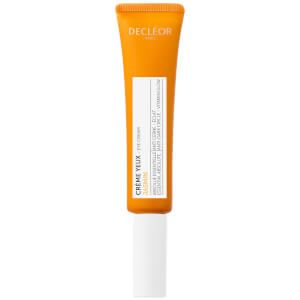
“Re-energise tired eyes and revive skin's glow with Parisian aromatherapeutic beauty brand DECLÉOR ’s Jasmine Eye Cream ; an anti-fatigue and anti-ageing moisturiser that reilluminates lacklustre skin surrounding the delicate eye area.”
This product can help improve hydration of the skin with the two types of ingredients.
The first type is called “humectants”:
these ingredients help attract water.
When humectants are on the surface of the skin, they “pull in” the moisture from the outside environment, or from
within deeper layers of the skin. The following ingredients in this product do the job:
glycerin, butylene glycol.
This product also contains ingredients called “occlusives”. They help reduce the speed with which our skin loses moisture to the outside environment. These ingredients also help soften the upper layer of the skin, so it feels less tight and nicer to the touch. The following ingredients in this product do the job: dimethicone, ethylhexyl hydroxystearate.
The following ingredients in this product are especially good for supporting the skin barrier and helping with the hydration level: hydroxypalmitoyl sphinganine, niacinamide
Anti-aging3 ingredients credited for this claimStrong support
“This eye contour is both an anti-wrinkle and concealer care.”
This product can help reduce and prevent fine lines and wrinkles, improve skin elasticity and firmness because it contains niacinamide.
These ingredients in the product can also be helpful, even though there is less evidence for their effectiveness: ascorbyl glucoside.
Keep in mind that it typically takes at least 6 weeks to notice any results because the changes that are needed to improve fine lines and elasticity happen in the deeper layers of the skin. No topical anti-aging product can “erase” wrinkles or fully reverse signs of aging.
ExfoliationNot advertised by the brand · 1 ingredient credited for this claimStrong support
This product can help exfoliate the skin. In other words, it helps break down the bonds between dead cells on the surface of the skin and speed up the skin turnover. Skin often appears softer and brighter after exfoliation, but overdoing it can result in disrupted skin barrier. The following ingredient is doing the exfoliating job in this product: capryloyl salicylic acid.
Evens skin toneNot advertised by the brand · 3 ingredients credited for this claimStrong support
This product can help reduce hypepigmentation and even out the skin tone because it contains the following effective ingredients: niacinamide
The following ingredient (ingredients) in this product might be helpful, but there is no evidence to confirm that it actually can help even out the skin tone: ascorbyl glucoside, capryloyl salicylic acid.
Keep in mind that you would need to apply any topical skincare targetted at hypigmentation consistently for a couple of months to get a result. No topical skincare product can help get rid of hyperpigmentation (including post-acne marks and age spots) instantly.
Anti-oxidationNot advertised by the brand · 5 ingredients credited for this claimModerate support
This product contains antioxidants (ascorbyl glucoside) that might be able to help neutralize free radicals in skin to lessen the damage it gets from the UV light (sun). There is not enough evidence to confirm their effectiveness in skin though.
Can it cause trouble?
Irritancy5 strong irritants: Alcohol denat., Jasminum officinale flower extract + 3 more — patch-test recommendedHigh risk
Comedogenic2 ingredients rated 2 or more on the 0–5 pore-clogging scale2 flagged


User reviews
Be the first — your take helps the next person decide.
Ingredients
Filter by role to see what each ingredient is doing.
Dimethicone~22–34%
- Irritation risk
- Low
A silicone that helps to reduce water loss from the surface of the skin. Can temporarily "fill in" lines and wrinkles, absorb oil, and create a nice product finish
More about DimethiconeGlycerin~3.7–5.6%
- Irritation risk
- Low
One of the best moisturizing ingredients. Naturally present in skin. It attracts water to the upper layer of the skin working as a humectant
More about GlycerinIsononyl isononanoate~4.6–6.8%
- Irritation risk
- Low
Forms a protective film on the surface of the skin to prevent moisture loss. Gives a velvety feel to products while reducing tackiness
More about Isononyl isononanoateAlcohol denat.~3.6–5.4%
- Irritation risk
- High
Produces temporary toning effect. Can help dissolve other ingredients or preserve products
More about Alcohol denat.Niacinamide~2.6–3.9%
- Irritation risk
- Low
Is proven to be effective in reducing blemishes, evening out skin tone and helping to improve lines and wrinkles. It helps the skin to repair sun damage, calm down inflammation and keep maintain good levels of moisture. The concentration of about 2% is effective for supporting the skin barrier and evening out the skin tone. Concentration of 4-6% is better for helping with acne and balancing the sebum production
More about NiacinamideCetyl alcohol~2.1–3.2%
- Irritation risk
- Low
A non-drying alcohol that works to soften the skin and stabilize product formulations helping oil and water mix together
More about Cetyl alcoholPeg-100 stearate~1.7–2.5%
- Irritation risk
- Low
Helps oil and water mix togehter and creates a nice product texture
More about Peg-100 stearateGlyceryl stearate~1.4–2.1%
- Irritation risk
- Low
An emollient that softens the skin and forms a protective layer on its surface. Helps water and oil mix together
More about Glyceryl stearateAscorbyl glucoside~1.1–1.7%
- Irritation risk
- Medium
A vitamin C derivative that is more stable but less potent than pure form of vitamin C. Has a potential to boost collagen production, nutralise free radicals and reduce hyperpigmentation, but the required concentration is likely to be much higher than for the pure form of vitamin C, limiting the ingredient's effectiveness in products
More about Ascorbyl glucosideAmaranthus caudatus seed extract~0.9–1.3%
- Irritation risk
- Low
Butyrospermum parkii butter~0.6–1.4%
- Irritation risk
- Low
- Comedogenicity
- 3/5
A great moisturising ingredient that softens the skin and reduces water loss from its upper layer. It also can be helpful in protecting skin from free radicals
More about Butyrospermum parkii butterTriethanolamine~0.45–1.05%
- Irritation risk
- Medium
Used to adjust pH of the product and can help improve the product's smell
More about TriethanolamineDimethicone/vinyl dimethicone crosspolymer~0.4–0.95%
- Irritation risk
- Low
Used to stabilize product formulations and create a nice product texture
More about Dimethicone/vinyl dimethicone crosspolymerCi 77163~0.4–0.9%
Ci 77891~0.35–0.8%
- Irritation risk
- Low
Titanium dioxide~0.45–1%
- Irritation risk
- Low
Works as a UV filter when used in high concentrations. It is photostable and is effective mostly against the UVB light, with some protection in the UVA range. In small concentrations, used for its ability to improve the color of cosmetic products. Is usually well tolerated by the skin
More about Titanium dioxideStearic acid~0.45–1.05%
- Irritation risk
- Low
Helps oil and water mix together and works as an emollient
More about Stearic acidSilica~0.45–1%
Palmitic acid~0.35–0.85%
- Irritation risk
- Low
An emollient that is naturally present in skin and helps soften it
More about Palmitic acidPhenoxyethanol~0.2–0.75%
- Irritation risk
- Low
A preservative. It helps prevent bacterial growth in cosmetic products
More about PhenoxyethanolCarbomer~0.15–0.7%
- Irritation risk
- Low
Helps create a thicker or gel-like product texture. It is not a surfactant but can be used in gentle cleansing formulations
More about CarbomerCaffeine~0.15–0.65%
- Irritation risk
- Medium
Might be helpful in neutralizing free radicals. Can have a dehydration effect that might somewhat decrease the look of puffy eyes
More about CaffeineSodium citrate~0.15–0.6%
- Irritation risk
- Medium
Helps to control the skin's pH level. Maintains the skin's natural film of amino-lactic acids and oils. Helps to preserve products
More about Sodium citrateAmmonium polyacryloyldimethyl taurate~0.15–0.65%
- Irritation risk
- Low
Used to create a thicker product consistency
More about Ammonium polyacryloyldimethyl taurateEthylhexyl hydroxystearate~0.2–0.8%
- Irritation risk
- Low
Helps soften the upper layer of the skin and reduce water loss from it
More about Ethylhexyl hydroxystearateMica~0.2–0.75%
- Irritation risk
- Low
Creates an illusion of smoother and more radiant skin tone. Adds shimmer to the skin by reflecting light
More about MicaTocopheryl acetate~0.15–0.65%
- Irritation risk
- Medium
A more stable but less bio-available form of vitamin E compared to Tocopherol. Might help moisturize and protect the skin from free radicals, but mostly used in low concentrations to stabilize other ingredients.
More about Tocopheryl acetateDisodium edta~0.15–0.65%
Xanthan gum~0.15–0.65%
- Irritation risk
- Low
Used to create a thicker product consistency
More about Xanthan gumIron oxides~0.15–0.6%
- Irritation risk
- Low
An umbrella term for the following three colorants: CI 77491, CI 77492, CI 77499. They might be able to offer some protection against visible light, but the degree of the protection is not clear
More about Iron oxidesCitric acid~0.15–0.6%
- Irritation risk
- Medium
Can work as an exfoliant but is typically used to adjust the product pH
More about Citric acidGlycyrrhiza glabra rhizome/root extract~0.15–0.65%
- Irritation risk
- Low
Capryloyl salicylic acid~0.15–0.6%
- Irritation risk
- High
Butylene glycol~0.15–0.6%
- Irritation risk
- Low
Used to create a nice product texture and help delivery of other ingredients. Might be somewhat helpful in attracting water to the upper layer of the skin
More about Butylene glycolDextrin~0.15–0.65%
- Irritation risk
- Low
A sugar that is used to stabilize the product formulation. Can help attract water to the upper layer of the skin
More about DextrinMyristic acid~0.2–0.7%
- Irritation risk
- Medium
- Comedogenicity
- 3/5
Helps oil and water mix together. Could be comedogenic
More about Myristic acidJasminum officinale flower extract~0.15–0.55%
Jasminum sambac flower extract~0.15–0.5%
- Irritation risk
- Low
Hydroxypalmitoyl sphinganine~0.15–0.55%
- Irritation risk
- Low
A type of lipid similar to ceramides naturally present in skin. Helps to soften the upper layer of the skin and supports the skin barrier function to keep it hydrated. Can help to prevent inflammation in skin
More about Hydroxypalmitoyl sphinganineOxothiazolidinecarboxylic acid~0.15–0.55%
- Irritation risk
- Low
Benzyl alcohol~0.1–0.35%
- Irritation risk
- High
A preservative. Can be used to mask unpleasant smell. Can be irritating
More about Benzyl alcoholEperua falcata bark extract~0.1–0.45%
- Irritation risk
- Low
Benzyl benzoate~0.1–0.35%
- Irritation risk
- High
Fragrance with sweet balsamic smell. Help to preserve products and dissolve other ingredients. Could trigger allergic reactions and be irritating
More about Benzyl benzoateTin oxide~0.2–0.8%
- Irritation risk
- Low
A colorant that can add a pearl-like appearance to the formulation
More about Tin oxideLinalool~0.1–0.35%
Paeonia suffruticosa root extract~0.05–0.3%
Eugenol~0.05–0.25%
Ingredient list view
Dimethicone, Glycerin, Isononyl isononanoate, Alcohol denat., Niacinamide, Cetyl alcohol, Peg-100 stearate, Glyceryl stearate, Ascorbyl glucoside, Amaranthus caudatus seed extract, Butyrospermum parkii butter, Triethanolamine, Dimethicone/vinyl dimethicone crosspolymer, Ci 77163, Ci 77891, Titanium dioxide, Stearic acid, Silica, Palmitic acid, Phenoxyethanol, Carbomer, Caffeine, Sodium citrate, Ammonium polyacryloyldimethyl taurate, Ethylhexyl hydroxystearate, Mica, Tocopheryl acetate, Disodium edta, Xanthan gum, Iron oxides, Citric acid, Glycyrrhiza glabra rhizome/root extract, Capryloyl salicylic acid, Butylene glycol, Dextrin, Myristic acid, Jasminum officinale flower extract, Jasminum sambac flower extract, Hydroxypalmitoyl sphinganine, Oxothiazolidinecarboxylic acid, Benzyl alcohol, Eperua falcata bark extract, Benzyl benzoate, Tin oxide, Linalool, Paeonia suffruticosa root extract, Eugenol
Compare prices
Retailers ranked by price — lowest first.
.png)

Worth comparing, line by line.
Match % combines shared ingredients, the first five ingredients, shared actives and hero ingredients, irritancy (lower counts in the alternative's favour), texture and body area. Only products in the same routine step are compared.
| DECLEORJasmine Eye CreamYOUR PRODUCT | VichyEye Contour Idealia Eye Cream | It CosmeticsConfidence in an Eye Cream Soin Yeux | La Roche-PosayPigmentclar Eyes - Dark Circle Skin-Evening Corrector | |
|---|---|---|---|---|
| Match | — | 100% | 91% | 79% |
| Price | $47.53 | $32.00−$15.53 | $47.46 | $25.35−$22.18 |
| Shared key ingredients | — | 10 of 10 | 7 of 10 | 6 of 10 |
| Key difference | — | — | Adenosine | Ferulic Acid |
| Irritancy | High | Medium | Medium | Low |
| Drying alcohol | Contains drying alcohol | Contains drying alcohol | — | — |
| View product | Shop | Shop | Shop |


Product summary
Judging from the ingredient list, "DECLEOR - Jasmine Eye Cream" works well for improving skin hydration As we expect from a proper moisturizer, the formula includes a combo of effective humectants and emollients. These are the two different types of ingredients that are essential for improving the skin hydration and supporting a healthy skin barrier. Glycerin, butylene glycol and dextrin in this product (humectants) attract water molecules to the upper layer of the skin (the water comes from the outside air or from the deeper layers of the skin if the air is dry). Dimethicone, ethylhexyl hydroxystearate, cetyl alcohol, glyceryl stearate and palmitic acid in this product help decrease the water evoporation from the skin, so that it stays hydrated for longer. These ingredients also soften the skin and take away the feeling of tightness and dryness.
Ingredient callouts
- We love that this moisturizer contains a good concentration of niacinamide 2.60% - 3.90%. Niacinamide is a perfect active in a moistruizer because it helps calm down inflamation in skin and support the skin barrier. More than that, it is helpful for most common skin concerns: it helps regulat oil production, help reduce acne and clogged pores, improve skin tone and prevent pigmentation marks. It also helps fight photodamage.
Irritation risk
There are quite a few common irritants in this product, including ingredients without particular skin benefits. We would not recommend it for sensitive skin. We assess the overall irritancy of this moisturizer to be high. For a detailed overview of all potential irritants: click here
You can see the detailed formula review with the breakdown of all actives in the product and the full ingredient list with estimated concentrations in the tables below.
Price
The product retails from 37.00£ up to 45.00£ in the United Kingdom.
For a detailed price comparison: click here.
Sources cited in this review
Every concentration estimate and effectiveness label is anchored to one of these 13 studies and safety reviews.
- 1
- 2Final Report on the Safety Assessment of Dimethicone Copolyoljournals.sagepub.com
- 3
- 4
- 5
- 6The Roles of Vitamin C in Skin Healthncbi.nlm.nih.gov

Affiliate links · As an Amazon Associate, WIMJ earns from qualifying purchases.