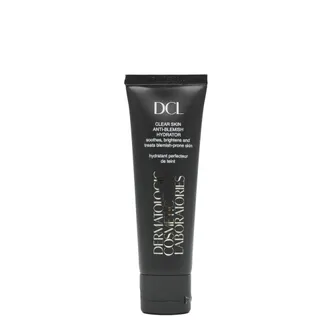
DCL Skincare Clear Skin Anti-Blemish Hydrator Serum

DCL Skincare Clear Skin Anti-Blemish Hydrator Serum

Efficacy100/100IrritancyHigh

Works for

Moisturizing
Ceramide ng, Panthenol + 29 more
Works well
What the product description says
“Designed especially for skin prone to blemishes and breakouts, the DCL serum works to moisturise without aggravating existing concerns.”
Source: Lookfantastic US

This product can help improve hydration of the skin with the two types of ingredients.

The first type is called “humectants”:
these ingredients help attract water. When humectants are on the surface of the skin, they “pull in” the moisture from the outside environment, or from within deeper layers of the skin. The following ingredients in this product do the job: alanine, arginine.

This product also contains ingredients called “occlusives”. They help reduce the speed with which our skin loses moisture to the outside environment. These ingredients also help soften the upper layer of the skin, so it feels less tight and nicer to the touch. The following ingredients in this product do the job: arginine, phenyl trimethicone.

The following ingredients in this product are especially good for supporting the skin barrier and helping with the hydration level: ceramide ng, panthenol

Ceramide ngHero· EmollientEffect: HighA type of lipid similar to ceramides naturally present in skin. Helps to soften the upper layer of the skin and supports the skin barrier function to keep it hydrated. Can help to prevent inflammation in skin~0.55–0.8%
PanthenolHero· HumectantEffect: HighHelps attract water to the upper layer of the skin and can help improve skin barrier function~0.3–0.6%
Lactic acidKey active· HumectantEffect: HighAn exfoliating and moisturizing alpha-hydroxy acid (AHA). Typically causes less irritation than other AHAs, for example, glycolic acid. At high concentrations (about 15%), lactic acid can help reduce lines and wrinkles. Recent studies show that lactic acid can support the "good" bacteria living on skin's surface (healthy skin microbiome)~1.9–2.3%
Cetearyl alcoholKey active· EmollientEffect: MediumA non-drying alcohol. Works as an emollient. Helps water and oil mix together and creates a nice product texture~1.5–1.8%
Phenyl trimethiconeKey active· OcclusiveEffect: HighA type of silicone that can decrease loss of moisture from the skin surface. It helps create a nice product texture~1.4–1.7%
CholesterolKey active· EmollientEffect: HighAn emollient that is naturally found in skin~0.45–0.65%
GlycerinKey active· HumectantEffect: HighOne of the best moisturizing ingredients. Naturally present in skin. It attracts water to the upper layer of the skin working as a humectant~0.4–0.6%
Glycine soja seed extractKey active· EmollientEffect: MediumAn emollient that helps soften the skin. Might be somewhat helpful in evening the skin tone.~0.4–0.6%
ProlineKey activeEffect: Medium~0.35–0.6%
HistidineKey active· HumectantEffect: High~0.3–0.55%
GlycineKey active· HumectantEffect: HighHelps to attract water to the upper layer of the skin and can help restore the skin barrier function~0.3–0.55%
IsoleucineKey activeEffect: HighAn amino acid that can help attract water to the upper layer of the skin and support skin's barrier function~0.3–0.55%
SerineKey activeEffect: HighAn amino-acid that helps to attract water to the upper layer of the skin. In combination with other amino-acids, might help to reduce fine lines and wrinkles~0.3–0.55%
Sodium hyaluronateKey active· HumectantEffect: HighOne of the best moisturizing ingredients. Attracts water into the upper layer of the skin~0.3–0.6%
Sodium lactateKey active· HumectantEffect: HighHelps attract water to the upper layer of the skin. Is often used to adjust the pH level of the product~0.3–0.6%
Sodium pcaKey active· HumectantEffect: HighNaturally present in skin and helps to attract water to its upper layer~0.3–0.6%
ThreonineKey activeEffect: HighAn amino-acid that helps to attract water to the upper layer of the skin. In combination with other amino-acids, might help to reduce fine lines and wrinkles~0.3–0.6%
AlanineKey active· HumectantEffect: HighAn amino-acid that helps to attract water to the upper layer of the skin and might help to lighten the skin, but solid evidence is lacking~0.3–0.55%
PcaKey active· HumectantEffect: HighNaturally present in skin and helps to attract water to its upper layer~0.3–0.55%
ArginineKey active· Humectant, OcclusiveEffect: HighAn amino acid that is naturally present in skin and helps keep it hydrated. When used together with AHAs, it can reduce their irritating effect on the skin~0.3–0.55%
Aspartic acidKey active· HumectantEffect: HighAn amino-acid that helps increase skin hydration and might help to slightly improve skin firmness, potentially reducing lines and wrinkles~0.3–0.55%
Saccharomyces lysate extractKey active· HumectantEffect: HighHelps attract water to the upper layer of the skin. Can have some anti-inflammatory effect~0.3–0.6%
Hydrolyzed soy proteinKey active· HumectantEffect: MediumHelps attract water to the upper layer of the skin. Might have some anti-aging, anti-oxidant, and skin lightening properties, but solid evidence is missing~0.2–0.4%
Ppg-15 stearyl ether· EmollientEffect: LowHelp soften the upper layer of the skin and create a nice product consistency~5.7–6.9%
Pentylene glycol· EmollientEffect: LowUsed to preserve products, dissolve other ingredients and create a nice product texture~5.1–6.2%
Camellia sinensis leaf extractEffect: LowCan contain potent anti-oxidant compounds (abbreviated ECG, GCG, EGC, and EGCG) that might help protect the skin from free radicals. Can help calm down inflammation and has some anti-bacterial properties. Unfortunately, these antioxidants are unstable and lose their effectiveness very quickly in products. The concentration of the antioxidant compounds in the extract also tends to be low to be effective in topical formulation~0.45–0.65%
Aloe barbadensis leaf juice powderEffect: LowTraditionally used to treat sunburns, dermatitis and inflammation, but evidence for its effectiveness is lacking. The extract can contain humectants that help attract water into the skin~0.35–0.6%
Butylene glycol· HumectantEffect: LowUsed to create a nice product texture and help delivery of other ingredients. Might be somewhat helpful in attracting water to the upper layer of the skin~0.15–0.25%
NiacinamideUnder-dosedIs proven to be effective in reducing blemishes, evening out skin tone and helping to improve lines and wrinkles. It helps the skin to repair sun damage, calm down inflammation and keep maintain good levels of moisture. The concentration of about 2% is effective for supporting the skin barrier and evening out the skin tone. Concentration of 4-6% is better for helping with acne and balancing the sebum production~0.6–0.95%
AllantoinUnder-dosedHelps calm down inflammation in skin and can help reduce itching. Helps to repair the skin barrier and keep skin hydrated~0.5–0.75%
Pyrus malus fruit extractUnder-dosedCan have some moisturizing properties due to its sugar content~0.4–0.65%
Evens skin tone
Lactic acid, Retinyl palmitate + 6 more
Works well
What the product description says
“It can reduce the intensity of scars and hyperpigmentation, particularly those related to past breakouts, while Vitamins E and A maintain elasticity.”
Source: Lookfantastic US

This product can help reduce hypepigmentation and even out the skin tone because it contains the following effective ingredients: lactic acid, salicylic acid

The following ingredient (ingredients) in this product might be helpful, but there is no evidence to confirm that it actually can help even out the skin tone: alanine, glycine soja seed extract, retinyl palmitate.

Keep in mind that you would need to apply any topical skincare targetted at hypigmentation consistently for a couple of months to get a result. No topical skincare product can help get rid of hyperpigmentation (including post-acne marks and age spots) instantly.

Lactic acidKey activeEffect: HighAn exfoliating and moisturizing alpha-hydroxy acid (AHA). Typically causes less irritation than other AHAs, for example, glycolic acid. At high concentrations (about 15%), lactic acid can help reduce lines and wrinkles. Recent studies show that lactic acid can support the "good" bacteria living on skin's surface (healthy skin microbiome)~1.9–2.3%
Retinyl palmitateKey activeEffect: MediumThree steps removed from the active form of vitamin A - retinoic acid. To have an effect in the skin, it first needs to be converted twice to become the retinoic acid. This means it is less potent than retinol, but could also be less irritating. Once converted to the retinoic acid in the skin, it helps against all signs of aging, improves skin cell turnover and helps fight blemishes and clogged pores. However, in many cosmetic formulations, it is used in a concentration that is too low to have the full effect~0.95–1.2%
Salicylic acidEffect: LowUsed for skin exfoliation. It has an anti-inflammatory and anti-bacterial effect, helps to unclog pores, prevent blemishes and speed up healing of the existing ones. Sometimes referred to as a BHA (beta-hydroxy acid)2%
Camellia sinensis leaf extractEffect: LowCan contain potent anti-oxidant compounds (abbreviated ECG, GCG, EGC, and EGCG) that might help protect the skin from free radicals. Can help calm down inflammation and has some anti-bacterial properties. Unfortunately, these antioxidants are unstable and lose their effectiveness very quickly in products. The concentration of the antioxidant compounds in the extract also tends to be low to be effective in topical formulation~0.45–0.65%
Glycine soja seed extractEffect: LowAn emollient that helps soften the skin. Might be somewhat helpful in evening the skin tone.~0.4–0.6%
AlanineEffect: LowAn amino-acid that helps to attract water to the upper layer of the skin and might help to lighten the skin, but solid evidence is lacking~0.3–0.55%
Hydrolyzed soy proteinEffect: LowHelps attract water to the upper layer of the skin. Might have some anti-aging, anti-oxidant, and skin lightening properties, but solid evidence is missing~0.2–0.4%
NiacinamideUnder-dosedIs proven to be effective in reducing blemishes, evening out skin tone and helping to improve lines and wrinkles. It helps the skin to repair sun damage, calm down inflammation and keep maintain good levels of moisture. The concentration of about 2% is effective for supporting the skin barrier and evening out the skin tone. Concentration of 4-6% is better for helping with acne and balancing the sebum production~0.6–0.95%
Anti-blemish
Salicylic acid, Retinyl palmitate + 3 more
Works well
What the product description says
“A solution of 2% Salicylic Acid combats unwanted bacteria on your skin’s surface, which can make future breakouts less likely to occur.”
Source: Lookfantastic US

This product can help reduce breakouts and clogged pores because it contains the following ingredient: salicylic acid. This ingredient is used for treating acne and can have a noticeable effect.

The following ingredient (ingredients) in this product might be helpful, but there is no evidence to confirm that it actually works: retinyl palmitate

Salicylic acidHeroEffect: HighUsed for skin exfoliation. It has an anti-inflammatory and anti-bacterial effect, helps to unclog pores, prevent blemishes and speed up healing of the existing ones. Sometimes referred to as a BHA (beta-hydroxy acid)2%
Retinyl palmitateKey activeEffect: MediumThree steps removed from the active form of vitamin A - retinoic acid. To have an effect in the skin, it first needs to be converted twice to become the retinoic acid. This means it is less potent than retinol, but could also be less irritating. Once converted to the retinoic acid in the skin, it helps against all signs of aging, improves skin cell turnover and helps fight blemishes and clogged pores. However, in many cosmetic formulations, it is used in a concentration that is too low to have the full effect~0.95–1.2%
Camellia sinensis leaf extractEffect: LowCan contain potent anti-oxidant compounds (abbreviated ECG, GCG, EGC, and EGCG) that might help protect the skin from free radicals. Can help calm down inflammation and has some anti-bacterial properties. Unfortunately, these antioxidants are unstable and lose their effectiveness very quickly in products. The concentration of the antioxidant compounds in the extract also tends to be low to be effective in topical formulation~0.45–0.65%
AllantoinEffect: Low, below effective doseHelps calm down inflammation in skin and can help reduce itching. Helps to repair the skin barrier and keep skin hydrated~0.5–0.75%
NiacinamideUnder-dosedIs proven to be effective in reducing blemishes, evening out skin tone and helping to improve lines and wrinkles. It helps the skin to repair sun damage, calm down inflammation and keep maintain good levels of moisture. The concentration of about 2% is effective for supporting the skin barrier and evening out the skin tone. Concentration of 4-6% is better for helping with acne and balancing the sebum production~0.6–0.95%
Exfoliation
Side benefit the brand mentions · Salicylic acid, Lactic acid + 2 more
Works well
What the product description says
“Thanks to Lactic Acid, you’ll benefit from a brighter finish as the powerful ingredient frees your visage of dead skin.”
Source: Lookfantastic

This product can help exfoliate the skin. In other words, it helps break down the bonds between dead cells on the surface of the skin and speed up the skin turnover. Skin often appears softer and brighter after exfoliation, but overdoing it can result in disrupted skin barrier. The following ingredient is doing the exfoliating job in this product: lactic acid, salicylic acid.

Salicylic acidKey activeEffect: HighUsed for skin exfoliation. It has an anti-inflammatory and anti-bacterial effect, helps to unclog pores, prevent blemishes and speed up healing of the existing ones. Sometimes referred to as a BHA (beta-hydroxy acid)2%
Lactic acidKey activeEffect: HighAn exfoliating and moisturizing alpha-hydroxy acid (AHA). Typically causes less irritation than other AHAs, for example, glycolic acid. At high concentrations (about 15%), lactic acid can help reduce lines and wrinkles. Recent studies show that lactic acid can support the "good" bacteria living on skin's surface (healthy skin microbiome)~1.9–2.3%
Retinyl palmitateEffect: LowThree steps removed from the active form of vitamin A - retinoic acid. To have an effect in the skin, it first needs to be converted twice to become the retinoic acid. This means it is less potent than retinol, but could also be less irritating. Once converted to the retinoic acid in the skin, it helps against all signs of aging, improves skin cell turnover and helps fight blemishes and clogged pores. However, in many cosmetic formulations, it is used in a concentration that is too low to have the full effect~0.95–1.2%
AllantoinEffect: Low, below effective doseHelps calm down inflammation in skin and can help reduce itching. Helps to repair the skin barrier and keep skin hydrated~0.5–0.75%
Anti-aging
Side benefit · Lactic acid, Retinyl palmitate + 7 more
May help

This product contains aspartic acid, lactic acid, retinyl palmitate, serine, threonine. These ingredients might be able to help reduce and prevent fine lines and wrinkles, improve skin elasticity and firmness, but there is not enough evidence that it actually works.

Lactic acidKey activeEffect: MediumAn exfoliating and moisturizing alpha-hydroxy acid (AHA). Typically causes less irritation than other AHAs, for example, glycolic acid. At high concentrations (about 15%), lactic acid can help reduce lines and wrinkles. Recent studies show that lactic acid can support the "good" bacteria living on skin's surface (healthy skin microbiome)~1.9–2.3%
Retinyl palmitateKey activeEffect: MediumThree steps removed from the active form of vitamin A - retinoic acid. To have an effect in the skin, it first needs to be converted twice to become the retinoic acid. This means it is less potent than retinol, but could also be less irritating. Once converted to the retinoic acid in the skin, it helps against all signs of aging, improves skin cell turnover and helps fight blemishes and clogged pores. However, in many cosmetic formulations, it is used in a concentration that is too low to have the full effect~0.95–1.2%
Aspartic acidKey activeEffect: MediumAn amino-acid that helps increase skin hydration and might help to slightly improve skin firmness, potentially reducing lines and wrinkles~0.3–0.55%
SerineKey activeEffect: MediumAn amino-acid that helps to attract water to the upper layer of the skin. In combination with other amino-acids, might help to reduce fine lines and wrinkles~0.3–0.55%
ThreonineKey activeEffect: MediumAn amino-acid that helps to attract water to the upper layer of the skin. In combination with other amino-acids, might help to reduce fine lines and wrinkles~0.3–0.6%
Camellia sinensis leaf extractEffect: LowCan contain potent anti-oxidant compounds (abbreviated ECG, GCG, EGC, and EGCG) that might help protect the skin from free radicals. Can help calm down inflammation and has some anti-bacterial properties. Unfortunately, these antioxidants are unstable and lose their effectiveness very quickly in products. The concentration of the antioxidant compounds in the extract also tends to be low to be effective in topical formulation~0.45–0.65%
Glycine soja seed extractEffect: LowAn emollient that helps soften the skin. Might be somewhat helpful in evening the skin tone.~0.4–0.6%
Magnesium aluminum silicateEffect: LowMight be helpful in restoring skin barrier function and, when combined with zinc carbonate and malonic acid, reducing fine lines and wrinkles by stimulating elastin production. Also helps stabilize the product formulation~0.3–0.6%
NiacinamideUnder-dosedIs proven to be effective in reducing blemishes, evening out skin tone and helping to improve lines and wrinkles. It helps the skin to repair sun damage, calm down inflammation and keep maintain good levels of moisture. The concentration of about 2% is effective for supporting the skin barrier and evening out the skin tone. Concentration of 4-6% is better for helping with acne and balancing the sebum production~0.6–0.95%
Anti-oxidation
Side benefit · Camellia sinensis leaf extract, Tocopheryl acetate + 7 more
May help

This product contains antioxidants (camellia sinensis leaf extract) that might be able to help neutralize free radicals in skin to lessen the damage it gets from the UV light (sun). There is not enough evidence to confirm their effectiveness in skin though.

Camellia sinensis leaf extractKey activeEffect: MediumCan contain potent anti-oxidant compounds (abbreviated ECG, GCG, EGC, and EGCG) that might help protect the skin from free radicals. Can help calm down inflammation and has some anti-bacterial properties. Unfortunately, these antioxidants are unstable and lose their effectiveness very quickly in products. The concentration of the antioxidant compounds in the extract also tends to be low to be effective in topical formulation~0.45–0.65%
Tocopheryl acetateEffect: LowA more stable but less bio-available form of vitamin E compared to Tocopherol. Might help moisturize and protect the skin from free radicals, but mostly used in low concentrations to stabilize other ingredients.~0.75–1.1%
Glycine soja seed extractEffect: LowAn emollient that helps soften the skin. Might be somewhat helpful in evening the skin tone.~0.4–0.6%
Cola acuminata seed extractEffect: LowA plant extract that might have some anti-oxidant properties, but research is missing~0.4–0.6%
Ascorbyl methylsilanol pectinateEffect: LowA stable derivative of pectin and vitamin C. It might help neutralize free radicals in skin, but evidence of effectiveness is lacking. Helps create a thicker product consistency and stabilize the product formulation~0.3–0.6%
Zingiber officinale root extractEffect: LowA plant extract that can contain an irritating essential oil. Might have some anti-oxidant effect, but evidence is lacking~0.25–0.45%
Hydrolyzed soy proteinEffect: LowHelps attract water to the upper layer of the skin. Might have some anti-aging, anti-oxidant, and skin lightening properties, but solid evidence is missing~0.2–0.4%
BisabololEffect: Low, below effective doseAn active component of chamomile plant that historically has been used to calm down irritated skin. A recent study shows that bisabolol indeed can have some anti-inflammatory effect on skin, even though conclusive data is lacking. Bisabolol has a sweet floral scent and can be added to products for its aromatic properties~0.5–0.8%
Pyrus malus fruit extractEffect: Low, below effective doseCan have some moisturizing properties due to its sugar content~0.4–0.65%

Can it cause trouble?

Irritancy
9 strong irritants: Retinyl palmitate, Cymbopogon schoenanthus extract + 7 more — patch-test recommended
High risk
We flagged 24 ingredients with irritancy potential. Severity depends on your sensitivity threshold; the table lists the worst offenders first.
IngredientFunctionIrritationEst. amount
Salicylic acidUsed for skin exfoliation. It has an anti-inflammatory and anti-bacterial effect, helps to unclog pores, prevent blemishes and speed up healing of the existing ones. Sometimes referred to as a BHA (beta-hydroxy acid)High2%
Retinyl palmitateThree steps removed from the active form of vitamin A - retinoic acid. To have an effect in the skin, it first needs to be converted twice to become the retinoic acid. This means it is less potent than retinol, but could also be less irritating. Once converted to the retinoic acid in the skin, it helps against all signs of aging, improves skin cell turnover and helps fight blemishes and clogged pores. However, in many cosmetic formulations, it is used in a concentration that is too low to have the full effectHigh~0.95–1.2%est.
Cymbopogon schoenanthus extract—High~0.45–0.7%est.
Cymbopogon schoenanthus oil—High~0.45–0.7%est.
Cinnamomum cassia bark extractUsed as a fragrance. Can be irritatingHigh~0.4–0.6%est.
Zingiber officinale root extractA plant extract that can contain an irritating essential oil. Might have some anti-oxidant effect, but evidence is lackingHigh~0.25–0.45%est.
FarnesolAdded to create a nice product smell. Can be irritatingHigh~0.3–0.55%est.
CitralA fragrance with a lemon scent. A likely irritantHigh~0.3–0.55%est.
LinaloolA fragrance. Can be irritatingHigh~0.3–0.55%est.
LimoneneA common frangrance that can easily irritate skin, especially if exposed to air, light or heatHigh~0.3–0.55%est.
Pentylene glycolUsed to preserve products, dissolve other ingredients and create a nice product textureMedium~5.1–6.2%est.
Ppg-14 butyl etherHelps to improve the product consistencyMedium~2.4–2.9%est.
Lactic acidAn exfoliating and moisturizing alpha-hydroxy acid (AHA). Typically causes less irritation than other AHAs, for example, glycolic acid. At high concentrations (about 15%), lactic acid can help reduce lines and wrinkles. Recent studies show that lactic acid can support the "good" bacteria living on skin's surface (healthy skin microbiome)Medium~1.9–2.3%est.
Tocopheryl acetateA more stable but less bio-available form of vitamin E compared to Tocopherol. Might help moisturize and protect the skin from free radicals, but mostly used in low concentrations to stabilize other ingredients.Medium~0.75–1.1%est.
Pyrus malus fruit extractCan have some moisturizing properties due to its sugar contentMedium~0.4–0.65%est.
Aloe barbadensis leaf juice powderTraditionally used to treat sunburns, dermatitis and inflammation, but evidence for its effectiveness is lacking. The extract can contain humectants that help attract water into the skinMedium~0.35–0.6%est.
Ascorbyl methylsilanol pectinateA stable derivative of pectin and vitamin C. It might help neutralize free radicals in skin, but evidence of effectiveness is lacking. Helps create a thicker product consistency and stabilize the product formulationMedium~0.3–0.6%est.
Glycine soja seed extractAn emollient that helps soften the skin. Might be somewhat helpful in evening the skin tone.Medium~0.4–0.6%est.
Sodium lactateHelps attract water to the upper layer of the skin. Is often used to adjust the pH level of the productMedium~0.3–0.6%est.
Ammonium hydroxideHelps adjust the product pHMedium~0.25–0.5%est.
ChlorphenesinA preservativeMedium~0.16–0.32%est.
Potassium sorbateA preservativeMedium~0.1–0.2%est.
Disodium edtaStabilizes the product formulationMedium~0.15–0.25%est.
MethylpropanediolHelps dissolve other ingredients in a formulationMedium~0.1–0.15%est.
Comedogenic
1 ingredient rated 2 or more on the 0–5 pore-clogging scale
1 flagged
These ingredients have a comedogenic rating of 2 or more on a 0–5 scale; the table shows each one's rating. In leave-on products they can clog pores in acne-prone skin.
IngredientFunctionRatingEst. amount
Cetearyl alcoholA non-drying alcohol. Works as an emollient. Helps water and oil mix together and creates a nice product texture2/5~1.5–1.8%est.

User reviews

Would you recommend?
No community reviews yet.

Be the first — your take helps the next person decide.

Ingredients

Filter by role to see what each ingredient is doing.

Salicylic acid2%
Hero · Anti-blemishIrritant · high
Irritation risk
High
Works for
Anti-inflammatoryAnti-blemishExfoliationAntibacterialEvens skin tone

Used for skin exfoliation. It has an anti-inflammatory and anti-bacterial effect, helps to unclog pores, prevent blemishes and speed up healing of the existing ones. Sometimes referred to as a BHA (beta-hydroxy acid)

More about Salicylic acid
Water~45–55%
Formula
Irritation risk
Low

Plain old water

More about Water
Ppg-15 stearyl ether~5.7–6.9%
Formula
Irritation risk
Low
Works for
Moisturizing

Help soften the upper layer of the skin and create a nice product consistency

More about Ppg-15 stearyl ether
Pentylene glycol~5.1–6.2%
Irritant · medium
Irritation risk
Medium
Works for
Moisturizing

Used to preserve products, dissolve other ingredients and create a nice product texture

More about Pentylene glycol
Corn starch modified~3.8–4.6%
Formula
Irritation risk
Low

Used to thicken the product formulation

More about Corn starch modified
Ppg-14 butyl ether~2.4–2.9%
Irritant · medium
Irritation risk
Medium

Helps to improve the product consistency

More about Ppg-14 butyl ether
Lactic acid~1.9–2.3%
Key activeIrritant · medium
Irritation risk
Medium
Works for
Evens skin toneMoisturizingExfoliationAnti-aging

An exfoliating and moisturizing alpha-hydroxy acid (AHA). Typically causes less irritation than other AHAs, for example, glycolic acid. At high concentrations (about 15%), lactic acid can help reduce lines and wrinkles. Recent studies show that lactic acid can support the "good" bacteria living on skin's surface (healthy skin microbiome)

More about Lactic acid
Peg-40 stearate~1.6–1.9%
Formula
Irritation risk
Low
Works for
Cleansing

Helps oil and water mix together

More about Peg-40 stearate
Cetearyl alcohol~1.5–1.8%
Key activeComedogenic 2/5
Irritation risk
Low
Comedogenicity
2/5
Works for
CleansingMoisturizing

A non-drying alcohol. Works as an emollient. Helps water and oil mix together and creates a nice product texture

More about Cetearyl alcohol
Phenyl trimethicone~1.4–1.7%
Key active
Irritation risk
Low
Works for
Moisturizing

A type of silicone that can decrease loss of moisture from the skin surface. It helps create a nice product texture

More about Phenyl trimethicone
Retinyl palmitate~0.95–1.2%
Key activeIrritant · high
Irritation risk
High
Works for
Evens skin toneAnti-blemishAnti-agingExfoliation

Three steps removed from the active form of vitamin A - retinoic acid. To have an effect in the skin, it first needs to be converted twice to become the retinoic acid. This means it is less potent than retinol, but could also be less irritating. Once converted to the retinoic acid in the skin, it helps against all signs of aging, improves skin cell turnover and helps fight blemishes and clogged pores. However, in many cosmetic formulations, it is used in a concentration that is too low to have the full effect

More about Retinyl palmitate
Tocopheryl acetate~0.75–1.1%
Irritant · medium
Irritation risk
Medium
Works for
Anti-oxidation

A more stable but less bio-available form of vitamin E compared to Tocopherol. Might help moisturize and protect the skin from free radicals, but mostly used in low concentrations to stabilize other ingredients.

More about Tocopheryl acetate
Niacinamide~0.6–0.95%
Under-dosed
Irritation risk
Low
Works for
Evens skin toneMoisturizingAnti-blemishAnti-agingReduces irritationAnti-inflammatoryReduces rednessAntibacterial

Is proven to be effective in reducing blemishes, evening out skin tone and helping to improve lines and wrinkles. It helps the skin to repair sun damage, calm down inflammation and keep maintain good levels of moisture. The concentration of about 2% is effective for supporting the skin barrier and evening out the skin tone. Concentration of 4-6% is better for helping with acne and balancing the sebum production

More about Niacinamide
Bisabolol~0.5–0.8%
Formula
Irritation risk
Low
Works for
Reduces irritationAnti-inflammatoryAnti-oxidation

An active component of chamomile plant that historically has been used to calm down irritated skin. A recent study shows that bisabolol indeed can have some anti-inflammatory effect on skin, even though conclusive data is lacking. Bisabolol has a sweet floral scent and can be added to products for its aromatic properties

More about Bisabolol
Allantoin~0.5–0.75%
Under-dosed
Irritation risk
Low
Works for
MoisturizingAnti-inflammatoryAnti-blemishReduces irritationReduces rednessExfoliation

Helps calm down inflammation in skin and can help reduce itching. Helps to repair the skin barrier and keep skin hydrated

More about Allantoin
Ceramide ng~0.55–0.8%
Hero · Moisturizing
Irritation risk
Low
Works for
MoisturizingAnti-inflammatory

A type of lipid similar to ceramides naturally present in skin. Helps to soften the upper layer of the skin and supports the skin barrier function to keep it hydrated. Can help to prevent inflammation in skin

More about Ceramide ng
Ormenis multicaulis oil~0.5–0.75%
Formula
Cymbopogon schoenanthus extract~0.45–0.7%
Irritant · high
Cymbopogon schoenanthus oil~0.45–0.7%
Irritant · high
Pyrus malus fruit extract~0.4–0.65%
Under-dosedIrritant · medium
Irritation risk
Medium
Works for
MoisturizingAnti-oxidation

Can have some moisturizing properties due to its sugar content

More about Pyrus malus fruit extract
Cola acuminata seed extract~0.4–0.6%
Formula
Irritation risk
Low
Works for
Anti-oxidation

A plant extract that might have some anti-oxidant properties, but research is missing

More about Cola acuminata seed extract
Camellia sinensis leaf extract~0.45–0.65%
Key active
Irritation risk
Low
Works for
Anti-oxidationAntibacterialAnti-agingAnti-blemishEvens skin toneMoisturizing

Can contain potent anti-oxidant compounds (abbreviated ECG, GCG, EGC, and EGCG) that might help protect the skin from free radicals. Can help calm down inflammation and has some anti-bacterial properties. Unfortunately, these antioxidants are unstable and lose their effectiveness very quickly in products. The concentration of the antioxidant compounds in the extract also tends to be low to be effective in topical formulation

More about Camellia sinensis leaf extract
Aloe barbadensis leaf juice powder~0.35–0.6%
Irritant · medium
Irritation risk
Medium
Works for
Moisturizing

Traditionally used to treat sunburns, dermatitis and inflammation, but evidence for its effectiveness is lacking. The extract can contain humectants that help attract water into the skin

More about Aloe barbadensis leaf juice powder
Sodium hyaluronate~0.3–0.6%
Key active
Irritation risk
Low
Works for
Moisturizing

One of the best moisturizing ingredients. Attracts water into the upper layer of the skin

More about Sodium hyaluronate
Cinnamomum cassia bark extract~0.4–0.6%
Irritant · high
Irritation risk
High

Used as a fragrance. Can be irritating

More about Cinnamomum cassia bark extract
Zingiber officinale root extract~0.25–0.45%
Irritant · high
Irritation risk
High
Works for
Anti-oxidation

A plant extract that can contain an irritating essential oil. Might have some anti-oxidant effect, but evidence is lacking

More about Zingiber officinale root extract
Sanguisorba officinalis root extract~0.4–0.65%
Formula
Ascorbyl methylsilanol pectinate~0.3–0.6%
Irritant · medium
Irritation risk
Medium
Works for
Anti-oxidation

A stable derivative of pectin and vitamin C. It might help neutralize free radicals in skin, but evidence of effectiveness is lacking. Helps create a thicker product consistency and stabilize the product formulation

More about Ascorbyl methylsilanol pectinate
Alanine~0.3–0.55%
Key active
Irritation risk
Low
Works for
MoisturizingEvens skin tone

An amino-acid that helps to attract water to the upper layer of the skin and might help to lighten the skin, but solid evidence is lacking

More about Alanine
Serine~0.3–0.55%
Key active
Irritation risk
Low
Works for
MoisturizingAnti-aging

An amino-acid that helps to attract water to the upper layer of the skin. In combination with other amino-acids, might help to reduce fine lines and wrinkles

More about Serine
Glycine~0.3–0.55%
Key active
Irritation risk
Low
Works for
Moisturizing

Helps to attract water to the upper layer of the skin and can help restore the skin barrier function

More about Glycine
Glycine soja seed extract~0.4–0.6%
Key activeIrritant · medium
Irritation risk
Medium
Works for
MoisturizingAnti-oxidationReduces rednessEvens skin toneAnti-aging

An emollient that helps soften the skin. Might be somewhat helpful in evening the skin tone.

More about Glycine soja seed extract
Panthenol~0.3–0.6%
Hero · Moisturizing
Irritation risk
Low
Works for
MoisturizingReduces rednessReduces irritation

Helps attract water to the upper layer of the skin and can help improve skin barrier function

More about Panthenol
Farnesol~0.3–0.55%
Irritant · high
Irritation risk
High

Added to create a nice product smell. Can be irritating

More about Farnesol
Hydroxyethylcellulose~0.5–0.75%
Formula
Irritation risk
Low

Used to thicken product formulations and create gel-like textures

More about Hydroxyethylcellulose
Glycerin~0.4–0.6%
Key active
Irritation risk
Low
Works for
Moisturizing

One of the best moisturizing ingredients. Naturally present in skin. It attracts water to the upper layer of the skin working as a humectant

More about Glycerin
Citral~0.3–0.55%
Irritant · high
Irritation risk
High

A fragrance with a lemon scent. A likely irritant

More about Citral
Arginine~0.3–0.55%
Key active
Irritation risk
Low
Works for
Moisturizing

An amino acid that is naturally present in skin and helps keep it hydrated. When used together with AHAs, it can reduce their irritating effect on the skin

More about Arginine
Threonine~0.3–0.6%
Key active
Irritation risk
Low
Works for
MoisturizingAnti-aging

An amino-acid that helps to attract water to the upper layer of the skin. In combination with other amino-acids, might help to reduce fine lines and wrinkles

More about Threonine
Linalool~0.3–0.55%
Irritant · high
Irritation risk
High

A fragrance. Can be irritating

More about Linalool
Sodium lactate~0.3–0.6%
Key activeIrritant · medium
Irritation risk
Medium
Works for
Moisturizing

Helps attract water to the upper layer of the skin. Is often used to adjust the pH level of the product

More about Sodium lactate
Valine~0.3–0.55%
Formula
Irritation risk
Low
More about Valine
Limonene~0.3–0.55%
Irritant · high
Irritation risk
High

A common frangrance that can easily irritate skin, especially if exposed to air, light or heat

More about Limonene
Saccharomyces lysate extract~0.3–0.6%
Key active
Irritation risk
Low
Works for
Moisturizing

Helps attract water to the upper layer of the skin. Can have some anti-inflammatory effect

More about Saccharomyces lysate extract
Aspartic acid~0.3–0.55%
Key active
Irritation risk
Low
Works for
MoisturizingAnti-aging

An amino-acid that helps increase skin hydration and might help to slightly improve skin firmness, potentially reducing lines and wrinkles

More about Aspartic acid
Proline~0.35–0.6%
Key active
Irritation risk
Low
Works for
Moisturizing
More about Proline
Sodium pca~0.3–0.6%
Key active
Irritation risk
Low
Works for
Moisturizing

Naturally present in skin and helps to attract water to its upper layer

More about Sodium pca
Cholesterol~0.45–0.65%
Key active
Irritation risk
Low
Works for
CleansingMoisturizing

An emollient that is naturally found in skin

More about Cholesterol
Histidine~0.3–0.55%
Key active
Irritation risk
Low
Works for
Moisturizing
More about Histidine
Isoleucine~0.3–0.55%
Key active
Irritation risk
Low
Works for
Moisturizing

An amino acid that can help attract water to the upper layer of the skin and support skin's barrier function

More about Isoleucine
Magnesium aluminum silicate~0.3–0.6%
Formula
Irritation risk
Low
Works for
Anti-aging

Might be helpful in restoring skin barrier function and, when combined with zinc carbonate and malonic acid, reducing fine lines and wrinkles by stimulating elastin production. Also helps stabilize the product formulation

More about Magnesium aluminum silicate
Pca~0.3–0.55%
Key active
Irritation risk
Low
Works for
Moisturizing

Naturally present in skin and helps to attract water to its upper layer

More about Pca
Dicetyl phosphate~0.3–0.55%
Formula
Irritation risk
Low
Works for
Cleansing
More about Dicetyl phosphate
Xanthan gum~0.3–0.55%
Formula
Irritation risk
Low
Works for
Cleansing

Used to create a thicker product consistency

More about Xanthan gum
Ammonium hydroxide~0.25–0.5%
Irritant · medium
Irritation risk
Medium

Helps adjust the product pH

More about Ammonium hydroxide
Ceteth-10 phosphate~0.35–0.65%
Formula
Irritation risk
Low
Works for
Cleansing
More about Ceteth-10 phosphate
Phenylalanine~0.25–0.5%
Formula
Irritation risk
Low
More about Phenylalanine
Chlorphenesin~0.16–0.32%
Irritant · medium
Irritation risk
Medium

A preservative

More about Chlorphenesin
Hydrolyzed soy protein~0.2–0.4%
Key active
Irritation risk
Low
Works for
MoisturizingAnti-oxidationAnti-inflammatoryEvens skin tone

Helps attract water to the upper layer of the skin. Might have some anti-aging, anti-oxidant, and skin lightening properties, but solid evidence is missing

More about Hydrolyzed soy protein
Coconut acid~0.35–0.6%
Formula
Irritation risk
Low
Works for
Cleansing
More about Coconut acid
Sodium benzoate~0.15–0.25%
Formula
Irritation risk
Low

A preservative

More about Sodium benzoate
Potassium sorbate~0.1–0.2%
Irritant · medium
Irritation risk
Medium

A preservative

More about Potassium sorbate
Disodium edta~0.15–0.25%
Irritant · medium
Irritation risk
Medium

Stabilizes the product formulation

More about Disodium edta
Butylene glycol~0.15–0.25%
Formula
Irritation risk
Low
Works for
Moisturizing

Used to create a nice product texture and help delivery of other ingredients. Might be somewhat helpful in attracting water to the upper layer of the skin

More about Butylene glycol
Methylpropanediol~0.1–0.15%
Irritant · medium
Irritation risk
Medium

Helps dissolve other ingredients in a formulation

More about Methylpropanediol
Phenoxyethanol~0.1–0.25%
Formula
Irritation risk
Low

A preservative. It helps prevent bacterial growth in cosmetic products

More about Phenoxyethanol
Ingredient list view

Salicylic acid, Water, Ppg-15 stearyl ether, Pentylene glycol, Corn starch modified, Ppg-14 butyl ether, Lactic acid, Peg-40 stearate, Cetearyl alcohol, Phenyl trimethicone, Retinyl palmitate, Tocopheryl acetate, Niacinamide, Bisabolol, Allantoin, Ceramide ng, Ormenis multicaulis oil, Cymbopogon schoenanthus extract, Cymbopogon schoenanthus oil, Pyrus malus fruit extract, Cola acuminata seed extract, Camellia sinensis leaf extract, Aloe barbadensis leaf juice powder, Sodium hyaluronate, Cinnamomum cassia bark extract, Zingiber officinale root extract, Sanguisorba officinalis root extract, Ascorbyl methylsilanol pectinate, Alanine, Serine, Glycine, Glycine soja seed extract, Panthenol, Farnesol, Hydroxyethylcellulose, Glycerin, Citral, Arginine, Threonine, Linalool, Sodium lactate, Valine, Limonene, Saccharomyces lysate extract, Aspartic acid, Proline, Sodium pca, Cholesterol, Histidine, Isoleucine, Magnesium aluminum silicate, Pca, Dicetyl phosphate, Xanthan gum, Ammonium hydroxide, Ceteth-10 phosphate, Phenylalanine, Chlorphenesin, Hydrolyzed soy protein, Coconut acid, Sodium benzoate, Potassium sorbate, Disodium edta, Butylene glycol, Methylpropanediol, Phenoxyethanol

Compare prices

Retailers ranked by price — lowest first.

No pricing data available yet for this product.

Worth comparing, line by line.

Match % combines shared ingredients, the first five ingredients, shared actives and hero ingredients, irritancy (lower counts in the alternative's favour), texture and body area. Only products in the same routine step are compared.

Side-by-side comparison of this product against its closest alternatives
DCLSkincare Clear Skin Anti-Blemish Hydrator SerumYOUR PRODUCTskintific2% SALICYLIC ACID ANTI ACNE SERUMUltraceuticalsUltra B2 Hydrating SerumFacetheoryElaquate Serum S11 with Calcium PCA and Sodium PCA
Match—75%74%74%
Price————
Shared key ingredients—7 of 255 of 2510 of 25
Key difference—Oligopeptide-1TrehaloseBetaine
Irritancy High Medium Low Medium
Drying alcohol————
View product Shop Shop Shop

More alternatives: The Constant Multi-Active Complex 12 Modern Actives Face SerumM.A.C Cosmetics Hyper Real Serumizer

Cheaper alternatives? Browse formulas in the same category.
We compare ingredient profiles across our catalog — pick the closest match for your budget.
Open dupe finder

Sources cited in this review

Every concentration estimate and effectiveness label is anchored to one of these 35 studies and safety reviews.

  1. 1
  2. 2
  3. 3
  4. 4
  5. 5
  6. 6
DCL Skincare Clear Skin Anti-Blemish Hydrator Serum
DCLSkincare Clear Skin Anti-Blemish Hydrator Serum

Affiliate links · As an Amazon Associate, WIMJ earns from qualifying purchases.

As an Amazon Associate, WIMJ earns from qualifying purchases.