Works for
0 of 1 advertised claim delivered
Anti-aging6 ingredients credited for this claimLimited support
“With the Intral De-Puffing Anti-Oxidant Eye Cream, gently soothe, depuff, and protect your sensitive eye area.”
This product does not contain ingredients that are able to reduce fine lines and wrinkles or help with skin elasticity, but it can improve the look of the skin temporarily through moisturization. Well-moisturized skin might also be able to repair the sun damage better.This ingredient - thermus thermophillus ferment - could be helpful for preventing or repairing signs of aging in theory, but there is no evidence that it actually works.
MoisturizingNot advertised by the brand · 43 ingredients credited for this claimStrong support
This product can help improve hydration of the skin with the two types of ingredients.
The first type is called “humectants”:
these ingredients help attract water.
When humectants are on the surface of the skin, they “pull in” the moisture from the outside environment, or from
within deeper layers of the skin. The following ingredients in this product do the job:
algae extract, artemia extract.
This product also contains ingredients called “occlusives”. They help reduce the speed with which our skin loses moisture to the outside environment. These ingredients also help soften the upper layer of the skin, so it feels less tight and nicer to the touch. The following ingredients in this product do the job: dimethicone, helianthus annuus seed oil.
The following ingredients in this product are especially good for supporting the skin barrier and helping with the hydration level: panthenol, phytosphingosine, urea
Can it cause trouble?
Irritancy11 strong irritants: Parfum, Farnesol + 9 more — patch-test recommendedHigh risk
Comedogenic4 ingredients rated 2 or more on the 0–5 pore-clogging scale4 flagged
User reviews
Be the first — your take helps the next person decide.
Ingredients
Filter by role to see what each ingredient is doing.
Water~45–55%
Butylene glycol~5.8–7.1%
- Irritation risk
- Low
Used to create a nice product texture and help delivery of other ingredients. Might be somewhat helpful in attracting water to the upper layer of the skin
More about Butylene glycolGlycerin~4.1–5%
- Irritation risk
- Low
One of the best moisturizing ingredients. Naturally present in skin. It attracts water to the upper layer of the skin working as a humectant
More about GlycerinChamomilla recutita flower extract~3–3.7%
- Irritation risk
- High
Plant extract that can have healing and anti-inflammatory properties. It is a potential allergen and can be irritating
More about Chamomilla recutita flower extractPaeonia suffruticosa root extract~2.2–2.7%
Alteromonas ferment extract~1.8–2.2%
- Irritation risk
- Low
A marine extract that helps attract water to the upper layer of the skin. It is claimed to have anti-inflammatory properties but research is lacking
More about Alteromonas ferment extractCrataegus monogyna flower extract~1.5–1.8%
- Irritation risk
- Low
Panthenol~1.2–1.5%
- Irritation risk
- Low
Helps attract water to the upper layer of the skin and can help improve skin barrier function
More about PanthenolGlycosaminoglycans~1.1–1.3%
- Irritation risk
- Low
Long sugars that help attract water to the upper layer of the skin
More about GlycosaminoglycansPolygonum cuspidatum root extract~0.7–1.05%
- Irritation risk
- Medium
A plant extract that can contain resveratrol, an antioxidant that can help neutralize free radicals in skin. The effectiveness depends on the extract quality and concentration in the product
More about Polygonum cuspidatum root extractSaccharomyces lysate extract~0.5–0.75%
- Irritation risk
- Low
Helps attract water to the upper layer of the skin. Can have some anti-inflammatory effect
More about Saccharomyces lysate extractYeast extract~0.45–0.65%
- Irritation risk
- Low
Helps attract water to the upper layer of the skin and might have some anti-oxidant and skin lightening properties. It can help calm down inflammation in skin
More about Yeast extractFaex~0.3–0.6%
- Irritation risk
- Low
Yeast extract. Helps to attract water to the upper layer of the skin
More about FaexYeast extract~0.3–0.55%
- Irritation risk
- Low
Helps attract water to the upper layer of the skin and might have some anti-oxidant and skin lightening properties. It can help calm down inflammation in skin
More about Yeast extractPeg-40 hydrogenated castor oil~0.3–0.55%
- Irritation risk
- Medium
Helps oil and water mix together
More about Peg-40 hydrogenated castor oilCellulose gum~0.3–0.55%
- Irritation risk
- Low
Used to create thicker product consistency and stabilize emulsions
More about Cellulose gumGlycereth-26~0.25–0.45%
Parfum~0.2–0.35%
- Irritation risk
- High
An aromatic blend of unspecified and possibly irritating ingredients
More about ParfumCitric acid~0.2–0.35%
- Irritation risk
- Medium
Can work as an exfoliant but is typically used to adjust the product pH
More about Citric acidXanthan gum~0.2–0.35%
- Irritation risk
- Low
Used to create a thicker product consistency
More about Xanthan gumDisodium edta~0.15–0.3%
Chlorphenesin~0.15–0.25%
Sodium benzoate~0.15–0.25%
Phenoxyethanol~0.15–0.3%
- Irritation risk
- Low
A preservative. It helps prevent bacterial growth in cosmetic products
More about PhenoxyethanolCi 14700~0.15–0.25%
Ci 60730~0.15–0.25%
- Irritation risk
- Low
Ci 19140~0.15–0.25%
Ci 17200~0.15–0.25%
Ci 42090~0.15–0.25%
Water~0.15–0.25%
Propanediol~0.15–0.3%
- Irritation risk
- Low
Acts as a solvent for other ingredients. Speeds up the absorption of other ingredients into the skin
More about PropanediolPanthenol~0.15–0.25%
- Irritation risk
- Low
Helps attract water to the upper layer of the skin and can help improve skin barrier function
More about PanthenolTriisostearin~0.1–0.25%
- Irritation risk
- Low
Isostearyl alcohol~0.15–0.3%
- Irritation risk
- Low
Helps soften the upper layer of the skin
More about Isostearyl alcoholButylene glycol~0.15–0.25%
- Irritation risk
- Low
Used to create a nice product texture and help delivery of other ingredients. Might be somewhat helpful in attracting water to the upper layer of the skin
More about Butylene glycolButylene glycol cocoate~0.15–0.3%
- Irritation risk
- Medium
Helps oil and water mix together
More about Butylene glycol cocoateSodium hyaluronate~0.15–0.25%
- Irritation risk
- Low
One of the best moisturizing ingredients. Attracts water into the upper layer of the skin
More about Sodium hyaluronateSqualane~0.2–0.35%
- Irritation risk
- Low
An oil naturally present in skin. Works as an emollient to soften the skin and form a protective layer on its surface without a greasy feeling.
More about SqualaneAlgae extract~0.2–0.35%
- Irritation risk
- Low
- Comedogenicity
- 3/5
Plant extract that helps the skin to attract water and make it more smooth for touch. Also shows promise of anti-aging properties, but research is not extensive yet
More about Algae extractAlteromonas ferment extract~0.1–0.25%
- Irritation risk
- Low
A marine extract that helps attract water to the upper layer of the skin. It is claimed to have anti-inflammatory properties but research is lacking
More about Alteromonas ferment extractCamellia japonica seed oil~0.15–0.3%
- Irritation risk
- Low
A plant oil that helps to soften the upper layer of the skin and can help restore skin's barrier function. Might have an anti-oxidant effect
More about Camellia japonica seed oilPrunus amygdalus dulcis oil~0.15–0.3%
- Irritation risk
- Low
An emollient that softens the skin
More about Prunus amygdalus dulcis oilPrunus domestica seed extract~0.15–0.3%
- Irritation risk
- Low
Tocopheryl acetate~0.15–0.3%
- Irritation risk
- Medium
A more stable but less bio-available form of vitamin E compared to Tocopherol. Might help moisturize and protect the skin from free radicals, but mostly used in low concentrations to stabilize other ingredients.
More about Tocopheryl acetateCrataegus monogyna flower extract~0.1–0.25%
- Irritation risk
- Low
Paeonia suffruticosa root extract~0.15–0.25%
Chamomilla recutita extract~0.1–0.25%
- Irritation risk
- High
Plant extract that can have healing and anti-inflammatory properties. It is a potential allergen and can be irritating
More about Chamomilla recutita extractGlycerin~0.15–0.3%
- Irritation risk
- Low
One of the best moisturizing ingredients. Naturally present in skin. It attracts water to the upper layer of the skin working as a humectant
More about GlycerinBisabolol~0.1–0.2%
- Irritation risk
- Low
An active component of chamomile plant that historically has been used to calm down irritated skin. A recent study shows that bisabolol indeed can have some anti-inflammatory effect on skin, even though conclusive data is lacking. Bisabolol has a sweet floral scent and can be added to products for its aromatic properties
More about BisabololCaffeine~0.15–0.25%
- Irritation risk
- Medium
Might be helpful in neutralizing free radicals. Can have a dehydration effect that might somewhat decrease the look of puffy eyes
More about CaffeineGlycine soja sterols~0.15–0.3%
- Irritation risk
- Low
An emollient that helps soften the skin
More about Glycine soja sterolsDipotassium glycyrrhizate~0.1–0.25%
- Irritation risk
- Low
A salt derived from licorice. Works as an emollient to soften the upper layer of the skin and can help calm down inflammation. Might be helpful for skin lightening
More about Dipotassium glycyrrhizatePhytosphingosine~0.2–0.35%
- Irritation risk
- Low
A type of lipid that is naturally present in skin. It might help in repairing skin barrier function and has anti-bacterial effect
More about PhytosphingosineSodium stearoyl glutamate~0.2–0.35%
- Irritation risk
- Medium
Helps oil and water mix together
More about Sodium stearoyl glutamateEthylhexylglycerin~0.15–0.25%
Sclerotium gum~0.1–0.25%
- Irritation risk
- Low
Used to create gel-like formulas and stabilize emulsions
More about Sclerotium gumMyreth-3 myristate~0.15–0.3%
Betaine~0.1–0.25%
- Irritation risk
- Low
Helps attract water to the upper layer of the skin and improves the product texture
More about BetaineLactobacillus ferment~0.1–0.25%
- Irritation risk
- Low
A fermentation product created by bacteria Lactobacillus. The fermented product has anti-bacterial properties and might be helpful in calming down inflammation, but studies are lacking. Helps attract water to the upper layer of the skin. Can be used as a preservative
More about Lactobacillus fermentLinoleic acid~0.25–0.45%
- Irritation risk
- Low
An excellent emollient. Helps soften the skin, restore its barrier function, and can help to calm down inflammation. It can be helpful to prevent blemishes and clogged pores
More about Linoleic acidHordeum vulgare extract~0.15–0.3%
- Irritation risk
- Medium
A plant extract that might have some anti-oxidant properties. Avoid if you are sensitive to gluten
More about Hordeum vulgare extractPullulan~0.15–0.3%
- Irritation risk
- High
Creates a thin drying film on the skin resulting in a short-term tightening effect
More about PullulanTriticum vulgare germ extract~0.15–0.3%
- Irritation risk
- Medium
- Comedogenicity
- 3/5
Plant extract that might have moisturizing properties. Avoid if you suffer from wheat or gluten intolerance
More about Triticum vulgare germ extractLecithin~0.15–0.3%
- Irritation risk
- Low
Used mostly for creating emulsions - helping oil and water mix together. Helps soften the upper layer of the skin
More about LecithinTocopherol~0.15–0.25%
- Irritation risk
- Low
Pure form of vitamin E. Can help moisturise and protect the skin from free radicals. Often used to help stabilise other ingredients or the formula itself
More about TocopherolEthylcellulose~0.15–0.3%
- Irritation risk
- Low
Silica~0.25–0.45%
Xanthan gum~0.15–0.25%
- Irritation risk
- Low
Used to create a thicker product consistency
More about Xanthan gumSodium hydroxide~0.15–0.25%
Acrylates/c10-30 alkyl acrylate crosspolymer~0.15–0.3%
- Irritation risk
- Medium
Maintains the texture of skincare products. Allows the product to spread evenly. Helps oil and water mix together
More about Acrylates/c10-30 alkyl acrylate crosspolymerParfum~0.1–0.2%
- Irritation risk
- High
An aromatic blend of unspecified and possibly irritating ingredients
More about ParfumFarnesol~0.1–0.2%
Bht~0.15–0.25%
Disodium edta~0.15–0.25%
Chlorphenesin~0.15–0.25%
Sodium benzoate~0.15–0.25%
Phenoxyethanol~0.15–0.25%
- Irritation risk
- Low
A preservative. It helps prevent bacterial growth in cosmetic products
More about PhenoxyethanolCi 14700~0.15–0.25%
Cream~0.15–0.3%
- Irritation risk
- Low
Water~0.15–0.25%
Butylene glycol~0.15–0.25%
- Irritation risk
- Low
Used to create a nice product texture and help delivery of other ingredients. Might be somewhat helpful in attracting water to the upper layer of the skin
More about Butylene glycolDimethicone~0.2–0.35%
- Irritation risk
- Low
A silicone that helps to reduce water loss from the surface of the skin. Can temporarily "fill in" lines and wrinkles, absorb oil, and create a nice product finish
More about DimethiconeTrisiloxane~0.15–0.25%
Glycerin~0.15–0.3%
- Irritation risk
- Low
One of the best moisturizing ingredients. Naturally present in skin. It attracts water to the upper layer of the skin working as a humectant
More about GlycerinAmmonium acryloyldimethyltaurate/vp copolymer~0.15–0.25%
- Irritation risk
- Low
Increases thickness of a product. Texture enhancer for oil-in-water emulsions
More about Ammonium acryloyldimethyltaurate/vp copolymerTrehalose~0.15–0.25%
- Irritation risk
- Low
A sugar that attracts water to the upper layer of the skin
More about TrehaloseSucrose~0.1–0.2%
- Irritation risk
- Low
Can help attract water to the upper layer of the skin. In crystal form, it can work as a gentle exfoliant, gentler than the salt scrub. Helps stabilize the emulsion
More about SucrosePaeonia suffruticosa root extract~0.15–0.25%
Crataegus monogyna flower extract~0.1–0.25%
- Irritation risk
- Low
Thermus thermophillus ferment~0.1–0.2%
- Irritation risk
- Medium
Might be helpful in neutralising free radicals in skin and have some hydration properties
More about Thermus thermophillus fermentCaffeine~0.15–0.25%
- Irritation risk
- Medium
Might be helpful in neutralizing free radicals. Can have a dehydration effect that might somewhat decrease the look of puffy eyes
More about CaffeineAsparagopsis armata extract~0.15–0.25%
- Irritation risk
- Low
Red seaweed extract. Can help attract water to the upper layer of the skin and might have some antioxidant effect
More about Asparagopsis armata extractAscophyllum nodosum extract~0.1–0.25%
- Irritation risk
- Low
Brown seaweed extract. Can help attract water to the upper layer of the skin and might have some antioxidant effect
More about Ascophyllum nodosum extractPalmaria palmata extract~0.15–0.25%
- Irritation risk
- Low
- Comedogenicity
- 3/5
Red algae extract that helps attract water to the upper layer of the skin
More about Palmaria palmata extractArtemia extract~0.1–0.25%
- Irritation risk
- Low
Zooplankton extract that can attract water to the upper level of the skin and might have some anti-oxidant effect
More about Artemia extractAlgae extract~0.25–0.4%
- Irritation risk
- Low
- Comedogenicity
- 3/5
Plant extract that helps the skin to attract water and make it more smooth for touch. Also shows promise of anti-aging properties, but research is not extensive yet
More about Algae extractHydrolyzed rice extract~0.15–0.3%
- Irritation risk
- Low
A plant extract that is claimed to be helpful in moisturizing and lightening the skin, but evidence is missing
More about Hydrolyzed rice extractCucumis sativus fruit extract~0.15–0.3%
- Irritation risk
- Medium
Might be somewhat helpful in reducing hyperpigmentation and neutralizing free radicals but its typical concentration in a product is too low for having an effect
More about Cucumis sativus fruit extractChamomilla recutita extract~0.15–0.3%
- Irritation risk
- High
Plant extract that can have healing and anti-inflammatory properties. It is a potential allergen and can be irritating
More about Chamomilla recutita extractErgothioneine~0.15–0.3%
- Irritation risk
- Low
Can help neutralize free radicals in skin. Preliminary studies show that it can be more effective than coenzyme Q10 but studies on effective concentration for topical applications are lacking
More about ErgothioneineUrea~0.15–0.3%
- Irritation risk
- Low
Naturally present in skin (urea makes up about 7% of natural moisturizing factors in skin). Attracts water to the upper layer of the skin. Also has a positive effect on the skin barrier beyond the humectant action. Can enhance penetration of other ingredients. Is an exfoliating ingredient when used in high concentrations
More about UreaDipotassium glycyrrhizate~0.15–0.3%
- Irritation risk
- Low
A salt derived from licorice. Works as an emollient to soften the upper layer of the skin and can help calm down inflammation. Might be helpful for skin lightening
More about Dipotassium glycyrrhizateGlucose~0.2–0.35%
- Irritation risk
- Low
Helps attract water to the upper layer of the skin. Could be helpful in restoring the skin barrier function
More about GlucoseOleth-10~0.2–0.35%
Tocopheryl acetate~0.2–0.35%
- Irritation risk
- Medium
A more stable but less bio-available form of vitamin E compared to Tocopherol. Might help moisturize and protect the skin from free radicals, but mostly used in low concentrations to stabilize other ingredients.
More about Tocopheryl acetateLauryl peg-9 polydimethylsiloxyethyl dimethicone~0.2–0.35%
- Irritation risk
- Low
A type of silicone that helps to soften upper layer of the skin and create a nice product texture
More about Lauryl peg-9 polydimethylsiloxyethyl dimethiconeSorbitol~0.2–0.35%
- Irritation risk
- Low
Helps attract water to the upper layer of the skin and improves the product texture
More about SorbitolAcetyl glucosamine~0.15–0.3%
- Irritation risk
- Low
An effective moisturizing ingredient that also has been shown to be effective in evening out the skin tone and reducing hyperpigmentation. It can help somewhat reduce wrinkles in skin
More about Acetyl glucosamineGuaiacol~0.15–0.3%
- Irritation risk
- Low
Manganese chloride~0.15–0.3%
- Irritation risk
- Low
Sodium pca~0.2–0.35%
- Irritation risk
- Low
Naturally present in skin and helps to attract water to its upper layer
More about Sodium pcaLauryl pca~0.2–0.35%
- Irritation risk
- Low
Helps attract water to the upper layer of the skin
More about Lauryl pcaSodium hyaluronate~0.2–0.35%
- Irritation risk
- Low
One of the best moisturizing ingredients. Attracts water into the upper layer of the skin
More about Sodium hyaluronateTetrahexyldecyl ascorbate~0.2–0.4%
- Irritation risk
- Medium
Being a lipid soluble form of vitamin C, it is more stable than ascorbic acid, but still degrades quickly and needs to be stabilized in a formulation with another ingredient. It is claimed to penetrate skin better than pure vitamin C and have the the similar benefits, but solid studies of its effectiveness are lacking. Is likely to require a higher concentration in a product than pure vitamin C to be effective. It might be able to help reduce pore clogging.
More about Tetrahexyldecyl ascorbateCitric acid~0.2–0.35%
- Irritation risk
- Medium
Can work as an exfoliant but is typically used to adjust the product pH
More about Citric acidTromethamine~0.2–0.4%
Triacetin~0.25–0.45%
Carbomer~0.25–0.4%
- Irritation risk
- Low
Helps create a thicker or gel-like product texture. It is not a surfactant but can be used in gentle cleansing formulations
More about CarbomerSorbic acid~0.25–0.45%
Polyquaternium-51~0.25–0.45%
- Irritation risk
- Low
An emollient that helps create a nice silky finish on the skin
More about Polyquaternium-51Cyclodextrin~0.25–0.4%
- Irritation risk
- Low
A type of sugar that is used to support delivery of active ingredients and can enhance their penetration into the skin without disrupting the skin's barrier
More about CyclodextrinDisodium edta~0.25–0.4%
Bht~0.25–0.4%
Potassium sorbate~0.25–0.45%
Chlorphenesin~0.16–0.32%
Phenoxyethanol~0.25–0.45%
- Irritation risk
- Low
A preservative. It helps prevent bacterial growth in cosmetic products
More about PhenoxyethanolChamomilla recutita extract~0.2–0.4%
- Irritation risk
- High
Plant extract that can have healing and anti-inflammatory properties. It is a potential allergen and can be irritating
More about Chamomilla recutita extractAroma~0.25–0.45%
Helianthus annuus seed oil~0.25–0.45%
- Irritation risk
- Low
A great emollient due to its high linoleic acid content. One of the most effective plant oils in helping skin hydration and repairing skin barrier function
More about Helianthus annuus seed oilSimmondsia chinensis seed oil~0.3–0.55%
- Irritation risk
- Medium
Softens the upper layer of skin and helps restore the healthy skin barrier. Has shown to help calm down inflammation in skin. It is a stable oil, meaning that it retains its properties even when exposed to air.
More about Simmondsia chinensis seed oilSesamum indicum seed oil~0.25–0.45%
- Irritation risk
- Low
A good moisturizing plant oil. Due to the high linoleic acid content, it helps soften the upper layer of the skin, reduce water loss and support skin barrier function
More about Sesamum indicum seed oilPrunus amygdalus dulcis oil~0.25–0.5%
- Irritation risk
- Low
An emollient that softens the skin
More about Prunus amygdalus dulcis oilLavandula angustifolia oil~0.2–0.4%
- Irritation risk
- High
An essential oil. Potential allergen and can be irritating. It has some anti-bacterial properties
More about Lavandula angustifolia oilCitrus aurantium bergamia fruit oil~0.2–0.35%
- Irritation risk
- High
A plant oil with a high content of volatile compounds that can irritate the skin and lead to allergic reactions. Can lead to photosensitivity
More about Citrus aurantium bergamia fruit oilSalvia officinalis oil~0.2–0.4%
- Irritation risk
- High
Anthemis nobilis flower oil~0.2–0.35%
- Irritation risk
- High
An essential oil that is used as a fragrance and can be irritating. It might have some anti-oxidant effect in skin
More about Anthemis nobilis flower oilSantalum album oil~0.2–0.35%
Bisabolol~0.15–0.25%
- Irritation risk
- Low
An active component of chamomile plant that historically has been used to calm down irritated skin. A recent study shows that bisabolol indeed can have some anti-inflammatory effect on skin, even though conclusive data is lacking. Bisabolol has a sweet floral scent and can be added to products for its aromatic properties
More about BisabololTocopherol~0.15–0.3%
- Irritation risk
- Low
Pure form of vitamin E. Can help moisturise and protect the skin from free radicals. Often used to help stabilise other ingredients or the formula itself
More about TocopherolLinalool~0.15–0.25%
Limonene~0.15–0.25%
- Irritation risk
- High
A common frangrance that can easily irritate skin, especially if exposed to air, light or heat
More about LimoneneGeraniol~0.1–0.15%
Coumarin~0.1–0.15%
Ingredient list view
Water, Butylene glycol, Glycerin, Chamomilla recutita flower extract, Paeonia suffruticosa root extract, Alteromonas ferment extract, Crataegus monogyna flower extract, Panthenol, Glycosaminoglycans, Polygonum cuspidatum root extract, Saccharomyces lysate extract, Yeast extract, Faex, Yeast extract, Peg-40 hydrogenated castor oil, Cellulose gum, Glycereth-26, Parfum, Citric acid, Xanthan gum, Disodium edta, Chlorphenesin, Sodium benzoate, Phenoxyethanol, Ci 14700, Unknown, Ci 60730, Ci 19140, Ci 17200, Ci 42090, Water, Unknown, Propanediol, Panthenol, Triisostearin, Isostearyl alcohol, Butylene glycol, Butylene glycol cocoate, Sodium hyaluronate, Squalane, Algae extract, Alteromonas ferment extract, Camellia japonica seed oil, Prunus amygdalus dulcis oil, Prunus domestica seed extract, Tocopheryl acetate, Crataegus monogyna flower extract, Paeonia suffruticosa root extract, Chamomilla recutita extract, Glycerin, Bisabolol, Caffeine, Glycine soja sterols, Dipotassium glycyrrhizate, Phytosphingosine, Sodium stearoyl glutamate, Ethylhexylglycerin, Sclerotium gum, Myreth-3 myristate, Betaine, Lactobacillus ferment, Linoleic acid, Hordeum vulgare extract, Pullulan, Triticum vulgare germ extract, Lecithin, Tocopherol, Ethylcellulose, Silica, Xanthan gum, Sodium hydroxide, Acrylates/c10-30 alkyl acrylate crosspolymer, Parfum, Farnesol, Bht, Disodium edta, Chlorphenesin, Sodium benzoate, Phenoxyethanol, Ci 14700, Cream, Water, Butylene glycol, Dimethicone, Trisiloxane, Glycerin, Ammonium acryloyldimethyltaurate/vp copolymer, Trehalose, Sucrose, Paeonia suffruticosa root extract, Crataegus monogyna flower extract, Thermus thermophillus ferment, Caffeine, Asparagopsis armata extract, Ascophyllum nodosum extract, Palmaria palmata extract, Artemia extract, Algae extract, Hydrolyzed rice extract, Cucumis sativus fruit extract, Chamomilla recutita extract, Ergothioneine, Urea, Dipotassium glycyrrhizate, Glucose, Oleth-10, Tocopheryl acetate, Lauryl peg-9 polydimethylsiloxyethyl dimethicone, Sorbitol, Acetyl glucosamine, Guaiacol, Manganese chloride, Sodium pca, Lauryl pca, Sodium hyaluronate, Tetrahexyldecyl ascorbate, Citric acid, Tromethamine, Triacetin, Carbomer, Sorbic acid, Polyquaternium-51, Cyclodextrin, Disodium edta, Bht, Potassium sorbate, Chlorphenesin, Phenoxyethanol, Chamomilla recutita extract, Aroma, Helianthus annuus seed oil, Simmondsia chinensis seed oil, Sesamum indicum seed oil, Prunus amygdalus dulcis oil, Lavandula angustifolia oil, Citrus aurantium bergamia fruit oil, Salvia officinalis oil, Anthemis nobilis flower oil, Santalum album oil, Bisabolol, Tocopherol, Linalool, Limonene, Geraniol, Coumarin
Compare prices
Retailers ranked by price — lowest first.
Affiliate links · prices updated regularly · As an Amazon Associate, WIMJ earns from qualifying purchases.
Product summary
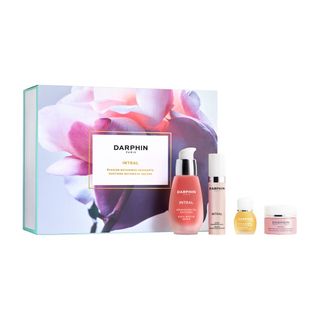
"Darphin - Intral Soothing Botanical Escape" is a well-rounded moisturizing product. As we expect from a proper moisturizer, the formula includes a combo of effective humectants and emollients. These are the two different types of ingredients that are essential for improving the skin hydration and supporting a healthy skin barrier. Panthenol, urea, algae extract, artemia extract and betaine in this product (humectants) attract water molecules to the upper layer of the skin (the water comes from the outside air or from the deeper layers of the skin if the air is dry). Phytosphingosine, algae extract, glycine soja sterols, glycosaminoglycans and sesamum indicum seed oil in this product help decrease the water evoporation from the skin, so that it stays hydrated for longer. These ingredients also soften the skin and take away the feeling of tightness and dryness.
Ingredient callouts
- Another benefit is that this moisturizer contain ceramides (phytosphingosine 0.20% - 0.35%). Ceramides are an important part of our natural skin barrier. The ceramides used in skincare are synthetic or come from plants. They help soften the skin and can help "fill the gaps" in the skin barrier, keeping the skin hydrated and resilient for longer.
- This formulation also uses an effective concentration of panthenol (pro-vitamin B5) - about 1.20% - 1.50%. Panthenol helps strengthen the skin barrier, improve hydration and reduce inflammation in skin.
Irritation risk
There are quite a few common irritants in this product, including ingredients without particular skin benefits. We would not recommend it for sensitive skin. We assess the overall irritancy of this moisturizer to be high. For a detailed overview of all potential irritants: click here
You can see the detailed formula review with the breakdown of all actives in the product and the full ingredient list with estimated concentrations in the tables below.
Sources cited in this review
Every concentration estimate and effectiveness label is anchored to one of these 56 studies and safety reviews.
- 1
- 2Skin moisturizing effects of panthenol-based formulationspdfs.semanticscholar.org
- 3
- 4
- 5
- 6Use of Probiotics for Dermal Applicationsresearchgate.net

Affiliate links · As an Amazon Associate, WIMJ earns from qualifying purchases.