Works for:
based on ingredients and %- Moisturizing
- Anti-aging
- Evens skin tone
- Anti-blemish
Can it cause trouble?
- Irritation risk: medium
- Comedogenic risk ingredients: 5
Key actives


Product Summary
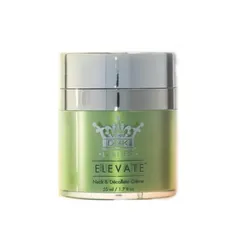
"Danne Montague-King - DMK Elevate Neck & Decollete Creme" has a good moisturizing formula. To work well, any moisturizer needs to include a combination of water-binding and emollient ingredients. Danne Montague-King - DMK Elevate Neck & Decollete Creme ticks this box. Panthenol, alanine, dextran, glycerin and butylene glycol in this product (humectants) attract water molecules to the upper layer of the skin (the water comes from the outside air or from the deeper layers of the skin if the air is dry). Caprylic/capric triglyceride, helianthus annuus seed oil, cetearyl alcohol, ethylhexyl palmitate and hydrogenated olive oil unsaponifiables in this product help decrease the water evoporation from the skin, so that it stays hydrated for longer. These ingredients also soften the skin and take away the feeling of tightness and dryness.
Ingredient callouts
- this moisturizer contains an effective form of retinoids (vitamin A): hydroxypinacolone retinoate 0.01% - 0.05%. Retinoids are potent multitasking actives. They work to improve and prevent early signs of aging, reduce hyperpigmentation (age spots and post-acne marks), and prevent inflamed blemishes and clogged pores. The downside of retinoids is that they can be irritating. If you are not already using a retinoid in your routine, it is best to start slowly and apply the retinoid product only a few times per week. If your skin tolerates it well, you can gradually increase the frequency to daily. Because of the irritation risk of retinoids, we recommend to have another, retinoid-free moisturizer in your routine to use on the alternative days or when your skin feels dry.
- We like that this moisturizer contains peptides (trifluoroacetyl tripeptide-2 0.35% - 0.65%). There are many different kind of peptides and they are naturally present in our skin. They all are a combination of amino-acids. Some of them work as natural anti-biotics, promote wound-healing and production of collagen. The science is still not settled on how effective peptides in skincare are, but it is very likely that they have a benefit. Peptides might help restore the skin barrier and fight the signs of aging. At the very least, peptides work as humectants: they attract water to the upper layer of the skin and improve its hydration.
Irritation risk
This formulation includes some common irritants, including ingredients that do not provide a benefit for the skin. We assess the overall irritancy of this moisturizer to be medium. For a detailed overview of all potential irritants: click here
You can see the detailed formula review with the breakdown of all actives in the product and the full ingredient list with estimated concentrations in the tables below.
Price
The product retails for 199.00£ in the United Kingdom.
For a detailed price comparison: click here.
Anti-aging
What does the product description say?
Muscle tightening is stimulated, lifting and firming sagging skin, while increased collagen production increases skin density and smoothes the appearance of lines and wrinkles.
Source: Face the future
This product can help reduce and prevent fine lines and wrinkles, improve skin elasticity and firmness because it contains hydroxypinacolone retinoate.
These ingredients in the product can also be helpful, even though there is less evidence for their effectiveness: serine, trifluoroacetyl tripeptide-2.
Keep in mind that it typically takes at least 6 weeks to notice any results because the changes that are needed to improve fine lines and elasticity happen in the deeper layers of the skin. No topical anti-aging product can “erase” wrinkles or fully reverse signs of aging.
A derivative of the most potent form of vitamin A, retinoic acid. The ingredient can be sold under name Granactive Retinoid. Note that if a skincare brand discloses the concentration of Granactive Retinoid in a product, the concentration refers to a diluted form of Hydroxypinacolone Retinoate: 1% of Granactive Retinoid corresponds to 0.1% of Hydroxypinacolone Retinoate. Hydroxypinacolone Retinoate (HPR) is a unique derivative of retinoic acid because it can directly work in the skin and does not require additional conversion steps. According to studies done by the manufacturer on models of human skin (not real people), this derivative is more effective than other cosmetic versions of retinoids (such as retinol, retinaldehyde, and retinyl palmitate), and, at the same time, causes less irritation. It has been also demonstrated to be more stable than retinol which makes formulating with easier and increases the chances that a product with it will maintain its effectiveness after opening. The packaging should still ideally be air-tight. HPR is available over the counter in the EU, UK, Asia, Australia and New Zealand, but is only with a prescription in Canada.
An amino-acid that helps to attract water to the upper layer of the skin. In combination with other amino-acids, might help to reduce fine lines and wrinkles
A type of peptide. Peptides are excellent moisturizers and might be able support collagen production reducing fine lines and wrinkles
Being a lipid soluble form of vitamin C, it is more stable than ascorbic acid, but still degrades quickly and needs to be stabilized in a formulation with another ingredient. It is claimed to penetrate skin better than pure vitamin C and have the the similar benefits, but solid studies of its effectiveness are lacking. Is likely to require a higher concentration in a product than pure vitamin C to be effective. It might be able to help reduce pore clogging.
Pure form of vitamin E. Can help moisturise and protect the skin from free radicals. Often used to help stabilise other ingredients or the formula itself
Anti-blemish
This product can help reduce breakouts and clogged pores because it contains the following ingredient: hydroxypinacolone retinoate. This ingredient is used for treating acne and can have a noticeable effect.
A derivative of the most potent form of vitamin A, retinoic acid. The ingredient can be sold under name Granactive Retinoid. Note that if a skincare brand discloses the concentration of Granactive Retinoid in a product, the concentration refers to a diluted form of Hydroxypinacolone Retinoate: 1% of Granactive Retinoid corresponds to 0.1% of Hydroxypinacolone Retinoate. Hydroxypinacolone Retinoate (HPR) is a unique derivative of retinoic acid because it can directly work in the skin and does not require additional conversion steps. According to studies done by the manufacturer on models of human skin (not real people), this derivative is more effective than other cosmetic versions of retinoids (such as retinol, retinaldehyde, and retinyl palmitate), and, at the same time, causes less irritation. It has been also demonstrated to be more stable than retinol which makes formulating with easier and increases the chances that a product with it will maintain its effectiveness after opening. The packaging should still ideally be air-tight. HPR is available over the counter in the EU, UK, Asia, Australia and New Zealand, but is only with a prescription in Canada.
Helps calm down inflammation in skin and can help reduce itching. Helps to repair the skin barrier and keep skin hydrated
Evens skin tone
This product can help reduce hypepigmentation and even out the skin tone because it contains the following effective ingredients: hydroxypinacolone retinoate.
The following ingredient (ingredients) in this product might be helpful, but there is no evidence to confirm that it actually can help even out the skin tone: alanine.
Keep in mind that you would need to apply any topical skincare targetted at hypigmentation consistently for a couple of months to get a result. No topical skincare product can help get rid of hyperpigmentation (including post-acne marks and age spots) instantly.
A derivative of the most potent form of vitamin A, retinoic acid. The ingredient can be sold under name Granactive Retinoid. Note that if a skincare brand discloses the concentration of Granactive Retinoid in a product, the concentration refers to a diluted form of Hydroxypinacolone Retinoate: 1% of Granactive Retinoid corresponds to 0.1% of Hydroxypinacolone Retinoate. Hydroxypinacolone Retinoate (HPR) is a unique derivative of retinoic acid because it can directly work in the skin and does not require additional conversion steps. According to studies done by the manufacturer on models of human skin (not real people), this derivative is more effective than other cosmetic versions of retinoids (such as retinol, retinaldehyde, and retinyl palmitate), and, at the same time, causes less irritation. It has been also demonstrated to be more stable than retinol which makes formulating with easier and increases the chances that a product with it will maintain its effectiveness after opening. The packaging should still ideally be air-tight. HPR is available over the counter in the EU, UK, Asia, Australia and New Zealand, but is only with a prescription in Canada.
An amino-acid that helps to attract water to the upper layer of the skin and might help to lighten the skin, but solid evidence is lacking
Being a lipid soluble form of vitamin C, it is more stable than ascorbic acid, but still degrades quickly and needs to be stabilized in a formulation with another ingredient. It is claimed to penetrate skin better than pure vitamin C and have the the similar benefits, but solid studies of its effectiveness are lacking. Is likely to require a higher concentration in a product than pure vitamin C to be effective. It might be able to help reduce pore clogging.
Moisturizing
What does the product description say?
Muscle tightening is stimulated, lifting and firming sagging skin, while increased collagen production increases skin density and smoothes the appearance of lines and wrinkles.
Source: Face the future
This product can help improve hydration of the skin with the two types of ingredients.
The first type is called “humectants”:
these ingredients help attract water.
When humectants are on the surface of the skin, they “pull in” the moisture from the outside environment, or from
within deeper layers of the skin. The following ingredients in this product do the job:
alanine, dextran.
This product also contains ingredients called “occlusives”. They help reduce the speed with which our skin loses moisture to the outside environment. These ingredients also help soften the upper layer of the skin, so it feels less tight and nicer to the touch. The following ingredients in this product do the job: caprylic/capric triglyceride, helianthus annuus seed oil.
The following ingredients in this product are especially good for supporting the skin barrier and helping with the hydration level: panthenol, trifluoroacetyl tripeptide-2
An amino-acid that helps to attract water to the upper layer of the skin and might help to lighten the skin, but solid evidence is lacking
An amino-acid. Helps attract water to the upper layer of the skin
Helps attract water to the upper layer of the skin and can help improve skin barrier function
A good mix of fatty acids that forms a protective layer on the skin. Improves the shelf life of products. Derived from coconut and glycerin
Helps attract water to the most upper layer of the skin. Derived from sugar
A good moisturizing plant oil. Due to the high linoleic acid content, it helps soften the upper layer of the skin, reduce water loss and support skin barrier function
A type of peptide. Peptides are excellent moisturizers and might be able support collagen production reducing fine lines and wrinkles
One of the best moisturizing ingredients. Naturally present in skin. It attracts water to the upper layer of the skin working as a humectant
An amino-acid that helps to attract water to the upper layer of the skin. In combination with other amino-acids, might help to reduce fine lines and wrinkles
A great emollient due to its high linoleic acid content. One of the most effective plant oils in helping skin hydration and repairing skin barrier function
Emollients that are naturaly present in skin. In addition, they help water and oil mix together in the product
A non-drying alcohol. Works as an emollient. Helps water and oil mix together and creates a nice product texture
An emollient that helps soften the skin and create a nice product texture
Help soften the upper layer of the skin
Used to stabilize the product formulations and works as an emollient
Helps preserve products and creates a nice product texture
An emollient that softens the skin and forms a protective layer on its surface. Helps water and oil mix together
A silicone that forms a light film on the skin surface helping to bind water and temporarily absorb oils creating a matt and powdery feel
Helps soften the upper layer of the skin
A type of silicone that helps to soften the upper layer of the skin and create a nice product finish on the skin
Used to create a nice product texture and help delivery of other ingredients. Might be somewhat helpful in attracting water to the upper layer of the skin
An effective moisturizing and skin barrier repair ingredient. Helps calm down inflammation and has some anti-oxidant properties
Helps calm down inflammation in skin and can help reduce itching. Helps to repair the skin barrier and keep skin hydrated
An emollient that helps soften the skin
Pure form of vitamin E. Can help moisturise and protect the skin from free radicals. Often used to help stabilise other ingredients or the formula itself
How honest is this product?
| Promise | Can it deliver? |
|---|---|
| Anti-aging | |
| Moisturizing |
Total Promises Fulfilled score: 100/100.
We receive a small commission for purchases made through these links at no cost for you. Thank you for your support! Learn more
Affiliate link · supports WIMJ at no cost to you
Potential irritants
Comedogenic ingredients
User reviews (0)
Averages from community submissions.
No reviews yet for this product.
Be the first to share your experience!
Tried this product?
Help capture what the ingredient list can't—texture, finish, pilling, scent, and more. Answer what you can, skip the rest.
Takes ~30 seconds.
Reviews are shown in aggregate. No personal details.
| Product | Similarity | Price | Irritancy |
|---|---|---|---|
 Danne Montague-King DMK Elevate Neck & Decollete Creme | Current | ≈ $263.09 | |
Dr. David Jack Good Night Retinoid Night Cream | 62% | ≈ $134.85 | |
Biopelle Emepelle Night Cream | 61% | - | |
 Peter Thomas Roth Green Releaf Therapeutic Sleep Cream | 59% | $88.00 |
Key Actives
Helps calm down inflammation in skin and can help reduce itching. Helps to repair the skin barrier and keep skin hydrated
A derivative of the most potent form of vitamin A, retinoic acid. The ingredient can be sold under name Granactive Retinoid. Note that if a skincare brand discloses the concentration of Granactive Retinoid in a product, the concentration refers to a diluted form of Hydroxypinacolone Retinoate: 1% of Granactive Retinoid corresponds to 0.1% of Hydroxypinacolone Retinoate. Hydroxypinacolone Retinoate (HPR) is a unique derivative of retinoic acid because it can directly work in the skin and does not require additional conversion steps. According to studies done by the manufacturer on models of human skin (not real people), this derivative is more effective than other cosmetic versions of retinoids (such as retinol, retinaldehyde, and retinyl palmitate), and, at the same time, causes less irritation. It has been also demonstrated to be more stable than retinol which makes formulating with easier and increases the chances that a product with it will maintain its effectiveness after opening. The packaging should still ideally be air-tight. HPR is available over the counter in the EU, UK, Asia, Australia and New Zealand, but is only with a prescription in Canada.
Pure form of vitamin E. Can help moisturise and protect the skin from free radicals. Often used to help stabilise other ingredients or the formula itself
Helps attract water to the upper layer of the skin and can help improve skin barrier function
A silicone that forms a light film on the skin surface helping to bind water and temporarily absorb oils creating a matt and powdery feel
An emollient that helps soften the skin
A type of peptide. Peptides are excellent moisturizers and might be able support collagen production reducing fine lines and wrinkles
An amino-acid that helps to attract water to the upper layer of the skin and might help to lighten the skin, but solid evidence is lacking
An amino-acid that helps to attract water to the upper layer of the skin. In combination with other amino-acids, might help to reduce fine lines and wrinkles
A good moisturizing plant oil. Due to the high linoleic acid content, it helps soften the upper layer of the skin, reduce water loss and support skin barrier function
One of the best moisturizing ingredients. Naturally present in skin. It attracts water to the upper layer of the skin working as a humectant
A good mix of fatty acids that forms a protective layer on the skin. Improves the shelf life of products. Derived from coconut and glycerin
An amino-acid. Helps attract water to the upper layer of the skin
A great emollient due to its high linoleic acid content. One of the most effective plant oils in helping skin hydration and repairing skin barrier function
Helps attract water to the most upper layer of the skin. Derived from sugar
Potential irritants
A derivative of the most potent form of vitamin A, retinoic acid. The ingredient can be sold under name Granactive Retinoid. Note that if a skincare brand discloses the concentration of Granactive Retinoid in a product, the concentration refers to a diluted form of Hydroxypinacolone Retinoate: 1% of Granactive Retinoid corresponds to 0.1% of Hydroxypinacolone Retinoate. Hydroxypinacolone Retinoate (HPR) is a unique derivative of retinoic acid because it can directly work in the skin and does not require additional conversion steps. According to studies done by the manufacturer on models of human skin (not real people), this derivative is more effective than other cosmetic versions of retinoids (such as retinol, retinaldehyde, and retinyl palmitate), and, at the same time, causes less irritation. It has been also demonstrated to be more stable than retinol which makes formulating with easier and increases the chances that a product with it will maintain its effectiveness after opening. The packaging should still ideally be air-tight. HPR is available over the counter in the EU, UK, Asia, Australia and New Zealand, but is only with a prescription in Canada.
Helps preserve products. Can mask unpleasant smell. Could be irritating
An essential oil. Can be irritating. Can become an allergen with oxidation
A good mix of fatty acids that forms a protective layer on the skin. Improves the shelf life of products. Derived from coconut and glycerin
Helps oil and water mix together. Has some emollient properties
Maintains the texture of skincare products. Allows the product to spread evenly. Helps oil and water mix together
Helps preserve products and creates a nice product texture
Being a lipid soluble form of vitamin C, it is more stable than ascorbic acid, but still degrades quickly and needs to be stabilized in a formulation with another ingredient. It is claimed to penetrate skin better than pure vitamin C and have the the similar benefits, but solid studies of its effectiveness are lacking. Is likely to require a higher concentration in a product than pure vitamin C to be effective. It might be able to help reduce pore clogging.
Comedogenic ingredients
An emollient that helps soften the skin and create a nice product texture
Used to stabilize the product formulations and works as an emollient
A non-drying alcohol. Works as an emollient. Helps water and oil mix together and creates a nice product texture
Helps oil and water mix together. Has some emollient properties
A good moisturizing plant oil. Due to the high linoleic acid content, it helps soften the upper layer of the skin, reduce water loss and support skin barrier function
All ingredients
Acts as a solvent for other ingredients. Speeds up the absorption of other ingredients into the skin
One of the best moisturizing ingredients. Naturally present in skin. It attracts water to the upper layer of the skin working as a humectant
An emollient that helps soften the skin and create a nice product texture
A good mix of fatty acids that forms a protective layer on the skin. Improves the shelf life of products. Derived from coconut and glycerin
A type of silicone that helps to soften the upper layer of the skin and create a nice product finish on the skin
Used to stabilize the product formulations and works as an emollient
A silicone that forms a light film on the skin surface helping to bind water and temporarily absorb oils creating a matt and powdery feel
An emollient that softens the skin and forms a protective layer on its surface. Helps water and oil mix together
Helps oil and water mix togehter and creates a nice product texture
A non-drying alcohol. Works as an emollient. Helps water and oil mix together and creates a nice product texture
Helps oil and water mix together. Has some emollient properties
Help soften the upper layer of the skin
A type of peptide. Peptides are excellent moisturizers and might be able support collagen production reducing fine lines and wrinkles
An effective moisturizing and skin barrier repair ingredient. Helps calm down inflammation and has some anti-oxidant properties
Helps attract water to the upper layer of the skin and can help improve skin barrier function
An amino-acid. Helps attract water to the upper layer of the skin
Used to dissolve other ingredients in a product and can enhance their ability to penetrate the skin
Helps calm down inflammation in skin and can help reduce itching. Helps to repair the skin barrier and keep skin hydrated
Maintains the texture of skincare products. Allows the product to spread evenly. Helps oil and water mix together
Emollients that are naturaly present in skin. In addition, they help water and oil mix together in the product
A derivative of the most potent form of vitamin A, retinoic acid. The ingredient can be sold under name Granactive Retinoid. Note that if a skincare brand discloses the concentration of Granactive Retinoid in a product, the concentration refers to a diluted form of Hydroxypinacolone Retinoate: 1% of Granactive Retinoid corresponds to 0.1% of Hydroxypinacolone Retinoate. Hydroxypinacolone Retinoate (HPR) is a unique derivative of retinoic acid because it can directly work in the skin and does not require additional conversion steps. According to studies done by the manufacturer on models of human skin (not real people), this derivative is more effective than other cosmetic versions of retinoids (such as retinol, retinaldehyde, and retinyl palmitate), and, at the same time, causes less irritation. It has been also demonstrated to be more stable than retinol which makes formulating with easier and increases the chances that a product with it will maintain its effectiveness after opening. The packaging should still ideally be air-tight. HPR is available over the counter in the EU, UK, Asia, Australia and New Zealand, but is only with a prescription in Canada.
Helps preserve products. Can mask unpleasant smell. Could be irritating
Helps preserve products and creates a nice product texture
Being a lipid soluble form of vitamin C, it is more stable than ascorbic acid, but still degrades quickly and needs to be stabilized in a formulation with another ingredient. It is claimed to penetrate skin better than pure vitamin C and have the the similar benefits, but solid studies of its effectiveness are lacking. Is likely to require a higher concentration in a product than pure vitamin C to be effective. It might be able to help reduce pore clogging.
Pure form of vitamin E. Can help moisturise and protect the skin from free radicals. Often used to help stabilise other ingredients or the formula itself
A great emollient due to its high linoleic acid content. One of the most effective plant oils in helping skin hydration and repairing skin barrier function
An amino-acid that helps to attract water to the upper layer of the skin and might help to lighten the skin, but solid evidence is lacking
An amino-acid that helps to attract water to the upper layer of the skin. In combination with other amino-acids, might help to reduce fine lines and wrinkles
A good moisturizing plant oil. Due to the high linoleic acid content, it helps soften the upper layer of the skin, reduce water loss and support skin barrier function
Helps attract water to the most upper layer of the skin. Derived from sugar
Used to create a nice product texture and help delivery of other ingredients. Might be somewhat helpful in attracting water to the upper layer of the skin
A preservative. It helps prevent bacterial growth in cosmetic products
An essential oil. Can be irritating. Can become an allergen with oxidation
Ingredient list view
Water, Propanediol, Glycerin, Ethylhexyl palmitate, C12-20 acid peg-8 ester, Caprylic/capric triglyceride, Caprylyl methicone, Glyceryl stearate se, Ethylhexyl stearate, Polysilicone-11, Prunus armeniaca kernel oil, Glyceryl stearate, Peg-100 stearate, Cetearyl alcohol, Ceteareth-20, Peg-12 dimethicone/ppg-20 crosspolymer, Hydrogenated olive oil unsaponifiables, Trifluoroacetyl tripeptide-2, Avena sativa kernel extract, Panthenol, Vanillyl butyl ether, Ornithine, Tetrahydroxypropyl ethylenediamine, Xanthan gum, Dimethyl isosorbide, Ethylhexylglycerin, Allantoin, Acrylates/c10-30 alkyl acrylate crosspolymer, Phospholipids, Methylglucoside phosphate, Hydrolyzed tremella fuciformis sporocarp extract, Pseudoalteromonas ferment extract, Laureth-12, Levulinic acid, Copper lysinate/prolinate, Glycolipids, Hydroxypinacolone retinoate, P-anisic acid, Sodium hydroxide, Caprylyl glycol, Tetrahexyldecyl ascorbate, Tocopherol, Helianthus annuus seed oil, Proline, Alanine, Serine, Sodium phosphate, Zea mays oil, Beta-carotene, Dextran, Butylene glycol, Phenoxyethanol, Pelargonium graveolens flower oil
- Glycerol and the skin: holistic approach to its origin and functions
- Skin moisturizing effects of panthenol-based formulations
- Safety Assessment of Panthenol, Pantothenic Acid, and Derivatives as Used in Cosmetics
- Activity enhancement of ferulic acid with dimethyl isosorbride in cosmetic compositions
- Profile of wound healing process induced by allantoin
- Antiaging effects of retinoid hydroxypinacolone retinoate on skin models. (2018). Journal of the American Academy of Dermatology, 79(3), AB44. doi:10.1016/j.jaad.2018.05.215
- Treatment of mild to moderate acne with a fixed combination of hydroxypinacolone retinoate, retinol glycospheres and papain glycospheres
- Sodium anisate
- Double-blind, half-face study comparing topical vitamin C and vehicle for rejuvenation of photodamage
- Application of tetra-isopalmitoyl ascorbic acid in cosmetic formulations: Stability studies and in vivo efficacy
- Vitamin E in dermatology
- Vitamin E and Skin Health
- Effect of Olive and Sunflower Seed Oil on the Adult Skin Barrier: Implications for Neonatal Skin Care
- Topically Applied Sunflower Seed Oil Prevents Invasive Bacterial Infections in Preterm Infants in Egypt
- Effect of topically applied lipids on surfactant-irritated skin
- Impact of topical oils on the skin barrier: possible implications for neonatal health in developing countries
- Combination of amino acids reduces pigmentation in B16F0 melanoma cells
- Topical palmitoyl pentapeptide provides improvement in photoaged human facial skin
- Content of fatty acids in corn (Zea mays L.) oil from Ecuador
- Fragrance Compound Geraniol Forms Contact Allergens on Air Exposure. Identification and Quantification of Oxidation Products and Effect on Skin Sensitization