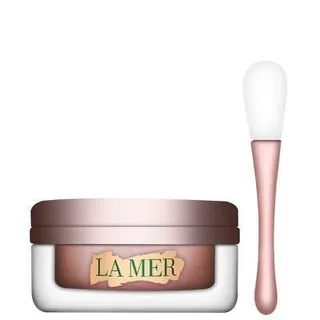
La Mer Face The Lip Polish

La Mer Face The Lip Polish

Efficacy0/100IrritancyHigh

Works for

Exfoliation
Copper gluconate, Maris sal + 2 more
Not delivered
What the product description says
“Face The Lip Polish”
From product name

This product does not contain effective exfoliating ingredients. It might be able to deliver physical exfoliation, that is scrub off some of the dead cells on the surface of the skin. We do not recommend physical exfoliation, because it is not uniform (some bits of skin can get exfoliated too much while others not at all). It can also traumatize the skin and aggrevate acne and other skin conditions.

Copper gluconateEffect: Low, below effective doseTypically used to stabilize the product formulations. It is a salt of polyhydroxy acid (PHA) and in larger concentrations, can help shed the dead cells from the skin surface revealing smoother skin. It can help attract water to the upper layer of the skin. Might to be helpful against acne and clogged pores. Could be helpful in neutralizing free radicals, but solid research is missing~0.15–0.6%
Maris salEffect: Low, below effective doseUsed to thicken the product formulation and might help to add minerals to the surface of the skin. It is used in scrubs as a physical exfoliant. Can increase sensitivity to other ingredients if left on the skin or used in high concentration~0.1–0.35%
Sea saltEffect: Low, below effective doseUsed to thicken the product formulation and might help to add minerals to the surface of the skin. It is used in scrubs as a physical exfoliant. Can increase sensitivity to other ingredients if left on the skin or used in high concentration~0.1–0.35%
Zinc gluconateEffect: Low, below effective doseTypically used to stabilize the product formulations. It is a salt of a polyhydroxy acid (PHA) and in larger concentrations, can help shed the dead cells from the skin surface revealing smoother skin. It can help attract water to the upper layer of the skin. Might to be helpful against acne and clogged pores. Could be helpful in neutralizing free radicals, but solid research is missing. Due to the zinc content, might help calm down inflammation in skin~0.1–0.45%
Moisturizing
Side benefit · Petrolatum, Phytosphingosine + 28 more
Works well

This product can help improve hydration of the skin with the two types of ingredients.

The first type is called “humectants”:
these ingredients help attract water. When humectants are on the surface of the skin, they “pull in” the moisture from the outside environment, or from within deeper layers of the skin. The following ingredients in this product do the job: algae extract, glycerin.

This product also contains ingredients called “occlusives”. They help reduce the speed with which our skin loses moisture to the outside environment. These ingredients also help soften the upper layer of the skin, so it feels less tight and nicer to the touch. The following ingredients in this product do the job: bis-diglyceryl polyacyladipate-2, butyrospermum parkii butter.

The following ingredients in this product are especially good for supporting the skin barrier and helping with the hydration level: petrolatum, phytosphingosine

PetrolatumHero· Emollient, OcclusiveEffect: HighOne of the most effective and the most studied occlusive ingredients that creates a protective layer on top of the skin preventing moisture loss~4.6–6.8%
PhytosphingosineHero· EmollientEffect: HighA type of lipid that is naturally present in skin. It might help in repairing skin barrier function and has anti-bacterial effect~0.15–0.55%
SucroseKey active· HumectantEffect: HighCan help attract water to the upper layer of the skin. In crystal form, it can work as a gentle exfoliant, gentler than the salt scrub. Helps stabilize the emulsion~26–39%
GlucoseKey active· HumectantEffect: MediumHelps attract water to the upper layer of the skin. Could be helpful in restoring the skin barrier function~4.4–6.6%
Butyrospermum parkii butterKey active· Emollient, OcclusiveEffect: HighA great moisturising ingredient that softens the skin and reduces water loss from its upper layer. It also can be helpful in protecting skin from free radicals~2.4–3.6%
Cera microcristallinaKey active· Emollient, OcclusiveEffect: HighHelps to soften the upper layer of the skin, reduce water loss from its surface and create a thicker product consistency~1.6–2.4%
Bis-diglyceryl polyacyladipate-2Key active· Emollient, OcclusiveEffect: HighHelps soften the upper layer of the skin and reduce water loss from its surface~1.2–1.8%
Algae extractKey active· Humectant, EmollientEffect: HighPlant extract that helps the skin to attract water and make it more smooth for touch. Also shows promise of anti-aging properties, but research is not extensive yet~0.55–1.25%
Sesamum indicum seed oilKey active· EmollientEffect: HighA good moisturizing plant oil. Due to the high linoleic acid content, it helps soften the upper layer of the skin, reduce water loss and support skin barrier function~0.45–1%
Medicago sativa seed powderKey activeEffect: MediumMight help soften the upper layer of the skin and help thicken the product formulation. It might have some anti-oxidant effect~0.35–0.75%
CholesterolKey active· EmollientEffect: HighAn emollient that is naturally found in skin~0.15–0.55%
Hippophae rhamnoides oilKey active· EmollientEffect: HighA good emollient. Contains various ingredients including vitamins and fatty acids that could work in the skin to neutralize free radicals and minimize moisture loss - if enough of these compounds is able to penetrate the skin in an active form.~0.15–0.5%
TrehaloseKey active· HumectantEffect: HighA sugar that attracts water to the upper layer of the skin~0.1–0.35%
Phenyl trimethiconeKey active· OcclusiveEffect: HighA type of silicone that can decrease loss of moisture from the skin surface. It helps create a nice product texture~0.1–0.4%
Laminaria ochroleuca extractKey activeEffect: HighHelps attract water to the upper layer of the skin~0.1–0.35%
Ricinus communis seed oilKey active· Emollient, OcclusiveEffect: HighA plant oil that can help soften the skin. It might be helpful in calming down inflammation, but solid research is lacking. Is often used in lip products to create the needed product consistency~0.1–0.5%
GlycerinKey active· HumectantEffect: HighOne of the best moisturizing ingredients. Naturally present in skin. It attracts water to the upper layer of the skin working as a humectant~0.1–0.45%
Glycine soja oilKey active· EmollientEffect: HighA good emollient that helps soften the skin and helps repair its barrier function. It can clog pores if used in high concentrations.~0.1–0.45%
Olea europaea fruit oilKey active· EmollientEffect: MediumAn emollient that helps soften the skin but is not effective for restoring its barrier function. Might be helpful to calm down inflammation~0.1–0.45%
Octyldodecanol· EmollientEffect: LowAn emollient that helps to soften the skin and create a pleasant product texture and stabilize the formulation~3.2–4.7%
Calcium gluconate· HumectantEffect: LowHelps attract water to the upper layer of the skin and helps to improve appearance of the product~0.15–0.65%
Oleic acid· EmollientEffect: LowHelps soften the upper layer of the skin. At the same time, it can weaken the skin's barrier enhancing penetration of other ingredients and increasing the risk of skin dryness~0.15–0.6%
Palmitic acid· EmollientEffect: LowAn emollient that is naturally present in skin and helps soften it~0.15–0.6%
Magnesium gluconateEffect: LowA mineral that might be able to support skin hydration, but convincing research on its effectiveness in topical skincare is lacking~0.1–0.5%
Butylene glycol· HumectantEffect: LowUsed to create a nice product texture and help delivery of other ingredients. Might be somewhat helpful in attracting water to the upper layer of the skin~0.1–0.35%
Aloe barbadensis leaf extractEffect: Low, below effective doseTraditionally used to treat sunburns, dermatitis and inflammation, but evidence for its effectiveness is lacking. The extract can contain humectants that help attract water into the skin~0.15–0.55%
Copper gluconateUnder-dosedTypically used to stabilize the product formulations. It is a salt of polyhydroxy acid (PHA) and in larger concentrations, can help shed the dead cells from the skin surface revealing smoother skin. It can help attract water to the upper layer of the skin. Might to be helpful against acne and clogged pores. Could be helpful in neutralizing free radicals, but solid research is missing~0.15–0.6%
Caprylic/capric triglycerideUnder-dosedA good mix of fatty acids that forms a protective layer on the skin. Improves the shelf life of products. Derived from coconut and glycerin~0.15–0.55%
NiacinUnder-dosedA form of vitamin B3. It is similar in action to niacinamide, but is more likely to cause red flashes in skin as the side effect~0.1–0.4%
Zinc gluconateUnder-dosedTypically used to stabilize the product formulations. It is a salt of a polyhydroxy acid (PHA) and in larger concentrations, can help shed the dead cells from the skin surface revealing smoother skin. It can help attract water to the upper layer of the skin. Might to be helpful against acne and clogged pores. Could be helpful in neutralizing free radicals, but solid research is missing. Due to the zinc content, might help calm down inflammation in skin~0.1–0.45%

Can it cause trouble?

Irritancy
6 strong irritants: Eucalyptus globulus leaf oil, Sorbitan sesquioleate + 4 more — patch-test recommended
High risk
We flagged 32 ingredients with irritancy potential. Severity depends on your sensitivity threshold; the table lists the worst offenders first.
IngredientFunctionIrritationEst. amount
Eucalyptus globulus leaf oilAn essential oil that can be very irritating. Has some anti-bacterial propertiesHigh~0.15–0.65%est.
NiacinA form of vitamin B3. It is similar in action to niacinamide, but is more likely to cause red flashes in skin as the side effectHigh~0.1–0.4%est.
Hippophae rhamnoides oilA good emollient. Contains various ingredients including vitamins and fatty acids that could work in the skin to neutralize free radicals and minimize moisture loss - if enough of these compounds is able to penetrate the skin in an active form.High~0.15–0.5%est.
Sorbitan sesquioleateUsed to help oil and water mix together. Can be irritatingHigh~0.1–0.4%est.
ParfumAn aromatic blend of unspecified and possibly irritating ingredientsHigh~0.1–0.35%est.
LinaloolA fragrance. Can be irritatingHigh~0.1–0.35%est.
LimoneneA common frangrance that can easily irritate skin, especially if exposed to air, light or heatHigh~0.1–0.35%est.
Benzyl benzoateFragrance with sweet balsamic smell. Help to preserve products and dissolve other ingredients. Could trigger allergic reactions and be irritatingHigh~0.1–0.35%est.
Ci 15850A red colorantHigh~0.1–0.4%est.
Ci 75470Carmine. A colorant. Can be an allergenHigh~0.1–0.45%est.
Ci 73360A red (pink) dyeHigh~0.1–0.4%est.
Ci 19140A yellow dyeHigh~0.1–0.4%est.
Ci 15985A colorantHigh~0.1–0.35%est.
Ci 45380A yellow dyeHigh~0.1–0.3%est.
Ci 45410A red colorantHigh~0.05–0.2%est.
Medicago sativa seed powderMight help soften the upper layer of the skin and help thicken the product formulation. It might have some anti-oxidant effectMedium~0.35–0.75%est.
Copper gluconateTypically used to stabilize the product formulations. It is a salt of polyhydroxy acid (PHA) and in larger concentrations, can help shed the dead cells from the skin surface revealing smoother skin. It can help attract water to the upper layer of the skin. Might to be helpful against acne and clogged pores. Could be helpful in neutralizing free radicals, but solid research is missingMedium~0.15–0.6%est.
Zinc gluconateTypically used to stabilize the product formulations. It is a salt of a polyhydroxy acid (PHA) and in larger concentrations, can help shed the dead cells from the skin surface revealing smoother skin. It can help attract water to the upper layer of the skin. Might to be helpful against acne and clogged pores. Could be helpful in neutralizing free radicals, but solid research is missing. Due to the zinc content, might help calm down inflammation in skinMedium~0.1–0.45%est.
Tocopheryl succinateUsed to preserve the product formulationMedium~0.1–0.45%est.
Sea saltUsed to thicken the product formulation and might help to add minerals to the surface of the skin. It is used in scrubs as a physical exfoliant. Can increase sensitivity to other ingredients if left on the skin or used in high concentrationMedium~0.1–0.35%est.
Maris salUsed to thicken the product formulation and might help to add minerals to the surface of the skin. It is used in scrubs as a physical exfoliant. Can increase sensitivity to other ingredients if left on the skin or used in high concentrationMedium~0.1–0.35%est.
Glycine soja oilA good emollient that helps soften the skin and helps repair its barrier function. It can clog pores if used in high concentrations.Medium~0.1–0.45%est.
Olea europaea fruit oilAn emollient that helps soften the skin but is not effective for restoring its barrier function. Might be helpful to calm down inflammationMedium~0.1–0.45%est.
Aloe barbadensis leaf extractTraditionally used to treat sunburns, dermatitis and inflammation, but evidence for its effectiveness is lacking. The extract can contain humectants that help attract water into the skinMedium~0.15–0.55%est.
Tocopheryl acetateA more stable but less bio-available form of vitamin E compared to Tocopherol. Might help moisturize and protect the skin from free radicals, but mostly used in low concentrations to stabilize other ingredients.Medium~0.1–0.4%est.
Ricinus communis seed oilA plant oil that can help soften the skin. It might be helpful in calming down inflammation, but solid research is lacking. Is often used in lip products to create the needed product consistencyMedium~0.1–0.5%est.
Caprylic/capric triglycerideA good mix of fatty acids that forms a protective layer on the skin. Improves the shelf life of products. Derived from coconut and glycerinMedium~0.15–0.55%est.
Oleic acidHelps soften the upper layer of the skin. At the same time, it can weaken the skin's barrier enhancing penetration of other ingredients and increasing the risk of skin drynessMedium~0.15–0.6%est.
BhtA preservativeMedium~0.1–0.4%est.
Ci 17200A red colorantMedium~0.1–0.4%est.
Blue 1 lakeA colorantMedium~0.1–0.4%est.
Ci 42090A colorant (dye)Medium~0.1–0.4%est.
Comedogenic
9 ingredients rated 2 or more on the 0–5 pore-clogging scale
9 flagged
These ingredients have a comedogenic rating of 2 or more on a 0–5 scale; the table shows each one's rating. In leave-on products they can clog pores in acne-prone skin.
IngredientFunctionRatingEst. amount
Butyrospermum parkii butterA great moisturising ingredient that softens the skin and reduces water loss from its upper layer. It also can be helpful in protecting skin from free radicals3/5~2.4–3.6%est.
Algae extractPlant extract that helps the skin to attract water and make it more smooth for touch. Also shows promise of anti-aging properties, but research is not extensive yet3/5~0.55–1.25%est.
Macrocystis pyrifera extract—3/5~0.1–0.35%est.
Spirulina platensis powder—3/5~0.1–0.35%est.
Laminaria ochroleuca extractHelps attract water to the upper layer of the skin3/5~0.1–0.35%est.
Ci 45410A red colorant3/5~0.05–0.2%est.
Glycine soja oilA good emollient that helps soften the skin and helps repair its barrier function. It can clog pores if used in high concentrations.2/5~0.1–0.45%est.
Ci 73360A red (pink) dye2/5~0.1–0.4%est.
Ci 45380A yellow dye2/5~0.1–0.3%est.

User reviews

Would you recommend?
No community reviews yet.

Be the first — your take helps the next person decide.

Ingredients

Filter by role to see what each ingredient is doing.

Sucrose~26–39%
Key active
Irritation risk
Low
Works for
Moisturizing

Can help attract water to the upper layer of the skin. In crystal form, it can work as a gentle exfoliant, gentler than the salt scrub. Helps stabilize the emulsion

More about Sucrose
Glucose~4.4–6.6%
Key active
Irritation risk
Low
Works for
Moisturizing

Helps attract water to the upper layer of the skin. Could be helpful in restoring the skin barrier function

More about Glucose
Petrolatum~4.6–6.8%
Hero · Moisturizing
Irritation risk
Low
Works for
Moisturizing

One of the most effective and the most studied occlusive ingredients that creates a protective layer on top of the skin preventing moisture loss

More about Petrolatum
Octyldodecanol~3.2–4.7%
Formula
Irritation risk
Low
Works for
Moisturizing

An emollient that helps to soften the skin and create a pleasant product texture and stabilize the formulation

More about Octyldodecanol
Butyrospermum parkii butter~2.4–3.6%
Key activeComedogenic 3/5
Irritation risk
Low
Comedogenicity
3/5
Works for
MoisturizingAnti-agingAnti-oxidation

A great moisturising ingredient that softens the skin and reduces water loss from its upper layer. It also can be helpful in protecting skin from free radicals

More about Butyrospermum parkii butter
Microcrystalline wax~1.8–2.6%
Formula
Irritation risk
Low

Used to create a thicker product consistency

More about Microcrystalline wax
Cera microcristallina~1.6–2.4%
Key active
Irritation risk
Low
Works for
Moisturizing

Helps to soften the upper layer of the skin, reduce water loss from its surface and create a thicker product consistency

More about Cera microcristallina
Polyglyceryl-10 pentaoleate~1.2–1.8%
Formula
Irritation risk
Low
Works for
Cleansing
More about Polyglyceryl-10 pentaoleate
Bis-diglyceryl polyacyladipate-2~1.2–1.8%
Key active
Irritation risk
Low
Works for
Moisturizing

Helps soften the upper layer of the skin and reduce water loss from its surface

More about Bis-diglyceryl polyacyladipate-2
Octyldodecyl stearoyl stearate~0.85–1.25%
Formula
Algae extract~0.55–1.25%
Key activeComedogenic 3/5
Irritation risk
Low
Comedogenicity
3/5
Works for
MoisturizingAnti-aging

Plant extract that helps the skin to attract water and make it more smooth for touch. Also shows promise of anti-aging properties, but research is not extensive yet

More about Algae extract
Sesamum indicum seed oil~0.45–1%
Key active
Irritation risk
Low
Works for
Moisturizing

A good moisturizing plant oil. Due to the high linoleic acid content, it helps soften the upper layer of the skin, reduce water loss and support skin barrier function

More about Sesamum indicum seed oil
Medicago sativa seed powder~0.35–0.75%
Key activeIrritant · medium
Irritation risk
Medium
Works for
MoisturizingAnti-oxidation

Might help soften the upper layer of the skin and help thicken the product formulation. It might have some anti-oxidant effect

More about Medicago sativa seed powder
Helianthus annuus seedcake~0.45–1.05%
Formula
Irritation risk
Low

Used to thicken the product consistency

More about Helianthus annuus seedcake
Prunus amygdalus dulcis seed meal~0.35–0.85%
Formula
Irritation risk
Low

Helps thicken the product texture

More about Prunus amygdalus dulcis seed meal
Eucalyptus globulus leaf oil~0.15–0.65%
Irritant · high
Irritation risk
High
Works for
Antibacterial

An essential oil that can be very irritating. Has some anti-bacterial properties

More about Eucalyptus globulus leaf oil
Sodium gluconate~0.15–0.65%
Formula
Irritation risk
Low

Helps stabilize product formulations

More about Sodium gluconate
Copper gluconate~0.15–0.6%
Under-dosedIrritant · medium
Irritation risk
Medium
Works for
MoisturizingAnti-agingEvens skin toneAnti-blemishExfoliationAnti-oxidation

Typically used to stabilize the product formulations. It is a salt of polyhydroxy acid (PHA) and in larger concentrations, can help shed the dead cells from the skin surface revealing smoother skin. It can help attract water to the upper layer of the skin. Might to be helpful against acne and clogged pores. Could be helpful in neutralizing free radicals, but solid research is missing

More about Copper gluconate
Calcium gluconate~0.15–0.65%
Formula
Irritation risk
Low
Works for
Moisturizing

Helps attract water to the upper layer of the skin and helps to improve appearance of the product

More about Calcium gluconate
Magnesium gluconate~0.1–0.5%
Formula
Irritation risk
Low
Works for
Moisturizing

A mineral that might be able to support skin hydration, but convincing research on its effectiveness in topical skincare is lacking

More about Magnesium gluconate
Zinc gluconate~0.1–0.45%
Under-dosedIrritant · medium
Irritation risk
Medium
Works for
MoisturizingAnti-agingEvens skin toneAnti-inflammatoryExfoliationAnti-blemishAnti-oxidation

Typically used to stabilize the product formulations. It is a salt of a polyhydroxy acid (PHA) and in larger concentrations, can help shed the dead cells from the skin surface revealing smoother skin. It can help attract water to the upper layer of the skin. Might to be helpful against acne and clogged pores. Could be helpful in neutralizing free radicals, but solid research is missing. Due to the zinc content, might help calm down inflammation in skin

More about Zinc gluconate
Tocopheryl succinate~0.1–0.45%
Irritant · medium
Irritation risk
Medium

Used to preserve the product formulation

More about Tocopheryl succinate
Niacin~0.1–0.4%
Under-dosedIrritant · high
Irritation risk
High
Works for
MoisturizingAnti-agingAnti-blemishEvens skin tone

A form of vitamin B3. It is similar in action to niacinamide, but is more likely to cause red flashes in skin as the side effect

More about Niacin
Sesamum indicum seed powder~0.1–0.35%
Formula
Macrocystis pyrifera extract~0.1–0.35%
Comedogenic 3/5
Irritation risk
Low
Comedogenicity
3/5
More about Macrocystis pyrifera extract
Spirulina platensis powder~0.1–0.35%
Comedogenic 3/5
Irritation risk
Low
Comedogenicity
3/5
More about Spirulina platensis powder
Sea salt~0.1–0.35%
Irritant · medium
Irritation risk
Medium
Works for
Exfoliation

Used to thicken the product formulation and might help to add minerals to the surface of the skin. It is used in scrubs as a physical exfoliant. Can increase sensitivity to other ingredients if left on the skin or used in high concentration

More about Sea salt
Maris sal~0.1–0.35%
Irritant · medium
Irritation risk
Medium
Works for
Exfoliation

Used to thicken the product formulation and might help to add minerals to the surface of the skin. It is used in scrubs as a physical exfoliant. Can increase sensitivity to other ingredients if left on the skin or used in high concentration

More about Maris sal
Laminaria ochroleuca extract~0.1–0.35%
Key activeComedogenic 3/5
Irritation risk
Low
Comedogenicity
3/5
Works for
Moisturizing

Helps attract water to the upper layer of the skin

More about Laminaria ochroleuca extract
Glycine soja oil~0.1–0.45%
Key activeComedogenic 2/5Irritant · medium
Irritation risk
Medium
Comedogenicity
2/5
Works for
Moisturizing

A good emollient that helps soften the skin and helps repair its barrier function. It can clog pores if used in high concentrations.

More about Glycine soja oil
Olea europaea fruit oil~0.1–0.45%
Key activeIrritant · medium
Irritation risk
Medium
Works for
Moisturizing

An emollient that helps soften the skin but is not effective for restoring its barrier function. Might be helpful to calm down inflammation

More about Olea europaea fruit oil
Hippophae rhamnoides oil~0.15–0.5%
Key activeIrritant · high
Irritation risk
High
Works for
MoisturizingAnti-oxidation

A good emollient. Contains various ingredients including vitamins and fatty acids that could work in the skin to neutralize free radicals and minimize moisture loss - if enough of these compounds is able to penetrate the skin in an active form.

More about Hippophae rhamnoides oil
Aloe barbadensis leaf extract~0.15–0.55%
Irritant · medium
Irritation risk
Medium
Works for
Moisturizing

Traditionally used to treat sunburns, dermatitis and inflammation, but evidence for its effectiveness is lacking. The extract can contain humectants that help attract water into the skin

More about Aloe barbadensis leaf extract
Polybutene~0.1–0.4%
Formula
Irritation risk
Low

Used to create a thicker product consistency

More about Polybutene
Phenyl trimethicone~0.1–0.4%
Key active
Irritation risk
Low
Works for
Moisturizing

A type of silicone that can decrease loss of moisture from the skin surface. It helps create a nice product texture

More about Phenyl trimethicone
Glycerin~0.1–0.45%
Key active
Irritation risk
Low
Works for
Moisturizing

One of the best moisturizing ingredients. Naturally present in skin. It attracts water to the upper layer of the skin working as a humectant

More about Glycerin
Tocopheryl acetate~0.1–0.4%
Irritant · medium
Irritation risk
Medium
Works for
Anti-oxidation

A more stable but less bio-available form of vitamin E compared to Tocopherol. Might help moisturize and protect the skin from free radicals, but mostly used in low concentrations to stabilize other ingredients.

More about Tocopheryl acetate
Menthyl pca~0.1–0.35%
Formula
Irritation risk
Low
More about Menthyl pca
Ricinus communis seed oil~0.1–0.5%
Key activeIrritant · medium
Irritation risk
Medium
Works for
MoisturizingAnti-inflammatory

A plant oil that can help soften the skin. It might be helpful in calming down inflammation, but solid research is lacking. Is often used in lip products to create the needed product consistency

More about Ricinus communis seed oil
Caprylic/capric triglyceride~0.15–0.55%
Under-dosedIrritant · medium
Irritation risk
Medium
Works for
Moisturizing

A good mix of fatty acids that forms a protective layer on the skin. Improves the shelf life of products. Derived from coconut and glycerin

More about Caprylic/capric triglyceride
Phytosphingosine~0.15–0.55%
Hero · Moisturizing
Irritation risk
Low
Works for
MoisturizingAnti-inflammatoryAnti-blemish

A type of lipid that is naturally present in skin. It might help in repairing skin barrier function and has anti-bacterial effect

More about Phytosphingosine
Water~0.1–0.35%
Formula
Irritation risk
Low

Plain old water

More about Water
Malachite~0.1–0.35%
Formula
Irritation risk
Low
More about Malachite
Tourmaline~0.1–0.35%
Formula
Irritation risk
Low
More about Tourmaline
Butylene glycol~0.1–0.35%
Formula
Irritation risk
Low
Works for
Moisturizing

Used to create a nice product texture and help delivery of other ingredients. Might be somewhat helpful in attracting water to the upper layer of the skin

More about Butylene glycol
Trehalose~0.1–0.35%
Key active
Irritation risk
Low
Works for
Moisturizing

A sugar that attracts water to the upper layer of the skin

More about Trehalose
Cholesterol~0.15–0.55%
Key active
Irritation risk
Low
Works for
MoisturizingCleansing

An emollient that is naturally found in skin

More about Cholesterol
Silica~0.15–0.65%
Formula
Irritation risk
Low

Used to absorb oil and can temporarily mattify skin

More about Silica
Tin oxide~0.15–0.65%
Formula
Irritation risk
Low

A colorant that can add a pearl-like appearance to the formulation

More about Tin oxide
Glyceryl distearate~0.15–0.5%
Formula
Sodium saccharin~0.1–0.4%
Formula
Sorbitan sesquioleate~0.1–0.4%
Irritant · high
Irritation risk
High
Works for
Cleansing

Used to help oil and water mix together. Can be irritating

More about Sorbitan sesquioleate
Calcium carbonate~0.2–0.75%
Formula
Irritation risk
Low

Helps improve the product appearance

More about Calcium carbonate
Sodium bicarbonate~0.15–0.55%
Formula
Irritation risk
Low

Helps regulate the product pH

More about Sodium bicarbonate
Palmitic acid~0.15–0.6%
Formula
Irritation risk
Low
Works for
CleansingMoisturizing

An emollient that is naturally present in skin and helps soften it

More about Palmitic acid
Oleic acid~0.15–0.6%
Irritant · medium
Irritation risk
Medium
Works for
CleansingMoisturizingAnti-inflammatory

Helps soften the upper layer of the skin. At the same time, it can weaken the skin's barrier enhancing penetration of other ingredients and increasing the risk of skin dryness

More about Oleic acid
Parfum~0.1–0.35%
Irritant · high
Irritation risk
High

An aromatic blend of unspecified and possibly irritating ingredients

More about Parfum
Linalool~0.1–0.35%
Irritant · high
Irritation risk
High

A fragrance. Can be irritating

More about Linalool
Limonene~0.1–0.35%
Irritant · high
Irritation risk
High

A common frangrance that can easily irritate skin, especially if exposed to air, light or heat

More about Limonene
Benzyl benzoate~0.1–0.35%
Irritant · high
Irritation risk
High

Fragrance with sweet balsamic smell. Help to preserve products and dissolve other ingredients. Could trigger allergic reactions and be irritating

More about Benzyl benzoate
Bht~0.1–0.4%
Irritant · medium
Irritation risk
Medium

A preservative

More about Bht
Mica~0.15–0.55%
Formula
Irritation risk
Low

Creates an illusion of smoother and more radiant skin tone. Adds shimmer to the skin by reflecting light

More about Mica
Titanium dioxide~0.15–0.6%
Formula
Irritation risk
Low
Works for
Sun protection

Works as a UV filter when used in high concentrations. It is photostable and is effective mostly against the UVB light, with some protection in the UVA range. In small concentrations, used for its ability to improve the color of cosmetic products. Is usually well tolerated by the skin

More about Titanium dioxide
Ci 77891~0.1–0.35%
Formula
Irritation risk
Low
More about Ci 77891
Iron oxides~0.1–0.35%
Formula
Irritation risk
Low
Works for
Sun protection

An umbrella term for the following three colorants: CI 77491, CI 77492, CI 77499. They might be able to offer some protection against visible light, but the degree of the protection is not clear

More about Iron oxides
Ci 77491~0.1–0.4%
Formula
Irritation risk
Low

A red colorant made of iron oxide. Typically is not irritating

More about Ci 77491
Iron oxides~0.1–0.35%
Formula
Irritation risk
Low
Works for
Sun protection

An umbrella term for the following three colorants: CI 77491, CI 77492, CI 77499. They might be able to offer some protection against visible light, but the degree of the protection is not clear

More about Iron oxides
Ci 77492~0.1–0.4%
Formula
Irritation risk
Low

A colorant. Usually well-tolerated

More about Ci 77492
Iron oxides~0.1–0.35%
Formula
Irritation risk
Low
Works for
Sun protection

An umbrella term for the following three colorants: CI 77491, CI 77492, CI 77499. They might be able to offer some protection against visible light, but the degree of the protection is not clear

More about Iron oxides
Ci 77499~0.1–0.4%
Formula
Irritation risk
Low

An iron oxide. Used as a colorant. Is usually well tolerated

More about Ci 77499
Ci 15850~0.1–0.4%
Irritant · high
Irritation risk
High

A red colorant

More about Ci 15850
Ci 77163~0.1–0.4%
Formula
Irritation risk
Low

Colorant

More about Ci 77163
Ci 75470~0.1–0.45%
Irritant · high
Irritation risk
High

Carmine. A colorant. Can be an allergen

More about Ci 75470
Ci 17200~0.1–0.4%
Irritant · medium
Irritation risk
Medium

A red colorant

More about Ci 17200
Ci 73360~0.1–0.4%
Comedogenic 2/5Irritant · high
Irritation risk
High
Comedogenicity
2/5

A red (pink) dye

More about Ci 73360
Ci 19140~0.1–0.4%
Irritant · high
Irritation risk
High

A yellow dye

More about Ci 19140
Blue 1 lake~0.1–0.4%
Irritant · medium
Irritation risk
Medium

A colorant

More about Blue 1 lake
Ci 42090~0.1–0.4%
Irritant · medium
Irritation risk
Medium

A colorant (dye)

More about Ci 42090
Ci 19140~0.1–0.35%
Irritant · high
Irritation risk
High

A yellow dye

More about Ci 19140
Ci 15985~0.1–0.35%
Irritant · high
Irritation risk
High

A colorant

More about Ci 15985
Ci 17200~0.1–0.35%
Irritant · medium
Irritation risk
Medium

A red colorant

More about Ci 17200
Ci 15850~0.1–0.35%
Irritant · high
Irritation risk
High

A red colorant

More about Ci 15850
Unrecognized ingredient
Not recognized
Ci 45380~0.1–0.3%
Comedogenic 2/5Irritant · high
Irritation risk
High
Comedogenicity
2/5

A yellow dye

More about Ci 45380
Ci 45410~0.05–0.2%
Comedogenic 3/5Irritant · high
Irritation risk
High
Comedogenicity
3/5

A red colorant

More about Ci 45410
Ci 15850~0.05–0.2%
Irritant · high
Irritation risk
High

A red colorant

More about Ci 15850
Ingredient list view

Sucrose, Glucose, Petrolatum, Octyldodecanol, Butyrospermum parkii butter, Microcrystalline wax, Cera microcristallina, Polyglyceryl-10 pentaoleate, Bis-diglyceryl polyacyladipate-2, Octyldodecyl stearoyl stearate, Algae extract, Sesamum indicum seed oil, Medicago sativa seed powder, Helianthus annuus seedcake, Prunus amygdalus dulcis seed meal, Eucalyptus globulus leaf oil, Sodium gluconate, Copper gluconate, Calcium gluconate, Magnesium gluconate, Zinc gluconate, Tocopheryl succinate, Niacin, Sesamum indicum seed powder, Macrocystis pyrifera extract, Spirulina platensis powder, Sea salt, Maris sal, Laminaria ochroleuca extract, Glycine soja oil, Olea europaea fruit oil, Hippophae rhamnoides oil, Aloe barbadensis leaf extract, Polybutene, Phenyl trimethicone, Glycerin, Tocopheryl acetate, Menthyl pca, Ricinus communis seed oil, Caprylic/capric triglyceride, Phytosphingosine, Water, Malachite, Tourmaline, Butylene glycol, Trehalose, Cholesterol, Silica, Tin oxide, Glyceryl distearate, Sodium saccharin, Sorbitan sesquioleate, Calcium carbonate, Sodium bicarbonate, Palmitic acid, Oleic acid, Parfum, Linalool, Limonene, Benzyl benzoate, Bht, Mica, Titanium dioxide, Ci 77891, Iron oxides, Ci 77491, Iron oxides, Ci 77492, Iron oxides, Ci 77499, Ci 15850, Ci 77163, Ci 75470, Ci 17200, Ci 73360, Ci 19140, Blue 1 lake, Ci 42090, Ci 19140, Ci 15985, Ci 17200, Ci 15850, Unknown, Ci 45380, Ci 45410, Ci 15850

Worth comparing, line by line.

Match % combines shared ingredients, the first five ingredients, shared actives and hero ingredients, irritancy (lower counts in the alternative's favour), texture and body area. Only products in the same routine step are compared.

Side-by-side comparison of this product against its closest alternatives
La MerFace The Lip PolishYOUR PRODUCTKlairsGentle Black Sugar Facial PolishGold BondHealing Sensitive Body and Face lotionExperimentSoftwear
Match—36%34%34%
Price—$18.32$12.98$15.99
Shared key ingredients—4 of 192 of 192 of 19
Key difference—Vitamin EOatmeal ExtractSqualane
Irritancy High Medium Medium Low
Drying alcohol————
View product Shop Shop Shop

More alternatives: Bliss Micro MagicRevlon Kiss Exfoliating Balm Sugar Mint, 1 Sugar Mint

Cheaper alternatives? Browse formulas in the same category.
We compare ingredient profiles across our catalog — pick the closest match for your budget.
Open dupe finder

Product summary

"Crème de la Mer - Face The Lip Polish" is effective for: Moisturizing

Ingredient callouts

  • Ceramides (phytosphingosine 0.15% - 0.55%). Ceramides are a type of lipids that our skin produces itself. They are a building block of the skin's barrier. Ceramides used in skincare are synthetic or extracted from plants. They work well for softening the skin surface and "patch holes" in the skin's barrier.
  • Humectants (trehalose 0.10% - 0.35%, glycerin 0.10% - 0.45%, algae extract 0.55% - 1.25% and sucrose 26.00% - 39.00%). These ingredients help attract water to the upper layer of the skin and improve the skin hydration.

Price

The product retails from 63.40£ up to 1519.00£ in the United Kingdom.

For a detailed price comparison: click here.

Sources cited in this review

Every concentration estimate and effectiveness label is anchored to one of these 26 studies and safety reviews.

  1. 1
  2. 2
  3. 3
  4. 4
  5. 5
  6. 6
La Mer Face The Lip Polish
La MerFace The Lip Polish