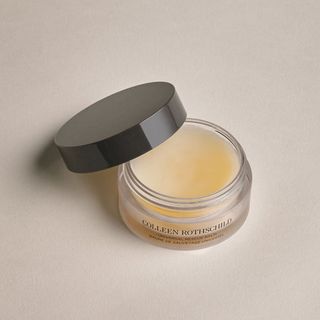
Colleen Rothschild Beauty Universal Rescue Balm
Works for
1 of 1 advertised claim delivered
MoisturizingGlycine soja oil, Ubiquinone + 13 moreGood evidence
“Created to address dry patches, stressed and irritated skin this multi-purpose, concentrated blend of plant oils and botanical extracts absorbs quickly leaving skin feeling hydrated and nurtured.”
This product can help improve hydration of the skin with the two types of ingredients.
The first type is called “humectants”:
these ingredients help attract water.
When humectants are on the surface of the skin, they “pull in” the moisture from the outside environment, or from
within deeper layers of the skin. The following ingredients in this product do the job:
sodium hyaluronate, sclerocarya birrea seed oil.
This product also contains ingredients called “occlusives”. They help reduce the speed with which our skin loses moisture to the outside environment. These ingredients also help soften the upper layer of the skin, so it feels less tight and nicer to the touch. The following ingredients in this product do the job: butyrospermum parkii butter, caprylic/capric triglyceride.
Anti-agingNot advertised by the brand · Retinol, Butyrospermum parkii butter + 3 moreStrong evidence
This product can help reduce and prevent fine lines and wrinkles, improve skin elasticity and firmness because it contains retinol.
Keep in mind that it typically takes at least 6 weeks to notice any results because the changes that are needed to improve fine lines and elasticity happen in the deeper layers of the skin. No topical anti-aging product can “erase” wrinkles or fully reverse signs of aging.
ExfoliationNot advertised by the brand · RetinolStrong evidence
This product can help exfoliate the skin. In other words, it helps break down the bonds between dead cells on the surface of the skin and speed up the skin turnover. Skin often appears softer and brighter after exfoliation, but overdoing it can result in disrupted skin barrier. The following ingredient is doing the exfoliating job in this product: retinol.
Evens skin toneNot advertised by the brand · Retinol, Camellia sinensis leaf extract + 1 moreStrong evidence
This product can help reduce hypepigmentation and even out the skin tone because it contains the following effective ingredients: retinol.
Keep in mind that you would need to apply any topical skincare targetted at hypigmentation consistently for a couple of months to get a result. No topical skincare product can help get rid of hyperpigmentation (including post-acne marks and age spots) instantly.
Anti-blemishNot advertised by the brand · Retinol, Camellia sinensis leaf extractStrong evidence
This product can help reduce breakouts and clogged pores because it contains the following ingredient: retinol. This ingredient is used for treating acne and can have a noticeable effect.
Anti-oxidationNot advertised by the brand · Retinol, Ubiquinone + 10 moreStrong evidence
This product contains antioxidants (retinol, ubiquinone) that can help neutralize free radicals in skin. By doing so, they can lessen the damage the skin gets from the UV light (sun).
The following ingredients - camellia sinensis leaf extract also can have an antioxidant effect, but there is less evidence to confirm their effectiveness in skin.
Can it cause trouble?
Irritancy11 strong irritants: Lavandula angustifolia oil, Boswellia carterii oil + 9 more — patch-test recommendedHigh risk
Comedogenic3 ingredients rated 2 or more on the 0–5 pore-clogging scale3 flagged

User reviews
Be the first — your take helps the next person decide.
Ingredients
Filter by role to see what each ingredient is doing.
Ricinus communis seed oil~25–37%
- Irritation risk
- Medium
A plant oil that can help soften the skin. It might be helpful in calming down inflammation, but solid research is lacking. Is often used in lip products to create the needed product consistency
More about Ricinus communis seed oilCaprylic/capric triglyceride~5–7.6%
- Irritation risk
- Medium
A good mix of fatty acids that forms a protective layer on the skin. Improves the shelf life of products. Derived from coconut and glycerin
More about Caprylic/capric triglycerideEuphorbia cerifera wax~5.1–7.7%
- Irritation risk
- Low
Isopropyl myristate~3.8–5.7%
- Irritation risk
- Low
- Comedogenicity
- 3/5
An emollient that helps soften the skin. Could be comedogenic
More about Isopropyl myristateButyrospermum parkii butter~3.2–4.8%
- Irritation risk
- Low
- Comedogenicity
- 3/5
A great moisturising ingredient that softens the skin and reduces water loss from its upper layer. It also can be helpful in protecting skin from free radicals
More about Butyrospermum parkii butterLavandula angustifolia oil~2.2–3.3%
- Irritation risk
- High
An essential oil. Potential allergen and can be irritating. It has some anti-bacterial properties
More about Lavandula angustifolia oilHydrogenated castor oil~1.8–2.7%
- Irritation risk
- Medium
A plant oil that can help soften the skin. It might be helpful in calming down inflammation, but solid research is lacking. Is often used in lip products to create the needed product consistency
More about Hydrogenated castor oilRosa canina seed oil~1.4–2.1%
- Irritation risk
- Medium
A plant oil that helps soften the upper layer of the skin. It might have anti-oxidant properties. Might help reduce inflammation in skin and help against blemishes
More about Rosa canina seed oilSimmondsia chinensis seed oil~1.4–2.1%
- Irritation risk
- Medium
Softens the upper layer of skin and helps restore the healthy skin barrier. Has shown to help calm down inflammation in skin. It is a stable oil, meaning that it retains its properties even when exposed to air.
More about Simmondsia chinensis seed oilHelianthus annuus seed oil~1–1.5%
- Irritation risk
- Low
A great emollient due to its high linoleic acid content. One of the most effective plant oils in helping skin hydration and repairing skin barrier function
More about Helianthus annuus seed oilSclerocarya birrea seed oil~0.85–1.3%
- Irritation risk
- Medium
An emollient that helps to soften the skin. It has a high contetn of oleic acid that might weaken the skin barrier. Might have some anti-oxidant properties. It might be somewhat helpful against hyperpigmentation.
More about Sclerocarya birrea seed oilBoswellia carterii oil~0.55–1.25%
Santalum album oil~0.5–1.2%
Anthemis nobilis flower oil~0.45–1.05%
- Irritation risk
- High
An essential oil that is used as a fragrance and can be irritating. It might have some anti-oxidant effect in skin
More about Anthemis nobilis flower oilCananga odorata flower oil~0.45–1.05%
Citrus aurantium bergamia peel oil~0.45–1.05%
- Irritation risk
- High
Juniperus virginiana oil~0.4–0.95%
- Irritation risk
- Medium
Cedarwood oil. Used as a fragrance. Can be irritating
More about Juniperus virginiana oilOriganum majorana leaf oil~0.4–0.95%
- Irritation risk
- High
Glycine soja oil~0.4–0.95%
- Irritation risk
- Medium
- Comedogenicity
- 2/5
A good emollient that helps soften the skin and helps repair its barrier function. It can clog pores if used in high concentrations.
More about Glycine soja oilVetiveria zizanoides root oil~0.3–0.75%
- Irritation risk
- Low
Sodium hyaluronate~0.3–0.75%
- Irritation risk
- Low
One of the best moisturizing ingredients. Attracts water into the upper layer of the skin
More about Sodium hyaluronateSynthetic wax~0.35–0.85%
- Irritation risk
- Low
Used to stabilize product formulations and thicken product consistency
More about Synthetic waxRosa moschata leaf extract~0.2–0.8%
- Irritation risk
- High
Tocopheryl acetate~0.2–0.8%
- Irritation risk
- Medium
A more stable but less bio-available form of vitamin E compared to Tocopherol. Might help moisturize and protect the skin from free radicals, but mostly used in low concentrations to stabilize other ingredients.
More about Tocopheryl acetateTetrahexyldecyl ascorbate~0.2–0.75%
- Irritation risk
- Medium
Being a lipid soluble form of vitamin C, it is more stable than ascorbic acid, but still degrades quickly and needs to be stabilized in a formulation with another ingredient. It is claimed to penetrate skin better than pure vitamin C and have the the similar benefits, but solid studies of its effectiveness are lacking. Is likely to require a higher concentration in a product than pure vitamin C to be effective. It might be able to help reduce pore clogging.
More about Tetrahexyldecyl ascorbateChrysanthemum parthenium extract~0.15–0.65%
- Irritation risk
- High
Could have anti-inflammatory effect on skin, but can be irritating as well. Can be added to products for its smell
More about Chrysanthemum parthenium extractPanax ginseng root extract~0.15–0.7%
- Irritation risk
- High
A plant extract that might have some anti-inflammatory properties, but solid evidence is lacking. It can be irritating
More about Panax ginseng root extractScutellaria galericulata extract~0.15–0.55%
- Irritation risk
- Low
Aloe barbadensis leaf extract~0.3–0.7%
- Irritation risk
- Medium
Traditionally used to treat sunburns, dermatitis and inflammation, but evidence for its effectiveness is lacking. The extract can contain humectants that help attract water into the skin
More about Aloe barbadensis leaf extractCalendula officinalis flower extract~0.15–0.5%
- Irritation risk
- High
A plant extract that has some anti-oxidant and anti-bacterial properties. Can be irritating
More about Calendula officinalis flower extractCamellia sinensis leaf extract~0.15–0.6%
- Irritation risk
- Low
Can contain potent anti-oxidant compounds (abbreviated ECG, GCG, EGC, and EGCG) that might help protect the skin from free radicals. Can help calm down inflammation and has some anti-bacterial properties. Unfortunately, these antioxidants are unstable and lose their effectiveness very quickly in products. The concentration of the antioxidant compounds in the extract also tends to be low to be effective in topical formulation
More about Camellia sinensis leaf extractCastanea sativa leaf extract~0.15–0.5%
- Irritation risk
- Low
Chamomilla recutita flower extract~0.15–0.5%
- Irritation risk
- High
Plant extract that can have healing and anti-inflammatory properties. It is a potential allergen and can be irritating
More about Chamomilla recutita flower extractCoffea arabica fruit extract~0.1–0.45%
- Irritation risk
- Low
Phoenix dactylifera fruit extract~0.15–0.65%
- Irritation risk
- Low
Pinus strobus bark extract~0.1–0.5%
- Irritation risk
- Low
Punica granatum fruit extract~0.1–0.4%
- Irritation risk
- High
A fruit extract that is used to add a fragrance to the product. It might have some antioxidant properties
More about Punica granatum fruit extractSorbitan palmitate~0.1–0.35%
- Irritation risk
- Medium
Helps water and oil mix together and stabilize the product formulation
More about Sorbitan palmitateC12-15 alkyl benzoate~0.15–0.55%
- Irritation risk
- Low
Enhances the product texture and makes it more spreadable. Helps reduce water loss from the outer layer of skin. Extands the shelf life by preventing bacteria growth
More about C12-15 alkyl benzoateParfum~0.05–0.25%
- Irritation risk
- High
An aromatic blend of unspecified and possibly irritating ingredients
More about ParfumRetinol~0.05–0.15%
- Irritation risk
- High
Two steps removed from the active form of vitamin A - retinoic acid. Once converted to the retinoic acid in the skin, retinol is proven to be effective against all signs of aging. It improves skin cell turnover, helps fight blemishes and clogged pores, can regulate excess oil production and even skin tone. It can, however, be quite irritating
More about RetinolUbiquinone~0.05–0.2%
- Irritation risk
- Low
Coenzyme Q10. It helps neutralize free radicals in skin, improves skin hydration and might be helpful agains fine lines and wrinkles. It can be an allergen
More about UbiquinoneIngredient list view
Ricinus communis seed oil, Caprylic/capric triglyceride, Euphorbia cerifera wax, Isopropyl myristate, Butyrospermum parkii butter, Lavandula angustifolia oil, Hydrogenated castor oil, Rosa canina seed oil, Simmondsia chinensis seed oil, Helianthus annuus seed oil, Sclerocarya birrea seed oil, Boswellia carterii oil, Santalum album oil, Anthemis nobilis flower oil, Cananga odorata flower oil, Citrus aurantium bergamia peel oil, Juniperus virginiana oil, Origanum majorana leaf oil, Glycine soja oil, Vetiveria zizanoides root oil, Sodium hyaluronate, Synthetic wax, Rosa moschata leaf extract, Tocopheryl acetate, Tetrahexyldecyl ascorbate, Chrysanthemum parthenium extract, Panax ginseng root extract, Scutellaria galericulata extract, Aloe barbadensis leaf extract, Calendula officinalis flower extract, Camellia sinensis leaf extract, Castanea sativa leaf extract, Chamomilla recutita flower extract, Coffea arabica fruit extract, Phoenix dactylifera fruit extract, Pinus strobus bark extract, Punica granatum fruit extract, Sorbitan palmitate, C12-15 alkyl benzoate, Parfum, Retinol, Ubiquinone
Compare prices
Retailers ranked by price — lowest first.

Affiliate links · prices updated regularly
Worth comparing, line by line.
Match % combines shared ingredients, the first five ingredients, shared actives and hero ingredients, irritancy (lower counts in the alternative's favour), texture and body area. Only products in the same routine step are compared.
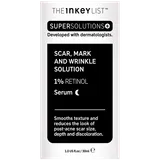
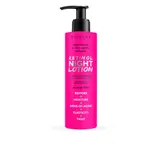
| Colleen Rothschild BeautyUniversal Rescue BalmYOUR PRODUCT | ReplenixSmoothing body lotion | The INKEY List CAScar, Mark and Wrinkle Solution | BioveneRETINOL NIGHT LOTION extra-firming body cream treatment | |
|---|---|---|---|---|
| Match | — | 76% | 76% | 73% |
| Price | — | $46.00 | — | $21.81 |
| Shared key ingredients | — | 3 of 12 | 3 of 12 | 4 of 12 |
| Key difference | — | Phytosphingosine | Glycerin | Niacinamide |
| Irritancy | High | Medium | Medium | High |
| Drying alcohol | — | — | — | — |
| View product | Shop | Shop | Shop |
Sources cited in this review
Every concentration estimate and effectiveness label is anchored to one of these 27 studies and safety reviews.
- 1
- 2
- 3
- 4Nutrient composition of rose (Rosa canina L.) seed and oilsncbi.nlm.nih.gov
- 5
- 6

Affiliate links · As an Amazon Associate, WIMJ earns from qualifying purchases.