Works for:
based on ingredients and %- Moisturizing
- Evens skin tone
- Anti-aging
- Anti-oxidation
Can it cause trouble?
- Irritation risk: high
- Comedogenic risk ingredients: 3
Key actives

Moisturizing
What does the product description say?
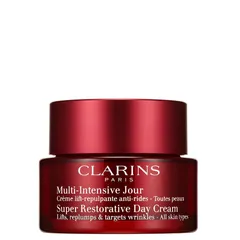
Clarins Super Restorative Day Cream for All Skin Types is a replenishing daily moisturiser created for skin experiencing hormonal changes, particularly around menopause.
Source: Allbeauty
This product can help improve hydration of the skin with the two types of ingredients.
The first type is called “humectants”:
these ingredients help attract water.
When humectants are on the surface of the skin, they “pull in” the moisture from the outside environment, or from
within deeper layers of the skin. The following ingredients in this product do the job:
anhydroxylitol, glycerin.
This product also contains ingredients called “occlusives”. They help reduce the speed with which our skin loses moisture to the outside environment. These ingredients also help soften the upper layer of the skin, so it feels less tight and nicer to the touch. The following ingredients in this product do the job: caprylic/capric triglyceride, dimethicone.
The following ingredients in this product are especially good for supporting the skin barrier and helping with the hydration level: palmitoyl tetrapeptide-7, palmitoyl tripeptide-1
Helps attract water to the upper layer of the skin and repair the skin barrir function
One of the best moisturizing ingredients. Naturally present in skin. It attracts water to the upper layer of the skin working as a humectant
A silicone that helps to reduce water loss from the surface of the skin. Can temporarily "fill in" lines and wrinkles, absorb oil, and create a nice product finish
A type of peptide. Peptides are excellent moisturizers and might be able support collagen production reducing fine lines and wrinkles
A type of peptide. Peptides are excellent moisturizers and might be able support collagen production reducing fine lines and wrinkles
One of the best moisturizing ingredients. Attracts water into the upper layer of the skin
Helps attract water to the upper layer of the skin. Is often used to adjust the pH level of the product
An oil naturally present in skin. Works as an emollient to soften the skin and form a protective layer on its surface without a greasy feeling.
A good mix of fatty acids that forms a protective layer on the skin. Improves the shelf life of products. Derived from coconut and glycerin
Helps attract water to the upper layer of the skin and repair the skin barrier function
Helps attract water to the upper layer of the skin. Could be helpful in restoring the skin barrier function
A non-drying alcohol. Works as an emollient. Helps water and oil mix together and creates a nice product texture
Helps to soften the upper layer of the skin without creating a greasy texture
Used to create a nice product texture and help delivery of other ingredients. Might be somewhat helpful in attracting water to the upper layer of the skin
An emollient that softens the skin and forms a protective layer on its surface. Helps water and oil mix together
Used to preserve products, dissolve other ingredients and create a nice product texture
Helps preserve products and creates a nice product texture
An emollient. Could be irritating
Used for its fragrance. Can be irritating
A great moisturising ingredient that softens the skin and reduces water loss from its upper layer. It also can be helpful in protecting skin from free radicals
Pure form of vitamin E. Can help moisturise and protect the skin from free radicals. Often used to help stabilise other ingredients or the formula itself
Anti-aging
What does the product description say?
Designed for skin experiencing hormonal changes, helping to address dryness, slackening and the look of deep-set wrinkles.
Source: Allbeauty
This product contains ascorbyl glucoside, palmitoyl tetrapeptide-7, palmitoyl tripeptide-1. These ingredients might be able to help reduce and prevent fine lines and wrinkles, improve skin elasticity and firmness, but there is not enough evidence that it actually works.
A type of peptide. Peptides are excellent moisturizers and might be able support collagen production reducing fine lines and wrinkles
A vitamin C derivative that is more stable but less potent than pure form of vitamin C. Has a potential to boost collagen production, nutralise free radicals and reduce hyperpigmentation, but the required concentration is likely to be much higher than for the pure form of vitamin C, limiting the ingredient's effectiveness in products
A type of peptide. Peptides are excellent moisturizers and might be able support collagen production reducing fine lines and wrinkles
Might be able to support collagen production, but no solid research is available
Pure form of vitamin E. Can help moisturise and protect the skin from free radicals. Often used to help stabilise other ingredients or the formula itself
A great moisturising ingredient that softens the skin and reduces water loss from its upper layer. It also can be helpful in protecting skin from free radicals
Anti-oxidation
This product contains antioxidants (ascorbyl glucoside) that might be able to help neutralize free radicals in skin to lessen the damage it gets from the UV light (sun). There is not enough evidence to confirm their effectiveness in skin though.
A vitamin C derivative that is more stable but less potent than pure form of vitamin C. Has a potential to boost collagen production, nutralise free radicals and reduce hyperpigmentation, but the required concentration is likely to be much higher than for the pure form of vitamin C, limiting the ingredient's effectiveness in products
A plant extract that might help neutralize free radicals in skin. It might help reduce hyperpigmentation
Pure form of vitamin E. Can help moisturise and protect the skin from free radicals. Often used to help stabilise other ingredients or the formula itself
A more stable but less bio-available form of vitamin E compared to Tocopherol. Might help moisturize and protect the skin from free radicals, but mostly used in low concentrations to stabilize other ingredients.
A great moisturising ingredient that softens the skin and reduces water loss from its upper layer. It also can be helpful in protecting skin from free radicals
Evens skin tone
What does the product description say?
Hydrating ingredients, including hyaluronic acid and vegetal squalane, help to cushion the skin and reinforce the protective barrier, while a vitamin C derivative works to brighten the look of the complexion.
Source: Allbeauty
The following ingredient (ingredients) in this product might be helpful, but there is no evidence to confirm that it actually works: ascorbyl glucoside, pancratium maritimum extract.
A vitamin C derivative that is more stable but less potent than pure form of vitamin C. Has a potential to boost collagen production, nutralise free radicals and reduce hyperpigmentation, but the required concentration is likely to be much higher than for the pure form of vitamin C, limiting the ingredient's effectiveness in products
A plant extract that might help neutralize free radicals in skin. It might help reduce hyperpigmentation
How honest is this product?
| Promise | Can it deliver? |
|---|---|
| Moisturizing | |
| Anti-aging | |
| Evens skin tone |
Total Promises Fulfilled score: 83/100.
We receive a small commission for purchases made through these links at no cost for you. Thank you for your support! Learn more
Affiliate link · supports WIMJ at no cost to you
Potential irritants
Comedogenic ingredients
User reviews (0)
Averages from community submissions.
No reviews yet for this product.
Be the first to share your experience!
Tried this product?
Help capture what the ingredient list can't—texture, finish, pilling, scent, and more. Answer what you can, skip the rest.
Takes ~30 seconds.
Reviews are shown in aggregate. No personal details.
| Product | Similarity | Price | Irritancy |
|---|---|---|---|
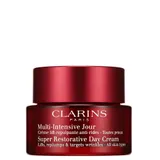 Clarins Super Restorative Day Cream for All Skin Types | Current | ≈ $96.63 | |
 Skin Functional Ultimate Ageing Moisturiser, All Skin | 64% | - | |
NEOGEN X SUR.MEDIC Surmedic 24K Gold Caviar Repair Vital Cream | 64% | $39.59 | |
Perricone MD Cold Plasma Plus+ Advanced Hydrating Complex | PerriconeMD | 62% | ≈ $94.38 | |
John Plunkett's SuperLift Collagen Lift Moisturiser | 61% | ≈ $36.31 | |
 Keys Soulcare Firm Belief Smoothing Peptide Cream | 60% | ≈ $20.36 |
Key Actives
Pure form of vitamin E. Can help moisturise and protect the skin from free radicals. Often used to help stabilise other ingredients or the formula itself
A vitamin C derivative that is more stable but less potent than pure form of vitamin C. Has a potential to boost collagen production, nutralise free radicals and reduce hyperpigmentation, but the required concentration is likely to be much higher than for the pure form of vitamin C, limiting the ingredient's effectiveness in products
A great moisturising ingredient that softens the skin and reduces water loss from its upper layer. It also can be helpful in protecting skin from free radicals
A silicone that helps to reduce water loss from the surface of the skin. Can temporarily "fill in" lines and wrinkles, absorb oil, and create a nice product finish
A plant extract that might help neutralize free radicals in skin. It might help reduce hyperpigmentation
A type of peptide. Peptides are excellent moisturizers and might be able support collagen production reducing fine lines and wrinkles
A type of peptide. Peptides are excellent moisturizers and might be able support collagen production reducing fine lines and wrinkles
A good mix of fatty acids that forms a protective layer on the skin. Improves the shelf life of products. Derived from coconut and glycerin
One of the best moisturizing ingredients. Naturally present in skin. It attracts water to the upper layer of the skin working as a humectant
An oil naturally present in skin. Works as an emollient to soften the skin and form a protective layer on its surface without a greasy feeling.
Helps attract water to the upper layer of the skin and repair the skin barrier function
Helps attract water to the upper layer of the skin and repair the skin barrir function
Helps attract water to the upper layer of the skin. Is often used to adjust the pH level of the product
One of the best moisturizing ingredients. Attracts water into the upper layer of the skin
Potential irritants
An aromatic blend of unspecified and possibly irritating ingredients
Used as a cleansing agent (surfactant) in cleansers. Helps water and oil mix together in lotions. Can be irritating
A plant extract that might help neutralize free radicals in skin. It might help reduce hyperpigmentation
Used for its fragrance. Can be irritating
A good mix of fatty acids that forms a protective layer on the skin. Improves the shelf life of products. Derived from coconut and glycerin
Used to preserve products, dissolve other ingredients and create a nice product texture
A vitamin C derivative that is more stable but less potent than pure form of vitamin C. Has a potential to boost collagen production, nutralise free radicals and reduce hyperpigmentation, but the required concentration is likely to be much higher than for the pure form of vitamin C, limiting the ingredient's effectiveness in products
A gelling agent that thickens the product consistency and leaves the skin with a velvety finish
Helps water and oil in the product mix well together and improves product texture
Helps preserve products and creates a nice product texture
Helps to control the skin's pH level. Maintains the skin's natural film of amino-lactic acids and oils. Helps to preserve products
A more stable but less bio-available form of vitamin E compared to Tocopherol. Might help moisturize and protect the skin from free radicals, but mostly used in low concentrations to stabilize other ingredients.
Can work as an exfoliant but is typically used to adjust the product pH
Helps attract water to the upper layer of the skin. Is often used to adjust the pH level of the product
Might be able to support collagen production, but no solid research is available
Used to thicken the product formulation and might help to add minerals to the surface of the skin. It is used in scrubs as a physical exfoliant. Can increase sensitivity to other ingredients if left on the skin or used in high concentration
Comedogenic ingredients
A non-drying alcohol. Works as an emollient. Helps water and oil mix together and creates a nice product texture
A great moisturising ingredient that softens the skin and reduces water loss from its upper layer. It also can be helpful in protecting skin from free radicals
All ingredients
A good mix of fatty acids that forms a protective layer on the skin. Improves the shelf life of products. Derived from coconut and glycerin
One of the best moisturizing ingredients. Naturally present in skin. It attracts water to the upper layer of the skin working as a humectant
Helps to soften the upper layer of the skin without creating a greasy texture
Used to preserve products, dissolve other ingredients and create a nice product texture
A non-drying alcohol. Works as an emollient. Helps water and oil mix together and creates a nice product texture
A vitamin C derivative that is more stable but less potent than pure form of vitamin C. Has a potential to boost collagen production, nutralise free radicals and reduce hyperpigmentation, but the required concentration is likely to be much higher than for the pure form of vitamin C, limiting the ingredient's effectiveness in products
A gelling agent that thickens the product consistency and leaves the skin with a velvety finish
An emollient that softens the skin and forms a protective layer on its surface. Helps water and oil mix together
Helps oil and water mix togehter and creates a nice product texture
A great moisturising ingredient that softens the skin and reduces water loss from its upper layer. It also can be helpful in protecting skin from free radicals
An oil naturally present in skin. Works as an emollient to soften the skin and form a protective layer on its surface without a greasy feeling.
Helps water and oil in the product mix well together and improves product texture
Used to create a nice product texture and help delivery of other ingredients. Might be somewhat helpful in attracting water to the upper layer of the skin
Helps preserve products and creates a nice product texture
A silicone that helps to reduce water loss from the surface of the skin. Can temporarily "fill in" lines and wrinkles, absorb oil, and create a nice product finish
Helps attract water to the upper layer of the skin and repair the skin barrier function
An aromatic blend of unspecified and possibly irritating ingredients
Helps to control the skin's pH level. Maintains the skin's natural film of amino-lactic acids and oils. Helps to preserve products
Helps attract water to the upper layer of the skin and repair the skin barrir function
A more stable but less bio-available form of vitamin E compared to Tocopherol. Might help moisturize and protect the skin from free radicals, but mostly used in low concentrations to stabilize other ingredients.
Helps attract water to the upper layer of the skin and repair the skin barrier function
A mineral that is used as an optical filter (makes the skin looks nicer through light reflection) and to improve the texture of cosmetic products
Can work as an exfoliant but is typically used to adjust the product pH
Helps attract water to the upper layer of the skin. Is often used to adjust the pH level of the product
Helps attract water to the upper layer of the skin. Could be helpful in restoring the skin barrier function
Helps create a thicker or gel-like product texture. It is not a surfactant but can be used in gentle cleansing formulations
Pure form of vitamin E. Can help moisturise and protect the skin from free radicals. Often used to help stabilise other ingredients or the formula itself
Acts as a solvent for other ingredients. Speeds up the absorption of other ingredients into the skin
Used as a cleansing agent (surfactant) in cleansers. Helps water and oil mix together in lotions. Can be irritating
One of the best moisturizing ingredients. Attracts water into the upper layer of the skin
Helps water and oil mix together and create a nice product texture
Might be able to support collagen production, but no solid research is available
A plant extract that might help neutralize free radicals in skin. It might help reduce hyperpigmentation
A type of peptide. Peptides are excellent moisturizers and might be able support collagen production reducing fine lines and wrinkles
Used for its fragrance. Can be irritating
Used to thicken the product formulation and might help to add minerals to the surface of the skin. It is used in scrubs as a physical exfoliant. Can increase sensitivity to other ingredients if left on the skin or used in high concentration
A type of peptide. Peptides are excellent moisturizers and might be able support collagen production reducing fine lines and wrinkles
Ingredient list view
Water, Caprylic/capric triglyceride, Glycerin, Coco-caprylate/caprate, Pentylene glycol, Cetearyl alcohol, Ascorbyl glucoside, Hydroxyethyl acrylate/sodium acryloyldimethyl taurate copolymer, Stearyl alcohol, Glyceryl stearate, Peg-100 stearate, Pentaerythrityl distearate, Butyrospermum parkii butter, Hydrogenated coconut oil, Squalane, Cetearyl glucoside, Butylene glycol, Caprylyl glycol, Dimethicone, Sucrose palmitate, Xylitylglucoside, Parfum, Sodium citrate, Sodium hydroxide, Anhydroxylitol, Tocopheryl acetate, Disodium edta, Xylitol, Glyceryl linoleate, Ci 77891, Synthetic fluorphlogopite, Citric acid, Sodium lactate, Glucose, Carbomer, Harungana madagascariensis extract, Tocopherol, Marrubium vulgare extract, Potassium sorbate, Propanediol, Coco-glucoside, Pectin, Sodium hyaluronate, Balanites roxburghii seed oil, Guar hydroxypropyltrimonium chloride, Phenethyl alcohol, Furcellaria lumbricalis extract, Pancratium maritimum extract, Ulex europaeus leaf/root/stem extract, Palmitoyl tripeptide-1, Lapsana communis flower/leaf/stem extract, Maris sal, Ci 14700, Palmitoyl tetrapeptide-7
- Glycerol and the skin: holistic approach to its origin and functions
- Safety Assessment of Alkyl Esters as Used in Cosmetics
- The Roles of Vitamin C in Skin Health
- Stability, transdermal penetration, and cutaneous effects of ascorbic acid and its derivatives
- Dimethicone as a protective ingredient in topical medications
- Final Report on the Safety Assessment of Dimethicone Copolyol
- Topical Glucose Induces Claudin-1 and Filaggrin Expression in a Mouse Model of Atopic Dermatitis and in Keratinocyte Culture, Exerting Anti-inflammatory Effects by Repairing Skin Barrier Function
- Vitamin E in dermatology
- Vitamin E and Skin Health
- In Vitro Assessment of Skin Irritation Potential of Surfactant-based Formulations by Using a 3-D Skin Reconstructed Tissue Model and Cytokine Response
- Allergen of the Year—Alkyl Glucoside
- Hyaluronic acid: A key molecule in skin aging
- Hyaluronan (Hyaluronic Acid): a natural moisturizer for skin care
- Final Report on On the Safety Assessment of Galactomannans As Used in Cosmetics
- Final Report on the Safety Assessment of Phenethyl Alcohol
- Use of Pancratium maritimum extract as cosmetic antioxidizing agent and/or melanogenesis inhibitor in cosmetic composition e.g. to prevent/fight against the signs of skin aging, and for depigmenting of the skin, body hair and/or hair