Works for
1 of 1 advertised claim delivered
Moisturizing10 ingredients credited for this claimGood support
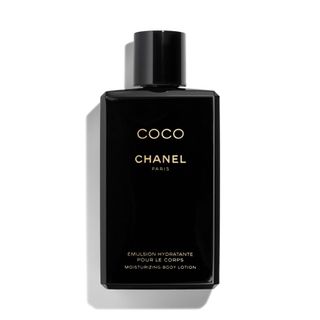
“Coco Moisturising Body Lotion”
This product can help improve hydration of the skin with the two types of ingredients.
The first type is called “humectants”:
these ingredients help attract water.
When humectants are on the surface of the skin, they “pull in” the moisture from the outside environment, or from
within deeper layers of the skin. The following ingredients in this product do the job:
glycerin, butylene glycol.
This product also contains ingredients called “occlusives”. They help reduce the speed with which our skin loses moisture to the outside environment. These ingredients also help soften the upper layer of the skin, so it feels less tight and nicer to the touch. The following ingredients in this product do the job: dimethicone, squalane.
Can it cause trouble?
Irritancy15 strong irritants: Parfum, Benzophenone-4 + 13 more — patch-test recommendedHigh risk
Comedogenic3 ingredients rated 2 or more on the 0–5 pore-clogging scale3 flagged
User reviews
Be the first — your take helps the next person decide.
Ingredients
Filter by role to see what each ingredient is doing.
Water~45–55%
Butylene glycol~5.8–7.1%
- Irritation risk
- Low
Used to create a nice product texture and help delivery of other ingredients. Might be somewhat helpful in attracting water to the upper layer of the skin
More about Butylene glycolEthylhexyl palmitate~4.2–5.2%
- Irritation risk
- Low
- Comedogenicity
- 3/5
An emollient that helps soften the skin and create a nice product texture
More about Ethylhexyl palmitateDiisopropyl dimer dilinoleate~3–3.7%
- Irritation risk
- Low
Parfum~1.7–2.1%
- Irritation risk
- High
An aromatic blend of unspecified and possibly irritating ingredients
More about ParfumEthylhexyl stearate~1.8–2.2%
- Irritation risk
- Low
Helps soften the upper layer of the skin
More about Ethylhexyl stearateDimethicone~1.5–1.9%
- Irritation risk
- Low
A silicone that helps to reduce water loss from the surface of the skin. Can temporarily "fill in" lines and wrinkles, absorb oil, and create a nice product finish
More about DimethiconePhytosteryl/octyldodecyl lauroyl glutamate~1.2–1.5%
- Irritation risk
- Low
A mix of amino acids and plant-based lipids. Helps to soften the upper layer of the skin and reduce water loss over time
More about Phytosteryl/octyldodecyl lauroyl glutamateCetearyl alcohol~1–1.3%
- Irritation risk
- Low
- Comedogenicity
- 2/5
A non-drying alcohol. Works as an emollient. Helps water and oil mix together and creates a nice product texture
More about Cetearyl alcoholPropylene glycol~0.65–0.95%
- Irritation risk
- High
Helps oil and water mix together and can enhance the penetration of other ingredients into the skin. It can be irritating
More about Propylene glycolSteareth-2~0.5–0.75%
Steareth-21~0.5–0.75%
Phenoxyethanol~0.3–0.6%
- Irritation risk
- Low
A preservative. It helps prevent bacterial growth in cosmetic products
More about PhenoxyethanolGlycerin~0.3–0.6%
- Irritation risk
- Low
One of the best moisturizing ingredients. Naturally present in skin. It attracts water to the upper layer of the skin working as a humectant
More about GlycerinHydroxyethyl acrylate/sodium acryloyldimethyl taurate copolymer~0.25–0.5%
- Irritation risk
- Medium
A gelling agent that thickens the product consistency and leaves the skin with a velvety finish
More about Hydroxyethyl acrylate/sodium acryloyldimethyl taurate copolymerSqualane~0.3–0.55%
- Irritation risk
- Low
An oil naturally present in skin. Works as an emollient to soften the skin and form a protective layer on its surface without a greasy feeling.
More about SqualaneCetearyl glucoside~0.25–0.45%
- Irritation risk
- Medium
Helps water and oil in the product mix well together and improves product texture
More about Cetearyl glucosideChlorphenesin~0.16–0.32%
Benzophenone-4~0.35–0.6%
- Irritation risk
- High
Sulisobenzone. A UV filter. Is typically used to improve the product stability under exposure to UV light. It is effective against both UVA and UVB rays. It can be used is larger concentrations as a sun protection ingredient for the skin, but can be irritating
More about Benzophenone-4Benzyl salicylate~0.15–0.3%
Limonene~0.15–0.25%
- Irritation risk
- High
A common frangrance that can easily irritate skin, especially if exposed to air, light or heat
More about LimoneneCitronellol~0.15–0.25%
Methylparaben~0.15–0.25%
Polysorbate 60~0.15–0.3%
Geraniol~0.15–0.25%
Eugenol~0.15–0.25%
Peg-8~0.2–0.35%
- Irritation risk
- Medium
Used to create a nice product consistency
More about Peg-8Coumarin~0.15–0.25%
Linalool~0.15–0.25%
Talc~0.3–0.5%
Polyacrylic acid~0.2–0.35%
- Irritation risk
- Low
Sodium polyacrylate~0.2–0.4%
- Irritation risk
- Low
Used to create a gel-like product texture, as well as to stabilize emulsions
More about Sodium polyacrylateCarrageenan~0.2–0.35%
- Irritation risk
- Medium
- Comedogenicity
- 3/5
Helps thicken the product formula and create a nice product formulation
More about CarrageenanPropylparaben~0.15–0.25%
Tetrasodium edta~0.15–0.3%
Xanthan gum~0.2–0.35%
- Irritation risk
- Low
Used to create a thicker product consistency
More about Xanthan gumSorbitan isostearate~0.2–0.35%
- Irritation risk
- Low
Helps oil and water mix together
More about Sorbitan isostearateSodium citrate~0.15–0.3%
- Irritation risk
- Medium
Helps to control the skin's pH level. Maintains the skin's natural film of amino-lactic acids and oils. Helps to preserve products
More about Sodium citrateAlpha-isomethyl ionone~0.15–0.25%
- Irritation risk
- High
A fragrance. Potential allergen and can be irritating
More about Alpha-isomethyl iononeTocopherol~0.2–0.35%
- Irritation risk
- Low
Pure form of vitamin E. Can help moisturise and protect the skin from free radicals. Often used to help stabilise other ingredients or the formula itself
More about TocopherolCinnamyl alcohol~0.15–0.3%
- Irritation risk
- High
Citral~0.15–0.3%
Benzyl benzoate~0.15–0.3%
- Irritation risk
- High
Fragrance with sweet balsamic smell. Help to preserve products and dissolve other ingredients. Could trigger allergic reactions and be irritating
More about Benzyl benzoateCinnamal~0.15–0.25%
- Irritation risk
- High
Ascorbyl palmitate~0.15–0.3%
- Irritation risk
- Medium
Being a lipid soluble form of vitamin C, it is more stable and can penetrate the skin better than L-Ascorbic acid. It is effective in protecting the skin from free radicals, as well as evening the skin tone, but is less effective in stimulating collagen production compared to L-Ascorbic acid.
More about Ascorbyl palmitateFarnesol~0.15–0.25%
Ascorbic acid~0.15–0.25%
- Irritation risk
- High
The most well-researched antioxidant that works in skin. Helps neutralize free radicals supporting collagen production, helping to even out the skin tone and preventing early signs of aging
More about Ascorbic acidCitric acid~0.1–0.2%
- Irritation risk
- Medium
Can work as an exfoliant but is typically used to adjust the product pH
More about Citric acidCi 77491~0.1–0.2%
- Irritation risk
- Low
A red colorant made of iron oxide. Typically is not irritating
More about Ci 77491Iron oxides~0.1–0.2%
- Irritation risk
- Low
An umbrella term for the following three colorants: CI 77491, CI 77492, CI 77499. They might be able to offer some protection against visible light, but the degree of the protection is not clear
More about Iron oxidesCi 77492~0.1–0.2%
Iron oxides~0.05–0.1%
- Irritation risk
- Low
An umbrella term for the following three colorants: CI 77491, CI 77492, CI 77499. They might be able to offer some protection against visible light, but the degree of the protection is not clear
More about Iron oxidesIngredient list view
Water, Butylene glycol, Ethylhexyl palmitate, Diisopropyl dimer dilinoleate, Parfum, Ethylhexyl stearate, Dimethicone, Phytosteryl/octyldodecyl lauroyl glutamate, Cetearyl alcohol, Propylene glycol, Steareth-2, Steareth-21, Phenoxyethanol, Glycerin, Hydroxyethyl acrylate/sodium acryloyldimethyl taurate copolymer, Squalane, Cetearyl glucoside, Chlorphenesin, Benzophenone-4, Benzyl salicylate, Limonene, Citronellol, Methylparaben, Polysorbate 60, Geraniol, Eugenol, Peg-8, Coumarin, Linalool, Talc, Polyacrylic acid, Sodium polyacrylate, Carrageenan, Propylparaben, Tetrasodium edta, Xanthan gum, Sorbitan isostearate, Sodium citrate, Alpha-isomethyl ionone, Tocopherol, Cinnamyl alcohol, Citral, Benzyl benzoate, Cinnamal, Ascorbyl palmitate, Farnesol, Ascorbic acid, Citric acid, Ci 77491, Iron oxides, Ci 77492, Iron oxides
Compare prices
Retailers ranked by price — lowest first.
Affiliate links · prices updated regularly · As an Amazon Associate, WIMJ earns from qualifying purchases.
Sources cited in this review
Every concentration estimate and effectiveness label is anchored to one of these 11 studies and safety reviews.
- 1
- 2Final Report on the Safety Assessment of Dimethicone Copolyoljournals.sagepub.com
- 3Surfactants and experimental irritant contact dermatitisncbi.nlm.nih.gov
- 4Propylene Glycolpubmed.ncbi.nlm.nih.gov
- 5Skin-sensitizing and irritant properties of propylene glycolonlinelibrary.wiley.com
- 6

Affiliate links · As an Amazon Associate, WIMJ earns from qualifying purchases.