Works for:
based on ingredients and %- Moisturizing
- Anti-oxidation
- Anti-aging
- Anti-blemish
Can it cause trouble?
- Irritation risk: high
- Comedogenic risk ingredients: 13
Key actives
Product Summary
"By BEAUTY BAY - Skincare Superstars" is effective for: Moisturizing, Anti-aging, Anti-blemish, Exfoliation and Evens skin tone
Ingredient callouts
- A good concentration of Niacinamide (4.80% - 5.80%). Niacinamide is a well-studied multi-tasking active. It is stable, and can work well in almost any hydrating formulation. There is solid evidence that Niacinamide can help support skin barrier, regulate oil production and reduce acne and clogged pores. It also helps to fight photodamage and improve the skin tone, reducing pigmentation marks.
- This product also contains Vitamin C (Ascorbic Acid). It can be an effective active for anti-aging and evening out the skin tone, but in this product it is used for stabilizing other ingredients in the formulation. In this concentration (0.15% - 0.25%) it cannot have a noticeable benefit for the skin.
- Humectants (glycerin 0.20% - 0.35%, sodium hyaluronate 0.15% - 0.30%, glycerin 0.20% - 0.35%, glyceryl acrylate/acrylic acid copolymer 0.15% - 0.25%, sodium hyaluronate 0.15% - 0.25%, glycerin 0.20% - 0.35%, sodium hyaluronate 0.15% - 0.25%, avena sativa kernel flour 0.25% - 0.45%, glycerin 0.20% - 0.35%, glycerin 0.20% - 0.35%, glycerin 0.20% - 0.35%, zinc pca 0.10% - 0.20%, sodium pca 0.15% - 0.25%, glycerin 0.20% - 0.35%, zinc pca 0.10% - 0.20%, sodium hyaluronate 0.15% - 0.25%, saccharide isomerate 0.15% - 0.25%, glycerin 0.20% - 0.35%, hyaluronic acid 0.15% - 0.25%, terminalia ferdinandiana seed oil 0.25% - 0.45%, glycerin 0.30% - 0.55% and sodium hyaluronate 28.00% - 35.00%). These ingredients help attract water to the upper layer of the skin and improve the skin hydration.
About the brand
According to Cruelty-Free Kitty "By BEAUTY BAY" is cruelty free and so is its parent company.
Anti-aging
This product can help reduce and prevent fine lines and wrinkles, improve skin elasticity and firmness because it contains glycolic acid, niacinamide.
Keep in mind that it typically takes at least 6 weeks to notice any results because the changes that are needed to improve fine lines and elasticity happen in the deeper layers of the skin. No topical anti-aging product can “erase” wrinkles or fully reverse signs of aging.
An alpha-hydroxy acid (AHA) that helps to remove the dead skin cells on the surface of the skin reveling a more even, smoother complexation. It is also able to stimulate collagen production with long-term use. Could help to reduce pore congestion. It can be irritating to the skin. Apply sunscreen daily if using products with glycolic acid
Is proven to be effective in reducing blemishes, evening out skin tone and helping to improve lines and wrinkles. It helps the skin to repair sun damage, calm down inflammation and keep maintain good levels of moisture. The concentration of about 2% is effective for supporting the skin barrier and evening out the skin tone. Concentration of 4-6% is better for helping with acne and balancing the sebum production
A compound that combines zinc with a hydrating ingredient PCA. Might to be helpful against acne and clogged pores. Can help calm down inflammation in skin. Could be helpful in reducing the formation of free radicals in skin. Might help to reduce fine lines in wrinkles, but solid evidence is missing
One of the best moisturizing ingredients. Attracts water into the upper layer of the skin. Naturally present in skin. Typically has large molecule size unless advertised otherwise on the product label. Helps support skin's barrier function and may help to reduce inflammation
A plant extract that can help neutralize free radicals in skin. Can contain fragrand compounds like linalool that can be irritating
The most well-researched antioxidant that works in skin. Helps neutralize free radicals supporting collagen production, helping to even out the skin tone and preventing early signs of aging
Pure form of vitamin E. Can help moisturise and protect the skin from free radicals. Often used to help stabilise other ingredients or the formula itself
Can contain potent anti-oxidant compounds (abbreviated ECG, GCG, EGC, and EGCG) that might help protect the skin from free radicals. Can help calm down inflammation and has some anti-bacterial properties. Unfortunately, these antioxidants are unstable and lose their effectiveness very quickly in products. The concentration of the antioxidant compounds in the extract also tends to be low to be effective in topical formulation
A great moisturising ingredient that softens the skin and reduces water loss from its upper layer. It also can be helpful in protecting skin from free radicals
Traditionally used to treat sunburns, dermatitis and inflammation, but evidence for its effectiveness is lacking. The extract can contain humectants that help attract water into the skin
Anti-blemish
This product can help reduce breakouts and clogged pores because it contains the following ingredient: azelaic acid, niacinamide, salicylic acid. These ingredients is used for treating acne and can have a noticeable effect.
The following ingredient (ingredients) in this product might be helpful, but there is no evidence to confirm that it actually works: glycolic acid, zinc pca
Is proven to be effective in reducing blemishes, evening out skin tone and helping to improve lines and wrinkles. It helps the skin to repair sun damage, calm down inflammation and keep maintain good levels of moisture. The concentration of about 2% is effective for supporting the skin barrier and evening out the skin tone. Concentration of 4-6% is better for helping with acne and balancing the sebum production
Is produced by a yeast that lives on normal human skin. It is used in medicine as a topical treatment for mild to moderate acne. It has a mild exfoliating effect. It can also help reduce hyperpigmentation, helps calm down inflammation and can help neutralize free radicals
Used for skin exfoliation. It has an anti-inflammatory and anti-bacterial effect, helps to unclog pores, prevent blemishes and speed up healing of the existing ones. Sometimes referred to as a BHA (beta-hydroxy acid)
An alpha-hydroxy acid (AHA) that helps to remove the dead skin cells on the surface of the skin reveling a more even, smoother complexation. It is also able to stimulate collagen production with long-term use. Could help to reduce pore congestion. It can be irritating to the skin. Apply sunscreen daily if using products with glycolic acid
A compound that combines zinc with a hydrating ingredient PCA. Might to be helpful against acne and clogged pores. Can help calm down inflammation in skin. Could be helpful in reducing the formation of free radicals in skin. Might help to reduce fine lines in wrinkles, but solid evidence is missing
Helps soften the upper layer of the skin and can support skin barrier function
A type of clay that consists mainly of aluminum silicate. Helps absorb oil and creates a thicker product consistency. Can be used to add a white color
Helps calm down inflammation in skin and can help reduce itching. Helps to repair the skin barrier and keep skin hydrated
Can contain potent anti-oxidant compounds (abbreviated ECG, GCG, EGC, and EGCG) that might help protect the skin from free radicals. Can help calm down inflammation and has some anti-bacterial properties. Unfortunately, these antioxidants are unstable and lose their effectiveness very quickly in products. The concentration of the antioxidant compounds in the extract also tends to be low to be effective in topical formulation
Traditionally used to treat sunburns, dermatitis and inflammation, but evidence for its effectiveness is lacking. The extract can contain humectants that help attract water into the skin
Anti-oxidation
This product contains antioxidants (azelaic acid) that can help neutralize free radicals in skin. By doing so, they can lessen the damage the skin gets from the UV light (sun).
The following ingredients - ilex paraguariensis leaf extract also can have an antioxidant effect, but there is less evidence to confirm their effectiveness in skin.
Is produced by a yeast that lives on normal human skin. It is used in medicine as a topical treatment for mild to moderate acne. It has a mild exfoliating effect. It can also help reduce hyperpigmentation, helps calm down inflammation and can help neutralize free radicals
A plant extract that can help neutralize free radicals in skin. Can contain fragrand compounds like linalool that can be irritating
A red algae extract that can help attract water to the upper layer of the skin and might have some antioxidant properties
Helps soften the upper layer of the skin and can support skin barrier function
A plant oil that might help neutralize free radicals and have an anti-bacterial effect
A more stable but less bio-available form of vitamin E compared to Tocopherol. Might help moisturize and protect the skin from free radicals, but mostly used in low concentrations to stabilize other ingredients.
A compound that combines zinc with a hydrating ingredient PCA. Might to be helpful against acne and clogged pores. Can help calm down inflammation in skin. Could be helpful in reducing the formation of free radicals in skin. Might help to reduce fine lines in wrinkles, but solid evidence is missing
A plant oil that might help neutralize free radicals, but evidence of effectiveness in skin is lacking
A great emollient that can also have anti-oxidant properties
A plant extract that has some anti-oxidant and anti-bacterial properties. Can be irritating
The most well-researched antioxidant that works in skin. Helps neutralize free radicals supporting collagen production, helping to even out the skin tone and preventing early signs of aging
Pure form of vitamin E. Can help moisturise and protect the skin from free radicals. Often used to help stabilise other ingredients or the formula itself
Can contain potent anti-oxidant compounds (abbreviated ECG, GCG, EGC, and EGCG) that might help protect the skin from free radicals. Can help calm down inflammation and has some anti-bacterial properties. Unfortunately, these antioxidants are unstable and lose their effectiveness very quickly in products. The concentration of the antioxidant compounds in the extract also tends to be low to be effective in topical formulation
A great moisturising ingredient that softens the skin and reduces water loss from its upper layer. It also can be helpful in protecting skin from free radicals
Evens skin tone
This product can help reduce hypepigmentation and even out the skin tone because it contains the following effective ingredients: azelaic acid, glycolic acid, niacinamide, salicylic acid
Keep in mind that you would need to apply any topical skincare targetted at hypigmentation consistently for a couple of months to get a result. No topical skincare product can help get rid of hyperpigmentation (including post-acne marks and age spots) instantly.
Is produced by a yeast that lives on normal human skin. It is used in medicine as a topical treatment for mild to moderate acne. It has a mild exfoliating effect. It can also help reduce hyperpigmentation, helps calm down inflammation and can help neutralize free radicals
An alpha-hydroxy acid (AHA) that helps to remove the dead skin cells on the surface of the skin reveling a more even, smoother complexation. It is also able to stimulate collagen production with long-term use. Could help to reduce pore congestion. It can be irritating to the skin. Apply sunscreen daily if using products with glycolic acid
Is proven to be effective in reducing blemishes, evening out skin tone and helping to improve lines and wrinkles. It helps the skin to repair sun damage, calm down inflammation and keep maintain good levels of moisture. The concentration of about 2% is effective for supporting the skin barrier and evening out the skin tone. Concentration of 4-6% is better for helping with acne and balancing the sebum production
Used for skin exfoliation. It has an anti-inflammatory and anti-bacterial effect, helps to unclog pores, prevent blemishes and speed up healing of the existing ones. Sometimes referred to as a BHA (beta-hydroxy acid)
The most well-researched antioxidant that works in skin. Helps neutralize free radicals supporting collagen production, helping to even out the skin tone and preventing early signs of aging
Can contain potent anti-oxidant compounds (abbreviated ECG, GCG, EGC, and EGCG) that might help protect the skin from free radicals. Can help calm down inflammation and has some anti-bacterial properties. Unfortunately, these antioxidants are unstable and lose their effectiveness very quickly in products. The concentration of the antioxidant compounds in the extract also tends to be low to be effective in topical formulation
Exfoliation
This product can help exfoliate the skin. In other words, it helps break down the bonds between dead cells on the surface of the skin and speed up the skin turnover. Skin often appears softer and brighter after exfoliation, but overdoing it can result in disrupted skin barrier. The following ingredient is doing the exfoliating job in this product: glycolic acid, salicylic acid.
Used for skin exfoliation. It has an anti-inflammatory and anti-bacterial effect, helps to unclog pores, prevent blemishes and speed up healing of the existing ones. Sometimes referred to as a BHA (beta-hydroxy acid)
An alpha-hydroxy acid (AHA) that helps to remove the dead skin cells on the surface of the skin reveling a more even, smoother complexation. It is also able to stimulate collagen production with long-term use. Could help to reduce pore congestion. It can be irritating to the skin. Apply sunscreen daily if using products with glycolic acid
Is produced by a yeast that lives on normal human skin. It is used in medicine as a topical treatment for mild to moderate acne. It has a mild exfoliating effect. It can also help reduce hyperpigmentation, helps calm down inflammation and can help neutralize free radicals
A plant extract that might contain salicylic acid
Helps calm down inflammation in skin and can help reduce itching. Helps to repair the skin barrier and keep skin hydrated
Moisturizing
What does the product description say?
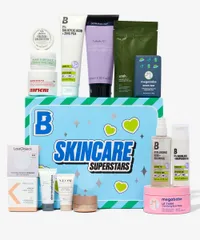
each box is limited to one per customer Worth £192.49!74% saving!Limited-edition Box Contains By BEAUTY BAY 5% Squalane + Grapeseed Oil Serum Hybrid 50ml – A dewy oil-serum hybrid formula that hydrated, protects, and conditions the skin for a dewy, radiant look By BEAUTY BAY Hyaluronic Acid + Sea Moss Hydrating Face Mist 100ml – A dewy, hydrating face mist that works to boosts skin’s hydration and lock in moisture, leaving a dewy, glowy finish By BEAUTY BAY 1% Salicylic Acid + Zinc PCA Cleansing Gel 150ml – A gently exfoliating, hydrating, gel-to-foam cleanser Megababe Le Tush Clarifying Butt Mask 200ml – An exfoliating bum mask powered by glycolic, malic, and azelaic acids to help resurface the skin and add moisture Megababe Space Bar Detoxifying Charcoal Underarm Bar 99g – An activated charcoal and tea tree underarm bar that absorbs and washes away odor-causing impurities, and exfoliates for smoother skin Last Object Lastround Single 1 x PAD – A zero-waste, reusable cotton pad, perfect for removing makeup and applying face products Nursem Caring Skin Fix 50 ml – An intensive, multi-use repair cream for cracked skin Mario Badescu Seaweed Night Cream 28g – An oil-free night cream to soften, hydrate, and nourish the skin Dermalogica Special Cleansing Gel 15ml – A gentle foaming gel cleanser that effectively removes impurities without disturbing the skin’s natural moisture balance Sol De Janeiro Brazilian Bum Bum Cream 25ml – A deeply hydrating, firming and deliciously-scented body cream Zitsticka Killa Spot Clarifying Patch 4 Pack – A box of four microdart spot patches and cleansing wipes, that work to banish the appearance and formation of under-the-skin spots NEOM Perfect Night's Sleep Overnight Facial Cream 10ml – A deeply nourishing, lavender-scented overnight facial cream DERMAdoctor Kakadu C Cleanser 210ml – A gentle, hydrating, and foaming gel cleanser that dissolves makeup and removes dirt and impurities to leave the skin feeling fresh and healthy Maude Soak Nourishing Mineral Bath Salts 4oz – Nourishing, rejuvenating mineral bath salts Foreo Supercharged Ultra-Hydrating Sleeping Mask 15ml – A rich and replenishing jelly overnight mask اقرأ المزيد
Source: Beauty Bay
This product can help improve hydration of the skin with the two types of ingredients.
The first type is called “humectants”:
these ingredients help attract water.
When humectants are on the surface of the skin, they “pull in” the moisture from the outside environment, or from
within deeper layers of the skin. The following ingredients in this product do the job:
avena sativa kernel flour, glycerin.
This product also contains ingredients called “occlusives”. They help reduce the speed with which our skin loses moisture to the outside environment. These ingredients also help soften the upper layer of the skin, so it feels less tight and nicer to the touch. The following ingredients in this product do the job: cocos nucifera oil, helianthus annuus seed oil.
The following ingredients in this product are especially good for supporting the skin barrier and helping with the hydration level: niacinamide
One of the best moisturizing ingredients. Attracts water into the upper layer of the skin
Helps soften the upper layer of the skin and can support skin barrier function
A type of silicone that can decrease loss of moisture from the skin surface. It helps create a nice product texture
Helps attract water to the upper layer of the skin
Naturally present in skin and helps to attract water to its upper layer
An oil naturally present in skin. Works as an emollient to soften the skin and form a protective layer on its surface without a greasy feeling.
Helps soften the upper layer of the skin
A great emollient that can also have anti-oxidant properties
A compound that combines zinc with a hydrating ingredient PCA. Might to be helpful against acne and clogged pores. Can help calm down inflammation in skin. Could be helpful in reducing the formation of free radicals in skin. Might help to reduce fine lines in wrinkles, but solid evidence is missing
Helps soften the upper layer of the skin and might as well help to attract moisture to its upper layer
A type of colloidal oatmeal. Can contain potent antioxidants and anti-inflammatory compounds. Is effective in supporting skin barrier
Red algae extract that helps attract water to the upper layer of the skin and create a nicer product consistency
An emollient. Found to be as effective as a moisturizer for dry skin as mineral oil. Could be comedogenic
One of the best moisturizing ingredients. Naturally present in skin. It attracts water to the upper layer of the skin working as a humectant
Helps attract water to the upper layer of the skin and provide a longer-lasting hydration. Can create a thicker product consistency
A great emollient due to its high linoleic acid content. One of the most effective plant oils in helping skin hydration and repairing skin barrier function
One of the best moisturizing ingredients. Attracts water into the upper layer of the skin. Naturally present in skin. Typically has large molecule size unless advertised otherwise on the product label. Helps support skin's barrier function and may help to reduce inflammation
An emollient that helps soften the skin. Could be comedogenic
A red algae extract that can help attract water to the upper layer of the skin and might have some antioxidant properties
Is proven to be effective in reducing blemishes, evening out skin tone and helping to improve lines and wrinkles. It helps the skin to repair sun damage, calm down inflammation and keep maintain good levels of moisture. The concentration of about 2% is effective for supporting the skin barrier and evening out the skin tone. Concentration of 4-6% is better for helping with acne and balancing the sebum production
Helps oil and water mix together, preserve cosmetic products, and attract water to the upper layer of the skin
Used to stabilize the product formulations and works as an emollient
Cannot penetrate the skin barrier so is not particularly useful in skincare products
An oil from a mixture of different vegetables. Helps soften the upper layer of the skin
A plant oil that can help soften the skin. It might be helpful in calming down inflammation, but solid research is lacking. Is often used in lip products to create the needed product consistency
A non-drying alcohol. Works as an emollient. Helps water and oil mix together and creates a nice product texture
A non-drying alcohol that works to soften the skin and stabilize product formulations helping oil and water mix together
An emollient that helps soften the skin but is not effective for restoring its barrier function. Might be helpful to calm down inflammation
Helps to soften the upper layer of the skin without creating a greasy texture
Helps oil and water mix together and can enhance the penetration of other ingredients into the skin. It can be irritating
An emollient that can also help water and oil mix together, as well as prevent bacteria growth in products
An emollient that softens the skin and forms a protective layer on its surface. Helps water and oil mix together
A sugar that is used to stabilize the product formulation. Can help attract water to the upper layer of the skin
Helps oil and water mix together while softening the upper layer of the skin
Helps preserve products and creates a nice product texture
An emollient that helps to soften the skin and create a pleasant product texture and stabilize the formulation
Is used to dissolve other ingredients and create nice product texture
Helps calm down inflammation in skin and can help reduce itching. Helps to repair the skin barrier and keep skin hydrated
A great moisturising ingredient that softens the skin and reduces water loss from its upper layer. It also can be helpful in protecting skin from free radicals
A good mix of fatty acids that forms a protective layer on the skin. Improves the shelf life of products. Derived from coconut and glycerin
Helps attract water to the upper layer of the skin and can help improve skin barrier function
An emollient that helps soften the skin and could be helpful in repairing its barrier function
Softens the upper layer of skin and helps restore the healthy skin barrier. Has shown to help calm down inflammation in skin. It is a stable oil, meaning that it retains its properties even when exposed to air.
Pure form of vitamin E. Can help moisturise and protect the skin from free radicals. Often used to help stabilise other ingredients or the formula itself
Helps oil and water mix together and works as an emollient
Traditionally used to treat sunburns, dermatitis and inflammation, but evidence for its effectiveness is lacking. The extract can contain humectants that help attract water into the skin
Can contain potent anti-oxidant compounds (abbreviated ECG, GCG, EGC, and EGCG) that might help protect the skin from free radicals. Can help calm down inflammation and has some anti-bacterial properties. Unfortunately, these antioxidants are unstable and lose their effectiveness very quickly in products. The concentration of the antioxidant compounds in the extract also tends to be low to be effective in topical formulation
How honest is this product?
| Promise | Can it deliver? |
|---|---|
| Moisturizing |
Total Promises Fulfilled score: 100/100.
We receive a small commission for purchases made through these links at no cost for you. Thank you for your support! Learn more
Affiliate link · supports WIMJ at no cost to you
Potential irritants
Comedogenic ingredients
User reviews (0)
Averages from community submissions.
No reviews yet for this product.
Be the first to share your experience!
Tried this product?
Help capture what the ingredient list can't—texture, finish, pilling, scent, and more. Answer what you can, skip the rest.
Takes ~30 seconds.
Reviews are shown in aggregate. No personal details.
| Product | Similarity | Price | Irritancy |
|---|---|---|---|
 By BEAUTY BAY Skincare Superstars | Current | - | |
 Urban Skin Rx PHA + 10% Niacinamide Smaller Pores Serum | 71% | $23.99 | |
 HELP Anti Dark Spot Serum | 71% | $6.49 | |
 Tula Clear It Up Acne Clearing + Tone Correcting Gel | 69% | $38.00 | |
 Facetheory Porebright Serum N10 | 67% | $210.00 | |
 SKINCITY skincare Enlightening Second Concentrate | 67% | - |
Key Actives
Is proven to be effective in reducing blemishes, evening out skin tone and helping to improve lines and wrinkles. It helps the skin to repair sun damage, calm down inflammation and keep maintain good levels of moisture. The concentration of about 2% is effective for supporting the skin barrier and evening out the skin tone. Concentration of 4-6% is better for helping with acne and balancing the sebum production
Is proven to be effective in reducing blemishes, evening out skin tone and helping to improve lines and wrinkles. It helps the skin to repair sun damage, calm down inflammation and keep maintain good levels of moisture. The concentration of about 2% is effective for supporting the skin barrier and evening out the skin tone. Concentration of 4-6% is better for helping with acne and balancing the sebum production
Can contain potent anti-oxidant compounds (abbreviated ECG, GCG, EGC, and EGCG) that might help protect the skin from free radicals. Can help calm down inflammation and has some anti-bacterial properties. Unfortunately, these antioxidants are unstable and lose their effectiveness very quickly in products. The concentration of the antioxidant compounds in the extract also tends to be low to be effective in topical formulation
A compound that combines zinc with a hydrating ingredient PCA. Might to be helpful against acne and clogged pores. Can help calm down inflammation in skin. Could be helpful in reducing the formation of free radicals in skin. Might help to reduce fine lines in wrinkles, but solid evidence is missing
A compound that combines zinc with a hydrating ingredient PCA. Might to be helpful against acne and clogged pores. Can help calm down inflammation in skin. Could be helpful in reducing the formation of free radicals in skin. Might help to reduce fine lines in wrinkles, but solid evidence is missing
Used for skin exfoliation. It has an anti-inflammatory and anti-bacterial effect, helps to unclog pores, prevent blemishes and speed up healing of the existing ones. Sometimes referred to as a BHA (beta-hydroxy acid)
Helps soften the upper layer of the skin and can support skin barrier function
An alpha-hydroxy acid (AHA) that helps to remove the dead skin cells on the surface of the skin reveling a more even, smoother complexation. It is also able to stimulate collagen production with long-term use. Could help to reduce pore congestion. It can be irritating to the skin. Apply sunscreen daily if using products with glycolic acid
Is produced by a yeast that lives on normal human skin. It is used in medicine as a topical treatment for mild to moderate acne. It has a mild exfoliating effect. It can also help reduce hyperpigmentation, helps calm down inflammation and can help neutralize free radicals
An alpha-hydroxy acid (AHA) that helps to remove the dead skin cells on the surface of the skin reveling a more even, smoother complexation. It is also able to stimulate collagen production with long-term use. Could help to reduce pore congestion. It can be irritating to the skin. Apply sunscreen daily if using products with glycolic acid
One of the best moisturizing ingredients. Attracts water into the upper layer of the skin. Naturally present in skin. Typically has large molecule size unless advertised otherwise on the product label. Helps support skin's barrier function and may help to reduce inflammation
Helps attract water to the upper layer of the skin and can help improve skin barrier function
A great moisturising ingredient that softens the skin and reduces water loss from its upper layer. It also can be helpful in protecting skin from free radicals
Helps attract water to the upper layer of the skin and can help improve skin barrier function
A great moisturising ingredient that softens the skin and reduces water loss from its upper layer. It also can be helpful in protecting skin from free radicals
Helps attract water to the upper layer of the skin and can help improve skin barrier function
A great emollient that can also have anti-oxidant properties
A great emollient that can also have anti-oxidant properties
A red algae extract that can help attract water to the upper layer of the skin and might have some antioxidant properties
A type of clay that consists mainly of aluminum silicate. Helps absorb oil and creates a thicker product consistency. Can be used to add a white color
A plant extract that can help neutralize free radicals in skin. Can contain fragrand compounds like linalool that can be irritating
One of the best moisturizing ingredients. Attracts water into the upper layer of the skin
One of the best moisturizing ingredients. Naturally present in skin. It attracts water to the upper layer of the skin working as a humectant
Softens the upper layer of skin and helps restore the healthy skin barrier. Has shown to help calm down inflammation in skin. It is a stable oil, meaning that it retains its properties even when exposed to air.
Helps soften the upper layer of the skin
A great emollient due to its high linoleic acid content. One of the most effective plant oils in helping skin hydration and repairing skin barrier function
One of the best moisturizing ingredients. Naturally present in skin. It attracts water to the upper layer of the skin working as a humectant
Helps attract water to the upper layer of the skin
One of the best moisturizing ingredients. Attracts water into the upper layer of the skin
One of the best moisturizing ingredients. Naturally present in skin. It attracts water to the upper layer of the skin working as a humectant
Naturally present in skin and helps to attract water to its upper layer
A great emollient due to its high linoleic acid content. One of the most effective plant oils in helping skin hydration and repairing skin barrier function
An emollient. Found to be as effective as a moisturizer for dry skin as mineral oil. Could be comedogenic
One of the best moisturizing ingredients. Naturally present in skin. It attracts water to the upper layer of the skin working as a humectant
One of the best moisturizing ingredients. Naturally present in skin. It attracts water to the upper layer of the skin working as a humectant
An emollient that helps soften the skin and could be helpful in repairing its barrier function
A great emollient due to its high linoleic acid content. One of the most effective plant oils in helping skin hydration and repairing skin barrier function
One of the best moisturizing ingredients. Naturally present in skin. It attracts water to the upper layer of the skin working as a humectant
An emollient that helps soften the skin and could be helpful in repairing its barrier function
A type of colloidal oatmeal. Can contain potent antioxidants and anti-inflammatory compounds. Is effective in supporting skin barrier
A good mix of fatty acids that forms a protective layer on the skin. Improves the shelf life of products. Derived from coconut and glycerin
One of the best moisturizing ingredients. Attracts water into the upper layer of the skin
Red algae extract that helps attract water to the upper layer of the skin and create a nicer product consistency
One of the best moisturizing ingredients. Naturally present in skin. It attracts water to the upper layer of the skin working as a humectant
An emollient that helps soften the skin. Could be comedogenic
One of the best moisturizing ingredients. Attracts water into the upper layer of the skin
Helps attract water to the upper layer of the skin and provide a longer-lasting hydration. Can create a thicker product consistency
Works as a UV filter when used in high concentrations. It is photostable and is effective mostly against the UVB light, with some protection in the UVA range. In small concentrations, used for its ability to improve the color of cosmetic products. Is usually well tolerated by the skin
One of the best moisturizing ingredients. Naturally present in skin. It attracts water to the upper layer of the skin working as a humectant
A type of silicone that can decrease loss of moisture from the skin surface. It helps create a nice product texture
A good mix of fatty acids that forms a protective layer on the skin. Improves the shelf life of products. Derived from coconut and glycerin
One of the best moisturizing ingredients. Attracts water into the upper layer of the skin
An emollient. Found to be as effective as a moisturizer for dry skin as mineral oil. Could be comedogenic
Helps soften the upper layer of the skin and might as well help to attract moisture to its upper layer
An oil naturally present in skin. Works as an emollient to soften the skin and form a protective layer on its surface without a greasy feeling.
One of the best moisturizing ingredients. Naturally present in skin. It attracts water to the upper layer of the skin working as a humectant
Potential irritants
Can be drying and contribute to skin irritation. Used in formulars to dissolve other ingredients, create a thinner product consistency or for its antibacterial properties
An essential oil that can be irritating. Has some anti-bacterial properties
A preservative. Can be used to mask unpleasant smell. Can be irritating
Helps water and oil mix together. Used as a cleansing ingredient. Could be an allergen
An essential oil that can be very irritating. Has some anti-bacterial properties
An essential oil. Potential allergen and can be irritating. It has some anti-bacterial properties
An alpha-hydroxy acid (AHA) that helps to remove the dead skin cells on the surface of the skin reveling a more even, smoother complexation. It is also able to stimulate collagen production with long-term use. Could help to reduce pore congestion. It can be irritating to the skin. Apply sunscreen daily if using products with glycolic acid
The most well-researched antioxidant that works in skin. Helps neutralize free radicals supporting collagen production, helping to even out the skin tone and preventing early signs of aging
A plant extract that has some anti-oxidant and anti-bacterial properties. Can be irritating
An alpha-hydroxy acid (AHA) that helps to remove the dead skin cells on the surface of the skin reveling a more even, smoother complexation. It is also able to stimulate collagen production with long-term use. Could help to reduce pore congestion. It can be irritating to the skin. Apply sunscreen daily if using products with glycolic acid
An essential oil that can be irritating. Has some anti-bacterial properties
The most well-researched antioxidant that works in skin. Helps neutralize free radicals supporting collagen production, helping to even out the skin tone and preventing early signs of aging
A preservative. Can be used to mask unpleasant smell. Can be irritating
Used for skin exfoliation. It has an anti-inflammatory and anti-bacterial effect, helps to unclog pores, prevent blemishes and speed up healing of the existing ones. Sometimes referred to as a BHA (beta-hydroxy acid)
Helps oil and water mix together and can enhance the penetration of other ingredients into the skin. It can be irritating
An aromatic blend of unspecified and possibly irritating ingredients
A preservative. Works by releasing formaldehyde. Can be irritating
An essential oil. Potential allergen and can be irritating. It has some anti-bacterial properties
A plant extract that is added for its fragrance. Can be irritating
A plant oil with a high content of volatile compounds that can irritate the skin and lead to allergic reactions. Can lead to photosensitivity
Helps water and oil mix together. Used as a cleansing ingredient. Could be an allergen
Helps oil and water mix together and works as a cleansing agent. Can be allergenic
An aromatic blend of unspecified and possibly irritating ingredients
A plant extract that can help neutralize free radicals in skin. Can contain fragrand compounds like linalool that can be irritating
A preservative. Can be used to mask unpleasant smell. Can be irritating
A common frangrance that can easily irritate skin, especially if exposed to air, light or heat
A more stable but less bio-available form of vitamin E compared to Tocopherol. Might help moisturize and protect the skin from free radicals, but mostly used in low concentrations to stabilize other ingredients.
A great emollient that can also have anti-oxidant properties
A great emollient that can also have anti-oxidant properties
Softens the upper layer of skin and helps restore the healthy skin barrier. Has shown to help calm down inflammation in skin. It is a stable oil, meaning that it retains its properties even when exposed to air.
Helps soften the upper layer of the skin and can support skin barrier function
A plant oil that can help soften the skin. It might be helpful in calming down inflammation, but solid research is lacking. Is often used in lip products to create the needed product consistency
Helps preserve products and creates a nice product texture
Can work as an exfoliant but is typically used to adjust the product pH
Helps to control the skin's pH level. Maintains the skin's natural film of amino-lactic acids and oils. Helps to preserve products
Can work as an exfoliant but is typically used to adjust the product pH
Helps oil and water mix together and works as a cleansing agent
Maintains the texture of skincare products. Allows the product to spread evenly. Helps oil and water mix together
A plant extract that might contain salicylic acid
A gelling agent that thickens the product consistency and leaves the skin with a velvety finish
Used to improve stability of the formulation
Helps to control the skin's pH level. Maintains the skin's natural film of amino-lactic acids and oils. Helps to preserve products
An emollient that helps soften the skin and could be helpful in repairing its barrier function
An emollient that helps soften the skin but is not effective for restoring its barrier function. Might be helpful to calm down inflammation
Traditionally used to treat sunburns, dermatitis and inflammation, but evidence for its effectiveness is lacking. The extract can contain humectants that help attract water into the skin
An emollient that helps soften the skin and could be helpful in repairing its barrier function
A good mix of fatty acids that forms a protective layer on the skin. Improves the shelf life of products. Derived from coconut and glycerin
Helps water and oil in the product mix well together and improves product texture
Helps attract water to the upper layer of the skin and provide a longer-lasting hydration. Can create a thicker product consistency
Used to adjust pH of the product and can help improve the product's smell
Helps oil and water mix together and works as a cleansing agent
Helps water and oil mix together. Can be used as a cleansing agent
A good mix of fatty acids that forms a protective layer on the skin. Improves the shelf life of products. Derived from coconut and glycerin
A plant oil that might help neutralize free radicals, but evidence of effectiveness in skin is lacking
Helps soften the upper layer of the skin and might as well help to attract moisture to its upper layer
A gelling agent that thickens the product consistency and leaves the skin with a velvety finish
Comedogenic ingredients
A non-drying alcohol. Works as an emollient. Helps water and oil mix together and creates a nice product texture
An oil from a mixture of different vegetables. Helps soften the upper layer of the skin
An emollient. Found to be as effective as a moisturizer for dry skin as mineral oil. Could be comedogenic
A great moisturising ingredient that softens the skin and reduces water loss from its upper layer. It also can be helpful in protecting skin from free radicals
A non-drying alcohol. Works as an emollient. Helps water and oil mix together and creates a nice product texture
A great moisturising ingredient that softens the skin and reduces water loss from its upper layer. It also can be helpful in protecting skin from free radicals
Used to stabilize the product formulations and works as an emollient
Red algae extract that helps attract water to the upper layer of the skin and create a nicer product consistency
An emollient that helps soften the skin. Could be comedogenic
A non-drying alcohol. Works as an emollient. Helps water and oil mix together and creates a nice product texture
An emollient. Found to be as effective as a moisturizer for dry skin as mineral oil. Could be comedogenic
All ingredients
One of the best moisturizing ingredients. Attracts water into the upper layer of the skin
Is proven to be effective in reducing blemishes, evening out skin tone and helping to improve lines and wrinkles. It helps the skin to repair sun damage, calm down inflammation and keep maintain good levels of moisture. The concentration of about 2% is effective for supporting the skin barrier and evening out the skin tone. Concentration of 4-6% is better for helping with acne and balancing the sebum production
Can be drying and contribute to skin irritation. Used in formulars to dissolve other ingredients, create a thinner product consistency or for its antibacterial properties
An essential oil that can be irritating. Has some anti-bacterial properties
A more stable but less bio-available form of vitamin E compared to Tocopherol. Might help moisturize and protect the skin from free radicals, but mostly used in low concentrations to stabilize other ingredients.
A great emollient that can also have anti-oxidant properties
Helps to soften the upper layer of the skin without creating a greasy texture
One of the best moisturizing ingredients. Naturally present in skin. It attracts water to the upper layer of the skin working as a humectant
A great emollient that can also have anti-oxidant properties
Acts as a solvent for other ingredients. Speeds up the absorption of other ingredients into the skin
Softens the upper layer of skin and helps restore the healthy skin barrier. Has shown to help calm down inflammation in skin. It is a stable oil, meaning that it retains its properties even when exposed to air.
An emollient that helps to soften the skin and create a pleasant product texture and stabilize the formulation
Helps soften the upper layer of the skin and can support skin barrier function
Used to stabilize mixtures of oil and water, and create thicker, gel-like product textures
Helps soften the upper layer of the skin
A plant oil that can help soften the skin. It might be helpful in calming down inflammation, but solid research is lacking. Is often used in lip products to create the needed product consistency
Helps preserve products and creates a nice product texture
A type of clay that is used to thicken the product consistency
Is used to dissolve other ingredients and create nice product texture
Pure form of vitamin E. Can help moisturise and protect the skin from free radicals. Often used to help stabilise other ingredients or the formula itself
A great emollient due to its high linoleic acid content. One of the most effective plant oils in helping skin hydration and repairing skin barrier function
Can work as an exfoliant but is typically used to adjust the product pH
One of the best moisturizing ingredients. Attracts water into the upper layer of the skin. Naturally present in skin. Typically has large molecule size unless advertised otherwise on the product label. Helps support skin's barrier function and may help to reduce inflammation
One of the best moisturizing ingredients. Naturally present in skin. It attracts water to the upper layer of the skin working as a humectant
One of the best moisturizing ingredients. Attracts water into the upper layer of the skin
A red algae extract that can help attract water to the upper layer of the skin and might have some antioxidant properties
Dissolves other ingredients. It does not have additional skin benefits compared to plain water
A preservative. It helps prevent bacterial growth in cosmetic products
A preservative. Can be used to mask unpleasant smell. Can be irritating
Helps to control the skin's pH level. Maintains the skin's natural film of amino-lactic acids and oils. Helps to preserve products
Can work as an exfoliant but is typically used to adjust the product pH
A compound that combines zinc with a hydrating ingredient PCA. Might to be helpful against acne and clogged pores. Can help calm down inflammation in skin. Could be helpful in reducing the formation of free radicals in skin. Might help to reduce fine lines in wrinkles, but solid evidence is missing
Helps water and oil mix together. Used as a cleansing ingredient. Could be an allergen
One of the best moisturizing ingredients. Naturally present in skin. It attracts water to the upper layer of the skin working as a humectant
Helps oil and water mix together and works as a cleansing agent
Used to stabilize mixtures of oil and water, and create thicker, gel-like product textures
Maintains the texture of skincare products. Allows the product to spread evenly. Helps oil and water mix together
Naturally present in skin and helps to attract water to its upper layer
A compound that combines zinc with a hydrating ingredient PCA. Might to be helpful against acne and clogged pores. Can help calm down inflammation in skin. Could be helpful in reducing the formation of free radicals in skin. Might help to reduce fine lines in wrinkles, but solid evidence is missing
Is proven to be effective in reducing blemishes, evening out skin tone and helping to improve lines and wrinkles. It helps the skin to repair sun damage, calm down inflammation and keep maintain good levels of moisture. The concentration of about 2% is effective for supporting the skin barrier and evening out the skin tone. Concentration of 4-6% is better for helping with acne and balancing the sebum production
Helps attract water to the upper layer of the skin and can help improve skin barrier function
A preservative. It helps prevent bacterial growth in cosmetic products
A sugar that is used to stabilize the product formulation. Can help attract water to the upper layer of the skin
A great emollient due to its high linoleic acid content. One of the most effective plant oils in helping skin hydration and repairing skin barrier function
A non-drying alcohol. Works as an emollient. Helps water and oil mix together and creates a nice product texture
An oil from a mixture of different vegetables. Helps soften the upper layer of the skin
An emollient. Found to be as effective as a moisturizer for dry skin as mineral oil. Could be comedogenic
Acts as a solvent for other ingredients. Speeds up the absorption of other ingredients into the skin
A type of clay that consists mainly of aluminum silicate. Helps absorb oil and creates a thicker product consistency. Can be used to add a white color
Can absorb oil. There is no research confirming other benefits for the skin
An emollient that softens the skin and forms a protective layer on its surface. Helps water and oil mix together
A great moisturising ingredient that softens the skin and reduces water loss from its upper layer. It also can be helpful in protecting skin from free radicals
A plant extract that might contain salicylic acid
An essential oil that can be very irritating. Has some anti-bacterial properties
An essential oil. Potential allergen and can be irritating. It has some anti-bacterial properties
An alpha-hydroxy acid (AHA) that helps to remove the dead skin cells on the surface of the skin reveling a more even, smoother complexation. It is also able to stimulate collagen production with long-term use. Could help to reduce pore congestion. It can be irritating to the skin. Apply sunscreen daily if using products with glycolic acid
Is produced by a yeast that lives on normal human skin. It is used in medicine as a topical treatment for mild to moderate acne. It has a mild exfoliating effect. It can also help reduce hyperpigmentation, helps calm down inflammation and can help neutralize free radicals
Helps attract water to the upper layer of the skin and can help improve skin barrier function
Helps calm down inflammation in skin and can help reduce itching. Helps to repair the skin barrier and keep skin hydrated
The most well-researched antioxidant that works in skin. Helps neutralize free radicals supporting collagen production, helping to even out the skin tone and preventing early signs of aging
A plant extract that has some anti-oxidant and anti-bacterial properties. Can be irritating
One of the best moisturizing ingredients. Naturally present in skin. It attracts water to the upper layer of the skin working as a humectant
Pure form of vitamin E. Can help moisturise and protect the skin from free radicals. Often used to help stabilise other ingredients or the formula itself
A gelling agent that thickens the product consistency and leaves the skin with a velvety finish
Used to improve stability of the formulation
One of the best moisturizing ingredients. Naturally present in skin. It attracts water to the upper layer of the skin working as a humectant
Helps to control the skin's pH level. Maintains the skin's natural film of amino-lactic acids and oils. Helps to preserve products
An alpha-hydroxy acid (AHA) that helps to remove the dead skin cells on the surface of the skin reveling a more even, smoother complexation. It is also able to stimulate collagen production with long-term use. Could help to reduce pore congestion. It can be irritating to the skin. Apply sunscreen daily if using products with glycolic acid
An essential oil that can be irritating. Has some anti-bacterial properties
An emollient that helps soften the skin and could be helpful in repairing its barrier function
A great emollient due to its high linoleic acid content. One of the most effective plant oils in helping skin hydration and repairing skin barrier function
Can contain potent anti-oxidant compounds (abbreviated ECG, GCG, EGC, and EGCG) that might help protect the skin from free radicals. Can help calm down inflammation and has some anti-bacterial properties. Unfortunately, these antioxidants are unstable and lose their effectiveness very quickly in products. The concentration of the antioxidant compounds in the extract also tends to be low to be effective in topical formulation
An emollient that helps soften the skin but is not effective for restoring its barrier function. Might be helpful to calm down inflammation
The most well-researched antioxidant that works in skin. Helps neutralize free radicals supporting collagen production, helping to even out the skin tone and preventing early signs of aging
Traditionally used to treat sunburns, dermatitis and inflammation, but evidence for its effectiveness is lacking. The extract can contain humectants that help attract water into the skin
Used to stabilize mixtures of oil and water, and create thicker, gel-like product textures
Used to stabilize the product formulation and can help absorb oil
A non-drying alcohol. Works as an emollient. Helps water and oil mix together and creates a nice product texture
A great moisturising ingredient that softens the skin and reduces water loss from its upper layer. It also can be helpful in protecting skin from free radicals
One of the best moisturizing ingredients. Naturally present in skin. It attracts water to the upper layer of the skin working as a humectant
An emollient that helps soften the skin and could be helpful in repairing its barrier function
A type of colloidal oatmeal. Can contain potent antioxidants and anti-inflammatory compounds. Is effective in supporting skin barrier
Used to stabilize the product formulations and works as an emollient
A good mix of fatty acids that forms a protective layer on the skin. Improves the shelf life of products. Derived from coconut and glycerin
Helps attract water to the upper layer of the skin and can help improve skin barrier function
Helps calm down inflammation in skin and can help reduce itching. Helps to repair the skin barrier and keep skin hydrated
Helps water and oil in the product mix well together and improves product texture
A preservative. Can be used to mask unpleasant smell. Can be irritating
Used for skin exfoliation. It has an anti-inflammatory and anti-bacterial effect, helps to unclog pores, prevent blemishes and speed up healing of the existing ones. Sometimes referred to as a BHA (beta-hydroxy acid)
One of the best moisturizing ingredients. Attracts water into the upper layer of the skin
Red algae extract that helps attract water to the upper layer of the skin and create a nicer product consistency
One of the best moisturizing ingredients. Naturally present in skin. It attracts water to the upper layer of the skin working as a humectant
An emollient that helps soften the skin. Could be comedogenic
Helps oil and water mix together and can enhance the penetration of other ingredients into the skin. It can be irritating
A non-drying alcohol that works to soften the skin and stabilize product formulations helping oil and water mix together
Cannot penetrate the skin barrier so is not particularly useful in skincare products
One of the best moisturizing ingredients. Attracts water into the upper layer of the skin
Helps attract water to the upper layer of the skin and provide a longer-lasting hydration. Can create a thicker product consistency
Helps create a thicker or gel-like product texture. It is not a surfactant but can be used in gentle cleansing formulations
An aromatic blend of unspecified and possibly irritating ingredients
Used to stabilize mixtures of oil and water, and create thicker, gel-like product textures
A preservative. It helps prevent bacterial growth in cosmetic products
Used to adjust pH of the product and can help improve the product's smell
A preservative. Works by releasing formaldehyde. Can be irritating
Creates an illusion of smoother and more radiant skin tone. Adds shimmer to the skin by reflecting light
Works as a UV filter when used in high concentrations. It is photostable and is effective mostly against the UVB light, with some protection in the UVA range. In small concentrations, used for its ability to improve the color of cosmetic products. Is usually well tolerated by the skin
Helps oil and water mix together and works as a cleansing agent
An essential oil. Potential allergen and can be irritating. It has some anti-bacterial properties
A plant extract that is added for its fragrance. Can be irritating
A plant oil with a high content of volatile compounds that can irritate the skin and lead to allergic reactions. Can lead to photosensitivity
One of the best moisturizing ingredients. Naturally present in skin. It attracts water to the upper layer of the skin working as a humectant
Helps water and oil mix together. Used as a cleansing ingredient. Could be an allergen
Helps oil and water mix together and works as a cleansing agent. Can be allergenic
Used to thicken product formulations and create gel-like textures
Helps water and oil mix together. Can be used as a cleansing agent
Helps oil and water mix together, preserve cosmetic products, and attract water to the upper layer of the skin
A type of silicone that can decrease loss of moisture from the skin surface. It helps create a nice product texture
A good mix of fatty acids that forms a protective layer on the skin. Improves the shelf life of products. Derived from coconut and glycerin
Helps oil and water mix together while softening the upper layer of the skin
An aromatic blend of unspecified and possibly irritating ingredients
A non-drying alcohol. Works as an emollient. Helps water and oil mix together and creates a nice product texture
One of the best moisturizing ingredients. Attracts water into the upper layer of the skin
An emollient. Found to be as effective as a moisturizer for dry skin as mineral oil. Could be comedogenic
A plant oil that might help neutralize free radicals, but evidence of effectiveness in skin is lacking
Helps soften the upper layer of the skin and might as well help to attract moisture to its upper layer
A plant oil that might help neutralize free radicals and have an anti-bacterial effect
A plant extract that can help neutralize free radicals in skin. Can contain fragrand compounds like linalool that can be irritating
Pure form of vitamin E. Can help moisturise and protect the skin from free radicals. Often used to help stabilise other ingredients or the formula itself
An oil naturally present in skin. Works as an emollient to soften the skin and form a protective layer on its surface without a greasy feeling.
An emollient that can also help water and oil mix together, as well as prevent bacteria growth in products
A gelling agent that thickens the product consistency and leaves the skin with a velvety finish
One of the best moisturizing ingredients. Naturally present in skin. It attracts water to the upper layer of the skin working as a humectant
A non-drying alcohol that works to soften the skin and stabilize product formulations helping oil and water mix together
A preservative. It helps prevent bacterial growth in cosmetic products
Creates an illusion of smoother and more radiant skin tone. Adds shimmer to the skin by reflecting light
A preservative. Can be used to mask unpleasant smell. Can be irritating
A common frangrance that can easily irritate skin, especially if exposed to air, light or heat
Ingredient list view
Sodium hyaluronate, Oligopeptide-76, Niacinamide, Sodium hydroxide, Alcohol, Water, Melaleuca alternifolia leaf oil, Tocopheryl acetate, Unknown, Water, Vitis vinifera seed oil, Unknown, Water, Coco-caprylate/caprate, Glycerin, Vitis vinifera seed oil, Polyglyceryl-3 polyricinoleate, Propanediol, Simmondsia chinensis seed oil, Octyldodecanol, Oenothera biennis oil, Sodium chloride, Terminalia ferdinandiana seed oil, Hydrogenated castor oil, 1,2-hexanediol, Caprylyl glycol, Disteardimonium hectorite, Propylene carbonate, Tocopherol, Helianthus annuus seed oil, Citric acid, Sodium hydroxide, Unknown, Water, Hyaluronic acid, Water, Glycerin, Polysorbate 20, Saccharide isomerate, Sodium hyaluronate, Kappaphycus alvarezii extract, Maris aqua, Sea water, Dehydroacetic acid, Phenoxyethanol, Benzyl alcohol, Ethylhexylglycerin, Sodium citrate, Citric acid, Unknown, Water, Zinc pca, Water, Cocamidopropyl betaine, Glycerin, Sodium lauroyl sarcosinate, Sodium chloride, Acrylates/c10-30 alkyl acrylate crosspolymer, Sodium pca, Zinc pca, Niacinamide, Panthenol, Polydextrose, Phenoxyethanol, Dextrin, Disodium edta, Ethylhexylglycerin, Amylopectin, Water, Helianthus annuus seed oil, Cetearyl alcohol, Hydrogenated vegetable oil, Cocos nucifera oil, Propanediol, Kaolin, Clay, Polyglyceryl-2 stearate, Glyceryl stearate, Butyrospermum parkii butter, Stearyl alcohol, Salix nigra bark extract, Menthol, Eucalyptus globulus leaf oil, Lavandula angustifolia oil, Macrocystis pyrifera extract, Glycolic acid, Malic acid, Azelaic acid, Panthenol, Allantoin, Ascorbic acid, Hydrolyzed camellia sinensis leaf, Unknown, Calendula officinalis flower extract, Xanthan gum, Glycerin, Potassium sorbate, Sodium benzoate, Tocopherol, Sodium hydroxide, Polysorbate 60, Hydroxyethyl acrylate/sodium acryloyldimethyl taurate copolymer, Trisodium ethylenediamine disuccinate, Charcoal, Sodium cocoate, Water, Glycerin, Coconut acid, Sodium citrate, Charcoal powder, Glycolic acid, Melaleuca alternifolia leaf oil, Persea gratissima oil, Helianthus annuus seed oil, Camellia sinensis leaf extract, Olea europaea fruit oil, Ascorbic acid, Aloe barbadensis leaf juice, Sodium gluconate, Sodium chloride, Maltodextrin, Water, Cetearyl alcohol, Butyrospermum parkii butter, Glycerin, Persea gratissima oil, Avena sativa kernel flour, Glyceryl stearate se, Caprylic/capric triglyceride, Panthenol, Allantoin, Cetearyl glucoside, Benzyl alcohol, Salicylic acid, Sodium hyaluronate, Sorbic acid, Chondrus crispus, Cream, Water, Glycerin, Isopropyl myristate, Stearic acid, Propylene glycol, Cetyl alcohol, Fucus vesiculosus extract, Hydrolyzed elastin, Collagen, Sodium hyaluronate, Glyceryl acrylate/acrylic acid copolymer, Carbomer, Parfum, Sodium chloride, Phenoxyethanol, Potassium sorbate, Methylparaben, Propylparaben, Sodium benzoate, Triethanolamine, Diazolidinyl urea, Mica, Ci 77891, Titanium dioxide, Ci 19140, Ci 42090, Ci 77288, Chromium oxide greens, Water, Disodium laureth sulfosuccinate, Sodium lauroyl sarcosinate, Quillaja saponaria bark extract, Lavandula angustifolia oil, Melissa officinalis leaf extract, Citrus limon peel oil, Citrus aurantium bergamia fruit oil, Cymbopogon winterianus herb oil, Glycerin, Cocamidopropyl betaine, Coco-betaine, Hydroxyethylcellulose, Sodium cocoyl isethionate, Capryloyl glycine, Sodium lauryl sulfoacetate, Methylpropanediol, Ethylhexylglycerin, Caprylhydroxamic acid, Ppg-5-ceteth-20, Sodium hydroxide, Disodium edta, Cream, Water, Methyl glucose sesquistearate, Phenyl trimethicone, Dodecane, Caprylic/capric triglyceride, Glyceryl stearate citrate, Parfum, Cetearyl alcohol, Sodium hyaluronate, Cocos nucifera oil, Euterpe oleracea fruit oil, Theobroma grandiflorum seed butter, Bertholletia excelsa seed oil, Daucus carota sativa seed oil, Paullinia cupana seed extract, Ilex guayusa leaf extract, Ilex paraguariensis leaf extract, Bixa orellana seed extract, Tocopherol, Squalane, Sorbitan isostearate, Sodium phytate, Sodium stearoyl glutamate, Glyceryl caprylate, Hydroxyethyl acrylate/sodium acryloyldimethyl taurate copolymer, Ethylhexylglycerin, Glycerin, Xanthan gum, Cetyl alcohol, Phenoxyethanol, Mica, Benzyl alcohol, Benzyl salicylate, Citral, Coumarin, Hydroxycitronellal, Limonene
- Hyaluronic acid: A key molecule in skin aging
- Hyaluronan (Hyaluronic Acid): a natural moisturizer for skin care
- Niacinamide - mechanisms of action and its topical use in dermatology
- Gehring, W. (2004). Nicotinic acid/niacinamide and the skin. Journal of Cosmetic Dermatology, 3(2), 88–93. doi:10.1111/j.1473-2130.2004.00115.x
- Safety Assessment of Alkyl Esters as Used in Cosmetics
- Glycerol and the skin: holistic approach to its origin and functions
- Chemical and Nutritional Composition of Terminalia ferdinandiana (Kakadu Plum) Kernels: A Novel Nutrition Source
- Final report on the safety assessment of Ricinus Communis (Castor) Seed Oil, Hydrogenated Castor Oil, Glyceryl Ricinoleate, Glyceryl Ricinoleate SE, Ricinoleic Acid, Potassium Ricinoleate, Sodium Ricinoleate, Zinc Ricinoleate, Cetyl Ricinoleate, Ethyl Ricinoleate, Glycol Ricinoleate, Isopropyl Ricinoleate, Methyl Ricinoleate, and Octyldodecyl Ricinoleate
- Castor Oil: Properties, Uses, and Optimization of Processing Parameters in Commercial Production
- Effect of ricinoleic acid in acute and subchronic experimental models of inflammation
- The influence of alkane chain length on the skin irritation potential of 1,2-alkanediols
- Vitamin E in dermatology
- Vitamin E and Skin Health
- Effect of Olive and Sunflower Seed Oil on the Adult Skin Barrier: Implications for Neonatal Skin Care
- Topically Applied Sunflower Seed Oil Prevents Invasive Bacterial Infections in Preterm Infants in Egypt
- Effect of topically applied lipids on surfactant-irritated skin
- Impact of topical oils on the skin barrier: possible implications for neonatal health in developing countries
- Efficacy of a New Topical Nano-hyaluronic Acid in Humans
- Physiochemical properties and application of hyaluronic acid: a systematic review
- 4 Final Report on the Safety Assessment of Sodium Dehydroacetate and Dehydroacetic Acid
- Zinc L-pyrrolidone carboxylate inhibits the UVA-induced production of matrix metalloproteinase-1 by in vitro cultured skin fibroblasts, whereas it enhances their collagen synthesis
- Zinc Therapy in Dermatology: A Review
- Skin moisturizing effects of panthenol-based formulations
- Safety Assessment of Panthenol, Pantothenic Acid, and Derivatives as Used in Cosmetics
- Safety Assessment of Polyglyceryl Fatty Acid Esters as Used in Cosmetics
- Photoprotective and antiinflammatory effects of topical glycolic acid
- Glycolic acid peel therapy – a current review
- Dual Effects of Alpha-Hydroxy Acids on the Skin
- Profile of wound healing process induced by allantoin
- Topical application of Calendula officinalis (L.): Formulation and evaluation of hydrophilic cream with antioxidant activity
- The seamy side of natural medicines: contact sensitization to arnica (Arnica montana L.) and marigold (Calendula officinalis L.)
- Final report on the safety assessment of Calendula officinalis extract and Calendula officinalis
- Contact dermatitis as an adverse reaction to some topically used European herbal medicinal products – part 1: Achillea millefolium–Curcuma longa
- Use of “natural” oils for moisturization: Review of olive, coconut, and sunflower seed oil
- Salicylic acid as a peeling agent: a comprehensive review
- Beta Hydroxy Acids
- A review of toxicity from topical salicylic acid preparations
- Glycolic Acid Peels Versus Salicylic–Mandelic Acid Peels in Active Acne Vulgaris and Post‐Acne Scarring and Hyperpigmentation: A Comparative Study
- Seaweeds as Source of Bioactive Substances and Skin Care Therapy—Cosmeceuticals, Algotheraphy, and Thalassotherapy
- Surfactants and experimental irritant contact dermatitis
- Propylene Glycol
- Skin-sensitizing and irritant properties of propylene glycol
- Analysis of Dyes in Cosmetics: Challenges and Recent Developments
- Safety Assessment of Citrus-Derived Peel Oils as Used in Cosmetics
- Oxidized citrus oil (R-limonene): A frequent skin sensitizer in Europe
- Air oxidation increases skin irritation from fragrance terpenes
- Final Report on the Safety Assessment of Sodium Cocoyl Isethionate
- Antioxidant Capacity and Other Bioactivities of the Freeze-Dried Amazonian Palm Berry, Euterpe oleraceae Mart. (Acai)
- Advanced Skin Care – A Novel Ingredient
- New Claims for Wild Carrot (Daucus carota subsp. carota) Essential Oil
- Topical formulation containing Ilex Paraguariensis extract increases metalloproteinases and myeloperoxidase activities in mice exposed to UVB radiation
- Chemical composition and antioxidant activity of yerba-mate (Ilex paraguariensis A.St.-Hil., Aquifoliaceae) extract as obtained by spray drying
- Essential oil and antioxidant activity of green mate and mate tea (Ilex paraguariensis) infusions