Works for:
based on ingredients and %- Cleansing
Can it cause trouble?
- Irritation risk: high
- Comedogenic risk ingredients: 0
Key actives

Works for
Cleansing
What does the product description say?
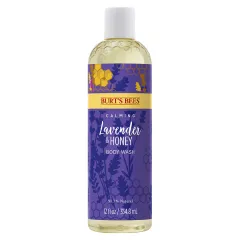
Body Wash Lavender & Honey
Source: From product name
This product works by removing dirt and oil from the surface of the skin.
The following cleansing agents are typically mild, but still can cause an irritation or allergy for some people coco-betaine, coco-glucoside, decyl glucoside, glyceryl oleate.
Keep in mind that cleansing can disrupt the skin barrier, and most people do not need to cleanse their skin more than once per day.
Used to create a thicker product consistency
Used as a cleansing agent (surfactant) in cleansers. Helps water and oil mix together in lotions. Can be irritating
Helps oil and water mix together. Can be irritating
Helps oil and water mix together. Can be irritating
Helps oil and water mix together
Helps oil and water mix together and works as a cleansing agent. Can be allergenic
Helps oil and water mix together. Can be used as a cleansing agent
Used mostly for creating emulsions - helping oil and water mix together. Helps soften the upper layer of the skin
How honest is this product?
| Promise | Can it deliver? |
|---|---|
| Cleansing |
Total Promises Fulfilled score: 75/100.
We receive a small commission for purchases made through these links at no cost for you. Thank you for your support! Learn more
Potential irritants
Comedogenic ingredients
No comedogenic ingredients detected
User reviews (0)
Averages from community submissions.
No reviews yet for this product.
Be the first to share your experience!
Tried this product?
Help capture what the ingredient list can't—texture, finish, pilling, scent, and more. Answer what you can, skip the rest.
Takes ~30 seconds.
Reviews are shown in aggregate. No personal details.
| Product | Similarity | Price | Irritancy |
|---|---|---|---|
 Burt's Bees Body Wash Lavender & Honey | Current | $8.99 | |
 Rogé Cavaillès Organic Macadamia Dry Skin Bath and Shower Gel | 37% | ≈ $7.62 | |
 Skinfix Eczema+ Foaming Oil Body Wash | 35% | ≈ $24.29 | |
 Biolane Expert Organic Body and Hair Cleansing Gel | 35% | ≈ $11.14 | |
 Bioderma Atoderm Shower Gel | 34% | ≈ $7.51 | |
 Aveeno Daily Care Baby Wipes x72 | 33% | ≈ $2.93 |
Key Actives
Pure form of vitamin E. Can help moisturise and protect the skin from free radicals. Often used to help stabilise other ingredients or the formula itself
Used mostly for creating emulsions - helping oil and water mix together. Helps soften the upper layer of the skin
Helps oil and water mix together. Can be irritating
Helps oil and water mix together and works as a cleansing agent. Can be allergenic
Helps attract water to the upper layer of the skin and improves the product texture
Helps oil and water mix together. Can be used as a cleansing agent
Used as a cleansing agent (surfactant) in cleansers. Helps water and oil mix together in lotions. Can be irritating
Helps oil and water mix together. Can be irritating
One of the best moisturizing ingredients. Naturally present in skin. It attracts water to the upper layer of the skin working as a humectant
Used to create a thicker product consistency
Potential irritants
An aromatic blend of unspecified and possibly irritating ingredients
Helps oil and water mix together and works as a cleansing agent. Can be allergenic
Essential oil that can be irritating
Used as a cleansing agent (surfactant) in cleansers. Helps water and oil mix together in lotions. Can be irritating
Can be drying and contribute to skin irritation. Used in formulars to dissolve other ingredients, create a thinner product consistency or for its antibacterial properties
Can work as an exfoliant but is typically used to adjust the product pH
Being a lipid soluble form of vitamin C, it is more stable and can penetrate the skin better than L-Ascorbic acid. It is effective in protecting the skin from free radicals, as well as evening the skin tone, but is less effective in stimulating collagen production compared to L-Ascorbic acid.
Comedogenic ingredients
We couldn't find any comedogenic ingredients in this product
All ingredients
An aromatic blend of unspecified and possibly irritating ingredients
Helps oil and water mix together and works as a cleansing agent. Can be allergenic
Helps attract water to the upper layer of the skin and improves the product texture
Helps oil and water mix together. Can be used as a cleansing agent
Essential oil that can be irritating
Used as a cleansing agent (surfactant) in cleansers. Helps water and oil mix together in lotions. Can be irritating
Can work as an exfoliant but is typically used to adjust the product pH
One of the best moisturizing ingredients. Naturally present in skin. It attracts water to the upper layer of the skin working as a humectant
Used to stabilize mixtures of oil and water, and create thicker, gel-like product textures
Pure form of vitamin E. Can help moisturise and protect the skin from free radicals. Often used to help stabilise other ingredients or the formula itself
Helps soften the upper layer of the skin
Used mostly for creating emulsions - helping oil and water mix together. Helps soften the upper layer of the skin
Being a lipid soluble form of vitamin C, it is more stable and can penetrate the skin better than L-Ascorbic acid. It is effective in protecting the skin from free radicals, as well as evening the skin tone, but is less effective in stimulating collagen production compared to L-Ascorbic acid.
Can be drying and contribute to skin irritation. Used in formulars to dissolve other ingredients, create a thinner product consistency or for its antibacterial properties
A preservative. It helps prevent bacterial growth in cosmetic products
An aromatic blend of unspecified and possibly irritating ingredients
Ingredient list view
Water, Lauryl glucoside, Decyl glucoside, Parfum, Coco-betaine, Betaine, Sucrose laurate, Lavandula angustifolia flower extract, Honey extract, Coco-glucoside, Glyceryl oleate, Citric acid, Glycerin, Xanthan gum, Sodium chloride, Potassium sorbate, Tocopherol, Hydrogenated palm glycerides citrate, Lecithin, Ascorbyl palmitate, Alcohol, Phenoxyethanol, Linalool, Parfum
- Ecofriendly surfactant is allergen of the year
- Evaluation of Skin Irritation and Acute and Subacute Oral Toxicity of Lavandula angustifolia Essential Oils in Rabbit and Mice
- Assessment report on Lavandula angustifolia Mill., aetheroleum and Lavandula angustifolia Mill., flos
- In Vitro Assessment of Skin Irritation Potential of Surfactant-based Formulations by Using a 3-D Skin Reconstructed Tissue Model and Cytokine Response
- Allergen of the Year—Alkyl Glucoside