Works for:
based on ingredients and %- Moisturizing
- Anti-aging
- Anti-oxidation
- Evens skin tone
Doesn't work for:
based on ingredients and %- Exfoliation
Can it cause trouble?
- Irritation risk: high
- Comedogenic risk ingredients: 4
Key actives


Product Summary
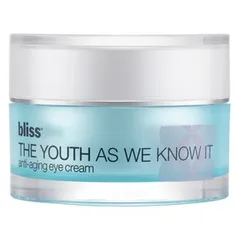
"Bliss - Youth Eye Cream" is a well-rounded moisturizing product. The formulation is based on a combination of good humectants and emollients. Both are needed to increase the skin hydration level. Urea, aminobutyric acid, glycerin, saccharomyces lysate extract and sodium hyaluronate in this product (humectants) attract water molecules to the upper layer of the skin (the water comes from the outside air or from the deeper layers of the skin if the air is dry). Emollients in this formulation (ceramide 2, palmitoyl tetrapeptide-7, cholesterol, butyrospermum parkii butter and dimethicone) help to reduce the moisture loss from the skin. They also soften the skin surface and relieve the feeling of dryness and tightness.
Ingredient callouts
- this moisturizer includes a form of retinoids (vitamin A) - retinyl palmitate 0.15% - 0.25%, but this type of vitamin A is not very effective. It could in theory help with fine lines and wrinkles, but the effect is most likely minimal.
- As a plus, this moisturizer also contains ceramides (ceramide 2 0.30% - 0.55%). Ceramides are a type of lipids that our skin produces itself. They are a building block of the skin's barrier. Ceramides used in skincare are synthetic or extracted from plants. They work well for softening the skin surface and "patch holes" in the skin's barrier.
- We like that this moisturizer contains peptides (palmitoyl tetrapeptide-7 0.30% - 0.55% and palmitoyl oligopeptide 0.40% - 0.60%). There are many different kind of peptides and they are naturally present in our skin. They all are a combination of amino-acids. Some of them work as natural anti-biotics, promote wound-healing and production of collagen. The science is still not settled on how effective peptides in skincare are, but it is very likely that they have a benefit. Peptides might help restore the skin barrier and fight the signs of aging. At the very least, peptides work as humectants: they attract water to the upper layer of the skin and improve its hydration.
Irritation risk
We assess the overall irritancy of this moisturizer to be high. For a detailed overview of all potential irritants: click here
You can see the detailed formula review with the breakdown of all actives in the product and the full ingredient list with estimated concentrations in the tables below.
Price
The product retails for 69.00A$ in Australia.
For a detailed price comparison: click here.
Moisturizing
What does the product description say?
Wrinkle appearance smoothers.
Source: Recreate Yourself
This product can help improve hydration of the skin with the two types of ingredients.
The first type is called “humectants”:
these ingredients help attract water.
When humectants are on the surface of the skin, they “pull in” the moisture from the outside environment, or from
within deeper layers of the skin. The following ingredients in this product do the job:
aminobutyric acid, glycerin.
This product also contains ingredients called “occlusives”. They help reduce the speed with which our skin loses moisture to the outside environment. These ingredients also help soften the upper layer of the skin, so it feels less tight and nicer to the touch. The following ingredients in this product do the job: butyrospermum parkii butter, dimethicone.
The following ingredients in this product are especially good for supporting the skin barrier and helping with the hydration level: ceramide 2, palmitoyl oligopeptide, palmitoyl tetrapeptide-7, urea
One of the best moisturizing ingredients. Naturally present in skin. It attracts water to the upper layer of the skin working as a humectant
A type of peptide. Peptides are excellent moisturizers and might be able support collagen production reducing fine lines and wrinkles
Helps attract water to the upper layer of the skin. Can have some anti-inflammatory effect
Sugar extract that helps attract water to the upper layer of the skin
One of the best moisturizing ingredients. Attracts water into the upper layer of the skin
Naturally present in skin and helps to attract water to its upper layer
An oil naturally present in skin. Works as an emollient to soften the skin and form a protective layer on its surface without a greasy feeling.
A sugar that attracts water to the upper layer of the skin
Naturally present in skin (urea makes up about 7% of natural moisturizing factors in skin). Attracts water to the upper layer of the skin. Also has a positive effect on the skin barrier beyond the humectant action. Can enhance penetration of other ingredients. Is an exfoliating ingredient when used in high concentrations
An emollient that is naturally found in skin
A type of lipid similar to ceramides naturally present in skin. Helps to soften the upper layer of the skin and supports the skin barrier function to keep it hydrated. Can help to prevent inflammation in skin
A great moisturising ingredient that softens the skin and reduces water loss from its upper layer. It also can be helpful in protecting skin from free radicals
Has been shown to support wound healing and skin barrier function when used topically in rats. Is likely to be effective in supporting skin's hydration and barrier function, but research for human skin is missing. Might have some anti-aging properties but the research is missing
A silicone that helps to reduce water loss from the surface of the skin. Can temporarily "fill in" lines and wrinkles, absorb oil, and create a nice product finish
A type of peptide. Peptides are excellent moisturizers and might be able support collagen production reducing fine lines and wrinkles
An emollient that helps soften the skin. Might be somewhat helpful in evening the skin tone.
Derived from brown algae. Helps attract water to the upper layer of the skin
A silicone that helps improve the product texture and spreadability. Can absorb oil creating a short-term mattifying effect on the skin
A plant extract that can help to attract water to the upper layer of the skin and might have some anti-oxidant and anti-inflammatory properties
A non-drying alcohol that works to soften the skin and stabilize product formulations helping oil and water mix together
A non-drying alcohol. Works as an emollient. Helps water and oil mix together and creates a nice product texture
Used to create a nice product texture and help delivery of other ingredients. Might be somewhat helpful in attracting water to the upper layer of the skin
A plant extract that has some anti-oxidant activity, but solid research is lacking. Can help attract water to the upper layer of the skin
An emollient that softens the skin and forms a protective layer on its surface. Helps water and oil mix together
A silicone that forms a light film on the skin surface helping to bind water and temporarily absorb oils creating a matt and powdery feel
An emollient that helps create a nice silky finish on the skin
Used to preserve products, dissolve other ingredients and create a nice product texture
A plant extract that has been shown to be able to reduce inflammation in skin, support restoration of skin barrier function, as well as support collagen production. Contains active compounds called centelloids: asiaticoside, madecasosside, asiatic acid and madecassic acid. Might be helpful in preventing stretch marks. It can be itself be irritating though.
Anti-aging
What does the product description say?
Wrinkle appearance smoothers.
Source: Recreate Yourself
This product contains palmitoyl oligopeptide, palmitoyl tetrapeptide-7. These ingredients might be able to help reduce and prevent fine lines and wrinkles, improve skin elasticity and firmness, but there is not enough evidence that it actually works.
A type of peptide. Peptides are excellent moisturizers and might be able support collagen production reducing fine lines and wrinkles
A type of peptide. Peptides are excellent moisturizers and might be able support collagen production reducing fine lines and wrinkles
A great moisturising ingredient that softens the skin and reduces water loss from its upper layer. It also can be helpful in protecting skin from free radicals
An emollient that helps soften the skin. Might be somewhat helpful in evening the skin tone.
Might be helpful in reducing fine lines and wrinkles, as well as lightening the skin, but solid evidence is missing. Could somewhat help in reducing the darkness of the under-eye area. Helps to neutralise free radicals in skin
Has been shown to support wound healing and skin barrier function when used topically in rats. Is likely to be effective in supporting skin's hydration and barrier function, but research for human skin is missing. Might have some anti-aging properties but the research is missing
Being a lipid soluble form of vitamin C, it is more stable than ascorbic acid, but still degrades quickly and needs to be stabilized in a formulation with another ingredient. It is claimed to penetrate skin better than pure vitamin C and have the the similar benefits, but solid studies of its effectiveness are lacking. Is likely to require a higher concentration in a product than pure vitamin C to be effective. It might be able to help reduce pore clogging.
Three steps removed from the active form of vitamin A - retinoic acid. To have an effect in the skin, it first needs to be converted twice to become the retinoic acid. This means it is less potent than retinol, but could also be less irritating. Once converted to the retinoic acid in the skin, it helps against all signs of aging, improves skin cell turnover and helps fight blemishes and clogged pores. However, in many cosmetic formulations, it is used in a concentration that is too low to have the full effect
A plant extract that has been shown to be able to reduce inflammation in skin, support restoration of skin barrier function, as well as support collagen production. Contains active compounds called centelloids: asiaticoside, madecasosside, asiatic acid and madecassic acid. Might be helpful in preventing stretch marks. It can be itself be irritating though.
Anti-oxidation
This product contains antioxidants (chrysin) that might be able to help neutralize free radicals in skin to lessen the damage it gets from the UV light (sun). There is not enough evidence to confirm their effectiveness in skin though.
Might be helpful in reducing fine lines and wrinkles, as well as lightening the skin, but solid evidence is missing. Could somewhat help in reducing the darkness of the under-eye area. Helps to neutralise free radicals in skin
A plant extract that can help to attract water to the upper layer of the skin and might have some anti-oxidant and anti-inflammatory properties
An emollient that helps soften the skin. Might be somewhat helpful in evening the skin tone.
A plant extract that has some anti-oxidant activity, but solid research is lacking. Can help attract water to the upper layer of the skin
A great moisturising ingredient that softens the skin and reduces water loss from its upper layer. It also can be helpful in protecting skin from free radicals
Being a lipid soluble form of vitamin C, it is more stable than ascorbic acid, but still degrades quickly and needs to be stabilized in a formulation with another ingredient. It is claimed to penetrate skin better than pure vitamin C and have the the similar benefits, but solid studies of its effectiveness are lacking. Is likely to require a higher concentration in a product than pure vitamin C to be effective. It might be able to help reduce pore clogging.
A plant extract that has been shown to be able to reduce inflammation in skin, support restoration of skin barrier function, as well as support collagen production. Contains active compounds called centelloids: asiaticoside, madecasosside, asiatic acid and madecassic acid. Might be helpful in preventing stretch marks. It can be itself be irritating though.
A more stable but less bio-available form of vitamin E compared to Tocopherol. Might help moisturize and protect the skin from free radicals, but mostly used in low concentrations to stabilize other ingredients.
Evens skin tone
The following ingredient (ingredients) in this product might be helpful, but there is no evidence to confirm that it actually works: chrysin, glycine soja seed extract.
Might be helpful in reducing fine lines and wrinkles, as well as lightening the skin, but solid evidence is missing. Could somewhat help in reducing the darkness of the under-eye area. Helps to neutralise free radicals in skin
An emollient that helps soften the skin. Might be somewhat helpful in evening the skin tone.
Is claimed to be able to brighten skin tone by removing some blood-related pigmented compounds in skin (hemoglobin and related elements) but solid research is missing. Can be irritating
Being a lipid soluble form of vitamin C, it is more stable than ascorbic acid, but still degrades quickly and needs to be stabilized in a formulation with another ingredient. It is claimed to penetrate skin better than pure vitamin C and have the the similar benefits, but solid studies of its effectiveness are lacking. Is likely to require a higher concentration in a product than pure vitamin C to be effective. It might be able to help reduce pore clogging.
Three steps removed from the active form of vitamin A - retinoic acid. To have an effect in the skin, it first needs to be converted twice to become the retinoic acid. This means it is less potent than retinol, but could also be less irritating. Once converted to the retinoic acid in the skin, it helps against all signs of aging, improves skin cell turnover and helps fight blemishes and clogged pores. However, in many cosmetic formulations, it is used in a concentration that is too low to have the full effect
Used for skin exfoliation. It has an anti-inflammatory and anti-bacterial effect, helps to unclog pores, prevent blemishes and speed up healing of the existing ones. Sometimes referred to as a BHA (beta-hydroxy acid)
Exfoliation
What does the product description say?
Known to promote cellular renewal and the exfoliation of skin cells.
Source: Recreate Yourself
This product might help exfoliate the skin with urea, but This ingredient is not the most effective.
Naturally present in skin (urea makes up about 7% of natural moisturizing factors in skin). Attracts water to the upper layer of the skin. Also has a positive effect on the skin barrier beyond the humectant action. Can enhance penetration of other ingredients. Is an exfoliating ingredient when used in high concentrations
Used for skin exfoliation. It has an anti-inflammatory and anti-bacterial effect, helps to unclog pores, prevent blemishes and speed up healing of the existing ones. Sometimes referred to as a BHA (beta-hydroxy acid)
Three steps removed from the active form of vitamin A - retinoic acid. To have an effect in the skin, it first needs to be converted twice to become the retinoic acid. This means it is less potent than retinol, but could also be less irritating. Once converted to the retinoic acid in the skin, it helps against all signs of aging, improves skin cell turnover and helps fight blemishes and clogged pores. However, in many cosmetic formulations, it is used in a concentration that is too low to have the full effect
How honest is this product?
| Promise | Can it deliver? |
|---|---|
| Moisturizing | |
| Anti-aging | |
| Exfoliation |
Total Promises Fulfilled score: 75/100.
We receive a small commission for purchases made through these links at no cost for you. Thank you for your support! Learn more
Potential irritants
Comedogenic ingredients
User reviews (0)
Averages from community submissions.
No reviews yet for this product.
Be the first to share your experience!
Tried this product?
Help capture what the ingredient list can't—texture, finish, pilling, scent, and more. Answer what you can, skip the rest.
Takes ~30 seconds.
Reviews are shown in aggregate. No personal details.
| Product | Similarity | Price | Irritancy |
|---|---|---|---|
 Bliss Youth Eye Cream | Current | $40.02 | |
 Kerstin Florian Brightening Eye Creme | 82% | $78.00 | |
 Joanna Vargas Revitalizing Eye Cream | 75% | ≈ $66.43 | |
 Filorga NCEF-Reverse Eyes Supreme Multi-Correction Eye Cream | 69% | ≈ $61.16 | |
 Dr Sebagh Firming Eye Cream | 68% | - | |
BYBI Bright Eyed Illuminating Eye Cream | 67% | $15.00 |
Key Actives
A plant extract that has been shown to be able to reduce inflammation in skin, support restoration of skin barrier function, as well as support collagen production. Contains active compounds called centelloids: asiaticoside, madecasosside, asiatic acid and madecassic acid. Might be helpful in preventing stretch marks. It can be itself be irritating though.
Used for skin exfoliation. It has an anti-inflammatory and anti-bacterial effect, helps to unclog pores, prevent blemishes and speed up healing of the existing ones. Sometimes referred to as a BHA (beta-hydroxy acid)
Three steps removed from the active form of vitamin A - retinoic acid. To have an effect in the skin, it first needs to be converted twice to become the retinoic acid. This means it is less potent than retinol, but could also be less irritating. Once converted to the retinoic acid in the skin, it helps against all signs of aging, improves skin cell turnover and helps fight blemishes and clogged pores. However, in many cosmetic formulations, it is used in a concentration that is too low to have the full effect
A great moisturising ingredient that softens the skin and reduces water loss from its upper layer. It also can be helpful in protecting skin from free radicals
Has been shown to support wound healing and skin barrier function when used topically in rats. Is likely to be effective in supporting skin's hydration and barrier function, but research for human skin is missing. Might have some anti-aging properties but the research is missing
A type of peptide. Peptides are excellent moisturizers and might be able support collagen production reducing fine lines and wrinkles
Might be helpful in reducing fine lines and wrinkles, as well as lightening the skin, but solid evidence is missing. Could somewhat help in reducing the darkness of the under-eye area. Helps to neutralise free radicals in skin
A silicone that helps improve the product texture and spreadability. Can absorb oil creating a short-term mattifying effect on the skin
A silicone that helps to reduce water loss from the surface of the skin. Can temporarily "fill in" lines and wrinkles, absorb oil, and create a nice product finish
A type of lipid similar to ceramides naturally present in skin. Helps to soften the upper layer of the skin and supports the skin barrier function to keep it hydrated. Can help to prevent inflammation in skin
A silicone that forms a light film on the skin surface helping to bind water and temporarily absorb oils creating a matt and powdery feel
An emollient that is naturally found in skin
A type of peptide. Peptides are excellent moisturizers and might be able support collagen production reducing fine lines and wrinkles
Naturally present in skin (urea makes up about 7% of natural moisturizing factors in skin). Attracts water to the upper layer of the skin. Also has a positive effect on the skin barrier beyond the humectant action. Can enhance penetration of other ingredients. Is an exfoliating ingredient when used in high concentrations
One of the best moisturizing ingredients. Naturally present in skin. It attracts water to the upper layer of the skin working as a humectant
One of the best moisturizing ingredients. Attracts water into the upper layer of the skin
Helps attract water to the upper layer of the skin. Can have some anti-inflammatory effect
An oil naturally present in skin. Works as an emollient to soften the skin and form a protective layer on its surface without a greasy feeling.
Sugar extract that helps attract water to the upper layer of the skin
Naturally present in skin and helps to attract water to its upper layer
A sugar that attracts water to the upper layer of the skin
Potential irritants
A plant extract that is used as a fragrance. Can be irritating and lead to photosensitivity
Used as a fragrance. Can be irritating and cause photosensitivity
A preservative. Can be used to mask unpleasant smell. Can be irritating
Used for skin exfoliation. It has an anti-inflammatory and anti-bacterial effect, helps to unclog pores, prevent blemishes and speed up healing of the existing ones. Sometimes referred to as a BHA (beta-hydroxy acid)
Is claimed to be able to brighten skin tone by removing some blood-related pigmented compounds in skin (hemoglobin and related elements) but solid research is missing. Can be irritating
Three steps removed from the active form of vitamin A - retinoic acid. To have an effect in the skin, it first needs to be converted twice to become the retinoic acid. This means it is less potent than retinol, but could also be less irritating. Once converted to the retinoic acid in the skin, it helps against all signs of aging, improves skin cell turnover and helps fight blemishes and clogged pores. However, in many cosmetic formulations, it is used in a concentration that is too low to have the full effect
Used to preserve products, dissolve other ingredients and create a nice product texture
An emollient that helps soften the skin. Might be somewhat helpful in evening the skin tone.
A plant extract that has some anti-oxidant activity, but solid research is lacking. Can help attract water to the upper layer of the skin
A more stable but less bio-available form of vitamin E compared to Tocopherol. Might help moisturize and protect the skin from free radicals, but mostly used in low concentrations to stabilize other ingredients.
A plant extract that can help to attract water to the upper layer of the skin and might have some anti-oxidant and anti-inflammatory properties
Being a lipid soluble form of vitamin C, it is more stable than ascorbic acid, but still degrades quickly and needs to be stabilized in a formulation with another ingredient. It is claimed to penetrate skin better than pure vitamin C and have the the similar benefits, but solid studies of its effectiveness are lacking. Is likely to require a higher concentration in a product than pure vitamin C to be effective. It might be able to help reduce pore clogging.
A plant extract that has been shown to be able to reduce inflammation in skin, support restoration of skin barrier function, as well as support collagen production. Contains active compounds called centelloids: asiaticoside, madecasosside, asiatic acid and madecassic acid. Might be helpful in preventing stretch marks. It can be itself be irritating though.
A gelling agent that thickens the product consistency and leaves the skin with a velvety finish
A plant extract that contains small percentage of AHAs. Is unlikely to have any skin benefit due the small concentration of the active compounds
Might be helpful in reducing fine lines and wrinkles, as well as lightening the skin, but solid evidence is missing. Could somewhat help in reducing the darkness of the under-eye area. Helps to neutralise free radicals in skin
Comedogenic ingredients
A great moisturising ingredient that softens the skin and reduces water loss from its upper layer. It also can be helpful in protecting skin from free radicals
A non-drying alcohol. Works as an emollient. Helps water and oil mix together and creates a nice product texture
A plant extract that can help to attract water to the upper layer of the skin and might have some anti-oxidant and anti-inflammatory properties
Derived from brown algae. Helps attract water to the upper layer of the skin
All ingredients
A silicone that helps improve the product texture and spreadability. Can absorb oil creating a short-term mattifying effect on the skin
Used to preserve products, dissolve other ingredients and create a nice product texture
One of the best moisturizing ingredients. Naturally present in skin. It attracts water to the upper layer of the skin working as a humectant
A great moisturising ingredient that softens the skin and reduces water loss from its upper layer. It also can be helpful in protecting skin from free radicals
A non-drying alcohol. Works as an emollient. Helps water and oil mix together and creates a nice product texture
A silicone that helps to reduce water loss from the surface of the skin. Can temporarily "fill in" lines and wrinkles, absorb oil, and create a nice product finish
An emollient that softens the skin and forms a protective layer on its surface. Helps water and oil mix together
A non-drying alcohol that works to soften the skin and stabilize product formulations helping oil and water mix together
An emollient that helps soften the skin. Might be somewhat helpful in evening the skin tone.
A plant extract that has some anti-oxidant activity, but solid research is lacking. Can help attract water to the upper layer of the skin
A more stable but less bio-available form of vitamin E compared to Tocopherol. Might help moisturize and protect the skin from free radicals, but mostly used in low concentrations to stabilize other ingredients.
One of the best moisturizing ingredients. Attracts water into the upper layer of the skin
A plant extract that can help to attract water to the upper layer of the skin and might have some anti-oxidant and anti-inflammatory properties
Helps attract water to the upper layer of the skin. Can have some anti-inflammatory effect
An oil naturally present in skin. Works as an emollient to soften the skin and form a protective layer on its surface without a greasy feeling.
Being a lipid soluble form of vitamin C, it is more stable than ascorbic acid, but still degrades quickly and needs to be stabilized in a formulation with another ingredient. It is claimed to penetrate skin better than pure vitamin C and have the the similar benefits, but solid studies of its effectiveness are lacking. Is likely to require a higher concentration in a product than pure vitamin C to be effective. It might be able to help reduce pore clogging.
A plant extract that has been shown to be able to reduce inflammation in skin, support restoration of skin barrier function, as well as support collagen production. Contains active compounds called centelloids: asiaticoside, madecasosside, asiatic acid and madecassic acid. Might be helpful in preventing stretch marks. It can be itself be irritating though.
A type of lipid similar to ceramides naturally present in skin. Helps to soften the upper layer of the skin and supports the skin barrier function to keep it hydrated. Can help to prevent inflammation in skin
Dissolves other ingredients. It does not have additional skin benefits compared to plain water
Helps create a thicker or gel-like product texture. It is not a surfactant but can be used in gentle cleansing formulations
A silicone that forms a light film on the skin surface helping to bind water and temporarily absorb oils creating a matt and powdery feel
A gelling agent that thickens the product consistency and leaves the skin with a velvety finish
Has been shown to support wound healing and skin barrier function when used topically in rats. Is likely to be effective in supporting skin's hydration and barrier function, but research for human skin is missing. Might have some anti-aging properties but the research is missing
Used to create a nice product texture and help delivery of other ingredients. Might be somewhat helpful in attracting water to the upper layer of the skin
A plant extract that contains small percentage of AHAs. Is unlikely to have any skin benefit due the small concentration of the active compounds
A plant extract that is used as a fragrance. Can be irritating and lead to photosensitivity
Used as a fragrance. Can be irritating and cause photosensitivity
Sugar extract that helps attract water to the upper layer of the skin
A preservative. It helps prevent bacterial growth in cosmetic products
Derived from brown algae. Helps attract water to the upper layer of the skin
A preservative. Can be used to mask unpleasant smell. Can be irritating
A type of peptide. Peptides are excellent moisturizers and might be able support collagen production reducing fine lines and wrinkles
A type of peptide. Peptides are excellent moisturizers and might be able support collagen production reducing fine lines and wrinkles
Used for skin exfoliation. It has an anti-inflammatory and anti-bacterial effect, helps to unclog pores, prevent blemishes and speed up healing of the existing ones. Sometimes referred to as a BHA (beta-hydroxy acid)
Might be helpful in reducing fine lines and wrinkles, as well as lightening the skin, but solid evidence is missing. Could somewhat help in reducing the darkness of the under-eye area. Helps to neutralise free radicals in skin
Is claimed to be able to brighten skin tone by removing some blood-related pigmented compounds in skin (hemoglobin and related elements) but solid research is missing. Can be irritating
An emollient that helps create a nice silky finish on the skin
Naturally present in skin and helps to attract water to its upper layer
Naturally present in skin (urea makes up about 7% of natural moisturizing factors in skin). Attracts water to the upper layer of the skin. Also has a positive effect on the skin barrier beyond the humectant action. Can enhance penetration of other ingredients. Is an exfoliating ingredient when used in high concentrations
Three steps removed from the active form of vitamin A - retinoic acid. To have an effect in the skin, it first needs to be converted twice to become the retinoic acid. This means it is less potent than retinol, but could also be less irritating. Once converted to the retinoic acid in the skin, it helps against all signs of aging, improves skin cell turnover and helps fight blemishes and clogged pores. However, in many cosmetic formulations, it is used in a concentration that is too low to have the full effect
Used to stabilize mixtures of oil and water, and create thicker, gel-like product textures
Ingredient list view
Water, Cyclopentasiloxane, Ppg-3 benzyl ether myristate, Pentylene glycol, Glycerin, Polysorbate 60, Butyrospermum parkii butter, Cetearyl alcohol, Dimethicone, Peg-40 stearate, Glyceryl stearate, Cetyl alcohol, Glycine soja seed extract, Portulaca oleracea extract, Tocopheryl acetate, Sodium hyaluronate, Centella asiatica root extract, Chlorella vulgaris extract, Saccharomyces lysate extract, Squalane, Tetrahexyldecyl ascorbate, Centella asiatica extract, Daucus carota sativa root, Ceramide 2, Sea water, Maris aqua, Carbomer, Polysilicone-11, Cholesterol, Hydroxyethyl acrylate/sodium acryloyldimethyl taurate copolymer, Aminobutyric acid, Peg-75 stearate, Steareth-20, Butylene glycol, Acer saccharum extract, Citrus aurantium dulcis fruit extract, Citrus limon fruit extract, Saccharum officinarum extract, Vaccinium myrtillus fruit/leaf extract, Phenoxyethanol, Ceteth-20, Hydrolyzed algin, Benzyl alcohol, Palmitoyl oligopeptide, Palmitoyl tetrapeptide-7, Polysorbate 20, Potassium sorbate, Sodium benzoate, Sodium hydroxide, Disodium edta, Benzoic acid, Dehydroacetic acid, Salicylic acid, Chrysin, N-hydroxysuccinimide, Polyquaternium-51, Sodium pca, Trehalose, Urea, Benzethonium chloride, Retinyl palmitate, Sodium chloride, Barium sulfate, Ci 77120
- Glycerol and the skin: holistic approach to its origin and functions
- Dimethicone as a protective ingredient in topical medications
- Final Report on the Safety Assessment of Dimethicone Copolyol
- Portulaca oleracea (purslane)
- Hyaluronic acid: A key molecule in skin aging
- Hyaluronan (Hyaluronic Acid): a natural moisturizer for skin care
- Use of Probiotics for Dermal Applications
- Double-blind, half-face study comparing topical vitamin C and vehicle for rejuvenation of photodamage
- Application of tetra-isopalmitoyl ascorbic acid in cosmetic formulations: Stability studies and in vivo efficacy
- Anti-Inflammatory Effect of Titrated Extract of Centella asiatica in Phthalic Anhydride-Induced Allergic Dermatitis Animal Model
- Centella asiatica in cosmetology
- Triterpene Composition and Bioactivities of Centella asiatica
- Asiaticoside induction for cell-cycle progression, proliferation and collagen synthesis in human dermal fibroblasts
- Assessment report on Centella asiatica (L.) Urban, herba
- Contact dermatitis due to Madecassol
- The Effects of a Standardized Extract of Centella asiatica on Postlaser Resurfacing Wound Healing on the Face: A Split-Face, Double-Blind, Randomized, Placebo-Controlled Trial
- Topically Applied Ceramides Interact with the Stratum Corneum Lipid Matrix in Compromised Ex Vivo Skin
- gamma-Aminobutyric acid (A) receptor agonists accelerate cutaneous barrier recovery and prevent epidermal hyperplasia induced by barrier disruption
- Wound healing activity of gamma-aminobutyric Acid (GABA) in rats
- Moisturizing effect of Gamma-aminobutyric acid for cosmetic application
- Stimulation of human fibroblast collagen synthesis in vitro by gamma-aminobutyric acid
- Safety Assessment of Citrus Fruit-Derived Ingredients as Used in Cosmetics
- Photosensitivity in children: An approach to diagnosis and management
- Safety Assessment of Citrus-Derived Peel Oils as Used in Cosmetics
- Safety Assessment of Plant Polysaccharide Gums as Used in Cosmetics
- 4 Final Report on the Safety Assessment of Sodium Dehydroacetate and Dehydroacetic Acid
- Salicylic acid as a peeling agent: a comprehensive review
- Beta Hydroxy Acids
- A review of toxicity from topical salicylic acid preparations
- Glycolic Acid Peels Versus Salicylic–Mandelic Acid Peels in Active Acne Vulgaris and Post‐Acne Scarring and Hyperpigmentation: A Comparative Study
- Anti-photoageing and anti-melanogenesis activities of chrysin
- Chrysin Protects Epidermal Keratinocytes from UVA- and UVB-Induced Damage
- Inhibition of melanogenesis by 5,7-dihydroxyflavone (chrysin) via blocking adenylyl cyclase activity
- Topical urea in skincare: A review