Works for
2 of 2 advertised claims delivered
Anti-aging5 ingredients credited for this claimStrong support
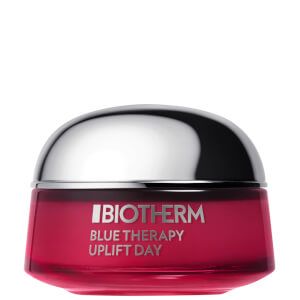
“Biotherm’s Blue Therapy Red Algae Uplift Day Cream is a velvety formula designed to target the visible signs of ageing.”
This product can help reduce and prevent fine lines and wrinkles, improve skin elasticity and firmness because it contains adenosine.
These ingredients in the product can also be helpful, even though there is less evidence for their effectiveness: palmitoyl tetrapeptide-7, palmitoyl tripeptide-1.
Keep in mind that it typically takes at least 6 weeks to notice any results because the changes that are needed to improve fine lines and elasticity happen in the deeper layers of the skin. No topical anti-aging product can “erase” wrinkles or fully reverse signs of aging.
Moisturizing18 ingredients credited for this claimStrong support
“Infused with 100% natural life plankton, the cream works to soften the appearance of fine lines and wrinkles.”
This product can help improve hydration of the skin with the two types of ingredients.
The first type is called “humectants”:
these ingredients help attract water.
When humectants are on the surface of the skin, they “pull in” the moisture from the outside environment, or from
within deeper layers of the skin. The following ingredients in this product do the job:
glycerin, sodium lactate.
This product also contains ingredients called “occlusives”. They help reduce the speed with which our skin loses moisture to the outside environment. These ingredients also help soften the upper layer of the skin, so it feels less tight and nicer to the touch. The following ingredients in this product do the job: dimethicone, cetearyl alcohol.
The following ingredients in this product are especially good for supporting the skin barrier and helping with the hydration level: palmitoyl tetrapeptide-7, palmitoyl tripeptide-1
Can it cause trouble?
Irritancy6 strong irritants: Alcohol denat., Linalool + 4 more — patch-test recommendedHigh risk
Comedogenic6 ingredients rated 2 or more on the 0–5 pore-clogging scale6 flagged


User reviews
Be the first — your take helps the next person decide.
Ingredients
Filter by role to see what each ingredient is doing.
Water~45–55%
Glycerin~4.6–5.6%
- Irritation risk
- Low
One of the best moisturizing ingredients. Naturally present in skin. It attracts water to the upper layer of the skin working as a humectant
More about GlycerinDimethicone~4.2–5.1%
- Irritation risk
- Low
A silicone that helps to reduce water loss from the surface of the skin. Can temporarily "fill in" lines and wrinkles, absorb oil, and create a nice product finish
More about DimethiconeRhamnose~3–3.7%
- Irritation risk
- Low
Helps oil and water mix together. It also helps attract water to the upper layer of the skin
More about RhamnoseIsohexadecane~2.4–2.9%
- Irritation risk
- Low
Improves the texture of the product and helps soften the skin. Helps oil and water mix together and can be used as a cleansing agent
More about IsohexadecaneAlcohol denat.~1.9–2.3%
- Irritation risk
- High
Produces temporary toning effect. Can help dissolve other ingredients or preserve products
More about Alcohol denat.Propanediol~1.6–2%
- Irritation risk
- Low
Acts as a solvent for other ingredients. Speeds up the absorption of other ingredients into the skin
More about PropanediolIsopropyl isostearate~1.5–1.8%
- Irritation risk
- Low
- Comedogenicity
- 3/5
An emollient that helps soften the skin
More about Isopropyl isostearateBehenyl alcohol~1.2–1.5%
- Irritation risk
- Low
Non-drying alcohol that helps water and oil mix together. Also serves as an emollient
More about Behenyl alcoholVinyl dimethicone/methicone silsesquioxane crosspolymer~0.9–1.15%
- Irritation risk
- Low
A type of silicone that create a smooth product finish and can create an optical soft-focus effect on the skin. Helps to thicken the product consistency
More about Vinyl dimethicone/methicone silsesquioxane crosspolymerCetyl alcohol~0.75–1.15%
- Irritation risk
- Low
A non-drying alcohol that works to soften the skin and stabilize product formulations helping oil and water mix together
More about Cetyl alcoholDimethicone/vinyl dimethicone crosspolymer~0.55–0.85%
- Irritation risk
- Low
Used to stabilize product formulations and create a nice product texture
More about Dimethicone/vinyl dimethicone crosspolymerNylon-12~0.65–0.95%
Alaria esculenta extract~0.45–0.7%
- Irritation risk
- Low
Works as a humectant helping to attract water to the upper layer of the skin and might be effective as an anti-oxidant.
More about Alaria esculenta extractCarrageenan~0.45–0.7%
- Irritation risk
- Medium
- Comedogenicity
- 3/5
Helps thicken the product formula and create a nice product formulation
More about CarrageenanTin oxide~0.6–0.9%
- Irritation risk
- Low
A colorant that can add a pearl-like appearance to the formulation
More about Tin oxidePeg-100 stearate~0.5–0.75%
- Irritation risk
- Low
Helps oil and water mix togehter and creates a nice product texture
More about Peg-100 stearateStearic acid~0.5–0.75%
- Irritation risk
- Low
Helps oil and water mix together and works as an emollient
More about Stearic acidSorbitan oleate~0.3–0.6%
- Irritation risk
- Medium
- Comedogenicity
- 2/5
Helps oil and water mix together
More about Sorbitan oleateCarbomer~0.3–0.55%
- Irritation risk
- Low
Helps create a thicker or gel-like product texture. It is not a surfactant but can be used in gentle cleansing formulations
More about CarbomerCetearyl alcohol~0.3–0.6%
- Irritation risk
- Low
- Comedogenicity
- 2/5
A non-drying alcohol. Works as an emollient. Helps water and oil mix together and creates a nice product texture
More about Cetearyl alcoholCetearyl glucoside~0.3–0.55%
- Irritation risk
- Medium
Helps water and oil in the product mix well together and improves product texture
More about Cetearyl glucosideCaffeine~0.25–0.45%
- Irritation risk
- Medium
Might be helpful in neutralizing free radicals. Can have a dehydration effect that might somewhat decrease the look of puffy eyes
More about CaffeineNeohesperidin dihydrochalcone~0.25–0.45%
- Irritation risk
- Low
Sodium chloride~0.3–0.55%
- Irritation risk
- Low
Used to stabilize mixtures of oil and water, and create thicker, gel-like product textures
More about Sodium chlorideSodium lactate~0.25–0.5%
- Irritation risk
- Medium
Helps attract water to the upper layer of the skin. Is often used to adjust the pH level of the product
More about Sodium lactateMyristic acid~0.3–0.55%
- Irritation risk
- Medium
- Comedogenicity
- 3/5
Helps oil and water mix together. Could be comedogenic
More about Myristic acidPalmitic acid~0.3–0.55%
- Irritation risk
- Low
An emollient that is naturally present in skin and helps soften it
More about Palmitic acidPalmitoyl tetrapeptide-7~0.3–0.55%
- Irritation risk
- Low
A type of peptide. Peptides are excellent moisturizers and might be able support collagen production reducing fine lines and wrinkles
More about Palmitoyl tetrapeptide-7Palmitoyl tripeptide-1~0.3–0.55%
- Irritation risk
- Low
A type of peptide. Peptides are excellent moisturizers and might be able support collagen production reducing fine lines and wrinkles
More about Palmitoyl tripeptide-1Adenosine~0.25–0.45%
- Irritation risk
- Low
Might help improve cell turnover and reduce inflammation in skin. One study shows that the ingredients might be able to help reduce dynamic wrinkles (for example, in the corners of the eyes or on the forehead)
More about AdenosineAmmonium polyacryloyldimethyl taurate~0.25–0.5%
- Irritation risk
- Low
Used to create a thicker product consistency
More about Ammonium polyacryloyldimethyl taurateDisodium stearoyl glutamate~0.3–0.6%
- Irritation risk
- Medium
Helps oil and water mix together and workd as a cleanser
More about Disodium stearoyl glutamateHydrolyzed rhodophyceae extract~0.25–0.5%
- Irritation risk
- Low
- Comedogenicity
- 3/5
Caprylic/capric triglyceride~0.3–0.6%
- Irritation risk
- Medium
A good mix of fatty acids that forms a protective layer on the skin. Improves the shelf life of products. Derived from coconut and glycerin
More about Caprylic/capric triglycerideCaprylyl glycol~0.3–0.55%
- Irritation risk
- Medium
Helps preserve products and creates a nice product texture
More about Caprylyl glycolVitreoscilla ferment~0.25–0.45%
- Irritation risk
- Low
Citric acid~0.25–0.45%
- Irritation risk
- Medium
Can work as an exfoliant but is typically used to adjust the product pH
More about Citric acidTrisodium ethylenediamine disuccinate~0.25–0.45%
- Irritation risk
- Medium
Used to improve stability of the formulation
More about Trisodium ethylenediamine disuccinateXanthan gum~0.25–0.5%
- Irritation risk
- Low
Used to create a thicker product consistency
More about Xanthan gumSynthetic fluorphlogopite~0.25–0.5%
- Irritation risk
- Low
A mineral that is used as an optical filter (makes the skin looks nicer through light reflection) and to improve the texture of cosmetic products
More about Synthetic fluorphlogopitePolysorbate 20~0.3–0.5%
Polysorbate 80~0.3–0.5%
Acrylamide/sodium acryloyldimethyltaurate copolymer~0.25–0.45%
- Irritation risk
- Low
Helps water and oil mix together and create gel-like textures
More about Acrylamide/sodium acryloyldimethyltaurate copolymerButylene glycol~0.25–0.5%
- Irritation risk
- Low
Used to create a nice product texture and help delivery of other ingredients. Might be somewhat helpful in attracting water to the upper layer of the skin
More about Butylene glycolPhenoxyethanol~0.25–0.5%
- Irritation risk
- Low
A preservative. It helps prevent bacterial growth in cosmetic products
More about PhenoxyethanolCi 77163~0.25–0.45%
Ci 77491~0.25–0.45%
- Irritation risk
- Low
A red colorant made of iron oxide. Typically is not irritating
More about Ci 77491Iron oxides~0.2–0.4%
- Irritation risk
- Low
An umbrella term for the following three colorants: CI 77491, CI 77492, CI 77499. They might be able to offer some protection against visible light, but the degree of the protection is not clear
More about Iron oxidesCi 77891~0.2–0.4%
- Irritation risk
- Low
Titanium dioxide~0.3–0.6%
- Irritation risk
- Low
Works as a UV filter when used in high concentrations. It is photostable and is effective mostly against the UVB light, with some protection in the UVA range. In small concentrations, used for its ability to improve the color of cosmetic products. Is usually well tolerated by the skin
More about Titanium dioxideMica~0.25–0.45%
- Irritation risk
- Low
Creates an illusion of smoother and more radiant skin tone. Adds shimmer to the skin by reflecting light
More about MicaLinalool~0.15–0.25%
Geraniol~0.1–0.2%
Limonene~0.15–0.25%
- Irritation risk
- High
A common frangrance that can easily irritate skin, especially if exposed to air, light or heat
More about LimoneneCitronellol~0.15–0.25%
Parfum~0.05–0.15%
- Irritation risk
- High
An aromatic blend of unspecified and possibly irritating ingredients
More about ParfumIngredient list view
Water, Glycerin, Dimethicone, Rhamnose, Isohexadecane, Alcohol denat., Propanediol, Isopropyl isostearate, Behenyl alcohol, Vinyl dimethicone/methicone silsesquioxane crosspolymer, Cetyl alcohol, Dimethicone/vinyl dimethicone crosspolymer, Nylon-12, Alaria esculenta extract, Carrageenan, Tin oxide, Peg-100 stearate, Stearic acid, Sorbitan oleate, Carbomer, Cetearyl alcohol, Cetearyl glucoside, Caffeine, Neohesperidin dihydrochalcone, Sodium chloride, Sodium lactate, Myristic acid, Palmitic acid, Palmitoyl tetrapeptide-7, Palmitoyl tripeptide-1, Adenosine, Ammonium polyacryloyldimethyl taurate, Disodium stearoyl glutamate, Hydrolyzed rhodophyceae extract, Caprylic/capric triglyceride, Caprylyl glycol, Vitreoscilla ferment, Citric acid, Trisodium ethylenediamine disuccinate, Xanthan gum, Synthetic fluorphlogopite, Polysorbate 20, Polysorbate 80, Acrylamide/sodium acryloyldimethyltaurate copolymer, Butylene glycol, Phenoxyethanol, Ci 77163, Ci 77491, Iron oxides, Ci 77891, Titanium dioxide, Mica, Linalool, Geraniol, Limonene, Citronellol, Parfum, Unknown
Compare prices
Retailers ranked by price — lowest first.
Affiliate links · prices updated regularly · As an Amazon Associate, WIMJ earns from qualifying purchases.
Worth comparing, line by line.
Match % combines shared ingredients, the first five ingredients, shared actives and hero ingredients, irritancy (lower counts in the alternative's favour), texture and body area. Only products in the same routine step are compared.
| BIOTHERMBlue Therapy Red Algae CreamYOUR PRODUCT | MedipeelPeptide 9 Volume Tox Cream Pro | Paula's choiceResist Intensive Repair Cream | Institut EsthedermExcellage Re-Densifying Face Cream | |
|---|---|---|---|---|
| Match | — | 66% | 65% | 64% |
| Price | $28.39 | $49.58+$21.19 | $26.40−$1.99 | $81.00+$52.61 |
| Shared key ingredients | — | 6 of 9 | 7 of 9 | 7 of 9 |
| Key difference | — | Acetyl Dipeptide-1 Cetyl Ester | Niacinamide | Niacinamide |
| Irritancy | High | Medium | Medium | Medium |
| Drying alcohol | Contains drying alcohol | — | — | — |
| View product | Shop | Shop | Shop |


Product summary
Judging from the ingredient list, "BIOTHERM - Blue Therapy Red Algae Cream" works well for improving skin hydration The formulation is based on a combination of good humectants and emollients. Both are needed to increase the skin hydration level. Glycerin, sodium lactate, rhamnose, butylene glycol and caprylyl glycol in this product (humectants) attract water molecules to the upper layer of the skin (the water comes from the outside air or from the deeper layers of the skin if the air is dry). Emollients in this formulation (palmitoyl tetrapeptide-7, palmitoyl tripeptide-1, dimethicone, cetearyl alcohol and cetyl alcohol) help to reduce the moisture loss from the skin. They also soften the skin surface and relieve the feeling of dryness and tightness.
Ingredient callouts
- This moistruizer also contains peptides (palmitoyl tripeptide-1 0.30% - 0.55% and palmitoyl tetrapeptide-7 0.30% - 0.55%). Peptides is a very big group of ingredients. They all consist of a different combination of amino-acids. Our skin produces peptides naturally. Some of them work as natural anti-biotics, promote wound-healing and production of collagen. The scientists are still studying how effective the topical application of peptides is, but it is very likely that peptides in skincare are helpful. They might be able to support skin barrier restoration and even have an anti-aging benefit. At the very least, they certainly help attract water to the skin and support the hydration in this way.
- Adenosine 0.25% - 0.45% in this product adds an anti-aging property to it. Adenosine is a chemical present inside our skin cells. A clinical trial confirmed that topical application of adenosine in a low concentration reduce dynamic wrinkles (these are the wrinkles that appear with age in a places where we our mimic is the most active, for example, in the corners of the eyes or on the forehead).
Irritation risk
There are quite a few common irritants in this product, including ingredients without particular skin benefits. We would not recommend it for sensitive skin. We assess the overall irritancy of this moisturizer to be high. For a detailed overview of all potential irritants: click here
You can see the detailed formula review with the breakdown of all actives in the product and the full ingredient list with estimated concentrations in the tables below.
Price
The product retails for 121.02A$ in Australia, for 64.20$ in the United States and from 21.30£ up to 58.50£ in the United Kingdom.
For a detailed price comparison: click here.
Sources cited in this review
Every concentration estimate and effectiveness label is anchored to one of these 10 studies and safety reviews.
- 1
- 2
- 3Final Report on the Safety Assessment of Dimethicone Copolyoljournals.sagepub.com
- 4Potentially beneficial effects of rhamnose on skin ageing: an in vitro and in vivo studypubmed.ncbi.nlm.nih.gov
- 5Safety Assessment of Tin(IV) Oxide as Used in Cosmeticscir-safety.org
- 6Surfactants and experimental irritant contact dermatitisncbi.nlm.nih.gov

Affiliate links · As an Amazon Associate, WIMJ earns from qualifying purchases.