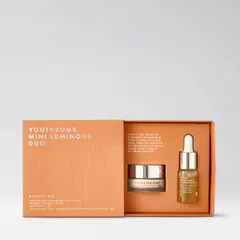
Works for:
based on ingredients and %- Moisturizing
- Anti-aging
Doesn't work for:
based on ingredients and %- Evens skin tone
Can it cause trouble?
- Irritation risk: high
- Comedogenic risk ingredients: 0
Key actives


Moisturizing
What does the product description say?
deep, cutting-edge moisture
Source: Beauty Pie
This product can help improve hydration of the skin with the two types of ingredients.
The first type is called “humectants”:
these ingredients help attract water.
When humectants are on the surface of the skin, they “pull in” the moisture from the outside environment, or from
within deeper layers of the skin. The following ingredients in this product do the job:
glycerin, polyglutamic acid.
This product also contains ingredients called “occlusives”. They help reduce the speed with which our skin loses moisture to the outside environment. These ingredients also help soften the upper layer of the skin, so it feels less tight and nicer to the touch. The following ingredients in this product do the job: dimethicone, coco-caprylate/caprate.
The following ingredients in this product are especially good for supporting the skin barrier and helping with the hydration level: acetyl hexapeptide-1
A seaweed extract that helps attract water to the upper layer of the skin and might have an anti-oxidant effect
A plant extract that can help attract water to the upper layer of the skin and might help to reduce inflammation
A product of bacterial fermentation. Can help attract water to the upper layer of the skin
A silicone that helps to reduce water loss from the surface of the skin. Can temporarily "fill in" lines and wrinkles, absorb oil, and create a nice product finish
One of the best moisturizing ingredients. Naturally present in skin. It attracts water to the upper layer of the skin working as a humectant
Helps attract water to the upper layer of the skin.
A type of peptide. Peptides are excellent moisturizers and might be able support collagen production reducing fine lines and wrinkles
Helps to soften the upper layer of the skin without creating a greasy texture
Helps attract water to the upper layer of the skin. Might have some anti-oxidant properties
Used to preserve products, dissolve other ingredients and create a nice product texture
An emollient that can also help water and oil mix together, as well as prevent bacteria growth in products
An emollient that softens the skin and forms a protective layer on its surface. Helps water and oil mix together
Used to create a nice product texture and help delivery of other ingredients. Might be somewhat helpful in attracting water to the upper layer of the skin
Helps preserve products and creates a nice product texture
Used to soften the upper layer of the skin and create a thicker product consistency
Non-drying alcohol that helps water and oil mix together. Also serves as an emollient
An effective moisturizing and skin barrier repair ingredient. Helps calm down inflammation and has some anti-oxidant properties
Is proven to be effective in reducing blemishes, evening out skin tone and helping to improve lines and wrinkles. It helps the skin to repair sun damage, calm down inflammation and keep maintain good levels of moisture. The concentration of about 2% is effective for supporting the skin barrier and evening out the skin tone. Concentration of 4-6% is better for helping with acne and balancing the sebum production
A good mix of fatty acids that forms a protective layer on the skin. Improves the shelf life of products. Derived from coconut and glycerin
A derivative of azelaic acid. It is obtained by reacting the chloride of azelaic acid with two molecules of glycine (an amino acid) and potassium hydroxide. It is less studied than azelaic acid, but the available research suggests that it also can be effective in reducing skin redness, hyperpigmentation and blemishes. There are claims that it is more bio-available and more effective than azelaic acid, but no comparison study is available. Potassium azeloyl diglycinate is better soluble in water compared with azelaic acid. Because of this property, products with potassium azeloyl digclycinate can have a nicer texture
Anti-aging
What does the product description say?
advanced firming
Source: Beauty Pie
This product contains acetyl hexapeptide-1. This ingredient might be able to help reduce and prevent fine lines and wrinkles, improve skin elasticity and firmness, but there is not enough evidence that it actually works.
A type of peptide. Peptides are excellent moisturizers and might be able support collagen production reducing fine lines and wrinkles
A plant extract that is, though different in chemical structure, acts similar to retinoids. First studies show that it can help reduce fine lines and wrinkles, improve skin tone, reduce clogged pores and blemishes, and reduce inflammation. There is no conclusive evidence that bakuchiol is as effective as retinol however. The study that directly compared retinol with bakuchiol used bakuchiol applied twice daily compared to once per day for the retinol. According to this study, bakuchiol is less irritating than retinol. Bakuchiol is extracted from seeds of Babchi plant. Other parts of the plant contain coumarins that could cause allergic and irritant reactions. These compounds should be removed in the extraction process when bakuchiol is produced, but it is a good idea to be cautious and stay away from products that include the Babchi plant extracts other than purified bakuchiol to avoid irritation
Is proven to be effective in reducing blemishes, evening out skin tone and helping to improve lines and wrinkles. It helps the skin to repair sun damage, calm down inflammation and keep maintain good levels of moisture. The concentration of about 2% is effective for supporting the skin barrier and evening out the skin tone. Concentration of 4-6% is better for helping with acne and balancing the sebum production
Evens skin tone
What does the product description say?
brightening Vitamin C
Source: Beauty Pie
This product contains ingredients (glycyrrhiza glabra root extract) that could help reduce hyperpigmentation (for example, post-acne marks or age spots) in theory, but there is not enough evidence that they actually work.
A plant extract that can help lighten the skin and calm down inflammation. Might be helpful in neutralizing free radicals
A plant extract that is, though different in chemical structure, acts similar to retinoids. First studies show that it can help reduce fine lines and wrinkles, improve skin tone, reduce clogged pores and blemishes, and reduce inflammation. There is no conclusive evidence that bakuchiol is as effective as retinol however. The study that directly compared retinol with bakuchiol used bakuchiol applied twice daily compared to once per day for the retinol. According to this study, bakuchiol is less irritating than retinol. Bakuchiol is extracted from seeds of Babchi plant. Other parts of the plant contain coumarins that could cause allergic and irritant reactions. These compounds should be removed in the extraction process when bakuchiol is produced, but it is a good idea to be cautious and stay away from products that include the Babchi plant extracts other than purified bakuchiol to avoid irritation
Is proven to be effective in reducing blemishes, evening out skin tone and helping to improve lines and wrinkles. It helps the skin to repair sun damage, calm down inflammation and keep maintain good levels of moisture. The concentration of about 2% is effective for supporting the skin barrier and evening out the skin tone. Concentration of 4-6% is better for helping with acne and balancing the sebum production
A derivative of azelaic acid. It is obtained by reacting the chloride of azelaic acid with two molecules of glycine (an amino acid) and potassium hydroxide. It is less studied than azelaic acid, but the available research suggests that it also can be effective in reducing skin redness, hyperpigmentation and blemishes. There are claims that it is more bio-available and more effective than azelaic acid, but no comparison study is available. Potassium azeloyl diglycinate is better soluble in water compared with azelaic acid. Because of this property, products with potassium azeloyl digclycinate can have a nicer texture
How honest is this product?
| Promise | Can it deliver? |
|---|---|
| Moisturizing | |
| Anti-aging | |
| Evens skin tone |
Total Promises Fulfilled score: 75/100.
We receive a small commission for purchases made through these links at no cost for you. Thank you for your support! Learn more
Affiliate link · supports WIMJ at no cost to you
Potential irritants
Comedogenic ingredients
No comedogenic ingredients detected
User reviews (0)
Averages from community submissions.
No reviews yet for this product.
Be the first to share your experience!
Tried this product?
Help capture what the ingredient list can't—texture, finish, pilling, scent, and more. Answer what you can, skip the rest.
Takes ~30 seconds.
Reviews are shown in aggregate. No personal details.
| Product | Similarity | Price | Irritancy |
|---|---|---|---|
 Beauty Pie Youthbomb Mini Luminous Duo | Current | $59.00 | |
COSRX The Blue Peptide Bakuchiol Plump Glow Serum | 78% | $22.95 | |
 NassifMD Dermaceuticals Intense Hydration Face and Body Soufflé Light-Weight Moisturising Cream | 75% | $40.00 | |
 Key Soulcare SKIN TRANSFORMATION CREAM FRAGRANCE FREE | 75% | $34.00 | |
Dime Beauty Co TBT Cream | 75% | $38.00 | |
K-SECRET SEOUL 1988 CREAM : RETINAL LIPOSOME 1% + FERMENTED RICE | 75% | $12.40 |
Key Actives
An effective moisturizing and skin barrier repair ingredient. Helps calm down inflammation and has some anti-oxidant properties
A plant extract that is, though different in chemical structure, acts similar to retinoids. First studies show that it can help reduce fine lines and wrinkles, improve skin tone, reduce clogged pores and blemishes, and reduce inflammation. There is no conclusive evidence that bakuchiol is as effective as retinol however. The study that directly compared retinol with bakuchiol used bakuchiol applied twice daily compared to once per day for the retinol. According to this study, bakuchiol is less irritating than retinol. Bakuchiol is extracted from seeds of Babchi plant. Other parts of the plant contain coumarins that could cause allergic and irritant reactions. These compounds should be removed in the extraction process when bakuchiol is produced, but it is a good idea to be cautious and stay away from products that include the Babchi plant extracts other than purified bakuchiol to avoid irritation
An effective moisturizing and skin barrier repair ingredient. Helps calm down inflammation and has some anti-oxidant properties
A plant extract that can help attract water to the upper layer of the skin and might help to reduce inflammation
A seaweed extract that helps attract water to the upper layer of the skin and might have an anti-oxidant effect
A type of peptide. Peptides are excellent moisturizers and might be able support collagen production reducing fine lines and wrinkles
A silicone that helps to reduce water loss from the surface of the skin. Can temporarily "fill in" lines and wrinkles, absorb oil, and create a nice product finish
A seaweed extract that helps attract water to the upper layer of the skin and might have an anti-oxidant effect
One of the best moisturizing ingredients. Naturally present in skin. It attracts water to the upper layer of the skin working as a humectant
Helps attract water to the upper layer of the skin.
A product of bacterial fermentation. Can help attract water to the upper layer of the skin
One of the best moisturizing ingredients. Naturally present in skin. It attracts water to the upper layer of the skin working as a humectant
Helps attract water to the upper layer of the skin.
A product of bacterial fermentation. Can help attract water to the upper layer of the skin
Potential irritants
A plant extract that can help calm down inflammation in skin. Can, however, itself be irritating
A plant extract that can help attract water to the upper layer of the skin and might help to reduce inflammation
A plant extract that can help neutralize free radicals in skin. It contains a compound salicin that can theoretically be converted into salicylic acid that, in turn, helps reduce inflammation in skin, but the evidence of effectiveness in skin is lacking and the extract is usually not used in a concentration that would enable an exfoliating effect
A plant extract that might have anti-oxidant properties. Can be irritating
A plant extract that has astringent properties. In other words, it might be able to interact with keratin in the uppermost layer of the skin to reduce swelling and create a temporal tightening effect. It can be irritating
An aromatic blend of unspecified and possibly irritating ingredients
A plant extract that might have anti-oxidant properties. Can be irritating
A plant extract that can help neutralize free radicals in skin. It contains a compound salicin that can theoretically be converted into salicylic acid that, in turn, helps reduce inflammation in skin, but the evidence of effectiveness in skin is lacking and the extract is usually not used in a concentration that would enable an exfoliating effect
A plant extract that has astringent properties. In other words, it might be able to interact with keratin in the uppermost layer of the skin to reduce swelling and create a temporal tightening effect. It can be irritating
Used to preserve products, dissolve other ingredients and create a nice product texture
Helps preserve products and creates a nice product texture
A plant extract that can help lighten the skin and calm down inflammation. Might be helpful in neutralizing free radicals
A good mix of fatty acids that forms a protective layer on the skin. Improves the shelf life of products. Derived from coconut and glycerin
Can work as an exfoliant but is typically used to adjust the product pH
Used to thicken the product formulation and might help to add minerals to the surface of the skin. It is used in scrubs as a physical exfoliant. Can increase sensitivity to other ingredients if left on the skin or used in high concentration
A good mix of fatty acids that forms a protective layer on the skin. Improves the shelf life of products. Derived from coconut and glycerin
A stable derivative of pectin and vitamin C. It might help neutralize free radicals in skin, but evidence of effectiveness is lacking. Helps create a thicker product consistency and stabilize the product formulation
A plant extract that is, though different in chemical structure, acts similar to retinoids. First studies show that it can help reduce fine lines and wrinkles, improve skin tone, reduce clogged pores and blemishes, and reduce inflammation. There is no conclusive evidence that bakuchiol is as effective as retinol however. The study that directly compared retinol with bakuchiol used bakuchiol applied twice daily compared to once per day for the retinol. According to this study, bakuchiol is less irritating than retinol. Bakuchiol is extracted from seeds of Babchi plant. Other parts of the plant contain coumarins that could cause allergic and irritant reactions. These compounds should be removed in the extraction process when bakuchiol is produced, but it is a good idea to be cautious and stay away from products that include the Babchi plant extracts other than purified bakuchiol to avoid irritation
Used to preserve products, dissolve other ingredients and create a nice product texture
A plant extract that can help lighten the skin and calm down inflammation. Might be helpful in neutralizing free radicals
Used to thicken the product formulation and might help to add minerals to the surface of the skin. It is used in scrubs as a physical exfoliant. Can increase sensitivity to other ingredients if left on the skin or used in high concentration
Can work as an exfoliant but is typically used to adjust the product pH
Comedogenic ingredients
We couldn't find any comedogenic ingredients in this product
All ingredients
Used to create a nice product texture and help delivery of other ingredients. Might be somewhat helpful in attracting water to the upper layer of the skin
One of the best moisturizing ingredients. Naturally present in skin. It attracts water to the upper layer of the skin working as a humectant
A plant extract that can help calm down inflammation in skin. Can, however, itself be irritating
A plant extract that can help attract water to the upper layer of the skin and might help to reduce inflammation
An effective moisturizing and skin barrier repair ingredient. Helps calm down inflammation and has some anti-oxidant properties
Acts as a solvent for other ingredients. Speeds up the absorption of other ingredients into the skin
Used to preserve products, dissolve other ingredients and create a nice product texture
Helps create a thicker or gel-like product texture. It is not a surfactant but can be used in gentle cleansing formulations
Helps attract water to the upper layer of the skin. Might have some anti-oxidant properties
Helps preserve products and creates a nice product texture
A plant extract that can help neutralize free radicals in skin. It contains a compound salicin that can theoretically be converted into salicylic acid that, in turn, helps reduce inflammation in skin, but the evidence of effectiveness in skin is lacking and the extract is usually not used in a concentration that would enable an exfoliating effect
A plant extract that might have anti-oxidant properties. Can be irritating
A plant extract that can help lighten the skin and calm down inflammation. Might be helpful in neutralizing free radicals
A good mix of fatty acids that forms a protective layer on the skin. Improves the shelf life of products. Derived from coconut and glycerin
Can work as an exfoliant but is typically used to adjust the product pH
An emollient that can also help water and oil mix together, as well as prevent bacteria growth in products
A product of bacterial fermentation. Can help attract water to the upper layer of the skin
A plant extract that has astringent properties. In other words, it might be able to interact with keratin in the uppermost layer of the skin to reduce swelling and create a temporal tightening effect. It can be irritating
A seaweed extract that helps attract water to the upper layer of the skin and might have an anti-oxidant effect
A type of peptide. Peptides are excellent moisturizers and might be able support collagen production reducing fine lines and wrinkles
Used to thicken the product formulation and might help to add minerals to the surface of the skin. It is used in scrubs as a physical exfoliant. Can increase sensitivity to other ingredients if left on the skin or used in high concentration
Helps to soften the upper layer of the skin without creating a greasy texture
Is proven to be effective in reducing blemishes, evening out skin tone and helping to improve lines and wrinkles. It helps the skin to repair sun damage, calm down inflammation and keep maintain good levels of moisture. The concentration of about 2% is effective for supporting the skin barrier and evening out the skin tone. Concentration of 4-6% is better for helping with acne and balancing the sebum production
A good mix of fatty acids that forms a protective layer on the skin. Improves the shelf life of products. Derived from coconut and glycerin
A stable derivative of pectin and vitamin C. It might help neutralize free radicals in skin, but evidence of effectiveness is lacking. Helps create a thicker product consistency and stabilize the product formulation
Used to create a nice product texture and help delivery of other ingredients. Might be somewhat helpful in attracting water to the upper layer of the skin
One of the best moisturizing ingredients. Naturally present in skin. It attracts water to the upper layer of the skin working as a humectant
Used to soften the upper layer of the skin and create a thicker product consistency
An emollient that softens the skin and forms a protective layer on its surface. Helps water and oil mix together
Helps oil and water mix togehter and creates a nice product texture
A silicone that helps to reduce water loss from the surface of the skin. Can temporarily "fill in" lines and wrinkles, absorb oil, and create a nice product finish
A plant extract that is, though different in chemical structure, acts similar to retinoids. First studies show that it can help reduce fine lines and wrinkles, improve skin tone, reduce clogged pores and blemishes, and reduce inflammation. There is no conclusive evidence that bakuchiol is as effective as retinol however. The study that directly compared retinol with bakuchiol used bakuchiol applied twice daily compared to once per day for the retinol. According to this study, bakuchiol is less irritating than retinol. Bakuchiol is extracted from seeds of Babchi plant. Other parts of the plant contain coumarins that could cause allergic and irritant reactions. These compounds should be removed in the extraction process when bakuchiol is produced, but it is a good idea to be cautious and stay away from products that include the Babchi plant extracts other than purified bakuchiol to avoid irritation
Non-drying alcohol that helps water and oil mix together. Also serves as an emollient
A derivative of azelaic acid. It is obtained by reacting the chloride of azelaic acid with two molecules of glycine (an amino acid) and potassium hydroxide. It is less studied than azelaic acid, but the available research suggests that it also can be effective in reducing skin redness, hyperpigmentation and blemishes. There are claims that it is more bio-available and more effective than azelaic acid, but no comparison study is available. Potassium azeloyl diglycinate is better soluble in water compared with azelaic acid. Because of this property, products with potassium azeloyl digclycinate can have a nicer texture
Helps create a thicker or gel-like product texture. It is not a surfactant but can be used in gentle cleansing formulations
An aromatic blend of unspecified and possibly irritating ingredients
Used to preserve products, dissolve other ingredients and create a nice product texture
An effective moisturizing and skin barrier repair ingredient. Helps calm down inflammation and has some anti-oxidant properties
Helps attract water to the upper layer of the skin. Might have some anti-oxidant properties
A seaweed extract that helps attract water to the upper layer of the skin and might have an anti-oxidant effect
A plant extract that might have anti-oxidant properties. Can be irritating
A plant extract that can help lighten the skin and calm down inflammation. Might be helpful in neutralizing free radicals
A plant extract that can help neutralize free radicals in skin. It contains a compound salicin that can theoretically be converted into salicylic acid that, in turn, helps reduce inflammation in skin, but the evidence of effectiveness in skin is lacking and the extract is usually not used in a concentration that would enable an exfoliating effect
Used to thicken the product formulation and might help to add minerals to the surface of the skin. It is used in scrubs as a physical exfoliant. Can increase sensitivity to other ingredients if left on the skin or used in high concentration
A product of bacterial fermentation. Can help attract water to the upper layer of the skin
Can work as an exfoliant but is typically used to adjust the product pH
A plant extract that has astringent properties. In other words, it might be able to interact with keratin in the uppermost layer of the skin to reduce swelling and create a temporal tightening effect. It can be irritating
Ingredient list view
Water, Butylene glycol, Glycerin, 1,2-hexanediol, Caprylic/capric/succinic triglyceride, Hamamelis virginiana water, Althaea officinalis root extract, Avena sativa kernel extract, Propanediol, Pentylene glycol, Carbomer, Hydrolyzed rice protein, Caprylyl glycol, Salix alba bark extract, Equisetum arvense extract, Glycyrrhiza glabra root extract, Harpagophytum procumbens root extract, Caprylic/capric triglyceride, Polyglutamic acid, Sodium hydroxide, Sodium benzoate, Citric acid, Potassium sorbate, Phenethyl alcohol, Xanthan gum, Glyceryl caprylate, Bacillus ferment, Sodium carrageenan, Alchemilla vulgaris extract, Undaria pinnatifida extract, Pseudoalteromonas ferment extract, Acetyl hexapeptide-1, Maris sal, Water, Coco-caprylate/caprate, Niacinamide, Caprylic/capric triglyceride, Ascorbyl methylsilanol pectinate, 1,2-hexanediol, Butylene glycol, Glycerin, Hamamelis virginiana leaf water, Arachidyl alcohol, Glyceryl stearate, Peg-100 stearate, Dimethicone, Bakuchiol, Behenyl alcohol, Potassium azeloyl diglycinate, Carbomer, Parfum, Methylpropanediol, Arachidyl glucoside, Pentylene glycol, Avena sativa kernel extract, Polyglutamic acid, Ethylhexylglycerin, Hydrolyzed rice protein, Sodium hydroxide, Hydrolyzed pea protein, Teprenone, Undaria pinnatifida extract, Tetrasodium glutamate diacetate, Sodium benzoate, Phenethyl alcohol, Harpagophytum procumbens root extract, Sodium carrageenan, Equisetum arvense extract, Glycyrrhiza glabra root extract, Salix alba bark extract, Maris sal, Bacillus ferment, Citric acid, Potassium sorbate, Alchemilla vulgaris extract, Tetramethyl acetyloctahydronaphthalenes
- Glycerol and the skin: holistic approach to its origin and functions
- The influence of alkane chain length on the skin irritation potential of 1,2-alkanediols
- Protection Against Free Radicals (UVB Irradiation) of a Water-Soluble Enzymatic Extract from Rice Bran. Study Using Human Keratinocyte Monolayer and Reconstructed Human Epidermis
- Amended final report on the safety assessment of Oryza Sativa (rice) Bran Oil, Oryza Sativa (rice) Germ Oil, Rice Bran Acid,Oryza Sativa (rice) Bran Wax, Hydrogenated Rice Bran Wax, Oryza Sativa (rice)Bran Extract, Oryza Sativa (rice) Extract, Oryza Sativa (rice) Germ Powder, Oryza Sativa (rice) Starch, Oryza Sativa (rice) Bran, Hydrolyzed Rice Bran Extract, Hydrolyzed Rice Bran Protein, Hydrolyzed Rice Extract, and Hydrolyzed Rice Protein
- Efficacy and Safety of White Willow Bark (Salix alba) Extract
- An evaluation of the effect of a topical product containing salicin on the visible signs of human skin aging
- γ‐Polyglutamic Acid Produced by Bacillus Subtilis (Natto): Structural Characteristics, Chemical Properties and Biological Functionalities
- Natural and edible biopolymer poly‐γ‐glutamic acid: synthesis, production, and applications
- Final Report on the Safety Assessment of Phenethyl Alcohol
- Effect of herbal mixture composed of Alchemilla vulgaris and Mimosa on wound healing process.
- Safety Assessment of Alkyl Esters as Used in Cosmetics
- Niacinamide - mechanisms of action and its topical use in dermatology
- Gehring, W. (2004). Nicotinic acid/niacinamide and the skin. Journal of Cosmetic Dermatology, 3(2), 88–93. doi:10.1111/j.1473-2130.2004.00115.x
- Dimethicone as a protective ingredient in topical medications
- Final Report on the Safety Assessment of Dimethicone Copolyol
- Bakuchiol in the Management of Acne-affected Skin
- Prospective, randomized, double‐blind assessment of topical bakuchiol and retinol for facial photoageing
- A dermocosmetic containing bakuchiol, Ginkgo biloba extract and mannitol improves the efficacy of adapalene in patients with acne vulgaris: result from a controlled randomized trial
- Clinical and instrumental assessment of the effects of a new product based on hydroxypropyl chitosan and potassium azeloyl diglycinate in the management of rosacea
- A Preliminary Clinical Evaluation of a Topical Product for Reducing Slight Rosacea Imperfections
- Azeloyl-Glycine: A new active in skin disequilibrium
- Formulation and evaluation of the cream made from potassium azeloyl diglycinate as an anti-aging