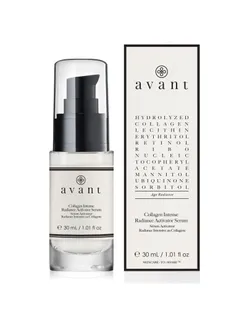
Avant Skincare Collagen Intense Radiance Activator Serum

Avant Skincare Collagen Intense Radiance Activator Serum

Efficacy58/100IrritancyMedium

Works for

Moisturizing
Urea, Caprylic/capric triglyceride + 29 more
Works well
What the product description says
“Rich in softening, soothing and moisturising properties, Lecithin helps hydrate, replenish and repair the skin, making it an excellent treatment for mature and dry skin.”
Source: N/A

This product can help improve hydration of the skin with the two types of ingredients.

The first type is called “humectants”:
these ingredients help attract water. When humectants are on the surface of the skin, they “pull in” the moisture from the outside environment, or from within deeper layers of the skin. The following ingredients in this product do the job: arginine, betaine.

This product also contains ingredients called “occlusives”. They help reduce the speed with which our skin loses moisture to the outside environment. These ingredients also help soften the upper layer of the skin, so it feels less tight and nicer to the touch. The following ingredients in this product do the job: arginine, caprylic/capric triglyceride.

The following ingredients in this product are especially good for supporting the skin barrier and helping with the hydration level: urea

UreaHero· HumectantEffect: HighNaturally present in skin (urea makes up about 7% of natural moisturizing factors in skin). Attracts water to the upper layer of the skin. Also has a positive effect on the skin barrier beyond the humectant action. Can enhance penetration of other ingredients. Is an exfoliating ingredient when used in high concentrations~1.2–1.4%
Caprylic/capric triglycerideKey active· Emollient, OcclusiveEffect: HighA good mix of fatty acids that forms a protective layer on the skin. Improves the shelf life of products. Derived from coconut and glycerin~3.3–4%
BetaineKey active· HumectantEffect: HighHelps attract water to the upper layer of the skin and improves the product texture~1.6–2%
Sodium hyaluronateKey active· HumectantEffect: HighOne of the best moisturizing ingredients. Attracts water into the upper layer of the skin~1.4–1.7%
GlycerinKey active· HumectantEffect: HighOne of the best moisturizing ingredients. Naturally present in skin. It attracts water to the upper layer of the skin working as a humectant~1–1.3%
Hydrolyzed collagenKey active· Humectant, EmollientEffect: HighA typically plant-derived compound that is supposed mimic human collagen. Cannot penetrate the skin barrier so is not particularly useful in skincare products beyond attracting water to the upper layer of the skin~0.65–0.95%
TrehaloseKey active· HumectantEffect: HighA sugar that attracts water to the upper layer of the skin~0.5–0.75%
SerineKey activeEffect: HighAn amino-acid that helps to attract water to the upper layer of the skin. In combination with other amino-acids, might help to reduce fine lines and wrinkles~0.45–0.65%
ArginineKey active· Humectant, OcclusiveEffect: HighAn amino acid that is naturally present in skin and helps keep it hydrated. When used together with AHAs, it can reduce their irritating effect on the skin~0.4–0.65%
Calcium pantothenateKey activeEffect: HighHelps support skin barrier function improving skin hydration and reducing sensitivity~0.35–0.6%
UbiquinoneKey activeEffect: HighCoenzyme Q10. It helps neutralize free radicals in skin, improves skin hydration and might be helpful agains fine lines and wrinkles. It can be an allergen~0.3–0.5%
DimethiconeKey active· Emollient, OcclusiveEffect: HighA silicone that helps to reduce water loss from the surface of the skin. Can temporarily "fill in" lines and wrinkles, absorb oil, and create a nice product finish~0.3–0.6%
Histidine hclKey activeEffect: HighA salt of an amino-acid that helps attract water to the upper layer of the skin. Might be helpful in restoring the skin barrier function~0.3–0.55%
Glyceryl linolenateKey active· EmollientEffect: MediumHelps soften the upper layer of the skin~0.3–0.55%
TyrosineKey activeEffect: High~0.25–0.5%
ErythritolKey active· HumectantEffect: HighHelps to attract water to the upper layer of the skin~0.25–0.5%
MannitolKey active· HumectantEffect: HighHelps to attract water to the upper layer of the skin~0.25–0.5%
Cetyl alcoholKey active· EmollientEffect: MediumA non-drying alcohol that works to soften the skin and stabilize product formulations helping oil and water mix together~0.25–0.5%
Dicaprylyl carbonate· EmollientEffect: LowHelps products spread more easily and works as an emollient to soften skin~4.4–5.3%
Butylene glycol· HumectantEffect: LowUsed to create a nice product texture and help delivery of other ingredients. Might be somewhat helpful in attracting water to the upper layer of the skin~4.2–5.2%
Glyceryl stearate· EmollientEffect: LowAn emollient that softens the skin and forms a protective layer on its surface. Helps water and oil mix together~2–2.4%
Sorbitol· HumectantEffect: LowHelps attract water to the upper layer of the skin and improves the product texture~0.7–1.05%
Arachidyl alcohol· EmollientEffect: LowUsed to soften the upper layer of the skin and create a thicker product consistency~0.3–0.55%
Behenyl alcohol· Emollient, OcclusiveEffect: LowNon-drying alcohol that helps water and oil mix together. Also serves as an emollient~0.3–0.55%
Caprylyl glycol· Humectant, EmollientEffect: LowHelps preserve products and creates a nice product texture~0.3–0.55%
Glyceryl caprylate· EmollientEffect: LowAn emollient that can also help water and oil mix together, as well as prevent bacteria growth in products~0.3–0.55%
AlginEffect: LowUsed to thicken product formulation. Can help attract water to the upper layer of the skin~0.25–0.5%
Pentylene glycol· EmollientEffect: LowUsed to preserve products, dissolve other ingredients and create a nice product texture~0.2–0.4%
LecithinEffect: Low, below effective doseUsed mostly for creating emulsions - helping oil and water mix together. Helps soften the upper layer of the skin~0.5–0.75%
TocopherolEffect: Low, below effective dosePure form of vitamin E. Can help moisturise and protect the skin from free radicals. Often used to help stabilise other ingredients or the formula itself~0.3–0.5%
NiacinamideUnder-dosedIs proven to be effective in reducing blemishes, evening out skin tone and helping to improve lines and wrinkles. It helps the skin to repair sun damage, calm down inflammation and keep maintain good levels of moisture. The concentration of about 2% is effective for supporting the skin barrier and evening out the skin tone. Concentration of 4-6% is better for helping with acne and balancing the sebum production~0.45–0.7%
Anti-aging
Serine, Ubiquinone + 6 more
May help
What the product description says
“Collagen aims to work as an important building block for elasticity, and helps reduce the appearance of fine lines and wrinkles.”
Source: N/A

This product contains serine. This ingredient might be able to help reduce and prevent fine lines and wrinkles, improve skin elasticity and firmness, but there is not enough evidence that it actually works.

SerineKey activeEffect: MediumAn amino-acid that helps to attract water to the upper layer of the skin. In combination with other amino-acids, might help to reduce fine lines and wrinkles~0.45–0.65%
UbiquinoneEffect: LowCoenzyme Q10. It helps neutralize free radicals in skin, improves skin hydration and might be helpful agains fine lines and wrinkles. It can be an allergen~0.3–0.5%
Thioctic acidEffect: Low~0.3–0.5%
TocopherolEffect: Low, below effective dosePure form of vitamin E. Can help moisturise and protect the skin from free radicals. Often used to help stabilise other ingredients or the formula itself~0.3–0.5%
Sodium ascorbyl phosphateEffect: Low, below effective doseA stable derivative of vitamin C. It is oil-soluble which means it is more likely to penetrate the skin compared to the pure form of vitamin C (which is water-soluble), but it is less bio-available and is way less effective in stimulating collagen and reducing wrinkles compared to the pure form of vitamin C (L-ascorbic acid) and its other derivatives (for example, magnesium ascorbyl phosphate). At the same time, this vitamin C derivative has been shown in studies to be effective in reducing acne, blemishes and clogged pores. It is less irritating then the pure form of vitamin C~0.3–0.5%
Ascorbyl palmitateEffect: Low, below effective doseBeing a lipid soluble form of vitamin C, it is more stable and can penetrate the skin better than L-Ascorbic acid. It is effective in protecting the skin from free radicals, as well as evening the skin tone, but is less effective in stimulating collagen production compared to L-Ascorbic acid.~0.25–0.5%
NiacinamideUnder-dosedIs proven to be effective in reducing blemishes, evening out skin tone and helping to improve lines and wrinkles. It helps the skin to repair sun damage, calm down inflammation and keep maintain good levels of moisture. The concentration of about 2% is effective for supporting the skin barrier and evening out the skin tone. Concentration of 4-6% is better for helping with acne and balancing the sebum production~0.45–0.7%
Retinyl palmitateUnder-dosedThree steps removed from the active form of vitamin A - retinoic acid. To have an effect in the skin, it first needs to be converted twice to become the retinoic acid. This means it is less potent than retinol, but could also be less irritating. Once converted to the retinoic acid in the skin, it helps against all signs of aging, improves skin cell turnover and helps fight blemishes and clogged pores. However, in many cosmetic formulations, it is used in a concentration that is too low to have the full effect~0.25–0.5%
Evens skin tone
Niacinamide ~0.45–0.7%, below the ~1% it needs + 1 more
Under-dosed

Effective ingredients missing or their concentration is too low

NiacinamideUnder-dosedIs proven to be effective in reducing blemishes, evening out skin tone and helping to improve lines and wrinkles. It helps the skin to repair sun damage, calm down inflammation and keep maintain good levels of moisture. The concentration of about 2% is effective for supporting the skin barrier and evening out the skin tone. Concentration of 4-6% is better for helping with acne and balancing the sebum production~0.45–0.7%
Retinyl palmitateUnder-dosedThree steps removed from the active form of vitamin A - retinoic acid. To have an effect in the skin, it first needs to be converted twice to become the retinoic acid. This means it is less potent than retinol, but could also be less irritating. Once converted to the retinoic acid in the skin, it helps against all signs of aging, improves skin cell turnover and helps fight blemishes and clogged pores. However, in many cosmetic formulations, it is used in a concentration that is too low to have the full effect~0.25–0.5%
Anti-oxidation
Side benefit · Ubiquinone, Thioctic acid + 5 more
Works well

This product contains antioxidants (thioctic acid, ubiquinone) that can help neutralize free radicals in skin. By doing so, they can lessen the damage the skin gets from the UV light (sun).

UbiquinoneKey activeEffect: HighCoenzyme Q10. It helps neutralize free radicals in skin, improves skin hydration and might be helpful agains fine lines and wrinkles. It can be an allergen~0.3–0.5%
Thioctic acidKey activeEffect: High~0.3–0.5%
Pyridoxine hclEffect: LowMight help neutralize free radicals in skin~0.35–0.65%
Tocopheryl acetateEffect: Low, below effective doseA more stable but less bio-available form of vitamin E compared to Tocopherol. Might help moisturize and protect the skin from free radicals, but mostly used in low concentrations to stabilize other ingredients.~0.3–0.5%
Ascorbyl palmitateEffect: Low, below effective doseBeing a lipid soluble form of vitamin C, it is more stable and can penetrate the skin better than L-Ascorbic acid. It is effective in protecting the skin from free radicals, as well as evening the skin tone, but is less effective in stimulating collagen production compared to L-Ascorbic acid.~0.25–0.5%
TocopherolUnder-dosedPure form of vitamin E. Can help moisturise and protect the skin from free radicals. Often used to help stabilise other ingredients or the formula itself~0.3–0.5%
Sodium ascorbyl phosphateUnder-dosedA stable derivative of vitamin C. It is oil-soluble which means it is more likely to penetrate the skin compared to the pure form of vitamin C (which is water-soluble), but it is less bio-available and is way less effective in stimulating collagen and reducing wrinkles compared to the pure form of vitamin C (L-ascorbic acid) and its other derivatives (for example, magnesium ascorbyl phosphate). At the same time, this vitamin C derivative has been shown in studies to be effective in reducing acne, blemishes and clogged pores. It is less irritating then the pure form of vitamin C~0.3–0.5%

Can it cause trouble?

Irritancy
2 strong irritants: Retinyl palmitate, Parfum
Medium risk
We flagged 14 ingredients with irritancy potential. Severity depends on your sensitivity threshold; the table lists the worst offenders first.
IngredientFunctionIrritationEst. amount
PullulanCreates a thin drying film on the skin resulting in a short-term tightening effectHigh~0.3–0.55%est.
Retinyl palmitateThree steps removed from the active form of vitamin A - retinoic acid. To have an effect in the skin, it first needs to be converted twice to become the retinoic acid. This means it is less potent than retinol, but could also be less irritating. Once converted to the retinoic acid in the skin, it helps against all signs of aging, improves skin cell turnover and helps fight blemishes and clogged pores. However, in many cosmetic formulations, it is used in a concentration that is too low to have the full effectHigh~0.25–0.5%est.
ParfumAn aromatic blend of unspecified and possibly irritating ingredientsHigh~0.1–0.25%est.
Caprylic/capric triglycerideA good mix of fatty acids that forms a protective layer on the skin. Improves the shelf life of products. Derived from coconut and glycerinMedium~3.3–4%est.
Pyridoxine hclMight help neutralize free radicals in skinMedium~0.35–0.65%est.
Tocopheryl acetateA more stable but less bio-available form of vitamin E compared to Tocopherol. Might help moisturize and protect the skin from free radicals, but mostly used in low concentrations to stabilize other ingredients.Medium~0.3–0.5%est.
Ascorbyl palmitateBeing a lipid soluble form of vitamin C, it is more stable and can penetrate the skin better than L-Ascorbic acid. It is effective in protecting the skin from free radicals, as well as evening the skin tone, but is less effective in stimulating collagen production compared to L-Ascorbic acid.Medium~0.25–0.5%est.
Sodium ascorbyl phosphateA stable derivative of vitamin C. It is oil-soluble which means it is more likely to penetrate the skin compared to the pure form of vitamin C (which is water-soluble), but it is less bio-available and is way less effective in stimulating collagen and reducing wrinkles compared to the pure form of vitamin C (L-ascorbic acid) and its other derivatives (for example, magnesium ascorbyl phosphate). At the same time, this vitamin C derivative has been shown in studies to be effective in reducing acne, blemishes and clogged pores. It is less irritating then the pure form of vitamin CMedium~0.3–0.5%est.
Caprylyl glycolHelps preserve products and creates a nice product textureMedium~0.3–0.55%est.
Glyceryl linoleateHelps oil and water mix togetherMedium~0.3–0.6%est.
Pentylene glycolUsed to preserve products, dissolve other ingredients and create a nice product textureMedium~0.2–0.4%est.
Disodium edtaStabilizes the product formulationMedium~0.15–0.25%est.
Citric acidCan work as an exfoliant but is typically used to adjust the product pHMedium~0.15–0.25%est.
EthylhexylglycerinA preservativeMedium~0.1–0.15%est.
Comedogenic
1 ingredient rated 2 or more on the 0–5 pore-clogging scale
1 flagged
These ingredients have a comedogenic rating of 2 or more on a 0–5 scale; the table shows each one's rating. In leave-on products they can clog pores in acne-prone skin.
IngredientFunctionRatingEst. amount
AlginUsed to thicken product formulation. Can help attract water to the upper layer of the skin3/5~0.25–0.5%est.

User reviews

Would you recommend?
No community reviews yet.

Be the first — your take helps the next person decide.

Ingredients

Filter by role to see what each ingredient is doing.

Water~45–55%
Formula
Irritation risk
Low

Plain old water

More about Water
Dicaprylyl carbonate~4.4–5.3%
Formula
Irritation risk
Low
Works for
Moisturizing

Helps products spread more easily and works as an emollient to soften skin

More about Dicaprylyl carbonate
Butylene glycol~4.2–5.2%
Formula
Irritation risk
Low
Works for
Moisturizing

Used to create a nice product texture and help delivery of other ingredients. Might be somewhat helpful in attracting water to the upper layer of the skin

More about Butylene glycol
Caprylic/capric triglyceride~3.3–4%
Key activeIrritant · medium
Irritation risk
Medium
Works for
Moisturizing

A good mix of fatty acids that forms a protective layer on the skin. Improves the shelf life of products. Derived from coconut and glycerin

More about Caprylic/capric triglyceride
Peg-100 stearate~2.5–3%
Formula
Irritation risk
Low
Works for
Cleansing

Helps oil and water mix togehter and creates a nice product texture

More about Peg-100 stearate
Glyceryl stearate~2–2.4%
Formula
Irritation risk
Low
Works for
CleansingMoisturizing

An emollient that softens the skin and forms a protective layer on its surface. Helps water and oil mix together

More about Glyceryl stearate
Betaine~1.6–2%
Key active
Irritation risk
Low
Works for
Moisturizing

Helps attract water to the upper layer of the skin and improves the product texture

More about Betaine
Sodium hyaluronate~1.4–1.7%
Key active
Irritation risk
Low
Works for
Moisturizing

One of the best moisturizing ingredients. Attracts water into the upper layer of the skin

More about Sodium hyaluronate
Urea~1.2–1.4%
Hero · Moisturizing
Irritation risk
Low
Works for
MoisturizingExfoliation

Naturally present in skin (urea makes up about 7% of natural moisturizing factors in skin). Attracts water to the upper layer of the skin. Also has a positive effect on the skin barrier beyond the humectant action. Can enhance penetration of other ingredients. Is an exfoliating ingredient when used in high concentrations

More about Urea
Glycerin~1–1.3%
Key active
Irritation risk
Low
Works for
Moisturizing

One of the best moisturizing ingredients. Naturally present in skin. It attracts water to the upper layer of the skin working as a humectant

More about Glycerin
Sorbitol~0.7–1.05%
Formula
Irritation risk
Low
Works for
Moisturizing

Helps attract water to the upper layer of the skin and improves the product texture

More about Sorbitol
Hydrolyzed collagen~0.65–0.95%
Key active
Irritation risk
Low
Works for
Moisturizing

A typically plant-derived compound that is supposed mimic human collagen. Cannot penetrate the skin barrier so is not particularly useful in skincare products beyond attracting water to the upper layer of the skin

More about Hydrolyzed collagen
Trehalose~0.5–0.75%
Key active
Irritation risk
Low
Works for
Moisturizing

A sugar that attracts water to the upper layer of the skin

More about Trehalose
Lecithin~0.5–0.75%
Formula
Irritation risk
Low
Works for
CleansingMoisturizing

Used mostly for creating emulsions - helping oil and water mix together. Helps soften the upper layer of the skin

More about Lecithin
Serine~0.45–0.65%
Key active
Irritation risk
Low
Works for
MoisturizingAnti-aging

An amino-acid that helps to attract water to the upper layer of the skin. In combination with other amino-acids, might help to reduce fine lines and wrinkles

More about Serine
Niacinamide~0.45–0.7%
Under-dosed
Irritation risk
Low
Works for
Anti-blemishAnti-agingEvens skin toneMoisturizingReduces irritationReduces rednessAnti-inflammatoryAntibacterial

Is proven to be effective in reducing blemishes, evening out skin tone and helping to improve lines and wrinkles. It helps the skin to repair sun damage, calm down inflammation and keep maintain good levels of moisture. The concentration of about 2% is effective for supporting the skin barrier and evening out the skin tone. Concentration of 4-6% is better for helping with acne and balancing the sebum production

More about Niacinamide
Arginine~0.4–0.65%
Key active
Irritation risk
Low
Works for
Moisturizing

An amino acid that is naturally present in skin and helps keep it hydrated. When used together with AHAs, it can reduce their irritating effect on the skin

More about Arginine
Pyridoxine hcl~0.35–0.65%
Irritant · medium
Irritation risk
Medium
Works for
Anti-oxidation

Might help neutralize free radicals in skin

More about Pyridoxine hcl
Calcium pantothenate~0.35–0.6%
Key active
Irritation risk
Low
Works for
MoisturizingReduces irritation

Helps support skin barrier function improving skin hydration and reducing sensitivity

More about Calcium pantothenate
Phenylalanine~0.3–0.6%
Formula
Irritation risk
Low
More about Phenylalanine
Histidine hcl~0.3–0.55%
Key active
Irritation risk
Low
Works for
Moisturizing

A salt of an amino-acid that helps attract water to the upper layer of the skin. Might be helpful in restoring the skin barrier function

More about Histidine hcl
Tyrosine~0.25–0.5%
Key active
Irritation risk
Low
Works for
Moisturizing
More about Tyrosine
Erythritol~0.25–0.5%
Key active
Irritation risk
Low
Works for
Moisturizing

Helps to attract water to the upper layer of the skin

More about Erythritol
Rna~0.25–0.5%
Formula
Irritation risk
Low
More about Rna
Algin~0.25–0.5%
Comedogenic 3/5
Irritation risk
Low
Comedogenicity
3/5
Works for
Moisturizing

Used to thicken product formulation. Can help attract water to the upper layer of the skin

More about Algin
Pullulan~0.3–0.55%
Irritant · high
Irritation risk
High
Works for
Mattifying

Creates a thin drying film on the skin resulting in a short-term tightening effect

More about Pullulan
Tocopherol~0.3–0.5%
Under-dosed
Irritation risk
Low
Works for
Anti-oxidationMoisturizingAnti-inflammatoryAnti-aging

Pure form of vitamin E. Can help moisturise and protect the skin from free radicals. Often used to help stabilise other ingredients or the formula itself

More about Tocopherol
Tocopheryl acetate~0.3–0.5%
Irritant · medium
Irritation risk
Medium
Works for
Anti-oxidation

A more stable but less bio-available form of vitamin E compared to Tocopherol. Might help moisturize and protect the skin from free radicals, but mostly used in low concentrations to stabilize other ingredients.

More about Tocopheryl acetate
Ascorbyl palmitate~0.25–0.5%
Irritant · medium
Irritation risk
Medium
Works for
Anti-oxidationAnti-aging

Being a lipid soluble form of vitamin C, it is more stable and can penetrate the skin better than L-Ascorbic acid. It is effective in protecting the skin from free radicals, as well as evening the skin tone, but is less effective in stimulating collagen production compared to L-Ascorbic acid.

More about Ascorbyl palmitate
Retinyl palmitate~0.25–0.5%
Under-dosedIrritant · high
Irritation risk
High
Works for
Evens skin toneAnti-blemishAnti-agingExfoliation

Three steps removed from the active form of vitamin A - retinoic acid. To have an effect in the skin, it first needs to be converted twice to become the retinoic acid. This means it is less potent than retinol, but could also be less irritating. Once converted to the retinoic acid in the skin, it helps against all signs of aging, improves skin cell turnover and helps fight blemishes and clogged pores. However, in many cosmetic formulations, it is used in a concentration that is too low to have the full effect

More about Retinyl palmitate
Ubiquinone~0.3–0.5%
Key active
Irritation risk
Low
Works for
Anti-oxidationMoisturizingAnti-aging

Coenzyme Q10. It helps neutralize free radicals in skin, improves skin hydration and might be helpful agains fine lines and wrinkles. It can be an allergen

More about Ubiquinone
Thioctic acid~0.3–0.5%
Key active
Irritation risk
Low
Works for
Anti-oxidationAnti-aging
More about Thioctic acid
Arachidyl glucoside~0.3–0.55%
Formula
Irritation risk
Low
Works for
Cleansing

Helps oil and water mix together

More about Arachidyl glucoside
Disodium adenosine triphosphate~0.25–0.5%
Formula
Mannitol~0.25–0.5%
Key active
Irritation risk
Low
Works for
Moisturizing

Helps to attract water to the upper layer of the skin

More about Mannitol
Maltodextrin~0.3–0.5%
Formula
Irritation risk
Low
Works for
Mattifying

Used to stabilize the product formulation and can help absorb oil

More about Maltodextrin
Potassium phosphate~0.3–0.5%
Formula
Irritation risk
Low

Helps regulate the pH of the formulation

More about Potassium phosphate
Disodium phosphate~0.25–0.5%
Formula
Irritation risk
Low

Helps adjust the product pH and stabilize the formulation

More about Disodium phosphate
Sodium ascorbyl phosphate~0.3–0.5%
Under-dosedIrritant · medium
Irritation risk
Medium
Works for
Anti-blemishAnti-oxidationAnti-aging

A stable derivative of vitamin C. It is oil-soluble which means it is more likely to penetrate the skin compared to the pure form of vitamin C (which is water-soluble), but it is less bio-available and is way less effective in stimulating collagen and reducing wrinkles compared to the pure form of vitamin C (L-ascorbic acid) and its other derivatives (for example, magnesium ascorbyl phosphate). At the same time, this vitamin C derivative has been shown in studies to be effective in reducing acne, blemishes and clogged pores. It is less irritating then the pure form of vitamin C

More about Sodium ascorbyl phosphate
Dimethicone~0.3–0.6%
Key active
Irritation risk
Low
Works for
MoisturizingMattifying

A silicone that helps to reduce water loss from the surface of the skin. Can temporarily "fill in" lines and wrinkles, absorb oil, and create a nice product finish

More about Dimethicone
Caprylyl glycol~0.3–0.55%
Irritant · medium
Irritation risk
Medium
Works for
Moisturizing

Helps preserve products and creates a nice product texture

More about Caprylyl glycol
Arachidyl alcohol~0.3–0.55%
Formula
Irritation risk
Low
Works for
Moisturizing

Used to soften the upper layer of the skin and create a thicker product consistency

More about Arachidyl alcohol
Sodium starch octenylsuccinate~0.25–0.5%
Formula
Glyceryl polyacrylate~0.25–0.5%
Formula
Irritation risk
Low

Helps to create a nice product texture and spread the product more easily on the skin

More about Glyceryl polyacrylate
Glyceryl linoleate~0.3–0.6%
Irritant · medium
Irritation risk
Medium
Works for
Cleansing

Helps oil and water mix together

More about Glyceryl linoleate
Glyceryl linolenate~0.3–0.55%
Key active
Irritation risk
Low
Works for
Moisturizing

Helps soften the upper layer of the skin

More about Glyceryl linolenate
Glyceryl caprylate~0.3–0.55%
Formula
Irritation risk
Low
Works for
CleansingMoisturizing

An emollient that can also help water and oil mix together, as well as prevent bacteria growth in products

More about Glyceryl caprylate
Silica~0.4–0.6%
Formula
Irritation risk
Low

Used to absorb oil and can temporarily mattify skin

More about Silica
Sodium polyacrylate~0.3–0.5%
Formula
Irritation risk
Low
Works for
Mattifying

Used to create a gel-like product texture, as well as to stabilize emulsions

More about Sodium polyacrylate
Behenyl alcohol~0.3–0.55%
Formula
Irritation risk
Low
Works for
Moisturizing

Non-drying alcohol that helps water and oil mix together. Also serves as an emollient

More about Behenyl alcohol
Cetyl alcohol~0.25–0.5%
Key active
Irritation risk
Low
Works for
CleansingMoisturizing

A non-drying alcohol that works to soften the skin and stabilize product formulations helping oil and water mix together

More about Cetyl alcohol
Xanthan gum~0.2–0.4%
Formula
Irritation risk
Low
Works for
Cleansing

Used to create a thicker product consistency

More about Xanthan gum
Pentylene glycol~0.2–0.4%
Irritant · medium
Irritation risk
Medium
Works for
Moisturizing

Used to preserve products, dissolve other ingredients and create a nice product texture

More about Pentylene glycol
Disodium edta~0.15–0.25%
Irritant · medium
Irritation risk
Medium

Stabilizes the product formulation

More about Disodium edta
Citric acid~0.15–0.25%
Irritant · medium
Irritation risk
Medium

Can work as an exfoliant but is typically used to adjust the product pH

More about Citric acid
Parfum~0.1–0.25%
Irritant · high
Irritation risk
High

An aromatic blend of unspecified and possibly irritating ingredients

More about Parfum
Ethylhexylglycerin~0.1–0.15%
Irritant · medium
Irritation risk
Medium

A preservative

More about Ethylhexylglycerin
Phenoxyethanol~0.15–0.25%
Formula
Irritation risk
Low

A preservative. It helps prevent bacterial growth in cosmetic products

More about Phenoxyethanol
Ingredient list view

Water, Dicaprylyl carbonate, Butylene glycol, Caprylic/capric triglyceride, Peg-100 stearate, Glyceryl stearate, Betaine, Sodium hyaluronate, Urea, Glycerin, Sorbitol, Hydrolyzed collagen, Trehalose, Lecithin, Serine, Niacinamide, Arginine, Pyridoxine hcl, Calcium pantothenate, Phenylalanine, Histidine hcl, Tyrosine, Erythritol, Rna, Algin, Pullulan, Tocopherol, Tocopheryl acetate, Ascorbyl palmitate, Retinyl palmitate, Ubiquinone, Thioctic acid, Arachidyl glucoside, Disodium adenosine triphosphate, Mannitol, Maltodextrin, Potassium phosphate, Disodium phosphate, Sodium ascorbyl phosphate, Dimethicone, Caprylyl glycol, Arachidyl alcohol, Sodium starch octenylsuccinate, Glyceryl polyacrylate, Glyceryl linoleate, Glyceryl linolenate, Glyceryl caprylate, Silica, Sodium polyacrylate, Behenyl alcohol, Cetyl alcohol, Xanthan gum, Pentylene glycol, Disodium edta, Citric acid, Parfum, Ethylhexylglycerin, Phenoxyethanol

Compare prices

Retailers ranked by price — lowest first.

Amazon USPrice as of 11/11 18:12 GMT
$109.99
Buy

Affiliate links · As an Amazon Associate, WIMJ earns from qualifying purchases.

Worth comparing, line by line.

Match % combines shared ingredients, the first five ingredients, shared actives and hero ingredients, irritancy (lower counts in the alternative's favour), texture and body area. Only products in the same routine step are compared.

Side-by-side comparison of this product against its closest alternatives
Avant SkincareCollagen Intense Radiance Activator SerumYOUR PRODUCTendota spaPeptide 8 Hyaluronic SerumAHCHydrating Korean Skincare Aqualuronic Face SerumUltraceuticalsUltra B2 Hydrating Serum
Match—85%83%82%
Price$109.99—$25.61−$84.38—
Shared key ingredients—5 of 229 of 224 of 22
Key difference—Acetyl Octapeptide-3Copper Tripeptide-1Panthenol
Irritancy Medium Low Medium Low
Drying alcohol————
View product Shop Shop Shop

More alternatives: Dr Roebuck's True Blue Ultimate Hydrating SerumRejuran Dual Effect Ampoule

Cheaper alternatives? See how this stacks up against similar formulas.
We compare ingredient profiles across our catalog — pick the closest match for your budget.
Open dupe finder

Product summary

"Avant Skincare - Collagen Intense Radiance Activator Serum" is effective for: Moisturizing

This product could be helpful for: Anti-aging, but its actives are not the most effective or are not well-studied.

Ingredient callouts

  • this product includes a form of Retinoids (vitamin A) - retinyl palmitate 0.25% - 0.50%, but this type of vitamin A is not very effective. It could in theory help with fine lines and wrinkles, but the effect is most likely minimal.
  • Humectants (urea 1.20% - 1.40%, trehalose 0.50% - 0.75%, sodium hyaluronate 1.40% - 1.70%, mannitol 0.25% - 0.50%, hydrolyzed collagen 0.65% - 0.95%, glycerin 1.00% - 1.30%, betaine 1.60% - 2.00%, arginine 0.40% - 0.65% and erythritol 0.25% - 0.50%). These ingredients help attract water to the upper layer of the skin and improve the skin hydration.

Price

The product retails for 91.00£ in the United Kingdom.

For a detailed price comparison: click here.

Sources cited in this review

Every concentration estimate and effectiveness label is anchored to one of these 23 studies and safety reviews.

  1. 1
  2. 2
  3. 3
    Topical urea in skincare: A reviewpubmed.ncbi.nlm.nih.gov
  4. 4
  5. 5
  6. 6
Avant Skincare Collagen Intense Radiance Activator Serum
Avant SkincareCollagen Intense Radiance Activator Serum

Affiliate links · As an Amazon Associate, WIMJ earns from qualifying purchases.

As an Amazon Associate, WIMJ earns from qualifying purchases.