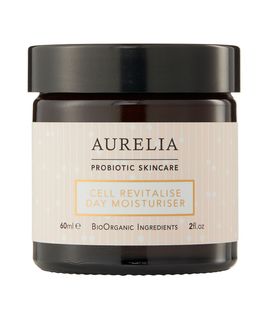
Aurelia Cell Revitalise Day Moisturiser

Aurelia Cell Revitalise Day Moisturiser

Efficacy62/100IrritancyHigh
Edit

Works for

1 of 2 advertised claims delivered

Moisturizing
18 ingredients credited for this claim
Good support
What the product description says
“Cell Revitalise Day Moisturiser”
From product name

This product can help improve hydration of the skin with the two types of ingredients.

The first type is called “humectants”:
these ingredients help attract water. When humectants are on the surface of the skin, they “pull in” the moisture from the outside environment, or from within deeper layers of the skin. The following ingredients in this product do the job: glycerin, lactose.

This product also contains ingredients called “occlusives”. They help reduce the speed with which our skin loses moisture to the outside environment. These ingredients also help soften the upper layer of the skin, so it feels less tight and nicer to the touch. The following ingredients in this product do the job: butyrospermum parkii butter, helianthus annuus seed oil.

Bifida ferment lysateKey activeEffect: HighConsists of remains of dead yeast bacteria cells. Helps to hydrate the skin and reduce irritation. Might has some anti-oxidant effect~2.5–3.8%
Borago officinalis seed oilKey active· EmollientEffect: HighA plant oil that is effective in reducing irritation in skin, restore the barrier function and support its hydration~0.2–0.75%
Butyrospermum parkii butterKey active· Emollient, OcclusiveEffect: HighA great moisturising ingredient that softens the skin and reduces water loss from its upper layer. It also can be helpful in protecting skin from free radicals~1.9–2.8%
GlycerinKey active· HumectantEffect: HighOne of the best moisturizing ingredients. Naturally present in skin. It attracts water to the upper layer of the skin working as a humectant~3.4–5%
Helianthus annuus seed oilKey active· Emollient, OcclusiveEffect: HighA great emollient due to its high linoleic acid content. One of the most effective plant oils in helping skin hydration and repairing skin barrier function~0.1–0.45%
Coco-caprylateKey active· EmollientEffect: MediumAn emollient that softens skin and creates a nice product texture~1.4–2.2%
Glyceryl stearate seKey activeEffect: MediumUsed to stabilize the product formulations and works as an emollient~1.1–1.7%
LactoseKey active· HumectantEffect: MediumHelps attract water to the upper layer of the skin~0.5–1.15%
Lauroyl lysineKey activeEffect: MediumHelps soften the upper layer of the skin and creates a nice product texture~0.1–0.3%
Milk proteinKey activeEffect: MediumHelps attract water to the upper layer of the skin~0.35–0.75%
Cetearyl alcoholKey active· EmollientEffect: MediumA non-drying alcohol. Works as an emollient. Helps water and oil mix together and creates a nice product texture~1–1.5%
Glyceryl caprylate· EmollientEffect: LowAn emollient that can also help water and oil mix together, as well as prevent bacteria growth in products~0.1–0.4%
Cocoglycerides· EmollientEffect: LowHelp soften the upper layer of the skin and make it easier for oil and water mix together. Recently, a rising number of allergic reactions to cocoglycerides and other coconut-derived surfactants has been reported. As there is a significant overlap between frequent irritants and allergens, we flag this ingredient for attention of those with very sensitive, reactive skin~0.55–1.35%
Aloe barbadensis leaf extract· Humectant, EmollientEffect: LowTraditionally used to treat sunburns, dermatitis and inflammation, but evidence for its effectiveness is lacking. The extract can contain humectants that help attract water into the skin~4.9–7.4%
Rosa damascena flower oilEffect: LowUsed as a fragrance. Can be irritating~0.15–0.65%
PanthenolUnder-dosedEffect: HighHelps attract water to the upper layer of the skin and can help improve skin barrier function~0.1–0.35%
Prunus armeniaca kernel oilUnder-dosedEffect: HighAn emollient that helps soften the skin~0.2–0.7%
Argania spinosa kernel oilUnder-dosedEffect: HighAn emollient that helps soften the upper layer of the skin. Might have some weak anti-oxidant properties~0.2–0.7%
Anti-aging
2 ingredients credited for this claim
Limited support
What the product description says
“Hydrate and soothe dull complexions with Aurelia Probiotic Skincare Cell Revitalise Day Moisturiser, a deliciously scented day cream that helps combat dehydration and early signs of ageing.”
Source: SpaceNK US

This product does not contain ingredients that are able to reduce fine lines and wrinkles or help with skin elasticity, but it can improve the look of the skin temporarily through moisturization. Well-moisturized skin might also be able to repair the sun damage better.These ingredients - butyrospermum parkii butter, sodium ascorbyl phosphate - could be helpful for preventing or repairing signs of aging in theory, but there is no evidence that it actually works.

This ingredient bifida ferment lysate might be able to help neutralize free radicals in skin and help it fight off some of the sun damage.

Sodium ascorbyl phosphateEffect: LowA stable derivative of vitamin C. It is oil-soluble which means it is more likely to penetrate the skin compared to the pure form of vitamin C (which is water-soluble), but it is less bio-available and is way less effective in stimulating collagen and reducing wrinkles compared to the pure form of vitamin C (L-ascorbic acid) and its other derivatives (for example, magnesium ascorbyl phosphate). At the same time, this vitamin C derivative has been shown in studies to be effective in reducing acne, blemishes and clogged pores. It is less irritating then the pure form of vitamin C~0.1–0.3%
Butyrospermum parkii butterEffect: LowA great moisturising ingredient that softens the skin and reduces water loss from its upper layer. It also can be helpful in protecting skin from free radicals~1.9–2.8%
Anti-oxidation
Not advertised by the brand · 8 ingredients credited for this claim
Moderate support

This product contains antioxidants (bifida ferment lysate, sodium ascorbyl phosphate) that might be able to help neutralize free radicals in skin to lessen the damage it gets from the UV light (sun). There is not enough evidence to confirm their effectiveness in skin though.

Bifida ferment lysateKey activeEffect: MediumConsists of remains of dead yeast bacteria cells. Helps to hydrate the skin and reduce irritation. Might has some anti-oxidant effect~2.5–3.8%
Sodium ascorbyl phosphateKey activeEffect: MediumA stable derivative of vitamin C. It is oil-soluble which means it is more likely to penetrate the skin compared to the pure form of vitamin C (which is water-soluble), but it is less bio-available and is way less effective in stimulating collagen and reducing wrinkles compared to the pure form of vitamin C (L-ascorbic acid) and its other derivatives (for example, magnesium ascorbyl phosphate). At the same time, this vitamin C derivative has been shown in studies to be effective in reducing acne, blemishes and clogged pores. It is less irritating then the pure form of vitamin C~0.1–0.3%
Borago officinalis seed oilEffect: LowA plant oil that is effective in reducing irritation in skin, restore the barrier function and support its hydration~0.2–0.75%
Butyrospermum parkii butterEffect: LowA great moisturising ingredient that softens the skin and reduces water loss from its upper layer. It also can be helpful in protecting skin from free radicals~1.9–2.8%
Hibiscus sabdariffa flower extractEffect: LowA plant extract that can be irritating. It might contain a compound anthocyanin that could be helpful in neutralizing free radicals~0.1–0.5%
Tocopheryl acetateEffect: Low, below effective doseA more stable but less bio-available form of vitamin E compared to Tocopherol. Might help moisturize and protect the skin from free radicals, but mostly used in low concentrations to stabilize other ingredients.~0.1–0.35%
Prunus armeniaca kernel oilEffect: Low, below effective doseAn emollient that helps soften the skin~0.2–0.7%
Argania spinosa kernel oilEffect: Low, below effective doseAn emollient that helps soften the upper layer of the skin. Might have some weak anti-oxidant properties~0.2–0.7%

Can it cause trouble?

Irritancy
8 strong irritants: Rosa damascena flower oil, Hibiscus sabdariffa flower extract + 6 more — patch-test recommended
High risk
We flagged 20 ingredients with irritancy potential. Severity depends on your sensitivity threshold; the table lists the worst offenders first.
IngredientFunctionIrritationEst. amount
CocoglyceridesHelp soften the upper layer of the skin and make it easier for oil and water mix together. Recently, a rising number of allergic reactions to cocoglycerides and other coconut-derived surfactants has been reported. As there is a significant overlap between frequent irritants and allergens, we flag this ingredient for attention of those with very sensitive, reactive skinHigh~0.55–1.35%est.
Rosa damascena flower oilUsed as a fragrance. Can be irritatingHigh~0.15–0.65%est.
Hibiscus sabdariffa flower extractA plant extract that can be irritating. It might contain a compound anthocyanin that could be helpful in neutralizing free radicalsHigh~0.1–0.5%est.
Citrus nobilis peel oilA plant oil with high content of volatile compounds that, especially when exposed to air, can cause allergic reactions and irritate the skinHigh~0.1–0.35%est.
Jasminum officinale flower extractFragrance. Can be irritatingHigh~0.05–0.25%est.
Polianthes tuberosa flower extract—High~0.05–0.3%est.
Benzyl alcoholA preservative. Can be used to mask unpleasant smell. Can be irritatingHigh~0.05–0.1%est.
Benzyl benzoateFragrance with sweet balsamic smell. Help to preserve products and dissolve other ingredients. Could trigger allergic reactions and be irritatingHigh~0.05–0.1%est.
LimoneneA common frangrance that can easily irritate skin, especially if exposed to air, light or heatHigh~0.01–0.05%est.
LinaloolA fragrance. Can be irritatingHigh~0.01–0.05%est.
Aloe barbadensis leaf extractTraditionally used to treat sunburns, dermatitis and inflammation, but evidence for its effectiveness is lacking. The extract can contain humectants that help attract water into the skinMedium~4.9–7.4%est.
Coco-caprylateAn emollient that softens skin and creates a nice product textureMedium~1.4–2.2%est.
Argania spinosa kernel oilAn emollient that helps soften the upper layer of the skin. Might have some weak anti-oxidant propertiesMedium~0.2–0.7%est.
Prunus armeniaca kernel oilAn emollient that helps soften the skinMedium~0.2–0.7%est.
Sodium ascorbyl phosphateA stable derivative of vitamin C. It is oil-soluble which means it is more likely to penetrate the skin compared to the pure form of vitamin C (which is water-soluble), but it is less bio-available and is way less effective in stimulating collagen and reducing wrinkles compared to the pure form of vitamin C (L-ascorbic acid) and its other derivatives (for example, magnesium ascorbyl phosphate). At the same time, this vitamin C derivative has been shown in studies to be effective in reducing acne, blemishes and clogged pores. It is less irritating then the pure form of vitamin CMedium~0.1–0.3%est.
Tocopheryl acetateA more stable but less bio-available form of vitamin E compared to Tocopherol. Might help moisturize and protect the skin from free radicals, but mostly used in low concentrations to stabilize other ingredients.Medium~0.1–0.35%est.
Sodium stearoyl glutamateHelps oil and water mix togetherMedium~0.1–0.45%est.
Citric acidCan work as an exfoliant but is typically used to adjust the product pHMedium~0.05–0.25%est.
HydroxyacetophenoneUsed to increase effectiveness of preservativesMedium~0.05–0.25%est.
Dehydroacetic acidA preservativeMedium~0.05–0.15%est.
Comedogenic
3 ingredients rated 2 or more on the 0–5 pore-clogging scale
3 flagged
These ingredients have a comedogenic rating of 2 or more on a 0–5 scale; the table shows each one's rating. In leave-on products they can clog pores in acne-prone skin.
IngredientFunctionRatingEst. amount
Butyrospermum parkii butterA great moisturising ingredient that softens the skin and reduces water loss from its upper layer. It also can be helpful in protecting skin from free radicals3/5~1.9–2.8%est.
Glyceryl stearate seUsed to stabilize the product formulations and works as an emollient2/5~1.1–1.7%est.
Cetearyl alcoholA non-drying alcohol. Works as an emollient. Helps water and oil mix together and creates a nice product texture2/5~1–1.5%est.
Edit

User reviews

Would you recommend?
No community reviews yet.

Be the first — your take helps the next person decide.

Write a review · ~30s

Ingredients

Filter by role to see what each ingredient is doing.

Water~40–60%
Formula
Irritation risk
Low

Plain old water

More about Water
Aloe barbadensis leaf extract~4.9–7.4%
Irritant · medium
Irritation risk
Medium
Works for
Moisturizing

Traditionally used to treat sunburns, dermatitis and inflammation, but evidence for its effectiveness is lacking. The extract can contain humectants that help attract water into the skin

More about Aloe barbadensis leaf extract
Glycerin~3.4–5%
Key active
Irritation risk
Low
Works for
Moisturizing

One of the best moisturizing ingredients. Naturally present in skin. It attracts water to the upper layer of the skin working as a humectant

More about Glycerin
Bifida ferment lysate~2.5–3.8%
Key active
Irritation risk
Low
Works for
MoisturizingAnti-oxidationEvens skin tone

Consists of remains of dead yeast bacteria cells. Helps to hydrate the skin and reduce irritation. Might has some anti-oxidant effect

More about Bifida ferment lysate
Butyrospermum parkii butter~1.9–2.8%
Key activeComedogenic 3/5
Irritation risk
Low
Comedogenicity
3/5
Works for
MoisturizingAnti-agingAnti-oxidation

A great moisturising ingredient that softens the skin and reduces water loss from its upper layer. It also can be helpful in protecting skin from free radicals

More about Butyrospermum parkii butter
Coco-caprylate~1.4–2.2%
Key activeIrritant · medium
Irritation risk
Medium
Works for
Moisturizing

An emollient that softens skin and creates a nice product texture

More about Coco-caprylate
Glyceryl stearate se~1.1–1.7%
Key activeComedogenic 2/5
Irritation risk
Low
Comedogenicity
2/5
Works for
CleansingMoisturizing

Used to stabilize the product formulations and works as an emollient

More about Glyceryl stearate se
Cetearyl alcohol~1–1.5%
Key activeComedogenic 2/5
Irritation risk
Low
Comedogenicity
2/5
Works for
CleansingMoisturizing

A non-drying alcohol. Works as an emollient. Helps water and oil mix together and creates a nice product texture

More about Cetearyl alcohol
Cocoglycerides~0.55–1.35%
Irritant · high
Irritation risk
High
Works for
CleansingMoisturizing

Help soften the upper layer of the skin and make it easier for oil and water mix together. Recently, a rising number of allergic reactions to cocoglycerides and other coconut-derived surfactants has been reported. As there is a significant overlap between frequent irritants and allergens, we flag this ingredient for attention of those with very sensitive, reactive skin

More about Cocoglycerides
Lactose~0.5–1.15%
Key active
Irritation risk
Low
Works for
Moisturizing

Helps attract water to the upper layer of the skin

More about Lactose
Lactis proteinum~0.35–0.85%
Formula
Milk protein~0.35–0.75%
Key active
Irritation risk
Low
Works for
Moisturizing

Helps attract water to the upper layer of the skin

More about Milk protein
Rhus verniciflua peel wax~0.3–0.7%
Formula
Borago officinalis seed oil~0.2–0.75%
Key active
Irritation risk
Low
Works for
MoisturizingReduces irritationAnti-inflammatoryAnti-oxidation

A plant oil that is effective in reducing irritation in skin, restore the barrier function and support its hydration

More about Borago officinalis seed oil
Rosa damascena flower oil~0.15–0.65%
Irritant · high
Irritation risk
High
Works for
Moisturizing

Used as a fragrance. Can be irritating

More about Rosa damascena flower oil
Argania spinosa kernel oil~0.2–0.7%
Under-dosedIrritant · medium
Irritation risk
Medium
Works for
MoisturizingAnti-oxidation

An emollient that helps soften the upper layer of the skin. Might have some weak anti-oxidant properties

More about Argania spinosa kernel oil
Prunus armeniaca kernel oil~0.2–0.7%
Under-dosedIrritant · medium
Irritation risk
Medium
Works for
MoisturizingAnti-oxidation

An emollient that helps soften the skin

More about Prunus armeniaca kernel oil
Kigelia africana fruit extract~0.15–0.55%
Formula
Hibiscus sabdariffa flower extract~0.1–0.5%
Irritant · high
Irritation risk
High
Works for
Anti-oxidation

A plant extract that can be irritating. It might contain a compound anthocyanin that could be helpful in neutralizing free radicals

More about Hibiscus sabdariffa flower extract
Adansonia digitata fruit extract~0.15–0.5%
Formula
Citrus nobilis peel oil~0.1–0.35%
Irritant · high
Irritation risk
High

A plant oil with high content of volatile compounds that, especially when exposed to air, can cause allergic reactions and irritate the skin

More about Citrus nobilis peel oil
Helianthus annuus seed oil~0.1–0.45%
Key active
Irritation risk
Low
Works for
Moisturizing

A great emollient due to its high linoleic acid content. One of the most effective plant oils in helping skin hydration and repairing skin barrier function

More about Helianthus annuus seed oil
Jasminum officinale flower extract~0.05–0.25%
Irritant · high
Irritation risk
High

Fragrance. Can be irritating

More about Jasminum officinale flower extract
Plumeria acutifolia flower extract~0.1–0.3%
Formula
Polianthes tuberosa flower extract~0.05–0.3%
Irritant · high
Schinziophyton rautanenii kernel oil~0.1–0.4%
Formula
Sodium ascorbyl phosphate~0.1–0.3%
Key activeIrritant · medium
Irritation risk
Medium
Works for
Anti-blemishAnti-oxidationAnti-aging

A stable derivative of vitamin C. It is oil-soluble which means it is more likely to penetrate the skin compared to the pure form of vitamin C (which is water-soluble), but it is less bio-available and is way less effective in stimulating collagen and reducing wrinkles compared to the pure form of vitamin C (L-ascorbic acid) and its other derivatives (for example, magnesium ascorbyl phosphate). At the same time, this vitamin C derivative has been shown in studies to be effective in reducing acne, blemishes and clogged pores. It is less irritating then the pure form of vitamin C

More about Sodium ascorbyl phosphate
Panthenol~0.1–0.35%
Under-dosed
Irritation risk
Low
Works for
Reduces rednessMoisturizingReduces irritation

Helps attract water to the upper layer of the skin and can help improve skin barrier function

More about Panthenol
Tocopheryl acetate~0.1–0.35%
Irritant · medium
Irritation risk
Medium
Works for
Anti-oxidation

A more stable but less bio-available form of vitamin E compared to Tocopherol. Might help moisturize and protect the skin from free radicals, but mostly used in low concentrations to stabilize other ingredients.

More about Tocopheryl acetate
Lauroyl lysine~0.1–0.3%
Key active
Irritation risk
Low
Works for
Moisturizing

Helps soften the upper layer of the skin and creates a nice product texture

More about Lauroyl lysine
Xanthan gum~0.1–0.35%
Formula
Irritation risk
Low
Works for
Cleansing

Used to create a thicker product consistency

More about Xanthan gum
Sodium stearoyl glutamate~0.1–0.45%
Irritant · medium
Irritation risk
Medium
Works for
Cleansing

Helps oil and water mix together

More about Sodium stearoyl glutamate
Sodium phytate~0.1–0.3%
Formula
Irritation risk
Low

Used to stabilize product formulations

More about Sodium phytate
Glyceryl caprylate~0.1–0.4%
Formula
Irritation risk
Low
Works for
CleansingMoisturizing

An emollient that can also help water and oil mix together, as well as prevent bacteria growth in products

More about Glyceryl caprylate
Citric acid~0.05–0.25%
Irritant · medium
Irritation risk
Medium

Can work as an exfoliant but is typically used to adjust the product pH

More about Citric acid
Hydroxyacetophenone~0.05–0.25%
Irritant · medium
Irritation risk
Medium

Used to increase effectiveness of preservatives

More about Hydroxyacetophenone
Benzyl alcohol~0.05–0.1%
Irritant · high
Irritation risk
High

A preservative. Can be used to mask unpleasant smell. Can be irritating

More about Benzyl alcohol
Dehydroacetic acid~0.05–0.15%
Irritant · medium
Irritation risk
Medium

A preservative

More about Dehydroacetic acid
Benzyl benzoate~0.05–0.1%
Irritant · high
Irritation risk
High

Fragrance with sweet balsamic smell. Help to preserve products and dissolve other ingredients. Could trigger allergic reactions and be irritating

More about Benzyl benzoate
Limonene~0.01–0.05%
Irritant · high
Irritation risk
High

A common frangrance that can easily irritate skin, especially if exposed to air, light or heat

More about Limonene
Linalool~0.01–0.05%
Irritant · high
Irritation risk
High

A fragrance. Can be irritating

More about Linalool
Ingredient list view

Water, Aloe barbadensis leaf extract, Glycerin, Bifida ferment lysate, Butyrospermum parkii butter, Coco-caprylate, Glyceryl stearate se, Cetearyl alcohol, Cocoglycerides, Lactose, Lactis proteinum, Milk protein, Rhus verniciflua peel wax, Borago officinalis seed oil, Rosa damascena flower oil, Argania spinosa kernel oil, Prunus armeniaca kernel oil, Kigelia africana fruit extract, Hibiscus sabdariffa flower extract, Adansonia digitata fruit extract, Citrus nobilis peel oil, Helianthus annuus seed oil, Jasminum officinale flower extract, Plumeria acutifolia flower extract, Polianthes tuberosa flower extract, Schinziophyton rautanenii kernel oil, Sodium ascorbyl phosphate, Panthenol, Tocopheryl acetate, Lauroyl lysine, Xanthan gum, Sodium stearoyl glutamate, Sodium phytate, Glyceryl caprylate, Citric acid, Hydroxyacetophenone, Benzyl alcohol, Dehydroacetic acid, Benzyl benzoate, Limonene, Linalool

Compare prices

Retailers ranked by price — lowest first.

SpaceNK US
$75.50
Buy
Lookfantastic US
$87.00
Buy
Amazon US
Price unavailable
Check

Affiliate links · prices updated regularly · As an Amazon Associate, WIMJ earns from qualifying purchases.

Worth comparing, line by line.

Match % combines shared ingredients, the first five ingredients, shared actives and hero ingredients, irritancy (lower counts in the alternative's favour), texture and body area. Only products in the same routine step are compared.

Side-by-side comparison of this product against its closest alternatives
AureliaCell Revitalise Day MoisturiserYOUR PRODUCTFacetheoryAventhra Moisturiser M2Fresh lineSoothing Face & Eye Emulsion with Canadian willowherbU BeautySuper Smart Hydrator
Match—55%52%52%
Price$25.38——$63.46+$38.08
Shared key ingredients—5 of 84 of 84 of 8
Key difference—Avena Sativa Kernel FlourNiacinamideNiacinamide
Irritancy High Medium High Medium
Drying alcohol————
View product Shop Shop Shop
Cheaper alternatives? See how this stacks up against similar formulas.
We compare ingredient profiles across our catalog — pick the closest match for your budget.
Open dupe finder

Sources cited in this review

Every concentration estimate and effectiveness label is anchored to one of these 27 studies and safety reviews.

  1. 1
  2. 2
  3. 3
  4. 4
  5. 5
  6. 6
Aurelia Cell Revitalise Day Moisturiser
AureliaCell Revitalise Day Moisturiser

Affiliate links · As an Amazon Associate, WIMJ earns from qualifying purchases.

As an Amazon Associate, WIMJ earns from qualifying purchases.