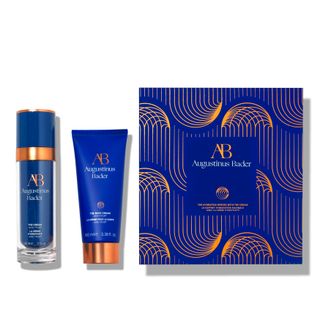
Augustinus Bader The Hydration Heroes with The Cream

Augustinus Bader The Hydration Heroes with The Cream

Efficacy75/100IrritancyHigh
Edit

Works for

2 of 3 advertised claims delivered

Moisturizing
39 ingredients credited for this claim
Strong support
What the product description says
“The Hydration Heroes with The Cream”
From product name

This product can help improve hydration of the skin with the two types of ingredients.

The first type is called “humectants”:
these ingredients help attract water. When humectants are on the surface of the skin, they “pull in” the moisture from the outside environment, or from within deeper layers of the skin. The following ingredients in this product do the job: alanyl glutamine, anhydroxylitol.

This product also contains ingredients called “occlusives”. They help reduce the speed with which our skin loses moisture to the outside environment. These ingredients also help soften the upper layer of the skin, so it feels less tight and nicer to the touch. The following ingredients in this product do the job: arginine, caprylic/capric triglyceride.

The following ingredients in this product are especially good for supporting the skin barrier and helping with the hydration level: ceramide ng, ceramide np, palmitoyl tripeptide-8, panthenol

Superoxide dismutaseKey activeEffect: HighAn antioxidant enzyme that is naturally present in skin. It can help support skin barrier function and reduce inflammation in skin. It is used in topical medications for inflammatory skin conditions including atopic dermatitis (eczema) and psoriasis. There are three types of natural Superoxide Dismutase in human skin. The compound used in topical treatments and cosmetics are mimics of typically one of these natural variants~0.45–0.7%
Alanyl glutamineKey active· HumectantEffect: HighA type of peptide. Peptides are excellent moisturizers and might be able support collagen production reducing fine lines and wrinkles~0.3–0.6%
SqualaneKey active· Emollient, OcclusiveEffect: HighAn oil naturally present in skin. Works as an emollient to soften the skin and form a protective layer on its surface without a greasy feeling.~0.35–0.65%
Scenedesmus rubescens extractKey activeEffect: HighA micro-algae extract that might help attract water to the upper layer of the skin, support its barrier function, amd might help neutralize free radicals, but evidence of effectiveness in skin is lacking~0.3–0.6%
Ceramide ngHero· EmollientEffect: HighA type of lipid similar to ceramides naturally present in skin. Helps to soften the upper layer of the skin and supports the skin barrier function to keep it hydrated. Can help to prevent inflammation in skin~0.4–0.6%
GlycineKey active· HumectantEffect: HighHelps to attract water to the upper layer of the skin and can help restore the skin barrier function~0.3–0.6%
Caprylic/capric triglycerideKey active· Emollient, OcclusiveEffect: HighA good mix of fatty acids that forms a protective layer on the skin. Improves the shelf life of products. Derived from coconut and glycerin~0.4–0.6%
Helianthus annuus seed oilKey active· Emollient, OcclusiveEffect: HighA great emollient due to its high linoleic acid content. One of the most effective plant oils in helping skin hydration and repairing skin barrier function~0.4–0.65%
GlycerinKey active· HumectantEffect: HighOne of the best moisturizing ingredients. Naturally present in skin. It attracts water to the upper layer of the skin working as a humectant~0.4–0.65%
Ceramide npHero· EmollientEffect: HighA type of lipid similar to ceramides naturally present in skin. Helps to soften the upper layer of the skin and supports the skin barrier function to keep it hydrated. Can help to prevent inflammation in skin~0.25–0.45%
CholesterolKey active· EmollientEffect: HighAn emollient that is naturally found in skin~0.45–0.7%
LysineKey activeEffect: HighAn amino-acid that helps to attract water to the upper layer of the skin. In combination with other amino-acids, might help to reduce fine lines and wrinkles~0.35–0.6%
DextranKey active· HumectantEffect: HighHelps attract water to the most upper layer of the skin. Derived from sugar~0.35–0.6%
AnhydroxylitolKey active· HumectantEffect: HighHelps attract water to the upper layer of the skin and repair the skin barrir function~0.35–0.6%
ArginineKey active· Humectant, OcclusiveEffect: HighAn amino acid that is naturally present in skin and helps keep it hydrated. When used together with AHAs, it can reduce their irritating effect on the skin~0.3–0.55%
XylitylglucosideKey active· HumectantEffect: HighHelps attract water to the upper layer of the skin and repair the skin barrier function~0.35–0.6%
Palmitoyl tripeptide-8HeroEffect: High~0.35–0.6%
PanthenolHero· HumectantEffect: HighHelps attract water to the upper layer of the skin and can help improve skin barrier function~0.6–0.9%
ProlineKey activeEffect: Medium~0.35–0.65%
GlucoseKey active· HumectantEffect: MediumHelps attract water to the upper layer of the skin. Could be helpful in restoring the skin barrier function~0.35–0.6%
Glycine soja proteinKey active· Humectant, EmollientEffect: MediumA plant extract that helps to attract water to the upper layer of the skin and soften it. It might be helpful in neutralizing free radicals. It might be somewhat helpful for evening out the skin tone. It might be able to support elastin production but solid research is lacking~0.4–0.6%
Hydrolyzed rice proteinKey active· HumectantEffect: MediumHelps attract water to the upper layer of the skin. Might have some anti-oxidant properties~0.25–0.5%
Sorbitol· HumectantEffect: LowHelps attract water to the upper layer of the skin and improves the product texture~1.4–1.7%
Propylene glycol· HumectantEffect: LowHelps oil and water mix together and can enhance the penetration of other ingredients into the skin. It can be irritating~2.6–3.2%
Pentylene glycol· EmollientEffect: LowUsed to preserve products, dissolve other ingredients and create a nice product texture~0.35–0.65%
Palmitic acid· EmollientEffect: LowAn emollient that is naturally present in skin and helps soften it~0.45–0.65%
Behenyl alcohol· Emollient, OcclusiveEffect: LowNon-drying alcohol that helps water and oil mix together. Also serves as an emollient~0.45–0.65%
Oleic acid· EmollientEffect: LowHelps soften the upper layer of the skin. At the same time, it can weaken the skin's barrier enhancing penetration of other ingredients and increasing the risk of skin dryness~0.45–0.65%
Lauryl laurateEffect: LowHelps soften the upper layer of the skin~0.35–0.6%
Glyceryl stearate· EmollientEffect: LowAn emollient that softens the skin and forms a protective layer on its surface. Helps water and oil mix together~0.45–0.65%
Dicaprylyl ether· EmollientEffect: LowHelps soften the upper layer of the skin while creating a non-greasy feel on the skin. Helps to dissolve other ingredients~0.4–0.6%
Butylene glycol· HumectantEffect: LowUsed to create a nice product texture and help delivery of other ingredients. Might be somewhat helpful in attracting water to the upper layer of the skin~1–1.3%
Myristyl myristateUnder-dosedEffect: HighAn emollient. Is not recommended for acne-prone skin as it can be comedogenic~0.4–0.65%
Butyrospermum parkii butterUnder-dosedEffect: HighA great moisturising ingredient that softens the skin and reduces water loss from its upper layer. It also can be helpful in protecting skin from free radicals~0.45–0.65%
NiacinamideUnder-dosedEffect: HighIs proven to be effective in reducing blemishes, evening out skin tone and helping to improve lines and wrinkles. It helps the skin to repair sun damage, calm down inflammation and keep maintain good levels of moisture. The concentration of about 2% is effective for supporting the skin barrier and evening out the skin tone. Concentration of 4-6% is better for helping with acne and balancing the sebum production~0.25–0.5%
LecithinEffect: Low, below effective doseUsed mostly for creating emulsions - helping oil and water mix together. Helps soften the upper layer of the skin~0.45–0.65%
TocopherolEffect: Low, below effective dosePure form of vitamin E. Can help moisturise and protect the skin from free radicals. Often used to help stabilise other ingredients or the formula itself~0.5–0.75%
Aloe barbadensis leaf juiceEffect: Low, below effective doseTraditionally used to treat sunburns, dermatitis and inflammation, but evidence for its effectiveness is lacking. The extract can contain humectants that help attract water into the skin~0.5–0.8%
Camellia sinensis leaf extractEffect: Low, below effective doseCan contain potent anti-oxidant compounds (abbreviated ECG, GCG, EGC, and EGCG) that might help protect the skin from free radicals. Can help calm down inflammation and has some anti-bacterial properties. Unfortunately, these antioxidants are unstable and lose their effectiveness very quickly in products. The concentration of the antioxidant compounds in the extract also tends to be low to be effective in topical formulation~0.35–0.65%
Anti-aging
12 ingredients credited for this claim
Moderate support
What the product description says
“The Cream is enriched with vitamin A to help reduce the appearance of lines and hyperpigmentation and boost the skin's barrier function.”
Source: SpaceNK US

This product contains alanyl glutamine, lysine, palmitoyl tripeptide-8. These ingredients might be able to help reduce and prevent fine lines and wrinkles, improve skin elasticity and firmness, but there is not enough evidence that it actually works.

LysineKey activeEffect: MediumAn amino-acid that helps to attract water to the upper layer of the skin. In combination with other amino-acids, might help to reduce fine lines and wrinkles~0.35–0.6%
Alanyl glutamineKey activeEffect: MediumA type of peptide. Peptides are excellent moisturizers and might be able support collagen production reducing fine lines and wrinkles~0.3–0.6%
Palmitoyl tripeptide-8Key activeEffect: Medium~0.35–0.6%
Glycine soja proteinEffect: LowA plant extract that helps to attract water to the upper layer of the skin and soften it. It might be helpful in neutralizing free radicals. It might be somewhat helpful for evening out the skin tone. It might be able to support elastin production but solid research is lacking~0.4–0.6%
Ascorbic acidUnder-dosedEffect: HighThe most well-researched antioxidant that works in skin. Helps neutralize free radicals supporting collagen production, helping to even out the skin tone and preventing early signs of aging~0.45–0.7%
NiacinamideUnder-dosedEffect: HighIs proven to be effective in reducing blemishes, evening out skin tone and helping to improve lines and wrinkles. It helps the skin to repair sun damage, calm down inflammation and keep maintain good levels of moisture. The concentration of about 2% is effective for supporting the skin barrier and evening out the skin tone. Concentration of 4-6% is better for helping with acne and balancing the sebum production~0.25–0.5%
Retinyl palmitateUnder-dosedEffect: MediumThree steps removed from the active form of vitamin A - retinoic acid. To have an effect in the skin, it first needs to be converted twice to become the retinoic acid. This means it is less potent than retinol, but could also be less irritating. Once converted to the retinoic acid in the skin, it helps against all signs of aging, improves skin cell turnover and helps fight blemishes and clogged pores. However, in many cosmetic formulations, it is used in a concentration that is too low to have the full effect~0.45–0.65%
TocopherolEffect: Low, below effective dosePure form of vitamin E. Can help moisturise and protect the skin from free radicals. Often used to help stabilise other ingredients or the formula itself~0.5–0.75%
Camellia sinensis leaf extractEffect: Low, below effective doseCan contain potent anti-oxidant compounds (abbreviated ECG, GCG, EGC, and EGCG) that might help protect the skin from free radicals. Can help calm down inflammation and has some anti-bacterial properties. Unfortunately, these antioxidants are unstable and lose their effectiveness very quickly in products. The concentration of the antioxidant compounds in the extract also tends to be low to be effective in topical formulation~0.35–0.65%
Butyrospermum parkii butterEffect: Low, below effective doseA great moisturising ingredient that softens the skin and reduces water loss from its upper layer. It also can be helpful in protecting skin from free radicals~0.45–0.65%
Ascorbyl palmitateEffect: Low, below effective doseBeing a lipid soluble form of vitamin C, it is more stable and can penetrate the skin better than L-Ascorbic acid. It is effective in protecting the skin from free radicals, as well as evening the skin tone, but is less effective in stimulating collagen production compared to L-Ascorbic acid.~0.45–0.7%
Aloe barbadensis leaf juiceEffect: Low, below effective doseTraditionally used to treat sunburns, dermatitis and inflammation, but evidence for its effectiveness is lacking. The extract can contain humectants that help attract water into the skin~0.5–0.8%
Evens skin tone
5 ingredients credited for this claim
Limited support
What the product description says
“The Cream is enriched with vitamin A to help reduce the appearance of lines and hyperpigmentation and boost the skin's barrier function.”
Source: SpaceNK US

This product contains ingredients (glycine soja protein) that could help reduce hyperpigmentation (for example, post-acne marks or age spots) in theory, but there is not enough evidence that they actually work.

Glycine soja proteinEffect: LowA plant extract that helps to attract water to the upper layer of the skin and soften it. It might be helpful in neutralizing free radicals. It might be somewhat helpful for evening out the skin tone. It might be able to support elastin production but solid research is lacking~0.4–0.6%
Ascorbic acidUnder-dosedEffect: HighThe most well-researched antioxidant that works in skin. Helps neutralize free radicals supporting collagen production, helping to even out the skin tone and preventing early signs of aging~0.45–0.7%
NiacinamideUnder-dosedEffect: HighIs proven to be effective in reducing blemishes, evening out skin tone and helping to improve lines and wrinkles. It helps the skin to repair sun damage, calm down inflammation and keep maintain good levels of moisture. The concentration of about 2% is effective for supporting the skin barrier and evening out the skin tone. Concentration of 4-6% is better for helping with acne and balancing the sebum production~0.25–0.5%
Retinyl palmitateUnder-dosedEffect: MediumThree steps removed from the active form of vitamin A - retinoic acid. To have an effect in the skin, it first needs to be converted twice to become the retinoic acid. This means it is less potent than retinol, but could also be less irritating. Once converted to the retinoic acid in the skin, it helps against all signs of aging, improves skin cell turnover and helps fight blemishes and clogged pores. However, in many cosmetic formulations, it is used in a concentration that is too low to have the full effect~0.45–0.65%
Camellia sinensis leaf extractEffect: Low, below effective doseCan contain potent anti-oxidant compounds (abbreviated ECG, GCG, EGC, and EGCG) that might help protect the skin from free radicals. Can help calm down inflammation and has some anti-bacterial properties. Unfortunately, these antioxidants are unstable and lose their effectiveness very quickly in products. The concentration of the antioxidant compounds in the extract also tends to be low to be effective in topical formulation~0.35–0.65%
Anti-oxidation
Not advertised by the brand · 11 ingredients credited for this claim
Strong support

This product contains antioxidants (superoxide dismutase) that can help neutralize free radicals in skin. By doing so, they can lessen the damage the skin gets from the UV light (sun).

Superoxide dismutaseKey activeEffect: HighAn antioxidant enzyme that is naturally present in skin. It can help support skin barrier function and reduce inflammation in skin. It is used in topical medications for inflammatory skin conditions including atopic dermatitis (eczema) and psoriasis. There are three types of natural Superoxide Dismutase in human skin. The compound used in topical treatments and cosmetics are mimics of typically one of these natural variants~0.45–0.7%
Scenedesmus rubescens extractEffect: LowA micro-algae extract that might help attract water to the upper layer of the skin, support its barrier function, amd might help neutralize free radicals, but evidence of effectiveness in skin is lacking~0.3–0.6%
Tocopheryl acetateEffect: LowA more stable but less bio-available form of vitamin E compared to Tocopherol. Might help moisturize and protect the skin from free radicals, but mostly used in low concentrations to stabilize other ingredients.~0.45–0.7%
Glycine soja proteinEffect: LowA plant extract that helps to attract water to the upper layer of the skin and soften it. It might be helpful in neutralizing free radicals. It might be somewhat helpful for evening out the skin tone. It might be able to support elastin production but solid research is lacking~0.4–0.6%
Hydrolyzed rice proteinEffect: LowHelps attract water to the upper layer of the skin. Might have some anti-oxidant properties~0.25–0.5%
Ascorbic acidUnder-dosedEffect: HighThe most well-researched antioxidant that works in skin. Helps neutralize free radicals supporting collagen production, helping to even out the skin tone and preventing early signs of aging~0.45–0.7%
TocopherolUnder-dosedEffect: HighPure form of vitamin E. Can help moisturise and protect the skin from free radicals. Often used to help stabilise other ingredients or the formula itself~0.5–0.75%
Camellia sinensis leaf extractUnder-dosedEffect: MediumCan contain potent anti-oxidant compounds (abbreviated ECG, GCG, EGC, and EGCG) that might help protect the skin from free radicals. Can help calm down inflammation and has some anti-bacterial properties. Unfortunately, these antioxidants are unstable and lose their effectiveness very quickly in products. The concentration of the antioxidant compounds in the extract also tends to be low to be effective in topical formulation~0.35–0.65%
Butyrospermum parkii butterEffect: Low, below effective doseA great moisturising ingredient that softens the skin and reduces water loss from its upper layer. It also can be helpful in protecting skin from free radicals~0.45–0.65%
BisabololEffect: Low, below effective doseAn active component of chamomile plant that historically has been used to calm down irritated skin. A recent study shows that bisabolol indeed can have some anti-inflammatory effect on skin, even though conclusive data is lacking. Bisabolol has a sweet floral scent and can be added to products for its aromatic properties~0.3–0.55%
Ascorbyl palmitateEffect: Low, below effective doseBeing a lipid soluble form of vitamin C, it is more stable and can penetrate the skin better than L-Ascorbic acid. It is effective in protecting the skin from free radicals, as well as evening the skin tone, but is less effective in stimulating collagen production compared to L-Ascorbic acid.~0.45–0.7%

Can it cause trouble?

Irritancy
2 strong irritants: Alcohol, Retinyl palmitate — patch-test recommended
High risk
We flagged 21 ingredients with irritancy potential. Severity depends on your sensitivity threshold; the table lists the worst offenders first.
IngredientFunctionIrritationEst. amount
Propylene glycolHelps oil and water mix together and can enhance the penetration of other ingredients into the skin. It can be irritatingHigh~2.6–3.2%est.
AlcoholCan be drying and contribute to skin irritation. Used in formulars to dissolve other ingredients, create a thinner product consistency or for its antibacterial propertiesHigh~0.55–0.8%est.
Retinyl palmitateThree steps removed from the active form of vitamin A - retinoic acid. To have an effect in the skin, it first needs to be converted twice to become the retinoic acid. This means it is less potent than retinol, but could also be less irritating. Once converted to the retinoic acid in the skin, it helps against all signs of aging, improves skin cell turnover and helps fight blemishes and clogged pores. However, in many cosmetic formulations, it is used in a concentration that is too low to have the full effectHigh~0.45–0.65%est.
Ascorbic acidThe most well-researched antioxidant that works in skin. Helps neutralize free radicals supporting collagen production, helping to even out the skin tone and preventing early signs of agingHigh~0.45–0.7%est.
Caprylic/capric triglycerideA good mix of fatty acids that forms a protective layer on the skin. Improves the shelf life of products. Derived from coconut and glycerinMedium~5.7–7%est.
Pentylene glycolUsed to preserve products, dissolve other ingredients and create a nice product textureMedium~3.8–4.7%est.
Hydrogenated phosphatidylcholineHelps oil and water mix togetherMedium~1.7–2%est.
Tocopheryl acetateA more stable but less bio-available form of vitamin E compared to Tocopherol. Might help moisturize and protect the skin from free radicals, but mostly used in low concentrations to stabilize other ingredients.Medium~1.3–1.5%est.
Aloe barbadensis leaf juiceTraditionally used to treat sunburns, dermatitis and inflammation, but evidence for its effectiveness is lacking. The extract can contain humectants that help attract water into the skinMedium~0.5–0.8%est.
Ascorbyl palmitateBeing a lipid soluble form of vitamin C, it is more stable and can penetrate the skin better than L-Ascorbic acid. It is effective in protecting the skin from free radicals, as well as evening the skin tone, but is less effective in stimulating collagen production compared to L-Ascorbic acid.Medium~0.45–0.7%est.
Citric acidCan work as an exfoliant but is typically used to adjust the product pHMedium~0.35–0.6%est.
Oleic acidHelps soften the upper layer of the skin. At the same time, it can weaken the skin's barrier enhancing penetration of other ingredients and increasing the risk of skin drynessMedium~0.45–0.65%est.
Scenedesmus rubescens extractA micro-algae extract that might help attract water to the upper layer of the skin, support its barrier function, amd might help neutralize free radicals, but evidence of effectiveness in skin is lackingMedium~0.3–0.6%est.
EthylhexylglycerinA preservativeMedium~0.35–0.65%est.
Disodium edtaStabilizes the product formulationMedium~0.35–0.6%est.
Potassium sorbateA preservativeMedium~0.3–0.6%est.
Lauryl laurateHelps soften the upper layer of the skinMedium~0.35–0.6%est.
Myristyl myristateAn emollient. Is not recommended for acne-prone skin as it can be comedogenicMedium~0.4–0.65%est.
Polyglyceryl-3 methylglucose distearateHelps water and oil mix togetherMedium~0.4–0.6%est.
Sodium stearoyl glutamateHelps oil and water mix togetherMedium~0.45–0.65%est.
ChlorphenesinA preservativeMedium~0.16–0.32%est.
Comedogenic
3 ingredients rated 2 or more on the 0–5 pore-clogging scale
3 flagged
These ingredients have a comedogenic rating of 2 or more on a 0–5 scale; the table shows each one's rating. In leave-on products they can clog pores in acne-prone skin.
IngredientFunctionRatingEst. amount
Butyrospermum parkii butterA great moisturising ingredient that softens the skin and reduces water loss from its upper layer. It also can be helpful in protecting skin from free radicals3/5~0.9–1.1%est.
Butyrospermum parkii butterA great moisturising ingredient that softens the skin and reduces water loss from its upper layer. It also can be helpful in protecting skin from free radicals3/5~0.45–0.65%est.
Myristyl myristateAn emollient. Is not recommended for acne-prone skin as it can be comedogenic3/5~0.4–0.65%est.
Edit

User reviews

Would you recommend?
No community reviews yet.

Be the first — your take helps the next person decide.

Write a review · ~30s

Ingredients

Filter by role to see what each ingredient is doing.

The
Not recognized
Cream~25–30%
Formula
Irritation risk
Low
More about Cream
Water~13–15%
Formula
Irritation risk
Low

Plain old water

More about Water
Caprylic/capric triglyceride~5.7–7%
Key activeIrritant · medium
Irritation risk
Medium
Works for
Moisturizing

A good mix of fatty acids that forms a protective layer on the skin. Improves the shelf life of products. Derived from coconut and glycerin

More about Caprylic/capric triglyceride
Pentylene glycol~3.8–4.7%
Irritant · medium
Irritation risk
Medium
Works for
Moisturizing

Used to preserve products, dissolve other ingredients and create a nice product texture

More about Pentylene glycol
Propylene glycol~2.6–3.2%
Irritant · high
Irritation risk
High
Works for
Moisturizing

Helps oil and water mix together and can enhance the penetration of other ingredients into the skin. It can be irritating

More about Propylene glycol
Glycerin~2.1–2.5%
Key active
Irritation risk
Low
Works for
Moisturizing

One of the best moisturizing ingredients. Naturally present in skin. It attracts water to the upper layer of the skin working as a humectant

More about Glycerin
Hydrogenated phosphatidylcholine~1.7–2%
Irritant · medium
Irritation risk
Medium
Works for
Cleansing

Helps oil and water mix together

More about Hydrogenated phosphatidylcholine
Sorbitol~1.4–1.7%
Formula
Irritation risk
Low
Works for
Moisturizing

Helps attract water to the upper layer of the skin and improves the product texture

More about Sorbitol
Tocopheryl acetate~1.3–1.5%
Irritant · medium
Irritation risk
Medium
Works for
Anti-oxidation

A more stable but less bio-available form of vitamin E compared to Tocopherol. Might help moisturize and protect the skin from free radicals, but mostly used in low concentrations to stabilize other ingredients.

More about Tocopheryl acetate
Butylene glycol~1–1.3%
Formula
Irritation risk
Low
Works for
Moisturizing

Used to create a nice product texture and help delivery of other ingredients. Might be somewhat helpful in attracting water to the upper layer of the skin

More about Butylene glycol
Butyrospermum parkii butter~0.9–1.1%
Under-dosedComedogenic 3/5
Irritation risk
Low
Comedogenicity
3/5
Works for
MoisturizingAnti-agingAnti-oxidation

A great moisturising ingredient that softens the skin and reduces water loss from its upper layer. It also can be helpful in protecting skin from free radicals

More about Butyrospermum parkii butter
Xanthan gum~0.65–0.95%
Formula
Irritation risk
Low
Works for
Cleansing

Used to create a thicker product consistency

More about Xanthan gum
Panthenol~0.6–0.9%
Hero · Moisturizing
Irritation risk
Low
Works for
Reduces rednessMoisturizingReduces irritation

Helps attract water to the upper layer of the skin and can help improve skin barrier function

More about Panthenol
Sodium carbomer~0.65–0.95%
Formula
Irritation risk
Low

Helps improve the texture

More about Sodium carbomer
Alcohol~0.55–0.8%
Irritant · high
Irritation risk
High
Works for
Antibacterial

Can be drying and contribute to skin irritation. Used in formulars to dissolve other ingredients, create a thinner product consistency or for its antibacterial properties

More about Alcohol
Aloe barbadensis leaf juice~0.5–0.8%
Irritant · medium
Irritation risk
Medium
Works for
MoisturizingAntibacterialReduces irritationReduces rednessAnti-inflammatoryAnti-blemishAnti-aging

Traditionally used to treat sunburns, dermatitis and inflammation, but evidence for its effectiveness is lacking. The extract can contain humectants that help attract water into the skin

More about Aloe barbadensis leaf juice
Hydrolyzed rice protein~0.5–0.75%
Key active
Irritation risk
Low
Works for
MoisturizingAnti-oxidation

Helps attract water to the upper layer of the skin. Might have some anti-oxidant properties

More about Hydrolyzed rice protein
Retinyl palmitate~0.45–0.65%
Under-dosedIrritant · high
Irritation risk
High
Works for
Evens skin toneAnti-blemishAnti-agingExfoliation

Three steps removed from the active form of vitamin A - retinoic acid. To have an effect in the skin, it first needs to be converted twice to become the retinoic acid. This means it is less potent than retinol, but could also be less irritating. Once converted to the retinoic acid in the skin, it helps against all signs of aging, improves skin cell turnover and helps fight blemishes and clogged pores. However, in many cosmetic formulations, it is used in a concentration that is too low to have the full effect

More about Retinyl palmitate
Helianthus annuus seed oil~0.5–0.75%
Key active
Irritation risk
Low
Works for
Moisturizing

A great emollient due to its high linoleic acid content. One of the most effective plant oils in helping skin hydration and repairing skin barrier function

More about Helianthus annuus seed oil
Squalane~0.5–0.75%
Key active
Irritation risk
Low
Works for
Moisturizing

An oil naturally present in skin. Works as an emollient to soften the skin and form a protective layer on its surface without a greasy feeling.

More about Squalane
Phenoxyethanol~0.4–0.65%
Formula
Irritation risk
Low

A preservative. It helps prevent bacterial growth in cosmetic products

More about Phenoxyethanol
Cholesterol~0.45–0.7%
Key active
Irritation risk
Low
Works for
MoisturizingCleansing

An emollient that is naturally found in skin

More about Cholesterol
Hydrogenated lecithin~0.4–0.6%
Formula
Irritation risk
Low
Works for
Cleansing

Helps to retain moisture by creating a protective barrier on the skin. Rich in fatty acids. Improves product texture and helps with the penetration of other ingredients.

More about Hydrogenated lecithin
Ascorbyl palmitate~0.45–0.7%
Irritant · medium
Irritation risk
Medium
Works for
Anti-oxidationAnti-aging

Being a lipid soluble form of vitamin C, it is more stable and can penetrate the skin better than L-Ascorbic acid. It is effective in protecting the skin from free radicals, as well as evening the skin tone, but is less effective in stimulating collagen production compared to L-Ascorbic acid.

More about Ascorbyl palmitate
Carbomer~0.35–0.65%
Formula
Irritation risk
Low
Works for
Cleansing

Helps create a thicker or gel-like product texture. It is not a surfactant but can be used in gentle cleansing formulations

More about Carbomer
Ceramide np~0.45–0.65%
Hero · Moisturizing
Irritation risk
Low
Works for
MoisturizingAnti-inflammatoryReduces irritation

A type of lipid similar to ceramides naturally present in skin. Helps to soften the upper layer of the skin and supports the skin barrier function to keep it hydrated. Can help to prevent inflammation in skin

More about Ceramide np
Lecithin~0.45–0.65%
Formula
Irritation risk
Low
Works for
CleansingMoisturizing

Used mostly for creating emulsions - helping oil and water mix together. Helps soften the upper layer of the skin

More about Lecithin
Glycine soja protein~0.4–0.6%
Key active
Irritation risk
Low
Works for
CleansingMoisturizingEvens skin toneAnti-agingAnti-oxidation

A plant extract that helps to attract water to the upper layer of the skin and soften it. It might be helpful in neutralizing free radicals. It might be somewhat helpful for evening out the skin tone. It might be able to support elastin production but solid research is lacking

More about Glycine soja protein
Superoxide dismutase~0.45–0.7%
Key active
Irritation risk
Low
Works for
Anti-oxidationMoisturizingAnti-inflammatory

An antioxidant enzyme that is naturally present in skin. It can help support skin barrier function and reduce inflammation in skin. It is used in topical medications for inflammatory skin conditions including atopic dermatitis (eczema) and psoriasis. There are three types of natural Superoxide Dismutase in human skin. The compound used in topical treatments and cosmetics are mimics of typically one of these natural variants

More about Superoxide dismutase
Sodium hydroxide~0.35–0.6%
Formula
Irritation risk
Low

Used to adjust the product's pH

More about Sodium hydroxide
Alanyl glutamine~0.3–0.6%
Key active
Irritation risk
Low
Works for
MoisturizingAnti-aging

A type of peptide. Peptides are excellent moisturizers and might be able support collagen production reducing fine lines and wrinkles

More about Alanyl glutamine
Arginine~0.3–0.6%
Key active
Irritation risk
Low
Works for
Moisturizing

An amino acid that is naturally present in skin and helps keep it hydrated. When used together with AHAs, it can reduce their irritating effect on the skin

More about Arginine
Ceramide ng~0.4–0.6%
Hero · Moisturizing
Irritation risk
Low
Works for
MoisturizingAnti-inflammatory

A type of lipid similar to ceramides naturally present in skin. Helps to soften the upper layer of the skin and supports the skin barrier function to keep it hydrated. Can help to prevent inflammation in skin

More about Ceramide ng
Citric acid~0.35–0.6%
Irritant · medium
Irritation risk
Medium

Can work as an exfoliant but is typically used to adjust the product pH

More about Citric acid
Dextran~0.35–0.6%
Key active
Irritation risk
Low
Works for
Moisturizing

Helps attract water to the most upper layer of the skin. Derived from sugar

More about Dextran
Glycine~0.3–0.6%
Key active
Irritation risk
Low
Works for
Moisturizing

Helps to attract water to the upper layer of the skin and can help restore the skin barrier function

More about Glycine
Lysine~0.35–0.6%
Key active
Irritation risk
Low
Works for
MoisturizingAnti-aging

An amino-acid that helps to attract water to the upper layer of the skin. In combination with other amino-acids, might help to reduce fine lines and wrinkles

More about Lysine
Oleic acid~0.45–0.65%
Irritant · medium
Irritation risk
Medium
Works for
CleansingAnti-inflammatoryMoisturizing

Helps soften the upper layer of the skin. At the same time, it can weaken the skin's barrier enhancing penetration of other ingredients and increasing the risk of skin dryness

More about Oleic acid
Palmitic acid~0.45–0.65%
Formula
Irritation risk
Low
Works for
CleansingMoisturizing

An emollient that is naturally present in skin and helps soften it

More about Palmitic acid
Palmitoyl tripeptide-8~0.35–0.6%
Hero · Moisturizing
Irritation risk
Low
Works for
MoisturizingAnti-aging
More about Palmitoyl tripeptide-8
Phenylalanine~0.35–0.6%
Formula
Irritation risk
Low
More about Phenylalanine
Proline~0.35–0.65%
Key active
Irritation risk
Low
Works for
Moisturizing
More about Proline
Scenedesmus rubescens extract~0.3–0.6%
Key activeIrritant · medium
Irritation risk
Medium
Works for
MoisturizingAnti-oxidation

A micro-algae extract that might help attract water to the upper layer of the skin, support its barrier function, amd might help neutralize free radicals, but evidence of effectiveness in skin is lacking

More about Scenedesmus rubescens extract
Ascorbic acid~0.45–0.7%
Under-dosedIrritant · high
Irritation risk
High
Works for
Anti-agingAnti-oxidationEvens skin tone

The most well-researched antioxidant that works in skin. Helps neutralize free radicals supporting collagen production, helping to even out the skin tone and preventing early signs of aging

More about Ascorbic acid
Ethylhexylglycerin~0.35–0.65%
Irritant · medium
Irritation risk
Medium

A preservative

More about Ethylhexylglycerin
Sodium benzoate~0.25–0.5%
Formula
Irritation risk
Low

A preservative

More about Sodium benzoate
Tocopherol~0.5–0.75%
Under-dosed
Irritation risk
Low
Works for
Anti-oxidationMoisturizingAnti-inflammatoryAnti-aging

Pure form of vitamin E. Can help moisturise and protect the skin from free radicals. Often used to help stabilise other ingredients or the formula itself

More about Tocopherol
Brassica alba seed extract~0.35–0.6%
Formula
Disodium edta~0.35–0.6%
Irritant · medium
Irritation risk
Medium

Stabilizes the product formulation

More about Disodium edta
Oligopeptide-177~0.3–0.55%
Formula
Sodium ascorbate~0.5–0.75%
Formula
Sodium dextran sulfate~0.35–0.6%
Formula
Potassium sorbate~0.3–0.6%
Irritant · medium
Irritation risk
Medium

A preservative

More about Potassium sorbate
The body
Not recognized
Cream~0.4–0.6%
Formula
Irritation risk
Low
More about Cream
Water~0.35–0.6%
Formula
Irritation risk
Low

Plain old water

More about Water
Butyrospermum parkii butter~0.45–0.65%
Under-dosedComedogenic 3/5
Irritation risk
Low
Comedogenicity
3/5
Works for
MoisturizingAnti-agingAnti-oxidation

A great moisturising ingredient that softens the skin and reduces water loss from its upper layer. It also can be helpful in protecting skin from free radicals

More about Butyrospermum parkii butter
Behenyl alcohol~0.45–0.65%
Formula
Irritation risk
Low
Works for
Moisturizing

Non-drying alcohol that helps water and oil mix together. Also serves as an emollient

More about Behenyl alcohol
Dicaprylyl ether~0.4–0.6%
Formula
Irritation risk
Low
Works for
Moisturizing

Helps soften the upper layer of the skin while creating a non-greasy feel on the skin. Helps to dissolve other ingredients

More about Dicaprylyl ether
Glycerin~0.4–0.65%
Key active
Irritation risk
Low
Works for
Moisturizing

One of the best moisturizing ingredients. Naturally present in skin. It attracts water to the upper layer of the skin working as a humectant

More about Glycerin
Lauryl laurate~0.35–0.6%
Irritant · medium
Irritation risk
Medium
Works for
Moisturizing

Helps soften the upper layer of the skin

More about Lauryl laurate
Myristyl myristate~0.4–0.65%
Under-dosedComedogenic 3/5Irritant · medium
Irritation risk
Medium
Comedogenicity
3/5
Works for
Moisturizing

An emollient. Is not recommended for acne-prone skin as it can be comedogenic

More about Myristyl myristate
Glyceryl stearate~0.45–0.65%
Formula
Irritation risk
Low
Works for
CleansingMoisturizing

An emollient that softens the skin and forms a protective layer on its surface. Helps water and oil mix together

More about Glyceryl stearate
Polyglyceryl-3 methylglucose distearate~0.4–0.6%
Irritant · medium
Irritation risk
Medium
Works for
Cleansing

Helps water and oil mix together

More about Polyglyceryl-3 methylglucose distearate
Sodium stearoyl glutamate~0.45–0.65%
Irritant · medium
Irritation risk
Medium
Works for
Cleansing

Helps oil and water mix together

More about Sodium stearoyl glutamate
Xylitylglucoside~0.35–0.6%
Key active
Irritation risk
Low
Works for
Moisturizing

Helps attract water to the upper layer of the skin and repair the skin barrier function

More about Xylitylglucoside
Anhydroxylitol~0.35–0.6%
Key active
Irritation risk
Low
Works for
Moisturizing

Helps attract water to the upper layer of the skin and repair the skin barrir function

More about Anhydroxylitol
Citric acid~0.35–0.6%
Irritant · medium
Irritation risk
Medium

Can work as an exfoliant but is typically used to adjust the product pH

More about Citric acid
Xylitol~0.3–0.6%
Formula
Irritation risk
Low

Helps attract water to the upper layer of the skin and repair the skin barrier function

More about Xylitol
Chlorphenesin~0.16–0.32%
Irritant · medium
Irritation risk
Medium

A preservative

More about Chlorphenesin
Xanthan gum~0.35–0.65%
Formula
Irritation risk
Low
Works for
Cleansing

Used to create a thicker product consistency

More about Xanthan gum
Bisabolol~0.3–0.55%
Formula
Irritation risk
Low
Works for
Reduces irritationAnti-inflammatoryAnti-oxidation

An active component of chamomile plant that historically has been used to calm down irritated skin. A recent study shows that bisabolol indeed can have some anti-inflammatory effect on skin, even though conclusive data is lacking. Bisabolol has a sweet floral scent and can be added to products for its aromatic properties

More about Bisabolol
Sodium benzoate~0.25–0.5%
Formula
Irritation risk
Low

A preservative

More about Sodium benzoate
Tocopherol~0.5–0.75%
Under-dosed
Irritation risk
Low
Works for
Anti-oxidationAnti-inflammatoryAnti-agingMoisturizing

Pure form of vitamin E. Can help moisturise and protect the skin from free radicals. Often used to help stabilise other ingredients or the formula itself

More about Tocopherol
Helianthus annuus seed oil~0.4–0.65%
Key active
Irritation risk
Low
Works for
Moisturizing

A great emollient due to its high linoleic acid content. One of the most effective plant oils in helping skin hydration and repairing skin barrier function

More about Helianthus annuus seed oil
Glucose~0.35–0.6%
Key active
Irritation risk
Low
Works for
Moisturizing

Helps attract water to the upper layer of the skin. Could be helpful in restoring the skin barrier function

More about Glucose
Tocopheryl acetate~0.45–0.7%
Irritant · medium
Irritation risk
Medium
Works for
Anti-oxidation

A more stable but less bio-available form of vitamin E compared to Tocopherol. Might help moisturize and protect the skin from free radicals, but mostly used in low concentrations to stabilize other ingredients.

More about Tocopheryl acetate
Caprylic/capric triglyceride~0.4–0.6%
Key activeIrritant · medium
Irritation risk
Medium
Works for
Moisturizing

A good mix of fatty acids that forms a protective layer on the skin. Improves the shelf life of products. Derived from coconut and glycerin

More about Caprylic/capric triglyceride
Hydrogenated phosphatidylcholine~0.3–0.55%
Irritant · medium
Irritation risk
Medium
Works for
Cleansing

Helps oil and water mix together

More about Hydrogenated phosphatidylcholine
Hydrolyzed rice protein~0.25–0.5%
Key active
Irritation risk
Low
Works for
MoisturizingAnti-oxidation

Helps attract water to the upper layer of the skin. Might have some anti-oxidant properties

More about Hydrolyzed rice protein
Maltodextrin~0.3–0.6%
Formula
Irritation risk
Low
Works for
Mattifying

Used to stabilize the product formulation and can help absorb oil

More about Maltodextrin
Niacinamide~0.25–0.5%
Under-dosed
Irritation risk
Low
Works for
Anti-agingEvens skin toneMoisturizingAnti-blemishReduces irritationAntibacterialReduces rednessAnti-inflammatory

Is proven to be effective in reducing blemishes, evening out skin tone and helping to improve lines and wrinkles. It helps the skin to repair sun damage, calm down inflammation and keep maintain good levels of moisture. The concentration of about 2% is effective for supporting the skin barrier and evening out the skin tone. Concentration of 4-6% is better for helping with acne and balancing the sebum production

More about Niacinamide
Sodium hydroxide~0.25–0.45%
Formula
Irritation risk
Low

Used to adjust the product's pH

More about Sodium hydroxide
Alanyl glutamine~0.3–0.6%
Key active
Irritation risk
Low
Works for
MoisturizingAnti-aging

A type of peptide. Peptides are excellent moisturizers and might be able support collagen production reducing fine lines and wrinkles

More about Alanyl glutamine
Arginine~0.3–0.55%
Key active
Irritation risk
Low
Works for
Moisturizing

An amino acid that is naturally present in skin and helps keep it hydrated. When used together with AHAs, it can reduce their irritating effect on the skin

More about Arginine
Camellia sinensis leaf extract~0.35–0.65%
Under-dosed
Irritation risk
Low
Works for
Anti-oxidationAntibacterialAnti-agingAnti-blemishEvens skin toneMoisturizing

Can contain potent anti-oxidant compounds (abbreviated ECG, GCG, EGC, and EGCG) that might help protect the skin from free radicals. Can help calm down inflammation and has some anti-bacterial properties. Unfortunately, these antioxidants are unstable and lose their effectiveness very quickly in products. The concentration of the antioxidant compounds in the extract also tends to be low to be effective in topical formulation

More about Camellia sinensis leaf extract
Pentylene glycol~0.35–0.65%
Irritant · medium
Irritation risk
Medium
Works for
Moisturizing

Used to preserve products, dissolve other ingredients and create a nice product texture

More about Pentylene glycol
Squalane~0.35–0.65%
Key active
Irritation risk
Low
Works for
Moisturizing

An oil naturally present in skin. Works as an emollient to soften the skin and form a protective layer on its surface without a greasy feeling.

More about Squalane
Brassica alba seed extract~0.25–0.45%
Formula
Ceramide np~0.25–0.45%
Hero · Moisturizing
Irritation risk
Low
Works for
MoisturizingReduces irritationAnti-inflammatory

A type of lipid similar to ceramides naturally present in skin. Helps to soften the upper layer of the skin and supports the skin barrier function to keep it hydrated. Can help to prevent inflammation in skin

More about Ceramide np
Hydrogenated lecithin~0.15–0.3%
Formula
Irritation risk
Low
Works for
Cleansing

Helps to retain moisture by creating a protective barrier on the skin. Rich in fatty acids. Improves product texture and helps with the penetration of other ingredients.

More about Hydrogenated lecithin
Oligopeptide-177~0.15–0.3%
Formula
Phenylalanine~0.2–0.35%
Formula
Irritation risk
Low
More about Phenylalanine
Potassium sorbate~0.15–0.3%
Irritant · medium
Irritation risk
Medium

A preservative

More about Potassium sorbate
Sodium chloride~0.1–0.25%
Formula
Irritation risk
Low

Used to stabilize mixtures of oil and water, and create thicker, gel-like product textures

More about Sodium chloride
Ingredient list view

Unknown, Cream, Water, Caprylic/capric triglyceride, Pentylene glycol, Propylene glycol, Glycerin, Hydrogenated phosphatidylcholine, Sorbitol, Tocopheryl acetate, Butylene glycol, Butyrospermum parkii butter, Xanthan gum, Panthenol, Sodium carbomer, Alcohol, Aloe barbadensis leaf juice, Hydrolyzed rice protein, Retinyl palmitate, Helianthus annuus seed oil, Squalane, Phenoxyethanol, Cholesterol, Hydrogenated lecithin, Ascorbyl palmitate, Carbomer, Ceramide np, Lecithin, Glycine soja protein, Superoxide dismutase, Sodium hydroxide, Alanyl glutamine, Arginine, Ceramide ng, Citric acid, Dextran, Glycine, Lysine, Oleic acid, Palmitic acid, Palmitoyl tripeptide-8, Phenylalanine, Proline, Scenedesmus rubescens extract, Ascorbic acid, Ethylhexylglycerin, Sodium benzoate, Tocopherol, Brassica alba seed extract, Disodium edta, Oligopeptide-177, Sodium ascorbate, Sodium dextran sulfate, Potassium sorbate, Unknown, Cream, Water, Butyrospermum parkii butter, Behenyl alcohol, Dicaprylyl ether, Glycerin, Lauryl laurate, Myristyl myristate, Glyceryl stearate, Polyglyceryl-3 methylglucose distearate, Sodium stearoyl glutamate, Xylitylglucoside, Anhydroxylitol, Citric acid, Xylitol, Chlorphenesin, Xanthan gum, Bisabolol, Sodium benzoate, Tocopherol, Helianthus annuus seed oil, Glucose, Tocopheryl acetate, Caprylic/capric triglyceride, Hydrogenated phosphatidylcholine, Hydrolyzed rice protein, Maltodextrin, Niacinamide, Sodium hydroxide, Alanyl glutamine, Arginine, Camellia sinensis leaf extract, Pentylene glycol, Squalane, Brassica alba seed extract, Ceramide np, Hydrogenated lecithin, Oligopeptide-177, Phenylalanine, Potassium sorbate, Sodium chloride

Compare prices

Retailers ranked by price — lowest first.

SpaceNK US
$325.00
Buy

Affiliate links · prices updated regularly

Worth comparing, line by line.

Match % combines shared ingredients, the first five ingredients, shared actives and hero ingredients, irritancy (lower counts in the alternative's favour), texture and body area. Only products in the same routine step are compared.

Side-by-side comparison of this product against its closest alternatives
Augustinus BaderThe Hydration Heroes with The CreamYOUR PRODUCTNATUREKINDWhitening Mega Vitamin CreamMISSHAActibarrier Strong Moist Cream INTENSIVENEOGEN X SUR.MEDICSurmedic 24K Gold Caviar Repair Vital Cream
Match—69%61%61%
Price$323.90$37.60−$286.30$28.11−$295.79$60.00−$263.90
Shared key ingredients—4 of 269 of 2610 of 26
Key difference—AdenosineCopper Tripeptide-1Copper Tripeptide-1
Irritancy High Medium Medium Medium
Drying alcohol Contains drying alcohol ———
View product Shop Shop Shop
Cheaper alternatives? See how this stacks up against similar formulas.
We compare ingredient profiles across our catalog — pick the closest match for your budget.
Open dupe finder

Product summary

Based on the ingredients included, "Augustinus Bader - The Hydration Heroes with The Cream" works well for moisturizing the skin. This moisturizer uses a good combo of humectants and emollients. These both types of ingredients are essentials for improving the skin hydration and keeping the skin barrier healthy. Panthenol, alanyl glutamine, anhydroxylitol, arginine and dextran in this product (humectants) attract water molecules to the upper layer of the skin (the water comes from the outside air or from the deeper layers of the skin if the air is dry). Ceramide ng, ceramide np, cholesterol, arginine and caprylic/capric triglyceride in this product help decrease the water evoporation from the skin, so that it stays hydrated for longer. These ingredients also soften the skin and take away the feeling of tightness and dryness.

Ingredient callouts

  • This product also contains Vitamin C (Ascorbic Acid). It can be an effective active for anti-aging and evening out the skin tone, but in this moisturizer it is used for stabilizing other ingredients in the formulation. In this concentration (0.45% - 0.70%) it cannot have a noticeable benefit for the skin.
  • This moisturizer includes a form of Retinoids (vitamin A) - retinyl palmitate 0.45% - 0.65%, but this type of vitamin A is not very effective. It could in theory help with fine lines and wrinkles, but the effect is most likely minimal.
  • Another benefit is that this moisturizer contain ceramides (ceramide np 0.25% - 0.45%, ceramide ng 0.40% - 0.60% and ceramide np 0.45% - 0.65%). Ceramides are an important part of our natural skin barrier. The Ceramides used in skincare are synthetic or come from plants. They help soften the skin and can help "fill the gaps" in the skin barrier, keeping the skin hydrated and resilient for longer.
  • We like that this moisturizer contains peptides (palmitoyl tripeptide-8 0.35% - 0.60%). There are many different kind of Peptides and they are naturally present in our skin. They all are a combination of aminoacids. Some of them work as natural antibiotics, promote wound-healing and production of collagen. The science is still not settled on how effective Peptides are in skincare, but it is very likely that they have a benefit. Peptides might help restore the skin barrier and fight the signs of aging. At the very least, Peptides work as humectants: they attract water to the upper layer of the skin and improve its hydration.
  • Panthenol (pro-vitamin B5) at about 0.60% - 0.90% concentration. In this concentration, Panthenol works effectively to improve the skin barrier and reduce inflammation.
This product contains ingredients that could be beneficial, but their concentrations are too low in this formulation: niacinamide, caprylic/capric triglyceride, vitamin e, myristyl myristate, butyrospermum parkii butter, vitamin e, vitamin c and lecithin

Irritation risk

This moisturizer contains some common irritants, including those without a benefit for the skin. We assess the overall irritancy of this moisturizer to be high. For a detailed overview of all potential irritants: click here

You can see the detailed formula review with the breakdown of all actives in the product and the full ingredient list with estimated concentrations in the tables below.

Price

The product retails from 325.00$ up to 750.00$ in the United States and from 245.00£ up to 1757.00£ in the United Kingdom.

For a detailed price comparison: click here.

Sources cited in this review

Every concentration estimate and effectiveness label is anchored to one of these 37 studies and safety reviews.

  1. 1
  2. 2
    Propylene Glycolpubmed.ncbi.nlm.nih.gov
  3. 3
  4. 4
  5. 5
  6. 6
Augustinus Bader The Hydration Heroes with The Cream
Augustinus BaderThe Hydration Heroes with The Cream

Affiliate links · As an Amazon Associate, WIMJ earns from qualifying purchases.

As an Amazon Associate, WIMJ earns from qualifying purchases.