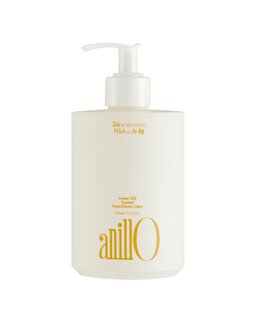
Anillo Amber 528 Scented Hand & Body Lotion
Works for
1 of 1 advertised claim delivered
MoisturizingNiacinamide, Ceramide np + 30 moreStrong evidence
“Smooth, hydrate, and restore with Anillo's Amber 528 Scented Hand & Body Lotion.”
This product can help improve hydration of the skin with the two types of ingredients.
The first type is called “humectants”:
these ingredients help attract water.
When humectants are on the surface of the skin, they “pull in” the moisture from the outside environment, or from
within deeper layers of the skin. The following ingredients in this product do the job:
anhydroxylitol, betaine.
This product also contains ingredients called “occlusives”. They help reduce the speed with which our skin loses moisture to the outside environment. These ingredients also help soften the upper layer of the skin, so it feels less tight and nicer to the touch. The following ingredients in this product do the job: caprylic/capric triglyceride, squalane.
The following ingredients in this product are especially good for supporting the skin barrier and helping with the hydration level: ceramide np, madecassoside, niacinamide, panthenol
Anti-oxidationNot advertised by the brand · Glutathione, Asiaticoside + 18 moreStrong evidence
This product contains antioxidants (asiaticoside, glutathione, madecassoside) that can help neutralize free radicals in skin. By doing so, they can lessen the damage the skin gets from the UV light (sun).
The following ingredients - pyridoxine also can have an antioxidant effect, but there is less evidence to confirm their effectiveness in skin.
Anti-agingNot advertised by the brand · Niacinamide, Adenosine + 9 moreStrong evidence
This product can help reduce and prevent fine lines and wrinkles, improve skin elasticity and firmness because it contains adenosine, niacinamide.
These ingredients in the product can also be helpful, even though there is less evidence for their effectiveness: asiaticoside, centella asiatica leaf extract, folic acid, madecassoside.
Keep in mind that it typically takes at least 6 weeks to notice any results because the changes that are needed to improve fine lines and elasticity happen in the deeper layers of the skin. No topical anti-aging product can “erase” wrinkles or fully reverse signs of aging.
Evens skin toneNot advertised by the brand · Glutathione, Niacinamide + 4 moreStrong evidence
This product can help reduce hypepigmentation and even out the skin tone because it contains the following effective ingredients: glutathione, niacinamide
The following ingredient (ingredients) in this product might be helpful, but there is no evidence to confirm that it actually can help even out the skin tone: glycyrrhiza glabra root extract, madecassoside.
Keep in mind that you would need to apply any topical skincare targetted at hypigmentation consistently for a couple of months to get a result. No topical skincare product can help get rid of hyperpigmentation (including post-acne marks and age spots) instantly.
Can it cause trouble?
Irritancy4 strong irritants: Alcohol denat., Alcohol + 2 more — patch-test recommendedHigh risk
ComedogenicClean of flagged comedogenic ingredientsNone flagged

User reviews
Be the first — your take helps the next person decide.
Ingredients
Filter by role to see what each ingredient is doing.
Water~40–60%
Glycerin~4–6%
- Irritation risk
- Low
One of the best moisturizing ingredients. Naturally present in skin. It attracts water to the upper layer of the skin working as a humectant
More about GlycerinButylene glycol~3.1–4.7%
- Irritation risk
- Low
Used to create a nice product texture and help delivery of other ingredients. Might be somewhat helpful in attracting water to the upper layer of the skin
More about Butylene glycolAlcohol denat.~2.6–3.9%
- Irritation risk
- High
Produces temporary toning effect. Can help dissolve other ingredients or preserve products
More about Alcohol denat.1,2-hexanediol~1.1–1.7%
Niacinamide~1.6–2.4%
- Irritation risk
- Low
Is proven to be effective in reducing blemishes, evening out skin tone and helping to improve lines and wrinkles. It helps the skin to repair sun damage, calm down inflammation and keep maintain good levels of moisture. The concentration of about 2% is effective for supporting the skin barrier and evening out the skin tone. Concentration of 4-6% is better for helping with acne and balancing the sebum production
More about NiacinamideMethyl gluceth-20~1.4–2%
- Irritation risk
- Low
Helps attract water to the upper layer of the skin and soften it
More about Methyl gluceth-20Betaine~1.2–1.8%
- Irritation risk
- Low
Helps attract water to the upper layer of the skin and improves the product texture
More about BetaineCaprylic/capric triglyceride~1–1.5%
- Irritation risk
- Medium
A good mix of fatty acids that forms a protective layer on the skin. Improves the shelf life of products. Derived from coconut and glycerin
More about Caprylic/capric triglyceridePolyglyceryl-10 oleate~0.5–1.2%
- Irritation risk
- Low
Helps soften the upper layer of the skin
More about Polyglyceryl-10 oleateAmmonium acryloyldimethyltaurate/vp copolymer~0.35–0.85%
- Irritation risk
- Low
Increases thickness of a product. Texture enhancer for oil-in-water emulsions
More about Ammonium acryloyldimethyltaurate/vp copolymerHydrogenated lecithin~0.2–0.75%
- Irritation risk
- Low
Helps to retain moisture by creating a protective barrier on the skin. Rich in fatty acids. Improves product texture and helps with the penetration of other ingredients.
More about Hydrogenated lecithinAlcohol~0.15–0.6%
- Irritation risk
- High
Can be drying and contribute to skin irritation. Used in formulars to dissolve other ingredients, create a thinner product consistency or for its antibacterial properties
More about AlcoholSodium surfactin~0.15–0.7%
Disodium edta~0.1–0.5%
Ethylhexylglycerin~0.1–0.45%
Parfum~0.1–0.45%
- Irritation risk
- High
An aromatic blend of unspecified and possibly irritating ingredients
More about ParfumGlutathione~0.1–0.5%
- Irritation risk
- Medium
A peptide that can help neutralize free radicals in skin and reduce melanin production resulting in skin lightening effect and reduction in hyperpigmentation. It can also help attract moisture to the upper layer of the skin
More about GlutathioneXanthan gum~0.15–0.5%
- Irritation risk
- Low
Used to create a thicker product consistency
More about Xanthan gumAdenosine~0.1–0.4%
- Irritation risk
- Low
Might help improve cell turnover and reduce inflammation in skin. One study shows that the ingredients might be able to help reduce dynamic wrinkles (for example, in the corners of the eyes or on the forehead)
More about AdenosineCeramide np~0.1–0.45%
- Irritation risk
- Low
A type of lipid similar to ceramides naturally present in skin. Helps to soften the upper layer of the skin and supports the skin barrier function to keep it hydrated. Can help to prevent inflammation in skin
More about Ceramide npXylitylglucoside~0.1–0.35%
- Irritation risk
- Low
Helps attract water to the upper layer of the skin and repair the skin barrier function
More about XylitylglucosideAnhydroxylitol~0.05–0.3%
- Irritation risk
- Low
Helps attract water to the upper layer of the skin and repair the skin barrir function
More about AnhydroxylitolXylitol~0.05–0.25%
- Irritation risk
- Low
Helps attract water to the upper layer of the skin and repair the skin barrier function
More about XylitolSodium hyaluronate~0.05–0.3%
- Irritation risk
- Low
One of the best moisturizing ingredients. Attracts water into the upper layer of the skin
More about Sodium hyaluronateDipotassium glycyrrhizate~0.05–0.25%
- Irritation risk
- Low
A salt derived from licorice. Works as an emollient to soften the upper layer of the skin and can help calm down inflammation. Might be helpful for skin lightening
More about Dipotassium glycyrrhizateRubus idaeus fruit extract~0.05–0.2%
- Irritation risk
- Medium
A fruit extract that might have some anti-oxidant properties but evidence of effectiveness in skin is lacking
More about Rubus idaeus fruit extractSqualane~0.1–0.4%
- Irritation risk
- Low
An oil naturally present in skin. Works as an emollient to soften the skin and form a protective layer on its surface without a greasy feeling.
More about SqualaneHydrogenated polyisobutene~0.1–0.35%
- Irritation risk
- Low
Used to improve the product consistency and soften the upper layer of the skin
More about Hydrogenated polyisobuteneMadecassoside~0.05–0.3%
- Irritation risk
- Medium
An antioxidant that is typically derived from plant Centella Asiatica. It can help neutralize free radicals in skin and support skin barrier function. It could, however, itself be irritating. It is often unstable in formulations
More about MadecassosideDioscorea japonica root extract~0.05–0.3%
- Irritation risk
- Low
Polyquaternium-51~0.1–0.35%
- Irritation risk
- Low
An emollient that helps create a nice silky finish on the skin
More about Polyquaternium-51Polyglyceryl-10 stearate~0.1–0.3%
- Irritation risk
- Medium
Helps water and oil mix together and softens the upper layer of the skin
More about Polyglyceryl-10 stearateBeta-glucan~0.1–0.3%
- Irritation risk
- Low
Helps attract water to the upper layer of the skin, calm down inflammation and irritation, restore the barrier function and support wound healing. It can be helpful in reducing fine lines and wrinkles
More about Beta-glucanHydrolyzed corn starch~0.05–0.3%
- Irritation risk
- Low
Helps improve the product texture
More about Hydrolyzed corn starchGlycyrrhiza glabra root extract~0.05–0.25%
- Irritation risk
- Medium
A plant extract that can help lighten the skin and calm down inflammation. Might be helpful in neutralizing free radicals
More about Glycyrrhiza glabra root extractPanthenol~0.1–0.3%
- Irritation risk
- Low
Helps attract water to the upper layer of the skin and can help improve skin barrier function
More about PanthenolRosa damascena callus culture extract~0.1–0.35%
- Irritation risk
- Low
Euterpe oleracea fruit extract~0.1–0.35%
- Irritation risk
- Medium
A plant extract that can have some anti-oxidant effect in skin
More about Euterpe oleracea fruit extractRubus coreanus fruit extract~0.05–0.3%
- Irritation risk
- Low
Rubus fruticosus fruit extract~0.05–0.3%
- Irritation risk
- Medium
A plant extract that might help neutralize free radicals in skin
More about Rubus fruticosus fruit extractVaccinium angustifolium fruit extract~0.05–0.25%
- Irritation risk
- Medium
A plant extract tha can have anti-oxidant properties, but evidence of effectiveness in skin is lacking
More about Vaccinium angustifolium fruit extractVaccinium macrocarpon fruit extract~0.1–0.35%
- Irritation risk
- High
A berry extract. Might have some anti-oxidant properties
More about Vaccinium macrocarpon fruit extractAsiaticoside~0.05–0.25%
- Irritation risk
- Medium
An active compound of Centella Asiatica plant extract. In combination with other active compounds of Centella Asiatica extract (madecasosside, asiatic acid and madecassic acid), asiaticoside has been shown to be helpful in wound-healing, restoring skin barrier function and supporting collagen production in skin. It can, however, itself be irritating
More about AsiaticosideSucrose~0.05–0.25%
- Irritation risk
- Low
Can help attract water to the upper layer of the skin. In crystal form, it can work as a gentle exfoliant, gentler than the salt scrub. Helps stabilize the emulsion
More about SucroseCentella asiatica extract~0.1–0.4%
- Irritation risk
- Medium
A plant extract that has been shown to be able to reduce inflammation in skin, support restoration of skin barrier function, as well as support collagen production. Contains active compounds called centelloids: asiaticoside, madecasosside, asiatic acid and madecassic acid. Might be helpful in preventing stretch marks. It can be itself be irritating though.
More about Centella asiatica extractSodium ascorbyl phosphate~0.1–0.35%
- Irritation risk
- Medium
A stable derivative of vitamin C. It is oil-soluble which means it is more likely to penetrate the skin compared to the pure form of vitamin C (which is water-soluble), but it is less bio-available and is way less effective in stimulating collagen and reducing wrinkles compared to the pure form of vitamin C (L-ascorbic acid) and its other derivatives (for example, magnesium ascorbyl phosphate). At the same time, this vitamin C derivative has been shown in studies to be effective in reducing acne, blemishes and clogged pores. It is less irritating then the pure form of vitamin C
More about Sodium ascorbyl phosphateCentella asiatica leaf extract~0.05–0.3%
- Irritation risk
- Medium
A plant extract that has been shown to be able to reduce inflammation in skin, support restoration of skin barrier function, as well as support collagen production. It can be irritating to sensitive skin. Might be helpful in preventing stretch marks. It could, however, itself be irritating.
More about Centella asiatica leaf extractCamellia sinensis leaf extract~0.1–0.35%
- Irritation risk
- Low
Can contain potent anti-oxidant compounds (abbreviated ECG, GCG, EGC, and EGCG) that might help protect the skin from free radicals. Can help calm down inflammation and has some anti-bacterial properties. Unfortunately, these antioxidants are unstable and lose their effectiveness very quickly in products. The concentration of the antioxidant compounds in the extract also tends to be low to be effective in topical formulation
More about Camellia sinensis leaf extractPolygonum cuspidatum root extract~0.1–0.4%
- Irritation risk
- Medium
A plant extract that can contain resveratrol, an antioxidant that can help neutralize free radicals in skin. The effectiveness depends on the extract quality and concentration in the product
More about Polygonum cuspidatum root extractRaspberry ketone~0.05–0.25%
- Irritation risk
- High
Used as a fragrance. It can reduce skin pigmentation, but it is not safe to use for these purposes in high concentrations as use of raspberry ketone and its derivative is linked to causing loss of skin pigmentation in people (leukoderma)
More about Raspberry ketoneScutellaria baicalensis root extract~0.05–0.25%
- Irritation risk
- High
A plant extract that might contain a compound baicalin that could be helpful in neutralizing free radicals and reducing inflammation in skin. The baicalin concentration in skincare products is often too low for an effective action. Can be used for its fragrant properties
More about Scutellaria baicalensis root extractChamomilla recutita flower extract~0.1–0.3%
- Irritation risk
- High
Plant extract that can have healing and anti-inflammatory properties. It is a potential allergen and can be irritating
More about Chamomilla recutita flower extractRosmarinus officinalis leaf extract~0.05–0.25%
- Irritation risk
- High
Can be helpful in reducing inflammation in skin, including inflamed acne. It can be irritating
More about Rosmarinus officinalis leaf extractBiotin~0.1–0.35%
- Irritation risk
- Low
Might have some moisturising properties. Is not effective when applied topically beyond some moisturizing effect
More about BiotinFolic acid~0.1–0.35%
- Irritation risk
- Low
Can help stimulate collagen production in skin. While available studies are promising, more research is needed to confirm the efficacy in skin
More about Folic acidPyridoxine~0.1–0.35%
- Irritation risk
- High
Might help neutralize free radicals in skin, but evidence of effectiveness in skin is lacking. It might be irritating
More about PyridoxineAnemarrhena asphodeloides root extract~0.05–0.3%
- Irritation risk
- Low
A plant extract that might have some anti-oxidant properties
More about Anemarrhena asphodeloides root extractCyanocobalamin~0.05–0.25%
- Irritation risk
- Low
Can support skin barrier function and reduce inflammation in skin
More about CyanocobalaminTocopherol~0.1–0.3%
- Irritation risk
- Low
Pure form of vitamin E. Can help moisturise and protect the skin from free radicals. Often used to help stabilise other ingredients or the formula itself
More about TocopherolInositol~0.05–0.25%
Linoleic acid~0.1–0.45%
- Irritation risk
- Low
An excellent emollient. Helps soften the skin, restore its barrier function, and can help to calm down inflammation. It can be helpful to prevent blemishes and clogged pores
More about Linoleic acidThiamine hcl~0.05–0.15%
- Irritation risk
- Medium
Can help attract water to the upper layer of the skin. Is studied as a mosquito repellent
More about Thiamine hclIngredient list view
Water, Glycerin, Butylene glycol, Alcohol denat., 1,2-hexanediol, Niacinamide, Methyl gluceth-20, Betaine, Caprylic/capric triglyceride, Polyglyceryl-10 oleate, Ammonium acryloyldimethyltaurate/vp copolymer, Hydrogenated lecithin, Alcohol, Sodium surfactin, Disodium edta, Ethylhexylglycerin, Parfum, Glutathione, Xanthan gum, Adenosine, Ceramide np, Xylitylglucoside, Anhydroxylitol, Xylitol, Sodium hyaluronate, Dipotassium glycyrrhizate, Rubus idaeus fruit extract, Squalane, Hydrogenated polyisobutene, Madecassoside, Dioscorea japonica root extract, Polyquaternium-51, Polyglyceryl-10 stearate, Beta-glucan, Hydrolyzed corn starch, Glycyrrhiza glabra root extract, Panthenol, Rosa damascena callus culture extract, Euterpe oleracea fruit extract, Rubus coreanus fruit extract, Rubus fruticosus fruit extract, Vaccinium angustifolium fruit extract, Vaccinium macrocarpon fruit extract, Asiaticoside, Sucrose, Centella asiatica extract, Sodium ascorbyl phosphate, Centella asiatica leaf extract, Camellia sinensis leaf extract, Polygonum cuspidatum root extract, Raspberry ketone, Scutellaria baicalensis root extract, Chamomilla recutita flower extract, Rosmarinus officinalis leaf extract, Biotin, Folic acid, Pyridoxine, Anemarrhena asphodeloides root extract, Cyanocobalamin, Tocopherol, Inositol, Linoleic acid, Thiamine hcl
Compare prices
Retailers ranked by price — lowest first.

Affiliate links · prices updated regularly
Worth comparing, line by line.
Match % combines shared ingredients, the first five ingredients, shared actives and hero ingredients, irritancy (lower counts in the alternative's favour), texture and body area. Only products in the same routine step are compared.
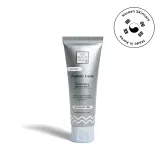
| AnilloAmber 528 Scented Hand & Body LotionYOUR PRODUCT | The Beauty CropPeptide Calm Moisturising Barrier | A'PIEUMadecassoside Hand Cream | EltaMDMoisture Rich Body Crème | |
|---|---|---|---|---|
| Match | — | 74% | 74% | 74% |
| Price | $25.00 | $15.00−$10.00 | $6.40−$18.60 | $45.00+$20.00 |
| Shared key ingredients | — | 9 of 24 | 8 of 24 | 7 of 24 |
| Key difference | — | Hexapeptide-9 | Carthamus Tinctorius Seed Oil | Hyaluronic Acid |
| Irritancy | High | Medium | Medium | Medium |
| Drying alcohol | Contains drying alcohol | — | — | — |
| View product | Shop | Shop | Shop |

Sources cited in this review
Every concentration estimate and effectiveness label is anchored to one of these 69 studies and safety reviews.
- 1
- 2
- 3
- 4
- 5
- 6

Affiliate links · As an Amazon Associate, WIMJ earns from qualifying purchases.