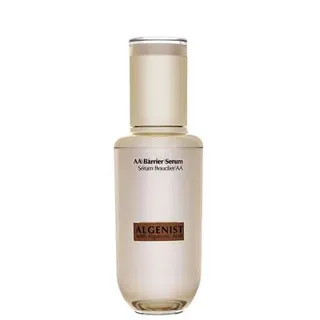
Algenist Skincare AA Barrier Serum

Algenist Skincare AA Barrier Serum

Efficacy91/100IrritancyMedium·0% recommend (1 review)

Works for

Anti-aging
Phloretin, Copper palmitoyl heptapeptide-14 + 9 more
Works well
What the product description says
“An antioxidant-rich, fortifying serum formulated with our highest concentration of Alguronic Acid to strengthen the skin barrier and defend skin against pollutants and environmental aggressors, while helping to improve the appearance of dullness, redness, discoloration, lines and skin tone.”
Source: Algenist

This product can help reduce and prevent fine lines and wrinkles, improve skin elasticity and firmness because it contains heptapeptide-15 palmitate.

These ingredients in the product can also be helpful, even though there is less evidence for their effectiveness: adenosine triphosphate, aspartic acid, copper palmitoyl heptapeptide-14, epigallocatechin gallate, phloretin, serine, threonine.

Keep in mind that it typically takes at least 6 weeks to notice any results because the changes that are needed to improve fine lines and elasticity happen in the deeper layers of the skin. No topical anti-aging product can “erase” wrinkles or fully reverse signs of aging.

PhloretinKey activeEffect: MediumA potent antioxidant that is able to penetrate the skin barrier. It can help neutralize free radicals in skin, fight photodamage and reduce hyperpigmentation. It is, however, unstable and loses effectiveness when exposed to light. Effective products with phloretin must come in air-tight opaque packaging and use a sophisticated delivery technology~1.2–1.5%
Copper palmitoyl heptapeptide-14Key activeEffect: MediumThe copper palmitoyl heptapeptide-14 is a synthetic peptide developed by ingredient supplier Infinitec, which claims that it can increase collagen production in skin when combined with Heptapeptide-15 Palmitate. The complex was tested in vitro (in a lab) and in a clinical test with 30 volunteers, but the latter wasn't placebo-controlled. The manufacturer reported wrinkle reduction after 28 days of use, but the details of the study aren't publicly available.~0.65–1%
Heptapeptide-15 palmitateKey activeEffect: HighA type of peptide. Peptides are excellent moisturizers and might be able support collagen production reducing fine lines and wrinkles~0.5–0.7%
Epigallocatechin gallateKey activeEffect: MediumA polyphenol found in tea. This particular compound abbreviated EGCG is the most powerful antioxidant among those extracted from tea (usually green tea). Unfortunately, EGCG is unstable, requires a low pH (below 4) to prevent quick degradation, and does not penetrate the skin very well. This is why the full anti-oxidant effect of EGCG is typically not realized when it is added to topical skincare~0.45–0.65%
Aspartic acidKey activeEffect: MediumAn amino-acid that helps increase skin hydration and might help to slightly improve skin firmness, potentially reducing lines and wrinkles~0.25–0.5%
ThreonineKey activeEffect: MediumAn amino-acid that helps to attract water to the upper layer of the skin. In combination with other amino-acids, might help to reduce fine lines and wrinkles~0.2–0.35%
SerineKey activeEffect: MediumAn amino-acid that helps to attract water to the upper layer of the skin. In combination with other amino-acids, might help to reduce fine lines and wrinkles~0.2–0.4%
Adenosine triphosphateKey activeEffect: Medium~0.15–0.3%
Ascorbic acidUnder-dosedThe most well-researched antioxidant that works in skin. Helps neutralize free radicals supporting collagen production, helping to even out the skin tone and preventing early signs of aging~0.15–0.3%
NiacinamideUnder-dosedIs proven to be effective in reducing blemishes, evening out skin tone and helping to improve lines and wrinkles. It helps the skin to repair sun damage, calm down inflammation and keep maintain good levels of moisture. The concentration of about 2% is effective for supporting the skin barrier and evening out the skin tone. Concentration of 4-6% is better for helping with acne and balancing the sebum production~0.15–0.3%
Retinyl palmitateUnder-dosedThree steps removed from the active form of vitamin A - retinoic acid. To have an effect in the skin, it first needs to be converted twice to become the retinoic acid. This means it is less potent than retinol, but could also be less irritating. Once converted to the retinoic acid in the skin, it helps against all signs of aging, improves skin cell turnover and helps fight blemishes and clogged pores. However, in many cosmetic formulations, it is used in a concentration that is too low to have the full effect~0.15–0.25%
Moisturizing
Copper palmitoyl heptapeptide-14, Heptapeptide-15 palmitate + 23 more
Works well
What the product description says
“An antioxidant-rich, fortifying serum formulated with our highest concentration of Alguronic Acid to strengthen the skin barrier and defend skin against pollutants and environmental aggressors, while helping to improve the appearance of dullness, redness, discoloration, lines and skin tone.”
Source: Algenist

This product can help improve hydration of the skin with the two types of ingredients.

The first type is called “humectants”:
these ingredients help attract water. When humectants are on the surface of the skin, they “pull in” the moisture from the outside environment, or from within deeper layers of the skin. The following ingredients in this product do the job: alanine, arginine.

This product also contains ingredients called “occlusives”. They help reduce the speed with which our skin loses moisture to the outside environment. These ingredients also help soften the upper layer of the skin, so it feels less tight and nicer to the touch. The following ingredients in this product do the job: arginine, dimethicone.

The following ingredients in this product are especially good for supporting the skin barrier and helping with the hydration level: copper palmitoyl heptapeptide-14, heptapeptide-15 palmitate

Copper palmitoyl heptapeptide-14Hero· HumectantEffect: HighThe copper palmitoyl heptapeptide-14 is a synthetic peptide developed by ingredient supplier Infinitec, which claims that it can increase collagen production in skin when combined with Heptapeptide-15 Palmitate. The complex was tested in vitro (in a lab) and in a clinical test with 30 volunteers, but the latter wasn't placebo-controlled. The manufacturer reported wrinkle reduction after 28 days of use, but the details of the study aren't publicly available.~0.65–1%
Heptapeptide-15 palmitateHero· HumectantEffect: HighA type of peptide. Peptides are excellent moisturizers and might be able support collagen production reducing fine lines and wrinkles~0.5–0.7%
DimethiconeKey active· Emollient, OcclusiveEffect: HighA silicone that helps to reduce water loss from the surface of the skin. Can temporarily "fill in" lines and wrinkles, absorb oil, and create a nice product finish~1.8–2.3%
Parachlorella beijerinckii exopolysaccharidesKey active· HumectantEffect: HighCompounds extracted from green algae that could help neutralize free radicals, but evidence of effectiveness in skincare products (topical applicaiton) is missing. Helps moisturize the skin by attracting water to its upper layer~1.5–1.8%
PcaKey active· HumectantEffect: HighNaturally present in skin and helps to attract water to its upper layer~0.25–0.45%
AlanineKey active· HumectantEffect: HighAn amino-acid that helps to attract water to the upper layer of the skin and might help to lighten the skin, but solid evidence is lacking~0.25–0.45%
Aspartic acidKey active· HumectantEffect: HighAn amino-acid that helps increase skin hydration and might help to slightly improve skin firmness, potentially reducing lines and wrinkles~0.25–0.5%
GlycerinKey active· HumectantEffect: HighOne of the best moisturizing ingredients. Naturally present in skin. It attracts water to the upper layer of the skin working as a humectant~0.2–0.35%
IsoleucineKey activeEffect: HighAn amino acid that can help attract water to the upper layer of the skin and support skin's barrier function~0.2–0.35%
SerineKey activeEffect: HighAn amino-acid that helps to attract water to the upper layer of the skin. In combination with other amino-acids, might help to reduce fine lines and wrinkles~0.2–0.4%
ThreonineKey activeEffect: HighAn amino-acid that helps to attract water to the upper layer of the skin. In combination with other amino-acids, might help to reduce fine lines and wrinkles~0.2–0.35%
ProlineKey activeEffect: Medium~0.2–0.35%
ArginineKey active· Humectant, OcclusiveEffect: HighAn amino acid that is naturally present in skin and helps keep it hydrated. When used together with AHAs, it can reduce their irritating effect on the skin~0.15–0.3%
HistidineKey active· HumectantEffect: High~0.15–0.3%
Sodium lactateKey active· HumectantEffect: HighHelps attract water to the upper layer of the skin. Is often used to adjust the pH level of the product~0.15–0.25%
Sodium pcaKey active· HumectantEffect: HighNaturally present in skin and helps to attract water to its upper layer~0.15–0.25%
Hydrolyzed oat proteinKey activeEffect: MediumHelps attract water to the upper layer of the skin~0.15–0.3%
Butylene glycol· HumectantEffect: LowUsed to create a nice product texture and help delivery of other ingredients. Might be somewhat helpful in attracting water to the upper layer of the skin~5.6–6.9%
Peg-8 dimethiconeEffect: LowA type of silicone that can help create nice product texture and soften the upper layer of the skin~3.9–4.8%
Caprylyl methiconeEffect: LowA type of silicone that helps to soften the upper layer of the skin and create a nice product finish on the skin~2.1–2.6%
Epigallocatechin gallateEffect: LowA polyphenol found in tea. This particular compound abbreviated EGCG is the most powerful antioxidant among those extracted from tea (usually green tea). Unfortunately, EGCG is unstable, requires a low pH (below 4) to prevent quick degradation, and does not penetrate the skin very well. This is why the full anti-oxidant effect of EGCG is typically not realized when it is added to topical skincare~0.45–0.65%
Isohexadecane· EmollientEffect: LowImproves the texture of the product and helps soften the skin. Helps oil and water mix together and can be used as a cleansing agent~0.25–0.5%
Octyldodecanol· EmollientEffect: LowAn emollient that helps to soften the skin and create a pleasant product texture and stabilize the formulation~0.2–0.35%
Pentylene glycol· EmollientEffect: LowUsed to preserve products, dissolve other ingredients and create a nice product texture~0.2–0.4%
NiacinamideUnder-dosedIs proven to be effective in reducing blemishes, evening out skin tone and helping to improve lines and wrinkles. It helps the skin to repair sun damage, calm down inflammation and keep maintain good levels of moisture. The concentration of about 2% is effective for supporting the skin barrier and evening out the skin tone. Concentration of 4-6% is better for helping with acne and balancing the sebum production~0.15–0.3%
Evens skin tone
Phloretin, Epigallocatechin gallate + 4 more
May help
What the product description says
“An antioxidant-rich, fortifying serum formulated with our highest concentration of Alguronic Acid to strengthen the skin barrier and defend skin against pollutants and environmental aggressors, while helping to improve the appearance of dullness, redness, discoloration, lines and skin tone.”
Source: Algenist

The following ingredient (ingredients) in this product might be helpful, but there is no evidence to confirm that it actually works: alanine, epigallocatechin gallate, phloretin.

PhloretinKey activeEffect: MediumA potent antioxidant that is able to penetrate the skin barrier. It can help neutralize free radicals in skin, fight photodamage and reduce hyperpigmentation. It is, however, unstable and loses effectiveness when exposed to light. Effective products with phloretin must come in air-tight opaque packaging and use a sophisticated delivery technology~1.2–1.5%
Epigallocatechin gallateKey activeEffect: MediumA polyphenol found in tea. This particular compound abbreviated EGCG is the most powerful antioxidant among those extracted from tea (usually green tea). Unfortunately, EGCG is unstable, requires a low pH (below 4) to prevent quick degradation, and does not penetrate the skin very well. This is why the full anti-oxidant effect of EGCG is typically not realized when it is added to topical skincare~0.45–0.65%
AlanineEffect: LowAn amino-acid that helps to attract water to the upper layer of the skin and might help to lighten the skin, but solid evidence is lacking~0.25–0.45%
Ascorbic acidUnder-dosedThe most well-researched antioxidant that works in skin. Helps neutralize free radicals supporting collagen production, helping to even out the skin tone and preventing early signs of aging~0.15–0.3%
NiacinamideUnder-dosedIs proven to be effective in reducing blemishes, evening out skin tone and helping to improve lines and wrinkles. It helps the skin to repair sun damage, calm down inflammation and keep maintain good levels of moisture. The concentration of about 2% is effective for supporting the skin barrier and evening out the skin tone. Concentration of 4-6% is better for helping with acne and balancing the sebum production~0.15–0.3%
Retinyl palmitateUnder-dosedThree steps removed from the active form of vitamin A - retinoic acid. To have an effect in the skin, it first needs to be converted twice to become the retinoic acid. This means it is less potent than retinol, but could also be less irritating. Once converted to the retinoic acid in the skin, it helps against all signs of aging, improves skin cell turnover and helps fight blemishes and clogged pores. However, in many cosmetic formulations, it is used in a concentration that is too low to have the full effect~0.15–0.25%
Anti-oxidation
Side benefit · Phloretin, Epigallocatechin gallate + 5 more
Works well

This product contains antioxidants (phloretin) that can help neutralize free radicals in skin. By doing so, they can lessen the damage the skin gets from the UV light (sun).

The following ingredients - epigallocatechin gallate also can have an antioxidant effect, but there is less evidence to confirm their effectiveness in skin.

PhloretinKey activeEffect: HighA potent antioxidant that is able to penetrate the skin barrier. It can help neutralize free radicals in skin, fight photodamage and reduce hyperpigmentation. It is, however, unstable and loses effectiveness when exposed to light. Effective products with phloretin must come in air-tight opaque packaging and use a sophisticated delivery technology~1.2–1.5%
Epigallocatechin gallateKey activeEffect: MediumA polyphenol found in tea. This particular compound abbreviated EGCG is the most powerful antioxidant among those extracted from tea (usually green tea). Unfortunately, EGCG is unstable, requires a low pH (below 4) to prevent quick degradation, and does not penetrate the skin very well. This is why the full anti-oxidant effect of EGCG is typically not realized when it is added to topical skincare~0.45–0.65%
Parachlorella beijerinckii exopolysaccharidesEffect: LowCompounds extracted from green algae that could help neutralize free radicals, but evidence of effectiveness in skincare products (topical applicaiton) is missing. Helps moisturize the skin by attracting water to its upper layer~1.5–1.8%
Pyridoxine hclEffect: LowMight help neutralize free radicals in skin~0.15–0.3%
Tocopheryl acetateEffect: Low, below effective doseA more stable but less bio-available form of vitamin E compared to Tocopherol. Might help moisturize and protect the skin from free radicals, but mostly used in low concentrations to stabilize other ingredients.~0.35–0.65%
ErgothioneineUnder-dosedCan help neutralize free radicals in skin. Preliminary studies show that it can be more effective than coenzyme Q10 but studies on effective concentration for topical applications are lacking~0.9–1.1%
Ascorbic acidUnder-dosedThe most well-researched antioxidant that works in skin. Helps neutralize free radicals supporting collagen production, helping to even out the skin tone and preventing early signs of aging~0.15–0.3%

Can it cause trouble?

Irritancy
1 strong irritant: Retinyl palmitate
Medium risk
We flagged 13 ingredients with irritancy potential. Severity depends on your sensitivity threshold; the table lists the worst offenders first.
IngredientFunctionIrritationEst. amount
Ascorbic acidThe most well-researched antioxidant that works in skin. Helps neutralize free radicals supporting collagen production, helping to even out the skin tone and preventing early signs of agingHigh~0.15–0.3%est.
Retinyl palmitateThree steps removed from the active form of vitamin A - retinoic acid. To have an effect in the skin, it first needs to be converted twice to become the retinoic acid. This means it is less potent than retinol, but could also be less irritating. Once converted to the retinoic acid in the skin, it helps against all signs of aging, improves skin cell turnover and helps fight blemishes and clogged pores. However, in many cosmetic formulations, it is used in a concentration that is too low to have the full effectHigh~0.15–0.25%est.
PhloretinA potent antioxidant that is able to penetrate the skin barrier. It can help neutralize free radicals in skin, fight photodamage and reduce hyperpigmentation. It is, however, unstable and loses effectiveness when exposed to light. Effective products with phloretin must come in air-tight opaque packaging and use a sophisticated delivery technologyMedium~1.2–1.5%est.
Tocopheryl acetateA more stable but less bio-available form of vitamin E compared to Tocopherol. Might help moisturize and protect the skin from free radicals, but mostly used in low concentrations to stabilize other ingredients.Medium~0.35–0.65%est.
Disodium edtaStabilizes the product formulationMedium~0.25–0.45%est.
Polyvinyl alcoholHelps improve the product textureMedium~0.2–0.35%est.
Pyridoxine hclMight help neutralize free radicals in skinMedium~0.15–0.3%est.
Hydroxyethyl acrylate/sodium acryloyldimethyl taurate copolymerA gelling agent that thickens the product consistency and leaves the skin with a velvety finishMedium~0.15–0.3%est.
Pentylene glycolUsed to preserve products, dissolve other ingredients and create a nice product textureMedium~0.2–0.4%est.
Citric acidCan work as an exfoliant but is typically used to adjust the product pHMedium~0.15–0.3%est.
Polysorbate 60Helps oil and water mix togetherMedium~0.2–0.35%est.
Sodium lactateHelps attract water to the upper layer of the skin. Is often used to adjust the pH level of the productMedium~0.15–0.25%est.
Potassium sorbateA preservativeMedium~0.1–0.2%est.
Comedogenic
Clean of flagged comedogenic ingredients
None flagged

User reviews

Would you recommend?
0%·yes

0 of 1 community members would buy it again.

0% would100% wouldn't
  • PBlovechild· Jun 2025Doesn't recommend

    Better alternatives with more actives, for a much lower price.

What reviewers noticed
Marker shows the average response

Ingredients

Filter by role to see what each ingredient is doing.

Water~45–55%
Formula
Irritation risk
Low

Plain old water

More about Water
Butylene glycol~5.6–6.9%
Formula
Irritation risk
Low
Works for
Moisturizing

Used to create a nice product texture and help delivery of other ingredients. Might be somewhat helpful in attracting water to the upper layer of the skin

More about Butylene glycol
Peg-8 dimethicone~3.9–4.8%
Formula
Irritation risk
Low
Works for
Moisturizing

A type of silicone that can help create nice product texture and soften the upper layer of the skin

More about Peg-8 dimethicone
Propanediol~3–3.6%
Formula
Irritation risk
Low

Acts as a solvent for other ingredients. Speeds up the absorption of other ingredients into the skin

More about Propanediol
Caprylyl methicone~2.1–2.6%
Formula
Irritation risk
Low
Works for
Moisturizing

A type of silicone that helps to soften the upper layer of the skin and create a nice product finish on the skin

More about Caprylyl methicone
Dimethicone~1.8–2.3%
Key active
Irritation risk
Low
Works for
MoisturizingMattifying

A silicone that helps to reduce water loss from the surface of the skin. Can temporarily "fill in" lines and wrinkles, absorb oil, and create a nice product finish

More about Dimethicone
Parachlorella beijerinckii exopolysaccharides~1.5–1.8%
Key active
Irritation risk
Low
Works for
MoisturizingAnti-oxidation

Compounds extracted from green algae that could help neutralize free radicals, but evidence of effectiveness in skincare products (topical applicaiton) is missing. Helps moisturize the skin by attracting water to its upper layer

More about Parachlorella beijerinckii exopolysaccharides
Phloretin~1.2–1.5%
Key activeIrritant · medium
Irritation risk
Medium
Works for
Anti-oxidationEvens skin toneAnti-aging

A potent antioxidant that is able to penetrate the skin barrier. It can help neutralize free radicals in skin, fight photodamage and reduce hyperpigmentation. It is, however, unstable and loses effectiveness when exposed to light. Effective products with phloretin must come in air-tight opaque packaging and use a sophisticated delivery technology

More about Phloretin
Ergothioneine~0.9–1.1%
Under-dosed
Irritation risk
Low
Works for
Anti-oxidation

Can help neutralize free radicals in skin. Preliminary studies show that it can be more effective than coenzyme Q10 but studies on effective concentration for topical applications are lacking

More about Ergothioneine
Copper palmitoyl heptapeptide-14~0.65–1%
Hero · Moisturizing
Irritation risk
Low
Works for
MoisturizingAnti-aging

The copper palmitoyl heptapeptide-14 is a synthetic peptide developed by ingredient supplier Infinitec, which claims that it can increase collagen production in skin when combined with Heptapeptide-15 Palmitate. The complex was tested in vitro (in a lab) and in a clinical test with 30 volunteers, but the latter wasn't placebo-controlled. The manufacturer reported wrinkle reduction after 28 days of use, but the details of the study aren't publicly available.

More about Copper palmitoyl heptapeptide-14
Heptapeptide-15 palmitate~0.5–0.7%
Hero · Moisturizing
Irritation risk
Low
Works for
MoisturizingAnti-aging

A type of peptide. Peptides are excellent moisturizers and might be able support collagen production reducing fine lines and wrinkles

More about Heptapeptide-15 palmitate
Epigallocatechin gallate~0.45–0.65%
Key active
Irritation risk
Low
Works for
Anti-oxidationEvens skin toneAnti-blemishAnti-agingMoisturizing

A polyphenol found in tea. This particular compound abbreviated EGCG is the most powerful antioxidant among those extracted from tea (usually green tea). Unfortunately, EGCG is unstable, requires a low pH (below 4) to prevent quick degradation, and does not penetrate the skin very well. This is why the full anti-oxidant effect of EGCG is typically not realized when it is added to topical skincare

More about Epigallocatechin gallate
Tocopheryl acetate~0.35–0.65%
Irritant · medium
Irritation risk
Medium
Works for
Anti-oxidation

A more stable but less bio-available form of vitamin E compared to Tocopherol. Might help moisturize and protect the skin from free radicals, but mostly used in low concentrations to stabilize other ingredients.

More about Tocopheryl acetate
Aspartic acid~0.25–0.5%
Key active
Irritation risk
Low
Works for
MoisturizingAnti-aging

An amino-acid that helps increase skin hydration and might help to slightly improve skin firmness, potentially reducing lines and wrinkles

More about Aspartic acid
Pca~0.25–0.45%
Key active
Irritation risk
Low
Works for
Moisturizing

Naturally present in skin and helps to attract water to its upper layer

More about Pca
Disodium edta~0.25–0.45%
Irritant · medium
Irritation risk
Medium

Stabilizes the product formulation

More about Disodium edta
Alanine~0.25–0.45%
Key active
Irritation risk
Low
Works for
MoisturizingEvens skin tone

An amino-acid that helps to attract water to the upper layer of the skin and might help to lighten the skin, but solid evidence is lacking

More about Alanine
Serine~0.2–0.4%
Key active
Irritation risk
Low
Works for
MoisturizingAnti-aging

An amino-acid that helps to attract water to the upper layer of the skin. In combination with other amino-acids, might help to reduce fine lines and wrinkles

More about Serine
Valine~0.2–0.35%
Formula
Irritation risk
Low
More about Valine
Isoleucine~0.2–0.35%
Key active
Irritation risk
Low
Works for
Moisturizing

An amino acid that can help attract water to the upper layer of the skin and support skin's barrier function

More about Isoleucine
Proline~0.2–0.35%
Key active
Irritation risk
Low
Works for
Moisturizing
More about Proline
Threonine~0.2–0.35%
Key active
Irritation risk
Low
Works for
MoisturizingAnti-aging

An amino-acid that helps to attract water to the upper layer of the skin. In combination with other amino-acids, might help to reduce fine lines and wrinkles

More about Threonine
Lactic acid/glycolic acid copolymer~0.15–0.3%
Formula
Polyvinyl alcohol~0.2–0.35%
Irritant · medium
Irritation risk
Medium

Helps improve the product texture

More about Polyvinyl alcohol
Histidine~0.15–0.3%
Key active
Irritation risk
Low
Works for
Moisturizing
More about Histidine
Phenylalanine~0.15–0.3%
Formula
Irritation risk
Low
More about Phenylalanine
Arginine~0.15–0.3%
Key active
Irritation risk
Low
Works for
Moisturizing

An amino acid that is naturally present in skin and helps keep it hydrated. When used together with AHAs, it can reduce their irritating effect on the skin

More about Arginine
Ascorbic acid~0.15–0.3%
Under-dosedIrritant · high
Irritation risk
High
Works for
Evens skin toneAnti-agingAnti-oxidation

The most well-researched antioxidant that works in skin. Helps neutralize free radicals supporting collagen production, helping to even out the skin tone and preventing early signs of aging

More about Ascorbic acid
Octyldodecanol~0.2–0.35%
Formula
Irritation risk
Low
Works for
Moisturizing

An emollient that helps to soften the skin and create a pleasant product texture and stabilize the formulation

More about Octyldodecanol
Pyridoxine hcl~0.15–0.3%
Irritant · medium
Irritation risk
Medium
Works for
Anti-oxidation

Might help neutralize free radicals in skin

More about Pyridoxine hcl
Retinyl palmitate~0.15–0.25%
Under-dosedIrritant · high
Irritation risk
High
Works for
Anti-agingEvens skin toneAnti-blemishExfoliation

Three steps removed from the active form of vitamin A - retinoic acid. To have an effect in the skin, it first needs to be converted twice to become the retinoic acid. This means it is less potent than retinol, but could also be less irritating. Once converted to the retinoic acid in the skin, it helps against all signs of aging, improves skin cell turnover and helps fight blemishes and clogged pores. However, in many cosmetic formulations, it is used in a concentration that is too low to have the full effect

More about Retinyl palmitate
Silica~0.25–0.45%
Formula
Irritation risk
Low

Used to absorb oil and can temporarily mattify skin

More about Silica
Sodium propoxyhydroxypropyl thiosulfate silica~0.15–0.3%
Formula
Glycerin~0.2–0.35%
Key active
Irritation risk
Low
Works for
Moisturizing

One of the best moisturizing ingredients. Naturally present in skin. It attracts water to the upper layer of the skin working as a humectant

More about Glycerin
Hydroxyethyl acrylate/sodium acryloyldimethyl taurate copolymer~0.15–0.3%
Irritant · medium
Irritation risk
Medium

A gelling agent that thickens the product consistency and leaves the skin with a velvety finish

More about Hydroxyethyl acrylate/sodium acryloyldimethyl taurate copolymer
Ammonium acryloyldimethyltaurate/vp copolymer~0.15–0.3%
Formula
Irritation risk
Low

Increases thickness of a product. Texture enhancer for oil-in-water emulsions

More about Ammonium acryloyldimethyltaurate/vp copolymer
Pentylene glycol~0.2–0.4%
Irritant · medium
Irritation risk
Medium
Works for
Moisturizing

Used to preserve products, dissolve other ingredients and create a nice product texture

More about Pentylene glycol
Isohexadecane~0.25–0.5%
Formula
Irritation risk
Low
Works for
CleansingMoisturizing

Improves the texture of the product and helps soften the skin. Helps oil and water mix together and can be used as a cleansing agent

More about Isohexadecane
Adenosine triphosphate~0.15–0.3%
Key active
Irritation risk
Low
Works for
Anti-aging
More about Adenosine triphosphate
Hydrolyzed oat protein~0.15–0.3%
Key active
Irritation risk
Low
Works for
Moisturizing

Helps attract water to the upper layer of the skin

More about Hydrolyzed oat protein
Niacinamide~0.15–0.3%
Under-dosed
Irritation risk
Low
Works for
Anti-agingEvens skin toneMoisturizingAnti-blemishReduces irritationAntibacterialReduces rednessAnti-inflammatory

Is proven to be effective in reducing blemishes, evening out skin tone and helping to improve lines and wrinkles. It helps the skin to repair sun damage, calm down inflammation and keep maintain good levels of moisture. The concentration of about 2% is effective for supporting the skin barrier and evening out the skin tone. Concentration of 4-6% is better for helping with acne and balancing the sebum production

More about Niacinamide
Citric acid~0.15–0.3%
Irritant · medium
Irritation risk
Medium

Can work as an exfoliant but is typically used to adjust the product pH

More about Citric acid
Polysorbate 60~0.2–0.35%
Irritant · medium
Irritation risk
Medium
Works for
Cleansing

Helps oil and water mix together

More about Polysorbate 60
Sorbitan isostearate~0.15–0.3%
Formula
Irritation risk
Low
Works for
Cleansing

Helps oil and water mix together

More about Sorbitan isostearate
Sodium pca~0.15–0.25%
Key active
Irritation risk
Low
Works for
Moisturizing

Naturally present in skin and helps to attract water to its upper layer

More about Sodium pca
Sodium phytate~0.1–0.2%
Formula
Irritation risk
Low

Used to stabilize product formulations

More about Sodium phytate
Sodium lactate~0.15–0.25%
Key activeIrritant · medium
Irritation risk
Medium
Works for
Moisturizing

Helps attract water to the upper layer of the skin. Is often used to adjust the pH level of the product

More about Sodium lactate
Sodium benzoate~0.1–0.2%
Formula
Irritation risk
Low

A preservative

More about Sodium benzoate
Potassium sorbate~0.1–0.2%
Irritant · medium
Irritation risk
Medium

A preservative

More about Potassium sorbate
Phenoxyethanol~0.1–0.2%
Formula
Irritation risk
Low

A preservative. It helps prevent bacterial growth in cosmetic products

More about Phenoxyethanol
Ingredient list view

Water, Butylene glycol, Peg-8 dimethicone, Propanediol, Caprylyl methicone, Dimethicone, Parachlorella beijerinckii exopolysaccharides, Phloretin, Ergothioneine, Copper palmitoyl heptapeptide-14, Heptapeptide-15 palmitate, Epigallocatechin gallate, Tocopheryl acetate, Aspartic acid, Pca, Disodium edta, Alanine, Serine, Valine, Isoleucine, Proline, Threonine, Lactic acid/glycolic acid copolymer, Polyvinyl alcohol, Histidine, Phenylalanine, Arginine, Ascorbic acid, Octyldodecanol, Pyridoxine hcl, Retinyl palmitate, Silica, Sodium propoxyhydroxypropyl thiosulfate silica, Glycerin, Hydroxyethyl acrylate/sodium acryloyldimethyl taurate copolymer, Ammonium acryloyldimethyltaurate/vp copolymer, Pentylene glycol, Isohexadecane, Adenosine triphosphate, Hydrolyzed oat protein, Niacinamide, Citric acid, Polysorbate 60, Sorbitan isostearate, Sodium pca, Sodium phytate, Sodium lactate, Sodium benzoate, Potassium sorbate, Phenoxyethanol

Compare prices

Retailers ranked by price — lowest first.

SpaceNK US
$34.00
Buy
Dermstore1 fl oz
$51.00 Out of stock
Check
Algenist
$85.00
Buy
Amazon US
Price unavailable Out of stock
Check

Affiliate links · As an Amazon Associate, WIMJ earns from qualifying purchases.

Worth comparing, line by line.

Match % combines shared ingredients, the first five ingredients, shared actives and hero ingredients, irritancy (lower counts in the alternative's favour), texture and body area. Only products in the same routine step are compared.

Side-by-side comparison of this product against its closest alternatives
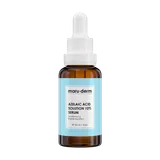
AlgenistSkincare AA Barrier SerumYOUR PRODUCTLancer SkincareLancer Triple Peptide Drops with Vitamin E + NiacinamideMaruderm%10 Azelaik Asit Solüsyon Serum – Leke ve Kızarıklık Karşıtı Cilt Bakım SerumuBootsIngredients Peptide Serum
Match—80%75%75%
Price$34.00$124.90+$90.90$6.43−$27.57—
Shared key ingredients—4 of 2111 of 219 of 21
Key difference—Acetyl Tetrapeptide-2Azelaic AcidPalmitoyl Tripeptide-1
Irritancy Medium Medium Low Low
Drying alcohol————
View product Shop Shop Shop

More alternatives: Arencia Deep Water Surge Serum 30Nooance cosmetiques Multi-Active Serum

Cheaper alternatives? See how this stacks up against similar formulas.
We compare ingredient profiles across our catalog — pick the closest match for your budget.
Open dupe finder

Product summary

"Algenist - Skincare AA Barrier Serum" is effective for: Moisturizing and Anti-aging

This product could be helpful for: Evens skin tone, but its actives are not the most effective or are not well-studied.

Ingredient callouts

  • This product also contains Vitamin C (Ascorbic Acid). It can be an effective active for anti-aging and evening out the skin tone, but in this product it is used for stabilizing other ingredients in the formulation. In this concentration (0.15% - 0.30%) it cannot have a noticeable benefit for the skin.
  • This product includes a form of Retinoids (vitamin A) - retinyl palmitate 0.15% - 0.25%, but this type of vitamin A is not very effective. It could in theory help with fine lines and wrinkles, but the effect is most likely minimal.
  • Peptides (heptapeptide-15 palmitate 0.50% - 0.70% and copper palmitoyl heptapeptide-14 0.65% - 1.00%). Peptides are a very big group of ingredients. They all consist of a different combination of aminoacids. Our skin produces Peptides naturally. Some of them work as natural antibiotics, promote wound-healing and production of collagen. The scientists are still studying how effective the topical application of Peptides is, but it is very likely that theynare helpful. Peptides might be able to support skin barrier restoration and even have an anti-aging benefit. At the very least, they certainly help attract water to the skin and support the hydration in this way.
  • Humectants (sodium lactate 0.15% - 0.25%, sodium pca 0.15% - 0.25%, glycerin 0.20% - 0.35%, arginine 0.15% - 0.30%, histidine 0.15% - 0.30%, alanine 0.25% - 0.45%, pca 0.25% - 0.45%, aspartic acid 0.25% - 0.50%, heptapeptide-15 palmitate 0.50% - 0.70%, copper palmitoyl heptapeptide-14 0.65% - 1.00% and parachlorella beijerinckii exopolysaccharides 1.50% - 1.80%). These ingredients help attract water to the upper layer of the skin and improve the skin hydration.

Price

The product retails from 48.95£ up to 1355.00£ in the United Kingdom and for 85.00$ in the United States.

For a detailed price comparison: click here.

Sources cited in this review

Every concentration estimate and effectiveness label is anchored to one of these 24 studies and safety reviews.

  1. 1
  2. 2
  3. 3
  4. 4
  5. 5
  6. 6
Algenist Skincare AA Barrier Serum
AlgenistSkincare AA Barrier Serum

Affiliate links · As an Amazon Associate, WIMJ earns from qualifying purchases.

As an Amazon Associate, WIMJ earns from qualifying purchases.