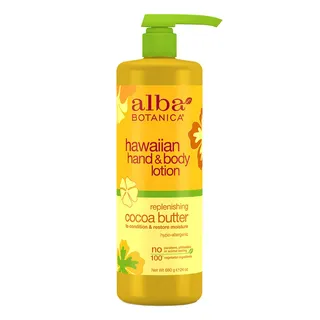
Alba Botanica Hawaiian Green Tea Sunscreen
Works for
MoisturizingCetearyl alcohol, Glycerin + 6 moreWorks
“An antioxidant rich sunscreen that combines green tea with aloe vera for deep moisturizing sun protection.”
This product can help improve hydration of the skin with the two types of ingredients.
The first type is called “humectants”:
these ingredients help attract water.
When humectants are on the surface of the skin, they “pull in” the moisture from the outside environment, or from
within deeper layers of the skin. The following ingredients in this product do the job:
glycerin.
This product also contains ingredients called “occlusives”. They help reduce the speed with which our skin loses moisture to the outside environment. These ingredients also help soften the upper layer of the skin, so it feels less tight and nicer to the touch. The following ingredients in this product do the job: caprylic/capric triglyceride, dimethicone.
Anti-oxidationNot advertised by the brand · Camellia sinensis leaf extract, Ginkgo biloba leaf extract + 2 moreMay help
This product contains antioxidants (camellia sinensis leaf extract, ginkgo biloba leaf extract) that might be able to help neutralize free radicals in skin to lessen the damage it gets from the UV light (sun). There is not enough evidence to confirm their effectiveness in skin though.
Can it cause trouble?
Irritancy10 strong irritants: Calendula officinalis flower extract, Lavandula angustifolia flower extract + 8 more — patch-test recommendedHigh risk
Comedogenic2 ingredients rated 2 or more on the 0–5 pore-clogging scale2 flagged
User reviews
Be the first — your take helps the next person decide.
Ingredients
Filter by role to see what each ingredient is doing.
Homosalate10%
- Irritation risk
- Medium
A weak sunscreen that offers some protection against the sun rays that cause sunburn (UVB), but does not offer meaningful protection against protect against the most aging sun rays (UVA). It loses its effectiveness quickly when exposed to sunlight. It is an organic, or so called "chemical" sunscreen. When used in low concentrations, helps to stabilize the product formulation
More about HomosalateOctocrylene10%
- Irritation risk
- Medium
A weak sunscreen that protects against the sun rays that cause sunburn (UVB) and is somewhat effective against the UVA rays. It is quite stable and can help stabilize other, more vulnerable, sunscreen ingredients like Avobenzone. It is an organic, or so called "chemical" sunscreen
More about OctocryleneEthylhexyl methoxycinnamate7.5%
- Irritation risk
- High
Octinoxate. When used in higher concentrations, works as a sunscreen protecting the skin from UVB rays. When used in lower concentration, helps to preserve the product formulation. Is shown to be harmful to coral reefs - consider avoiding bathing in coral reef areas when wearing a product with this ingredient. It can be irritating
More about Ethylhexyl methoxycinnamateEthylhexyl salicylate5%
- Irritation risk
- Low
Octisalate. A UV filter. It offers some protection against the sun rays that cause sunburn (UVB), but does not protect against the most aging sun rays (UVA). It loses its effectiveness quickly when exposed to sunlight. It is an organic, or so called "chemical" sunscreen
More about Ethylhexyl salicylateTitanium dioxide2%
- Irritation risk
- Low
Works as a UV filter when used in high concentrations. It is photostable and is effective mostly against the UVB light, with some protection in the UVA range. In small concentrations, used for its ability to improve the color of cosmetic products. Is usually well tolerated by the skin
More about Titanium dioxideWater~45–55%
Cetearyl alcohol~6.7–8.2%
- Irritation risk
- Low
- Comedogenicity
- 2/5
A non-drying alcohol. Works as an emollient. Helps water and oil mix together and creates a nice product texture
More about Cetearyl alcoholGlycerin~5.7–6.9%
- Irritation risk
- Low
One of the best moisturizing ingredients. Naturally present in skin. It attracts water to the upper layer of the skin working as a humectant
More about GlycerinCetyl alcohol~4.5–5.5%
- Irritation risk
- Low
A non-drying alcohol that works to soften the skin and stabilize product formulations helping oil and water mix together
More about Cetyl alcoholDimethicone~3.6–4.4%
- Irritation risk
- Low
A silicone that helps to reduce water loss from the surface of the skin. Can temporarily "fill in" lines and wrinkles, absorb oil, and create a nice product finish
More about DimethiconeVp/hexadecene copolymer~2.5–3.1%
- Irritation risk
- Low
Creates a nice product texture and can support water-resistance of sunscreens
More about Vp/hexadecene copolymerCaprylic/capric triglyceride~2.2–2.7%
- Irritation risk
- Medium
A good mix of fatty acids that forms a protective layer on the skin. Improves the shelf life of products. Derived from coconut and glycerin
More about Caprylic/capric triglycerideGlyceryl stearate se~1.7–2%
- Irritation risk
- Low
- Comedogenicity
- 2/5
Used to stabilize the product formulations and works as an emollient
More about Glyceryl stearate seHydrogenated palm kernel oil~1.5–1.8%
- Irritation risk
- Low
Aloe barbadensis leaf juice~1.1–1.4%
- Irritation risk
- Medium
Traditionally used to treat sunburns, dermatitis and inflammation, but evidence for its effectiveness is lacking. The extract can contain humectants that help attract water into the skin
More about Aloe barbadensis leaf juiceCalendula officinalis flower extract~0.9–1.1%
- Irritation risk
- High
A plant extract that has some anti-oxidant and anti-bacterial properties. Can be irritating
More about Calendula officinalis flower extractCamellia sinensis leaf extract~0.75–1.1%
- Irritation risk
- Low
Can contain potent anti-oxidant compounds (abbreviated ECG, GCG, EGC, and EGCG) that might help protect the skin from free radicals. Can help calm down inflammation and has some anti-bacterial properties. Unfortunately, these antioxidants are unstable and lose their effectiveness very quickly in products. The concentration of the antioxidant compounds in the extract also tends to be low to be effective in topical formulation
More about Camellia sinensis leaf extractChamomilla recutita flower extract~0.65–1%
- Irritation risk
- High
Plant extract that can have healing and anti-inflammatory properties. It is a potential allergen and can be irritating
More about Chamomilla recutita flower extractGinkgo biloba leaf extract~0.65–0.95%
- Irritation risk
- High
A plant extract that might help neutralize free radicals and reduce inflammation in skin. It can be irritating
More about Ginkgo biloba leaf extractLavandula angustifolia flower extract~0.65–1%
- Irritation risk
- High
Essential oil that can be irritating
More about Lavandula angustifolia flower extractCetearyl olivate~0.6–0.9%
Polysorbate 60~0.6–0.9%
Silica~0.65–1%
Sodium stearoyl glutamate~0.6–0.9%
- Irritation risk
- Medium
Helps oil and water mix together
More about Sodium stearoyl glutamateSorbitan olivate~0.5–0.75%
Tocopheryl acetate~0.5–0.7%
- Irritation risk
- Medium
A more stable but less bio-available form of vitamin E compared to Tocopherol. Might help moisturize and protect the skin from free radicals, but mostly used in low concentrations to stabilize other ingredients.
More about Tocopheryl acetateXanthan gum~0.5–0.7%
- Irritation risk
- Low
Used to create a thicker product consistency
More about Xanthan gumAlcohol~0.45–0.7%
- Irritation risk
- High
Can be drying and contribute to skin irritation. Used in formulars to dissolve other ingredients, create a thinner product consistency or for its antibacterial properties
More about AlcoholBenzyl alcohol~0.4–0.6%
- Irritation risk
- High
A preservative. Can be used to mask unpleasant smell. Can be irritating
More about Benzyl alcoholEthylhexylglycerin~0.45–0.65%
Phenoxyethanol~0.45–0.65%
- Irritation risk
- Low
A preservative. It helps prevent bacterial growth in cosmetic products
More about PhenoxyethanolPotassium sorbate~0.3–0.6%
Sodium benzoate~0.25–0.5%
Citronellol~0.3–0.55%
Geraniol~0.3–0.5%
Hexyl cinnamal~0.25–0.5%
Hydroxyisohexyl 3-cyclohexene carboxaldehyde~0.25–0.45%
- Irritation risk
- High
A fragrance. Can be irritating
More about Hydroxyisohexyl 3-cyclohexene carboxaldehydeLimonene~0.25–0.45%
- Irritation risk
- High
A common frangrance that can easily irritate skin, especially if exposed to air, light or heat
More about LimoneneLinalool~0.2–0.4%
Parfum~0.2–0.35%
- Irritation risk
- High
An aromatic blend of unspecified and possibly irritating ingredients
More about ParfumIngredient list view
Homosalate, Octocrylene, Ethylhexyl methoxycinnamate, Ethylhexyl salicylate, Titanium dioxide, Water, Cetearyl alcohol, Glycerin, Cetyl alcohol, Dimethicone, Vp/hexadecene copolymer, Caprylic/capric triglyceride, Glyceryl stearate se, Hydrogenated palm kernel oil, Aloe barbadensis leaf juice, Calendula officinalis flower extract, Camellia sinensis leaf extract, Chamomilla recutita flower extract, Ginkgo biloba leaf extract, Lavandula angustifolia flower extract, Cetearyl olivate, Polysorbate 60, Silica, Sodium stearoyl glutamate, Sorbitan olivate, Tocopheryl acetate, Xanthan gum, Alcohol, Benzyl alcohol, Ethylhexylglycerin, Phenoxyethanol, Potassium sorbate, Sodium benzoate, Citronellol, Geraniol, Hexyl cinnamal, Hydroxyisohexyl 3-cyclohexene carboxaldehyde, Limonene, Linalool, Parfum
Compare prices
Retailers ranked by price — lowest first.
Affiliate links · As an Amazon Associate, WIMJ earns from qualifying purchases.
Worth comparing, line by line.
Match % combines shared ingredients, the first five ingredients, shared actives and hero ingredients, irritancy (lower counts in the alternative's favour), texture and body area. Only products in the same routine step are compared.
| Alba BotanicaHawaiian Green Tea SunscreenYOUR PRODUCT | DiorInvisible UV Fluid Hydrating Face Sunscreen | Beauty of JoseonDay Dew Sunscreen | FRUDIABlueberry Hydrating Air Fit Sunscreen | |
|---|---|---|---|---|
| Match | — | 35% | 35% | 34% |
| Price | — | $62.00 | $16.20 | $14.74 |
| Shared key ingredients | — | 5 of 9 | 4 of 9 | 4 of 9 |
| Key difference | — | Avobenzone | Niacinamide | Niacinamide |
| Irritancy | High | Medium | Low | Medium |
| Drying alcohol | Contains drying alcohol | — | — | — |
| View product | Shop | Shop | Shop |

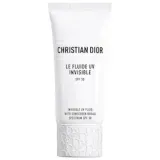
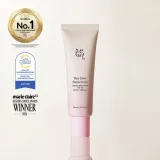
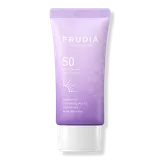
More alternatives: Institut Esthederm Sun Intolerance Body SprayLancôme UVEX Supra SPF
Sources cited in this review
Every concentration estimate and effectiveness label is anchored to one of these 13 studies and safety reviews.
- 1
- 2
- 3
- 4Final Report on the Safety Assessment of Dimethicone Copolyoljournals.sagepub.com
- 5
- 6

Affiliate links · As an Amazon Associate, WIMJ earns from qualifying purchases.