Works for
2 of 3 advertised claims delivered
Anti-aging12 ingredients credited for this claimStrong support
“The innovative formula promotes a smoother, firmer and more radiant-looking complexion, targeting concerns such as dryness, uneven skin tone, loss of elasticity and fine lines.”
This product can help reduce and prevent fine lines and wrinkles, improve skin elasticity and firmness because it contains adenosine.
These ingredients in the product can also be helpful, even though there is less evidence for their effectiveness: arginine/lysine polypeptide, folic acid, lysine, palmitoyl pentapeptide-4, threonine.
Keep in mind that it typically takes at least 6 weeks to notice any results because the changes that are needed to improve fine lines and elasticity happen in the deeper layers of the skin. No topical anti-aging product can “erase” wrinkles or fully reverse signs of aging.
Moisturizing42 ingredients credited for this claimStrong support
“Ultrafine Micro Technology optimises ingredient delivery by working to increasing absorption rate into the skin.”
This product can help improve hydration of the skin with the two types of ingredients.
The first type is called “humectants”:
these ingredients help attract water.
When humectants are on the surface of the skin, they “pull in” the moisture from the outside environment, or from
within deeper layers of the skin. The following ingredients in this product do the job:
acetyl hydroxyproline, fructooligosaccharides.
This product also contains ingredients called “occlusives”. They help reduce the speed with which our skin loses moisture to the outside environment. These ingredients also help soften the upper layer of the skin, so it feels less tight and nicer to the touch. The following ingredients in this product do the job: caprylic/capric triglyceride, dimethicone.
The following ingredients in this product are especially good for supporting the skin barrier and helping with the hydration level: arginine/lysine polypeptide, palmitoyl pentapeptide-4
Evens skin tone1 ingredient credited for this claimWeak support
“The innovative formula promotes a smoother, firmer and more radiant-looking complexion, targeting concerns such as dryness, uneven skin tone, loss of elasticity and fine lines.”
Effective ingredients missing or their concentration is too low
Anti-oxidationNot advertised by the brand · 11 ingredients credited for this claimModerate support
This product contains antioxidants (pyridoxine) that might be able to help neutralize free radicals in skin to lessen the damage it gets from the UV light (sun). There is not enough evidence to confirm their effectiveness in skin though.
Can it cause trouble?
Irritancy3 strong irritants: Eclipta prostrata leaf extract, Alcohol + 1 more — patch-test recommendedHigh risk
Comedogenic5 ingredients rated 2 or more on the 0–5 pore-clogging scale5 flagged


User reviews
Be the first — your take helps the next person decide.
Ingredients
Filter by role to see what each ingredient is doing.
Water~40–60%
Glycerin~3.7–5.6%
- Irritation risk
- Low
One of the best moisturizing ingredients. Naturally present in skin. It attracts water to the upper layer of the skin working as a humectant
More about GlycerinCaprylic/capric triglyceride~3.5–5.3%
- Irritation risk
- Medium
A good mix of fatty acids that forms a protective layer on the skin. Improves the shelf life of products. Derived from coconut and glycerin
More about Caprylic/capric triglycerideSorbitan stearate~2.2–3.4%
1,2-hexanediol~1.1–1.6%
Cetearyl alcohol~1.6–2.4%
- Irritation risk
- Low
- Comedogenicity
- 2/5
A non-drying alcohol. Works as an emollient. Helps water and oil mix together and creates a nice product texture
More about Cetearyl alcoholGlyceryl stearate~1.3–2%
- Irritation risk
- Low
An emollient that softens the skin and forms a protective layer on its surface. Helps water and oil mix together
More about Glyceryl stearateCyclohexasiloxane~1.2–1.8%
- Irritation risk
- Low
A silicone that serves as an emollient. Helps create a nice non-greasy feels
More about CyclohexasiloxanePalmitic acid~0.95–1.4%
- Irritation risk
- Low
An emollient that is naturally present in skin and helps soften it
More about Palmitic acidBisabolol~0.45–1.05%
- Irritation risk
- Low
An active component of chamomile plant that historically has been used to calm down irritated skin. A recent study shows that bisabolol indeed can have some anti-inflammatory effect on skin, even though conclusive data is lacking. Bisabolol has a sweet floral scent and can be added to products for its aromatic properties
More about BisabololStearic acid~0.4–0.95%
- Irritation risk
- Low
Helps oil and water mix together and works as an emollient
More about Stearic acidDipropylene glycol~0.15–0.6%
- Irritation risk
- Low
Helps to dissolve other ingredients in a formulation. Slows down the rate of product drying
More about Dipropylene glycolLaminaria japonica extract~0.1–0.45%
- Irritation risk
- Low
- Comedogenicity
- 3/5
Seaweed extract that might help to attract water to the upper layer of the skin and have some anti-oxidant properties
More about Laminaria japonica extractEclipta prostrata leaf extract~0.1–0.3%
- Irritation risk
- High
A plant extract that is mostly used as a fragrance. Might have some anti-oxidant effect
More about Eclipta prostrata leaf extractAlcohol~0.1–0.35%
- Irritation risk
- High
Can be drying and contribute to skin irritation. Used in formulars to dissolve other ingredients, create a thinner product consistency or for its antibacterial properties
More about AlcoholEthylhexylglycerin~0.1–0.35%
Hydrogenated polyisobutene~0.1–0.4%
- Irritation risk
- Low
Used to improve the product consistency and soften the upper layer of the skin
More about Hydrogenated polyisobuteneDimethicone~0.1–0.5%
- Irritation risk
- Low
A silicone that helps to reduce water loss from the surface of the skin. Can temporarily "fill in" lines and wrinkles, absorb oil, and create a nice product finish
More about DimethiconeSqualane~0.1–0.45%
- Irritation risk
- Low
An oil naturally present in skin. Works as an emollient to soften the skin and form a protective layer on its surface without a greasy feeling.
More about SqualaneHydrogenated lecithin~0.1–0.3%
- Irritation risk
- Low
Helps to retain moisture by creating a protective barrier on the skin. Rich in fatty acids. Improves product texture and helps with the penetration of other ingredients.
More about Hydrogenated lecithinPropanediol~0.05–0.3%
- Irritation risk
- Low
Acts as a solvent for other ingredients. Speeds up the absorption of other ingredients into the skin
More about PropanediolParfum~0.05–0.2%
- Irritation risk
- High
An aromatic blend of unspecified and possibly irritating ingredients
More about ParfumAdenosine~0.05–0.15%
- Irritation risk
- Low
Might help improve cell turnover and reduce inflammation in skin. One study shows that the ingredients might be able to help reduce dynamic wrinkles (for example, in the corners of the eyes or on the forehead)
More about AdenosineFructooligosaccharides~0.05–0.15%
- Irritation risk
- Low
Help attract water to the upper layer of the skin
More about FructooligosaccharidesButylene glycol~0.05–0.2%
- Irritation risk
- Low
Used to create a nice product texture and help delivery of other ingredients. Might be somewhat helpful in attracting water to the upper layer of the skin
More about Butylene glycolArgania spinosa kernel oil~0.05–0.25%
- Irritation risk
- Medium
An emollient that helps soften the upper layer of the skin. Might have some weak anti-oxidant properties
More about Argania spinosa kernel oilIsononyl isononanoate~0.05–0.25%
- Irritation risk
- Low
Forms a protective film on the surface of the skin to prevent moisture loss. Gives a velvety feel to products while reducing tackiness
More about Isononyl isononanoatePolyglyceryl-10 stearate~0.05–0.15%
- Irritation risk
- Medium
Helps water and oil mix together and softens the upper layer of the skin
More about Polyglyceryl-10 stearateDisodium edta~0.05–0.15%
Beta-glucan~0.05–0.15%
- Irritation risk
- Low
Helps attract water to the upper layer of the skin, calm down inflammation and irritation, restore the barrier function and support wound healing. It can be helpful in reducing fine lines and wrinkles
More about Beta-glucanButyrospermum parkii butter~0.05–0.25%
- Irritation risk
- Low
- Comedogenicity
- 3/5
A great moisturising ingredient that softens the skin and reduces water loss from its upper layer. It also can be helpful in protecting skin from free radicals
More about Butyrospermum parkii butterPolyglyceryl-2 dipolyhydroxystearate~0.05–0.15%
- Irritation risk
- Low
Helps to soften the upper layer of the skin
More about Polyglyceryl-2 dipolyhydroxystearateXanthan gum~0.05–0.2%
- Irritation risk
- Low
Used to create a thicker product consistency
More about Xanthan gumGold~0.05–0.2%
Acmella oleracea extract~0.05–0.2%
- Irritation risk
- Low
Panthenol~0.05–0.15%
- Irritation risk
- Low
Helps attract water to the upper layer of the skin and can help improve skin barrier function
More about PanthenolHydrolyzed hyaluronic acid~0.05–0.15%
- Irritation risk
- Low
One of the best moisturizing ingredients. Attracts water into the upper layer of the skin. A version of it is naturally present in skin
More about Hydrolyzed hyaluronic acidMyristic acid~0.05–0.25%
- Irritation risk
- Medium
- Comedogenicity
- 3/5
Helps oil and water mix together. Could be comedogenic
More about Myristic acidDextrin~0.05–0.25%
- Irritation risk
- Low
A sugar that is used to stabilize the product formulation. Can help attract water to the upper layer of the skin
More about DextrinTheobroma cacao seed extract~0.05–0.2%
- Irritation risk
- Low
- Comedogenicity
- 3/5
Polyacrylate-13~0.05–0.25%
- Irritation risk
- Low
Used to create a thicker product consistency and stabilize the product formulation
More about Polyacrylate-13Hydrolyzed collagen~0.05–0.25%
- Irritation risk
- Low
A typically plant-derived compound that is supposed mimic human collagen. Cannot penetrate the skin barrier so is not particularly useful in skincare products beyond attracting water to the upper layer of the skin
More about Hydrolyzed collagenPhellodendron amurense bark extract~0.05–0.15%
- Irritation risk
- Medium
A plant extract that might have an anti-inflammatory effect
More about Phellodendron amurense bark extractInulin lauryl carbamate~0.05–0.2%
Centella asiatica extract~0.05–0.3%
- Irritation risk
- Medium
A plant extract that has been shown to be able to reduce inflammation in skin, support restoration of skin barrier function, as well as support collagen production. Contains active compounds called centelloids: asiaticoside, madecasosside, asiatic acid and madecassic acid. Might be helpful in preventing stretch marks. It can be itself be irritating though.
More about Centella asiatica extractFicus carica fruit extract~0.05–0.15%
- Irritation risk
- Medium
A plant extract that can help neutralize free radicals. The concentrations typically used in cosmetics are too small to have an effect
More about Ficus carica fruit extractRaffinose~0.05–0.15%
- Irritation risk
- Low
Polyisobutene~0.05–0.25%
Folic acid~0.05–0.15%
- Irritation risk
- Low
Can help stimulate collagen production in skin. While available studies are promising, more research is needed to confirm the efficacy in skin
More about Folic acidCeramide np~0.05–0.25%
- Irritation risk
- Low
A type of lipid similar to ceramides naturally present in skin. Helps to soften the upper layer of the skin and supports the skin barrier function to keep it hydrated. Can help to prevent inflammation in skin
More about Ceramide npCholesterol~0.1–0.3%
- Irritation risk
- Low
An emollient that is naturally found in skin
More about CholesterolDisodium stearoyl glutamate~0.1–0.35%
- Irritation risk
- Medium
Helps oil and water mix together and workd as a cleanser
More about Disodium stearoyl glutamatePolysorbate 20~0.05–0.3%
Sorbitan isostearate~0.05–0.25%
- Irritation risk
- Low
Helps oil and water mix together
More about Sorbitan isostearateTromethamine~0.05–0.2%
Tocopherol~0.05–0.25%
- Irritation risk
- Low
Pure form of vitamin E. Can help moisturise and protect the skin from free radicals. Often used to help stabilise other ingredients or the formula itself
More about TocopherolPullulan~0.05–0.25%
- Irritation risk
- High
Creates a thin drying film on the skin resulting in a short-term tightening effect
More about PullulanBenzyl alcohol~0.05–0.15%
- Irritation risk
- High
A preservative. Can be used to mask unpleasant smell. Can be irritating
More about Benzyl alcoholMaltodextrin~0.05–0.25%
- Irritation risk
- Low
Used to stabilize the product formulation and can help absorb oil
More about MaltodextrinHydrolyzed vegetable protein~0.05–0.2%
Glyceryl caprylate~0.1–0.35%
- Irritation risk
- Low
An emollient that can also help water and oil mix together, as well as prevent bacteria growth in products
More about Glyceryl caprylateBenzoic acid~0.05–0.25%
Palmitoyl pentapeptide-4~0.05–0.2%
- Irritation risk
- Low
A type of peptide. Peptides are excellent moisturizers and might be able support collagen production reducing fine lines and wrinkles
More about Palmitoyl pentapeptide-4Leucine~0.05–0.2%
- Irritation risk
- Low
Lysine~0.05–0.2%
- Irritation risk
- Low
An amino-acid that helps to attract water to the upper layer of the skin. In combination with other amino-acids, might help to reduce fine lines and wrinkles
More about LysineTryptophan~0.05–0.2%
- Irritation risk
- Low
Isoleucine~0.05–0.2%
- Irritation risk
- Low
An amino acid that can help attract water to the upper layer of the skin and support skin's barrier function
More about IsoleucineValine~0.05–0.2%
- Irritation risk
- Low
Methionine~0.05–0.2%
- Irritation risk
- Low
Arginine~0.05–0.2%
- Irritation risk
- Low
An amino acid that is naturally present in skin and helps keep it hydrated. When used together with AHAs, it can reduce their irritating effect on the skin
More about ArginineHistidine~0.05–0.25%
Threonine~0.05–0.2%
- Irritation risk
- Low
An amino-acid that helps to attract water to the upper layer of the skin. In combination with other amino-acids, might help to reduce fine lines and wrinkles
More about ThreoninePhenylalanine~0.05–0.2%
- Irritation risk
- Low
Thiamine hcl~0.05–0.15%
- Irritation risk
- Medium
Can help attract water to the upper layer of the skin. Is studied as a mosquito repellent
More about Thiamine hclNiacinamide~0.05–0.2%
- Irritation risk
- Low
Is proven to be effective in reducing blemishes, evening out skin tone and helping to improve lines and wrinkles. It helps the skin to repair sun damage, calm down inflammation and keep maintain good levels of moisture. The concentration of about 2% is effective for supporting the skin barrier and evening out the skin tone. Concentration of 4-6% is better for helping with acne and balancing the sebum production
More about NiacinamidePyridoxine~0.05–0.25%
- Irritation risk
- High
Might help neutralize free radicals in skin, but evidence of effectiveness in skin is lacking. It might be irritating
More about PyridoxineCyanocobalamin~0.05–0.25%
- Irritation risk
- Low
Can support skin barrier function and reduce inflammation in skin
More about CyanocobalaminBiotin~0.05–0.25%
- Irritation risk
- Low
Might have some moisturising properties. Is not effective when applied topically beyond some moisturizing effect
More about BiotinSodium ascorbyl phosphate~0.05–0.2%
- Irritation risk
- Medium
A stable derivative of vitamin C. It is oil-soluble which means it is more likely to penetrate the skin compared to the pure form of vitamin C (which is water-soluble), but it is less bio-available and is way less effective in stimulating collagen and reducing wrinkles compared to the pure form of vitamin C (L-ascorbic acid) and its other derivatives (for example, magnesium ascorbyl phosphate). At the same time, this vitamin C derivative has been shown in studies to be effective in reducing acne, blemishes and clogged pores. It is less irritating then the pure form of vitamin C
More about Sodium ascorbyl phosphateRiboflavin~0.05–0.15%
- Irritation risk
- Low
Beta-carotene~0.05–0.15%
Sodium hyaluronate~0.05–0.15%
- Irritation risk
- Low
One of the best moisturizing ingredients. Attracts water into the upper layer of the skin
More about Sodium hyaluronateAcetyl hydroxyproline~0.05–0.1%
- Irritation risk
- Low
An amino-acid that can support ceramides production in skin and reduce water-loss
More about Acetyl hydroxyprolineArginine/lysine polypeptide~0.01–0.05%
- Irritation risk
- Low
A type of peptide. Peptides are excellent moisturizers and might be able support collagen production reducing fine lines and wrinkles
More about Arginine/lysine polypeptideIngredient list view
Water, Glycerin, Caprylic/capric triglyceride, Sorbitan stearate, 1,2-hexanediol, Cetearyl alcohol, Glyceryl stearate, Cyclohexasiloxane, Palmitic acid, Bisabolol, Stearic acid, Dipropylene glycol, Laminaria japonica extract, Eclipta prostrata leaf extract, Alcohol, Ethylhexylglycerin, Hydrogenated polyisobutene, Dimethicone, Squalane, Hydrogenated lecithin, Propanediol, Parfum, Adenosine, Fructooligosaccharides, Butylene glycol, Argania spinosa kernel oil, Isononyl isononanoate, Polyglyceryl-10 stearate, Disodium edta, Beta-glucan, Butyrospermum parkii butter, Polyglyceryl-2 dipolyhydroxystearate, Xanthan gum, Gold, Acmella oleracea extract, Panthenol, Hydrolyzed hyaluronic acid, Myristic acid, Dextrin, Theobroma cacao seed extract, Polyacrylate-13, Hydrolyzed collagen, Phellodendron amurense bark extract, Inulin lauryl carbamate, Centella asiatica extract, Ficus carica fruit extract, Raffinose, Polyisobutene, Folic acid, Ceramide np, Cholesterol, Disodium stearoyl glutamate, Polysorbate 20, Sorbitan isostearate, Tromethamine, Tocopherol, Pullulan, Benzyl alcohol, Maltodextrin, Hydrolyzed vegetable protein, Glyceryl caprylate, Benzoic acid, Palmitoyl pentapeptide-4, Leucine, Lysine, Tryptophan, Isoleucine, Valine, Methionine, Arginine, Histidine, Threonine, Phenylalanine, Thiamine hcl, Niacinamide, Pyridoxine, Cyanocobalamin, Biotin, Sodium ascorbyl phosphate, Riboflavin, Beta-carotene, Sodium hyaluronate, Acetyl hydroxyproline, Arginine/lysine polypeptide
Compare prices
Retailers ranked by price — lowest first.


Worth comparing, line by line.
Match % combines shared ingredients, the first five ingredients, shared actives and hero ingredients, irritancy (lower counts in the alternative's favour), texture and body area. Only products in the same routine step are compared.
| AHCGold Eye Cream for FaceYOUR PRODUCT | NEOGEN X SUR.MEDICV.Biome Advanced Eye Cream | DUFT&DOFTSalmonvgene Hydro Active Eye Cream | looks&meiiRich Routine Barrier Cream | |
|---|---|---|---|---|
| Match | — | 56% | 54% | 53% |
| Price | $46.27 | $25.16−$21.11 | — | $39.00−$7.27 |
| Shared key ingredients | — | 10 of 29 | 13 of 29 | 14 of 29 |
| Key difference | — | Copper Tripeptide-1 | Niacinamide | Copper Tripeptide-1 |
| Irritancy | High | Medium | Medium | High |
| Drying alcohol | Contains drying alcohol | — | Contains drying alcohol | Contains drying alcohol |
| View product | Shop | Shop | Shop |


Product summary
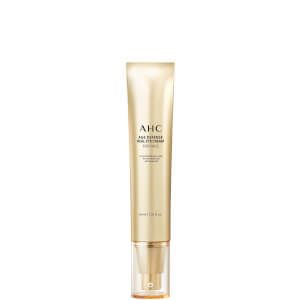
Judging from the ingredient list, "AHC - Gold Eye Cream for Face" works well for improving skin hydration This moisturizer uses a good combo of humectants and emollients. These both types of ingredients are essentials for improving the skin hydration and keeping the skin barrier healthy. Humectants in this product (acetyl hydroxyproline, fructooligosaccharides, glycerin, histidine and hydrolyzed collagen) help to increase the water content in the upper layer of the skin. (These ingredients do so by "capturing" water molecules from the outside air or from within the deeper layers of the skin). Emollients in this formulation (acetyl hydroxyproline, cholesterol, hydrolyzed collagen, caprylic/capric triglyceride and dimethicone) help to reduce the moisture loss from the skin. They also soften the skin surface and relieve the feeling of dryness and tightness.
Ingredient callouts
- As a plus, this moisturizer also contains Ceramides (ceramide np 0.05% - 0.25%). Ceramides are a type of lipids that our skin produces itself. They are a building block of the skin's barrier. Ceramides used in skincare are synthetic or extracted from plants. They work well for softening the skin surface and "patch holes" in the skin's barrier.
- We like that this moisturizer contains peptides (palmitoyl pentapeptide-4 0.05% - 0.20% and arginine/lysine polypeptide 0.01% - 0.05%). There are many different kind of Peptides and they are naturally present in our skin. They all are a combination of aminoacids. Some of them work as natural antibiotics, promote wound-healing and production of collagen. The science is still not settled on how effective Peptides are in skincare, but it is very likely that they have a benefit. Peptides might help restore the skin barrier and fight the signs of aging. At the very least, Peptides work as humectants: they attract water to the upper layer of the skin and improve its hydration.
- Adenosine 0.05% - 0.15%. It is a compound that in involved in many biological processes inside the skin cells. According one high-quality clinical trial, topical Adenosine in low concentrations can somewhat help improve "deep wrinkles" - the wrinkles that appear with age in places where our faces are most dynamic (for example, on the forehead or in the corners of the eyes).
Irritation risk
We assess the overall irritancy of this moisturizer to be high. For a detailed overview of all potential irritants: click here
You can see the detailed formula review with the breakdown of all actives in the product and the full ingredient list with estimated concentrations in the tables below.
Price
The product retails for 61.30CA$ in Canada and for 35.00£ in the United Kingdom.
For a detailed price comparison: click here.
Sources cited in this review
Every concentration estimate and effectiveness label is anchored to one of these 56 studies and safety reviews.
- 1
- 2
- 3
- 4
- 5
- 6Final Report on the Safety Assessment of Dimethicone Copolyoljournals.sagepub.com

Affiliate links · As an Amazon Associate, WIMJ earns from qualifying purchases.