Works for
1 of 1 advertised claim delivered
Moisturizing20 ingredients credited for this claimStrong support
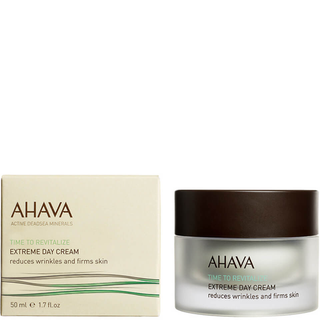
“Extreme Day Cream”
This product can help improve hydration of the skin with the two types of ingredients.
The first type is called “humectants”:
these ingredients help attract water.
When humectants are on the surface of the skin, they “pull in” the moisture from the outside environment, or from
within deeper layers of the skin. The following ingredients in this product do the job:
glycerin, sodium hyaluronate.
This product also contains ingredients called “occlusives”. They help reduce the speed with which our skin loses moisture to the outside environment. These ingredients also help soften the upper layer of the skin, so it feels less tight and nicer to the touch. The following ingredients in this product do the job: dimethicone, squalene.
The following ingredients in this product are especially good for supporting the skin barrier and helping with the hydration level: palmitoyl oligopeptide, panthenol
Anti-oxidationNot advertised by the brand · 6 ingredients credited for this claimStrong support
This product contains antioxidants (tocopherol) that can help neutralize free radicals in skin. By doing so, they can lessen the damage the skin gets from the UV light (sun).
The following ingredients - lycium barbarum fruit extract, squalene also can have an antioxidant effect, but there is less evidence to confirm their effectiveness in skin.
Can it cause trouble?
Irritancy14 strong irritants: Hypericum perforatum flower/leaf/stem extract, Alcohol + 12 more — patch-test recommendedHigh risk
Comedogenic3 ingredients rated 2 or more on the 0–5 pore-clogging scale3 flagged
User reviews
Be the first — your take helps the next person decide.
Ingredients
Filter by role to see what each ingredient is doing.
Squalene~28–34%
- Irritation risk
- Low
- Comedogenicity
- 2/5
An oil that is naturally part of skin sebum that helps to soften its upper layer, reduce water loss and neutralize free radicals. It might be comedogenic. Avoid applying large concentrations (or pure oil) before sun exposure as oxidized squalene can clog pores and lead to skin irritation. Today squalene is mostly derived from vegetable oils or synthetized by yeast
More about SqualeneVitis vinifera seed oil~9.1–11.1%
- Irritation risk
- Medium
A great emollient that can also have anti-oxidant properties
More about Vitis vinifera seed oilAlgae~5.5–6.8%
- Irritation risk
- Low
Tocopherol~3.6–4.3%
- Irritation risk
- Low
Pure form of vitamin E. Can help moisturise and protect the skin from free radicals. Often used to help stabilise other ingredients or the formula itself
More about TocopherolPanthenol~2.6–3.1%
- Irritation risk
- Low
Helps attract water to the upper layer of the skin and can help improve skin barrier function
More about PanthenolWater~2.1–2.6%
Sodium hyaluronate~1.9–2.4%
- Irritation risk
- Low
One of the best moisturizing ingredients. Attracts water into the upper layer of the skin
More about Sodium hyaluronateWater~1.7–2%
Ceteth-20~1.7–2.1%
Glyceryl stearate~1.3–1.6%
- Irritation risk
- Low
An emollient that softens the skin and forms a protective layer on its surface. Helps water and oil mix together
More about Glyceryl stearateSteareth-25~1.2–1.5%
Stearyl alcohol~1.1–1.4%
- Irritation risk
- Low
An emollient that helps soften the skin
More about Stearyl alcoholDimethicone~1–1.2%
- Irritation risk
- Low
A silicone that helps to reduce water loss from the surface of the skin. Can temporarily "fill in" lines and wrinkles, absorb oil, and create a nice product finish
More about DimethiconeDimethicone crosspolymer~0.75–1.1%
- Irritation risk
- Low
Used to create a thicker product texture. Helps soften the upper layer of the skin and might be able to prevent moisture loss from its surface
More about Dimethicone crosspolymerEthylhexyl palmitate~0.8–1.2%
- Irritation risk
- Low
- Comedogenicity
- 3/5
An emollient that helps soften the skin and create a nice product texture
More about Ethylhexyl palmitateSqualene~0.8–1.15%
- Irritation risk
- Low
- Comedogenicity
- 2/5
An oil that is naturally part of skin sebum that helps to soften its upper layer, reduce water loss and neutralize free radicals. It might be comedogenic. Avoid applying large concentrations (or pure oil) before sun exposure as oxidized squalene can clog pores and lead to skin irritation. Today squalene is mostly derived from vegetable oils or synthetized by yeast
More about SqualeneVitis vinifera seed oil~0.75–1.15%
- Irritation risk
- Medium
A great emollient that can also have anti-oxidant properties
More about Vitis vinifera seed oilCetearyl olivate~0.7–1%
Sorbitan olivate~0.65–1%
Glycerin~0.65–1%
- Irritation risk
- Low
One of the best moisturizing ingredients. Naturally present in skin. It attracts water to the upper layer of the skin working as a humectant
More about GlycerinHomarine hcl~0.6–0.9%
- Irritation risk
- Medium
Might help to improve skin hydration levels
More about Homarine hclCaprylic/capric triglyceride~0.7–1.05%
- Irritation risk
- Medium
A good mix of fatty acids that forms a protective layer on the skin. Improves the shelf life of products. Derived from coconut and glycerin
More about Caprylic/capric triglycerideTeprenone~0.55–0.85%
- Irritation risk
- Low
Cetyl palmitate~0.65–1%
- Irritation risk
- Low
An emollient that helps soften the skin and is used to improve product texture and stability
More about Cetyl palmitateSorbitan palmitate~0.6–0.9%
- Irritation risk
- Medium
Helps water and oil mix together and stabilize the product formulation
More about Sorbitan palmitateCeratonia siliqua gum~0.7–1.05%
- Irritation risk
- Medium
Used to stabilize product formulations and create thicker consistency
More about Ceratonia siliqua gumButylene glycol~0.6–0.85%
- Irritation risk
- Low
Used to create a nice product texture and help delivery of other ingredients. Might be somewhat helpful in attracting water to the upper layer of the skin
More about Butylene glycolPalmitoyl oligopeptide~0.75–1.15%
- Irritation risk
- Low
A type of peptide. Peptides are excellent moisturizers and might be able support collagen production reducing fine lines and wrinkles
More about Palmitoyl oligopeptideElaeis guineensis extract~0.55–0.85%
- Irritation risk
- Low
Tetrapeptide-3~0.55–0.85%
- Irritation risk
- Low
Polysorbate 20~0.6–0.9%
Carbomer~0.6–0.9%
- Irritation risk
- Low
Helps create a thicker or gel-like product texture. It is not a surfactant but can be used in gentle cleansing formulations
More about CarbomerTocopherol~0.6–0.9%
- Irritation risk
- Low
Pure form of vitamin E. Can help moisturise and protect the skin from free radicals. Often used to help stabilise other ingredients or the formula itself
More about TocopherolHypericum perforatum flower/leaf/stem extract~0.55–0.85%
- Irritation risk
- High
A plant extract (perforate St John's-wort) that might have some anti-oxidant effect. Can be used as a fragrance and be irritating
More about Hypericum perforatum flower/leaf/stem extractOlea europaea fruit oil~0.65–0.95%
- Irritation risk
- Medium
An emollient that helps soften the skin but is not effective for restoring its barrier function. Might be helpful to calm down inflammation
More about Olea europaea fruit oilCetraria islandica extract~0.65–1%
- Irritation risk
- Low
Alcohol~0.6–0.9%
- Irritation risk
- High
Can be drying and contribute to skin irritation. Used in formulars to dissolve other ingredients, create a thinner product consistency or for its antibacterial properties
More about AlcoholDimethicone~0.7–1%
- Irritation risk
- Low
A silicone that helps to reduce water loss from the surface of the skin. Can temporarily "fill in" lines and wrinkles, absorb oil, and create a nice product finish
More about DimethiconePanthenol~0.6–0.85%
- Irritation risk
- Low
Helps attract water to the upper layer of the skin and can help improve skin barrier function
More about PanthenolDisodium lauriminodipropionate tocopheryl phosphates~0.75–1.15%
- Irritation risk
- Low
A form of Vitamin E. In concentrations 1-3%, it can help neutralize free radicals in skin and support photodamage repair
More about Disodium lauriminodipropionate tocopheryl phosphatesPhenoxyethanol~0.6–0.85%
- Irritation risk
- Low
A preservative. It helps prevent bacterial growth in cosmetic products
More about PhenoxyethanolPichia/resveratrol ferment extract~0.6–0.85%
- Irritation risk
- Low
Phenoxyethanol~0.6–0.85%
- Irritation risk
- Low
A preservative. It helps prevent bacterial growth in cosmetic products
More about PhenoxyethanolEthylhexylglycerin~0.6–0.9%
Maris sal~0.55–0.85%
- Irritation risk
- Medium
Used to thicken the product formulation and might help to add minerals to the surface of the skin. It is used in scrubs as a physical exfoliant. Can increase sensitivity to other ingredients if left on the skin or used in high concentration
More about Maris salSea water~0.55–0.85%
- Irritation risk
- Low
Dissolves other ingredients. It does not have additional skin benefits compared to plain water
More about Sea waterRosa centifolia flower extract~0.6–0.85%
- Irritation risk
- High
Contains essential oil. Can be irritating
More about Rosa centifolia flower extractLycium barbarum fruit extract~0.55–0.85%
- Irritation risk
- Medium
A plant extract that can help neutralize free radicals in skin and attract water to its upper layer
More about Lycium barbarum fruit extractStearyl alcohol~0.7–1%
- Irritation risk
- Low
An emollient that helps soften the skin
More about Stearyl alcoholRubus ellipticus root extract~0.55–0.85%
Boron nitride~0.6–0.9%
- Irritation risk
- Low
Helps to absord oil and evenly disperse other ingredients (for example, pigment) in product formulation
More about Boron nitrideAllantoin~0.5–0.75%
- Irritation risk
- Low
Helps calm down inflammation in skin and can help reduce itching. Helps to repair the skin barrier and keep skin hydrated
More about AllantoinParfum~0.5–0.75%
- Irritation risk
- High
An aromatic blend of unspecified and possibly irritating ingredients
More about ParfumDunaliella salina extract~0.55–0.8%
- Irritation risk
- Low
A green micro-algae extract that might help neutralize free radicals in skin, but solid evidence is lacking. It helps to soften the upper layer of the skin
More about Dunaliella salina extractPhoenix dactylifera fruit extract~0.6–0.9%
- Irritation risk
- Low
Propylene glycol~0.5–0.75%
- Irritation risk
- High
Helps oil and water mix together and can enhance the penetration of other ingredients into the skin. It can be irritating
More about Propylene glycolPentaerythrityl tetra-di-t-butyl hydroxyhydrocinnamate~0.5–0.8%
- Irritation risk
- Low
Used to increase stability of product formulations
More about Pentaerythrityl tetra-di-t-butyl hydroxyhydrocinnamateFolic acid~0.5–0.75%
- Irritation risk
- Low
Can help stimulate collagen production in skin. While available studies are promising, more research is needed to confirm the efficacy in skin
More about Folic acidCitronellol~0.45–0.7%
Coumarin~0.45–0.65%
Alpha-isomethyl ionone~0.4–0.6%
- Irritation risk
- High
A fragrance. Potential allergen and can be irritating
More about Alpha-isomethyl iononeLimonene~0.3–0.55%
- Irritation risk
- High
A common frangrance that can easily irritate skin, especially if exposed to air, light or heat
More about LimoneneLinalool~0.25–0.5%
Butylphenyl methylpropional~0.2–0.4%
- Irritation risk
- High
A fragrance. Can trigger allergic reactions and be irritating
More about Butylphenyl methylpropionalCitral~0.2–0.35%
Benzyl alcohol~0.15–0.3%
- Irritation risk
- High
A preservative. Can be used to mask unpleasant smell. Can be irritating
More about Benzyl alcoholBenzyl benzoate~0.15–0.25%
- Irritation risk
- High
Fragrance with sweet balsamic smell. Help to preserve products and dissolve other ingredients. Could trigger allergic reactions and be irritating
More about Benzyl benzoateIsoeugenol~0.1–0.25%
- Irritation risk
- High
Ingredient list view
Squalene, Vitis vinifera seed oil, Unknown, Algae, Tocopherol, Panthenol, Water, Sodium hyaluronate, Water, Ceteth-20, Glyceryl stearate, Steareth-25, Stearyl alcohol, Dimethicone, Dimethicone crosspolymer, Ethylhexyl palmitate, Squalene, Vitis vinifera seed oil, Cetearyl olivate, Sorbitan olivate, Glycerin, Homarine hcl, Caprylic/capric triglyceride, Teprenone, Cetyl palmitate, Sorbitan palmitate, Ceratonia siliqua gum, Butylene glycol, Palmitoyl oligopeptide, Elaeis guineensis extract, Tetrapeptide-3, Polysorbate 20, Carbomer, Tocopherol, Hypericum perforatum flower/leaf/stem extract, Olea europaea fruit oil, Cetraria islandica extract, Alcohol, Dimethicone, Panthenol, Disodium lauriminodipropionate tocopheryl phosphates, Phenoxyethanol, Pichia/resveratrol ferment extract, Phenoxyethanol, Ethylhexylglycerin, Maris sal, Unknown, Sea water, Rosa centifolia flower extract, Lycium barbarum fruit extract, Stearyl alcohol, Rubus ellipticus root extract, Boron nitride, Allantoin, Parfum, Dunaliella salina extract, Phoenix dactylifera fruit extract, Propylene glycol, Pentaerythrityl tetra-di-t-butyl hydroxyhydrocinnamate, Folic acid, Citronellol, Coumarin, Alpha-isomethyl ionone, Limonene, Linalool, Butylphenyl methylpropional, Citral, Benzyl alcohol, Benzyl benzoate, Isoeugenol
Compare prices
Retailers ranked by price — lowest first.


Worth comparing, line by line.
Match % combines shared ingredients, the first five ingredients, shared actives and hero ingredients, irritancy (lower counts in the alternative's favour), texture and body area. Only products in the same routine step are compared.
| AhavaExtreme Day CreamYOUR PRODUCT | RetrouvéDynamic Nourishing Face Cream | |
|---|---|---|
| Match | — | 51% |
| Price | $48.92 | $135.00+$86.08 |
| Shared key ingredients | — | 4 of 13 |
| Key difference | — | Niacinamide |
| Irritancy | High | Medium |
| Drying alcohol | Contains drying alcohol | — |
| View product | Shop |

Product summary
Based on the ingredient list, "Ahava - Extreme Day Cream" can work well for skin moisturization. To work well, any moisturizer needs to include a combination of water-binding and emollient ingredients. Ahava - Extreme Day Cream ticks this box. Humectants in this product (panthenol, glycerin, sodium hyaluronate, butylene glycol and rubus ellipticus root extract) help to increase the water content in the upper layer of the skin. (These ingredients do so by "capturing" water molecules from the outside air or from within the deeper layers of the skin). Vitis vinifera seed oil, dimethicone, squalene, cetyl palmitate and ethylhexyl palmitate in this product help decrease the water evoporation from the skin, so that it stays hydrated for longer. These ingredients also soften the skin and take away the feeling of tightness and dryness.
Ingredient callouts
- This moistruizer also contains peptides (palmitoyl oligopeptide 0.75% - 1.15%). Peptides is a very big group of ingredients. They all consist of a different combination of amino-acids. Our skin produces peptides naturally. Some of them work as natural anti-biotics, promote wound-healing and production of collagen. The scientists are still studying how effective the topical application of peptides is, but it is very likely that peptides in skincare are helpful. They might be able to support skin barrier restoration and even have an anti-aging benefit. At the very least, they certainly help attract water to the skin and support the hydration in this way.
- This formulation also includes panthenol (pro-vitamin B5) at about 0.60% - 0.85% concentration. In this concentration, panthenol works effectively to improve the skin barrier and reduce inflammation.
Irritation risk
There are quite a few common irritants in this product, including ingredients without particular skin benefits. We would not recommend it for sensitive skin. We assess the overall irritancy of this moisturizer to be high. For a detailed overview of all potential irritants: click here
You can see the detailed formula review with the breakdown of all actives in the product and the full ingredient list with estimated concentrations in the tables below.
Price
The product retails from 62.99$ up to 78.00$ in the United States, from 65.70CA$ up to 91.99CA$ in Canada, from 92.00A$ up to 99.95A$ in Australia and from 37.00£ up to 62.99£ in the United Kingdom.
For a detailed price comparison: click here.
Sources cited in this review
Every concentration estimate and effectiveness label is anchored to one of these 28 studies and safety reviews.
- 1Squalene and its potential clinical useseuropepmc.org
- 2
- 3Enhanced comedo formation in rabbit ear skin by squalene and oleic acid peroxidesonlinelibrary.wiley.com
- 4Vitamin E in dermatologyncbi.nlm.nih.gov
- 5Vitamin E and Skin Healthlpi.oregonstate.edu
- 6Skin moisturizing effects of panthenol-based formulationspdfs.semanticscholar.org

Affiliate links · As an Amazon Associate, WIMJ earns from qualifying purchases.