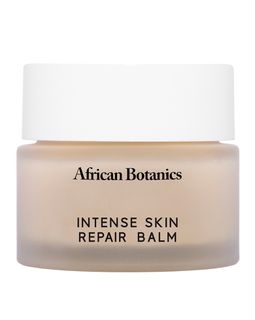
African Botanics Intense Skin Repair Balm
Works for
2 of 3 advertised claims delivered
Anti-aging7 ingredients credited for this claimModerate support
“Solid Oil/Balm Solution for • Normal, dull and dry skin • Redness and irritation • Fine lines and wrinkles • Sun damage and skin pigmentation • Compromised skin barrier • Acne scars and blemishes Key Benefits • Anti-inflammatory, restructuring and regenerative • Targets the appearance of fine lines, wrinkles and sun damage • Helps reduce scarring • Replenishes, boosts skin nourishment and barrier protection Active Ingredients and Technology • Retinol.”
This product contains ubiquinone. This ingredient help neutralize free radicals in skin. By doing so, they might be able to prevent early signs of aging (like fine lines and wrinkles), at least to some extent. These ingredients will not be able to "reverse" signs of aging.
Moisturizing16 ingredients credited for this claimGood support
“Reapply for added moisture and protection.”
This product can help improve hydration of the skin with the two types of ingredients.
The first type is called “humectants”:
these ingredients help attract water.
When humectants are on the surface of the skin, they “pull in” the moisture from the outside environment, or from
within deeper layers of the skin. The following ingredients in this product do the job:
glycerin, sclerocarya birrea seed oil.
This product also contains ingredients called “occlusives”. They help reduce the speed with which our skin loses moisture to the outside environment. These ingredients also help soften the upper layer of the skin, so it feels less tight and nicer to the touch. The following ingredients in this product do the job: beeswax, butyrospermum parkii butter.
Evens skin tone3 ingredients credited for this claimWeak support
“Solid Oil/Balm Solution for • Normal, dull and dry skin • Redness and irritation • Fine lines and wrinkles • Sun damage and skin pigmentation • Compromised skin barrier • Acne scars and blemishes Key Benefits • Anti-inflammatory, restructuring and regenerative • Targets the appearance of fine lines, wrinkles and sun damage • Helps reduce scarring • Replenishes, boosts skin nourishment and barrier protection Active Ingredients and Technology • Retinol.”
Effective ingredients missing or their concentration is too low
Anti-oxidationNot advertised by the brand · 10 ingredients credited for this claimStrong support
This product contains antioxidants (ubiquinone) that can help neutralize free radicals in skin. By doing so, they can lessen the damage the skin gets from the UV light (sun).
Can it cause trouble?
Irritancy6 strong irritants: Calendula officinalis flower oil, Rosa damascena flower oil + 4 more — patch-test recommendedHigh risk
Comedogenic1 ingredient rated 2 or more on the 0–5 pore-clogging scale1 flagged


User reviews
Be the first — your take helps the next person decide.
Ingredients
Filter by role to see what each ingredient is doing.
Trichilia emetica seed butter~26–39%
- Irritation risk
- Low
Butyrospermum parkii butter~5.6–8.4%
- Irritation risk
- Low
- Comedogenicity
- 3/5
A great moisturising ingredient that softens the skin and reduces water loss from its upper layer. It also can be helpful in protecting skin from free radicals
More about Butyrospermum parkii butterSclerocarya birrea seed oil~4.4–6.6%
- Irritation risk
- Medium
An emollient that helps to soften the skin. It has a high contetn of oleic acid that might weaken the skin barrier. Might have some anti-oxidant properties. It might be somewhat helpful against hyperpigmentation.
More about Sclerocarya birrea seed oilWater~3.1–4.7%
Squalane~2.4–3.6%
- Irritation risk
- Low
An oil naturally present in skin. Works as an emollient to soften the skin and form a protective layer on its surface without a greasy feeling.
More about SqualaneMangifera indica seed butter~1.7–2.6%
- Irritation risk
- Low
Helps to soften the upper layer of the skin and might have some anti-oxidant effect
More about Mangifera indica seed butterBeeswax~1.5–2.3%
- Irritation risk
- Low
Forms a protective barrier that holds water and keeps dry skin hydrated. Keeps an emulsion from separating into its oil and liquid components, and increases the thickness of a product. Can be an allergen
More about BeeswaxJasminum sambac flower extract~1–1.6%
- Irritation risk
- Low
Jasminum sambac flower oil~0.9–1.3%
- Irritation risk
- Low
Adansonia digitata seed oil~0.55–1.25%
- Irritation risk
- Medium
Helps soften the upper layer of the skin
More about Adansonia digitata seed oilOenothera biennis oil~0.5–1.15%
- Irritation risk
- Medium
Helps soften the upper layer of the skin and can support skin barrier function
More about Oenothera biennis oilCalendula officinalis flower oil~0.35–0.75%
- Irritation risk
- High
A plant oil that might have an antibacterial and some antioxidant effect. Is a common allergen and irritant
More about Calendula officinalis flower oilIsoamyl laurate~0.35–0.85%
- Irritation risk
- Medium
Helps stabilize emulsions and create a nice product texture
More about Isoamyl laurateNiacinamide~0.2–0.75%
- Irritation risk
- Low
Is proven to be effective in reducing blemishes, evening out skin tone and helping to improve lines and wrinkles. It helps the skin to repair sun damage, calm down inflammation and keep maintain good levels of moisture. The concentration of about 2% is effective for supporting the skin barrier and evening out the skin tone. Concentration of 4-6% is better for helping with acne and balancing the sebum production
More about NiacinamideRosa damascena flower oil~0.15–0.65%
- Irritation risk
- High
Used as a fragrance. Can be irritating
More about Rosa damascena flower oilCitrullus lanatus fruit extract~0.15–0.7%
- Irritation risk
- Medium
A plant extract that can contain an antioxidant compound
More about Citrullus lanatus fruit extractCucumis melo seed oil~0.15–0.65%
- Irritation risk
- Low
Helichrysum angustifolium cera~0.2–0.75%
- Irritation risk
- Low
Citrus aurantium bergamia fruit oil~0.15–0.5%
- Irritation risk
- High
A plant oil with a high content of volatile compounds that can irritate the skin and lead to allergic reactions. Can lead to photosensitivity
More about Citrus aurantium bergamia fruit oilRosa moschata seed oil~0.15–0.65%
- Irritation risk
- High
Pichia/resveratrol ferment extract~0.15–0.55%
- Irritation risk
- Low
Glyceryl caprylate~0.15–0.7%
- Irritation risk
- Low
An emollient that can also help water and oil mix together, as well as prevent bacteria growth in products
More about Glyceryl caprylateRosa damascena extract~0.1–0.45%
- Irritation risk
- High
Oil of a very fragrant pink rose used as fragrance in cosmetics. Extensive research has shown it has mixed benefits. In the pro column, inhaling this flower’s scent seems to have relaxing properties and the plant’s petals contain skin-soothing and antioxidant compounds that can benefit skin. On the flipside, the numerous chemicals that create this rose’s distinctive fragrance pose a risk of causing skin aggravation.
More about Rosa damascena extractAspalathus linearis extract~0.1–0.5%
- Irritation risk
- Low
Macadamia ternifolia seed oil~0.15–0.6%
- Irritation risk
- Medium
Plant oil from nuts that helps soften the upper layer of the skin. Contains a high concentration of oleic acid that can weaken skin's barrier function and increase water-loss while enhancing penetration of other ingredients
More about Macadamia ternifolia seed oilPhospholipids~0.1–0.5%
- Irritation risk
- Low
Emollients that are naturaly present in skin. In addition, they help water and oil mix together in the product
More about PhospholipidsStearic acid~0.3–0.75%
- Irritation risk
- Low
Helps oil and water mix together and works as an emollient
More about Stearic acidGlycerin~0.15–0.6%
- Irritation risk
- Low
One of the best moisturizing ingredients. Naturally present in skin. It attracts water to the upper layer of the skin working as a humectant
More about GlycerinSafflower oil/palm oil aminopropanediol esters~0.15–0.5%
- Irritation risk
- Low
Ubiquinone~0.15–0.5%
- Irritation risk
- Low
Coenzyme Q10. It helps neutralize free radicals in skin, improves skin hydration and might be helpful agains fine lines and wrinkles. It can be an allergen
More about UbiquinoneRetinyl palmitate~0.1–0.45%
- Irritation risk
- High
Three steps removed from the active form of vitamin A - retinoic acid. To have an effect in the skin, it first needs to be converted twice to become the retinoic acid. This means it is less potent than retinol, but could also be less irritating. Once converted to the retinoic acid in the skin, it helps against all signs of aging, improves skin cell turnover and helps fight blemishes and clogged pores. However, in many cosmetic formulations, it is used in a concentration that is too low to have the full effect
More about Retinyl palmitateTocopherol~0.1–0.35%
- Irritation risk
- Low
Pure form of vitamin E. Can help moisturise and protect the skin from free radicals. Often used to help stabilise other ingredients or the formula itself
More about TocopherolSodium ascorbyl phosphate~0.1–0.35%
- Irritation risk
- Medium
A stable derivative of vitamin C. It is oil-soluble which means it is more likely to penetrate the skin compared to the pure form of vitamin C (which is water-soluble), but it is less bio-available and is way less effective in stimulating collagen and reducing wrinkles compared to the pure form of vitamin C (L-ascorbic acid) and its other derivatives (for example, magnesium ascorbyl phosphate). At the same time, this vitamin C derivative has been shown in studies to be effective in reducing acne, blemishes and clogged pores. It is less irritating then the pure form of vitamin C
More about Sodium ascorbyl phosphateTetrahexyldecyl ascorbate~0.05–0.25%
- Irritation risk
- Medium
Being a lipid soluble form of vitamin C, it is more stable than ascorbic acid, but still degrades quickly and needs to be stabilized in a formulation with another ingredient. It is claimed to penetrate skin better than pure vitamin C and have the the similar benefits, but solid studies of its effectiveness are lacking. Is likely to require a higher concentration in a product than pure vitamin C to be effective. It might be able to help reduce pore clogging.
More about Tetrahexyldecyl ascorbateSqualane~0.1–0.45%
- Irritation risk
- Low
An oil naturally present in skin. Works as an emollient to soften the skin and form a protective layer on its surface without a greasy feeling.
More about SqualaneIngredient list view
Trichilia emetica seed butter, Butyrospermum parkii butter, Sclerocarya birrea seed oil, Water, Squalane, Mangifera indica seed butter, Beeswax, Jasminum sambac flower extract, Unknown, Jasminum sambac flower oil, Adansonia digitata seed oil, Oenothera biennis oil, Calendula officinalis flower oil, Isoamyl laurate, Niacinamide, Rosa damascena flower oil, Citrullus lanatus fruit extract, Cucumis melo seed oil, Helichrysum angustifolium cera, Citrus aurantium bergamia fruit oil, Rosa moschata seed oil, Pichia/resveratrol ferment extract, Glyceryl caprylate, Rosa damascena extract, Aspalathus linearis extract, Macadamia ternifolia seed oil, Phospholipids, Stearic acid, Glycerin, Safflower oil/palm oil aminopropanediol esters, Ubiquinone, Retinyl palmitate, Unknown, Tocopherol, Sodium ascorbyl phosphate, Tetrahexyldecyl ascorbate, Squalane
Compare prices
Retailers ranked by price — lowest first.


Worth comparing, line by line.
Match % combines shared ingredients, the first five ingredients, shared actives and hero ingredients, irritancy (lower counts in the alternative's favour), texture and body area. Only products in the same routine step are compared.
| African BotanicsIntense Skin Repair BalmYOUR PRODUCT | Doctor Rogers RestoreRestore Face Lotion | La Roche-PosayToleriane Sensitive Cream Moisturiser | Genus SkincarePhysio~Logic Fortifying Moisturiser | |
|---|---|---|---|---|
| Match | — | 83% | 83% | 82% |
| Price | $160.00 | $72.00−$88.00 | $30.41−$129.59 | $39.66−$120.34 |
| Shared key ingredients | — | 4 of 9 | 4 of 9 | 4 of 9 |
| Key difference | — | Adenosine | Isocetyl Stearate | Ceramide 1 |
| Irritancy | High | Low | Low | Low |
| Drying alcohol | — | — | — | — |
| View product | Shop | Shop | Shop |


Sources cited in this review
Every concentration estimate and effectiveness label is anchored to one of these 26 studies and safety reviews.
- 1
- 2
- 3
- 4Extraction and Characteristics of Seed Kernel Oil from Mangopdfs.semanticscholar.org
- 5
- 6

Affiliate links · As an Amazon Associate, WIMJ earns from qualifying purchases.