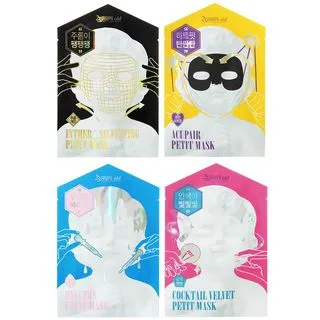
23 years old Petit Mask 1pc

23 years old Petit Mask 1pc

Efficacy87/100IrritancyHigh

Works for

Anti-aging
Retinyl palmitate, Adenosine + 7 more
Works well
What the product description says
“Combat signs of aging with Inthera Silfting mask that reduces wrinkles and improves skin elasticity thanks to its chitosan and hyaluronic acid-infused essence.”
Source: Yesstyle

This product can help reduce and prevent fine lines and wrinkles, improve skin elasticity and firmness because it contains adenosine.

These ingredients in the product can also be helpful, even though there is less evidence for their effectiveness: folic acid, retinyl palmitate.

Keep in mind that it typically takes at least 6 weeks to notice any results because the changes that are needed to improve fine lines and elasticity happen in the deeper layers of the skin. No topical anti-aging product can “erase” wrinkles or fully reverse signs of aging.

Retinyl palmitateKey activeEffect: MediumThree steps removed from the active form of vitamin A - retinoic acid. To have an effect in the skin, it first needs to be converted twice to become the retinoic acid. This means it is less potent than retinol, but could also be less irritating. Once converted to the retinoic acid in the skin, it helps against all signs of aging, improves skin cell turnover and helps fight blemishes and clogged pores. However, in many cosmetic formulations, it is used in a concentration that is too low to have the full effect~0.25–0.5%
AdenosineKey activeEffect: HighMight help improve cell turnover and reduce inflammation in skin. One study shows that the ingredients might be able to help reduce dynamic wrinkles (for example, in the corners of the eyes or on the forehead)~0.2–0.4%
Folic acidKey activeEffect: MediumCan help stimulate collagen production in skin. While available studies are promising, more research is needed to confirm the efficacy in skin~0.2–0.35%
Prunus amygdalus dulcis oilEffect: LowAn emollient that softens the skin~0.35–0.65%
TocopherolEffect: Low, below effective dosePure form of vitamin E. Can help moisturise and protect the skin from free radicals. Often used to help stabilise other ingredients or the formula itself~0.15–0.25%
NiacinamideUnder-dosedIs proven to be effective in reducing blemishes, evening out skin tone and helping to improve lines and wrinkles. It helps the skin to repair sun damage, calm down inflammation and keep maintain good levels of moisture. The concentration of about 2% is effective for supporting the skin barrier and evening out the skin tone. Concentration of 4-6% is better for helping with acne and balancing the sebum production~0.25–0.45%
GluconolactoneUnder-dosedA polyhydroxy acid (PHA) that helps shed the dead cells from the skin surface revealing smoother skin. Is believed to be genter than AHAs. It helps attract water to the upper layer of the skin and can stimulate production of skin's own hyaluronic acid resulting in improved hydration levels. It has been shown to be helpful against acne and clogged pores if used consistently (e.g over a period of 12 weeks) in high enough concentration. It can help reduce fine lines and wrinkles and improve skin tone with long-term application. Can help neutralize free radicals~0.2–0.4%
Ascorbic acidUnder-dosedThe most well-researched antioxidant that works in skin. Helps neutralize free radicals supporting collagen production, helping to even out the skin tone and preventing early signs of aging~0.2–0.4%
NiacinUnder-dosedA form of vitamin B3. It is similar in action to niacinamide, but is more likely to cause red flashes in skin as the side effect~0.2–0.4%
Evens skin tone
Glutathione, Retinyl palmitate + 5 more
Works well
What the product description says
“Packed with 5 types of whitening essence, it helps correct skin tone while reducing the appearance of wrinkles.”
Source: Yesstyle

This product can help reduce hypepigmentation and even out the skin tone because it contains the following effective ingredients: glutathione

The following ingredient (ingredients) in this product might be helpful, but there is no evidence to confirm that it actually can help even out the skin tone: retinyl palmitate.

Keep in mind that you would need to apply any topical skincare targetted at hypigmentation consistently for a couple of months to get a result. No topical skincare product can help get rid of hyperpigmentation (including post-acne marks and age spots) instantly.

GlutathioneKey activeEffect: HighA peptide that can help neutralize free radicals in skin and reduce melanin production resulting in skin lightening effect and reduction in hyperpigmentation. It can also help attract moisture to the upper layer of the skin~0.25–0.45%
Retinyl palmitateKey activeEffect: MediumThree steps removed from the active form of vitamin A - retinoic acid. To have an effect in the skin, it first needs to be converted twice to become the retinoic acid. This means it is less potent than retinol, but could also be less irritating. Once converted to the retinoic acid in the skin, it helps against all signs of aging, improves skin cell turnover and helps fight blemishes and clogged pores. However, in many cosmetic formulations, it is used in a concentration that is too low to have the full effect~0.25–0.5%
Dipotassium glycyrrhizateEffect: Low, below effective doseA salt derived from licorice. Works as an emollient to soften the upper layer of the skin and can help calm down inflammation. Might be helpful for skin lightening~0.3–0.55%
NiacinamideUnder-dosedIs proven to be effective in reducing blemishes, evening out skin tone and helping to improve lines and wrinkles. It helps the skin to repair sun damage, calm down inflammation and keep maintain good levels of moisture. The concentration of about 2% is effective for supporting the skin barrier and evening out the skin tone. Concentration of 4-6% is better for helping with acne and balancing the sebum production~0.25–0.45%
GluconolactoneUnder-dosedA polyhydroxy acid (PHA) that helps shed the dead cells from the skin surface revealing smoother skin. Is believed to be genter than AHAs. It helps attract water to the upper layer of the skin and can stimulate production of skin's own hyaluronic acid resulting in improved hydration levels. It has been shown to be helpful against acne and clogged pores if used consistently (e.g over a period of 12 weeks) in high enough concentration. It can help reduce fine lines and wrinkles and improve skin tone with long-term application. Can help neutralize free radicals~0.2–0.4%
Ascorbic acidUnder-dosedThe most well-researched antioxidant that works in skin. Helps neutralize free radicals supporting collagen production, helping to even out the skin tone and preventing early signs of aging~0.2–0.4%
NiacinUnder-dosedA form of vitamin B3. It is similar in action to niacinamide, but is more likely to cause red flashes in skin as the side effect~0.2–0.4%
Moisturizing
Panthenol, Allantoin + 39 more
Works well
What the product description says
“Gently exfoliate skin while replenishing moisture with the Hyaltox mask.”
Source: Yesstyle

This product can help improve hydration of the skin with the two types of ingredients.

The first type is called “humectants”:
these ingredients help attract water. When humectants are on the surface of the skin, they “pull in” the moisture from the outside environment, or from within deeper layers of the skin. The following ingredients in this product do the job: allantoin, arginine.

This product also contains ingredients called “occlusives”. They help reduce the speed with which our skin loses moisture to the outside environment. These ingredients also help soften the upper layer of the skin, so it feels less tight and nicer to the touch. The following ingredients in this product do the job: arginine, dimethiconol.

The following ingredients in this product are especially good for supporting the skin barrier and helping with the hydration level: panthenol

PanthenolHero· HumectantEffect: HighHelps attract water to the upper layer of the skin and can help improve skin barrier function~1.9–2.3%
AllantoinKey active· HumectantEffect: HighHelps calm down inflammation in skin and can help reduce itching. Helps to repair the skin barrier and keep skin hydrated~2.9–3.5%
Olea europaea fruit oilKey active· EmollientEffect: MediumAn emollient that helps soften the skin but is not effective for restoring its barrier function. Might be helpful to calm down inflammation~0.45–0.7%
Prunus amygdalus dulcis oilKey active· EmollientEffect: MediumAn emollient that softens the skin~0.35–0.65%
Persea gratissima oilKey active· EmollientEffect: HighAn emollient that helps soften the skin and could be helpful in repairing its barrier function~0.3–0.5%
BetaineKey active· HumectantEffect: HighHelps attract water to the upper layer of the skin and improves the product texture~0.25–0.45%
GlycerinKey active· HumectantEffect: HighOne of the best moisturizing ingredients. Naturally present in skin. It attracts water to the upper layer of the skin working as a humectant~0.25–0.5%
GlutathioneKey activeEffect: HighA peptide that can help neutralize free radicals in skin and reduce melanin production resulting in skin lightening effect and reduction in hyperpigmentation. It can also help attract moisture to the upper layer of the skin~0.25–0.45%
Sodium hyaluronateKey active· HumectantEffect: HighOne of the best moisturizing ingredients. Attracts water into the upper layer of the skin~0.25–0.45%
SqualaneKey active· Emollient, OcclusiveEffect: HighAn oil naturally present in skin. Works as an emollient to soften the skin and form a protective layer on its surface without a greasy feeling.~0.25–0.45%
DimethiconolKey active· Emollient, OcclusiveEffect: HighA silicone that makes products more spreadable and keeps skin smooth. Helps to add gloss to skin and may visually fill in fine lines/wrinkles for short time~0.25–0.4%
TrehaloseKey active· HumectantEffect: HighA sugar that attracts water to the upper layer of the skin~0.25–0.45%
ChitosanKey active· HumectantEffect: MediumInhibits acne-causing bacteria on the surface of the skin. Can help to reduce inflammation caused by bacteria. Helps neutralize free radicals in skin. Helps to attract water to the upper layer of the skin~0.25–0.45%
CyclopentasiloxaneKey active· EmollientEffect: MediumA silicone that helps improve the product texture and spreadability. Can absorb oil creating a short-term mattifying effect on the skin~0.25–0.45%
Methyl gluceth-20Key active· HumectantEffect: MediumHelps attract water to the upper layer of the skin and soften it~0.25–0.45%
ArginineKey active· Humectant, OcclusiveEffect: HighAn amino acid that is naturally present in skin and helps keep it hydrated. When used together with AHAs, it can reduce their irritating effect on the skin~0.2–0.4%
TriethylhexanoinKey activeEffect: HighHelps soften the upper layer of the skin~0.2–0.35%
Pantothenic acidKey activeEffect: HighHelps attract water to the upper layer of the skin and may help reduce inflammation in skin~0.2–0.4%
AdenosineKey activeEffect: MediumMight help improve cell turnover and reduce inflammation in skin. One study shows that the ingredients might be able to help reduce dynamic wrinkles (for example, in the corners of the eyes or on the forehead)~0.2–0.4%
Carnitine hclKey active· HumectantEffect: MediumMight be helpful in decreasing sebum production making the skin less oily. Is claimed to be able to support ceramide production in skin that leads to better hydration, but evidence is lacking. Is able to attract water to the upper layer of the skin~0.2–0.4%
Lactobacillus/soybean ferment extractKey activeEffect: MediumA fermentation product created by bacteria Lactobacillus out of soybean. The fermented product helps to attract water to the upper layer of the skin and has anti-bacterial properties. It might be helpful in calming down inflammation and could be helpful in evening out skin tone, but studies are lacking~0.2–0.4%
Polyglyceryl-2 triisostearateEffect: LowHelps to soften the upper layer of the skin and create a nice product texture~1.4–1.7%
Caprylyl glycol· Humectant, EmollientEffect: LowHelps preserve products and creates a nice product texture~0.65–0.95%
Isohexadecane· EmollientEffect: LowImproves the texture of the product and helps soften the skin. Helps oil and water mix together and can be used as a cleansing agent~0.35–0.65%
Scutellaria baicalensis root extract· HumectantEffect: LowA plant extract that might contain a compound baicalin that could be helpful in neutralizing free radicals and reducing inflammation in skin. The baicalin concentration in skincare products is often too low for an effective action. Can be used for its fragrant properties~0.3–0.6%
Cetyl ethylhexanoate· EmollientEffect: LowAn emollient that helps soften the skin and creates a thicker product texture~0.25–0.5%
Bis-peg-18 methyl ether dimethyl silane· Humectant, EmollientEffect: LowA type of silicone that helps soften the upper layer of the skin and create a nice product texture~0.25–0.45%
Caprylic/capric/myristic/stearic triglyceride· EmollientEffect: LowHelps to soften the upper layer of the skin~0.2–0.4%
BiotinEffect: LowMight have some moisturising properties. Is not effective when applied topically beyond some moisturizing effect~0.2–0.4%
Butylene glycol· HumectantEffect: LowUsed to create a nice product texture and help delivery of other ingredients. Might be somewhat helpful in attracting water to the upper layer of the skin~0.2–0.4%
Portulaca oleracea extract· HumectantEffect: LowA plant extract that has some anti-oxidant activity, but solid research is lacking. Can help attract water to the upper layer of the skin~0.1–0.15%
CyclohexasiloxaneEffect: Low, below effective doseA silicone that serves as an emollient. Helps create a nice non-greasy feels~0.25–0.5%
TocopherolEffect: Low, below effective dosePure form of vitamin E. Can help moisturise and protect the skin from free radicals. Often used to help stabilise other ingredients or the formula itself~0.15–0.25%
Dipotassium glycyrrhizateUnder-dosedA salt derived from licorice. Works as an emollient to soften the upper layer of the skin and can help calm down inflammation. Might be helpful for skin lightening~0.3–0.55%
Simmondsia chinensis seed oilUnder-dosedSoftens the upper layer of skin and helps restore the healthy skin barrier. Has shown to help calm down inflammation in skin. It is a stable oil, meaning that it retains its properties even when exposed to air.~0.3–0.55%
NiacinamideUnder-dosedIs proven to be effective in reducing blemishes, evening out skin tone and helping to improve lines and wrinkles. It helps the skin to repair sun damage, calm down inflammation and keep maintain good levels of moisture. The concentration of about 2% is effective for supporting the skin barrier and evening out the skin tone. Concentration of 4-6% is better for helping with acne and balancing the sebum production~0.25–0.45%
Caprylic/capric triglycerideUnder-dosedA good mix of fatty acids that forms a protective layer on the skin. Improves the shelf life of products. Derived from coconut and glycerin~0.2–0.35%
GluconolactoneUnder-dosedA polyhydroxy acid (PHA) that helps shed the dead cells from the skin surface revealing smoother skin. Is believed to be genter than AHAs. It helps attract water to the upper layer of the skin and can stimulate production of skin's own hyaluronic acid resulting in improved hydration levels. It has been shown to be helpful against acne and clogged pores if used consistently (e.g over a period of 12 weeks) in high enough concentration. It can help reduce fine lines and wrinkles and improve skin tone with long-term application. Can help neutralize free radicals~0.2–0.4%
NiacinUnder-dosedA form of vitamin B3. It is similar in action to niacinamide, but is more likely to cause red flashes in skin as the side effect~0.2–0.4%
Macadamia integrifolia seed oilUnder-dosedA plant oil that helps soften the upper layer of the skin~0.2–0.4%
Argania spinosa kernel oilUnder-dosedAn emollient that helps soften the upper layer of the skin. Might have some weak anti-oxidant properties~0.15–0.3%
Exfoliation
Allantoin, Retinyl palmitate + 2 more
Not delivered
What the product description says
“Gently exfoliate skin while replenishing moisture with the Hyaltox mask.”
Source: Yesstyle

This product might help exfoliate the skin with retinyl palmitate, but This ingredient is not the most effective.

AllantoinEffect: LowHelps calm down inflammation in skin and can help reduce itching. Helps to repair the skin barrier and keep skin hydrated~2.9–3.5%
Retinyl palmitateEffect: LowThree steps removed from the active form of vitamin A - retinoic acid. To have an effect in the skin, it first needs to be converted twice to become the retinoic acid. This means it is less potent than retinol, but could also be less irritating. Once converted to the retinoic acid in the skin, it helps against all signs of aging, improves skin cell turnover and helps fight blemishes and clogged pores. However, in many cosmetic formulations, it is used in a concentration that is too low to have the full effect~0.25–0.5%
Salix alba bark extractEffect: LowA plant extract that can help neutralize free radicals in skin. It contains a compound salicin that can theoretically be converted into salicylic acid that, in turn, helps reduce inflammation in skin, but the evidence of effectiveness in skin is lacking and the extract is usually not used in a concentration that would enable an exfoliating effect~0.2–0.4%
GluconolactoneUnder-dosedA polyhydroxy acid (PHA) that helps shed the dead cells from the skin surface revealing smoother skin. Is believed to be genter than AHAs. It helps attract water to the upper layer of the skin and can stimulate production of skin's own hyaluronic acid resulting in improved hydration levels. It has been shown to be helpful against acne and clogged pores if used consistently (e.g over a period of 12 weeks) in high enough concentration. It can help reduce fine lines and wrinkles and improve skin tone with long-term application. Can help neutralize free radicals~0.2–0.4%
Anti-oxidation
Side benefit · Glutathione, Chitosan + 15 more
Works well

This product contains antioxidants (glutathione) that can help neutralize free radicals in skin. By doing so, they can lessen the damage the skin gets from the UV light (sun).

The following ingredients - chitosan, ginkgo biloba leaf extract also can have an antioxidant effect, but there is less evidence to confirm their effectiveness in skin.

GlutathioneKey activeEffect: HighA peptide that can help neutralize free radicals in skin and reduce melanin production resulting in skin lightening effect and reduction in hyperpigmentation. It can also help attract moisture to the upper layer of the skin~0.25–0.45%
ChitosanKey activeEffect: MediumInhibits acne-causing bacteria on the surface of the skin. Can help to reduce inflammation caused by bacteria. Helps neutralize free radicals in skin. Helps to attract water to the upper layer of the skin~0.25–0.45%
Ginkgo biloba leaf extractKey activeEffect: MediumA plant extract that might help neutralize free radicals and reduce inflammation in skin. It can be irritating~0.2–0.35%
Origanum vulgare leaf extractEffect: LowA plant extract. Can have an anti-oxidant effect, but can also contain irritants~0.45–0.7%
Prunus amygdalus dulcis oilEffect: LowAn emollient that softens the skin~0.35–0.65%
Scutellaria baicalensis root extractEffect: LowA plant extract that might contain a compound baicalin that could be helpful in neutralizing free radicals and reducing inflammation in skin. The baicalin concentration in skincare products is often too low for an effective action. Can be used for its fragrant properties~0.3–0.6%
Anemarrhena asphodeloides root extractEffect: LowA plant extract that might have some anti-oxidant properties~0.2–0.4%
Rose flower oilEffect: LowFlower oil that is used as a fragrance~0.2–0.4%
AdenosineEffect: LowMight help improve cell turnover and reduce inflammation in skin. One study shows that the ingredients might be able to help reduce dynamic wrinkles (for example, in the corners of the eyes or on the forehead)~0.2–0.4%
Salix alba bark extractEffect: LowA plant extract that can help neutralize free radicals in skin. It contains a compound salicin that can theoretically be converted into salicylic acid that, in turn, helps reduce inflammation in skin, but the evidence of effectiveness in skin is lacking and the extract is usually not used in a concentration that would enable an exfoliating effect~0.2–0.4%
Portulaca oleracea extractEffect: LowA plant extract that has some anti-oxidant activity, but solid research is lacking. Can help attract water to the upper layer of the skin~0.1–0.15%
Tocopheryl acetateEffect: Low, below effective doseA more stable but less bio-available form of vitamin E compared to Tocopherol. Might help moisturize and protect the skin from free radicals, but mostly used in low concentrations to stabilize other ingredients.~0.25–0.45%
Rosmarinus officinalis leaf oilEffect: Low, below effective doseA plant oil with high content of volatile compounds that can irritate the skin. Can be used as a fragrance. Has anti-bacterial properties and might help neutralize free radicals on the surface of the skin~0.2–0.35%
Argania spinosa kernel oilEffect: Low, below effective doseAn emollient that helps soften the upper layer of the skin. Might have some weak anti-oxidant properties~0.15–0.3%
Ascorbic acidUnder-dosedThe most well-researched antioxidant that works in skin. Helps neutralize free radicals supporting collagen production, helping to even out the skin tone and preventing early signs of aging~0.2–0.4%
GluconolactoneUnder-dosedA polyhydroxy acid (PHA) that helps shed the dead cells from the skin surface revealing smoother skin. Is believed to be genter than AHAs. It helps attract water to the upper layer of the skin and can stimulate production of skin's own hyaluronic acid resulting in improved hydration levels. It has been shown to be helpful against acne and clogged pores if used consistently (e.g over a period of 12 weeks) in high enough concentration. It can help reduce fine lines and wrinkles and improve skin tone with long-term application. Can help neutralize free radicals~0.2–0.4%
TocopherolUnder-dosedPure form of vitamin E. Can help moisturise and protect the skin from free radicals. Often used to help stabilise other ingredients or the formula itself~0.15–0.25%
Anti-blemish
Side benefit · Chitosan, Retinyl palmitate + 8 more
May help

This product might be able to help reduce blemishes and clogged pores because it contains chitosan.

The following ingredient (ingredients) in this product might be helpful, but there is no evidence to confirm that it actually works: pantothenic acid, retinyl palmitate

ChitosanKey activeEffect: HighInhibits acne-causing bacteria on the surface of the skin. Can help to reduce inflammation caused by bacteria. Helps neutralize free radicals in skin. Helps to attract water to the upper layer of the skin~0.25–0.45%
Retinyl palmitateKey activeEffect: MediumThree steps removed from the active form of vitamin A - retinoic acid. To have an effect in the skin, it first needs to be converted twice to become the retinoic acid. This means it is less potent than retinol, but could also be less irritating. Once converted to the retinoic acid in the skin, it helps against all signs of aging, improves skin cell turnover and helps fight blemishes and clogged pores. However, in many cosmetic formulations, it is used in a concentration that is too low to have the full effect~0.25–0.5%
Pantothenic acidKey activeEffect: MediumHelps attract water to the upper layer of the skin and may help reduce inflammation in skin~0.2–0.4%
AllantoinEffect: LowHelps calm down inflammation in skin and can help reduce itching. Helps to repair the skin barrier and keep skin hydrated~2.9–3.5%
Ginkgo biloba leaf extractEffect: LowA plant extract that might help neutralize free radicals and reduce inflammation in skin. It can be irritating~0.2–0.35%
Salix alba bark extractEffect: LowA plant extract that can help neutralize free radicals in skin. It contains a compound salicin that can theoretically be converted into salicylic acid that, in turn, helps reduce inflammation in skin, but the evidence of effectiveness in skin is lacking and the extract is usually not used in a concentration that would enable an exfoliating effect~0.2–0.4%
Carnitine hclEffect: LowMight be helpful in decreasing sebum production making the skin less oily. Is claimed to be able to support ceramide production in skin that leads to better hydration, but evidence is lacking. Is able to attract water to the upper layer of the skin~0.2–0.4%
NiacinamideUnder-dosedIs proven to be effective in reducing blemishes, evening out skin tone and helping to improve lines and wrinkles. It helps the skin to repair sun damage, calm down inflammation and keep maintain good levels of moisture. The concentration of about 2% is effective for supporting the skin barrier and evening out the skin tone. Concentration of 4-6% is better for helping with acne and balancing the sebum production~0.25–0.45%
GluconolactoneUnder-dosedA polyhydroxy acid (PHA) that helps shed the dead cells from the skin surface revealing smoother skin. Is believed to be genter than AHAs. It helps attract water to the upper layer of the skin and can stimulate production of skin's own hyaluronic acid resulting in improved hydration levels. It has been shown to be helpful against acne and clogged pores if used consistently (e.g over a period of 12 weeks) in high enough concentration. It can help reduce fine lines and wrinkles and improve skin tone with long-term application. Can help neutralize free radicals~0.2–0.4%
NiacinUnder-dosedA form of vitamin B3. It is similar in action to niacinamide, but is more likely to cause red flashes in skin as the side effect~0.2–0.4%

Can it cause trouble?

Irritancy
9 strong irritants: Chamaecyparis obtusa leaf extract, Origanum vulgare leaf extract + 7 more — patch-test recommended
High risk
We flagged 38 ingredients with irritancy potential. Severity depends on your sensitivity threshold; the table lists the worst offenders first.
IngredientFunctionIrritationEst. amount
Chamaecyparis obtusa leaf extractUsed as a fragranceHigh~4.4–5.4%est.
Origanum vulgare leaf extractA plant extract. Can have an anti-oxidant effect, but can also contain irritantsHigh~0.45–0.7%est.
Scutellaria baicalensis root extractA plant extract that might contain a compound baicalin that could be helpful in neutralizing free radicals and reducing inflammation in skin. The baicalin concentration in skincare products is often too low for an effective action. Can be used for its fragrant propertiesHigh~0.3–0.6%est.
Retinyl palmitateThree steps removed from the active form of vitamin A - retinoic acid. To have an effect in the skin, it first needs to be converted twice to become the retinoic acid. This means it is less potent than retinol, but could also be less irritating. Once converted to the retinoic acid in the skin, it helps against all signs of aging, improves skin cell turnover and helps fight blemishes and clogged pores. However, in many cosmetic formulations, it is used in a concentration that is too low to have the full effectHigh~0.25–0.5%est.
Rose flower oilFlower oil that is used as a fragranceHigh~0.2–0.4%est.
Cinnamomum cassia bark extractUsed as a fragrance. Can be irritatingHigh~0.2–0.4%est.
Citrus aurantium bergamia fruit oilA plant oil with a high content of volatile compounds that can irritate the skin and lead to allergic reactions. Can lead to photosensitivityHigh~0.2–0.35%est.
NiacinA form of vitamin B3. It is similar in action to niacinamide, but is more likely to cause red flashes in skin as the side effectHigh~0.2–0.4%est.
Ascorbic acidThe most well-researched antioxidant that works in skin. Helps neutralize free radicals supporting collagen production, helping to even out the skin tone and preventing early signs of agingHigh~0.2–0.4%est.
Pelargonium graveolens leaf oilAn essential oil used as a fragrance. Can be irritatingHigh~0.25–0.45%est.
Ethyl hexanediolUsed to dissolve other ingredients. Might be irritatingHigh~0.25–0.45%est.
Sorbitan sesquioleateUsed to help oil and water mix together. Can be irritatingHigh~0.25–0.45%est.
Salix alba bark extractA plant extract that can help neutralize free radicals in skin. It contains a compound salicin that can theoretically be converted into salicylic acid that, in turn, helps reduce inflammation in skin, but the evidence of effectiveness in skin is lacking and the extract is usually not used in a concentration that would enable an exfoliating effectHigh~0.2–0.4%est.
Ginkgo biloba leaf extractA plant extract that might help neutralize free radicals and reduce inflammation in skin. It can be irritatingHigh~0.2–0.35%est.
Rosmarinus officinalis leaf oilA plant oil with high content of volatile compounds that can irritate the skin. Can be used as a fragrance. Has anti-bacterial properties and might help neutralize free radicals on the surface of the skinHigh~0.2–0.35%est.
Peg-60 hydrogenated castor oilHelps oil and water mix togetherMedium~1.1–1.3%est.
Caprylyl glycolHelps preserve products and creates a nice product textureMedium~0.65–0.95%est.
Olea europaea fruit oilAn emollient that helps soften the skin but is not effective for restoring its barrier function. Might be helpful to calm down inflammationMedium~0.45–0.7%est.
Cetyl ethylhexanoateAn emollient that helps soften the skin and creates a thicker product textureMedium~0.25–0.5%est.
EthylhexylglycerinA preservativeMedium~0.2–0.35%est.
MethylpropanediolHelps dissolve other ingredients in a formulationMedium~0.2–0.4%est.
ChitosanInhibits acne-causing bacteria on the surface of the skin. Can help to reduce inflammation caused by bacteria. Helps neutralize free radicals in skin. Helps to attract water to the upper layer of the skinMedium~0.25–0.45%est.
GluconolactoneA polyhydroxy acid (PHA) that helps shed the dead cells from the skin surface revealing smoother skin. Is believed to be genter than AHAs. It helps attract water to the upper layer of the skin and can stimulate production of skin's own hyaluronic acid resulting in improved hydration levels. It has been shown to be helpful against acne and clogged pores if used consistently (e.g over a period of 12 weeks) in high enough concentration. It can help reduce fine lines and wrinkles and improve skin tone with long-term application. Can help neutralize free radicalsMedium~0.2–0.4%est.
Sorbitan oleateHelps oil and water mix togetherMedium~0.25–0.45%est.
Tocopheryl acetateA more stable but less bio-available form of vitamin E compared to Tocopherol. Might help moisturize and protect the skin from free radicals, but mostly used in low concentrations to stabilize other ingredients.Medium~0.25–0.45%est.
Polysorbate 60Helps oil and water mix togetherMedium~0.25–0.5%est.
Persea gratissima oilAn emollient that helps soften the skin and could be helpful in repairing its barrier functionMedium~0.3–0.5%est.
Simmondsia chinensis seed oilSoftens the upper layer of skin and helps restore the healthy skin barrier. Has shown to help calm down inflammation in skin. It is a stable oil, meaning that it retains its properties even when exposed to air.Medium~0.3–0.55%est.
TriethylhexanoinHelps soften the upper layer of the skinMedium~0.2–0.35%est.
GlutathioneA peptide that can help neutralize free radicals in skin and reduce melanin production resulting in skin lightening effect and reduction in hyperpigmentation. It can also help attract moisture to the upper layer of the skinMedium~0.25–0.45%est.
Caprylhydroxamic acidA preservativeMedium~0.25–0.4%est.
Thiamine hclCan help attract water to the upper layer of the skin. Is studied as a mosquito repellentMedium~0.2–0.4%est.
1,2-hexanediolA preservativeMedium~0.2–0.35%est.
Hydroxyethyl acrylate/sodium acryloyldimethyl taurate copolymerA gelling agent that thickens the product consistency and leaves the skin with a velvety finishMedium~0.15–0.3%est.
Disodium edtaStabilizes the product formulationMedium~0.15–0.25%est.
Argania spinosa kernel oilAn emollient that helps soften the upper layer of the skin. Might have some weak anti-oxidant propertiesMedium~0.15–0.3%est.
Caprylic/capric triglycerideA good mix of fatty acids that forms a protective layer on the skin. Improves the shelf life of products. Derived from coconut and glycerinMedium~0.2–0.35%est.
Portulaca oleracea extractA plant extract that has some anti-oxidant activity, but solid research is lacking. Can help attract water to the upper layer of the skinMedium~0.1–0.15%est.
Comedogenic
1 ingredient rated 2 or more on the 0–5 pore-clogging scale
1 flagged
These ingredients have a comedogenic rating of 2 or more on a 0–5 scale; the table shows each one's rating. In leave-on products they can clog pores in acne-prone skin.
IngredientFunctionRatingEst. amount
Sorbitan oleateHelps oil and water mix together2/5~0.25–0.45%est.

User reviews

Would you recommend?
No community reviews yet.

Be the first — your take helps the next person decide.

Ingredients

Filter by role to see what each ingredient is doing.

Water~45–55%
Formula
Irritation risk
Low

Plain old water

More about Water
Chamaecyparis obtusa leaf extract~4.4–5.4%
Irritant · high
Irritation risk
High

Used as a fragrance

More about Chamaecyparis obtusa leaf extract
Glycereth-26~4–4.9%
Formula
Irritation risk
Low

Helps create a thicker product consistency

More about Glycereth-26
Allantoin~2.9–3.5%
Key active
Irritation risk
Low
Works for
MoisturizingAnti-inflammatoryAnti-blemishReduces irritationReduces rednessExfoliation

Helps calm down inflammation in skin and can help reduce itching. Helps to repair the skin barrier and keep skin hydrated

More about Allantoin
Riboflavin~2.2–2.7%
Formula
Irritation risk
Low
More about Riboflavin
Panthenol~1.9–2.3%
Hero · Moisturizing
Irritation risk
Low
Works for
MoisturizingReduces rednessReduces irritation

Helps attract water to the upper layer of the skin and can help improve skin barrier function

More about Panthenol
Cellulose gum~1.7–2.1%
Formula
Irritation risk
Low

Used to create thicker product consistency and stabilize emulsions

More about Cellulose gum
Polyglyceryl-2 triisostearate~1.4–1.7%
Formula
Irritation risk
Low
Works for
CleansingMoisturizing

Helps to soften the upper layer of the skin and create a nice product texture

More about Polyglyceryl-2 triisostearate
Peg-60 hydrogenated castor oil~1.1–1.3%
Irritant · medium
Irritation risk
Medium
Works for
Cleansing

Helps oil and water mix together

More about Peg-60 hydrogenated castor oil
Polyisobutene~0.95–1.15%
Formula
Irritation risk
Low

Used to improve the product consistency

More about Polyisobutene
Caprylyl glycol~0.65–0.95%
Irritant · medium
Irritation risk
Medium
Works for
Moisturizing

Helps preserve products and creates a nice product texture

More about Caprylyl glycol
Origanum vulgare leaf extract~0.45–0.7%
Irritant · high
Irritation risk
High
Works for
Anti-oxidation

A plant extract. Can have an anti-oxidant effect, but can also contain irritants

More about Origanum vulgare leaf extract
Olea europaea fruit oil~0.45–0.7%
Key activeIrritant · medium
Irritation risk
Medium
Works for
Moisturizing

An emollient that helps soften the skin but is not effective for restoring its barrier function. Might be helpful to calm down inflammation

More about Olea europaea fruit oil
Scutellaria baicalensis root extract~0.3–0.6%
Irritant · high
Irritation risk
High
Works for
Anti-inflammatoryAnti-oxidationMoisturizingReduces irritationAntibacterial

A plant extract that might contain a compound baicalin that could be helpful in neutralizing free radicals and reducing inflammation in skin. The baicalin concentration in skincare products is often too low for an effective action. Can be used for its fragrant properties

More about Scutellaria baicalensis root extract
Dipotassium glycyrrhizate~0.3–0.55%
Under-dosed
Irritation risk
Low
Works for
MoisturizingAnti-inflammatoryEvens skin tone

A salt derived from licorice. Works as an emollient to soften the upper layer of the skin and can help calm down inflammation. Might be helpful for skin lightening

More about Dipotassium glycyrrhizate
Prunus amygdalus dulcis oil~0.35–0.65%
Key active
Irritation risk
Low
Works for
MoisturizingAnti-oxidationAnti-aging

An emollient that softens the skin

More about Prunus amygdalus dulcis oil
Polyacrylate-13~0.35–0.6%
Formula
Irritation risk
Low

Used to create a thicker product consistency and stabilize the product formulation

More about Polyacrylate-13
Retinyl palmitate~0.25–0.5%
Key activeIrritant · high
Irritation risk
High
Works for
Anti-blemishEvens skin toneAnti-agingExfoliation

Three steps removed from the active form of vitamin A - retinoic acid. To have an effect in the skin, it first needs to be converted twice to become the retinoic acid. This means it is less potent than retinol, but could also be less irritating. Once converted to the retinoic acid in the skin, it helps against all signs of aging, improves skin cell turnover and helps fight blemishes and clogged pores. However, in many cosmetic formulations, it is used in a concentration that is too low to have the full effect

More about Retinyl palmitate
Betaine~0.25–0.45%
Key active
Irritation risk
Low
Works for
Moisturizing

Helps attract water to the upper layer of the skin and improves the product texture

More about Betaine
Cetyl ethylhexanoate~0.25–0.5%
Irritant · medium
Irritation risk
Medium
Works for
Moisturizing

An emollient that helps soften the skin and creates a thicker product texture

More about Cetyl ethylhexanoate
Rose flower oil~0.2–0.4%
Irritant · high
Irritation risk
High
Works for
Anti-oxidation

Flower oil that is used as a fragrance

More about Rose flower oil
Cyclopentasiloxane~0.25–0.45%
Key active
Irritation risk
Low
Works for
MoisturizingMattifying

A silicone that helps improve the product texture and spreadability. Can absorb oil creating a short-term mattifying effect on the skin

More about Cyclopentasiloxane
Folic acid~0.2–0.35%
Key active
Irritation risk
Low
Works for
Anti-aging

Can help stimulate collagen production in skin. While available studies are promising, more research is needed to confirm the efficacy in skin

More about Folic acid
Macadamia integrifolia seed oil~0.2–0.4%
Under-dosed
Irritation risk
Low
Works for
Moisturizing

A plant oil that helps soften the upper layer of the skin

More about Macadamia integrifolia seed oil
Dimethiconol~0.25–0.4%
Key active
Irritation risk
Low
Works for
Moisturizing

A silicone that makes products more spreadable and keeps skin smooth. Helps to add gloss to skin and may visually fill in fine lines/wrinkles for short time

More about Dimethiconol
Squalane~0.25–0.45%
Key active
Irritation risk
Low
Works for
Moisturizing

An oil naturally present in skin. Works as an emollient to soften the skin and form a protective layer on its surface without a greasy feeling.

More about Squalane
Ethylhexylglycerin~0.2–0.35%
Irritant · medium
Irritation risk
Medium

A preservative

More about Ethylhexylglycerin
Xanthan gum~0.2–0.35%
Formula
Irritation risk
Low
Works for
Cleansing

Used to create a thicker product consistency

More about Xanthan gum
Caprylic/capric/myristic/stearic triglyceride~0.2–0.4%
Formula
Irritation risk
Low
Works for
Moisturizing

Helps to soften the upper layer of the skin

More about Caprylic/capric/myristic/stearic triglyceride
Cinnamomum cassia bark extract~0.2–0.4%
Irritant · high
Irritation risk
High

Used as a fragrance. Can be irritating

More about Cinnamomum cassia bark extract
Biotin~0.2–0.4%
Formula
Irritation risk
Low
Works for
Moisturizing

Might have some moisturising properties. Is not effective when applied topically beyond some moisturizing effect

More about Biotin
Citrus aurantium bergamia fruit oil~0.2–0.35%
Irritant · high
Irritation risk
High

A plant oil with a high content of volatile compounds that can irritate the skin and lead to allergic reactions. Can lead to photosensitivity

More about Citrus aurantium bergamia fruit oil
Bis-peg-18 methyl ether dimethyl silane~0.25–0.45%
Formula
Irritation risk
Low
Works for
CleansingMoisturizing

A type of silicone that helps soften the upper layer of the skin and create a nice product texture

More about Bis-peg-18 methyl ether dimethyl silane
Niacin~0.2–0.4%
Under-dosedIrritant · high
Irritation risk
High
Works for
MoisturizingAnti-agingAnti-blemishEvens skin tone

A form of vitamin B3. It is similar in action to niacinamide, but is more likely to cause red flashes in skin as the side effect

More about Niacin
Lactobacillus/soybean ferment extract~0.2–0.4%
Key active
Irritation risk
Low
Works for
Moisturizing

A fermentation product created by bacteria Lactobacillus out of soybean. The fermented product helps to attract water to the upper layer of the skin and has anti-bacterial properties. It might be helpful in calming down inflammation and could be helpful in evening out skin tone, but studies are lacking

More about Lactobacillus/soybean ferment extract
Ascorbic acid~0.2–0.4%
Under-dosedIrritant · high
Irritation risk
High
Works for
Anti-oxidationEvens skin toneAnti-aging

The most well-researched antioxidant that works in skin. Helps neutralize free radicals supporting collagen production, helping to even out the skin tone and preventing early signs of aging

More about Ascorbic acid
Methylpropanediol~0.2–0.4%
Irritant · medium
Irritation risk
Medium

Helps dissolve other ingredients in a formulation

More about Methylpropanediol
Isohexadecane~0.35–0.65%
Formula
Irritation risk
Low
Works for
CleansingMoisturizing

Improves the texture of the product and helps soften the skin. Helps oil and water mix together and can be used as a cleansing agent

More about Isohexadecane
Cyclohexasiloxane~0.25–0.5%
Formula
Irritation risk
Low
Works for
Moisturizing

A silicone that serves as an emollient. Helps create a nice non-greasy feels

More about Cyclohexasiloxane
Methyl gluceth-20~0.25–0.45%
Key active
Irritation risk
Low
Works for
Moisturizing

Helps attract water to the upper layer of the skin and soften it

More about Methyl gluceth-20
Chitosan~0.25–0.45%
Key activeIrritant · medium
Irritation risk
Medium
Works for
Anti-blemishAntibacterialMoisturizingAnti-oxidation

Inhibits acne-causing bacteria on the surface of the skin. Can help to reduce inflammation caused by bacteria. Helps neutralize free radicals in skin. Helps to attract water to the upper layer of the skin

More about Chitosan
Sodium hyaluronate~0.25–0.45%
Key active
Irritation risk
Low
Works for
Moisturizing

One of the best moisturizing ingredients. Attracts water into the upper layer of the skin

More about Sodium hyaluronate
Pelargonium graveolens leaf oil~0.25–0.45%
Irritant · high
Irritation risk
High

An essential oil used as a fragrance. Can be irritating

More about Pelargonium graveolens leaf oil
Gluconolactone~0.2–0.4%
Under-dosedIrritant · medium
Irritation risk
Medium
Works for
MoisturizingAnti-agingEvens skin toneExfoliationAnti-oxidationAnti-blemish

A polyhydroxy acid (PHA) that helps shed the dead cells from the skin surface revealing smoother skin. Is believed to be genter than AHAs. It helps attract water to the upper layer of the skin and can stimulate production of skin's own hyaluronic acid resulting in improved hydration levels. It has been shown to be helpful against acne and clogged pores if used consistently (e.g over a period of 12 weeks) in high enough concentration. It can help reduce fine lines and wrinkles and improve skin tone with long-term application. Can help neutralize free radicals

More about Gluconolactone
Ethyl hexanediol~0.25–0.45%
Irritant · high
Irritation risk
High

Used to dissolve other ingredients. Might be irritating

More about Ethyl hexanediol
Sorbitan isostearate~0.25–0.45%
Formula
Irritation risk
Low
Works for
Cleansing

Helps oil and water mix together

More about Sorbitan isostearate
Trehalose~0.25–0.45%
Key active
Irritation risk
Low
Works for
Moisturizing

A sugar that attracts water to the upper layer of the skin

More about Trehalose
Sorbitan oleate~0.25–0.45%
Comedogenic 2/5Irritant · medium
Irritation risk
Medium
Comedogenicity
2/5
Works for
Cleansing

Helps oil and water mix together

More about Sorbitan oleate
Tocopheryl acetate~0.25–0.45%
Irritant · medium
Irritation risk
Medium
Works for
Anti-oxidation

A more stable but less bio-available form of vitamin E compared to Tocopherol. Might help moisturize and protect the skin from free radicals, but mostly used in low concentrations to stabilize other ingredients.

More about Tocopheryl acetate
Pantothenic acid~0.2–0.4%
Key active
Irritation risk
Low
Works for
MoisturizingReduces irritationAnti-blemishReduces redness

Helps attract water to the upper layer of the skin and may help reduce inflammation in skin

More about Pantothenic acid
Hydroxyethylcellulose~0.25–0.45%
Formula
Irritation risk
Low

Used to thicken product formulations and create gel-like textures

More about Hydroxyethylcellulose
Glycerin~0.25–0.5%
Key active
Irritation risk
Low
Works for
Moisturizing

One of the best moisturizing ingredients. Naturally present in skin. It attracts water to the upper layer of the skin working as a humectant

More about Glycerin
Carnitine hcl~0.2–0.4%
Key active
Irritation risk
Low
Works for
MattifyingMoisturizingAnti-blemish

Might be helpful in decreasing sebum production making the skin less oily. Is claimed to be able to support ceramide production in skin that leads to better hydration, but evidence is lacking. Is able to attract water to the upper layer of the skin

More about Carnitine hcl
Polysorbate 60~0.25–0.5%
Irritant · medium
Irritation risk
Medium
Works for
Cleansing

Helps oil and water mix together

More about Polysorbate 60
Sorbitan sesquioleate~0.25–0.45%
Irritant · high
Irritation risk
High
Works for
Cleansing

Used to help oil and water mix together. Can be irritating

More about Sorbitan sesquioleate
Arginine~0.2–0.4%
Key active
Irritation risk
Low
Works for
Moisturizing

An amino acid that is naturally present in skin and helps keep it hydrated. When used together with AHAs, it can reduce their irritating effect on the skin

More about Arginine
Polysorbate 20~0.25–0.5%
Formula
Irritation risk
Low
Works for
Cleansing

Helps oil and water mix together

More about Polysorbate 20
Persea gratissima oil~0.3–0.5%
Key activeIrritant · medium
Irritation risk
Medium
Works for
Moisturizing

An emollient that helps soften the skin and could be helpful in repairing its barrier function

More about Persea gratissima oil
Simmondsia chinensis seed oil~0.3–0.55%
Under-dosedIrritant · medium
Irritation risk
Medium
Works for
Moisturizing

Softens the upper layer of skin and helps restore the healthy skin barrier. Has shown to help calm down inflammation in skin. It is a stable oil, meaning that it retains its properties even when exposed to air.

More about Simmondsia chinensis seed oil
Triethylhexanoin~0.2–0.35%
Key activeIrritant · medium
Irritation risk
Medium
Works for
Moisturizing

Helps soften the upper layer of the skin

More about Triethylhexanoin
Salix alba bark extract~0.2–0.4%
Irritant · high
Irritation risk
High
Works for
Anti-inflammatoryAnti-oxidationAnti-blemishExfoliation

A plant extract that can help neutralize free radicals in skin. It contains a compound salicin that can theoretically be converted into salicylic acid that, in turn, helps reduce inflammation in skin, but the evidence of effectiveness in skin is lacking and the extract is usually not used in a concentration that would enable an exfoliating effect

More about Salix alba bark extract
Glutathione~0.25–0.45%
Key activeIrritant · medium
Irritation risk
Medium
Works for
Anti-oxidationMoisturizingEvens skin tone

A peptide that can help neutralize free radicals in skin and reduce melanin production resulting in skin lightening effect and reduction in hyperpigmentation. It can also help attract moisture to the upper layer of the skin

More about Glutathione
Niacinamide~0.25–0.45%
Under-dosed
Irritation risk
Low
Works for
Evens skin toneAnti-blemishAnti-agingMoisturizingReduces irritationAnti-inflammatoryReduces rednessAntibacterial

Is proven to be effective in reducing blemishes, evening out skin tone and helping to improve lines and wrinkles. It helps the skin to repair sun damage, calm down inflammation and keep maintain good levels of moisture. The concentration of about 2% is effective for supporting the skin barrier and evening out the skin tone. Concentration of 4-6% is better for helping with acne and balancing the sebum production

More about Niacinamide
Adenosine~0.2–0.4%
Key active
Irritation risk
Low
Works for
Anti-agingMoisturizingAnti-oxidation

Might help improve cell turnover and reduce inflammation in skin. One study shows that the ingredients might be able to help reduce dynamic wrinkles (for example, in the corners of the eyes or on the forehead)

More about Adenosine
Sodium acrylate/sodium acryloyldimethyl taurate copolymer~0.2–0.4%
Formula
Irritation risk
Low

Used to create a thicker product consistency

More about Sodium acrylate/sodium acryloyldimethyl taurate copolymer
Caprylhydroxamic acid~0.25–0.4%
Irritant · medium
Irritation risk
Medium

A preservative

More about Caprylhydroxamic acid
Polysorbate 80~0.25–0.45%
Formula
Irritation risk
Low
Works for
Cleansing

Helps water and oil mix together

More about Polysorbate 80
Thiamine hcl~0.2–0.4%
Irritant · medium
Irritation risk
Medium

Can help attract water to the upper layer of the skin. Is studied as a mosquito repellent

More about Thiamine hcl
Anemarrhena asphodeloides root extract~0.2–0.4%
Formula
Irritation risk
Low
Works for
Anti-oxidation

A plant extract that might have some anti-oxidant properties

More about Anemarrhena asphodeloides root extract
Carbomer~0.2–0.4%
Formula
Irritation risk
Low
Works for
Cleansing

Helps create a thicker or gel-like product texture. It is not a surfactant but can be used in gentle cleansing formulations

More about Carbomer
Butylene glycol~0.2–0.4%
Formula
Irritation risk
Low
Works for
Moisturizing

Used to create a nice product texture and help delivery of other ingredients. Might be somewhat helpful in attracting water to the upper layer of the skin

More about Butylene glycol
1,2-hexanediol~0.2–0.35%
Irritant · medium
Irritation risk
Medium

A preservative

More about 1,2-hexanediol
Ginkgo biloba leaf extract~0.2–0.35%
Key activeIrritant · high
Irritation risk
High
Works for
Anti-oxidationAnti-blemishAntibacterialAnti-inflammatory

A plant extract that might help neutralize free radicals and reduce inflammation in skin. It can be irritating

More about Ginkgo biloba leaf extract
Rosmarinus officinalis leaf oil~0.2–0.35%
Irritant · high
Irritation risk
High
Works for
AntibacterialAnti-oxidation

A plant oil with high content of volatile compounds that can irritate the skin. Can be used as a fragrance. Has anti-bacterial properties and might help neutralize free radicals on the surface of the skin

More about Rosmarinus officinalis leaf oil
Hydroxyethyl acrylate/sodium acryloyldimethyl taurate copolymer~0.15–0.3%
Irritant · medium
Irritation risk
Medium

A gelling agent that thickens the product consistency and leaves the skin with a velvety finish

More about Hydroxyethyl acrylate/sodium acryloyldimethyl taurate copolymer
Disodium edta~0.15–0.25%
Irritant · medium
Irritation risk
Medium

Stabilizes the product formulation

More about Disodium edta
Argania spinosa kernel oil~0.15–0.3%
Under-dosedIrritant · medium
Irritation risk
Medium
Works for
MoisturizingAnti-oxidation

An emollient that helps soften the upper layer of the skin. Might have some weak anti-oxidant properties

More about Argania spinosa kernel oil
Tocopherol~0.15–0.25%
Under-dosed
Irritation risk
Low
Works for
Anti-oxidationAnti-agingMoisturizingAnti-inflammatory

Pure form of vitamin E. Can help moisturise and protect the skin from free radicals. Often used to help stabilise other ingredients or the formula itself

More about Tocopherol
Caprylic/capric triglyceride~0.2–0.35%
Under-dosedIrritant · medium
Irritation risk
Medium
Works for
Moisturizing

A good mix of fatty acids that forms a protective layer on the skin. Improves the shelf life of products. Derived from coconut and glycerin

More about Caprylic/capric triglyceride
Ammonium acryloyldimethyltaurate/vp copolymer~0.05–0.15%
Formula
Irritation risk
Low

Increases thickness of a product. Texture enhancer for oil-in-water emulsions

More about Ammonium acryloyldimethyltaurate/vp copolymer
Portulaca oleracea extract~0.1–0.15%
Irritant · medium
Irritation risk
Medium
Works for
MoisturizingAnti-oxidation

A plant extract that has some anti-oxidant activity, but solid research is lacking. Can help attract water to the upper layer of the skin

More about Portulaca oleracea extract
Ingredient list view

Water, Chamaecyparis obtusa leaf extract, Glycereth-26, Allantoin, Riboflavin, Panthenol, Cellulose gum, Polyglyceryl-2 triisostearate, Peg-60 hydrogenated castor oil, Polyisobutene, Caprylyl glycol, Origanum vulgare leaf extract, Olea europaea fruit oil, Scutellaria baicalensis root extract, Dipotassium glycyrrhizate, Prunus amygdalus dulcis oil, Polyacrylate-13, Retinyl palmitate, Betaine, Cetyl ethylhexanoate, Rose flower oil, Cyclopentasiloxane, Folic acid, Macadamia integrifolia seed oil, Dimethiconol, Squalane, Ethylhexylglycerin, Xanthan gum, Caprylic/capric/myristic/stearic triglyceride, Cinnamomum cassia bark extract, Biotin, Citrus aurantium bergamia fruit oil, Bis-peg-18 methyl ether dimethyl silane, Niacin, Lactobacillus/soybean ferment extract, Ascorbic acid, Methylpropanediol, Isohexadecane, Cyclohexasiloxane, Methyl gluceth-20, Chitosan, Sodium hyaluronate, Pelargonium graveolens leaf oil, Gluconolactone, Ethyl hexanediol, Sorbitan isostearate, Trehalose, Sorbitan oleate, Tocopheryl acetate, Pantothenic acid, Hydroxyethylcellulose, Glycerin, Carnitine hcl, Polysorbate 60, Sorbitan sesquioleate, Arginine, Polysorbate 20, Persea gratissima oil, Simmondsia chinensis seed oil, Triethylhexanoin, Salix alba bark extract, Glutathione, Niacinamide, Adenosine, Sodium acrylate/sodium acryloyldimethyl taurate copolymer, Caprylhydroxamic acid, Polysorbate 80, Thiamine hcl, Anemarrhena asphodeloides root extract, Carbomer, Butylene glycol, 1,2-hexanediol, Ginkgo biloba leaf extract, Rosmarinus officinalis leaf oil, Hydroxyethyl acrylate/sodium acryloyldimethyl taurate copolymer, Disodium edta, Argania spinosa kernel oil, Tocopherol, Caprylic/capric triglyceride, Ammonium acryloyldimethyltaurate/vp copolymer, Portulaca oleracea extract

Compare prices

Retailers ranked by price — lowest first.

Yesstyle
$5.20 Out of stock
Check

Affiliate links · As an Amazon Associate, WIMJ earns from qualifying purchases.

Worth comparing, line by line.

Match % combines shared ingredients, the first five ingredients, shared actives and hero ingredients, irritancy (lower counts in the alternative's favour), texture and body area. Only products in the same routine step are compared.

Side-by-side comparison of this product against its closest alternatives
23 years oldPetit Mask 1pcYOUR PRODUCTMEDIHEALN.M.F Intensive Hydrating Sheet MaskSKIN 1004.Madagascar Centella Probio-Cica Nourishing MaskBANOBAGIVita Genic Jelly Mask - 7 Types
Match—82%82%81%
Price—$9.95$2.01$3.12
Shared key ingredients—10 of 269 of 2614 of 26
Key difference—Ceramide NpTripeptide-1Madecassoside
Irritancy High Medium Medium Medium
Drying alcohol————
View product Shop Shop Shop

More alternatives: Glowiest Dream Glow Deep Hydrating MaskRodial Vit C Cellulose Sheet Mask Single 1pk

Cheaper alternatives? See how this stacks up against similar formulas.
We compare ingredient profiles across our catalog — pick the closest match for your budget.
Open dupe finder

Product summary

"23 years old - Petit Mask 1pc" is effective for: Anti-inflammatory, Evens skin tone, Anti-aging and Moisturizing

This product could be helpful for: Anti-blemish, but its actives are not the most effective or are not well-studied.

Ingredient callouts

  • This product also contains Vitamin C (Ascorbic Acid). It can be an effective active for anti-aging and evening out the skin tone, but in this product it is used for stabilizing other ingredients in the formulation. In this concentration (0.20% - 0.40%) it cannot have a noticeable benefit for the skin.
  • This product includes a form of Retinoids (vitamin A) - retinyl palmitate 0.25% - 0.50%, but this type of vitamin A is not very effective. It could in theory help with fine lines and wrinkles, but the effect is most likely minimal.
  • Adenosine 0.20% - 0.40%. It is a chemical present inside our skin cells. A clinical trial confirmed that topical application of Adenosine in a low concentration can reduce dynamic wrinkles (these are the wrinkles that appear with age in a places where our mimic is the most active, for example, in the corners of the eyes or on the forehead).
  • An effective concentration of Panthenol (pro-vitamin B5) - about 1.90% - 2.30%. Panthenol helps strengthen the skin barrier, improve hydration and reduce inflammation in skin.
  • In addition, this product contains Allantoin (2.90% - 3.50%). Allantoin is helpful in wound-healing and can help restore the skin barrier faster. It might also be able to improve scars, but the evidence is not very strong for this.
  • Humectants (arginine 0.20% - 0.40%, glycerin 0.25% - 0.50%, trehalose 0.25% - 0.45%, sodium hyaluronate 0.25% - 0.45%, panthenol 1.90% - 2.30%, betaine 0.25% - 0.45% and allantoin 2.90% - 3.50%). These ingredients help attract water to the upper layer of the skin and improve the skin hydration.

Price

The product retails for 5.20$ in the United States.

For a detailed price comparison: click here.

Sources cited in this review

Every concentration estimate and effectiveness label is anchored to one of these 64 studies and safety reviews.

  1. 1
  2. 2
  3. 3
  4. 4
  5. 5
  6. 6
23 years old Petit Mask 1pc
23 years oldPetit Mask 1pc

Affiliate links · As an Amazon Associate, WIMJ earns from qualifying purchases.

As an Amazon Associate, WIMJ earns from qualifying purchases.