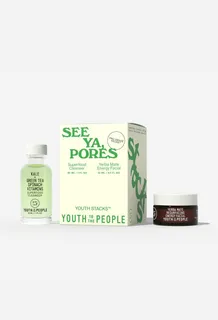
Youth To The People Youth Stacks™ See Ya, Pores
Works for
Anti-oxidationSide benefit · Camellia sinensis leaf extract, Ilex paraguariensis leaf extract + 7 moreMay help
This product contains antioxidants (camellia sinensis leaf extract, ilex paraguariensis leaf extract) that might be able to help neutralize free radicals in skin to lessen the damage it gets from the UV light (sun). There is not enough evidence to confirm their effectiveness in skin though.
Can it cause trouble?
Irritancy7 strong irritants: Parfum, Hexyl cinnamal + 5 more — patch-test recommendedHigh risk
Comedogenic2 ingredients rated 2 or more on the 0–5 pore-clogging scale2 flagged

User reviews
Be the first — your take helps the next person decide.
Ingredients
Filter by role to see what each ingredient is doing.
Water~45–55%
Cocamidopropyl hydroxysultaine~6.9–8.4%
- Irritation risk
- Medium
Used as a cleansing agent. Helps water and oil mix together
More about Cocamidopropyl hydroxysultaineSodium cocoyl glutamate~4.7–5.7%
- Irritation risk
- Medium
Helps oil and water mix together
More about Sodium cocoyl glutamateSorbeth-230 tetraoleate~2.9–3.6%
Polysorbate 20~2.2–2.7%
Sodium chloride~2–2.4%
- Irritation risk
- Low
Used to stabilize mixtures of oil and water, and create thicker, gel-like product textures
More about Sodium chlorideAloe barbadensis leaf juice powder~1.6–1.9%
- Irritation risk
- Medium
Traditionally used to treat sunburns, dermatitis and inflammation, but evidence for its effectiveness is lacking. The extract can contain humectants that help attract water into the skin
More about Aloe barbadensis leaf juice powderBrassica oleracea acephala leaf extract~1.3–1.6%
- Irritation risk
- Medium
Might be helpful in neutralizing free radicals in skin but solid research is lacking. Helps attract water to the upper layer of the skin
More about Brassica oleracea acephala leaf extractSpinacia oleracea leaf extract~1.1–1.3%
- Irritation risk
- Medium
A plant extract that might have some anti-oxidant properties
More about Spinacia oleracea leaf extractCamellia sinensis leaf extract~0.8–1.15%
- Irritation risk
- Low
Can contain potent anti-oxidant compounds (abbreviated ECG, GCG, EGC, and EGCG) that might help protect the skin from free radicals. Can help calm down inflammation and has some anti-bacterial properties. Unfortunately, these antioxidants are unstable and lose their effectiveness very quickly in products. The concentration of the antioxidant compounds in the extract also tends to be low to be effective in topical formulation
More about Camellia sinensis leaf extractMedicago sativa extract~0.65–0.95%
- Irritation risk
- Medium
A plant extract that might help neutralize free radicals in skin
More about Medicago sativa extractChamomilla recutita flower extract~0.5–0.75%
- Irritation risk
- High
Plant extract that can have healing and anti-inflammatory properties. It is a potential allergen and can be irritating
More about Chamomilla recutita flower extractTetrahexyldecyl ascorbate~0.45–0.7%
- Irritation risk
- Medium
Being a lipid soluble form of vitamin C, it is more stable than ascorbic acid, but still degrades quickly and needs to be stabilized in a formulation with another ingredient. It is claimed to penetrate skin better than pure vitamin C and have the the similar benefits, but solid studies of its effectiveness are lacking. Is likely to require a higher concentration in a product than pure vitamin C to be effective. It might be able to help reduce pore clogging.
More about Tetrahexyldecyl ascorbateGlycerin~0.45–0.7%
- Irritation risk
- Low
One of the best moisturizing ingredients. Naturally present in skin. It attracts water to the upper layer of the skin working as a humectant
More about GlycerinPanthenol~0.35–0.65%
- Irritation risk
- Low
Helps attract water to the upper layer of the skin and can help improve skin barrier function
More about PanthenolTocopheryl acetate~0.4–0.6%
- Irritation risk
- Medium
A more stable but less bio-available form of vitamin E compared to Tocopherol. Might help moisturize and protect the skin from free radicals, but mostly used in low concentrations to stabilize other ingredients.
More about Tocopheryl acetateTocopherol~0.35–0.65%
- Irritation risk
- Low
Pure form of vitamin E. Can help moisturise and protect the skin from free radicals. Often used to help stabilise other ingredients or the formula itself
More about TocopherolDecyl glucoside~0.45–0.65%
- Irritation risk
- High
Helps oil and water mix together. Can be irritating
More about Decyl glucosideSorbitan laurate~0.3–0.55%
Tetrasodium glutamate diacetate~0.25–0.5%
- Irritation risk
- Low
Helps stabilize the product formulation
More about Tetrasodium glutamate diacetateGluconolactone~0.25–0.45%
- Irritation risk
- Medium
A polyhydroxy acid (PHA) that helps shed the dead cells from the skin surface revealing smoother skin. Is believed to be genter than AHAs. It helps attract water to the upper layer of the skin and can stimulate production of skin's own hyaluronic acid resulting in improved hydration levels. It has been shown to be helpful against acne and clogged pores if used consistently (e.g over a period of 12 weeks) in high enough concentration. It can help reduce fine lines and wrinkles and improve skin tone with long-term application. Can help neutralize free radicals
More about GluconolactoneEthylhexylglycerin~0.25–0.5%
Maltodextrin~0.25–0.45%
- Irritation risk
- Low
Used to stabilize the product formulation and can help absorb oil
More about MaltodextrinCitric acid~0.25–0.45%
- Irritation risk
- Medium
Can work as an exfoliant but is typically used to adjust the product pH
More about Citric acidPhenoxyethanol~0.25–0.45%
- Irritation risk
- Low
A preservative. It helps prevent bacterial growth in cosmetic products
More about PhenoxyethanolPotassium sorbate~0.25–0.45%
Sodium benzoate~0.25–0.45%
Gardenia jasminoides fruit extract~0.25–0.45%
- Irritation risk
- Low
Parfum~0.2–0.4%
- Irritation risk
- High
An aromatic blend of unspecified and possibly irritating ingredients
More about ParfumSodium hydroxide~0.25–0.45%
Sodium glycolate~0.25–0.45%
- Irritation risk
- Low
Sodium formate~0.25–0.45%
- Irritation risk
- Low
Hexyl cinnamal~0.25–0.45%
Linalool~0.25–0.45%
Limonene~0.25–0.45%
- Irritation risk
- High
A common frangrance that can easily irritate skin, especially if exposed to air, light or heat
More about LimoneneChlorophyllin-copper complex~0.25–0.45%
- Irritation risk
- Low
Ci 75810~0.25–0.45%
- Irritation risk
- Low
Water~0.25–0.45%
Bambusa arundinacea stem extract~0.25–0.45%
- Irritation risk
- Low
Diatomaceous earth~0.4–0.6%
Carthamus tinctorius seed oil~0.3–0.55%
- Irritation risk
- Low
An emollient that helps soften the skin and might help calm down inflammation
More about Carthamus tinctorius seed oilPropanediol~0.25–0.5%
- Irritation risk
- Low
Acts as a solvent for other ingredients. Speeds up the absorption of other ingredients into the skin
More about PropanediolAloe barbadensis leaf juice~0.25–0.45%
- Irritation risk
- Medium
Traditionally used to treat sunburns, dermatitis and inflammation, but evidence for its effectiveness is lacking. The extract can contain humectants that help attract water into the skin
More about Aloe barbadensis leaf juiceCetyl alcohol~0.3–0.55%
- Irritation risk
- Low
A non-drying alcohol that works to soften the skin and stabilize product formulations helping oil and water mix together
More about Cetyl alcoholGlyceryl stearate se~0.25–0.5%
- Irritation risk
- Low
- Comedogenicity
- 2/5
Used to stabilize the product formulations and works as an emollient
More about Glyceryl stearate seGlycerin~0.3–0.55%
- Irritation risk
- Low
One of the best moisturizing ingredients. Naturally present in skin. It attracts water to the upper layer of the skin working as a humectant
More about GlycerinLactic acid~0.25–0.45%
- Irritation risk
- Medium
An exfoliating and moisturizing alpha-hydroxy acid (AHA). Typically causes less irritation than other AHAs, for example, glycolic acid. At high concentrations (about 15%), lactic acid can help reduce lines and wrinkles. Recent studies show that lactic acid can support the "good" bacteria living on skin's surface (healthy skin microbiome)
More about Lactic acidSodium acrylate/sodium acryloyldimethyl taurate copolymer~0.25–0.45%
- Irritation risk
- Low
Used to create a thicker product consistency
More about Sodium acrylate/sodium acryloyldimethyl taurate copolymerNiacinamide~0.25–0.45%
- Irritation risk
- Low
Is proven to be effective in reducing blemishes, evening out skin tone and helping to improve lines and wrinkles. It helps the skin to repair sun damage, calm down inflammation and keep maintain good levels of moisture. The concentration of about 2% is effective for supporting the skin barrier and evening out the skin tone. Concentration of 4-6% is better for helping with acne and balancing the sebum production
More about NiacinamideC15-19 alkane~0.25–0.45%
- Irritation risk
- Low
Helps soften the upper layer of the skin and create a nice product texture
More about C15-19 alkaneIlex paraguariensis leaf extract~0.2–0.4%
- Irritation risk
- High
A plant extract that can help neutralize free radicals in skin. Can contain fragrand compounds like linalool that can be irritating
More about Ilex paraguariensis leaf extractIlex guayusa leaf extract~0.25–0.45%
- Irritation risk
- Low
Potassium sorbate~0.25–0.5%
Polyglyceryl-6 laurate~0.3–0.5%
- Irritation risk
- Medium
Helps oil and water mix together
More about Polyglyceryl-6 laurateTocopherol~0.25–0.5%
- Irritation risk
- Low
Pure form of vitamin E. Can help moisturise and protect the skin from free radicals. Often used to help stabilise other ingredients or the formula itself
More about TocopherolEthylhexylglycerin~0.25–0.45%
Bromelain~0.25–0.45%
- Irritation risk
- Low
Ananas sativus fruit extract~0.25–0.45%
- Irritation risk
- Medium
A fruit extract that might help to attract water to the upper layer of the skin, but there is no evidence for any other benefits to the skin
More about Ananas sativus fruit extractSodium phytate~0.25–0.45%
Papain~0.25–0.45%
- Irritation risk
- High
An enzyme extracted from papaya fruit. Can have an exfoliating effect on the skin. Can be irritating
More about PapainCarica papaya fruit extract~0.25–0.4%
- Irritation risk
- High
Polyglycerin-6~0.25–0.45%
- Irritation risk
- Medium
Helps attract water to the upper layer of the skin
More about Polyglycerin-6Zingiber officinale root oil~0.15–0.3%
- Irritation risk
- High
An essential oil that is likely to be irritating and can cause photosensitivity
More about Zingiber officinale root oilPassiflora edulis fruit extract~0.2–0.4%
- Irritation risk
- Low
Xanthan gum~0.2–0.4%
- Irritation risk
- Low
Used to create a thicker product consistency
More about Xanthan gumCurcuma longa root powder~0.2–0.35%
- Irritation risk
- Low
Hylocereus undatus fruit extract~0.15–0.3%
- Irritation risk
- Low
Sorbitan oleate~0.15–0.25%
- Irritation risk
- Medium
- Comedogenicity
- 2/5
Helps oil and water mix together
More about Sorbitan oleateHelianthus annuus seed oil~0.15–0.3%
- Irritation risk
- Low
A great emollient due to its high linoleic acid content. One of the most effective plant oils in helping skin hydration and repairing skin barrier function
More about Helianthus annuus seed oilSorbitan isostearate~0.1–0.25%
- Irritation risk
- Low
Helps oil and water mix together
More about Sorbitan isostearatePhenoxyethanol~0.1–0.2%
- Irritation risk
- Low
A preservative. It helps prevent bacterial growth in cosmetic products
More about PhenoxyethanolSodium benzoate~0.1–0.15%
Ingredient list view
Water, Cocamidopropyl hydroxysultaine, Sodium cocoyl glutamate, Sorbeth-230 tetraoleate, Polysorbate 20, Sodium chloride, Aloe barbadensis leaf juice powder, Brassica oleracea acephala leaf extract, Spinacia oleracea leaf extract, Camellia sinensis leaf extract, Medicago sativa extract, Chamomilla recutita flower extract, Tetrahexyldecyl ascorbate, Glycerin, Panthenol, Tocopheryl acetate, Tocopherol, Decyl glucoside, Sorbitan laurate, Tetrasodium glutamate diacetate, Gluconolactone, Ethylhexylglycerin, Maltodextrin, Citric acid, Phenoxyethanol, Potassium sorbate, Sodium benzoate, Gardenia jasminoides fruit extract, Parfum, Sodium hydroxide, Sodium glycolate, Sodium formate, Hexyl cinnamal, Linalool, Limonene, Chlorophyllin-copper complex, Ci 75810, Water, Bambusa arundinacea stem extract, Diatomaceous earth, Carthamus tinctorius seed oil, Propanediol, Aloe barbadensis leaf juice, Cetyl alcohol, Glyceryl stearate se, Glycerin, Lactic acid, Sodium acrylate/sodium acryloyldimethyl taurate copolymer, Niacinamide, C15-19 alkane, Ilex paraguariensis leaf extract, Ilex guayusa leaf extract, Potassium sorbate, Polyglyceryl-6 laurate, Tocopherol, Ethylhexylglycerin, Bromelain, Ananas sativus fruit extract, Sodium phytate, Papain, Carica papaya fruit extract, Polyglycerin-6, Zingiber officinale root oil, Passiflora edulis fruit extract, Xanthan gum, Curcuma longa root powder, Hylocereus undatus fruit extract, Sorbitan oleate, Helianthus annuus seed oil, Sorbitan isostearate, Phenoxyethanol, Sodium benzoate
Worth comparing, line by line.
Match % combines shared ingredients, the first five ingredients, shared actives and hero ingredients, irritancy (lower counts in the alternative's favour), texture and body area. Only products in the same routine step are compared.
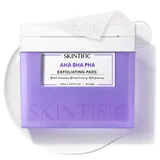
| Youth To The PeopleYouth Stacks™ See Ya, PoresYOUR PRODUCT | skintificAHA BHA PHA Exfoliating Pads | Dr.GBrightening Vita Peeling Pad (70pcs) | NaturiumVegan Lactic Acid Emulsion 5% | |
|---|---|---|---|---|
| Match | — | 61% | 60% | 57% |
| Price | $20.00 | $15.90−$4.10 | $18.66−$1.34 | — |
| Shared key ingredients | — | 4 of 11 | 4 of 11 | 4 of 11 |
| Key difference | — | Salicylic Acid | Lactobionic Acid | 3-O-Ethyl Ascorbic Acid |
| Irritancy | High | Medium | Medium | Low |
| Drying alcohol | — | — | — | — |
| View product | Shop | Shop | Shop |


More alternatives: Creamy Tônico clareadorStarface Exfoliating Night Water
Product summary
"Youth To The People - Youth Stacks™ See Ya, Pores" is effective for: Moisturizing
Ingredient callouts
- Humectants (glycerin 0.30% - 0.55%, panthenol 0.35% - 0.65% and glycerin 0.45% - 0.70%). These ingredients help attract water to the upper layer of the skin and improve the skin hydration.
About the brand
According to Cruelty-Free Kitty "Youth To The People" is cruelty free and so is its parent company.
Price
The product retails for 20.00$ in the United States.
For a detailed price comparison: click here.
Sources cited in this review
Every concentration estimate and effectiveness label is anchored to one of these 35 studies and safety reviews.
- 1
- 2
- 3
- 4
- 5
- 6
