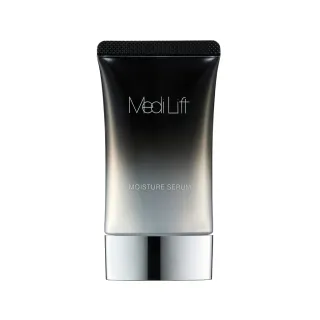
Works for
MoisturizingAcetyl hexapeptide-8, Hexapeptide-3 + 24 moreWorks well
“✓ Hydrates skin and helps skin retain moisture”
This product can help improve hydration of the skin with the two types of ingredients.
The first type is called “humectants”:
these ingredients help attract water.
When humectants are on the surface of the skin, they “pull in” the moisture from the outside environment, or from
within deeper layers of the skin. The following ingredients in this product do the job:
glycerin, hydrolyzed collagen.
This product also contains ingredients called “occlusives”. They help reduce the speed with which our skin loses moisture to the outside environment. These ingredients also help soften the upper layer of the skin, so it feels less tight and nicer to the touch. The following ingredients in this product do the job: hydrolyzed collagen, phytosterols.
The following ingredients in this product are especially good for supporting the skin barrier and helping with the hydration level: acetyl hexapeptide-8, ceramide ap, ceramide ng, ceramide np, dipeptide diaminobutyroyl benzylamide diacetate, hexapeptide-3, panthenol
Anti-agingAcetyl hexapeptide-8, Hexapeptide-3 + 5 moreMay help
“✓ Plumps and smooths the look of skin and reduces the visual appearance of wrinkles”
This product contains acetyl hexapeptide-8, dipeptide diaminobutyroyl benzylamide diacetate, hexapeptide-3. These ingredients might be able to help reduce and prevent fine lines and wrinkles, improve skin elasticity and firmness, but there is not enough evidence that it actually works.
Can it cause trouble?
Irritancy5 strong irritants: Citrus junos fruit extract, Chrysanthellum indicum extract + 3 more — patch-test recommendedHigh risk
Comedogenic2 ingredients rated 2 or more on the 0–5 pore-clogging scale2 flagged

User reviews
Be the first — your take helps the next person decide.
Ingredients
Filter by role to see what each ingredient is doing.
Water~45–55%
Butylene glycol~5.9–7.2%
- Irritation risk
- Low
Used to create a nice product texture and help delivery of other ingredients. Might be somewhat helpful in attracting water to the upper layer of the skin
More about Butylene glycolGlycerin~4.1–5%
- Irritation risk
- Low
One of the best moisturizing ingredients. Naturally present in skin. It attracts water to the upper layer of the skin working as a humectant
More about GlycerinPentylene glycol~3–3.7%
- Irritation risk
- Medium
Used to preserve products, dissolve other ingredients and create a nice product texture
More about Pentylene glycolHydrolyzed hyaluronic acid~2.2–2.7%
- Irritation risk
- Low
One of the best moisturizing ingredients. Attracts water into the upper layer of the skin. A version of it is naturally present in skin
More about Hydrolyzed hyaluronic acidSodium hyaluronate~1.8–2.2%
- Irritation risk
- Low
One of the best moisturizing ingredients. Attracts water into the upper layer of the skin
More about Sodium hyaluronateSodium hyaluronate crosspolymer~1.5–1.8%
- Irritation risk
- Medium
Attracts water into the upper layer of the skin
More about Sodium hyaluronate crosspolymerSoluble proteoglycan~1.3–1.5%
- Irritation risk
- Low
Hydrolyzed collagen~1.1–1.4%
- Irritation risk
- Low
A typically plant-derived compound that is supposed mimic human collagen. Cannot penetrate the skin barrier so is not particularly useful in skincare products beyond attracting water to the upper layer of the skin
More about Hydrolyzed collagenDipalmitoyl hydroxyproline~0.7–1.05%
- Irritation risk
- Low
Is claimed to stimulate collagen and elastin production, as well as work as an anti-oxidant. There is however not enough evidence for its effectiveness
More about Dipalmitoyl hydroxyprolineAcetyl hexapeptide-8~0.55–0.8%
- Irritation risk
- Low
A type of peptide. Peptides are excellent moisturizers and might be able support collagen production reducing fine lines and wrinkles
More about Acetyl hexapeptide-8Hexapeptide-3~0.45–0.7%
- Irritation risk
- Low
A type of peptide. Peptides are excellent moisturizers and might be able support collagen production reducing fine lines and wrinkles
More about Hexapeptide-3Panthenol~0.4–0.65%
- Irritation risk
- Low
Helps attract water to the upper layer of the skin and can help improve skin barrier function
More about PanthenolCeramide np~0.4–0.65%
- Irritation risk
- Low
A type of lipid similar to ceramides naturally present in skin. Helps to soften the upper layer of the skin and supports the skin barrier function to keep it hydrated. Can help to prevent inflammation in skin
More about Ceramide npCeramide ng~0.3–0.6%
- Irritation risk
- Low
A type of lipid similar to ceramides naturally present in skin. Helps to soften the upper layer of the skin and supports the skin barrier function to keep it hydrated. Can help to prevent inflammation in skin
More about Ceramide ngCeramide ap~0.3–0.6%
- Irritation risk
- Low
A type of lipid similar to ceramides naturally present in skin. Helps to soften the upper layer of the skin and supports the skin barrier function to keep it hydrated. Can help to prevent inflammation in skin
More about Ceramide apDipeptide diaminobutyroyl benzylamide diacetate~0.3–0.5%
- Irritation risk
- Low
A type of peptide. Peptides are excellent moisturizers and might be able support collagen production reducing fine lines and wrinkles
More about Dipeptide diaminobutyroyl benzylamide diacetatePhytosterols~0.3–0.6%
- Irritation risk
- Medium
Lipids that work as an emollient and can be helpful in repairing skin barrier function
More about PhytosterolsAverrhoa carambola leaf extract~0.25–0.45%
- Irritation risk
- Low
Salix alba bark extract~0.2–0.4%
- Irritation risk
- High
A plant extract that can help neutralize free radicals in skin. It contains a compound salicin that can theoretically be converted into salicylic acid that, in turn, helps reduce inflammation in skin, but the evidence of effectiveness in skin is lacking and the extract is usually not used in a concentration that would enable an exfoliating effect
More about Salix alba bark extractHydrolyzed hibiscus esculentus extract~0.2–0.4%
- Irritation risk
- Medium
A plant extract that might contain a peptide (Myoxinol). It could be helpful in attracting water to the upper layer of the skin and might have some anti-aging effect, but the research is lacking and it is rarely used in a high enough concentration
More about Hydrolyzed hibiscus esculentus extractVaccinium myrtillus leaf extract~0.2–0.4%
- Irritation risk
- Low
Leontopodium alpinum callus culture extract~0.2–0.4%
- Irritation risk
- Low
A plant stem cell extract that might help neutralize free radicals and reduce inflammation in skin
More about Leontopodium alpinum callus culture extractHydrangea serrata leaf extract~0.2–0.4%
- Irritation risk
- Low
Coptis japonica root extract~0.2–0.4%
- Irritation risk
- High
A plant extract that might have some anti-oxidant properties
More about Coptis japonica root extractPorphyridium cruentum extract~0.2–0.4%
- Irritation risk
- Low
- Comedogenicity
- 3/5
A red algae extract. Can help attract water to the upper layer of the skin and might have an antioxidant effect
More about Porphyridium cruentum extractCitrus junos fruit extract~0.2–0.4%
- Irritation risk
- High
Contains essential oil. Can be irritating and lead to photosensitivity
More about Citrus junos fruit extractChrysanthellum indicum extract~0.2–0.4%
Centella asiatica leaf/stem extract~0.2–0.35%
- Irritation risk
- Low
Perilla ocymoides leaf extract~0.25–0.45%
- Irritation risk
- High
A plant extract that might help neutralize free radicals in skin but solid research is lacking. Contains a number of volatile compounds and could be irritating
More about Perilla ocymoides leaf extractVitis vinifera vine extract~0.2–0.4%
- Irritation risk
- Low
Aloe barbadensis leaf extract~0.25–0.5%
- Irritation risk
- Medium
Traditionally used to treat sunburns, dermatitis and inflammation, but evidence for its effectiveness is lacking. The extract can contain humectants that help attract water into the skin
More about Aloe barbadensis leaf extractAnanas sativus fruit extract~0.2–0.4%
- Irritation risk
- Medium
A fruit extract that might help to attract water to the upper layer of the skin, but there is no evidence for any other benefits to the skin
More about Ananas sativus fruit extractRetinyl palmitate~0.2–0.35%
- Irritation risk
- High
Three steps removed from the active form of vitamin A - retinoic acid. To have an effect in the skin, it first needs to be converted twice to become the retinoic acid. This means it is less potent than retinol, but could also be less irritating. Once converted to the retinoic acid in the skin, it helps against all signs of aging, improves skin cell turnover and helps fight blemishes and clogged pores. However, in many cosmetic formulations, it is used in a concentration that is too low to have the full effect
More about Retinyl palmitateMagnesium ascorbyl phosphate~0.2–0.4%
- Irritation risk
- Medium
A derivative of vitamin C that is more stable, but less bioavailable than the pure form of vitamin C. It does not penetrate the skin well, but has been shown to convert to pure vitamin C once in skin. It can be helpful in stimulating collagen production and lightening the skin tone, but the required concentration is likely to be very high
More about Magnesium ascorbyl phosphateZea mays oil~0.2–0.35%
- Irritation risk
- Low
- Comedogenicity
- 3/5
A good moisturizing plant oil. Due to the high linoleic acid content, it helps soften the upper layer of the skin, reduce water loss and support skin barrier function
More about Zea mays oilPolysorbate 80~0.25–0.45%
Hydrogenated lecithin~0.25–0.45%
- Irritation risk
- Low
Helps to retain moisture by creating a protective barrier on the skin. Rich in fatty acids. Improves product texture and helps with the penetration of other ingredients.
More about Hydrogenated lecithinMaltitol~0.2–0.4%
- Irritation risk
- Low
Helps attract water to the upper layer of the skin
More about MaltitolSorbitol~0.25–0.4%
- Irritation risk
- Low
Helps attract water to the upper layer of the skin and improves the product texture
More about SorbitolCaprylyl glycol~0.25–0.45%
- Irritation risk
- Medium
Helps preserve products and creates a nice product texture
More about Caprylyl glycolCarbomer~0.2–0.4%
- Irritation risk
- Low
Helps create a thicker or gel-like product texture. It is not a surfactant but can be used in gentle cleansing formulations
More about CarbomerXanthan gum~0.2–0.4%
- Irritation risk
- Low
Used to create a thicker product consistency
More about Xanthan gumPotassium hydroxide~0.2–0.4%
Citric acid~0.2–0.35%
- Irritation risk
- Medium
Can work as an exfoliant but is typically used to adjust the product pH
More about Citric acidSodium citrate~0.15–0.3%
- Irritation risk
- Medium
Helps to control the skin's pH level. Maintains the skin's natural film of amino-lactic acids and oils. Helps to preserve products
More about Sodium citrateHydroxypropyl methylcellulose~0.15–0.3%
- Irritation risk
- Medium
Used to create a thicker product consistency and stabilize the formulation
More about Hydroxypropyl methylcellulosePullulan~0.15–0.3%
- Irritation risk
- High
Creates a thin drying film on the skin resulting in a short-term tightening effect
More about PullulanDextrin~0.15–0.3%
- Irritation risk
- Low
A sugar that is used to stabilize the product formulation. Can help attract water to the upper layer of the skin
More about Dextrin1,2-hexanediol~0.1–0.2%
Citrus aurantium bergamia fruit oil~0.05–0.15%
- Irritation risk
- High
A plant oil with a high content of volatile compounds that can irritate the skin and lead to allergic reactions. Can lead to photosensitivity
More about Citrus aurantium bergamia fruit oilIngredient list view
Water, Butylene glycol, Glycerin, Pentylene glycol, Hydrolyzed hyaluronic acid, Sodium hyaluronate, Sodium hyaluronate crosspolymer, Soluble proteoglycan, Hydrolyzed collagen, Dipalmitoyl hydroxyproline, Acetyl hexapeptide-8, Hexapeptide-3, Panthenol, Ceramide np, Ceramide ng, Ceramide ap, Dipeptide diaminobutyroyl benzylamide diacetate, Phytosterols, Averrhoa carambola leaf extract, Salix alba bark extract, Hydrolyzed hibiscus esculentus extract, Vaccinium myrtillus leaf extract, Leontopodium alpinum callus culture extract, Hydrangea serrata leaf extract, Coptis japonica root extract, Porphyridium cruentum extract, Citrus junos fruit extract, Chrysanthellum indicum extract, Centella asiatica leaf/stem extract, Perilla ocymoides leaf extract, Vitis vinifera vine extract, Aloe barbadensis leaf extract, Ananas sativus fruit extract, Retinyl palmitate, Magnesium ascorbyl phosphate, Zea mays oil, Polysorbate 80, Hydrogenated lecithin, Maltitol, Sorbitol, Caprylyl glycol, Carbomer, Xanthan gum, Potassium hydroxide, Citric acid, Sodium citrate, Hydroxypropyl methylcellulose, Pullulan, Dextrin, 1,2-hexanediol, Citrus aurantium bergamia fruit oil
Compare prices
Retailers ranked by price — lowest first.

Worth comparing, line by line.
Match % combines shared ingredients, the first five ingredients, shared actives and hero ingredients, irritancy (lower counts in the alternative's favour), texture and body area. Only products in the same routine step are compared.
| YamanMedi Lift Moisture SerumYOUR PRODUCT | MEDIHEALBaobab Soothing Moisture Serum | MEDI-PEELLuminous Silk Oil Serum | NACIFICUyu Cream Ampoule | |
|---|---|---|---|---|
| Match | — | 51% | 49% | 49% |
| Price | $40.00 | — | $30.20−$9.80 | $7.51−$32.49 |
| Shared key ingredients | — | 10 of 16 | 8 of 16 | 8 of 16 |
| Key difference | — | Copper Tripeptide-1 | Niacinamide | Niacinamide |
| Irritancy | High | Medium | Medium | Low |
| Drying alcohol | — | — | — | — |
| View product | Shop | Shop | Shop |


More alternatives: Arencia Deep Water Surge Hydrating Serum 30Eveline Cosmetics Serum Shot Multi Peptides & Collagen Serum Rejuvenation
Product summary
"Yaman - Medi Lift Moisture Serum" is effective for: Moisturizing
This product could be helpful for: Anti-aging, but its actives are not the most effective or are not well-studied.
Ingredient callouts
- this product includes a form of Retinoids (vitamin A) - retinyl palmitate 0.25% - 0.40%, but this type of vitamin A is not very effective. It could in theory help with fine lines and wrinkles, but the effect is most likely minimal.
- Ceramides (ceramide ap 0.30% - 0.55%, ceramide ng 0.35% - 0.65% and ceramide np 0.45% - 0.65%). Ceramides are an important part of our natural skin barrier. The Ceramides used in skincare are synthetic or come from plants. They help soften the skin and can help "fill the gaps" in the skin barrier, keeping the skin hydrated and resilient for longer.
- Peptides (acetyl hexapeptide-8 0.55% - 0.85%, dipeptide diaminobutyroyl benzylamide diacetate 0.30% - 0.55% and hexapeptide-3 0.50% - 0.70%). Peptides are a very big group of ingredients. They all consist of a different combination of aminoacids. Our skin produces Peptides naturally. Some of them work as natural antibiotics, promote wound-healing and production of collagen. The scientists are still studying how effective the topical application of Peptides is, but it is very likely that theynare helpful. Peptides might be able to support skin barrier restoration and even have an anti-aging benefit. At the very least, they certainly help attract water to the skin and support the hydration in this way.
- Humectants (acetyl hexapeptide-8 0.55% - 0.85%, panthenol 0.45% - 0.65%, hydrolyzed collagen 1.20% - 1.40%, sodium hyaluronate crosspolymer 1.50% - 1.90%, sodium hyaluronate 1.80% - 2.20%, hydrolyzed hyaluronic acid 2.30% - 2.80% and glycerin 4.10% - 5.00%). These ingredients help attract water to the upper layer of the skin and improve the skin hydration.
Sources cited in this review
Every concentration estimate and effectiveness label is anchored to one of these 23 studies and safety reviews.
- 1
- 2Efficacy of a New Topical Nano-hyaluronic Acid in Humansncbi.nlm.nih.gov
- 3Physiochemical properties and application of hyaluronic acid: a systematic reviewonlinelibrary.wiley.com
- 4Hyaluronic acid: A key molecule in skin agingncbi.nlm.nih.gov
- 5
- 6Skin moisturizing effects of panthenol-based formulationspdfs.semanticscholar.org

Affiliate links · As an Amazon Associate, WIMJ earns from qualifying purchases.