Works for
CleansingMyristic acid, Stearic acid + 10 moreCleanses gently
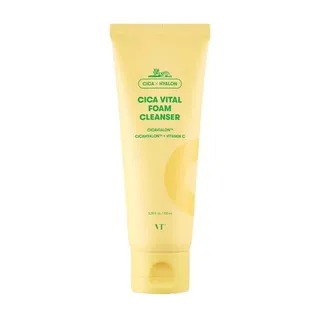
“Buy VT Cosmetics Cica Vital Foam Cleanser , Korean Skincare”
This product works by removing dirt and oil from the surface of the skin. It uses a combination of mild cleansing agents (arachidic acid, cetearyl alcohol, cocamidopropyl betaine, glyceryl stearate, hydrogenated lecithin, lauric acid, myristic acid, oleic acid, palmitic acid, polyglyceryl-10 laurate, sodium c14-16 olefin sulfonate, stearic acid) and should be able to cleanse the skin gently. Still keep in mind that any cleansing can disrupt the skin barrier, and most people do not need to cleanse their skin more than once per day.
Even though this formulation is mild, the following cleansing agents could trigger an irritation or allergy for some people: cocamidopropyl betaine, sodium c14-16 olefin sulfonate
Can it cause trouble?
Irritancy3 strong irritants: Citrus limon fruit extract, Citrus grandis seed extract + 1 more — patch-test recommendedHigh risk
Comedogenic3 ingredients rated 2 or more on the 0–5 pore-clogging scale3 flagged
User reviews
Be the first — your take helps the next person decide.
Ingredients
Filter by role to see what each ingredient is doing.
Water~45–55%
Myristic acid~6.8–8.3%
- Irritation risk
- Medium
- Comedogenicity
- 3/5
Helps oil and water mix together. Could be comedogenic
More about Myristic acidGlycerin~4–4.9%
- Irritation risk
- Low
One of the best moisturizing ingredients. Naturally present in skin. It attracts water to the upper layer of the skin working as a humectant
More about GlycerinPotassium hydroxide~3.1–3.8%
Stearic acid~2.4–3%
- Irritation risk
- Low
Helps oil and water mix together and works as an emollient
More about Stearic acidGlyceryl stearate~2–2.4%
- Irritation risk
- Low
An emollient that softens the skin and forms a protective layer on its surface. Helps water and oil mix together
More about Glyceryl stearatePalmitic acid~1.7–2%
- Irritation risk
- Low
An emollient that is naturally present in skin and helps soften it
More about Palmitic acidCocamidopropyl betaine~2–2.4%
- Irritation risk
- High
Helps water and oil mix together. Used as a cleansing ingredient. Could be an allergen
More about Cocamidopropyl betaineButylene glycol~1.2–1.4%
- Irritation risk
- Low
Used to create a nice product texture and help delivery of other ingredients. Might be somewhat helpful in attracting water to the upper layer of the skin
More about Butylene glycolSodium c14-16 olefin sulfonate~1–1.3%
- Irritation risk
- High
Helps oil and water mix together and used as a cleansing agent. Can be irritating and is better avoided for sensitive skin
More about Sodium c14-16 olefin sulfonateCoptis japonica root extract~0.7–1.05%
- Irritation risk
- High
A plant extract that might have some anti-oxidant properties
More about Coptis japonica root extractSodium chloride~0.65–1%
- Irritation risk
- Low
Used to stabilize mixtures of oil and water, and create thicker, gel-like product textures
More about Sodium chlorideSorbitol~0.55–0.8%
- Irritation risk
- Low
Helps attract water to the upper layer of the skin and improves the product texture
More about SorbitolAcrylates/c10-30 alkyl acrylate crosspolymer~0.55–0.8%
- Irritation risk
- Medium
Maintains the texture of skincare products. Allows the product to spread evenly. Helps oil and water mix together
More about Acrylates/c10-30 alkyl acrylate crosspolymerCetearyl alcohol~0.55–0.8%
- Irritation risk
- Low
- Comedogenicity
- 2/5
A non-drying alcohol. Works as an emollient. Helps water and oil mix together and creates a nice product texture
More about Cetearyl alcoholPotassium benzoate~0.25–0.5%
Boron nitride~0.5–0.75%
- Irritation risk
- Low
Helps to absord oil and evenly disperse other ingredients (for example, pigment) in product formulation
More about Boron nitrideNiacinamide~0.45–0.65%
- Irritation risk
- Low
Is proven to be effective in reducing blemishes, evening out skin tone and helping to improve lines and wrinkles. It helps the skin to repair sun damage, calm down inflammation and keep maintain good levels of moisture. The concentration of about 2% is effective for supporting the skin barrier and evening out the skin tone. Concentration of 4-6% is better for helping with acne and balancing the sebum production
More about NiacinamidePolyquaternium-67~0.45–0.65%
- Irritation risk
- Low
Helps soften the upper layer of the skin and create a nice product finish
More about Polyquaternium-67Hydrogenated polydecene~0.35–0.65%
- Irritation risk
- Low
Helps to soften the upper layer of the skin and create a nice product texture
More about Hydrogenated polydeceneArachidic acid~0.5–0.7%
Lauric acid~0.45–0.7%
- Irritation risk
- Medium
- Comedogenicity
- 3/5
Helps water and oil mix together. Has anti-bacterial properties that might be helpful in preventing blemishes
More about Lauric acidCentella asiatica extract~0.4–0.6%
- Irritation risk
- Medium
A plant extract that has been shown to be able to reduce inflammation in skin, support restoration of skin barrier function, as well as support collagen production. Contains active compounds called centelloids: asiaticoside, madecasosside, asiatic acid and madecassic acid. Might be helpful in preventing stretch marks. It can be itself be irritating though.
More about Centella asiatica extractSodium citrate~0.3–0.55%
- Irritation risk
- Medium
Helps to control the skin's pH level. Maintains the skin's natural film of amino-lactic acids and oils. Helps to preserve products
More about Sodium citrateTrisodium ethylenediamine disuccinate~0.3–0.55%
- Irritation risk
- Medium
Used to improve stability of the formulation
More about Trisodium ethylenediamine disuccinateOleic acid~0.35–0.65%
- Irritation risk
- Medium
Helps soften the upper layer of the skin. At the same time, it can weaken the skin's barrier enhancing penetration of other ingredients and increasing the risk of skin dryness
More about Oleic acidCitrus limon fruit extract~0.3–0.55%
- Irritation risk
- High
Used as a fragrance. Can be irritating and cause photosensitivity
More about Citrus limon fruit extractCitric acid~0.3–0.55%
- Irritation risk
- Medium
Can work as an exfoliant but is typically used to adjust the product pH
More about Citric acid1,2-hexanediol~0.3–0.55%
Ascorbic acid~0.3–0.55%
- Irritation risk
- High
The most well-researched antioxidant that works in skin. Helps neutralize free radicals supporting collagen production, helping to even out the skin tone and preventing early signs of aging
More about Ascorbic acidHippophae rhamnoides fruit extract~0.3–0.55%
- Irritation risk
- Medium
A plant extract that might help neutralize free radicals in skin, but research on its effectiveness is lacking
More about Hippophae rhamnoides fruit extractDisodium edta~0.3–0.55%
Hydrogenated lecithin~0.3–0.6%
- Irritation risk
- Low
Helps to retain moisture by creating a protective barrier on the skin. Rich in fatty acids. Improves product texture and helps with the penetration of other ingredients.
More about Hydrogenated lecithinCitrus grandis seed extract~0.25–0.5%
- Irritation risk
- High
Sodium hyaluronate~0.3–0.55%
- Irritation risk
- Low
One of the best moisturizing ingredients. Attracts water into the upper layer of the skin
More about Sodium hyaluronatePolyglyceryl-10 laurate~0.3–0.6%
- Irritation risk
- Medium
Helps water and oil mix together
More about Polyglyceryl-10 lauratePanthenol~0.3–0.55%
- Irritation risk
- Low
Helps attract water to the upper layer of the skin and can help improve skin barrier function
More about PanthenolSodium ascorbyl phosphate~0.3–0.55%
- Irritation risk
- Medium
A stable derivative of vitamin C. It is oil-soluble which means it is more likely to penetrate the skin compared to the pure form of vitamin C (which is water-soluble), but it is less bio-available and is way less effective in stimulating collagen and reducing wrinkles compared to the pure form of vitamin C (L-ascorbic acid) and its other derivatives (for example, magnesium ascorbyl phosphate). At the same time, this vitamin C derivative has been shown in studies to be effective in reducing acne, blemishes and clogged pores. It is less irritating then the pure form of vitamin C
More about Sodium ascorbyl phosphateBiotin~0.3–0.55%
- Irritation risk
- Low
Might have some moisturising properties. Is not effective when applied topically beyond some moisturizing effect
More about BiotinPyridoxine~0.25–0.5%
- Irritation risk
- High
Might help neutralize free radicals in skin, but evidence of effectiveness in skin is lacking. It might be irritating
More about PyridoxineAsiaticoside~0.25–0.45%
- Irritation risk
- Medium
An active compound of Centella Asiatica plant extract. In combination with other active compounds of Centella Asiatica extract (madecasosside, asiatic acid and madecassic acid), asiaticoside has been shown to be helpful in wound-healing, restoring skin barrier function and supporting collagen production in skin. It can, however, itself be irritating
More about AsiaticosideAsiatic acid~0.25–0.45%
- Irritation risk
- Medium
An active compound of Centella Asiatica plant extract. In combination with other active compounds of Centella Asiatica extract (asiaticoside, madecasosside and madecassic acid) asiatic acid has been shown to be helpful in wound-healing, restoring skin barrier function and supporting collagen production in skin. It can, however, itself be irritating
More about Asiatic acidMadecassoside~0.25–0.45%
- Irritation risk
- Medium
An antioxidant that is typically derived from plant Centella Asiatica. It can help neutralize free radicals in skin and support skin barrier function. It could, however, itself be irritating. It is often unstable in formulations
More about MadecassosideMadecassic acid~0.2–0.4%
- Irritation risk
- Medium
An active compound of Centella Asiatica plant extract. In combination with other active compounds of Centella Asiatica extract (asiaticoside, madecasosside and asiatic acid), madecassic acid has been shown to be helpful in wound-healing, restoring skin barrier function and supporting collagen production in skin. It can, however, itself be irritating
More about Madecassic acidPropolis extract~0.2–0.4%
- Irritation risk
- High
A complex substance produced by honey bees. Can have anti-bacterial and some anti-oxidant effect. Is an allergen and can be irritating
More about Propolis extractCyanocobalamin~0.15–0.3%
- Irritation risk
- Low
Can support skin barrier function and reduce inflammation in skin
More about CyanocobalaminTocopherol~0.15–0.3%
- Irritation risk
- Low
Pure form of vitamin E. Can help moisturise and protect the skin from free radicals. Often used to help stabilise other ingredients or the formula itself
More about TocopherolBeta-carotene~0.15–0.25%
Riboflavin~0.15–0.25%
- Irritation risk
- Low
Thiamine hcl~0.1–0.15%
- Irritation risk
- Medium
Can help attract water to the upper layer of the skin. Is studied as a mosquito repellent
More about Thiamine hclParfum~0.05–0.1%
- Irritation risk
- High
An aromatic blend of unspecified and possibly irritating ingredients
More about ParfumIngredient list view
Water, Myristic acid, Glycerin, Potassium hydroxide, Stearic acid, Glyceryl stearate, Palmitic acid, Cocamidopropyl betaine, Butylene glycol, Sodium c14-16 olefin sulfonate, Coptis japonica root extract, Sodium chloride, Sorbitol, Acrylates/c10-30 alkyl acrylate crosspolymer, Cetearyl alcohol, Potassium benzoate, Boron nitride, Niacinamide, Polyquaternium-67, Hydrogenated polydecene, Arachidic acid, Lauric acid, Centella asiatica extract, Sodium citrate, Trisodium ethylenediamine disuccinate, Oleic acid, Citrus limon fruit extract, Citric acid, 1,2-hexanediol, Ascorbic acid, Hippophae rhamnoides fruit extract, Disodium edta, Hydrogenated lecithin, Citrus grandis seed extract, Sodium hyaluronate, Polyglyceryl-10 laurate, Panthenol, Sodium ascorbyl phosphate, Biotin, Pyridoxine, Asiaticoside, Asiatic acid, Madecassoside, Madecassic acid, Propolis extract, Cyanocobalamin, Tocopherol, Beta-carotene, Riboflavin, Thiamine hcl, Parfum
Compare prices
Retailers ranked by price — lowest first.

Worth comparing, line by line.
Match % combines shared ingredients, the first five ingredients, shared actives and hero ingredients, irritancy (lower counts in the alternative's favour), texture and body area. Only products in the same routine step are compared.
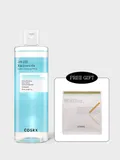
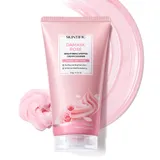
| VT CosmeticsCica Vital Foam CleanserYOUR PRODUCT | skintificDamask Rose Brightening Whipped Cream Cleanser | COSRXLow pH Niacinamide Micellar Cleansing Water | MedicubeKojic Acid Turmeric Toning Cleanser | |
|---|---|---|---|---|
| Match | — | 71% | 70% | 70% |
| Price | — | — | $9.99 | $17.53 |
| Shared key ingredients | — | 6 of 23 | 4 of 23 | 11 of 23 |
| Key difference | — | Beta-Glucan | Allantoin | Salicylic Acid |
| Irritancy | High | Medium | Low | High |
| Drying alcohol | — | — | — | — |
| View product | Shop | Shop | Shop |


More alternatives: Mary&May White Collagen Cleansing FoamBIOTHERM CERA CLEANSER CREAM-TO-FOAM
Sources cited in this review
Every concentration estimate and effectiveness label is anchored to one of these 45 studies and safety reviews.
- 1
- 2
- 3Final Report On the Safety Assessment of Sodium Alpha-Olefin Sulfonatesjournals.sagepub.com
- 4Safety Assessment of Boron Nitride as Used in Cosmetics cir-safety.org
- 5
- 6

Affiliate links · As an Amazon Associate, WIMJ earns from qualifying purchases.