Works for:
based on ingredients and %- Cleansing
Doesn't work for:
based on ingredients and %- Exfoliation
Can it cause trouble?
- Irritation risk: high
- Comedogenic risk ingredients: 2
Key actives

Cleansing
What does the product description say?
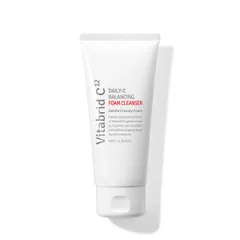
Daily-C Balancing Foam Cleanser.
Source: From product name
This product works by removing dirt and oil from the surface of the skin. It uses a combination of mild cleansing agents (coco-glucoside, glyceryl stearate, lauric acid, myristic acid, palmitic acid, sodium cocoyl glutamate, sodium cocoyl glycinate, sodium cocoyl isethionate) and should be able to cleanse the skin gently. Still keep in mind that any cleansing can disrupt the skin barrier, and most people do not need to cleanse their skin more than once per day.
Even though this formulation is mild, the following cleansing agents could trigger an irritation or allergy for some people: coco-glucoside
Helps water and oil mix together. Can be used as a cleansing agent
Used as a cleansing agent (surfactant) in cleansers. Helps water and oil mix together in lotions. Can be irritating
An emollient that softens the skin and forms a protective layer on its surface. Helps water and oil mix together
Helps water and oil mix together. Has anti-bacterial properties that might be helpful in preventing blemishes
Helps oil and water mix together. Could be comedogenic
An emollient that is naturally present in skin and helps soften it
Helps oil and water mix together
Helps oil and water mix together
Exfoliation
What does the product description say?
A potent, antioxidant-rich face cleanser that gently sweeps away impurities and dead skin cells to help promote a healthy, balanced, and hydrated skin.
Source: Vitabrid
This product does not contain effective exfoliating ingredients. It might be able to deliver physical exfoliation, that is scrub off some of the dead cells on the surface of the skin. We do not recommend physical exfoliation, because it is not uniform (some bits of skin can get exfoliated too much while others not at all). It can also traumatize the skin and aggrevate acne and other skin conditions.
An exfoliating and moisturizing alpha-hydroxy acid (AHA). Typically causes less irritation than other AHAs, for example, glycolic acid. At high concentrations (about 15%), lactic acid can help reduce lines and wrinkles. Recent studies show that lactic acid can support the "good" bacteria living on skin's surface (healthy skin microbiome)
How honest is this product?
| Promise | Can it deliver? |
|---|---|
| Cleansing | |
| Exfoliation |
Total Promises Fulfilled score: 50/100.
Potential irritants
Comedogenic ingredients
User reviews (0)
Averages from community submissions.
No reviews yet for this product.
Be the first to share your experience!
Tried this product?
Help capture what the ingredient list can't—texture, finish, pilling, scent, and more. Answer what you can, skip the rest.
Takes ~30 seconds.
Reviews are shown in aggregate. No personal details.
| Product | Similarity | Price | Irritancy |
|---|---|---|---|
 Vitabrid Daily-C Balancing Foam Cleanser: Anti-Aging Face Brightening | Vitabrid US | Current | - | |
Hanskin Vitamin C Glow Powder Cleanser | 61% | $21.00 | |
megababe Space Bar Detoxifying Charcoal Underarm Bar | 50% | $15.94 | |
 Ongredients Skin Barrier Moisture Deep Cleanser | 41% | $14.90 | |
 the Torriden Store Balanceful Cica Cleansing Gel | 37% | $17.36 | |
 Leaders Calming Biotics Gel Cleanser | 34% | $22.00 |
Key Actives
A plant extract that has been shown to be able to reduce inflammation in skin, support restoration of skin barrier function, as well as support collagen production. Contains active compounds called centelloids: asiaticoside, madecasosside, asiatic acid and madecassic acid. Might be helpful in preventing stretch marks. It can be itself be irritating though.
An exfoliating and moisturizing alpha-hydroxy acid (AHA). Typically causes less irritation than other AHAs, for example, glycolic acid. At high concentrations (about 15%), lactic acid can help reduce lines and wrinkles. Recent studies show that lactic acid can support the "good" bacteria living on skin's surface (healthy skin microbiome)
An antioxidant that is typically derived from plant Centella Asiatica. It can help neutralize free radicals in skin and support skin barrier function. It could, however, itself be irritating. It is often unstable in formulations
An active compound of Centella Asiatica plant extract. In combination with other active compounds of Centella Asiatica extract (madecasosside, asiatic acid and madecassic acid), asiaticoside has been shown to be helpful in wound-healing, restoring skin barrier function and supporting collagen production in skin. It can, however, itself be irritating
Pure form of vitamin E. Can help moisturise and protect the skin from free radicals. Often used to help stabilise other ingredients or the formula itself
The most well-researched antioxidant that works in skin. Helps neutralize free radicals supporting collagen production, helping to even out the skin tone and preventing early signs of aging
Helps water and oil mix together. Has anti-bacterial properties that might be helpful in preventing blemishes
A type of clay that consists mainly of aluminum silicate. Helps absorb oil and creates a thicker product consistency. Can be used to add a white color
An emollient that softens the skin and forms a protective layer on its surface. Helps water and oil mix together
A plant oil with a high content of linoleic acid that helps soften the upper layer of the skin and helps strengthen the skin barrier. It is an excellent moisturizer. Might have an anti-oxidant effect
An emollient that is naturally present in skin and helps soften it
Helps oil and water mix together
Helps water and oil mix together. Can be used as a cleansing agent
One of the best moisturizing ingredients. Naturally present in skin. It attracts water to the upper layer of the skin working as a humectant
Used as a cleansing agent (surfactant) in cleansers. Helps water and oil mix together in lotions. Can be irritating
Helps oil and water mix together
Helps oil and water mix together. Could be comedogenic
A broad spectrum sunblock (protects from both UVA and UVB rays). Is suitable for most sensitive skins. In small concentrations, can be used as a colorant
Potential irritants
Used as a cleansing agent (surfactant) in cleansers. Helps water and oil mix together in lotions. Can be irritating
The most well-researched antioxidant that works in skin. Helps neutralize free radicals supporting collagen production, helping to even out the skin tone and preventing early signs of aging
An essential oil. Potential allergen and can be irritating. It has some anti-bacterial properties
A plant extract that might have some anti-inflammatory and anti-oxidant properties. It can be irritating
An essential oil. Can be irritating. Can become an allergen with oxidation
Helps water and oil mix together. Can be used as a cleansing agent
An exfoliating and moisturizing alpha-hydroxy acid (AHA). Typically causes less irritation than other AHAs, for example, glycolic acid. At high concentrations (about 15%), lactic acid can help reduce lines and wrinkles. Recent studies show that lactic acid can support the "good" bacteria living on skin's surface (healthy skin microbiome)
An antioxidant that is typically derived from plant Centella Asiatica. It can help neutralize free radicals in skin and support skin barrier function. It could, however, itself be irritating. It is often unstable in formulations
A plant extract that has been shown to be able to reduce inflammation in skin, support restoration of skin barrier function, as well as support collagen production. Contains active compounds called centelloids: asiaticoside, madecasosside, asiatic acid and madecassic acid. Might be helpful in preventing stretch marks. It can be itself be irritating though.
An active compound of Centella Asiatica plant extract. In combination with other active compounds of Centella Asiatica extract (madecasosside, asiatic acid and madecassic acid), asiaticoside has been shown to be helpful in wound-healing, restoring skin barrier function and supporting collagen production in skin. It can, however, itself be irritating
A plant extract that might help neutralize free radicals in skin, but research on its effectiveness is lacking
Helps oil and water mix together. Could be comedogenic
Helps water and oil mix together. Has anti-bacterial properties that might be helpful in preventing blemishes
Can work as an exfoliant but is typically used to adjust the product pH
Helps preserve products and creates a nice product texture
Comedogenic ingredients
Helps oil and water mix together. Could be comedogenic
Helps water and oil mix together. Has anti-bacterial properties that might be helpful in preventing blemishes
All ingredients
Acts as a solvent for other ingredients. Speeds up the absorption of other ingredients into the skin
Used to create a nice product texture and help delivery of other ingredients. Might be somewhat helpful in attracting water to the upper layer of the skin
Helps water and oil mix together. Can be used as a cleansing agent
One of the best moisturizing ingredients. Naturally present in skin. It attracts water to the upper layer of the skin working as a humectant
Used as a cleansing agent (surfactant) in cleansers. Helps water and oil mix together in lotions. Can be irritating
An exfoliating and moisturizing alpha-hydroxy acid (AHA). Typically causes less irritation than other AHAs, for example, glycolic acid. At high concentrations (about 15%), lactic acid can help reduce lines and wrinkles. Recent studies show that lactic acid can support the "good" bacteria living on skin's surface (healthy skin microbiome)
A type of clay that consists mainly of aluminum silicate. Helps absorb oil and creates a thicker product consistency. Can be used to add a white color
An emollient that softens the skin and forms a protective layer on its surface. Helps water and oil mix together
An antioxidant that is typically derived from plant Centella Asiatica. It can help neutralize free radicals in skin and support skin barrier function. It could, however, itself be irritating. It is often unstable in formulations
A plant extract that has been shown to be able to reduce inflammation in skin, support restoration of skin barrier function, as well as support collagen production. Contains active compounds called centelloids: asiaticoside, madecasosside, asiatic acid and madecassic acid. Might be helpful in preventing stretch marks. It can be itself be irritating though.
An active compound of Centella Asiatica plant extract. In combination with other active compounds of Centella Asiatica extract (madecasosside, asiatic acid and madecassic acid), asiaticoside has been shown to be helpful in wound-healing, restoring skin barrier function and supporting collagen production in skin. It can, however, itself be irritating
The most well-researched antioxidant that works in skin. Helps neutralize free radicals supporting collagen production, helping to even out the skin tone and preventing early signs of aging
A plant oil with a high content of linoleic acid that helps soften the upper layer of the skin and helps strengthen the skin barrier. It is an excellent moisturizer. Might have an anti-oxidant effect
Helps to attract water to the upper layer of the skin. Can add sweet taste to lip products
Pure form of vitamin E. Can help moisturise and protect the skin from free radicals. Often used to help stabilise other ingredients or the formula itself
An essential oil. Potential allergen and can be irritating. It has some anti-bacterial properties
A plant extract that might have some anti-inflammatory and anti-oxidant properties. It can be irritating
An essential oil. Can be irritating. Can become an allergen with oxidation
A plant extract that might help neutralize free radicals in skin, but research on its effectiveness is lacking
A plant extract that might have an anti-oxidant effect and help even out skin tone, but solid evidence of effectiveness is lacking
Helps oil and water mix together. Could be comedogenic
A broad spectrum sunblock (protects from both UVA and UVB rays). Is suitable for most sensitive skins. In small concentrations, can be used as a colorant
Helps soften the upper layer of the skin and improve the product texture
Helps water and oil mix together. Has anti-bacterial properties that might be helpful in preventing blemishes
An emollient that is naturally present in skin and helps soften it
Can work as an exfoliant but is typically used to adjust the product pH
Helps preserve products and creates a nice product texture
Ingredient list view
Propanediol, Water, Butylene glycol, Sodium cocoyl glycinate, Sodium cocoyl isethionate, Glycerin, Coco-glucoside, Lactic acid, Sodium cocoyl glutamate, Kaolin, Glyceryl stearate, Glycosyl trehalose, Madecassoside, Centella asiatica extract, Asiaticoside, Ascorbic acid, Caryodendron orinocense seed oil, Hydrogenated starch hydrolysate, Tocopherol, Caulerpa lentillifera extract, Lavandula angustifolia oil, Illite, Carica papaya fruit extract, Mesembryanthemum crystallinum extract, Artemisia vulgaris extract, Pelargonium graveolens flower oil, Myrciaria dubia fruit extract, Nelumbo nucifera flower extract, Prunus mume fruit extract, Myristic acid, Zinc oxide, 1,2-hexanediol, Trihydroxystearin, Lauric acid, Palmitic acid, Citric acid, Disodium edta, Caprylyl glycol, Ethylhexylglycerin
- Final Report on the Safety Assessment of Sodium Cocoyl Isethionate
- Glycerol and the skin: holistic approach to its origin and functions
- In Vitro Assessment of Skin Irritation Potential of Surfactant-based Formulations by Using a 3-D Skin Reconstructed Tissue Model and Cytokine Response
- Allergen of the Year—Alkyl Glucoside
- Epidermal and dermal effects of topical lactic acid
- Dual Effects of Alpha-Hydroxy Acids on the Skin
- Safety Assessment of Amino Acid Alkyl Amides as Used in Cosmetics
- Irritant and sensitizing potential of eight surfactants commonly used in skin cleansers: an evaluation of 105 patients
- Centella asiatica in Dermatology: An Overview
- Protective effect of madecassoside on H2O2-induced oxidative stress and autophagy activation in human melanocytes
- Madecassoside, a triterpenoid saponin isolated from Centella asiatica herbs, protects endothelial cells against oxidative stress
- Madecassoside Inhibits Melanin Synthesis by Blocking Ultraviolet-Induced Inflammation
- Contact dermatitis due to Madecassol
- The Effects of a Standardized Extract of Centella asiatica on Postlaser Resurfacing Wound Healing on the Face: A Split-Face, Double-Blind, Randomized, Placebo-Controlled Trial
- Stability Study of the Active Constituents in the Centella asiatica Extract Formulations
- Anti-Inflammatory Effect of Titrated Extract of Centella asiatica in Phthalic Anhydride-Induced Allergic Dermatitis Animal Model
- Centella asiatica in cosmetology
- Triterpene Composition and Bioactivities of Centella asiatica
- Asiaticoside induction for cell-cycle progression, proliferation and collagen synthesis in human dermal fibroblasts
- Assessment report on Centella asiatica (L.) Urban, herba
- Contact dermatitis due to Madecassol
- Contact dermatitis due to Madecassol
- Centella asiatica in Dermatology: An Overview
- Chemical characterization and antioxidant activity of Amazonian (Ecuador) Caryodendron orinocense Karst. and Bactris gasipaes Kunth seed oils
- Safety assessment of hydrogenated starch hydrolysates
- Vitamin E in dermatology
- Vitamin E and Skin Health
- Fragrance Compound Geraniol Forms Contact Allergens on Air Exposure. Identification and Quantification of Oxidation Products and Effect on Skin Sensitization
- Antioxidant and Associated Capacities of Camu Camu (Myrciaria dubia): A Systematic Review
- Fermented Maesil (Prunus mume) with probiotics inhibits development of atopic dermatitis‐like skin lesions in NC/Nga mice
- The fatty acid profile of the skin surface lipid layer in papulopustular rosacea
- A review of inorganic UV filters zinc oxide and titanium dioxide
- Risk assessment of zinc oxide, a cosmetic ingredient used as a UV filter of sunscreens
- Characterization of the UVA protection provided by avobenzone, zinc oxide, and titanium dioxide in broad-spectrum sunscreen products
- Ultraviolet Protection Properties of Commercial Sunscreens and Sunscreens Containing Zno Nanorods
- ZnO nanoparticles and organic chemical UV-filters are equally well tolerated by human immune cells
- The influence of alkane chain length on the skin irritation potential of 1,2-alkanediols