Works for:
based on ingredients and %- Anti-aging
- Moisturizing
Can it cause trouble?
- Irritation risk: medium
- Comedogenic risk ingredients: 2
Key actives

Works for
Anti-aging
What does the product description say?
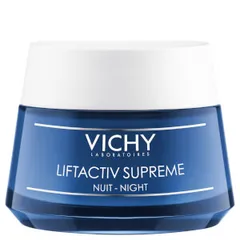
Lift Activ Anti-Wrinkle and Firming Night Moisturiser
Source: From product name
This product can help reduce and prevent fine lines and wrinkles, improve skin elasticity and firmness because it contains adenosine.
Keep in mind that it typically takes at least 6 weeks to notice any results because the changes that are needed to improve fine lines and elasticity happen in the deeper layers of the skin. No topical anti-aging product can “erase” wrinkles or fully reverse signs of aging.
Might help improve cell turnover and reduce inflammation in skin. One study shows that the ingredients might be able to help reduce dynamic wrinkles (for example, in the corners of the eyes or on the forehead)
A great moisturising ingredient that softens the skin and reduces water loss from its upper layer. It also can be helpful in protecting skin from free radicals
Helps oil and water mix together. It also helps attract water to the upper layer of the skin
A vitamin C derivative that is more stable but less potent than pure form of vitamin C. Has a potential to boost collagen production, nutralise free radicals and reduce hyperpigmentation, but the required concentration is likely to be much higher than for the pure form of vitamin C, limiting the ingredient's effectiveness in products
A derivative of vitamin C that is more stable, but less bioavailable than the pure form of vitamin C. It does not penetrate the skin well, but has been shown to convert to pure vitamin C once in skin. It can be helpful in stimulating collagen production and lightening the skin tone, but the required concentration is likely to be very high
Moisturizing
What does the product description say?
Lift Activ Anti-Wrinkle and Firming Night Moisturiser
Source: From product name
This product can help improve hydration of the skin with the two types of ingredients.
The first type is called “humectants”:
these ingredients help attract water.
When humectants are on the surface of the skin, they “pull in” the moisture from the outside environment, or from
within deeper layers of the skin. The following ingredients in this product do the job:
glycerin, rhamnose.
This product also contains ingredients called “occlusives”. They help reduce the speed with which our skin loses moisture to the outside environment. These ingredients also help soften the upper layer of the skin, so it feels less tight and nicer to the touch. The following ingredients in this product do the job: beeswax, butyrospermum parkii butter.
A silicone that makes products more spreadable and keeps skin smooth. Helps to add gloss to skin and may visually fill in fine lines/wrinkles for short time
Forms a protective barrier that holds water and keeps dry skin hydrated. Keeps an emulsion from separating into its oil and liquid components, and increases the thickness of a product. Can be an allergen
An emollient that helps soften the skin
A great moisturising ingredient that softens the skin and reduces water loss from its upper layer. It also can be helpful in protecting skin from free radicals
One of the best moisturizing ingredients. Naturally present in skin. It attracts water to the upper layer of the skin working as a humectant
A good mix of fatty acids that forms a protective layer on the skin. Improves the shelf life of products. Derived from coconut and glycerin
Forms a protective barrier that holds water and keeps dry skin hydrated. Keeps an emulsion from separating into its oil and liquid components, and increases the thickness of a product. Can be an allergen
A silicone that helps to reduce water loss from the surface of the skin. Can temporarily "fill in" lines and wrinkles, absorb oil, and create a nice product finish
A non-drying alcohol that works to soften the skin and stabilize product formulations helping oil and water mix together
Helps oil and water mix together. It also helps attract water to the upper layer of the skin
Might help improve cell turnover and reduce inflammation in skin. One study shows that the ingredients might be able to help reduce dynamic wrinkles (for example, in the corners of the eyes or on the forehead)
Helps preserve products and creates a nice product texture
An emollient that softens the skin and forms a protective layer on its surface. Helps water and oil mix together
Used to create a nice product consistency while softening the upper layer of the skin
Used to preserve products, dissolve other ingredients and create a nice product texture
Helps to stabilize the product formulation while softening the upper layer of the skin. Can be irritating
One of the most effective and the most studied occlusive ingredients that creates a protective layer on top of the skin preventing moisture loss
How honest is this product?
| Promise | Can it deliver? |
|---|---|
| Anti-aging | |
| Moisturizing |
Total Promises Fulfilled score: 87/100.
We receive a small commission for purchases made through these links at no cost for you. Thank you for your support! Learn more
Potential irritants
Comedogenic ingredients
User reviews (1)
Averages from community submissions.
How would you describe the finish?
How would you describe the texture?
How much does this product clog pores?
How would you describe the smell?
Tried this product?
Help capture what the ingredient list can't—texture, finish, pilling, scent, and more. Answer what you can, skip the rest.
Takes ~30 seconds.
Reviews are shown in aggregate. No personal details.
| Product | Similarity | Price | Irritancy |
|---|---|---|---|
 Vichy LiftActiv Anti-Wrinkle and Firming Night Moisturiser | Current | ≈ $36.69 | |
 Farm Stay Ceramide Firming Facial Cream | 53% | $13.05 |
Key Actives
A great moisturising ingredient that softens the skin and reduces water loss from its upper layer. It also can be helpful in protecting skin from free radicals
Might help improve cell turnover and reduce inflammation in skin. One study shows that the ingredients might be able to help reduce dynamic wrinkles (for example, in the corners of the eyes or on the forehead)
An emollient that helps soften the skin
A silicone that helps to reduce water loss from the surface of the skin. Can temporarily "fill in" lines and wrinkles, absorb oil, and create a nice product finish
Forms a protective barrier that holds water and keeps dry skin hydrated. Keeps an emulsion from separating into its oil and liquid components, and increases the thickness of a product. Can be an allergen
One of the best moisturizing ingredients. Naturally present in skin. It attracts water to the upper layer of the skin working as a humectant
A good mix of fatty acids that forms a protective layer on the skin. Improves the shelf life of products. Derived from coconut and glycerin
One of the most effective and the most studied occlusive ingredients that creates a protective layer on top of the skin preventing moisture loss
Forms a protective barrier that holds water and keeps dry skin hydrated. Keeps an emulsion from separating into its oil and liquid components, and increases the thickness of a product. Can be an allergen
Used to regulate product's pH, but can be also used as an exfoliator when included in higher concentrations. There is a controversy about whether it can generate free radicals and induce skin cell damage when used in topical products
A silicone that makes products more spreadable and keeps skin smooth. Helps to add gloss to skin and may visually fill in fine lines/wrinkles for short time
Potential irritants
Helps to stabilize the product formulation while softening the upper layer of the skin. Can be irritating
An aromatic blend of unspecified and possibly irritating ingredients
A good mix of fatty acids that forms a protective layer on the skin. Improves the shelf life of products. Derived from coconut and glycerin
Used to thicken the product's consistency
Used to preserve products, dissolve other ingredients and create a nice product texture
Forms a protective barrier that holds water and keeps dry skin hydrated. Keeps an emulsion from separating into its oil and liquid components, and increases the thickness of a product. Can be an allergen
Used to regulate product's pH, but can be also used as an exfoliator when included in higher concentrations. There is a controversy about whether it can generate free radicals and induce skin cell damage when used in topical products
Used to adjust pH of the product and can help improve the product's smell
A derivative of vitamin C that is more stable, but less bioavailable than the pure form of vitamin C. It does not penetrate the skin well, but has been shown to convert to pure vitamin C once in skin. It can be helpful in stimulating collagen production and lightening the skin tone, but the required concentration is likely to be very high
A vitamin C derivative that is more stable but less potent than pure form of vitamin C. Has a potential to boost collagen production, nutralise free radicals and reduce hyperpigmentation, but the required concentration is likely to be much higher than for the pure form of vitamin C, limiting the ingredient's effectiveness in products
Helps preserve products and creates a nice product texture
Comedogenic ingredients
Used to thicken the product's consistency
A great moisturising ingredient that softens the skin and reduces water loss from its upper layer. It also can be helpful in protecting skin from free radicals
All ingredients
One of the best moisturizing ingredients. Naturally present in skin. It attracts water to the upper layer of the skin working as a humectant
Helps oil and water mix together. It also helps attract water to the upper layer of the skin
A good mix of fatty acids that forms a protective layer on the skin. Improves the shelf life of products. Derived from coconut and glycerin
Used to create a nice product consistency while softening the upper layer of the skin
A non-drying alcohol that works to soften the skin and stabilize product formulations helping oil and water mix together
Used to thicken the product's consistency
A great moisturising ingredient that softens the skin and reduces water loss from its upper layer. It also can be helpful in protecting skin from free radicals
One of the most effective and the most studied occlusive ingredients that creates a protective layer on top of the skin preventing moisture loss
An emollient that softens the skin and forms a protective layer on its surface. Helps water and oil mix together
Used to preserve products, dissolve other ingredients and create a nice product texture
A silicone that helps to reduce water loss from the surface of the skin. Can temporarily "fill in" lines and wrinkles, absorb oil, and create a nice product finish
Forms a protective barrier that holds water and keeps dry skin hydrated. Keeps an emulsion from separating into its oil and liquid components, and increases the thickness of a product. Can be an allergen
Forms a protective barrier that holds water and keeps dry skin hydrated. Keeps an emulsion from separating into its oil and liquid components, and increases the thickness of a product. Can be an allergen
Used to regulate product's pH, but can be also used as an exfoliator when included in higher concentrations. There is a controversy about whether it can generate free radicals and induce skin cell damage when used in topical products
A silicone that makes products more spreadable and keeps skin smooth. Helps to add gloss to skin and may visually fill in fine lines/wrinkles for short time
Used to adjust pH of the product and can help improve the product's smell
Helps to stabilize the product formulation while softening the upper layer of the skin. Can be irritating
A preservative. It helps prevent bacterial growth in cosmetic products
Might help improve cell turnover and reduce inflammation in skin. One study shows that the ingredients might be able to help reduce dynamic wrinkles (for example, in the corners of the eyes or on the forehead)
A derivative of vitamin C that is more stable, but less bioavailable than the pure form of vitamin C. It does not penetrate the skin well, but has been shown to convert to pure vitamin C once in skin. It can be helpful in stimulating collagen production and lightening the skin tone, but the required concentration is likely to be very high
A vitamin C derivative that is more stable but less potent than pure form of vitamin C. Has a potential to boost collagen production, nutralise free radicals and reduce hyperpigmentation, but the required concentration is likely to be much higher than for the pure form of vitamin C, limiting the ingredient's effectiveness in products
Helps preserve products and creates a nice product texture
Used to increase stability of product formulations
An aromatic blend of unspecified and possibly irritating ingredients
Ingredient list view
Water, Glycerin, Rhamnose, Prunus armeniaca kernel oil, Caprylic/capric triglyceride, Pentaerythrityl tetraethylhexanoate, Cetyl alcohol, Zea mays starch, Butyrospermum parkii butter, Petrolatum, Glyceryl stearate, Pentylene glycol, Dimethicone, Peg-40 stearate, Cera alba, Beeswax, Hydroxyethylpiperazine ethane sulfonic acid, Stearyl alcohol, Sorbitan tristearate, Dimethiconol, Triethanolamine, Myristyl alcohol, Phenoxyethanol, Adenosine, Magnesium ascorbyl phosphate, Ascorbyl glucoside, Poloxamer 338, Caprylyl glycol, Xanthan gum, Pentaerythrityl tetra-di-t-butyl hydroxyhydrocinnamate, Parfum, Unknown
- Glycerol and the skin: holistic approach to its origin and functions
- Potentially beneficial effects of rhamnose on skin ageing: an in vitro and in vivo study
- Safety Assessment of Pentaerythrityl Tetraesters as Used in Cosmetics
- Dimethicone as a protective ingredient in topical medications
- Final Report on the Safety Assessment of Dimethicone Copolyol
- Efficacy of barrier creams in comparison to skin care products in dental laboratory technicians--a controlled trial
- Oxidative DNA damage induced by HEPES (2-[4-(2-hydroxyethyl)-1-piperazinyl]ethanesulfonic acid) buffer in the presence of Au(III)
- Final report on the safety assessment of sorbitan caprylate, sorbitan cocoate, sorbitan diisostearate, sorbitan dioleate, sorbitan distearate, sorbitan isostearate, sorbitan olivate, sorbitan sesquiisostearate, sorbitan sesquistearate, and sorbitan triisostearate
- Cosmetic allergy from myristyl alcohol
- Contact Sensitization to Emulsifying Agents: An Underrated Issue?
- Patch testing with myristyl alcohol
- Evaluation of anti-wrinkle efficacy of adenosine-containing products using the FOITS technique
- Stability, transdermal penetration, and cutaneous effects of ascorbic acid and its derivatives
- Topical L-ascorbic acid: percutaneous absorption studies
- The Roles of Vitamin C in Skin Health
- Safety Assessment of Pentaerythrityl Tetra-Di-t-Butyl Hydroxyhydrocinnamate as Used in Cosmetics