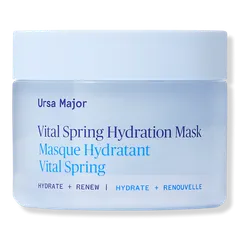
Works for:
based on ingredients and %- Moisturizing
Doesn't work for:
based on ingredients and %- Anti-aging
Can it cause trouble?
- Irritation risk: high
- Comedogenic risk ingredients: 1
Key actives


Moisturizing
What does the product description say?
Restores moisture fast, leaving skin hydrated and bouncy
Source: Ulta
This product can help improve hydration of the skin with the two types of ingredients.
The first type is called “humectants”:
these ingredients help attract water.
When humectants are on the surface of the skin, they “pull in” the moisture from the outside environment, or from
within deeper layers of the skin. The following ingredients in this product do the job:
fructooligosaccharides, glycerin.
This product also contains ingredients called “occlusives”. They help reduce the speed with which our skin loses moisture to the outside environment. These ingredients also help soften the upper layer of the skin, so it feels less tight and nicer to the touch. The following ingredients in this product do the job: caprylic/capric triglyceride, dicaprylyl carbonate.
One of the best moisturizing ingredients. Naturally present in skin. It attracts water to the upper layer of the skin working as a humectant
A good mix of fatty acids that forms a protective layer on the skin. Improves the shelf life of products. Derived from coconut and glycerin
One of the best moisturizing ingredients. Attracts water into the upper layer of the skin
Red algae extract that helps attract water to the upper layer of the skin and might contain antioxidants
Helps attract water to the upper layer of the skin, calm down inflammation and irritation, restore the barrier function and support wound healing. It can be helpful in reducing fine lines and wrinkles
Help attract water to the upper layer of the skin
Traditionally used to treat sunburns, dermatitis and inflammation, but evidence for its effectiveness is lacking. The extract can contain humectants that help attract water into the skin
Helps products spread more easily and works as an emollient to soften skin
An emollient that can also help water and oil mix together, as well as prevent bacteria growth in products
Lecithin derivative. It helps oil and water mix together and can enhance penetration of other ingredients. It helps soften the upper layer of the skin
An exfoliating and moisturizing alpha-hydroxy acid (AHA). Typically causes less irritation than other AHAs, for example, glycolic acid. At high concentrations (about 15%), lactic acid can help reduce lines and wrinkles. Recent studies show that lactic acid can support the "good" bacteria living on skin's surface (healthy skin microbiome)
Pure form of vitamin E. Can help moisturise and protect the skin from free radicals. Often used to help stabilise other ingredients or the formula itself
Anti-aging
What does the product description say?
Supports skin elasticity to smooth the look of fine lines, wrinkles, and uneven texture
Source: Ulta
This product does not contain ingredients that are able to reduce fine lines and wrinkles or help with skin elasticity, but it can improve the look of the skin temporarily through moisturization. Well-moisturized skin might also be able to repair the sun damage better.This ingredient - beta-glucan - could be helpful for preventing or repairing signs of aging in theory, but there is no evidence that it actually works.
Helps attract water to the upper layer of the skin, calm down inflammation and irritation, restore the barrier function and support wound healing. It can be helpful in reducing fine lines and wrinkles
An exfoliating and moisturizing alpha-hydroxy acid (AHA). Typically causes less irritation than other AHAs, for example, glycolic acid. At high concentrations (about 15%), lactic acid can help reduce lines and wrinkles. Recent studies show that lactic acid can support the "good" bacteria living on skin's surface (healthy skin microbiome)
Pure form of vitamin E. Can help moisturise and protect the skin from free radicals. Often used to help stabilise other ingredients or the formula itself
How honest is this product?
| Promise | Can it deliver? |
|---|---|
| Moisturizing | |
| Anti-aging |
Total Promises Fulfilled score: 62/100.
We receive a small commission for purchases made through these links at no cost for you. Thank you for your support! Learn more
Potential irritants
Comedogenic ingredients
User reviews (0)
Averages from community submissions.
No reviews yet for this product.
Be the first to share your experience!
Tried this product?
Help capture what the ingredient list can't—texture, finish, pilling, scent, and more. Answer what you can, skip the rest.
Takes ~30 seconds.
Reviews are shown in aggregate. No personal details.
| Product | Similarity | Price | Irritancy |
|---|---|---|---|
 Ursa Major Vital Spring Hydration Mask | Current | $52.00 | |
BIHAKU JOSHI White Mask | 50% | $12.70 | |
NassifMD Dermaceuticals Overnight Illuminating Masque with Elasta-Derm C | 50% | $52.00 | |
 PEACH & LILY Overnight Star Sleeping Mask | 39% | $45.00 | |
 ACWELL Real Aqua Balancing Sleeping Pack | 36% | $18.90 | |
 BIOHEAL BOH PROBIODERM 3DLifting Cream Mask | 36% | $29.00 |
Key Actives
Helps attract water to the upper layer of the skin, calm down inflammation and irritation, restore the barrier function and support wound healing. It can be helpful in reducing fine lines and wrinkles
An exfoliating and moisturizing alpha-hydroxy acid (AHA). Typically causes less irritation than other AHAs, for example, glycolic acid. At high concentrations (about 15%), lactic acid can help reduce lines and wrinkles. Recent studies show that lactic acid can support the "good" bacteria living on skin's surface (healthy skin microbiome)
Pure form of vitamin E. Can help moisturise and protect the skin from free radicals. Often used to help stabilise other ingredients or the formula itself
A plant extract that has anti-bacterial properties. Can be used to preserve the product. Can be irritating
Red algae extract that helps attract water to the upper layer of the skin and might contain antioxidants
A good mix of fatty acids that forms a protective layer on the skin. Improves the shelf life of products. Derived from coconut and glycerin
One of the best moisturizing ingredients. Naturally present in skin. It attracts water to the upper layer of the skin working as a humectant
Help attract water to the upper layer of the skin
One of the best moisturizing ingredients. Attracts water into the upper layer of the skin
Creates a thin drying film on the skin resulting in a short-term tightening effect
Potential irritants
Creates a thin drying film on the skin resulting in a short-term tightening effect
A plant extract that has anti-bacterial properties. Can be used to preserve the product. Can be irritating
Helps preserve products. Can mask unpleasant smell. Could be irritating
A plant extract that might have some anti-oxidant effect
A plant extract that can contain an active compound curcumin, that may have some anti-inflammatory properties when applied to the skin, but solid research is lacking and the typical concentration used in skincare products is too low. Can be an irritant
Used as a fragrance. Canbe irritating
A plant extract that is rich in a fragrance compound eugenol that is a frequent allergen and can be irritating. It might also contain anti-oxidants to help neutralize free radicals
An essential oil. Can be irritating. Can become an allergen with oxidation
A plant oil with a high content of volatile compounds that can irritate the skin and lead to allergic reactions. Can lead to photosensitivity
An essential oil that is likely to be irritating and can cause photosensitivity
Plant extract that can be irritating and is a known allergen
A plant oil that is used as a fragrance. Can be irritating
A plant oil with high content of volatile compounds that, especially when exposed to air, can cause allergic reactions and irritate the skin
An essential oil. Potential allergen and can be irritating. It has some anti-bacterial properties
An essential oil with a lemon-like smell that is extracted from a fruit grown in Asia. Used as a fragrance
A common frangrance that can easily irritate skin, especially if exposed to air, light or heat
A good mix of fatty acids that forms a protective layer on the skin. Improves the shelf life of products. Derived from coconut and glycerin
A plant extract that might have some antioxidant properties, but mostly used in cosmetics for its color
A plant extract that might be helpful to neutralize free radicals in skin
A plant extract that might have some anti-oxidant effect helping neutralize free radicals in skin
An exfoliating and moisturizing alpha-hydroxy acid (AHA). Typically causes less irritation than other AHAs, for example, glycolic acid. At high concentrations (about 15%), lactic acid can help reduce lines and wrinkles. Recent studies show that lactic acid can support the "good" bacteria living on skin's surface (healthy skin microbiome)
Traditionally used to treat sunburns, dermatitis and inflammation, but evidence for its effectiveness is lacking. The extract can contain humectants that help attract water into the skin
Eggplant fruit extract. Might have some anti-oxidant effect
Can work as an exfoliant but is typically used to adjust the product pH
Comedogenic ingredients
Red algae extract that helps attract water to the upper layer of the skin and might contain antioxidants
All ingredients
A good mix of fatty acids that forms a protective layer on the skin. Improves the shelf life of products. Derived from coconut and glycerin
Acts as a solvent for other ingredients. Speeds up the absorption of other ingredients into the skin
Helps products spread more easily and works as an emollient to soften skin
One of the best moisturizing ingredients. Naturally present in skin. It attracts water to the upper layer of the skin working as a humectant
A plant extract that might have some antioxidant properties, but mostly used in cosmetics for its color
One of the best moisturizing ingredients. Attracts water into the upper layer of the skin
Lecithin derivative. It helps oil and water mix together and can enhance penetration of other ingredients. It helps soften the upper layer of the skin
Creates a thin drying film on the skin resulting in a short-term tightening effect
A plant extract that has anti-bacterial properties. Can be used to preserve the product. Can be irritating
A plant extract that might be helpful to neutralize free radicals in skin
An emollient that can also help water and oil mix together, as well as prevent bacteria growth in products
Helps attract water to the upper layer of the skin, calm down inflammation and irritation, restore the barrier function and support wound healing. It can be helpful in reducing fine lines and wrinkles
A plant extract that might have some anti-oxidant effect helping neutralize free radicals in skin
An exfoliating and moisturizing alpha-hydroxy acid (AHA). Typically causes less irritation than other AHAs, for example, glycolic acid. At high concentrations (about 15%), lactic acid can help reduce lines and wrinkles. Recent studies show that lactic acid can support the "good" bacteria living on skin's surface (healthy skin microbiome)
Red algae extract that helps attract water to the upper layer of the skin and might contain antioxidants
Helps preserve products. Can mask unpleasant smell. Could be irritating
A plant extract that might have some anti-oxidant effect
Traditionally used to treat sunburns, dermatitis and inflammation, but evidence for its effectiveness is lacking. The extract can contain humectants that help attract water into the skin
Eggplant fruit extract. Might have some anti-oxidant effect
A plant extract that can contain an active compound curcumin, that may have some anti-inflammatory properties when applied to the skin, but solid research is lacking and the typical concentration used in skincare products is too low. Can be an irritant
Used as a fragrance. Canbe irritating
A plant extract that is rich in a fragrance compound eugenol that is a frequent allergen and can be irritating. It might also contain anti-oxidants to help neutralize free radicals
Can work as an exfoliant but is typically used to adjust the product pH
Pure form of vitamin E. Can help moisturise and protect the skin from free radicals. Often used to help stabilise other ingredients or the formula itself
An essential oil. Can be irritating. Can become an allergen with oxidation
A plant oil with a high content of volatile compounds that can irritate the skin and lead to allergic reactions. Can lead to photosensitivity
An essential oil that is likely to be irritating and can cause photosensitivity
Plant extract that can be irritating and is a known allergen
A plant oil that is used as a fragrance. Can be irritating
A plant oil with high content of volatile compounds that, especially when exposed to air, can cause allergic reactions and irritate the skin
An essential oil. Potential allergen and can be irritating. It has some anti-bacterial properties
An essential oil with a lemon-like smell that is extracted from a fruit grown in Asia. Used as a fragrance
A common frangrance that can easily irritate skin, especially if exposed to air, light or heat
Ingredient list view
Water, Caprylic/capric triglyceride, Propanediol, Dicaprylyl carbonate, Glycerin, 1,2-hexanediol, Cetearyl olivate, Citrus limon peel powder, Sorbitan olivate, Sclerotium gum, Citrus aurantifolia peel powder, Hydroxyacetophenone, Fructooligosaccharides, Beta vulgaris root extract, Sodium hyaluronate, Lysolecithin, Pullulan, Xanthan gum, Melia azadirachta leaf extract, Melia azadirachta flower extract, Glyceryl caprylate, Linum usitatissimum seed extract, Potassium lactate, Beta-glucan, Coccinia indica fruit extract, Fagus sylvatica seed extract, Lactic acid, Corallina officinalis extract, P-anisic acid, Silica, Leucojum aestivum bulb extract, Inula helenium extract, Aloe barbadensis flower extract, Aloe barbadensis leaf juice powder, Solanum melongena fruit extract, Potassium sorbate, Sodium benzoate, Curcuma longa root extract, Ocimum basilicum flower/leaf extract, Ocimum sanctum leaf extract, Citric acid, Tocopherol, Triethyl citrate, Abies sibirica oil, Pogostemon cablin oil, Artemisia herba-alba leaf oil, Juniperus mexicana oil, Cupressus sempervirens branch/leaf oil, Juniperus communis fruit oil, Citrus limon peel oil, Pelargonium graveolens flower oil, Citrus aurantium bergamia fruit oil, Zingiber officinale root oil, Lavandula hybrida oil, Citrus aurantifolia oil, Coriandrum sativum fruit oil, Citrus nobilis peel oil, Nicotiana tabacum leaf extract, Lavandula angustifolia oil, Litsea cubeba fruit oil, Limonene
- Glycerol and the skin: holistic approach to its origin and functions
- The influence of alkane chain length on the skin irritation potential of 1,2-alkanediols
- Hyaluronic acid: A key molecule in skin aging
- Hyaluronan (Hyaluronic Acid): a natural moisturizer for skin care
- Melia azedarach
- Preliminary and Pharmacological Profile of Melia azedarach L.: An Overview
- β-Glucans: Multi-Functional Modulator of Wound Healing
- Anti-Wrinkle Therapy: Significant New Findings in the Non-Invasive Cosmetic Treatment of Skin Wrinkles with Beta-Glucan
- Skin Health Promotion Effects of Natural Beta-Glucan Derived from Cereals and Microorganisms: A Review
- Anticancer properties of low molecular weight oat beta-glucan – An in vitro study
- A critical review on production and industrial applications 2 of beta-glucans
- Improving skin function with CM-glucan, a biological response modifier from yeast
- Preparation, characterization, and biological properties of β-glucans
- Characterization of a new beta(1-3)-glucan branching activity of Aspergillus fumigatus
- Epidermal and dermal effects of topical lactic acid
- Dual Effects of Alpha-Hydroxy Acids on the Skin
- Sodium anisate
- In Vitro antioxidative and anti-inflammatory activities of the ethanol extract of eggplant (Solanum melongena) stalks in macrophage RAW 264.7 cells
- Vaughn, A. R., Branum, A., & Sivamani, R. K. (2016). Effects of Turmeric (Curcuma longa) on Skin Health: A Systematic Review of the Clinical Evidence. Phytotherapy Research, 30(8), 1243–1264. doi:10.1002/ptr.5640
- Vitamin E in dermatology
- Vitamin E and Skin Health
- Citric Acid, Inorganic Citrate Salts and Alkyl Citrate Esters As Used in Cosmetics
- Fragrance Compound Geraniol Forms Contact Allergens on Air Exposure. Identification and Quantification of Oxidation Products and Effect on Skin Sensitization
- Safety Assessment of Citrus-Derived Peel Oils as Used in Cosmetics
- Oxidized citrus oil (R-limonene): A frequent skin sensitizer in Europe
- Air oxidation increases skin irritation from fragrance terpenes
- Zingiber officinale Rosc. essential oil, a review on its composition and bioactivity
- Oil composition of coriander (Coriandrum sativum L.) fruit-seeds
- Oxidized citrus oil (R-limonene): A frequent skin sensitizer in Europe
- Ethnopharmacological Properties and Medicinal Uses of Litsea cubeba