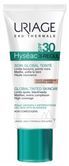
Uriage Hyséac 3-Regul Global Tinted Skin-Care SPF30
Works for
2 of 3 advertised claims delivered
Sun protectionSPF 30 · 5 UV filtersBroad spectrum
This product offers a good level of protection against both UVB and UVA rays.
This sunscreen uses organic (so-called "chemical") sunscreen filters. Organic, or "chemical" filters usually provide reliable sun protection and rarely leave a white cast. Sunscreens with organic filters can sting eyes.
Moisturizing15 ingredients credited for this claimStrong support
“The skin is perfectly hydrated, the skin regains matte and radiance without shining.”
This product can help soften the skin and reduce its moisture loss with emollients and occlusives: dimethicone, cetyl alcohol.
Keep in mind that this product does not contain effective ingredients to attract water to the upper layer of the skin. This is why an additional product with humectants like glycerin or hyaluronic acid can be helpful (apply it before this product for the best results).
The following ingredients in this product are especially good for supporting the skin barrier and helping with the hydration level: phytosphingosine
Anti-blemish2 ingredients credited for this claimWeak support
“It naturally unifies the complexion, refines the skin texture and masks the pimples.”
Effective ingredients missing or their concentration is too low.
Evens skin toneNot advertised by the brand · 3 ingredients credited for this claimStrong support
This product offers broad spectrum sun protection. It means that it can prevent hyperpigmentation and help keep the skin tone even (sun damage is the main factor causing age spots, darkening of post-acne marks and other discolorations).
Anti-oxidationNot advertised by the brand · 5 ingredients credited for this claimStrong support
This product contains antioxidants (asiaticoside) that can help neutralize free radicals in skin. By doing so, they can lessen the damage the skin gets from the UV light (sun).
Anti-agingNot advertised by the brand · 4 ingredients credited for this claimStrong support
This product can help prevent early signs of skin aging because it offers a good level of broad spectrum sun protection. Sun damage is the main cause of premature skin aging, and protecting your skin from the sun is the best anti-aging strategy.
These ingredients in the product might also be helpful for reducing and preventing fine lines, wrinkles, and skin elasticity, even though there is no conclusive evidence for their effectiveness: asiaticoside.
Can it cause trouble?
Irritancy1 strong irritant: ParfumMedium risk
Comedogenic1 ingredient rated 2 or more on the 0–5 pore-clogging scale1 flagged
![[ Etude House ] Face Blur - Mattifying SPF50+ PA++++](/_ipx/q_80&f_webp&fit_inside&s_160x160/https://image-delivery.nyc3.cdn.digitaloceanspaces.com/full/501e2597deca6725590ad517d7dc1fae.jpeg)
User reviews
Be the first — your take helps the next person decide.
Ingredients
Filter by role to see what each ingredient is doing.
Water~45–55%
Ethylhexyl methoxycinnamate~5–6.1%
- Irritation risk
- High
Octinoxate. When used in higher concentrations, works as a sunscreen protecting the skin from UVB rays. When used in lower concentration, helps to preserve the product formulation. Is shown to be harmful to coral reefs - consider avoiding bathing in coral reef areas when wearing a product with this ingredient. It can be irritating
More about Ethylhexyl methoxycinnamateCi 77891~5–6.1%
- Irritation risk
- Low
Titanium dioxide~4–4.9%
- Irritation risk
- Low
Works as a UV filter when used in high concentrations. It is photostable and is effective mostly against the UVB light, with some protection in the UVA range. In small concentrations, used for its ability to improve the color of cosmetic products. Is usually well tolerated by the skin
More about Titanium dioxideDiethylamino hydroxybenzoyl hexyl benzoate~3.6–4.5%
- Irritation risk
- Medium
Uvinul A Plus. A new generation broad spectrum sunscreen that offers an effective protection especially in the UVA range. It is stable in formulations. Unfortunately, is not approved by the FDA (US) yet
More about Diethylamino hydroxybenzoyl hexyl benzoateEthylhexyl salicylate~3–3.6%
- Irritation risk
- Low
Octisalate. A UV filter. It offers some protection against the sun rays that cause sunburn (UVB), but does not protect against the most aging sun rays (UVA). It loses its effectiveness quickly when exposed to sunlight. It is an organic, or so called "chemical" sunscreen
More about Ethylhexyl salicylateOctocrylene~2.5–3.1%
- Irritation risk
- Medium
A weak sunscreen that protects against the sun rays that cause sunburn (UVB) and is somewhat effective against the UVA rays. It is quite stable and can help stabilize other, more vulnerable, sunscreen ingredients like Avobenzone. It is an organic, or so called "chemical" sunscreen
More about OctocryleneDicaprylyl carbonate~1.6–2%
- Irritation risk
- Low
Helps products spread more easily and works as an emollient to soften skin
More about Dicaprylyl carbonateSteareth-2~1.3–1.6%
Steareth-21~1.1–1.4%
Dimethicone~1–1.2%
- Irritation risk
- Low
A silicone that helps to reduce water loss from the surface of the skin. Can temporarily "fill in" lines and wrinkles, absorb oil, and create a nice product finish
More about DimethiconeCetyl alcohol~1–1.2%
- Irritation risk
- Low
A non-drying alcohol that works to soften the skin and stabilize product formulations helping oil and water mix together
More about Cetyl alcoholHydrogenated vegetable oil~0.75–1.15%
- Irritation risk
- Low
- Comedogenicity
- 2/5
An oil from a mixture of different vegetables. Helps soften the upper layer of the skin
More about Hydrogenated vegetable oilButylene glycol~0.7–1%
- Irritation risk
- Low
Used to create a nice product texture and help delivery of other ingredients. Might be somewhat helpful in attracting water to the upper layer of the skin
More about Butylene glycolPotassium cetyl phosphate~0.7–1.05%
- Irritation risk
- Medium
Helps oil and water mix together
More about Potassium cetyl phosphateTromethamine~0.65–1%
Lactic acid~0.6–0.9%
- Irritation risk
- Medium
An exfoliating and moisturizing alpha-hydroxy acid (AHA). Typically causes less irritation than other AHAs, for example, glycolic acid. At high concentrations (about 15%), lactic acid can help reduce lines and wrinkles. Recent studies show that lactic acid can support the "good" bacteria living on skin's surface (healthy skin microbiome)
More about Lactic acidParfum~0.55–0.85%
- Irritation risk
- High
An aromatic blend of unspecified and possibly irritating ingredients
More about ParfumCi 77492~0.55–0.85%
Iron oxides~0.55–0.85%
- Irritation risk
- Low
An umbrella term for the following three colorants: CI 77491, CI 77492, CI 77499. They might be able to offer some protection against visible light, but the degree of the protection is not clear
More about Iron oxidesPhenoxyethanol~0.55–0.8%
- Irritation risk
- Low
A preservative. It helps prevent bacterial growth in cosmetic products
More about PhenoxyethanolHydrogenated palm kernel glycerides~0.55–0.8%
- Irritation risk
- Low
Help soften the upper layer of the skin
More about Hydrogenated palm kernel glyceridesGlyceryl stearate~0.55–0.85%
- Irritation risk
- Low
An emollient that softens the skin and forms a protective layer on its surface. Helps water and oil mix together
More about Glyceryl stearatePeg-100 stearate~0.55–0.85%
- Irritation risk
- Low
Helps oil and water mix togehter and creates a nice product texture
More about Peg-100 stearateCi 77491~0.5–0.75%
- Irritation risk
- Low
A red colorant made of iron oxide. Typically is not irritating
More about Ci 77491Iron oxides~0.45–0.7%
- Irritation risk
- Low
An umbrella term for the following three colorants: CI 77491, CI 77492, CI 77499. They might be able to offer some protection against visible light, but the degree of the protection is not clear
More about Iron oxidesChlorphenesin~0.16–0.32%
Polyacrylate-13~0.55–0.8%
- Irritation risk
- Low
Used to create a thicker product consistency and stabilize the product formulation
More about Polyacrylate-13Tetrasodium edta~0.5–0.75%
Xanthan gum~0.5–0.75%
- Irritation risk
- Low
Used to create a thicker product consistency
More about Xanthan gumAcrylates/c10-30 alkyl acrylate crosspolymer~0.5–0.8%
- Irritation risk
- Medium
Maintains the texture of skincare products. Allows the product to spread evenly. Helps oil and water mix together
More about Acrylates/c10-30 alkyl acrylate crosspolymerPolyisobutene~0.55–0.8%
Hydrogenated palm glycerides~0.55–0.8%
- Irritation risk
- Low
An emollient that softens the skin
More about Hydrogenated palm glyceridesCi 77499~0.45–0.7%
Iron oxides~0.45–0.65%
- Irritation risk
- Low
An umbrella term for the following three colorants: CI 77491, CI 77492, CI 77499. They might be able to offer some protection against visible light, but the degree of the protection is not clear
More about Iron oxidesO-cymen-5-ol~0.05–0.1%
Salicylic acid~0.45–0.65%
- Irritation risk
- High
Used for skin exfoliation. It has an anti-inflammatory and anti-bacterial effect, helps to unclog pores, prevent blemishes and speed up healing of the existing ones. Sometimes referred to as a BHA (beta-hydroxy acid)
More about Salicylic acidTocopheryl acetate~0.35–0.6%
- Irritation risk
- Medium
A more stable but less bio-available form of vitamin E compared to Tocopherol. Might help moisturize and protect the skin from free radicals, but mostly used in low concentrations to stabilize other ingredients.
More about Tocopheryl acetateAlumina~0.45–0.7%
- Irritation risk
- Low
The same compound that is used safely in dental implants and bone cements. In cosmetics, it is used to improve the consistency of products
More about AluminaTriethoxycaprylylsilane~0.3–0.6%
- Irritation risk
- Low
A type of silicone that helps oil and water mix well together. Helps to disperse other ingredients, e.g. pigments, evenly in a formulation
More about TriethoxycaprylylsilanePropanediol~0.35–0.6%
- Irritation risk
- Low
Acts as a solvent for other ingredients. Speeds up the absorption of other ingredients into the skin
More about PropanediolPolysorbate 20~0.35–0.6%
Sorbitan isostearate~0.3–0.55%
- Irritation risk
- Low
Helps oil and water mix together
More about Sorbitan isostearateAsiaticoside~0.2–0.4%
- Irritation risk
- Medium
An active compound of Centella Asiatica plant extract. In combination with other active compounds of Centella Asiatica extract (madecasosside, asiatic acid and madecassic acid), asiaticoside has been shown to be helpful in wound-healing, restoring skin barrier function and supporting collagen production in skin. It can, however, itself be irritating
More about AsiaticosideGlycyrrhiza inflata root extract~0.25–0.45%
- Irritation risk
- Medium
A plant extract that can help lighten the skin and calm down inflammation. Might be helpful in neutralizing free radicals
More about Glycyrrhiza inflata root extractPhytosphingosine~0.3–0.55%
- Irritation risk
- Low
A type of lipid that is naturally present in skin. It might help in repairing skin barrier function and has anti-bacterial effect
More about PhytosphingosineBht~0.2–0.4%
Tocopherol~0.2–0.35%
- Irritation risk
- Low
Pure form of vitamin E. Can help moisturise and protect the skin from free radicals. Often used to help stabilise other ingredients or the formula itself
More about TocopherolRhamnose~0.15–0.3%
- Irritation risk
- Low
Helps oil and water mix together. It also helps attract water to the upper layer of the skin
More about RhamnoseLens esculenta fruit extract~0.15–0.3%
- Irritation risk
- Medium
A plant extract containing sugars that might help attract water to the upper layer of the skin. Is claimed by the manufacturer to help reduce pore size but evidence is lacking
More about Lens esculenta fruit extractGlucose~0.15–0.25%
- Irritation risk
- Low
Helps attract water to the upper layer of the skin. Could be helpful in restoring the skin barrier function
More about GlucoseGlucuronic acid~0.1–0.2%
- Irritation risk
- Low
Ethylhexylglycerin~0.1–0.15%
Ingredient list view
Water, Ethylhexyl methoxycinnamate, Ci 77891, Titanium dioxide, Diethylamino hydroxybenzoyl hexyl benzoate, Ethylhexyl salicylate, Octocrylene, Dicaprylyl carbonate, Unknown, Steareth-2, Steareth-21, Dimethicone, Cetyl alcohol, Hydrogenated vegetable oil, Butylene glycol, Potassium cetyl phosphate, Tromethamine, Lactic acid, Parfum, Ci 77492, Iron oxides, Phenoxyethanol, Hydrogenated palm kernel glycerides, Glyceryl stearate, Peg-100 stearate, Ci 77491, Iron oxides, Chlorphenesin, Polyacrylate-13, Tetrasodium edta, Xanthan gum, Acrylates/c10-30 alkyl acrylate crosspolymer, Polyisobutene, Hydrogenated palm glycerides, Ci 77499, Iron oxides, O-cymen-5-ol, Salicylic acid, Tocopheryl acetate, Alumina, Triethoxycaprylylsilane, Propanediol, Polysorbate 20, Sorbitan isostearate, Asiaticoside, Glycyrrhiza inflata root extract, Phytosphingosine, Bht, Tocopherol, Rhamnose, Lens esculenta fruit extract, Glucose, Glucuronic acid, Ethylhexylglycerin
Compare prices
Retailers ranked by price — lowest first.

Affiliate links · prices updated regularly
Worth comparing, line by line.
Match % combines shared ingredients, the first five ingredients, shared actives and hero ingredients, irritancy (lower counts in the alternative's favour), texture and body area. Only products in the same routine step are compared.
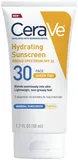
| UriageHyséac 3-Regul Global Tinted Skin-Care SPF30YOUR PRODUCT | Etude House[ Etude House ] Face Blur - Mattifying SPF50+ PA++++ | CeraVeFace Sheer Tint Hydrating Sunscreen SPF 30 | SkinCeuticalsSheer Physical UV Defense SPF 50 | |
|---|---|---|---|---|
| Match | — | 70% | 69% | 67% |
| Price | $16.79 | $16.00−$0.79 | $13.97−$2.82 | $36.00+$19.21 |
| Shared key ingredients | — | 5 of 10 | 4 of 10 | 3 of 10 |
| Key difference | — | Glycolic Acid | Niacinamide | Artemia Extract |
| Irritancy | Medium | Medium | Medium | Low |
| SPF | SPF 30 | SPF 50 | SPF 30 | SPF 50 |
| Drying alcohol | — | Contains drying alcohol | — | — |
| View product | Shop | Shop | Shop |


Product summary
The ingredient list suggests that "Uriage - Hyséac 3-Regul Global Tinted Skin-Care SPF30" can provide reliable sun protection. It can protect from both UVA and UVB rays. This is great news because not all sunscreens with SPF ratings give UVA protection. (UVA rays do not cause sunburn, but still damage our skin and lead to early aging).
Its formula is also hydrating, so you might not need an additional moistruizer during the day. Like all broad-spectrum sunscreens, this product has an anti-aging benefit.
Sunscreen filters
This sunscreen uses a mixture of both mineral and organic (so-called "chemical") UV filters. Here are the organic filters this product uses: uvinul a plus, octinoxate, octisalate and octocrylene. As for the mineral filters, this sunscreen uses titanium dioxide.
Irritation risk
This formulation includes some common irritants, including ingredients that do not provide a benefit for the skin. We assess the overall irritancy of this moisturizer to be medium. For a detailed overview of all potential irritants: click here
You can see the detailed formula review with the breakdown of all actives in the product and the full ingredient list with estimated concentrations in the tables below.
Price
The product retails for 12.70£ in the United Kingdom.
For a detailed price comparison: click here.
Sources cited in this review
Every concentration estimate and effectiveness label is anchored to one of these 21 studies and safety reviews.
- 1
- 2
- 3Final Report on the Safety Assessment of Dimethicone Copolyoljournals.sagepub.com
- 4Safety Assessment of Tromethamine as Used in Cosmeticscir-safety.org
- 5Epidermal and dermal effects of topical lactic acidncbi.nlm.nih.gov
- 6Dual Effects of Alpha-Hydroxy Acids on the Skinpdfs.semanticscholar.org

Affiliate links · As an Amazon Associate, WIMJ earns from qualifying purchases.