Works for
1 of 2 advertised claims delivered
MoisturizingUrea, Paraffinum liquidum + 10 moreStrong evidence
“Su fórmula con un 30% de Urea ISDIN® exfolía, hidrata intensamente y restaura la barrera cutánea.”
This product can help improve hydration of the skin with the two types of ingredients.
The first type is called “humectants”:
these ingredients help attract water.
When humectants are on the surface of the skin, they “pull in” the moisture from the outside environment, or from
within deeper layers of the skin. The following ingredients in this product do the job:
arginine.
This product also contains ingredients called “occlusives”. They help reduce the speed with which our skin loses moisture to the outside environment. These ingredients also help soften the upper layer of the skin, so it feels less tight and nicer to the touch. The following ingredients in this product do the job: arginine, dimethicone.
The following ingredients in this product are especially good for supporting the skin barrier and helping with the hydration level: paraffinum liquidum, urea
ExfoliationUrea, Allantoin + 1 moreLimited evidence
“Su fórmula con un 30% de Urea ISDIN® exfolía, hidrata intensamente y restaura la barrera cutánea.”
This product might help exfoliate the skin with urea, but This ingredient is not the most effective.
Can it cause trouble?
Irritancy12 strong irritants: Parfum, Limonene + 10 more — patch-test recommendedHigh risk
Comedogenic1 ingredient rated 2 or more on the 0–5 pore-clogging scale1 flagged


User reviews
Be the first — your take helps the next person decide.
Ingredients
Filter by role to see what each ingredient is doing.
Water~45–55%
Urea~9.5–11.6%
- Irritation risk
- Low
Naturally present in skin (urea makes up about 7% of natural moisturizing factors in skin). Attracts water to the upper layer of the skin. Also has a positive effect on the skin barrier beyond the humectant action. Can enhance penetration of other ingredients. Is an exfoliating ingredient when used in high concentrations
More about UreaParaffinum liquidum~4.4–5.4%
- Irritation risk
- Low
Mineral oil. One of the most effective and well studied occlusive and emollient moisturizing ingredients. Helps reduce moisture loss in skin and repair skin barrier function
More about Paraffinum liquidumIsopropyl palmitate~3.1–3.8%
- Irritation risk
- Medium
- Comedogenicity
- 3/5
Helps soften the upper layer of the skin and create a thicker product consistency
More about Isopropyl palmitateGlyceryl stearate~2.4–2.9%
- Irritation risk
- Low
An emollient that softens the skin and forms a protective layer on its surface. Helps water and oil mix together
More about Glyceryl stearatePeg-100 stearate~2–2.5%
- Irritation risk
- Low
Helps oil and water mix togehter and creates a nice product texture
More about Peg-100 stearateCetearyl ethylhexanoate~1.7–2.1%
- Irritation risk
- Low
An emollient that helps soften the skin
More about Cetearyl ethylhexanoateCetyl alcohol~1.6–1.9%
- Irritation risk
- Low
A non-drying alcohol that works to soften the skin and stabilize product formulations helping oil and water mix together
More about Cetyl alcoholDimethicone~1.4–1.7%
- Irritation risk
- Low
A silicone that helps to reduce water loss from the surface of the skin. Can temporarily "fill in" lines and wrinkles, absorb oil, and create a nice product finish
More about DimethiconeArginine~1.1–1.3%
- Irritation risk
- Low
An amino acid that is naturally present in skin and helps keep it hydrated. When used together with AHAs, it can reduce their irritating effect on the skin
More about ArgininePhenoxyethanol~0.5–1%
- Irritation risk
- Low
A preservative. It helps prevent bacterial growth in cosmetic products
More about PhenoxyethanolLactic acid~0.65–1%
- Irritation risk
- Medium
An exfoliating and moisturizing alpha-hydroxy acid (AHA). Typically causes less irritation than other AHAs, for example, glycolic acid. At high concentrations (about 15%), lactic acid can help reduce lines and wrinkles. Recent studies show that lactic acid can support the "good" bacteria living on skin's surface (healthy skin microbiome)
More about Lactic acidAcrylates/c10-30 alkyl acrylate crosspolymer~0.65–0.95%
- Irritation risk
- Medium
Maintains the texture of skincare products. Allows the product to spread evenly. Helps oil and water mix together
More about Acrylates/c10-30 alkyl acrylate crosspolymerAllantoin~0.55–0.8%
- Irritation risk
- Low
Helps calm down inflammation in skin and can help reduce itching. Helps to repair the skin barrier and keep skin hydrated
More about AllantoinPalmitic acid~0.6–0.85%
- Irritation risk
- Low
An emollient that is naturally present in skin and helps soften it
More about Palmitic acidParfum~0.5–0.75%
- Irritation risk
- High
An aromatic blend of unspecified and possibly irritating ingredients
More about ParfumStearic acid~0.65–0.95%
- Irritation risk
- Low
Helps oil and water mix together and works as an emollient
More about Stearic acidDisodium edta~0.45–0.7%
Ethylhexylglycerin~0.45–0.65%
Limonene~0.3–0.6%
- Irritation risk
- High
A common frangrance that can easily irritate skin, especially if exposed to air, light or heat
More about LimoneneHexyl cinnamal~0.3–0.5%
Alpha-isomethyl ionone~0.25–0.45%
- Irritation risk
- High
A fragrance. Potential allergen and can be irritating
More about Alpha-isomethyl iononeLinalool~0.25–0.4%
Benzyl salicylate~0.2–0.35%
Eugenol~0.15–0.25%
Citral~0.1–0.25%
Hydroxycitronellal~0.1–0.2%
- Irritation risk
- High
A fragrance. A likely allergen and can be irritating
More about HydroxycitronellalCoumarin~0.1–0.15%
Geraniol~0.05–0.1%
Citronellol~0.05–0.1%
Ingredient list view
Water, Urea, Paraffinum liquidum, Isopropyl palmitate, Glyceryl stearate, Peg-100 stearate, Cetearyl ethylhexanoate, Cetyl alcohol, Dimethicone, Arginine, Phenoxyethanol, Lactic acid, Acrylates/c10-30 alkyl acrylate crosspolymer, Allantoin, Palmitic acid, Parfum, Stearic acid, Disodium edta, Ethylhexylglycerin, Limonene, Hexyl cinnamal, Alpha-isomethyl ionone, Linalool, Benzyl salicylate, Eugenol, Citral, Hydroxycitronellal, Coumarin, Geraniol, Citronellol
Compare prices
Retailers ranked by price — lowest first.
Affiliate links · prices updated regularly
Worth comparing, line by line.
Match % combines shared ingredients, the first five ingredients, shared actives and hero ingredients, irritancy (lower counts in the alternative's favour), texture and body area. Only products in the same routine step are compared.
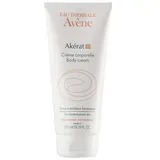
| Ureadin®Ultra30 Crema Anti-RugosidadesYOUR PRODUCT | ISDINUREADIN Ultra30 Exfolierende Creme | CCSFoot Cream | Eau Thermale AveneBody Akerat 10: Body Cream | |
|---|---|---|---|---|
| Match | — | 63% | 60% | 60% |
| Price | — | — | $8.99 | $23.47 |
| Shared key ingredients | — | 6 of 6 | 3 of 6 | 2 of 6 |
| Key difference | — | — | Glycerin | Salicylic Acid |
| Irritancy | High | High | Medium | Low |
| Drying alcohol | — | — | — | — |
| View product | Shop | Shop | Shop |
Sources cited in this review
Every concentration estimate and effectiveness label is anchored to one of these 9 studies and safety reviews.
- 1Topical urea in skincare: A reviewpubmed.ncbi.nlm.nih.gov
- 2A review on the extensive skin benefits of mineral oilncbi.nlm.nih.gov
- 3Final Report on the Safety Assessment of Isopropyl Isostearatejournals.sagepub.com
- 4
- 5Final Report on the Safety Assessment of Dimethicone Copolyoljournals.sagepub.com
- 6Epidermal and dermal effects of topical lactic acidncbi.nlm.nih.gov

Affiliate links · As an Amazon Associate, WIMJ earns from qualifying purchases.